

A horrifying find in Podil: a full container of human skeletons. The outcome
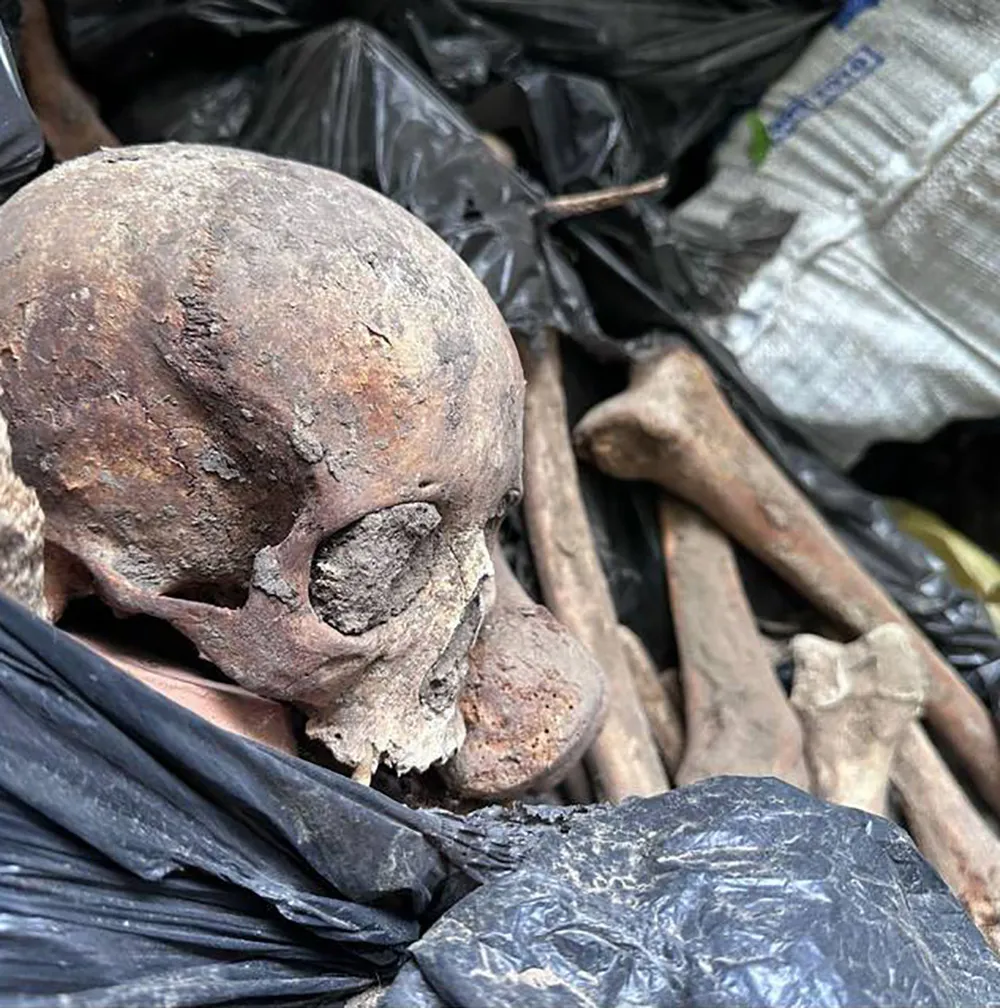
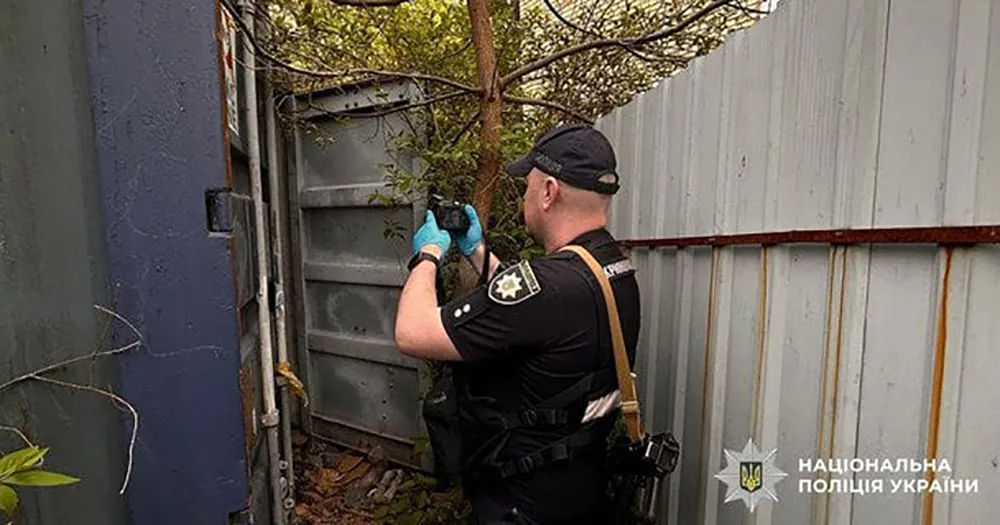
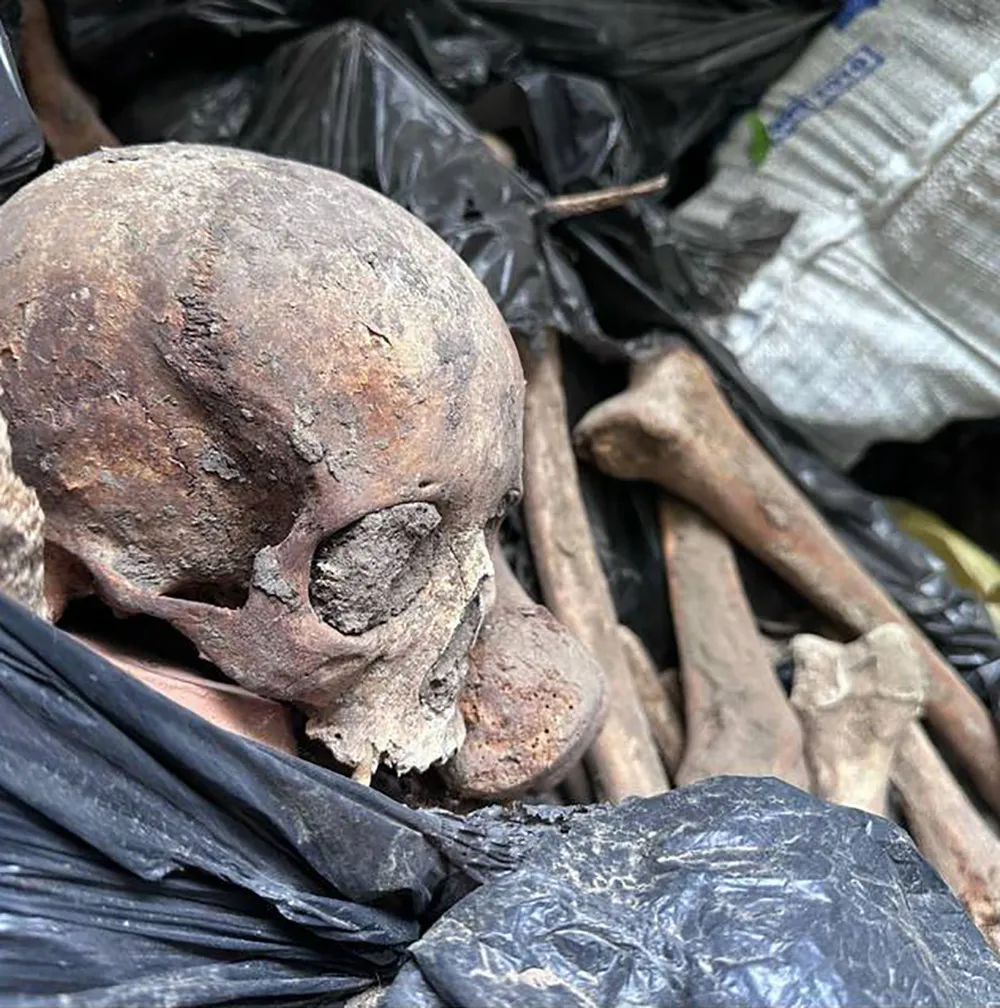
In recent days a scandal has attracted considerable attention around a large cargo container, packed to the brim with human remains, discovered in Podil by the National Police. As soon became clear, these bones are “archaeological artefacts”.
The Kyiv Scientific and Methodological Centre for the Protection, Restoration and Use of Monuments of History, Culture and Protected Areas (KNMC) and the State Historical and Archaeological Reserve “Ancient Kyiv” subordinate to it gave the following explanation of the find:
“Since the building near which the container with bones was found is part of the territory of the “Ancient Kyiv” Reserve, and is also on the balance sheet of the KNMC (to which the Reserve is subordinate), we want to give an explanation of our own.
Previously the building housed the Podil Archaeological Expedition of the Institute of Archaeology of the National Academy of Sciences of Ukraine. Because the building was closed for restoration, the archaeologists had to leave it, which they did. They were also obliged to take all their belongings and “archaeological artefacts”. They took everything except… the bones.
A large number of human skeletons collected during numerous archaeological investigations in Kyiv remained in a large container in the yard. According to representatives of the Institute of Archaeology, these bones have already been studied, no longer have archaeological value and should be reburied.
For our part, we can add what the media did not say: the quantity of human bones there is incredible. These are mostly human skeletons from excavations on the slope of Shchekavytsia hill, where a cemetery once stood… We hope that in the near future the Ministry of Culture will be able to approve the reburial of the human remains found during archaeological excavations, and the Institute of Archaeology will carry it out.”
Archaeologists also responded to the scandal. A long statement soon appeared on the official Facebook page of the Institute of Archaeology of the National Academy of Sciences of Ukraine: “What happened at 9-B Skovoroda Street?”. Everyone can read its text by following the link.
In particular, the scholars confirmed that the human remains are archaeological finds:
“The Institute of Archaeology of the National Academy of Sciences of Ukraine reports: the human remains found near the former archaeological base in Podil are not a mysterious discovery. They are the remains of the Shchekavytsia cemetery (18th–20th centuries), which had previously been studied by archaeologists and anthropologists.”.
The statement then speaks about the building itself, near which the container was found:
“The building at 9-B Skovoroda Street is the former base of the Podil Archaeological Expedition. It operated here in 1984–2021, actively studied Podil and became a true centre of science, education and cultural heritage protection…”
Then, quite in the tradition of bureaucratic brush-offs, the “passing of the buck” begins. In particular, we read the following:
“In 2021 the Institute was finally “pushed out” of the premises under the pretext of “restoration”. After that the archaeologists lost access to the remains kept in the basement. They were moved to a metal container provided by a structure of the Kyiv City State Administration (KMDA). Since then all responsibility for their condition and preservation has been borne by the Department for the Protection of Cultural Heritage of the KMDA.”
Two questions arise here. Not that many stone houses from the end of the 18th century have survived in Kyiv. Why is there talk of being “pushed out”? Of course, having an archaeological base in the historic centre of the capital is important and necessary. But why should this essentially technical institution be located in a unique historic building? Again, the shifting of responsibility to the Department for the Protection of Cultural Heritage of the KMDA looks strange.
Why, after the anthropological studies were carried out, did these human remains stay in the cellars of a listed building instead of being reburied immediately?
It is clear that this is not a simple matter, with a whole range of both bureaucratic and technical problems and obstacles. But why did nobody particularly worry about overcoming them while the base of the Podil Archaeological Expedition was still working in the building in question?
As the statement says: “The Institute appealed to the Ministry of Culture, since according to the law even such remains are considered part of the museum fund. But there has been no reply.”.
There are questions here both for the Institute and for the Ministry. Bureaucratic red tape in our ministries and agencies is well known. Indeed, it seems strange why, on such a fairly simple issue, Ministry officials ignored the scholars’ appeals. On the other hand, the scholars could have been more insistent and, in the end, brought the media into the matter. As experience shows, after a media kick the cogs of the state bureaucratic machine begin to turn quite quickly.
The “Conclusion” of the statement is interesting:
“The Institute of Archaeology has no connection to the state in which the human remains are now. Responsibility lies with the local authorities. We call for a civilised solution: reburial and the restoration of the archaeologists’ scientific presence in Podil.”
The editors of “Ukraine Incognita” agree one hundred percent on the civilised resolution of the problem. As for the claim that the Institute of Archaeology has no involvement in the situation that has arisen NOW, we again want to remind you: this problem should have been resolved much earlier, immediately after the scholars completed the anthropological study of the finds.


