

The famous Sanguszko Palace in Iziaslav has not been an architectural monument until now!
It turns out that the famous palace of the Sanguszko princes in Iziaslav (Khmelnytskyi Oblast) has not until now been an official architectural monument, and the Ministry of Culture entered it in the register only after a demand from the prosecutor’s office. This is reported by the Office of the Prosecutor General. The statement says, in particular:
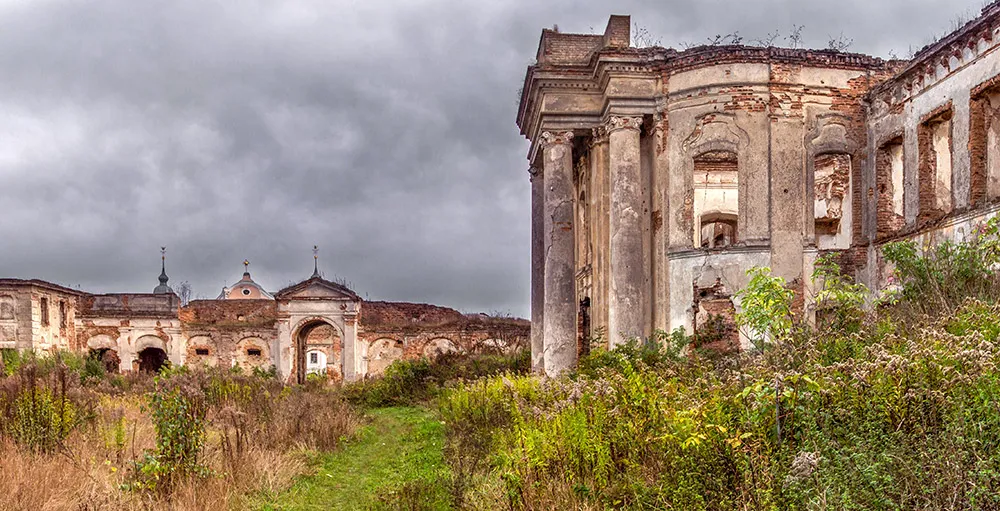
Here and below, photos: D. Poliukhovych / “Ukraine Incognita”
Following a lawsuit by the Khmelnytskyi Regional Prosecutor’s Office, an architectural monument of national significance, the 17th–18th-century estate of Prince Sanguszko in the city of Iziaslav, has been entered in the State Register of Immovable Monuments of Ukraine.
The architectural complex includes the palace, a courtyard with arcades, a small bridge and the Missionaries’ church. Prince Sanguszko’s palace was built in the mid-18th century in the Baroque style, to a design and under the supervision of the Italian architect Paolo Antonio Fontana.
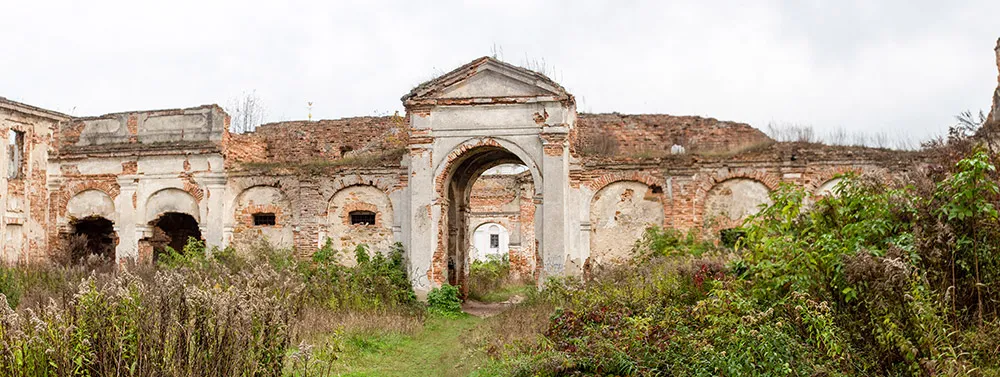
The two-storey rectangular palace took shape on the basis of a bastioned castle built on the right bank of the Horyn River in the 1620s–1630s.
After proceedings were opened, the Ministry of Culture and Strategic Communications of Ukraine voluntarily met the demands set out in the prosecutor’s lawsuit. Entering this cultural heritage site in the State Register of Immovable Monuments of Ukraine will ensure state protection and help preserve the historical and cultural heritage for future generations.
For reference
The Sanguszko Palace is a huge architectural complex located on the grounds of the Novozaslav Castle, which once rose on a high promontory at the confluence of the Ponora River with the Horyn. The defensive moats of the ancient fortification can still be clearly traced. The palace was built between 1754 and 1770 for Barbara Sanguszkowa, as the residence and centre of the princes’ Volhynian estates.
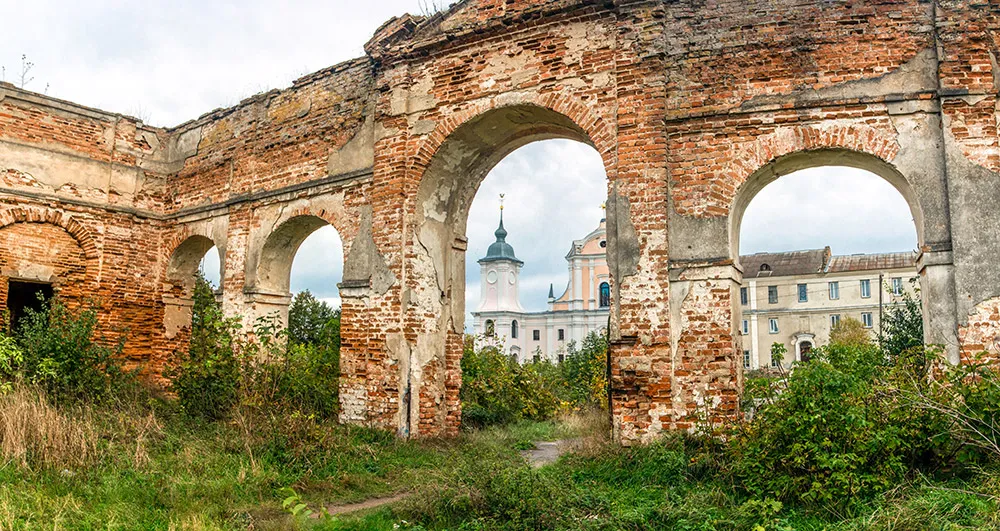
The original design was drawn up by the already mentioned Paolo Fontana, the court architect of the Sanguszkos. Lady Barbara disliked it as “old-fashioned”, and at her request the design was refined and substantially reworked by the royal architect Jakub Fontana.
The two-storey building has a “piano nobile” layout (the lavish, aristocratic floor), which is interesting and quite rare for palaces of the Polish–Lithuanian Commonwealth. This was the name for the floor above the ground floor, consisting of a sumptuous hall and an enfilade of decorated rooms intended for official receptions and celebrations. The piano nobile was usually reached by a grand staircase. There is one in Iziaslav too.
In the late 19th century the palace was turned into barracks for Russian soldiers. From the early 1920s Red Army troops were quartered here.
At present the monument is in a state of desolation and ruin.


