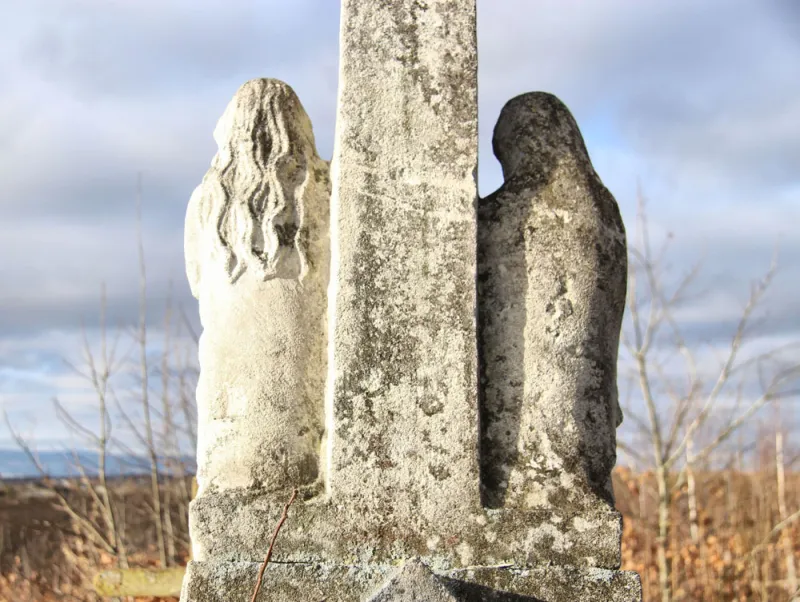
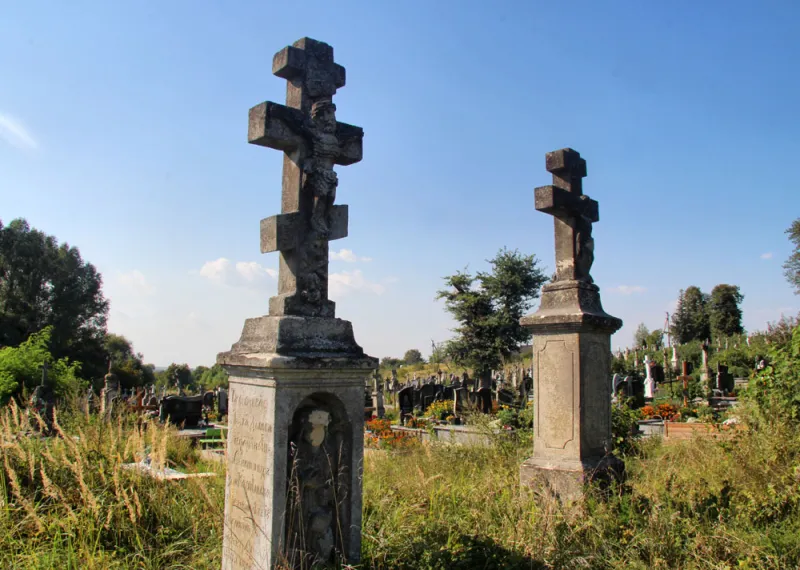
Viknyne and Hrushkivka. Old cemetery and wayside cross

· 3 min read
Today these are separate villages of Zvenyhorodka district, but in the 19th century it was a single village, Viknyne, the centre of a volost, and Hrushkivka was part of it.
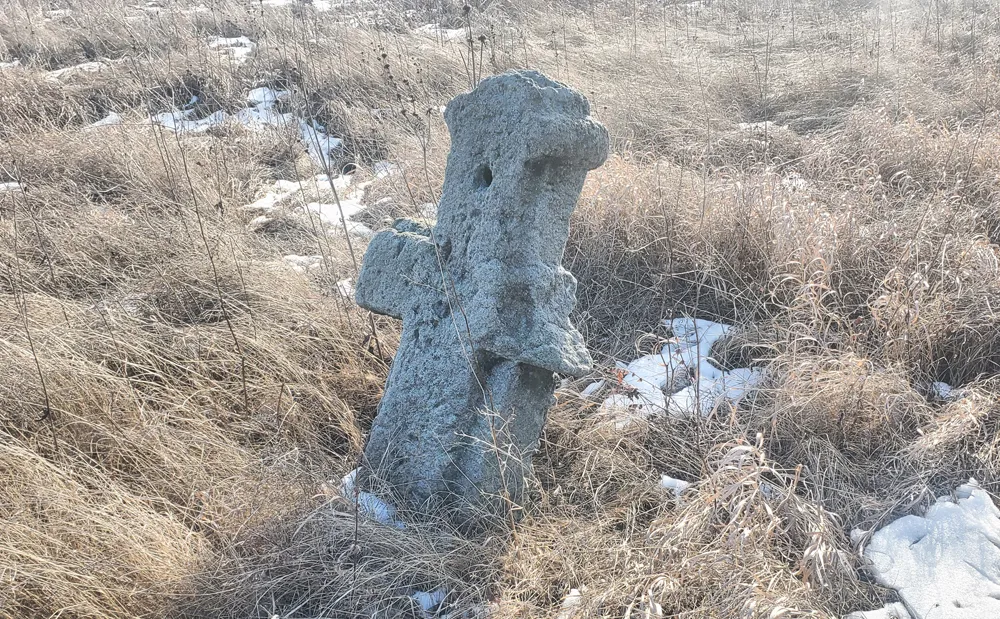
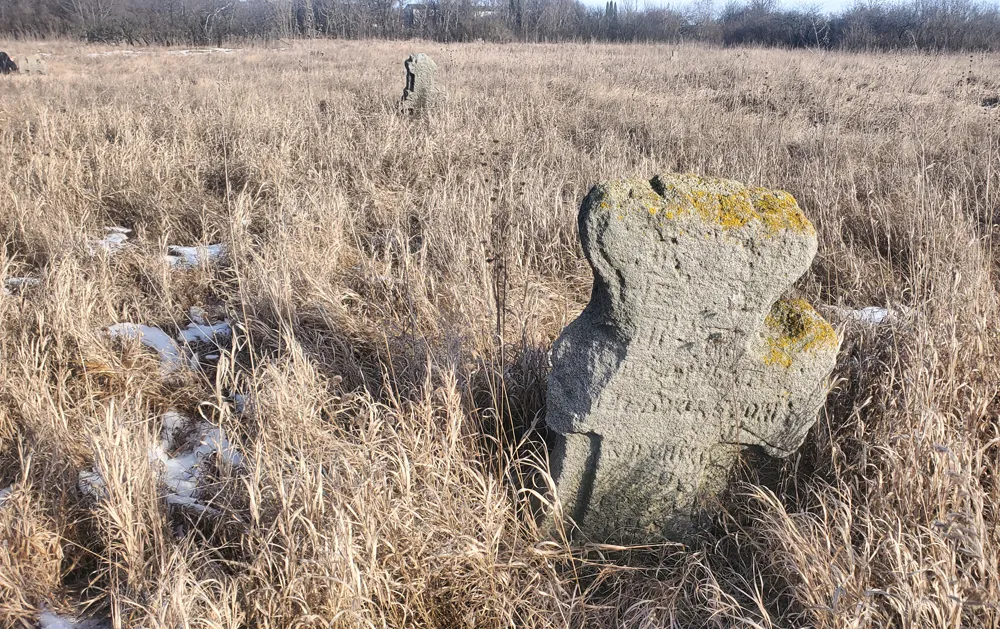
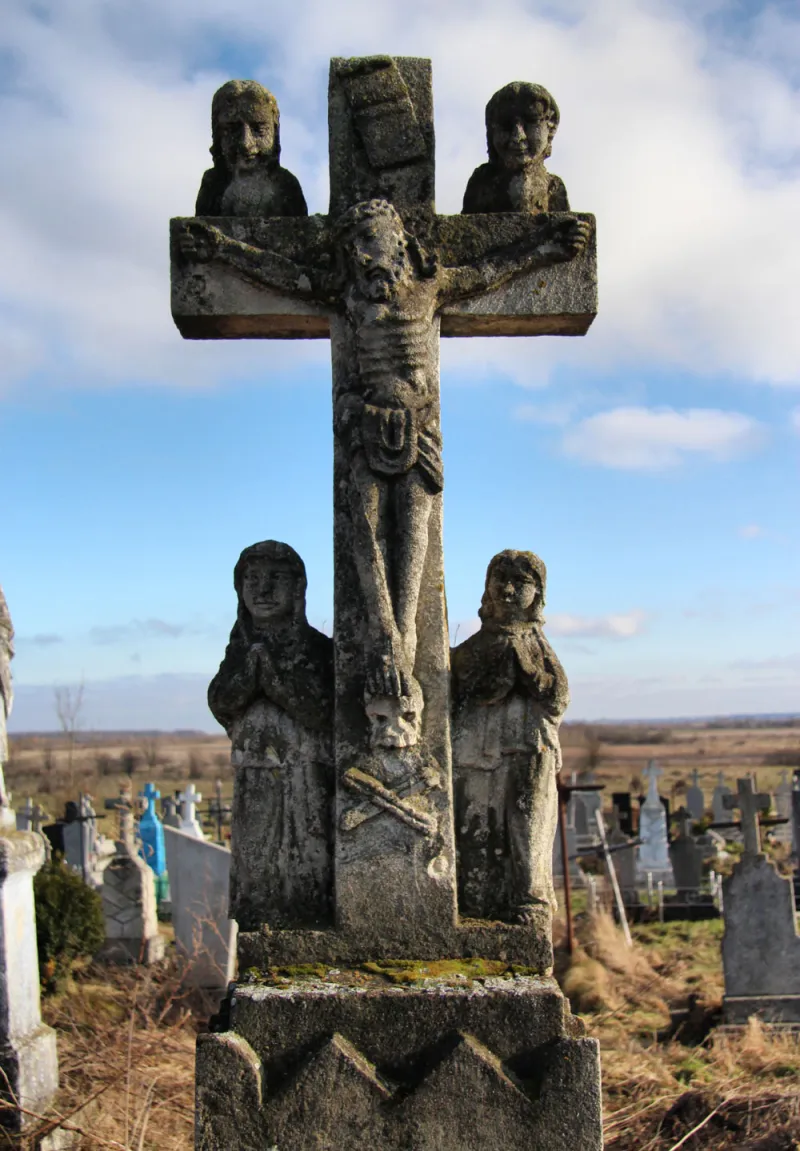
Viknyne was founded by uhozhany (frontier settlers) who settled in the second half of the 18th century near four springs, which were called “windows” (vikna). Hence the name of the village. They were armed people – the area lay on the edge of the Wild Field and needed constant defence. Whether they were Cossacks is an open question, but Cossack-style crosses were erected in the cemetery. This tradition continued until the end of the 19th century, when the village lands passed to four landowners. The peasants of Viknyne were not serfs – they were state peasants, and it was they who probably continued the tradition of the Cossack cemetery.
In the days of the Polish–Lithuanian Commonwealth, Viknyne was part of the starosta estates and was therefore state-owned. After the Russian seizure of the Right Bank, the village likewise became the property of the imperial state.
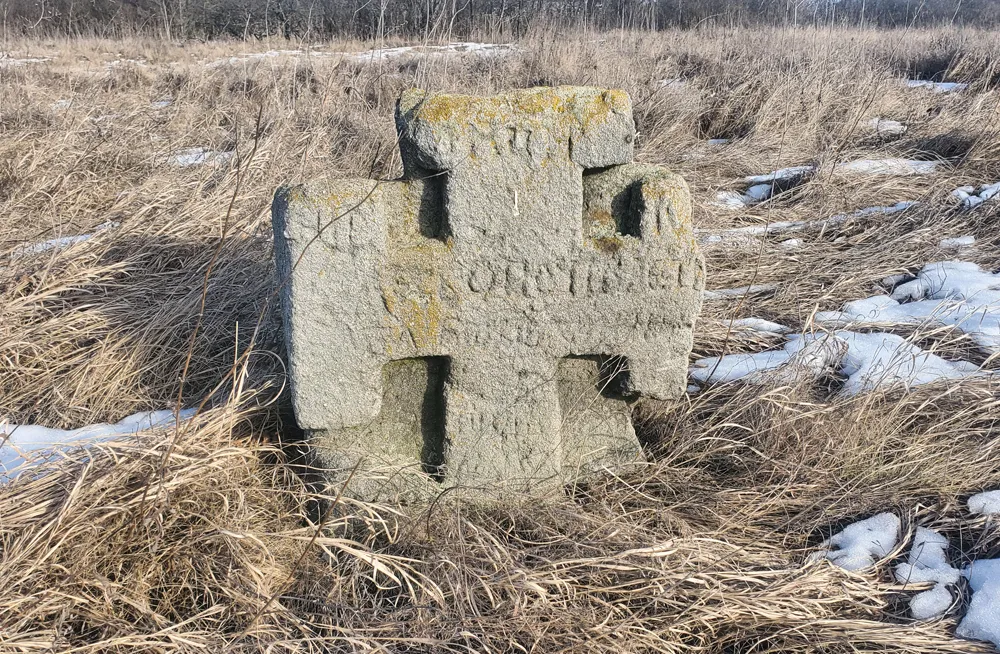
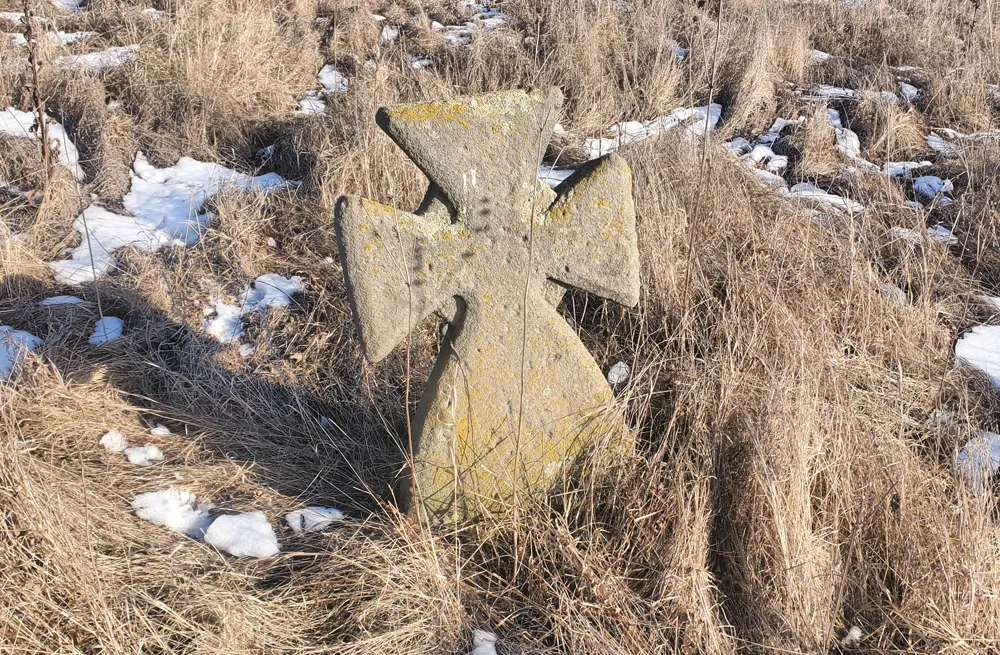
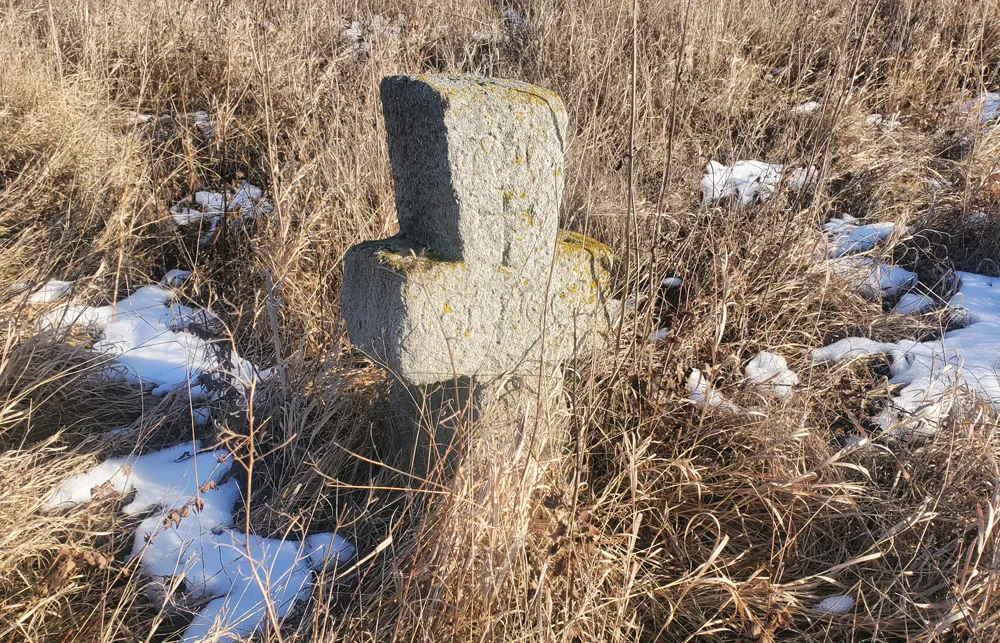
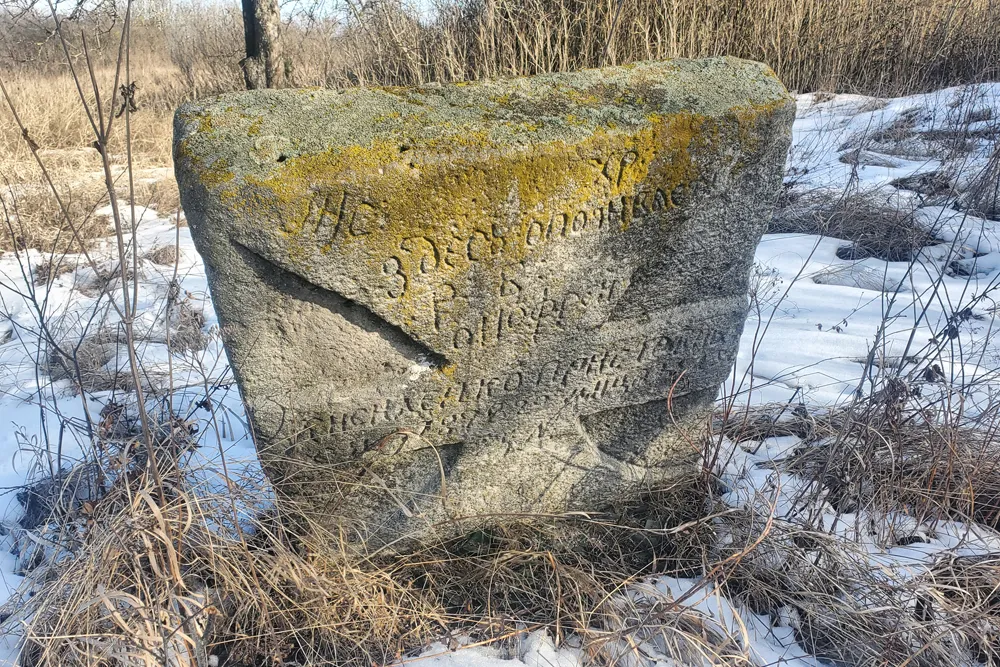
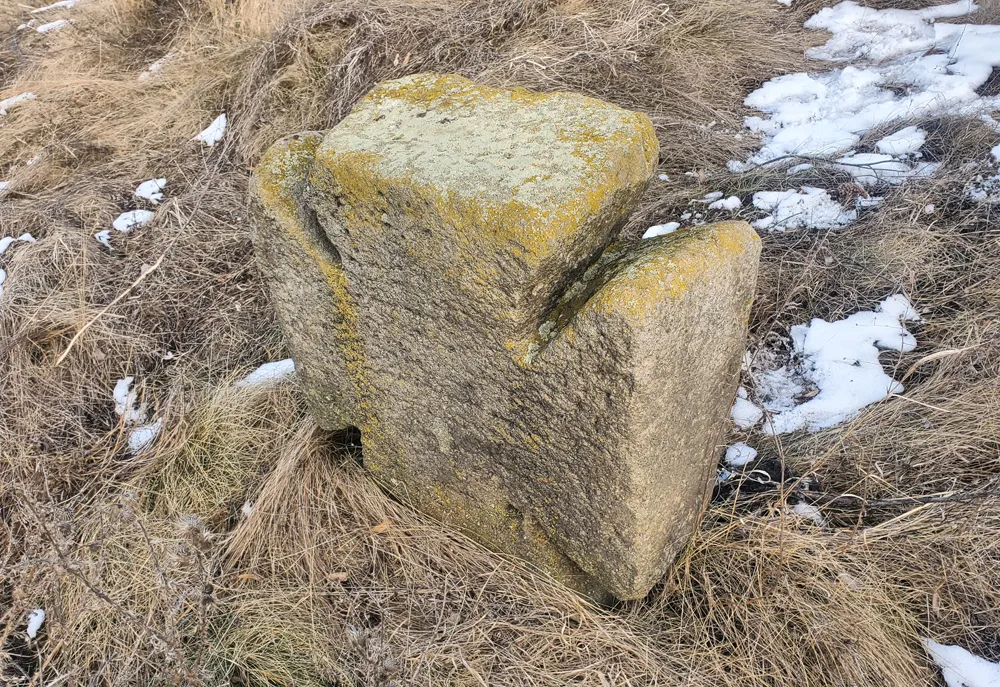
In Viknyne, before the entrance to the village, there is a tall stone wayside cross. It stands above a slope in thickets. Its coordinates: 48.91759 31.10391. Unfortunately we could not decipher the inscription on the cross.
The old cemetery is now located in the village of Hrushkivka, next to the modern cemetery. No trees grow in the old cemetery; it is covered with grass. Its coordinates: 48.91929 31.12012
Here is what Wikipedia writes about Viknyne:
A legend about the origin of the village’s name has been preserved.
In the times when Cuman horses trampled the steppes of Huliaipole, people, hiding from the raids of foreigners, came upon a place with steep hills and deep ravines.
Tormented by thirst, they searched for water. Dense golden willows hinted that water was near. As soon as the fugitives came close to the water, they saw that the little lake, formed by four large and powerful springs, was like a window. Here the fugitives settled.
The spring was named Vikno (“window”), and the place Viknyne. This was in the mid-1750s.
The first settlers on these lands were fugitive peasants and enjoyed freedom. This did not last long: in the early 1760s the Polish nobleman A. Rubliovskyi arrived in the village, and with him the Uniate priest V. Puhach.
From 1793 Viknyne, like all of Right-Bank Ukraine, was annexed by the Russian Empire. The village belonged to the Bratslav Viceroyalty, from 1795 to 1797 to the Voznesensk Governorate, and from June 1797 to the Kyiv Governorate.
The village was initially part of Katerynopil county (1795–1797), and from 1798 of Zvenyhorodka county.
Viknyne was the centre of a volost administration, to which the villages of Hrushkivka, Kyselivka and Kaitanivka were subordinate.
1784 – the Church of St. Nicholas was built.
In 1799 the Russian tsar Paul I gave the Korsun estate, which included the village of Viknyne, to the Minister of Justice and Procurator General V. Lopukhin. The latter later sold it to V. Monastyrskyi, who in 1842 sold it to Lieutenant General Vasylkovskyi. After his death the Viknyne estate was owned by his wife Rozaliia. She was obliged to pass the village on as an inheritance to her sons Yehor and Stepan Vasylkovskyi, who were to pay 8,000 rubles each to their sisters and brother. Yehor passed his inheritance to his sister Anna Filipova. Thus the village came to be owned by Anna Filipova and Stepan Vasylkovskyi. Another part of the village (Hrushkivka) belonged to Colonel Liutsenko.
In 1900 the Viknyne lands were divided among the landowners O. Kopylov, M. Novitska and O. Portasiev. At that time the village had a literacy school, 5 windmills and a smithy.
Photos by Roman Malenkov
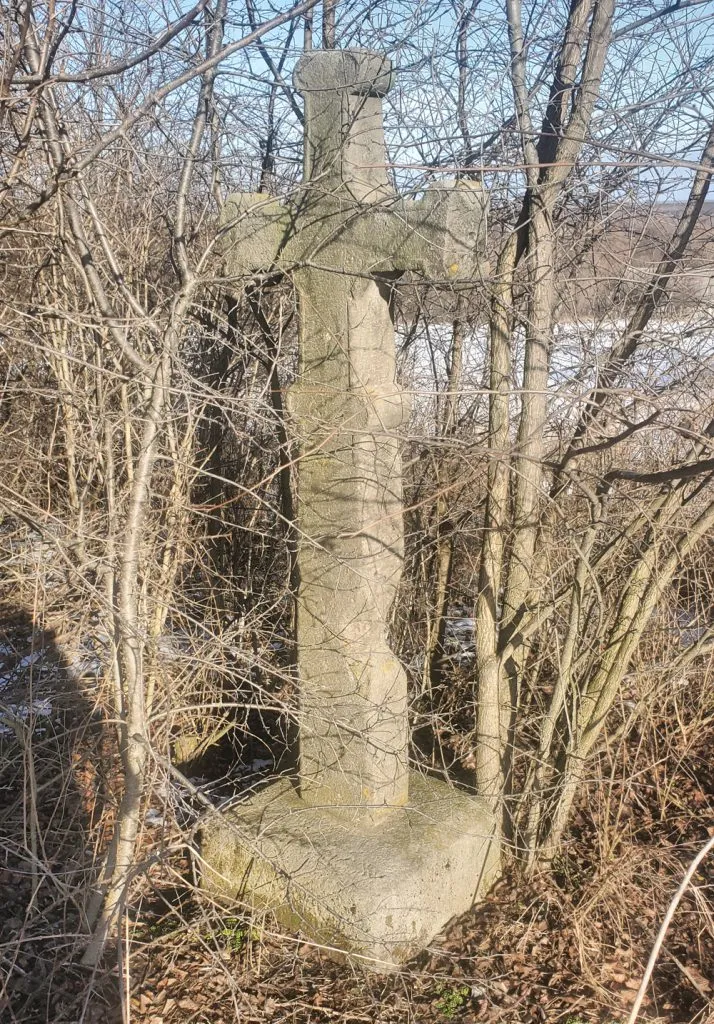
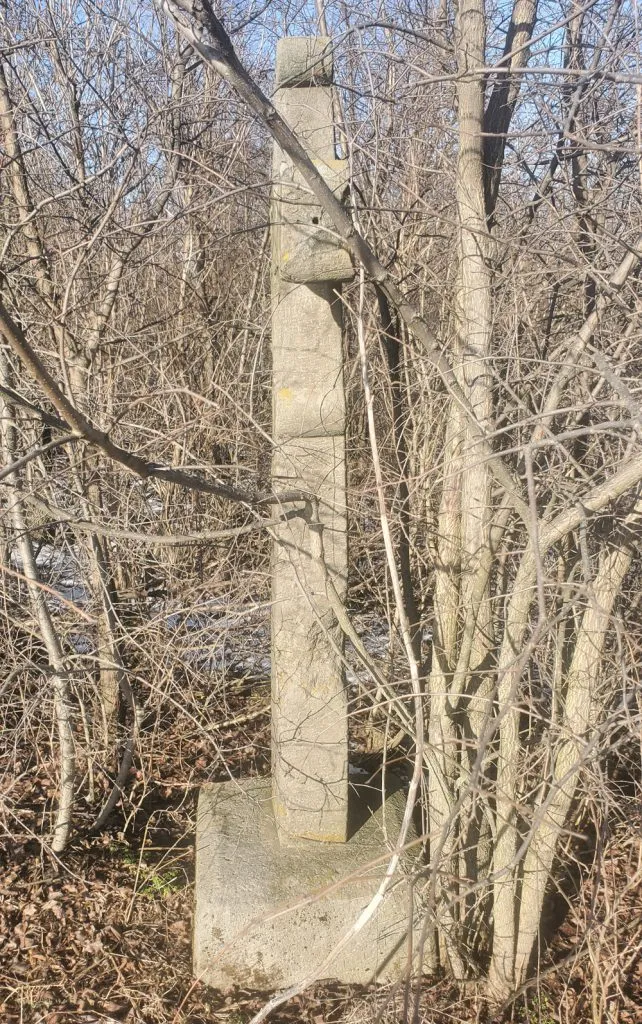
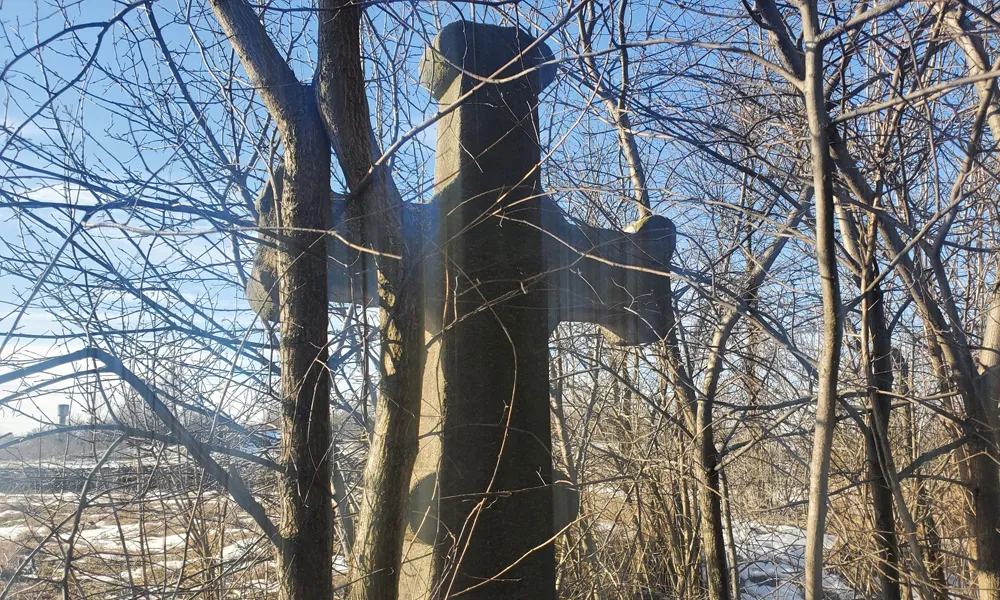
Wayside cross in the village of Viknyne