Historical Ukraine in one click: why Ostriv deserves worldwide recognition, as seen by Pavlo Vyshniak
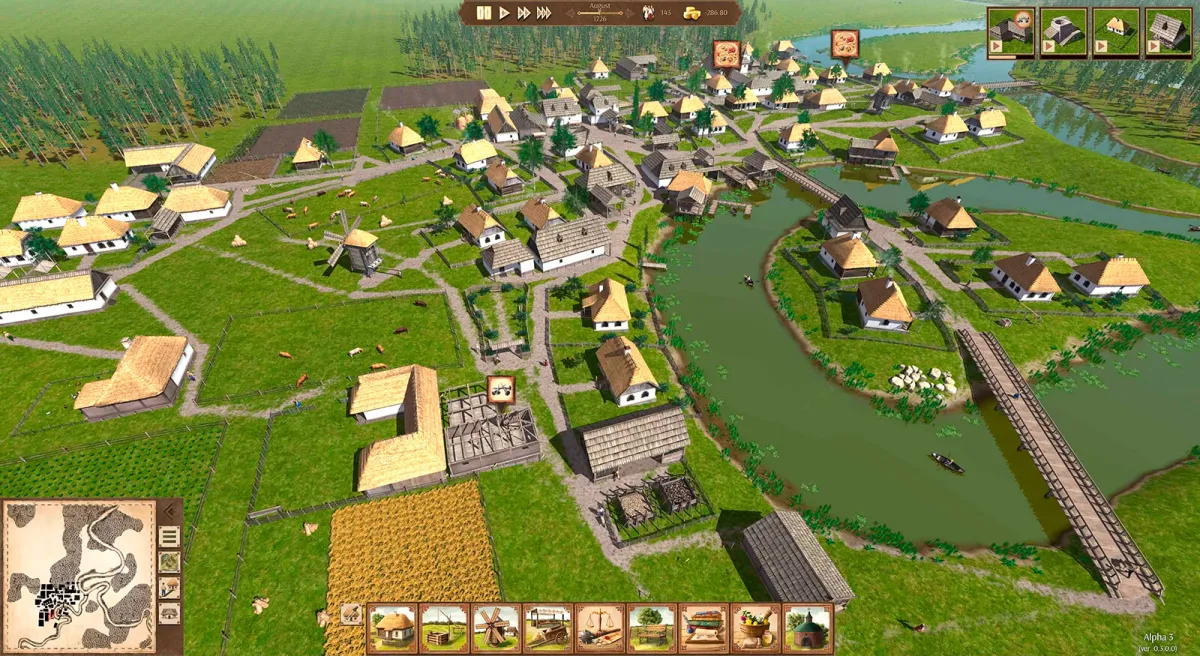
Most city-building simulators offer standard paths of development and a limited choice of architectural solutions. Ostriv, however, is a Ukrainian indie project that ambitiously tries to turn the idea of the genre upside down. Instead of the typical “building routine”, the player is immersed in the multifaceted environment of an 18th-century Ukrainian village with its economic challenges, social relations and authentic traditions. In this text Pavlo Vyshniak, a gaming expert, about whom you can learn more at this link, looks at the history of the game’s development and its key features, and explains why Ostriv attracts such attention both among Ukrainian players and far abroad.
The history of the project: the path from idea to promising indie
Development of Ostriv began in 2014 thanks to the efforts of Yevhen (a 3D artist and game designer by profession), who wanted to recreate the world of an 18th-century Ukrainian village in the most realistic format possible. According to gamedev.dou.ua, at first the idea was modest in scale, but constant updates and the pursuit of historical accuracy drew the attention of the community. Later other specialists joined Yevhen, forming a small but close-knit team.
The developers often had to look for historical materials in archives, analyse examples of Cossack architecture and study in detail the daily life of the peasants of that time. A tight schedule was combined with financial and technical challenges: from a shortage of resources to difficulties with relocation because of the war. Yet these difficulties only strengthened the authors’ devotion to their idea. Their goal is to create not just a simulator but a deep historical world that unfolds before the player without standard templates.
Main gameplay features
- Historical authenticity
Instead of generic “medieval” building models, Ostriv reproduces the architecture characteristic of the 18th century, from traditional houses to churches. The emphasis on cultural details and rituals helps you not only to play but also to find yourself in the midst of the Ukrainian historical context. - Social interaction
Each villager is affected by various factors: availability of work, observance of traditions, relations with neighbours. The player has to take their needs and wishes into account; otherwise dissatisfied residents may leave, which will negatively affect the economy and the development of the settlement. - Economic depth
Agriculture, trade, crafts, construction: all of these are components of a complex economic system. It is important to distribute resources and plan logistics chains to avoid shortages or, conversely, surpluses. - Dynamic seasons and environment
The seasons change the speed of resource extraction, agricultural productivity and the mood of the population. This cyclicality makes Ostriv even more realistic and keeps the player constantly on their toes. - Freedom of planning and construction
Unlike most city-building simulators, where the placement of houses and roads is rigidly fixed, Ostriv offers almost unlimited room for creativity. You shape the landscape yourself, creating unique infrastructure solutions.
What makes Ostriv stand out on the indie market
- A focus on quality rather than a quick release. In early access the game was carefully tested from the start: the developers respond quickly to feedback and release updates that improve game balance and graphics.
- Ukrainian identity on the international stage. This project shows that local history can be interesting to a wide audience, you only have to think through its implementation down to the smallest detail.
- Close communication with the community. On the official website ostrivgame.com you can find development diaries and plans for future updates, and the developers often join discussions on social networks and gaming forums.
Prospects for development
Even though Ostriv has already gained fairly wide publicity, the project continues to evolve. Among the planned innovations are an expansion of economic tools, additional cultural events and, perhaps, even the integration of multiplayer elements. This opens a wide niche for experiments: the developers can develop the Cossack theme, supplement the game with other historical periods or even make story campaigns.
According to Yevhen, the team’s main task is to keep quality at the highest level. And since the community is constantly growing, there is every chance that in time Ostriv will turn into one of the brightest Ukrainian game projects in the city-building simulator segment.
Ostriv as an embodiment of national history and innovation in gaming
What makes Ostriv special? First of all, it is a real example of how devotion to one’s idea can give life to something globally new. The project combines the game mechanics of a “city builder” with the historical and cultural identity of Ukraine. It is not just entertainment but also a chance to glimpse our past, feel the flavour of the era and see that indie developers can deliver experiences no worse than big studios.
Despite difficult development conditions and limited resources, Ostriv continues to evolve, receiving positive feedback from both Ukrainian and foreign players. Such projects bring diversity to the world of gaming and help popularize Ukrainian culture. So, if you are looking for something innovative and authentic, it is worth giving Ostriv a chance to become your next favourite game.