Verkhovyna. Zhabie. The Hutsul capital and the koliada

· 7 min read
Once in Kolomyia I heard a joke about how Soviet ethnographers looked for Hutsuls in the Carpathians.
They came to Kolomyia and asked:– Are you Hutsuls?
– No, we are not Hutsuls. The Hutsuls are further on, in Kosiv.
They go to Kosiv and ask there.
– Are you Hutsuls?
– No, the Hutsuls are further on, in Zhebie.
They go to Zhebie and ask there.
– No, – they say, – we are not Hutsuls. The Hutsuls are further on, in Vorokhta.
The ethnographers arrived in Vorokhta.
– Well, you are Hutsuls, aren’t you?
– Oh no, we are not Hutsuls.
– So where are those Hutsuls?
– You have already driven past them.
What is this Zhebie, I wondered then. It turned out to be present-day Verkhovyna: until 1962 it was called Zhabie. This town is called the capital of the Hutsul region, although I have heard the same about Kosiv and Rakhiv.
The Hutsul koliada
I give the history of Verkhovyna as text from Wikipedia:
The first written mention of the settlement dates from 1424: on 17 August Zhabie is mentioned in a charter of Grand Duke Lev-Svydrygailo[3]. Franko once said: “Here is Zhabie, the Hutsul capital. There is nothing. Villages are said to lie beyond Zhabie. And it is futile to look for greater misery,” and indeed until 1962 Verkhovyna was called Zhabie. There are various versions of the origin of the name: either from the swamp on which the first inhabitants settled, or from the name of the first inhabitant, who probably came from France and was called Zhabien; nobody knows for sure. Nevertheless, in 1962 the renaming took place; an interesting fact is that Verkhovyna was going to be named Frankivsk, after the surname of Ivan Franko. The name Verkhovyna comes from the multitude of peaks (verkhy) that surround it; seen from above, it really resembles a bowl, that is, it lies in a kind of pit surrounded by peaks and mountains.
In ancient times it was divided into two parts, Zhabie-Iltsi and Zhabie-Slupiika, and had many hamlets: Krasnyi Luh, Kryvopole, Volova, Khodak, Vipche, Zamahura. At various times the villages of Bystrets, Dzembronia, Topilche, Zelene, Yavirnyk and Burkut belonged to the Zhabie gmina.
It is also divided into hamlets: Slupiika, Bezvidne, Tsentr, Vipche, Rovenka, Pushkar, Zhabie Stream, Bahny and Hrabovets. This is really very interesting, because it is believed that, depending on the hamlet, a certain mentality and psychology of the resident stands out. For example, the residents of Zhabie Stream are characterized by wonderful acting abilities; this “nook” (the Hutsul dialect word for a hamlet) is even called the “Hutsul Hollywood”, because the films “Annychka” (1968), “Shadows of Forgotten Ancestors” (1964), “Oleksa Dovbush” (1959), “Shadows of Unforgotten Ancestors” (2013) and many other films were and are shot precisely here, and local residents played and continue to play roles in them.
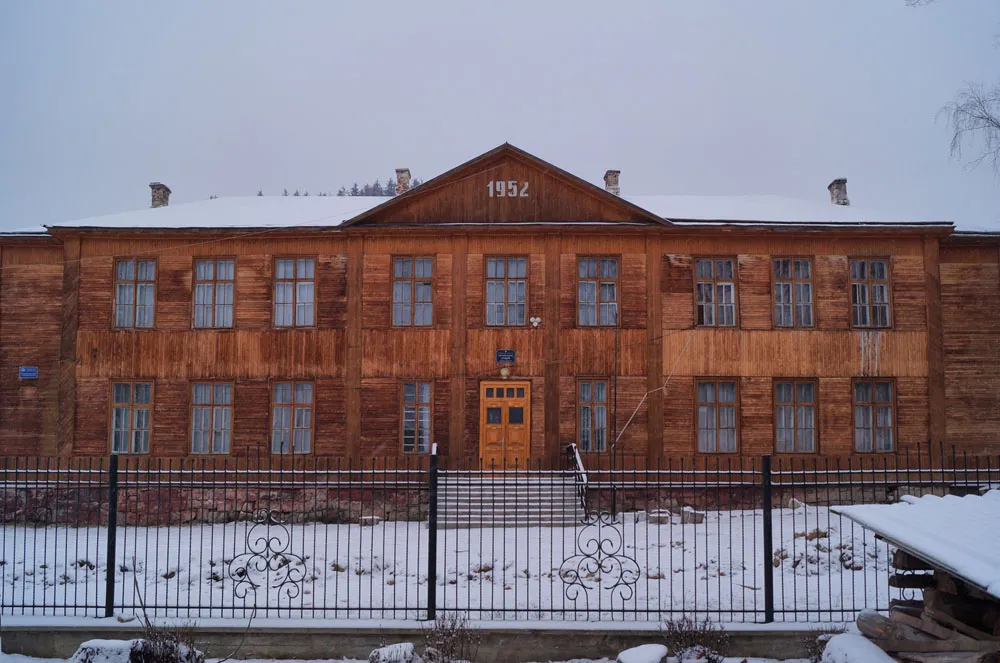
Or, for example, the residents of Vipche are characterized by exceptional activity, since it is one of the highest-altitude hamlets, and also by an extraordinary love of dancing and singing; it is the residents of this hamlet who have the best musical ear, and with their dances and music they have toured all of Europe and even the USA.
In 1772, as a result of the first partition of Poland between the Russian Empire, Prussia and Austria, the lands of the present-day Verkhovyna district became part of Austria.
Property stratification, national oppression and intensified exploitation of the population of mountain villages caused mass discontent among the peasants. The opryshok movement was a peculiar form of struggle and an expression of the peasantry’s spontaneous protest against the existing order. Many residents of the village of Zhabie acted in the detachments of Oleksa Dovbush, I. Pysklyvyi, Pynti, Boichuk and Baiurak. The convening of the vicha (assemblies), a new form of the liberation movement of the late 19th century, became widespread among the highlanders. In the first half of the 19th century, opryshoks led by M. Shtoliuk operated in Zhabie and neighbouring villages.
During the First World War, battles between the Austrians and the Russians were fought in the vicinity of the village of Zhabie and other villages. Many Hutsuls fought in the Austrian army, especially in the Legion of Ukrainian Sich Riflemen.
In April 1920 a peasant uprising took place (it became known as the “Hutsul Uprising”), which was suppressed by the Polish authorities. A memorial sign has been erected to the participants of the Hutsul Uprising of 1920.
From 1921 to 1939 Verkhovyna was part of Poland. On 1 April 1928 the hamlets (khutory) of Dzembronia, Bystrets, Zelene and Yavirnyk were separated from the Zhabie gmina (community) and formed into the self-governing administrative gmina of Dzembronia. On 17 September 1939, on the basis of the Molotov-Ribbentrop Pact, Soviet troops entered the territory of Galicia.
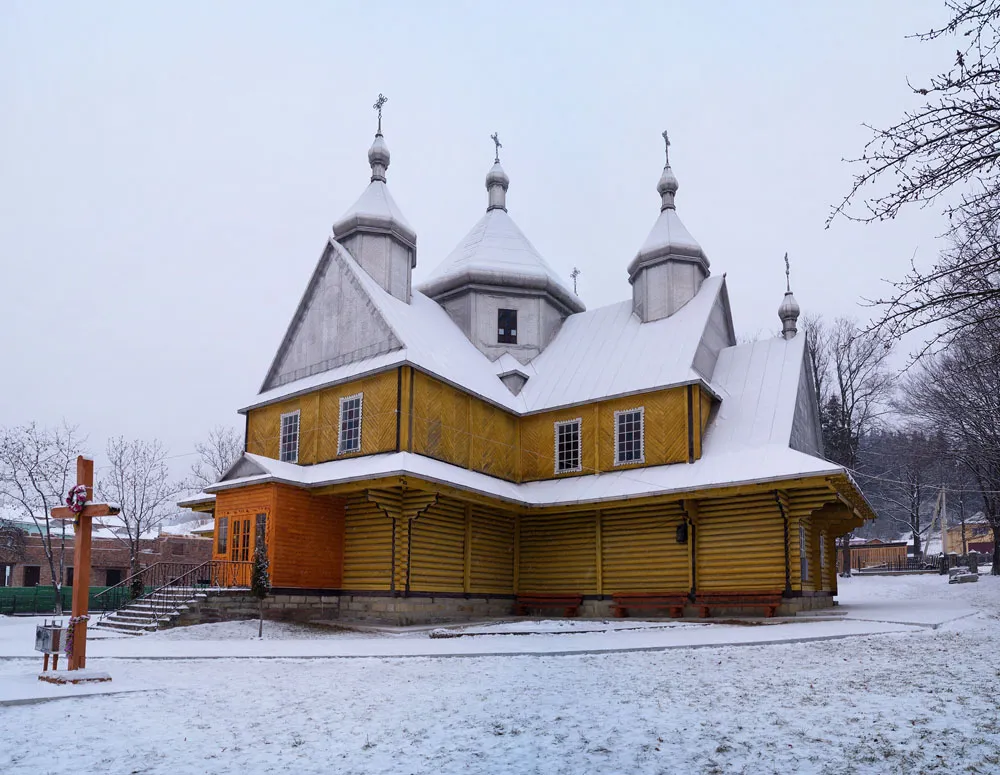
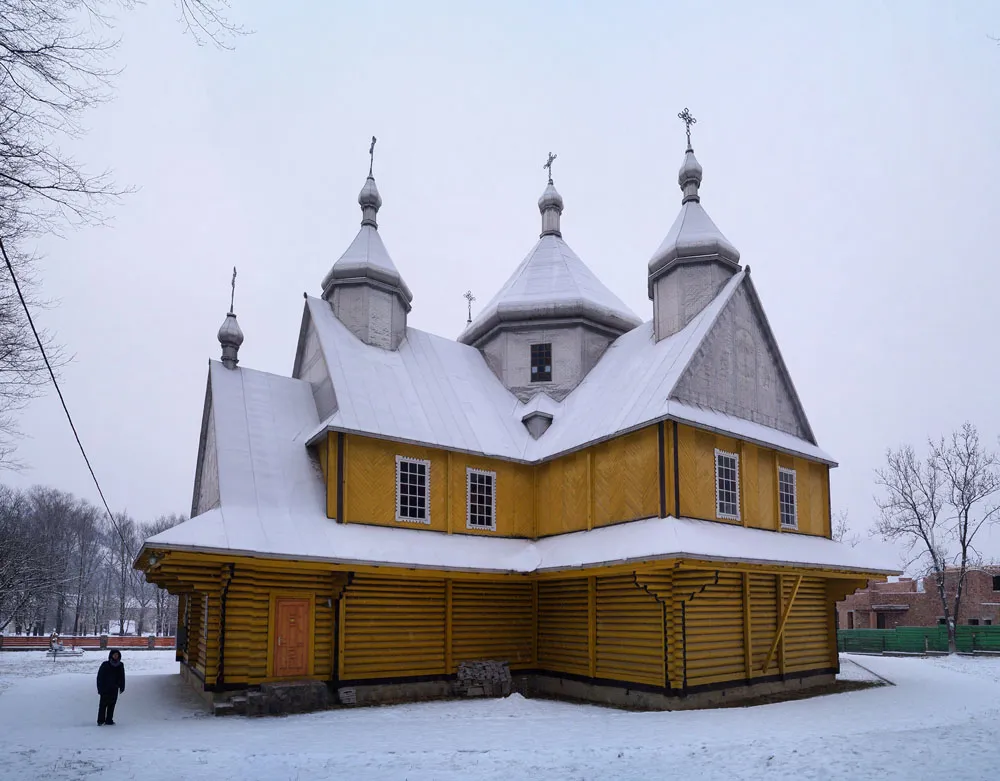
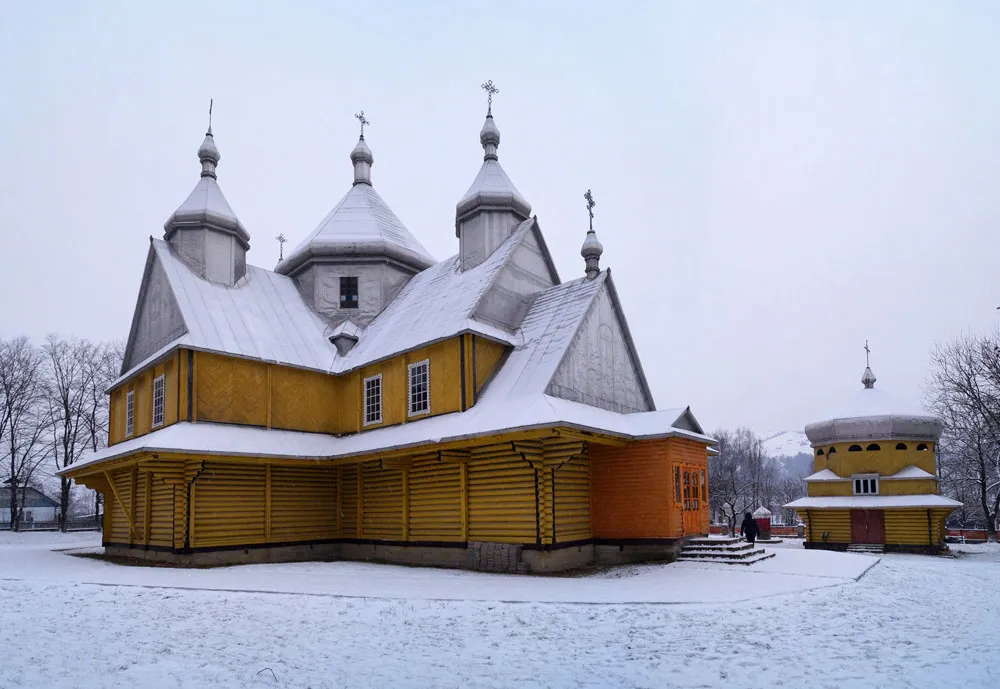
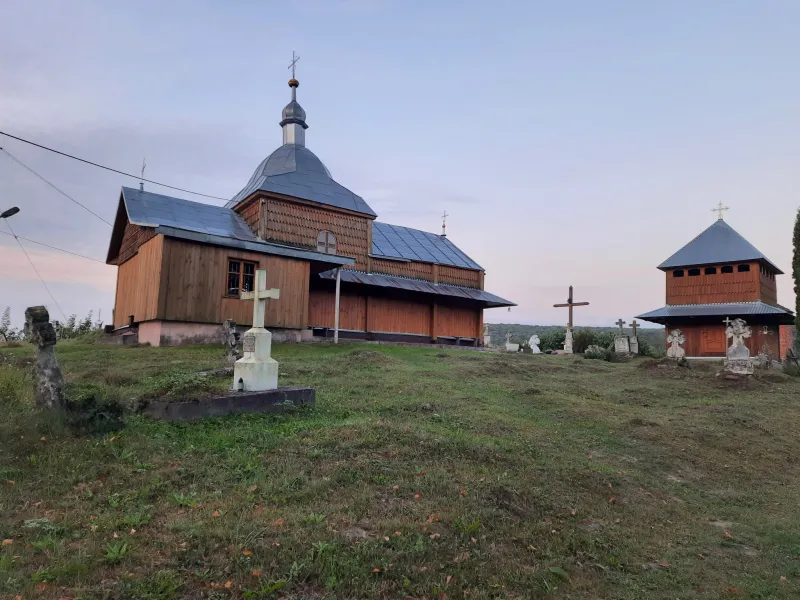
Church of the Dormition of the Holy Mother of God
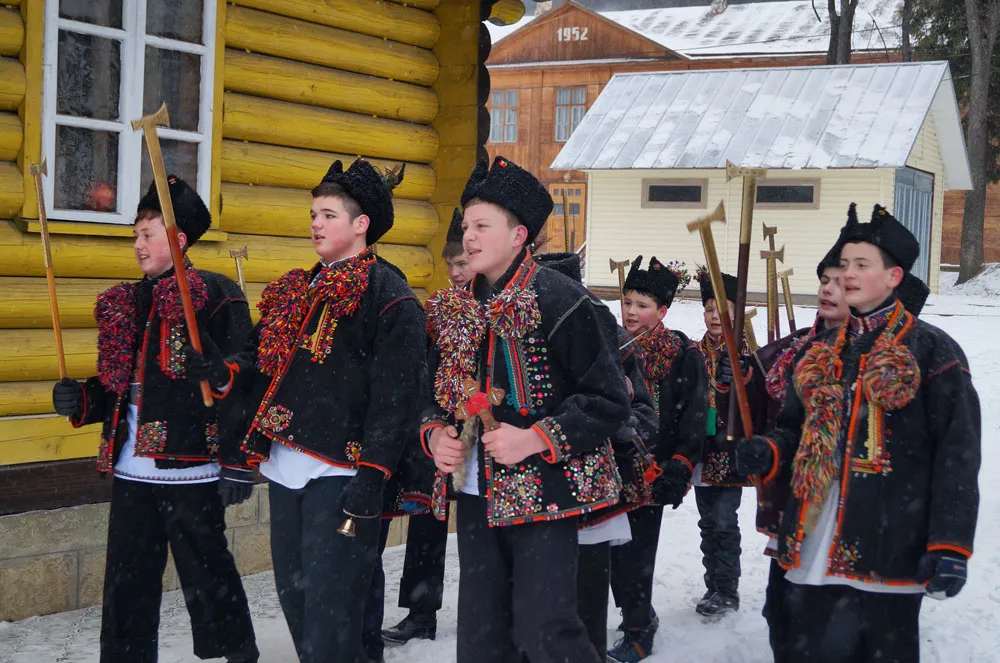
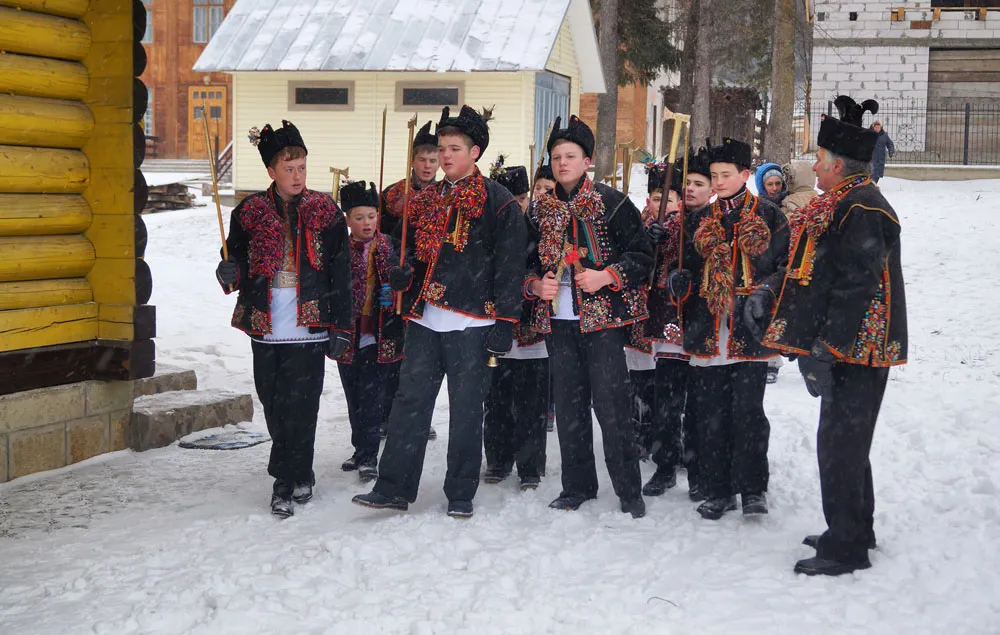
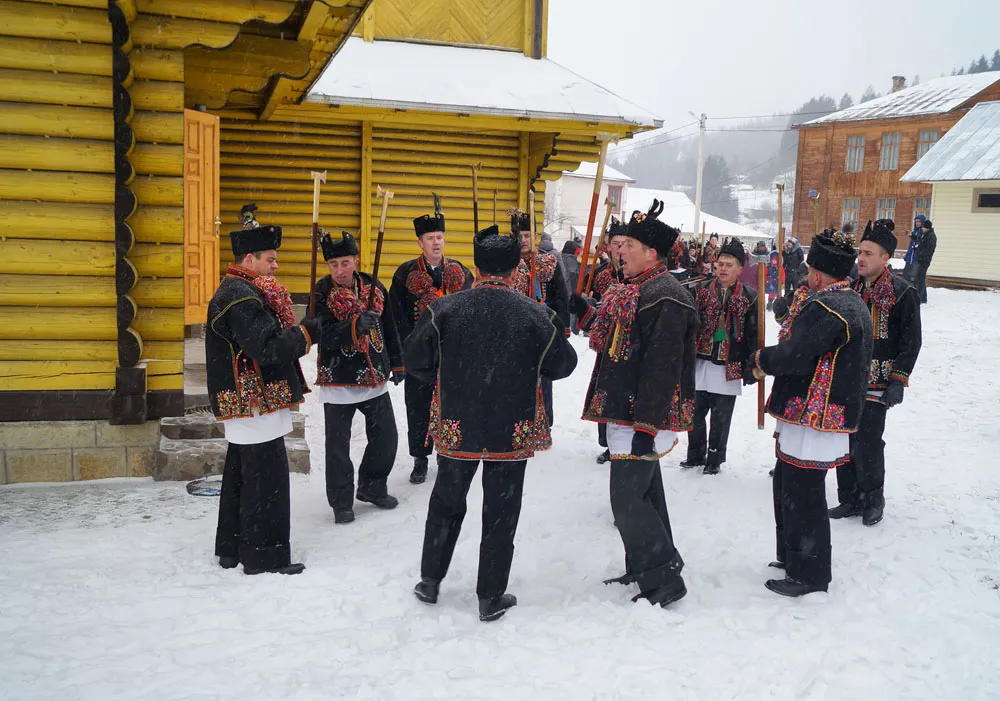
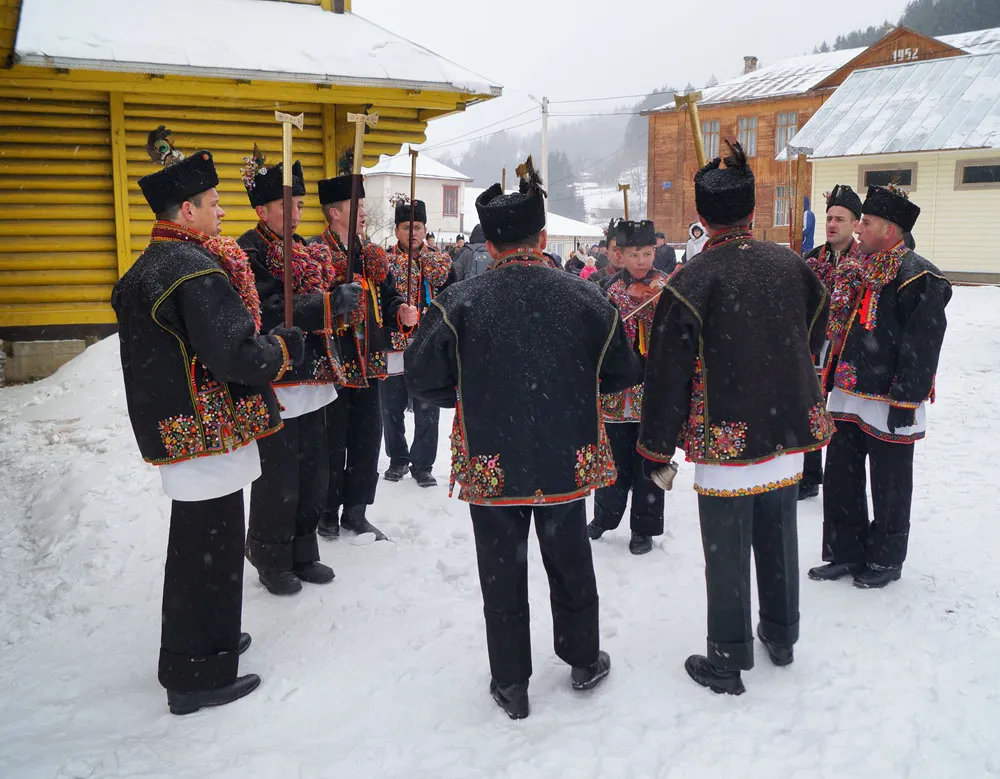
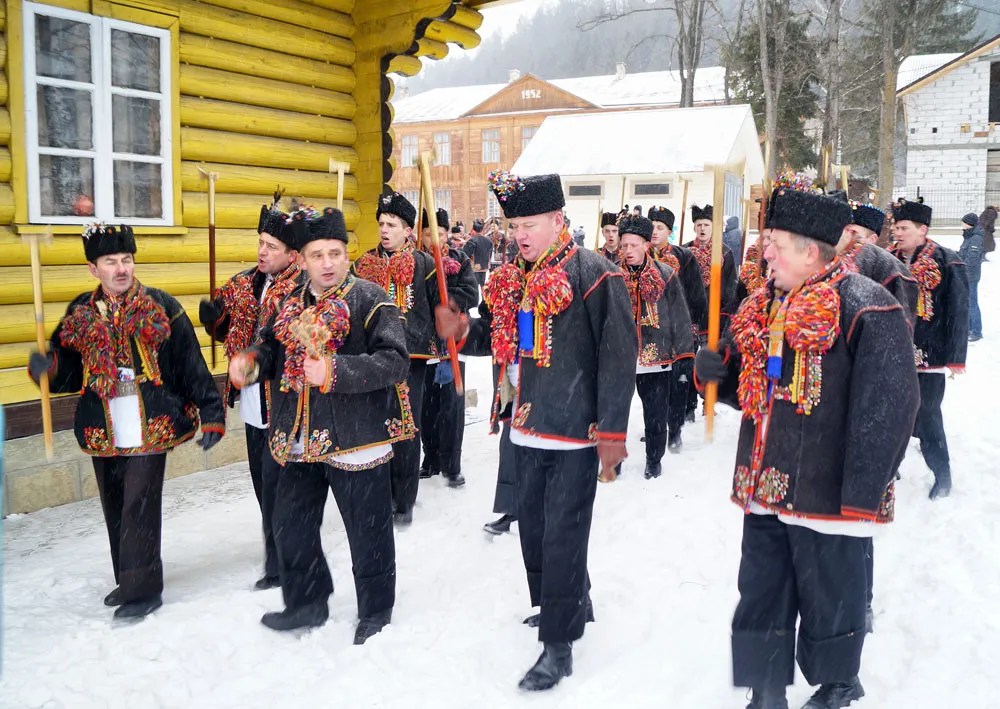
The best thing in Verkhovyna is the Hutsul koliada. You should go for it on 7 January: first to Verkhovyna, and then to Kryvorivnia, the main centre of the koliada. In Verkhovyna the koliada festival takes place near the Church of the Dormition of the Holy Mother of God. The church, built in the 18th century, is one of the oldest buildings in the settlement and a vivid example of Hutsul folk architecture. It is known that in 1944, on a hot summer day, the church in Verkhovyna that had been built in 1880 burned down. The Soviet authorities promoted atheism by all means, so a district Communist Party committee building was erected on the site of the burned church, and people went to pray in the neighbouring villages of Iltsi and Kryvorivnia.
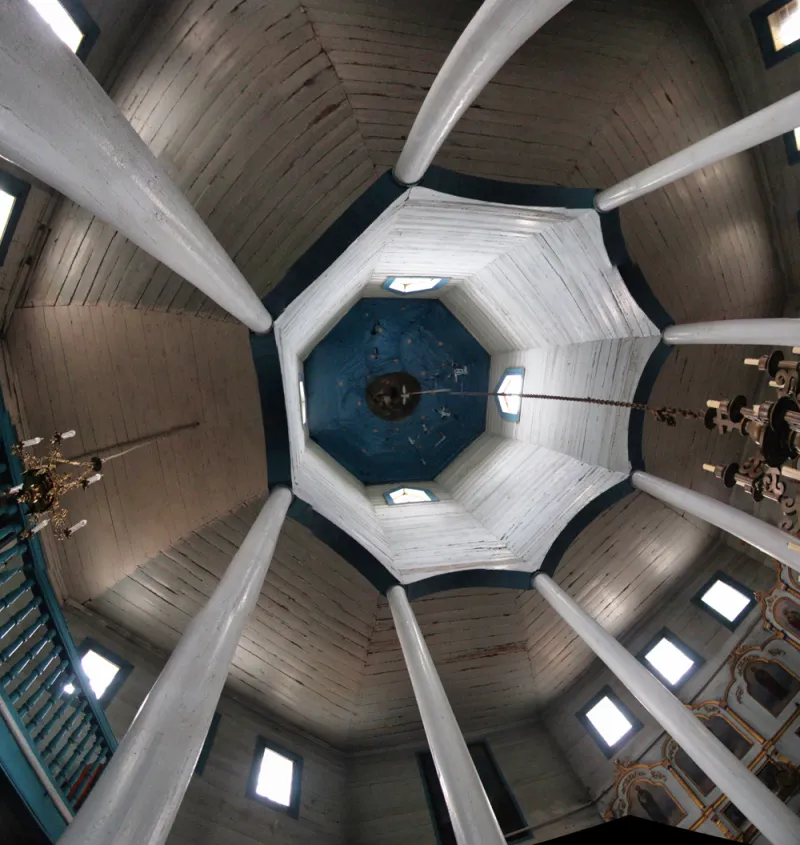
On all sides it is surrounded by a low fence of wood and stone. The carved gate, made of wood and echoing the architecture of the church, is crowned by a tall vaulted arch and three domes with crosses. The church building is rectangular, crowned with four domes ending in openwork silvery crosses. It is painted yellow. In all of Ukraine it is one of the largest wooden architectural structures. Source: Wikipedia
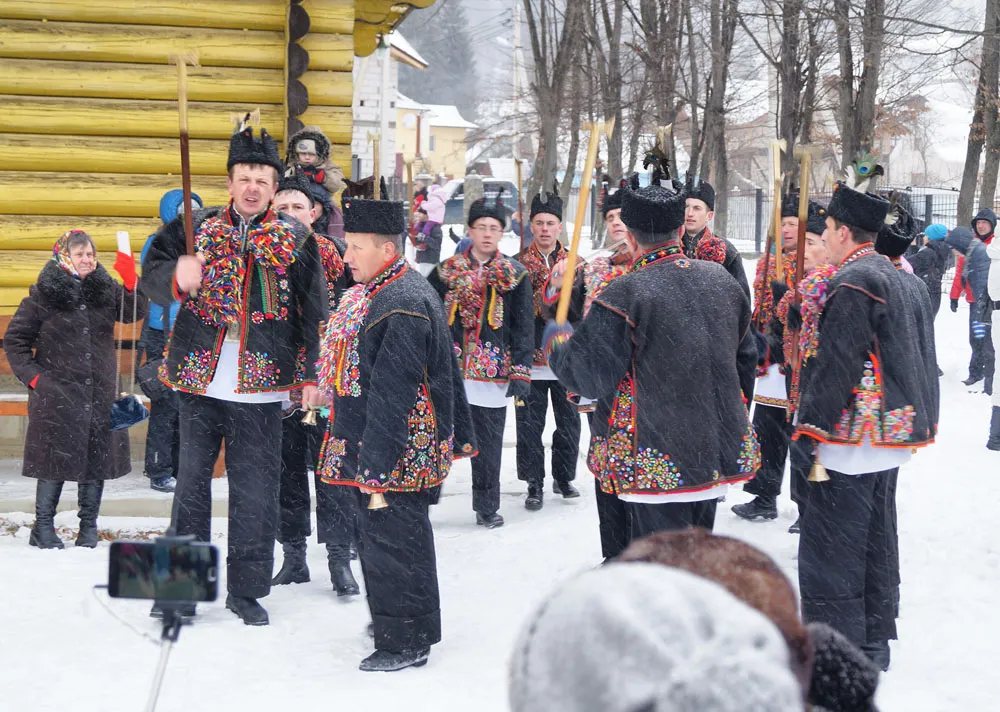
The Hutsul koliada is something special, and so many people gather for it that I would call it an ethnic and cultural festival. Next I give the text of Ukrinform:
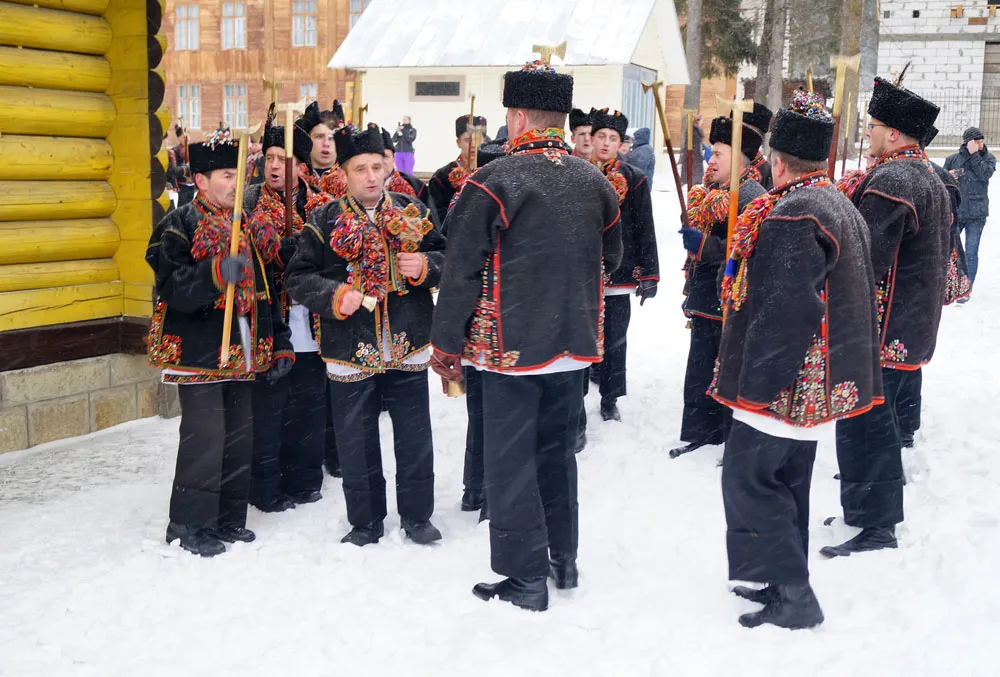
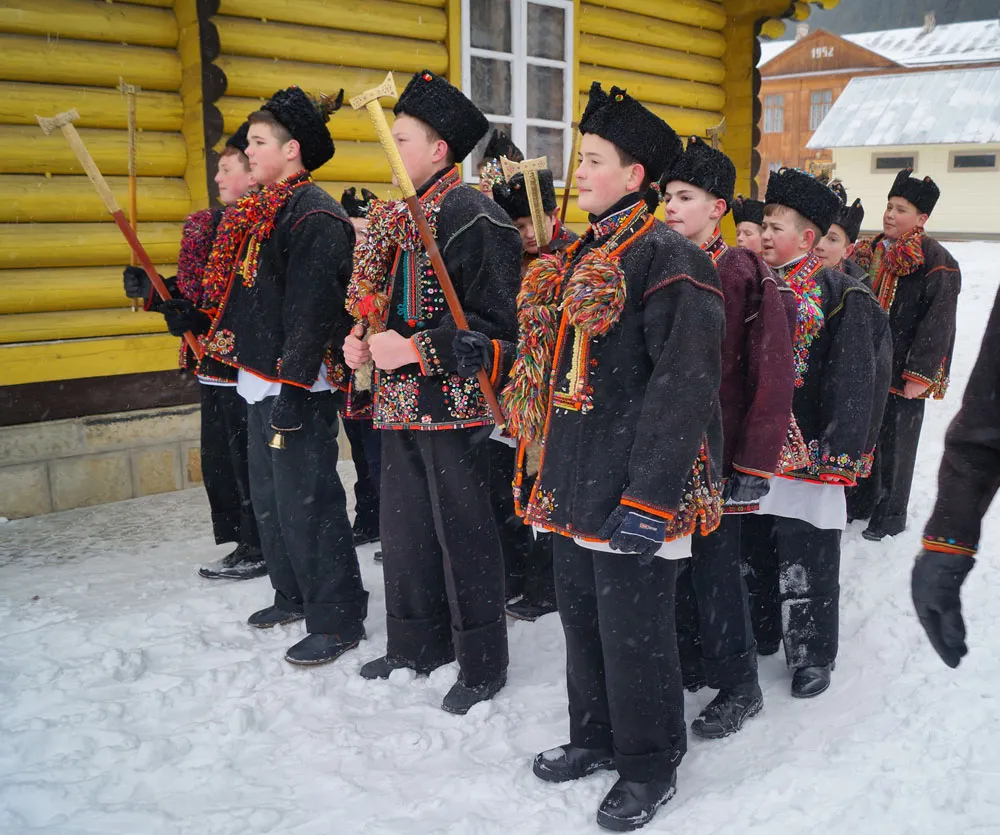
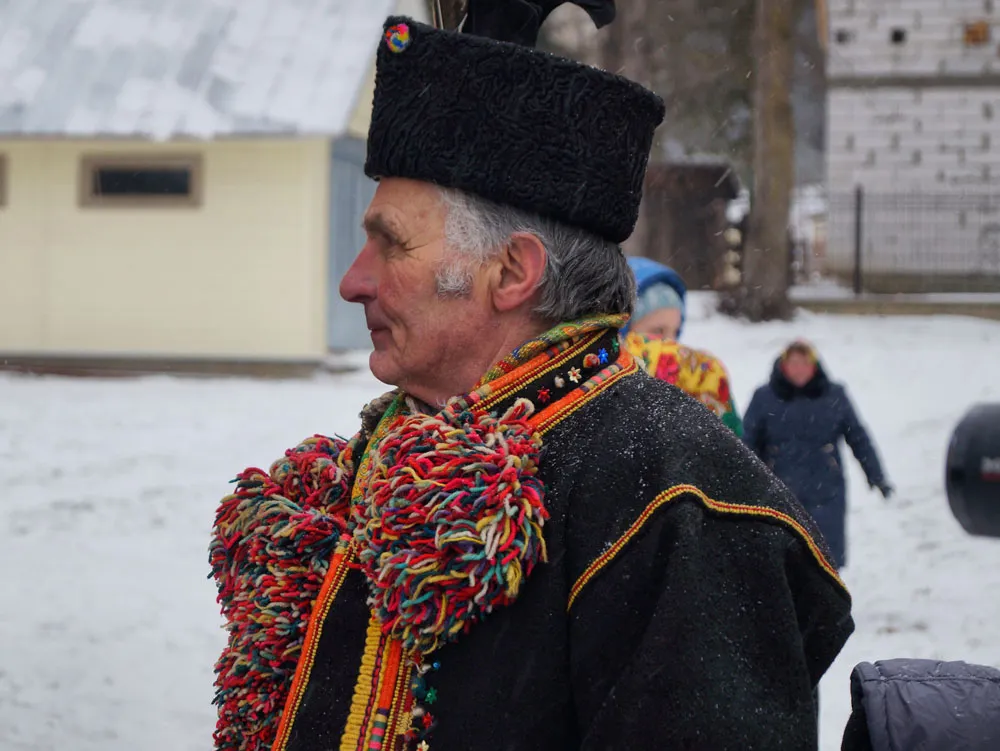
The caroling ritual in the Verkhovyna region begins on the second day of the Christmas holidays (8 January), when everyone gathers at the church. After the Divine Liturgy, men in festive traditional costumes come out into the churchyard. Most of them hold a “bartka” (a small axe with a bell tied to it by a strap) with a long wooden handle, and sheepskin hats with “tresunky” (decorations of beads and sequins). Some carry trembitas, horns and fiddles.
The men form groups (“camps”, “partyi”) of up to ten carolers. In front of each caroling “partyia” goes its leader, the “bereza”. He holds a wooden cross in his hands. The “bereza” is the most important person among all the carolers: he knows all the carols and “plesy” (ritual dances) flawlessly and is able to lead the koliada with dignity in accordance with ancient customary requirements.
The caroling “partyi” sing carols from Christmas until Yordan (Epiphany). On Epiphany (19 January) everyone gathers at the church for the “Rozples” (the end of the Christmas holidays, the farewell to the koliada); the caroling groups take turns singing one carol each, and the “Vybirtsia” (the treasurer) hands over the money collected from caroling for the needs of the church.
Before the Christmas holidays the “Bereza” gathers his caroling “partyia” to rehearse all the carols and greetings, and experienced participants hold master classes in the Hutsul ples (the dances that accompany the ritual) for young carolers who will take part in the ritual for the first time.
In this form the Hutsul koliada and plesy exist only in the villages of the Verkhovyna district and are not found in other districts.
Photos by Roman Malenkov