Stone beasts will tell about Jewish culture: an exhibition in Dnipro

· 6 min read
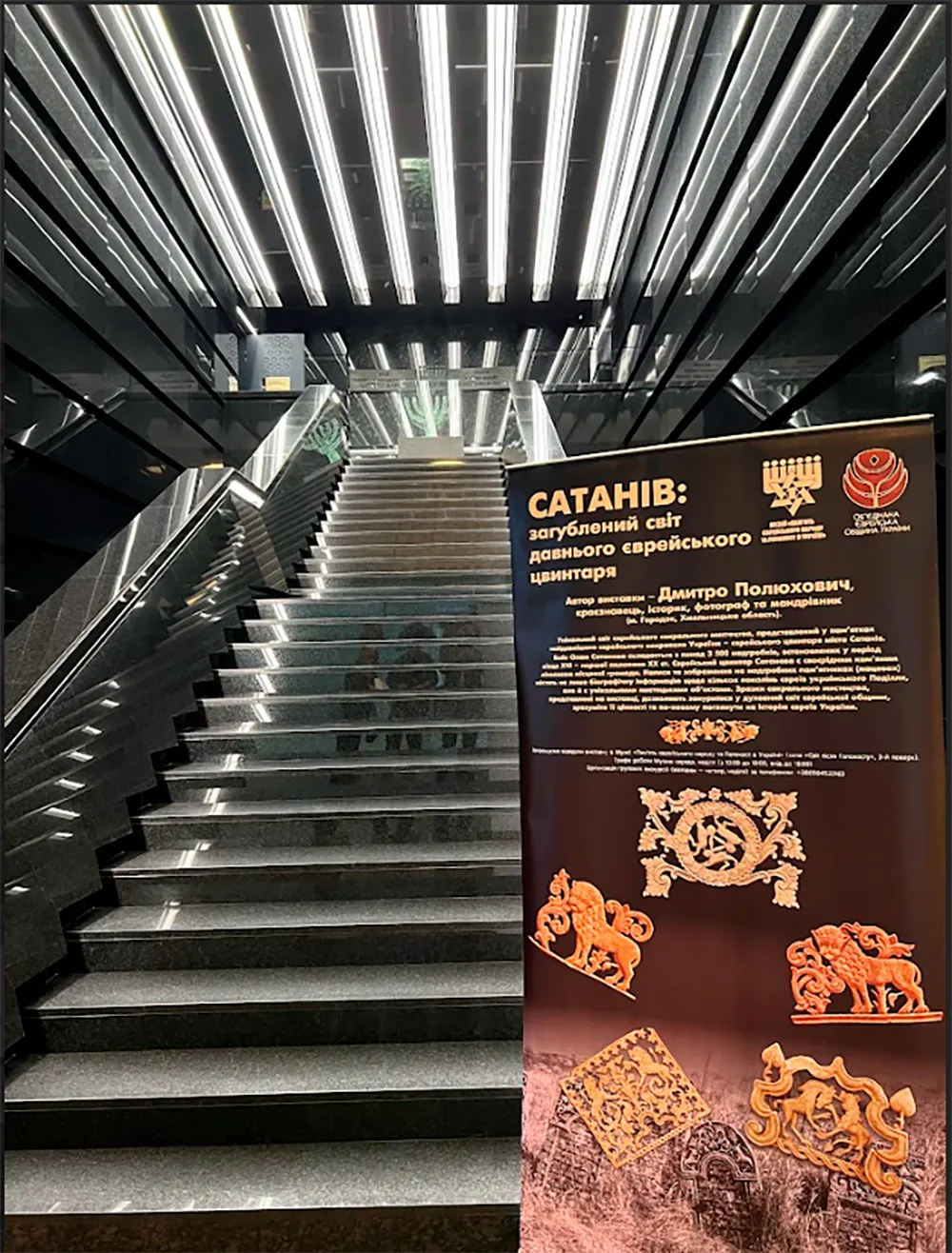
In Dnipro, at the largest Jewish museum in Ukraine and one of the largest such museums in Europe, the “Memory of the Jewish People and the Holocaust in Ukraine” museum, the exhibition “Sataniv: the lost world of an ancient Jewish cemetery” has opened with the support of the United Jewish Community of Ukraine. Its official opening took place on 25 January as part of a ceremony for International Holocaust Remembrance Day.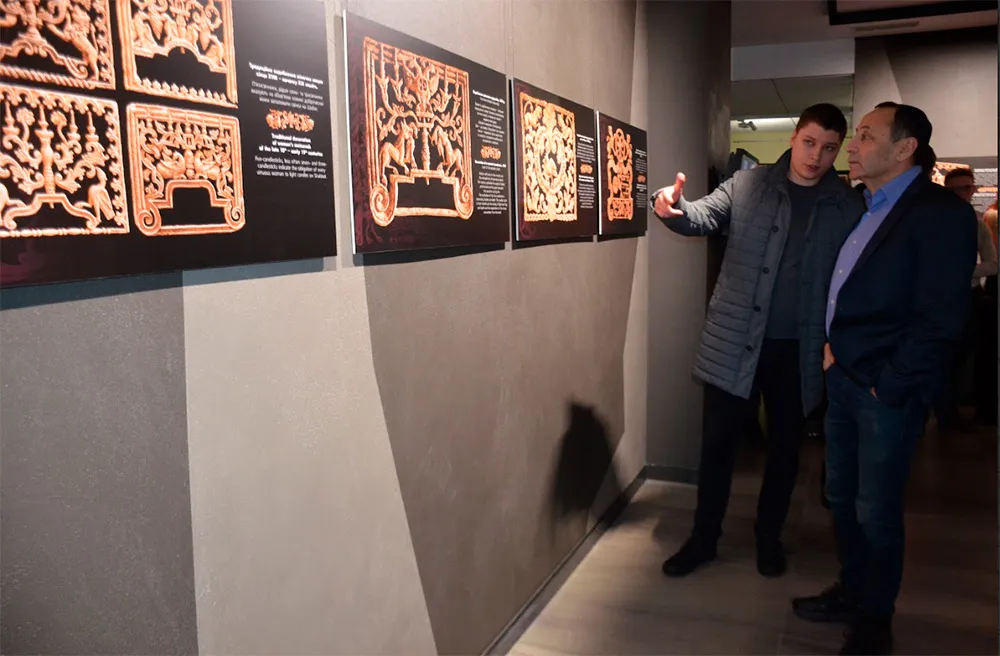
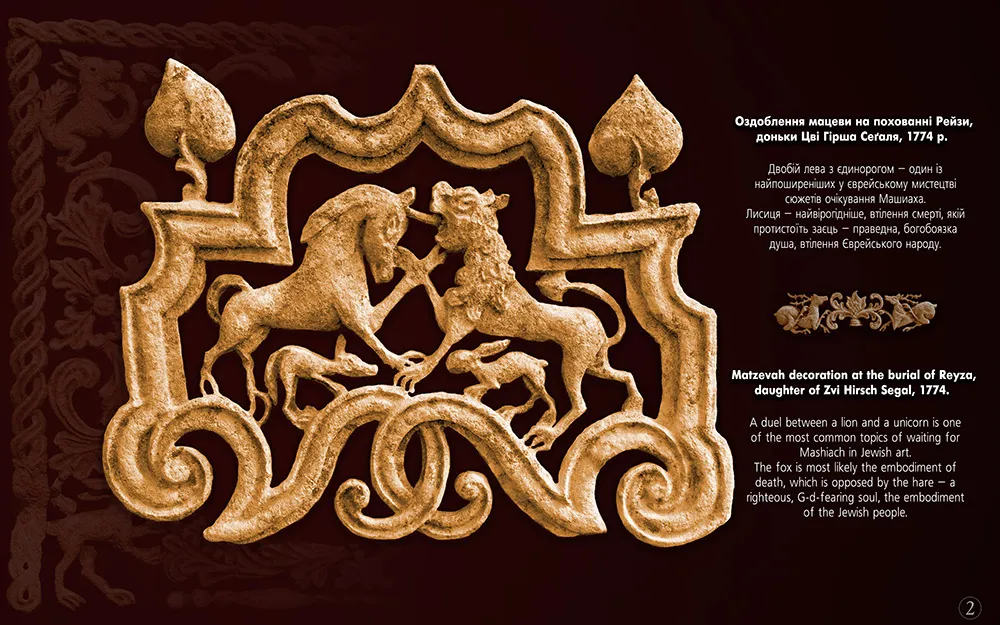
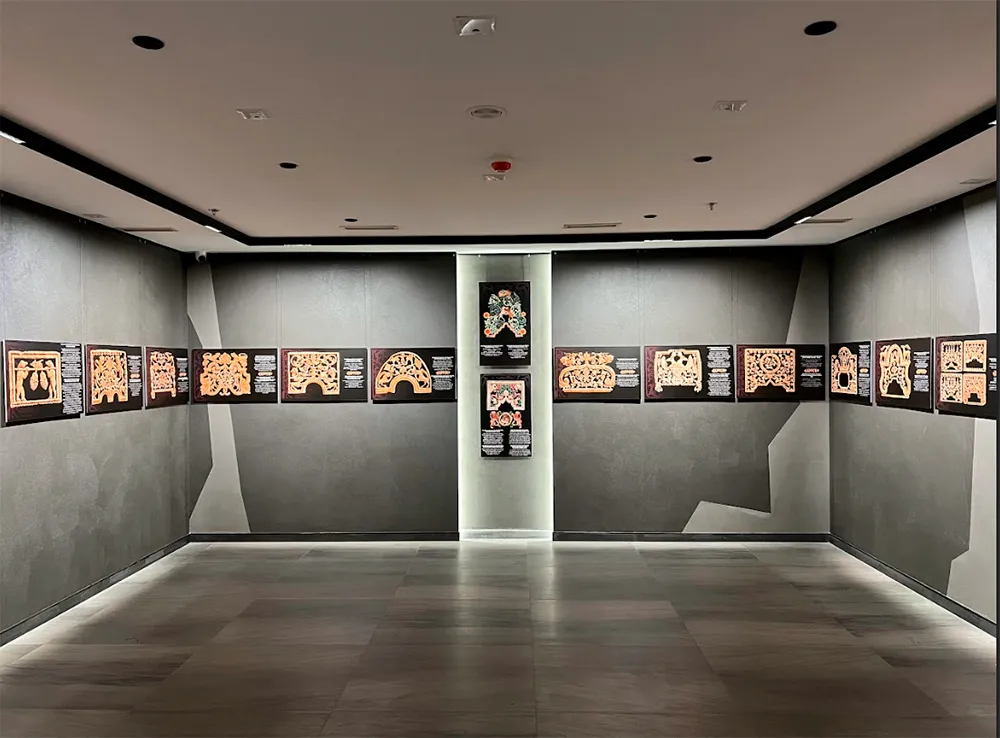
The author of the exhibition is a member of the “Ukraine Incognita” team, the well-known Podillia local historian, traveller and photographer Dmytro Poliukhovych. It presents 25 panels with his works, which he calls “vytynanky” (cut-outs).
The author explains where the name came from as follows:
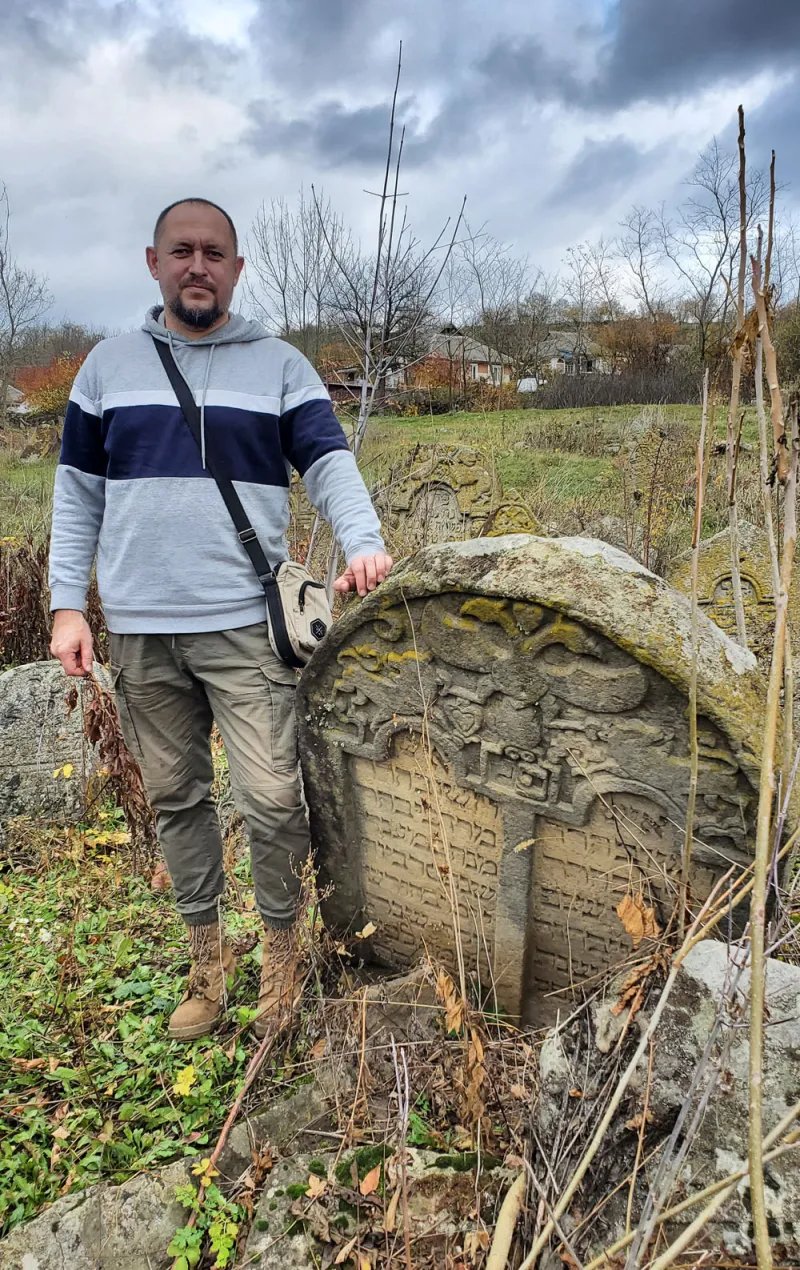
“I have always been fascinated by the carving on ancient Jewish gravestones, especially those dated from the late 17th to the early 19th century. This is the time of the peak of the development of carving among Jews. After that, sadly, comes degradation. Which is no surprise. It is connected with the rapid decline of Jewish shtetls and, accordingly, of culture and art, which began after Russian rule spread over the territory of Right-Bank Ukraine in general and Podillia in particular,” Mr Dmytro remarks. “It is quite difficult to show the whole beauty of the old masters’ works in ordinary photographs: patches of moss, lichen, weathering and so on get in the way. So I came up with my own know-how: remove everything superfluous, that is, cut out the background completely. As a result you get a self-sufficient work of art.”
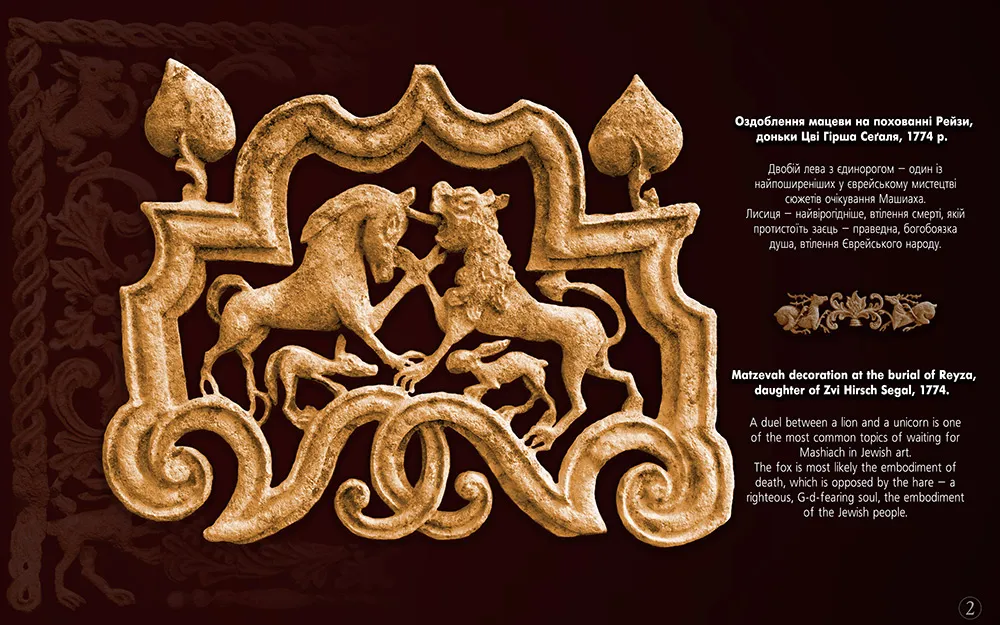
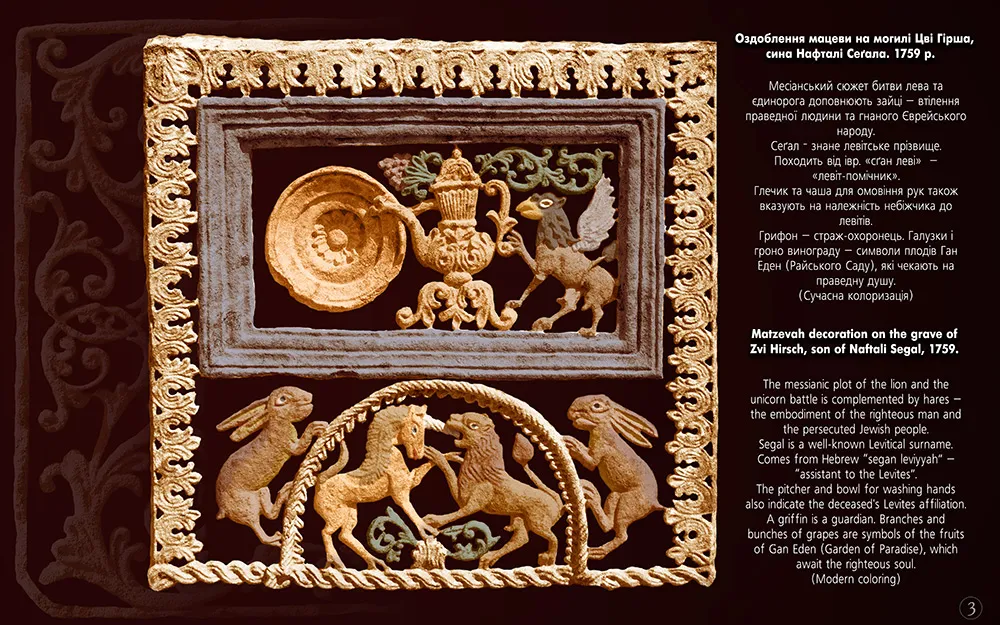
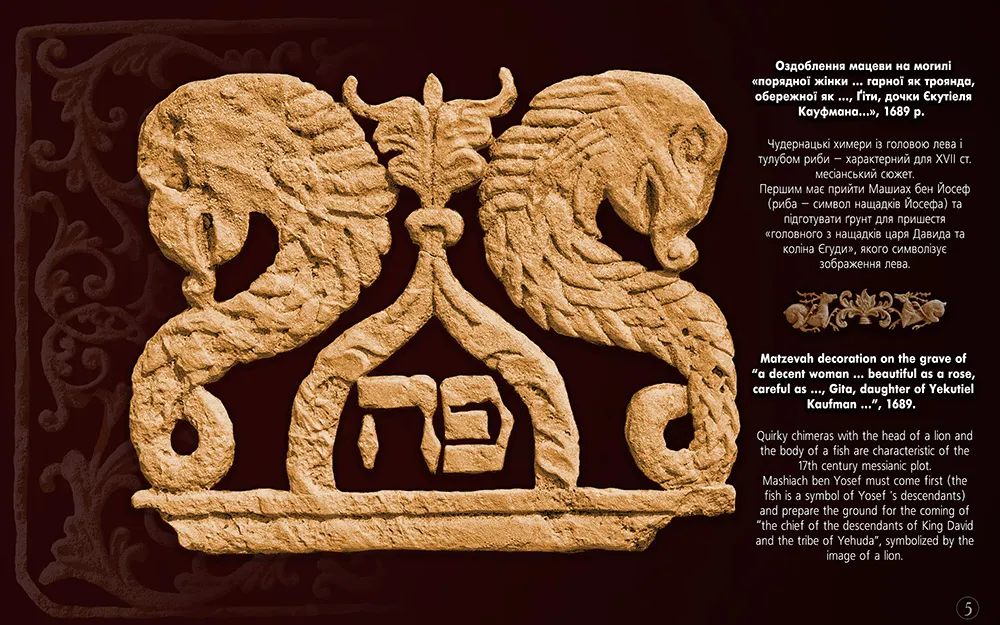
(Samples of the works)
Work on each “vytynanka” begins with photographing the “base”, which is not simple either:
“Quite often, before taking a photograph, you need to clean the matzevah nicely, because the overgrowth can be very considerable,” the local historian shares the process of creating the “vytynanky”. “And this can take up to an hour. First the moss is scraped off with a wooden splinter, then everything is thoroughly cleaned and washed with a soft brush… You can, of course, act radically and use a wire brush. Ten minutes would be enough then. But a wire brush on the very delicate carving of the 17th–18th centuries is vandalism!”.
Selecting the subject itself is not easy either. There are hundreds of interesting matzevot in Sataniv, but one cannot embrace the unembraceable, so one has to settle on the most valuable. Expeditions within the “Ancestors’ Graves” project helped with this, a joint project of the NGO “Ukraine Incognita” and the department of culture, nationalities, religions and tourism of the Horodok city council, with the support of Horodok mayor Neonila Andriichuk. The project involves research into old necropolises of the historical Horodok region (Ukrainian, Polish and Jewish), the aim of which is to study and show the bright, multinational culture of Podillia. We note that although today Sataniv does not belong to the Horodok community, it very much belongs to the historical Horodok region.
The bas-reliefs that are to become a “vytynanka” are chosen by two criteria. The first is artistic. The second is how interesting the subject is.
Here, we note, we have yet another huge layer of the traditional art of the Jews of Ukraine.
The religious beliefs of Ashkenazi Jews forbade depicting people. So the story of the deceased and of his future in the Better World, and the hope of resurrection from the dead, were “encrypted” in plant ornaments and zoomorphic images.
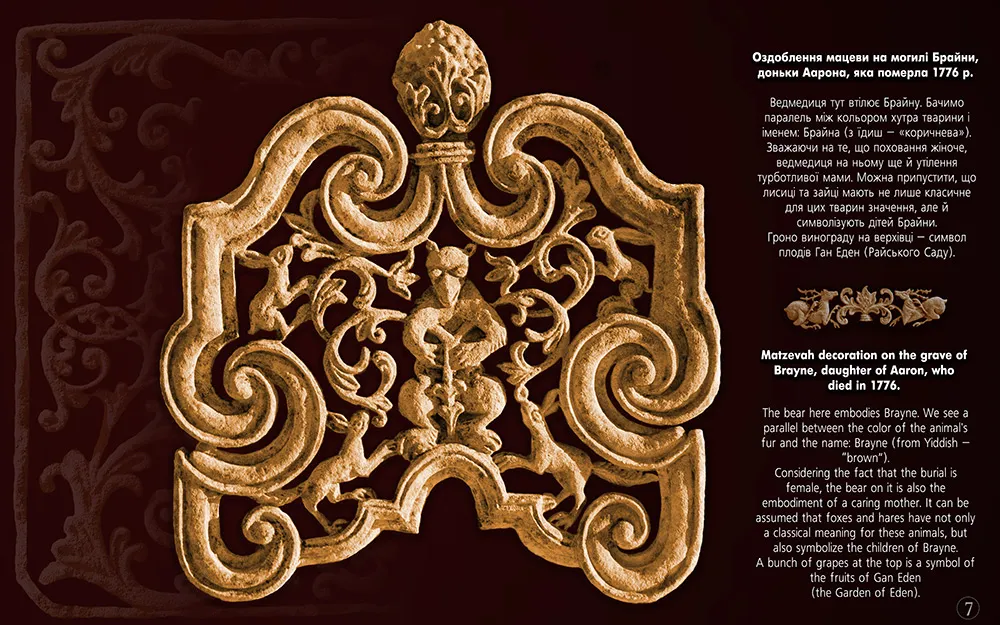
Almost every such image is an illustration of the sacred texts of the Torah and the Talmud. However, “extra-textual” subjects also occur. For example, the main element of a very beautiful Baroque gravestone on the burial of Brayna, daughter of Aaron, who died in 1776, is a she-bear with twigs in her paws. Here we see not only an illustration of the psalms of King David, which say: “The righteous shall flourish like the palm tree: he shall grow like a cedar in Lebanon” (the popular subject of a bear with twigs is that righteous man in the Garden of Eden). In this subject the master also played on the name of the deceased: Brayna is a literal translation from Yiddish of “brown”. We see a parallel between the name of the woman buried and the brown fur of the bear.
Visitors to the exhibition will accordingly not only become acquainted with the traditional folk art of the Jews but also learn about the information codes encrypted in all these images. Stone lions, bears, deer, foxes, wolves, hares, squirrels and various birds have a great deal to tell.
It is worth stressing that the exhibition is not only about necropolis studies but about all traditional Jewish folk art in general. Its pinnacle was the painted decoration of the wooden synagogues of the 17th–18th centuries. Unfortunately, after the communists and the Nazis, only old photographs and a few modern reconstructions remain of them.
But nothing disappears without a trace. In decorating matzevot, the old masters carefully reproduced in the gravestone decoration the subjects and rich plant ornaments from the walls of the now vanished synagogues. It is also likely that the stone carvers and the artists who painted the synagogues used the same “patterns”, special albums with ready-made samples.
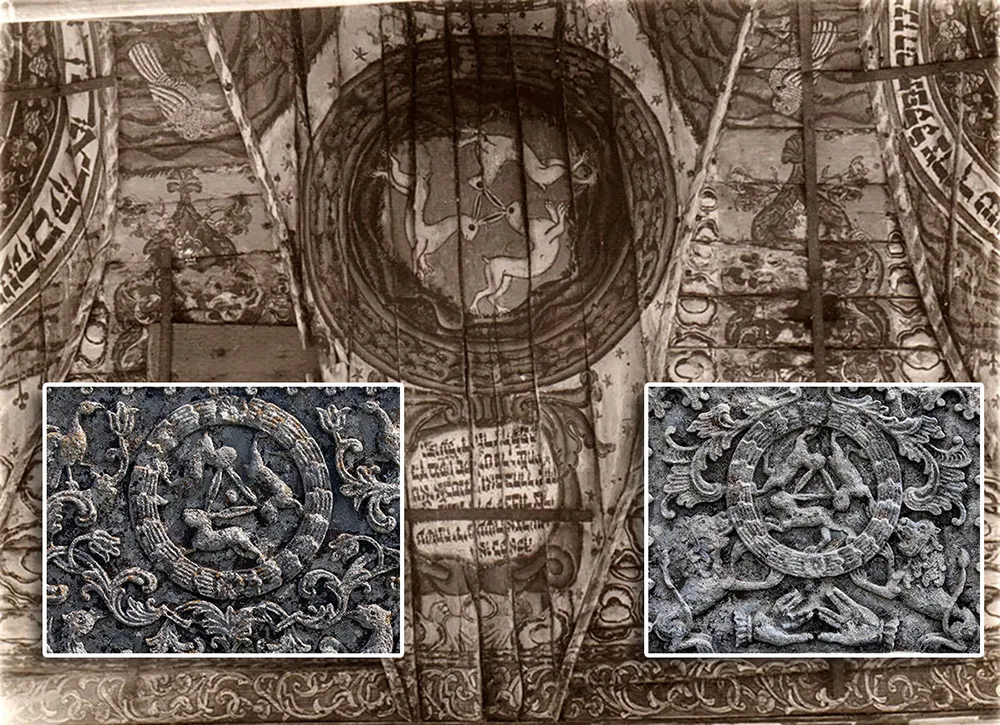
Parallels between the painted decoration of the synagogue in Smotrych (photo by P. Zholtovskyi) and the decoration of gravestones in Sataniv.
The idea of holding the exhibition arose thanks to Vitalii Kamozin, operating director of the United Jewish Community of Ukraine, who, having become acquainted with the “vytynanky”, proposed showing them to people more widely than in photos on social networks. He, together with Gene bat Suri Horodetska, became a patron of the exhibition; printing the panels, we note, is not cheap.
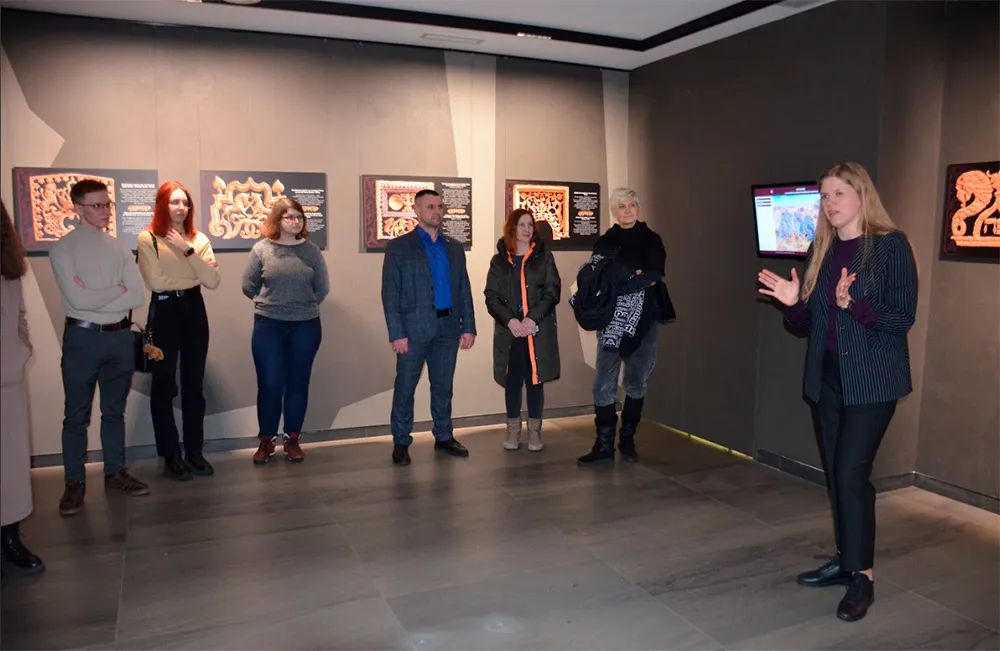
The exhibition will be open every Wednesday and Sunday from 10:00 to 19:00. Group tours can also be arranged every Tuesday, Thursday and Sunday.
The exhibition will be on at the “Memory of the Jewish People and the Holocaust in Ukraine” Museum until early March. After that it will travel to Odesa and then to Kyiv. Showing it outside Ukraine is not ruled out either.
“We should not forget that the traditional art of Ukrainian Jews is an integral part of the common culture and history of Ukraine,” sums up the exhibition’s author Dmytro Poliukhovych. “All the more so because throughout history there has been active mutual cultural exchange. And this bright and very interesting page must be studied and preserved. This is also our cultural heritage and it needs to be known. In preparing the event I was oriented first of all towards Ukrainians, so that they would learn more about the culture and traditional art of a people who have lived next to us for over a thousand years”.
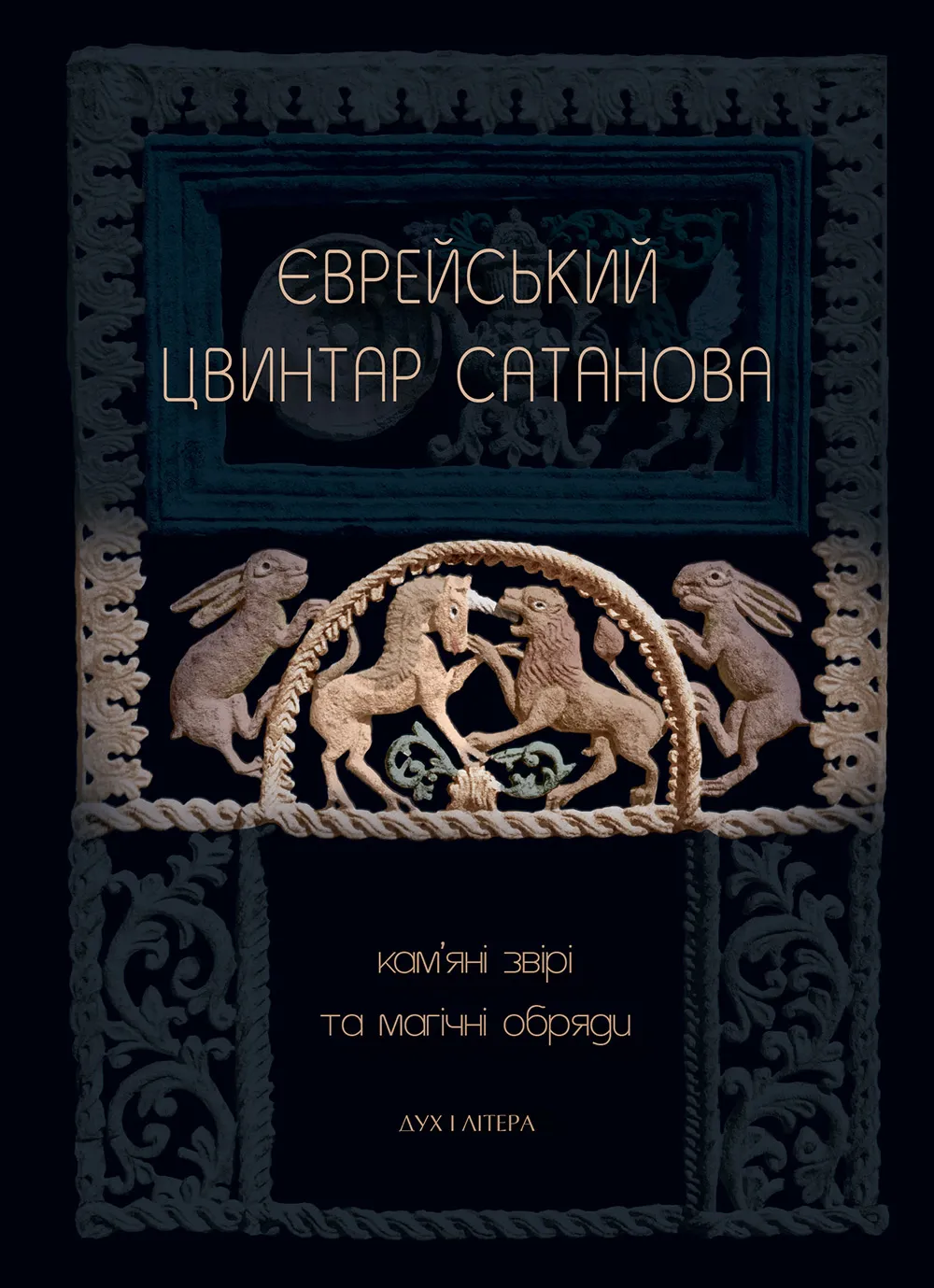
(Cover design)
P.S. You will be able to read in more detail about the history of the Jewish necropolis of Sataniv, where the oldest burials date back to the 16th century, about the symbolism of the ancient bas-reliefs and much more, in Dmytro Poliukhovych’s large study “The Jewish Cemetery of Sataniv. Stone Beasts and Magical Rites”, which will soon be published by the publishing house “Dukh i Litera”.
Photos by the “Memory of the Jewish People and the Holocaust in Ukraine” Museum and Dmytro Poliukhovych