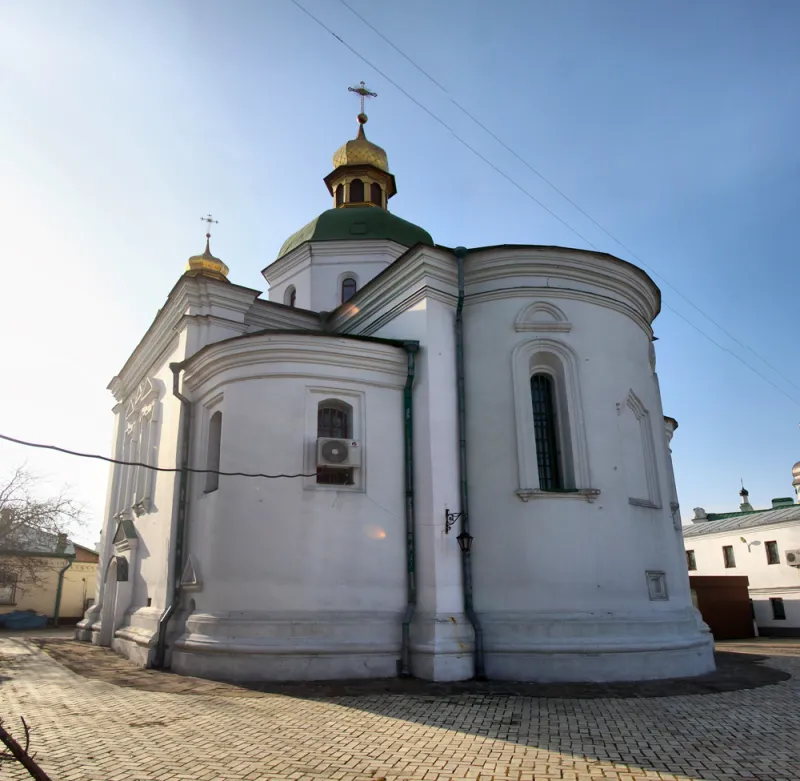
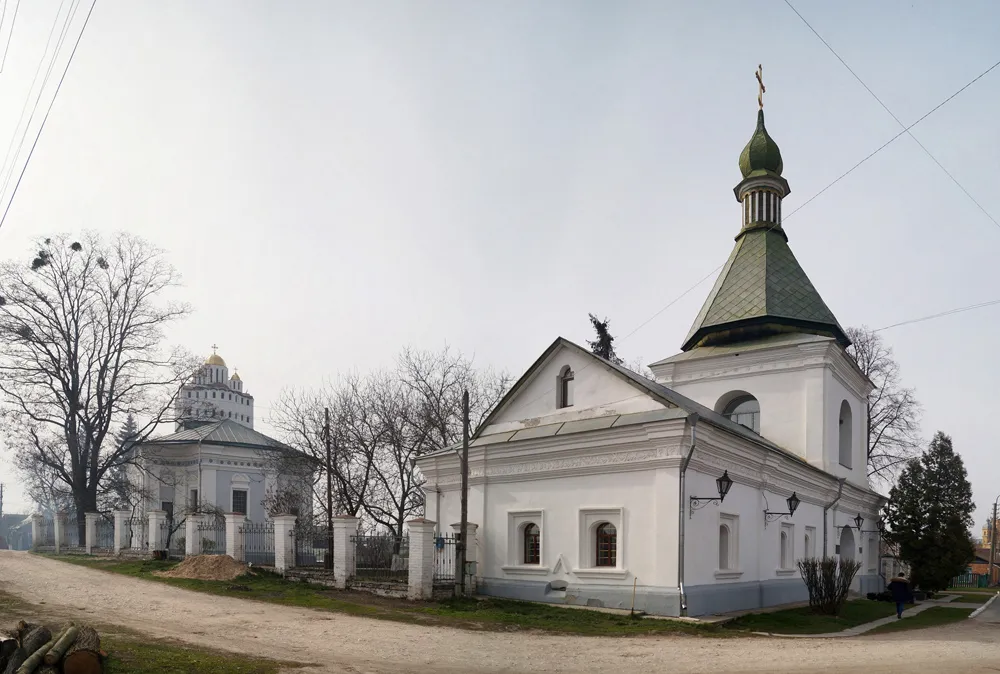
Pereiaslav. St. Michael’s Monastery: church and bell tower
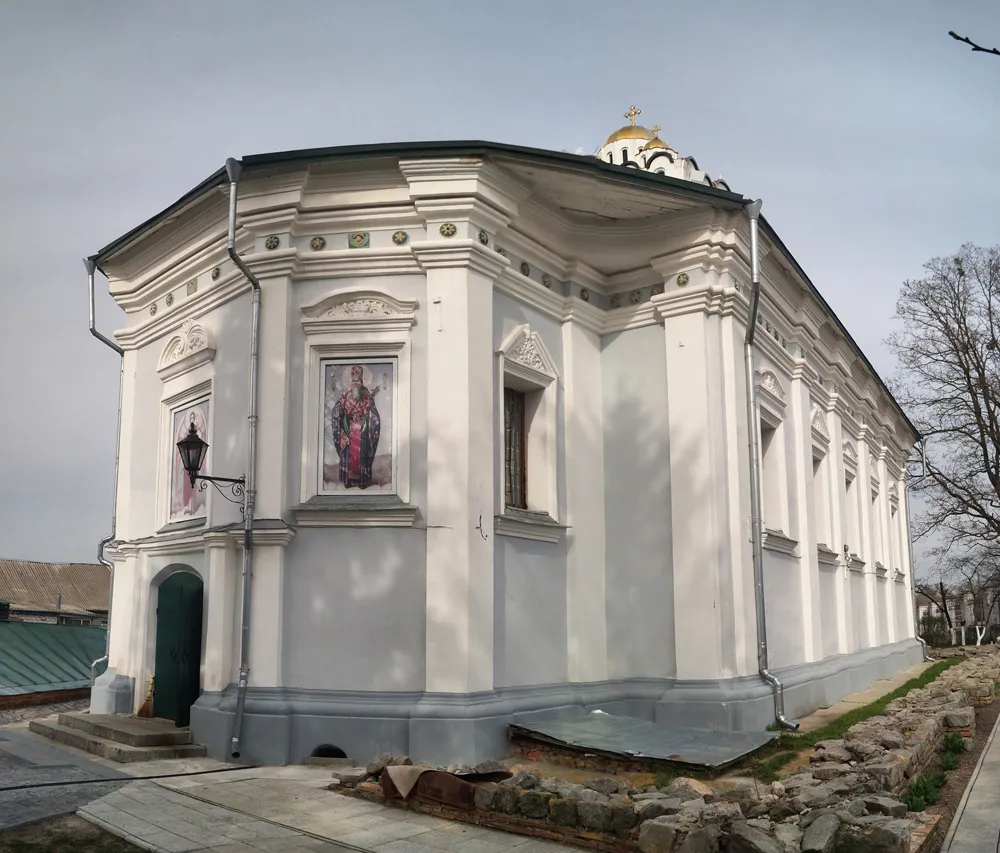
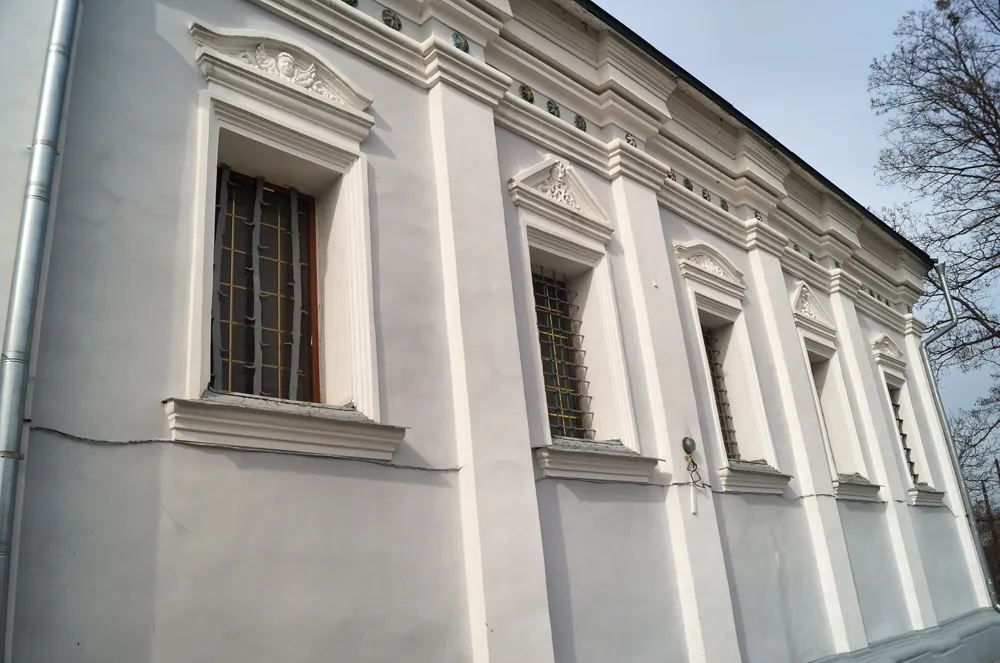
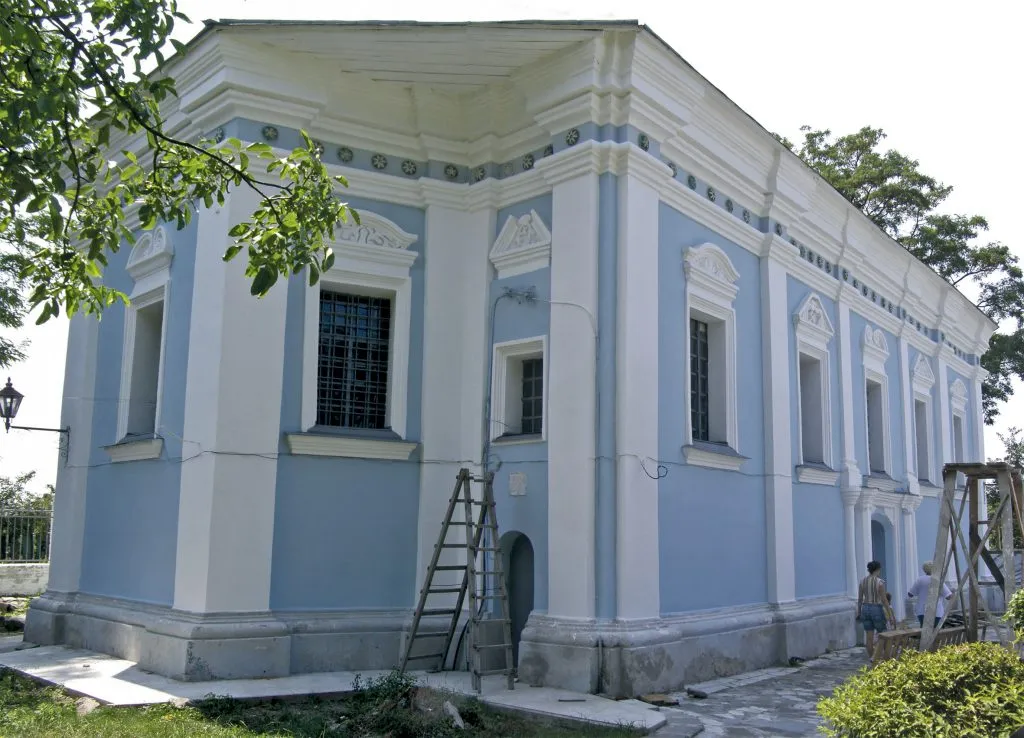
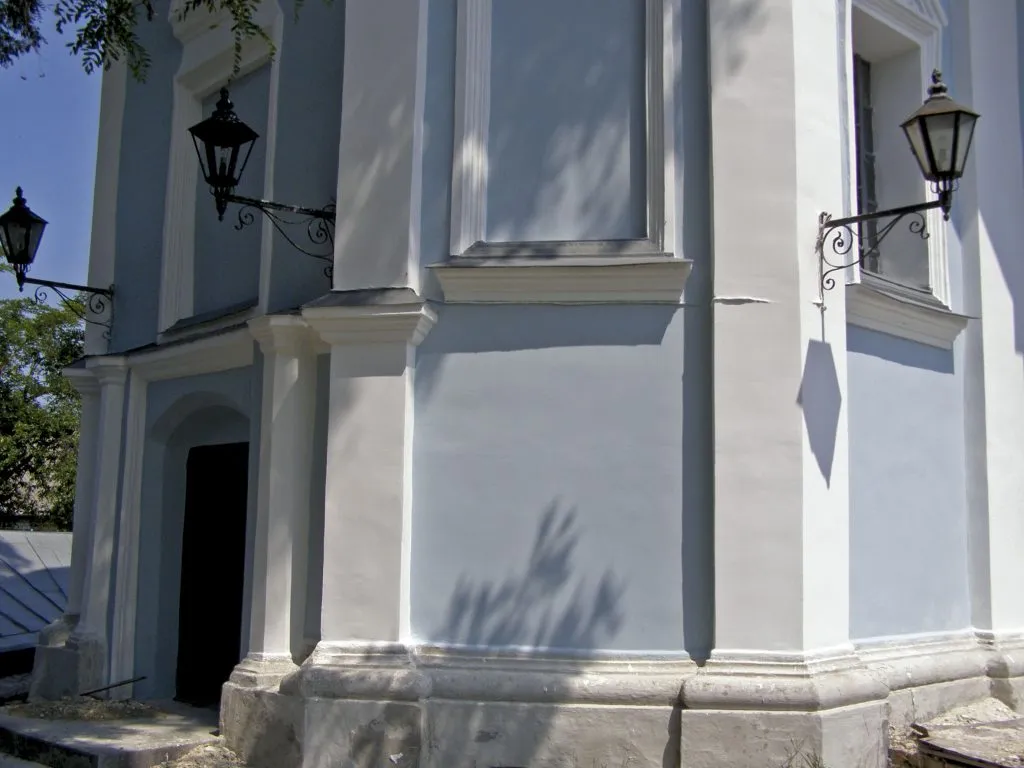
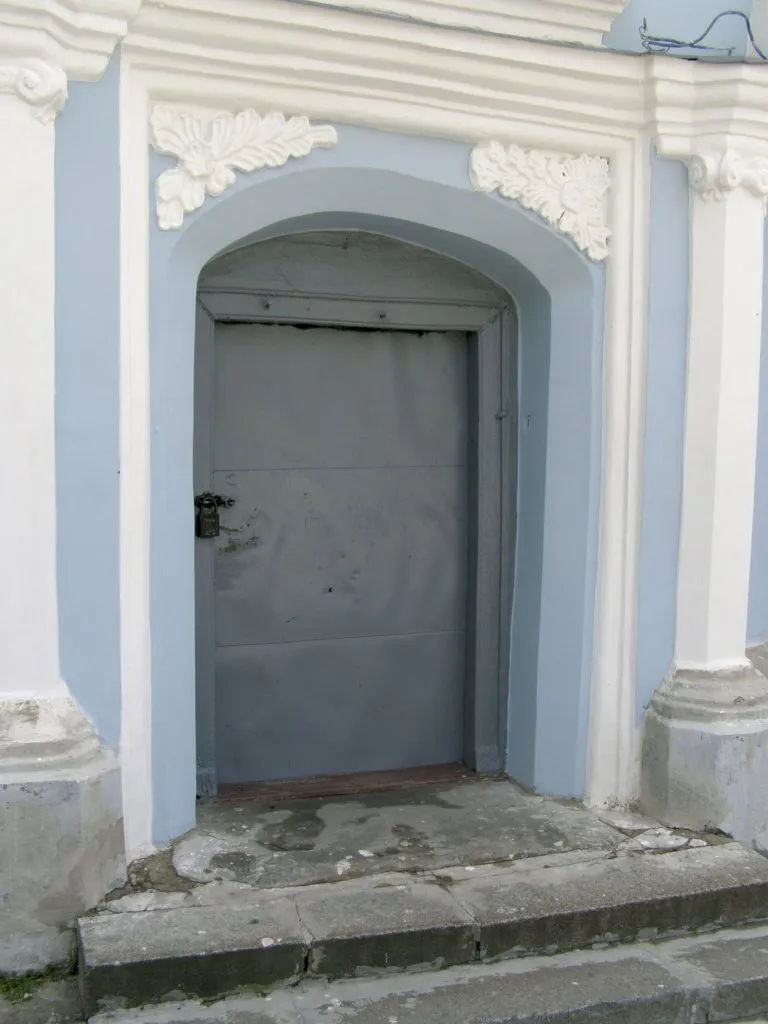
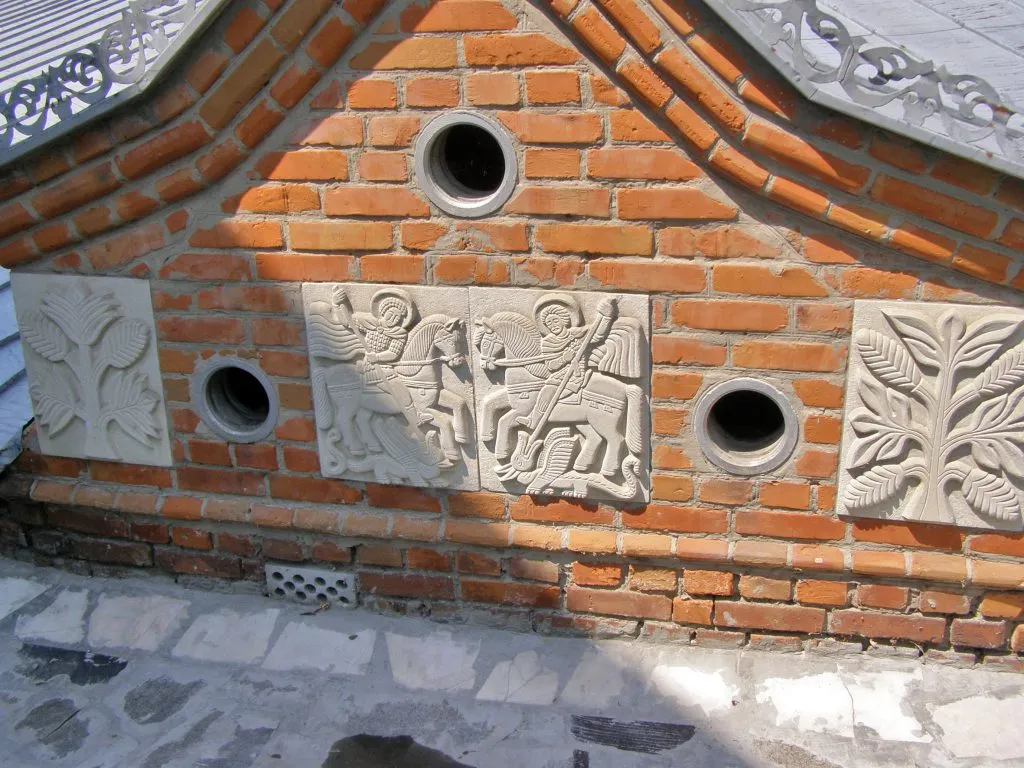
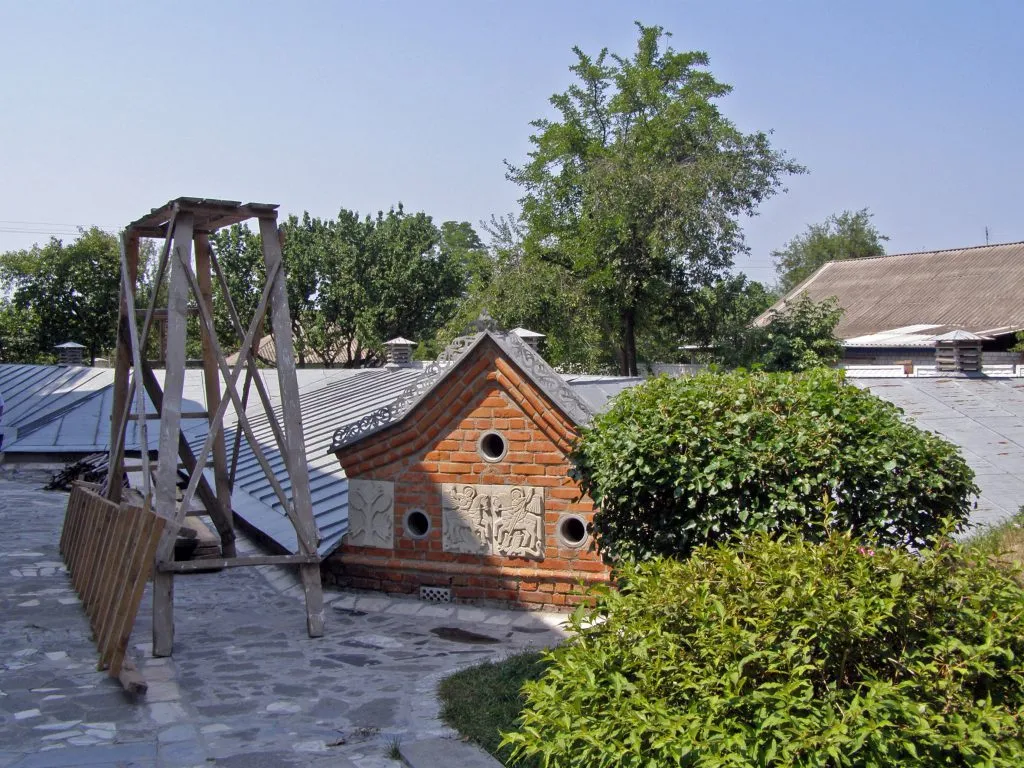
The oldest building in Pereiaslav is the Church of St. Michael. It stands not far from the Pereiaslav Council Square (34 Mykhaila Sikorskoho Street). The church was founded in 1646. A significant part of the funds for its construction was provided by Colonel Fedir Loboda. The church was restored and renovated in 1719 and again after a fire in 1734. At the beginning of the 19th century the stone vault collapsed. It was not rebuilt, and in 1823 it was replaced with a wooden roof. It was then that the Church of St. Michael came to look like a large decorated house, with facades adorned with pilasters and coloured glazed rosettes, cherub heads and relief ornamental inscriptions. During the Second World War the church was badly damaged. It was restored in 1951–53 following a drawing by Taras Shevchenko. In the Soviet period the church building housed the exhibitions of the Museum of Folk Costume.
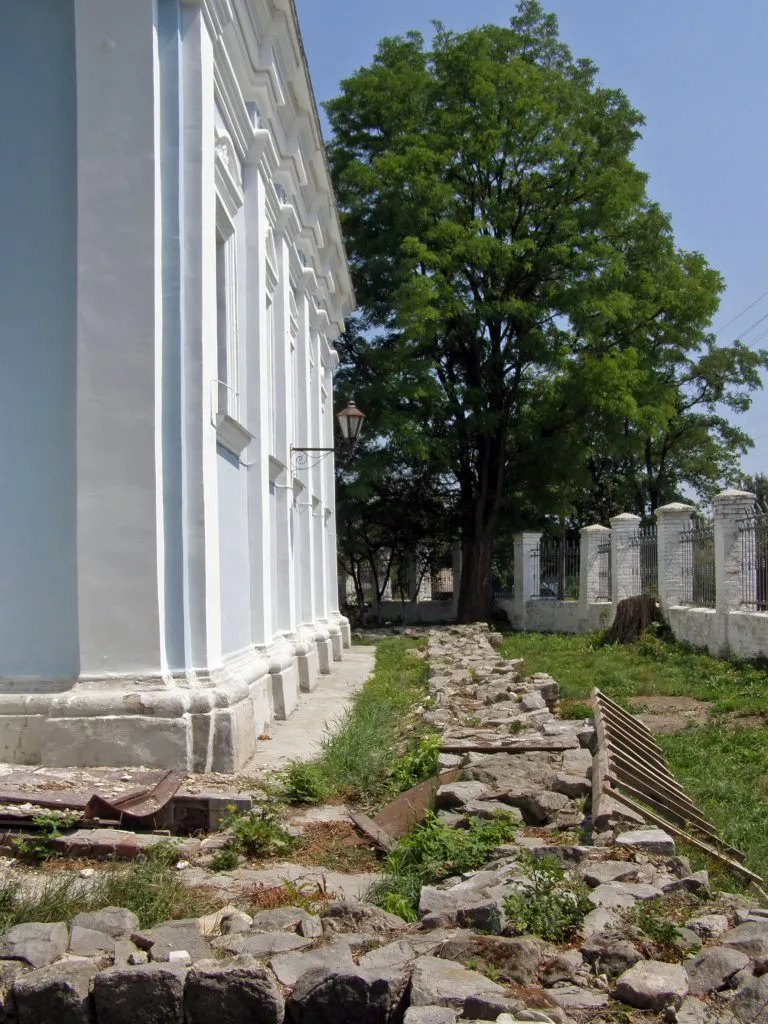
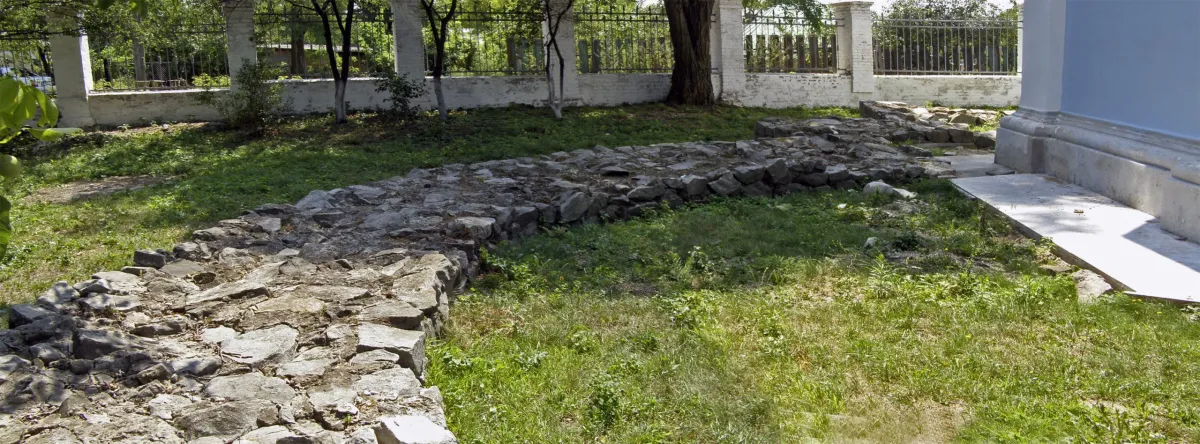
The Church of St. Michael was built over the foundation of the large five-domed Cathedral of St. Michael, which stood in the centre of the detinets. This structure, dated to the second half of the 11th century, is repeatedly mentioned in the chronicles as one of the grandest churches of Kyivan Rus’. Pereiaslav princes were buried in it. The foundation and remains of the walls of the cathedral, destroyed by the Tatar-Mongols, were excavated in 1949–53. And in 1982 a pavilion was erected over the north-western part of the foundation, housing the Museum of Architecture of Pereiaslav in the Kyivan Rus’ period.
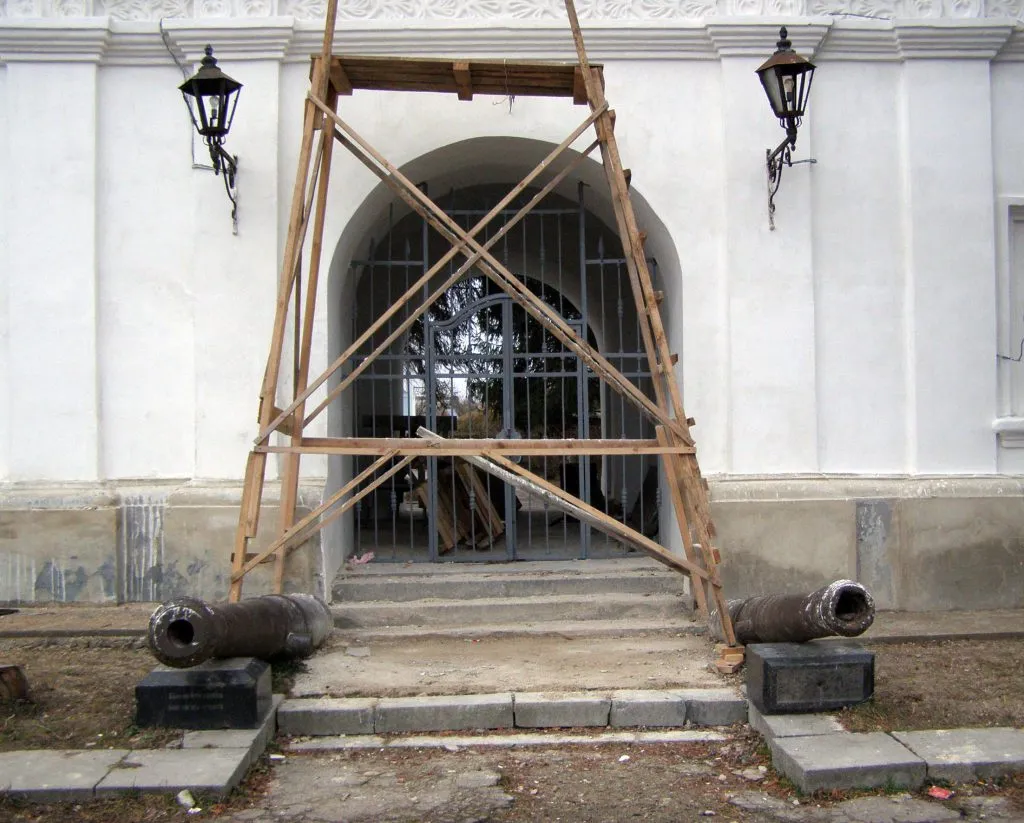
In the 17th century the Church of St. Michael was the main church of the monastery of the same name. Next to the church a bell tower was built, which also served as a gate tower, along with a refectory and cells. According to the register of immovable monuments of Ukraine, the bell tower was built in 1666, but many researchers claim that this happened in 1745.
In the 21st century, instead of restoring the church’s dome, clumsy Moscow priests built a decorative top in the form of a Byzantine church. How could such a thing be done to an architectural monument, and who allowed it?
To the east of the church stands the gate bell tower, built in 1747. The monastery refectory and cells are attached to it. They are combined into one structure. The building has a semicircular drive-through arch that was once a gate.
Text and photos by Roman Malenkov.
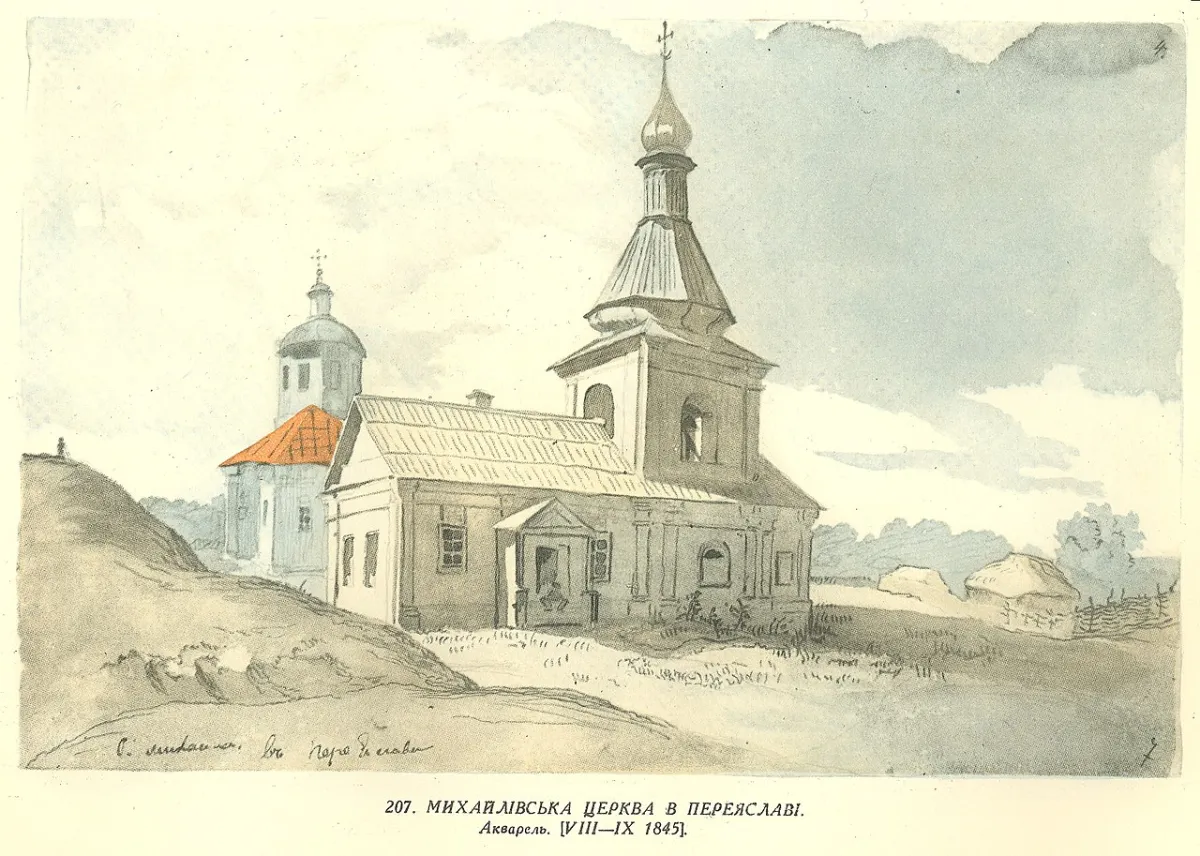
Drawing by Taras Shevchenko