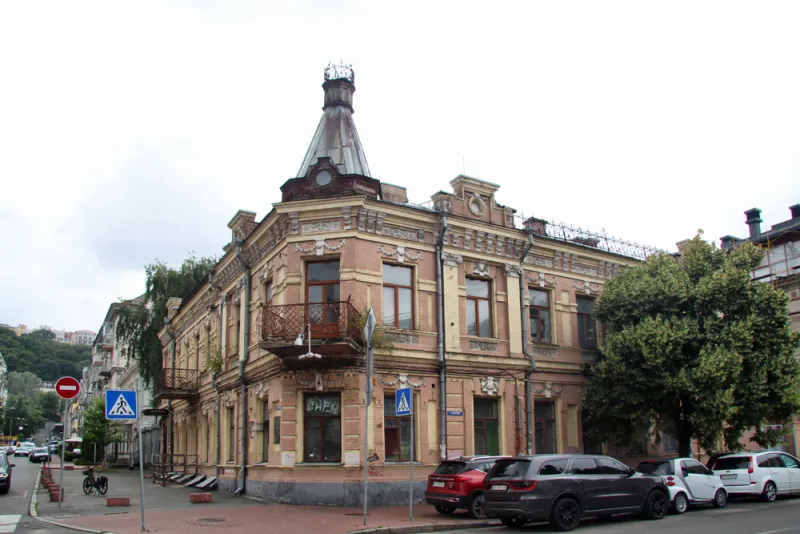
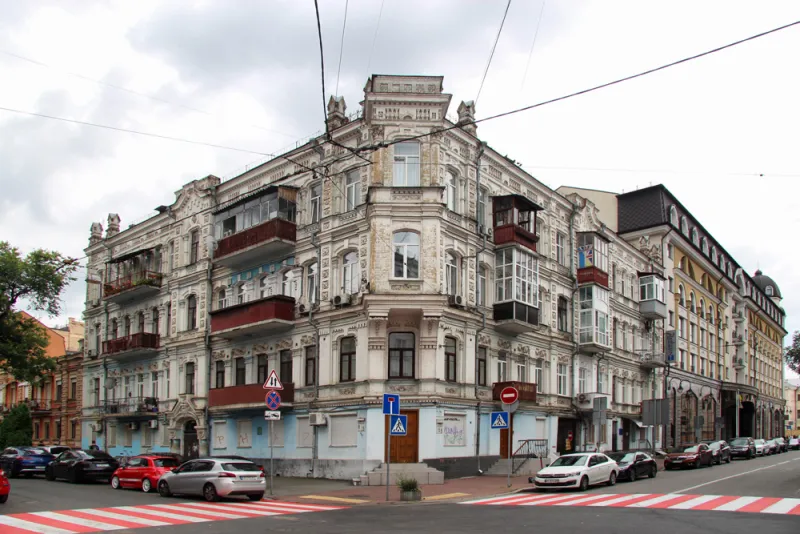
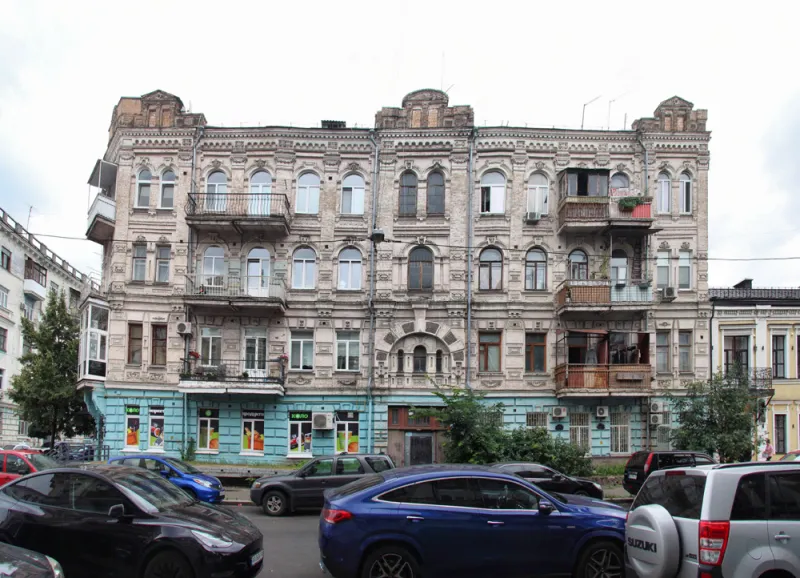
Koliada apartment building. 38 Velyka Zhytomyrska Street
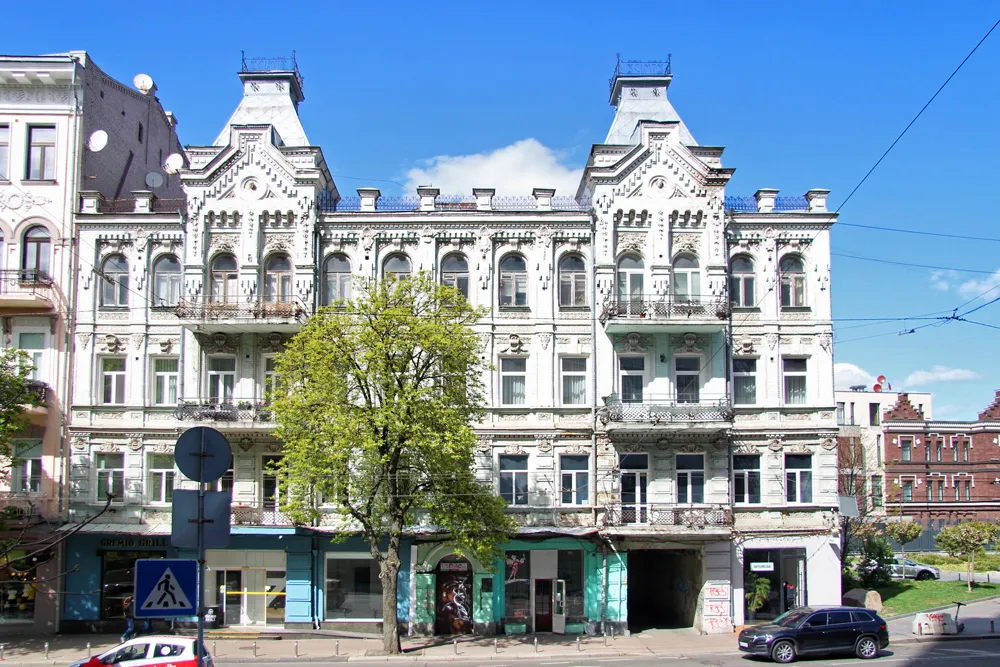
In 1882 this plot belonged to Afihonohen Sopotsynskyi. In 1899 it was bought by Dmytro Koliada, a former peasant who had grown rich and moved to Kyiv. And then he even changed his surname from Koliada to Koliadin. It was Dmitrii Koliadin who commissioned the architect Vladimir Nikolaev to build an apartment building, completed within a year. This building became one of the finest examples of neo-Renaissance in Kyiv. It is located at 38 Velyka Zhytomyrska Street.
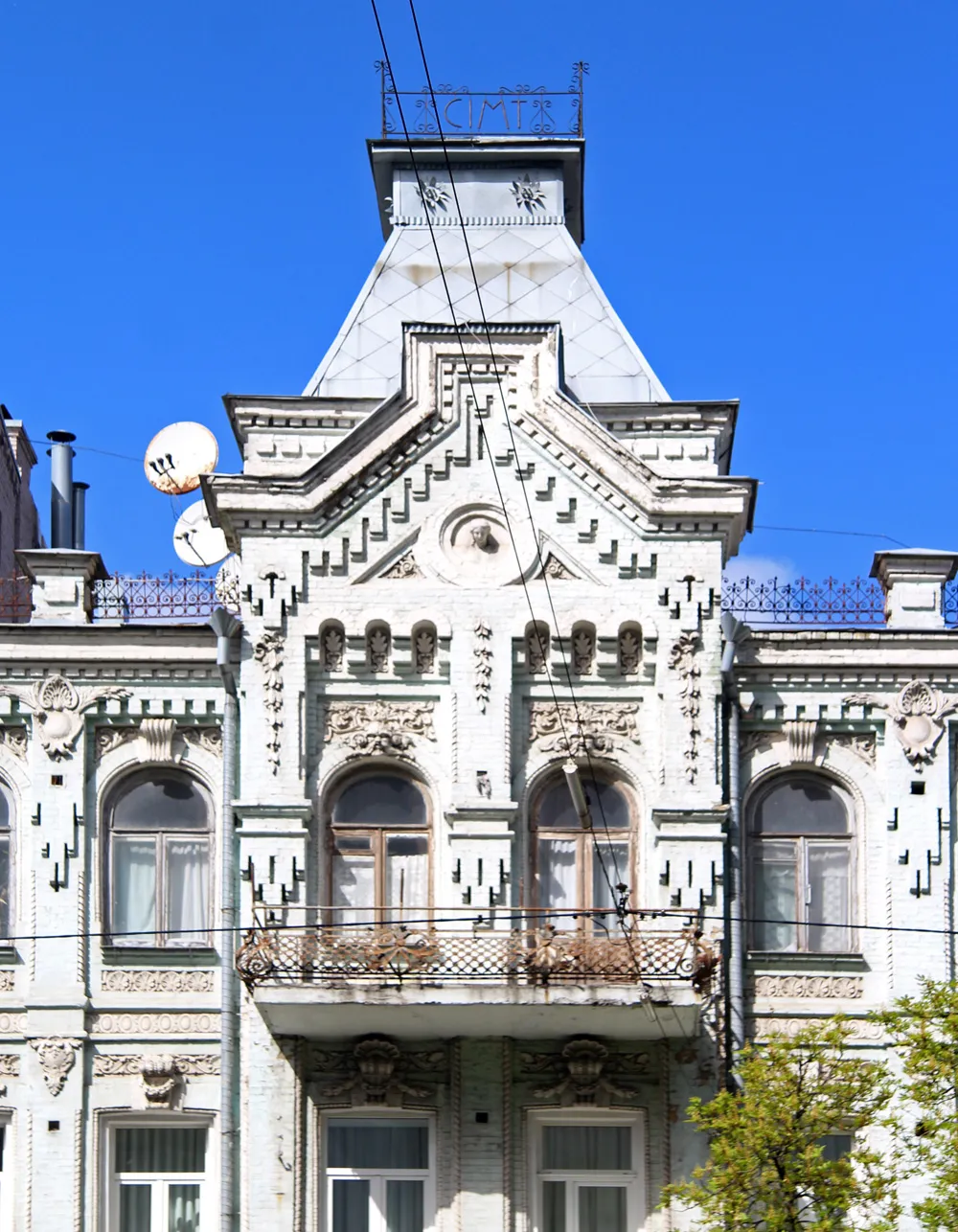
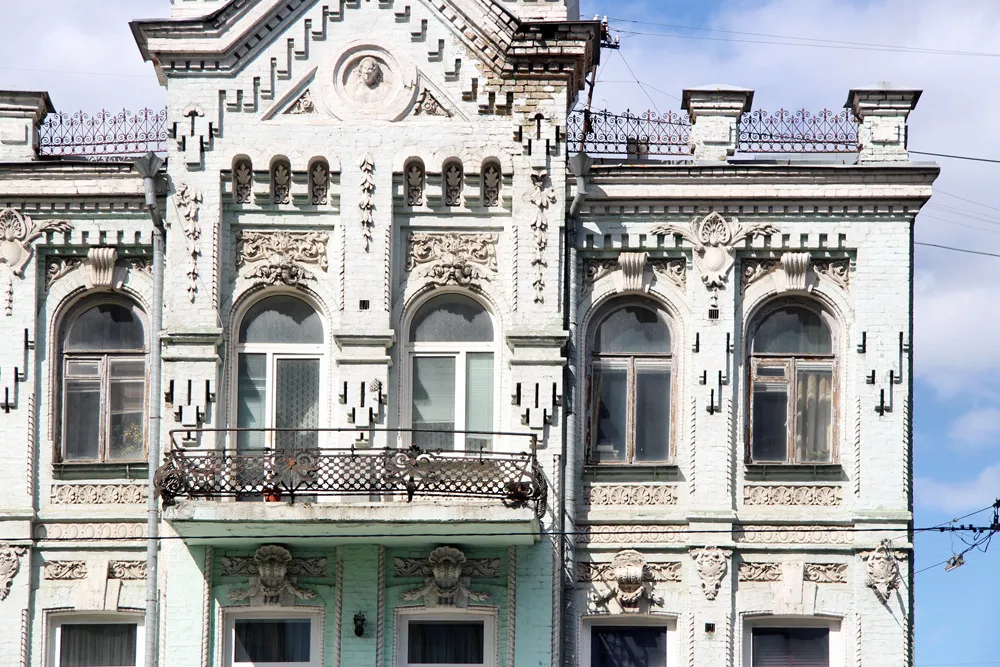
Four-storey, brick, T-shaped in plan, single-section, with the ground floor having large display windows and a side carriageway; the composition of the main façade is symmetrical, with two side projections (avant-corps) of slight protrusion with balconies. The projections are accentuated by triangular pediments and terminal towers in the form of truncated pyramids in the style of the 16th-century French Renaissance. In the design of the façade an active role is played by the combination of rectangular and arched window openings placed at the level of the fourth floor.
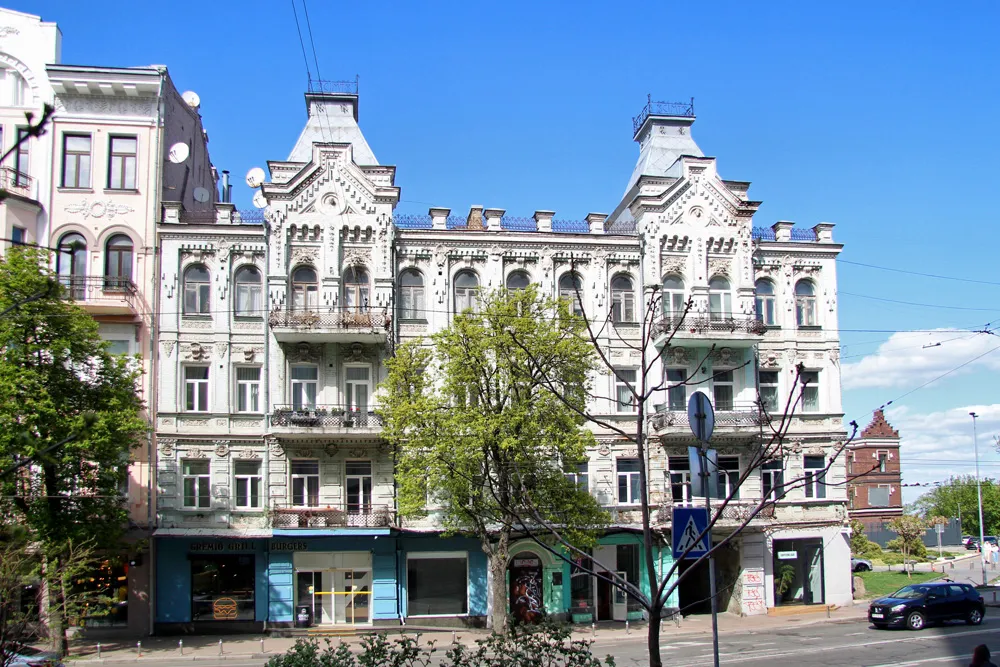
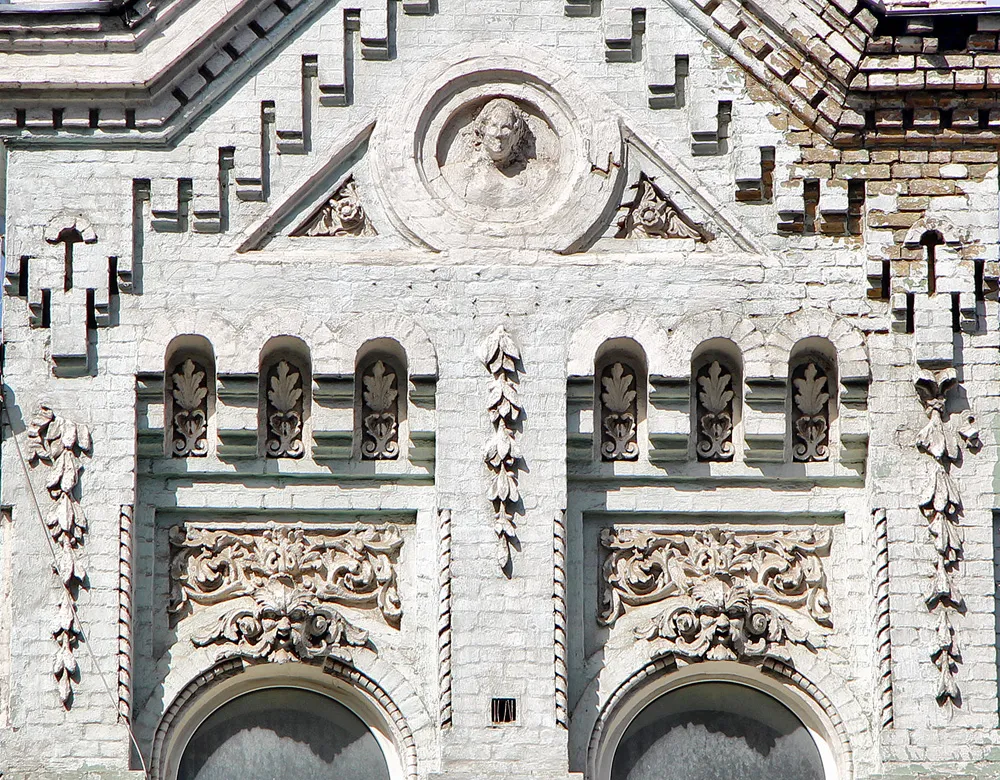
The entrance to the building in the centre is also emphasized by an arched lintel. The lavish plasticity of the façade is formed by brick decor and plaster details of varied design in the Renaissance style: keystones of the window lintels, string courses, ornamental plant-motif inserts, and sculpted heads in the round niches of the side pediments. The original convex openwork balcony railings are well preserved, and above the entrance door there is a small stained-glass window.
From August 1901 to mid-1909, and in 1922–28, apartment No. 1 of this building was the home of Vasyl Hryhorovych Liaskoronskyi (1859–1928), historian, archaeologist, numismatist and public figure. In 1891–1907 he was a teacher of history and geography at the 3rd Gymnasium, in 1907–09 a Privatdozent in the Department of Russian History at St. Vladimir University of Kyiv, and in 1909–22 a professor at the Nizhyn Historical and Philological Institute. In 1922–24 he was a professor at the Archaeological Institute in Kyiv and head of the numismatic department of the Museum Town at the Lavra. He took an active part in the work of the VUAN (All-Ukrainian Academy of Sciences): its Archaeological Committee and historical section, in particular the Commission on Kyiv and the Right-Bank Ukraine. In 1927 he carried out archaeological research at the Golden Gate. Author of works including: “Hillforts, Burial Mounds and Serpent’s Ramparts” (1899, 1905), “Guillaume Levasseur de Beauplan and His Historical and Geographical Works on Southern Russia” (1901), “The Past. The Town of Trypillia” (1903), “Kyiv’s Vyshhorod in the Appanage and Veche Period” (1913), “Roman Coins Found on the Territory of the City of Kyiv” (1927), and others.
In writing this, the following was used: Code of Monuments of History and Culture of Ukraine.
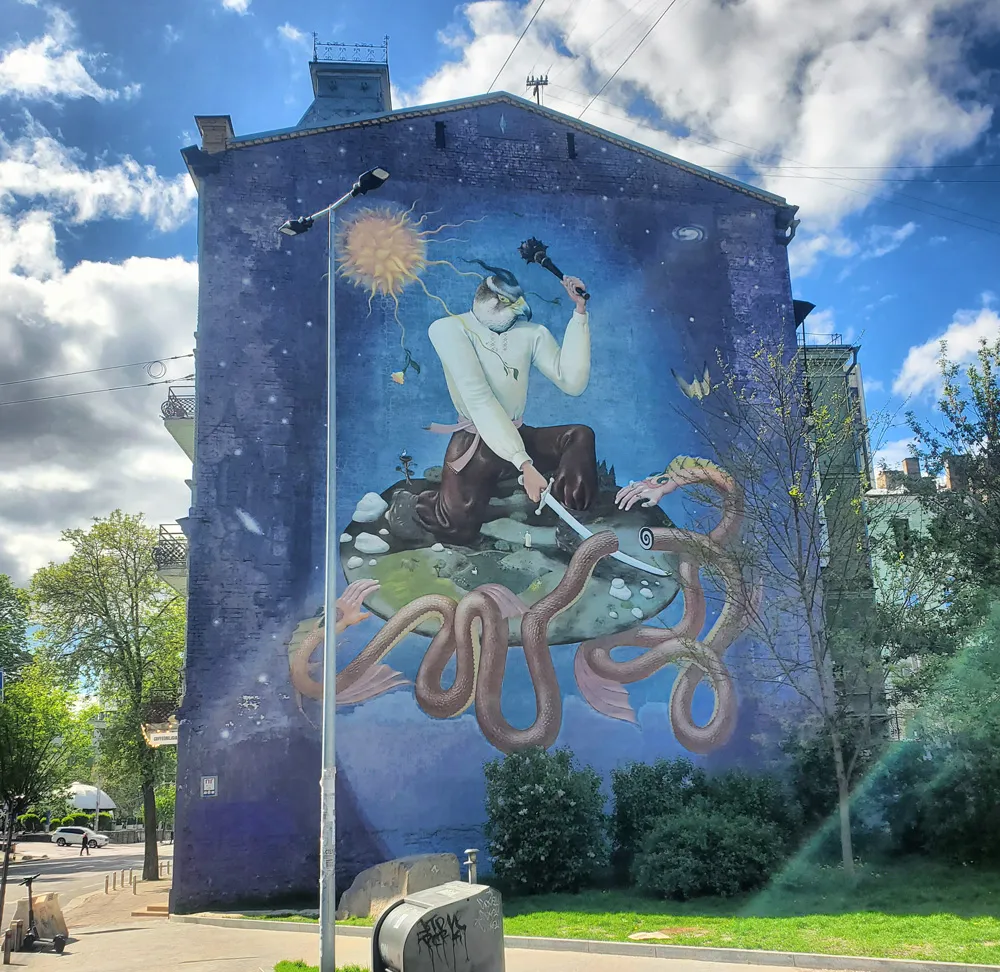
The building has a large mural, “St. George,” created in 2014 by the artist Oleksii Bordusov. He did the work under the influence of the events of the time, in particular the annexation of Crimea and the war in Donbas. The artist explained: “The subject of my work reflects the events in the country and symbolizes the struggle of good against evil in general. It is an interpretation of the classic image of the fight with the serpent. The serpent in this context is all the misfortunes that have befallen our land: internal and external aggression, hatred, war and its victims.”
Text from Wikipedia.
Photos by Roman Malenkov.