Pluhiv. Wooden church

· 4 min read
The first mention of the village of Pluhiv dates to 1469. It was then that Mr. Świnka showed the royal inspectors an “act of perpetual grant”. The village was then called Plekhov, and in later documents Plukhiv. In 1477 Pavlo, the owner of Olesko, borrowed 60 hryvnias from Petrovskyi, for which he gave him the village of Pluhiv. According to the 1515 survey, the village belonged to the Zolochiv key of the Lviv Land, on whose territory there were 10 lans of land settled by peasants, as well as a hand mill.
In 1532 Stanisław Sieniński sold the town of Zolochiv with the surrounding villages, among them Pluhiv, to the feudal lord Andrzej Górka. The lord Górka was obliged to exempt the inhabitants from taxes for 14 years so that they could rebuild their homesteads, destroyed by frequent wars and raids by Tatars and Turks.
In 1598 Marek Sobieski bought Pluhiv and many other villages from the Zborowskis. The peasants paid him a tribute of 100 Polish zlotys at Pentecost and performed corvée labour: mowing hayfields and working in the fields at harvest.
On 14 September 1604 the village was a halting place for the Ukrainian-Polish army that on 20 June 1605 captured Moscow[2].
In 1649 the village and its surroundings were devastated by the Tatars; a representative of the village told Zofia Teofila Sobieska that because of the devastation he had been unable to collect taxes, since the people had died out.
In 1672 Pluhiv was seized by the Tatars. The village was destroyed. The appearance of the village at that time is described in the “Anegdotes” of 1687: “The village, after its recent destruction by the Tatars, had only a few dozen huts, hastily woven from branches, scattered in a valley among wooded hills. Over the stream several mills clattered, and in the middle stood a wretched tavern.”
At the time corvée was abolished, in Pluhiv 87 households had from 14 to 16 morgs of land. In addition, 42 farms had from 570 sazhens to 4 morgs of land in their use. The better-off peasants worked less and often paid a redemption instead of corvée, which amounted to 28 thousand francs over 20 years.
During Austrian rule, the German colonies of Bronislavivka and Kazmirivka were founded near Pluhiv. In the 1860s the village was divided into two parts: towards the railway, Zakuty, and the other, Pluhivshchyna. The first public school opened in 1856. A German state school existed in Bronislavivka from 1867.
Text from Wikipedia
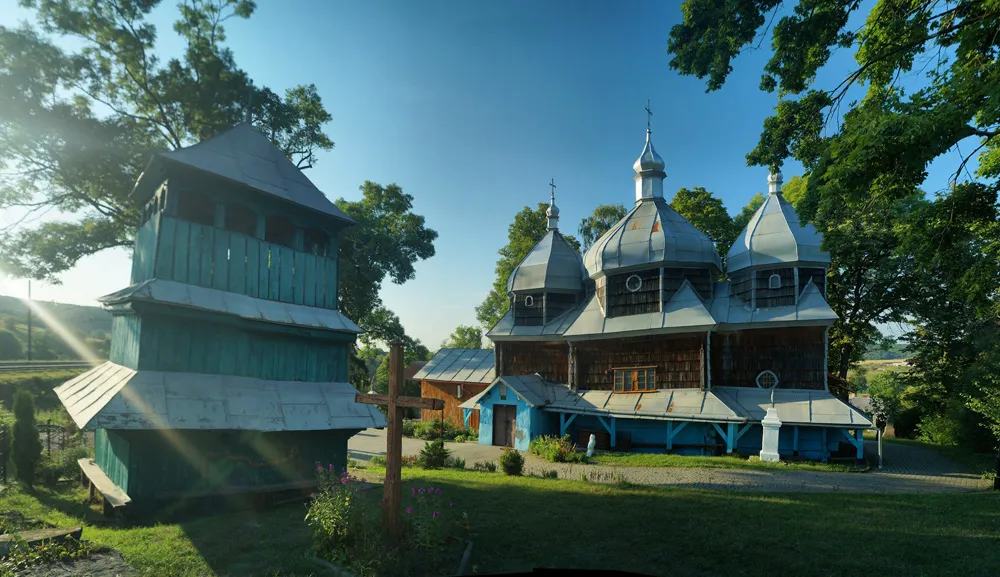
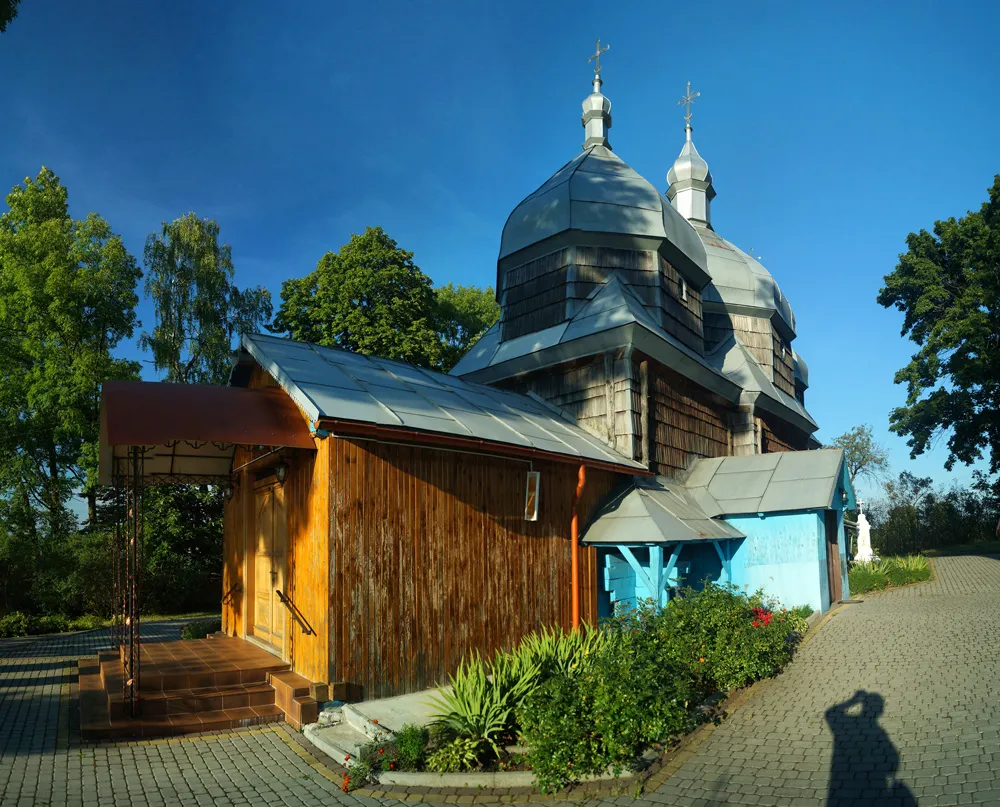
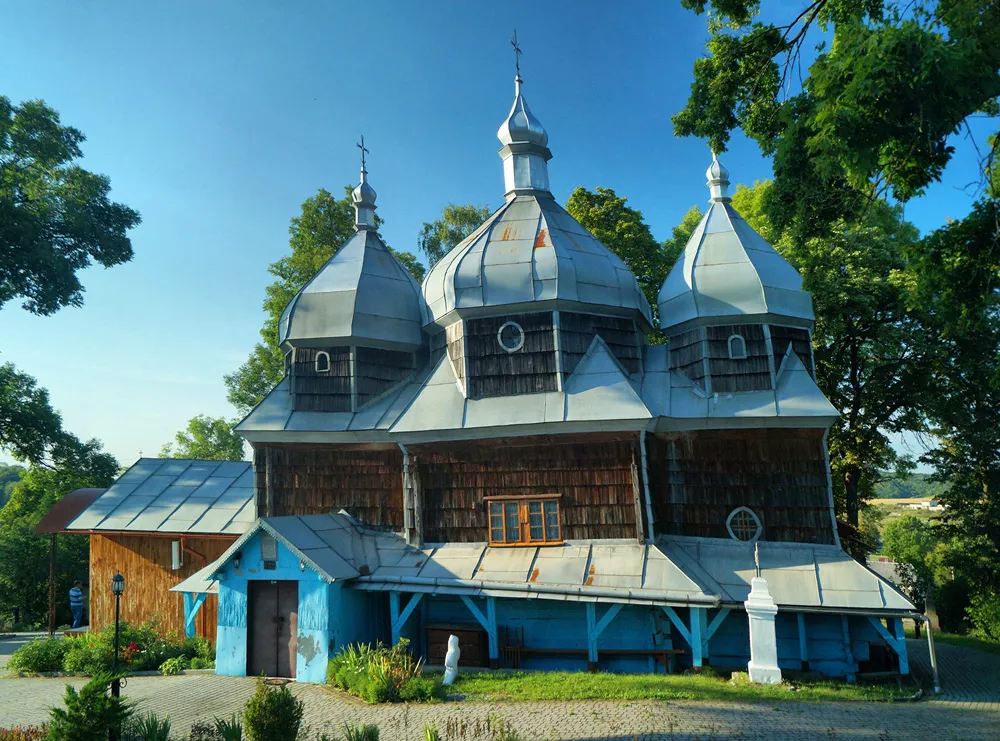
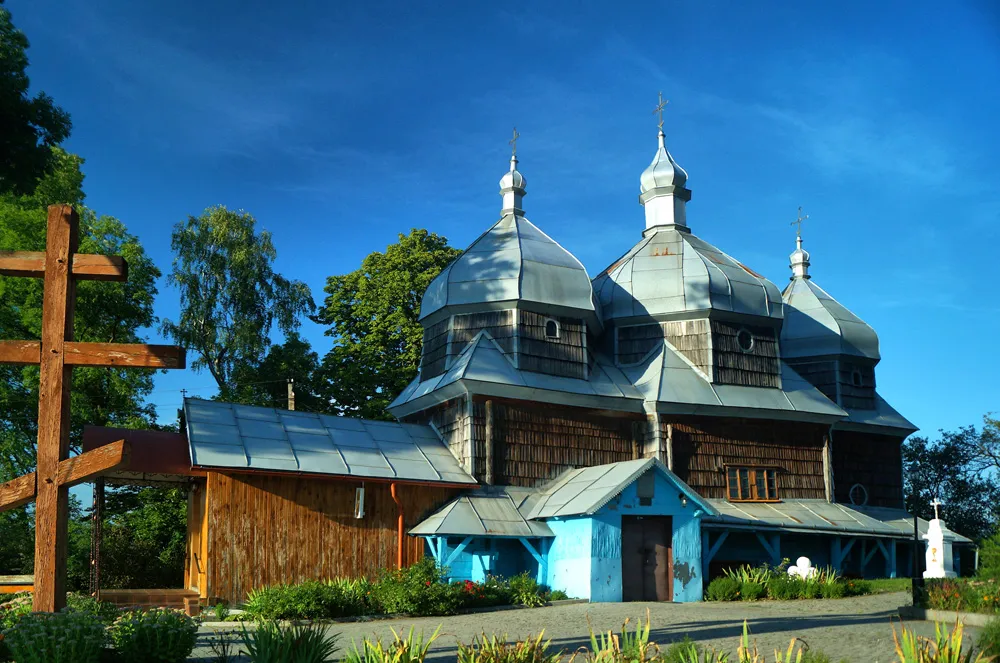
Church of St. Paraskeva
There were formerly two wooden churches in the village: the Church of the Deposition of the Robe of the Mother of God (1738) and the Church of St. Paraskeva, 23 years younger. The first stood on the slope of the western outskirts of the village, close to today’s railway, before the bridge, and according to local residents burned down.
On its site a modern brick church has been built. The second church, St. Paraskeva’s, has survived to this day.
According to legend, in ancient times there was a pagan sanctuary on its site. It was built of spruce beams by order of Hetman Bohdan Khmelnytskyi in memory of 40 severely wounded Cossacks who were captured by a Polish detachment and thrown alive into the local lake. An old stone Cossack cross has survived beside the church.
Rebuilt in 1753. Wall paintings from the 19th century have survived in the interior. In 1943 a miraculous renewal of icons was recorded in the church. An architectural monument of national significance. The church is used by the UGCC community.
It stands not far from the centre of the village, on a slope, near the railway. It consists of three log sections (the nave slightly wider) oriented on one axis from east to west. A sacristy adjoins the sanctuary from the north, and porches are attached to the narthex from the west and south (the western one as wide as the narthex).
The building is surrounded by a wide skirt roof on wooden posts with braces. Under the skirt roof the walls are of exposed log beams; above it they are clad in shingles. The church is crowned by three light octagons (the one over the nave larger), covered with helmet domes with lanterns and finials.
To the south of the church stands a wooden bell tower, square in plan, of two tiers, under a tented roof.
Text from the website “Wooden Churches of Western Ukraine”