Sasiv

· 5 min read
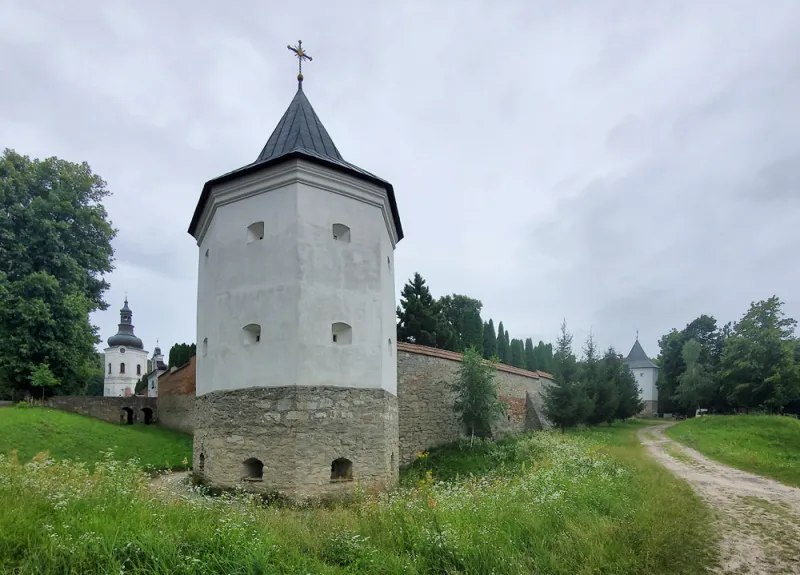
Sasiv is now a village in Zolochiv district of Lviv Oblast, home to about seven hundred people. Until the 20th century it was a small town with Magdeburg law, founded in 1615 by the Ruthenian voivode Ivan Danylovych, owner of Olesko Castle. He belonged to the Sas coat of arms, which is why he named the town Sasiv.
Before Sasiv, the village of Komariv stood on this site, so Danylovych did not found the town in an empty place. Later his daughter, Teofilia, married Jakub Sobieski and bore him a son, Jan, who in the future became king of the Polish–Lithuanian Commonwealth. Together with Teofilia, Sasiv passed into the possession of the Sobieskis.
In 1675 the Crimean khan Hajji II Giray burned Sasiv, and in 1682 the settlement lost Magdeburg law and its town status.
Sasiv gained a new life in the 19th century, already as part of the Austrian Empire. Significant deposits of medicinal mineral waters were found here then, and the settlement was turned into a resort. At that time Sasiv also regained the status of a small town. The local spa clinic received up to 400 visitors per season. The town’s territory was put in order and parks were created. The resort ceased to function during the First World War and was never fully restored.
It should be noted that from its founding until the Second World War a significant Jewish community lived in Sasiv. During the German occupation most of Sasiv’s Jews were killed.
Text by Roman Malenkov.
Sasiv’s main monuments are the wooden St. Nicholas Church and the Church of the Nativity of St. John the Baptist. Here is what Wikipedia writes about them:
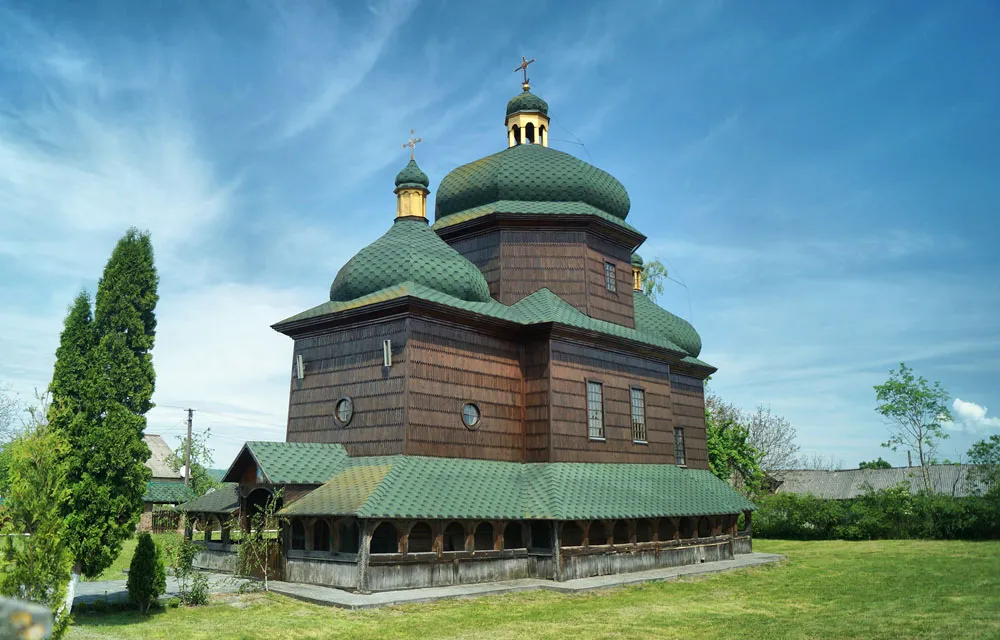
St. Nicholas Church
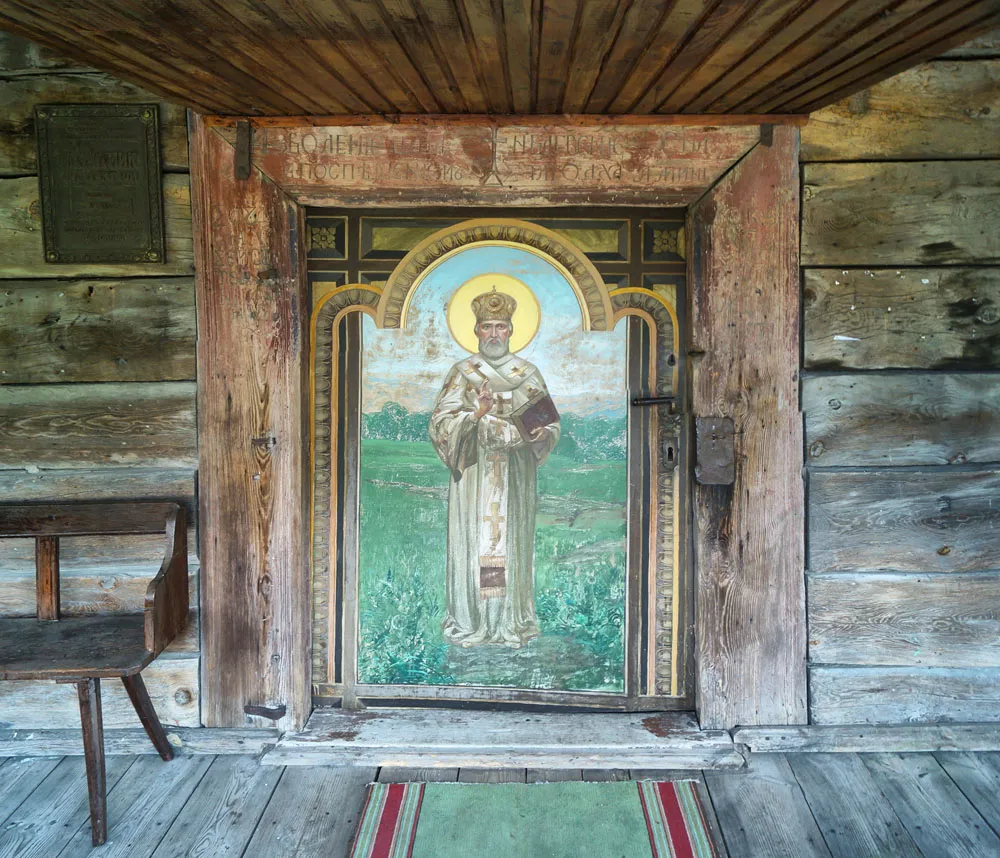
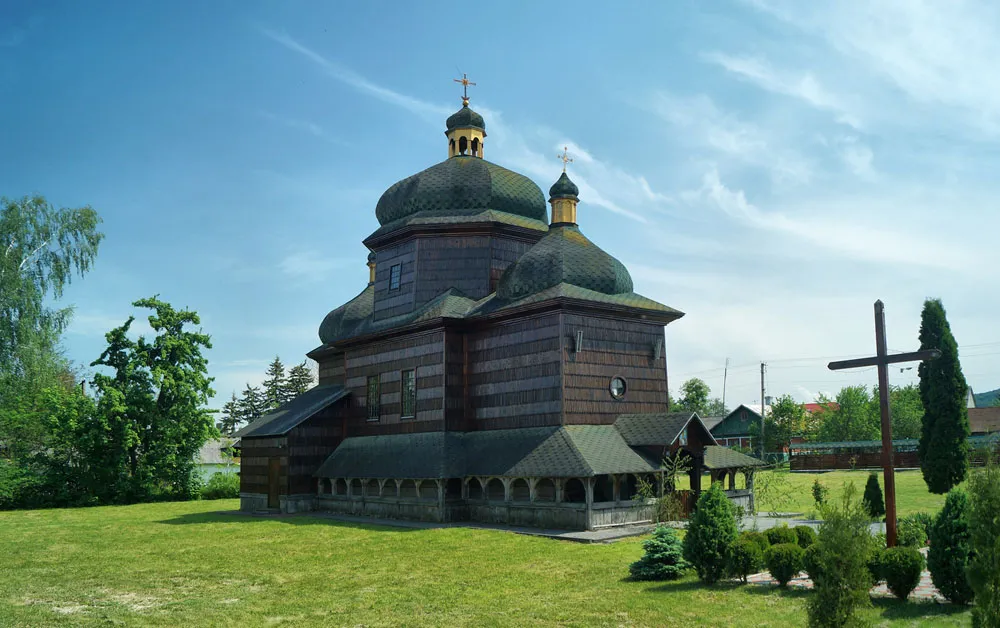
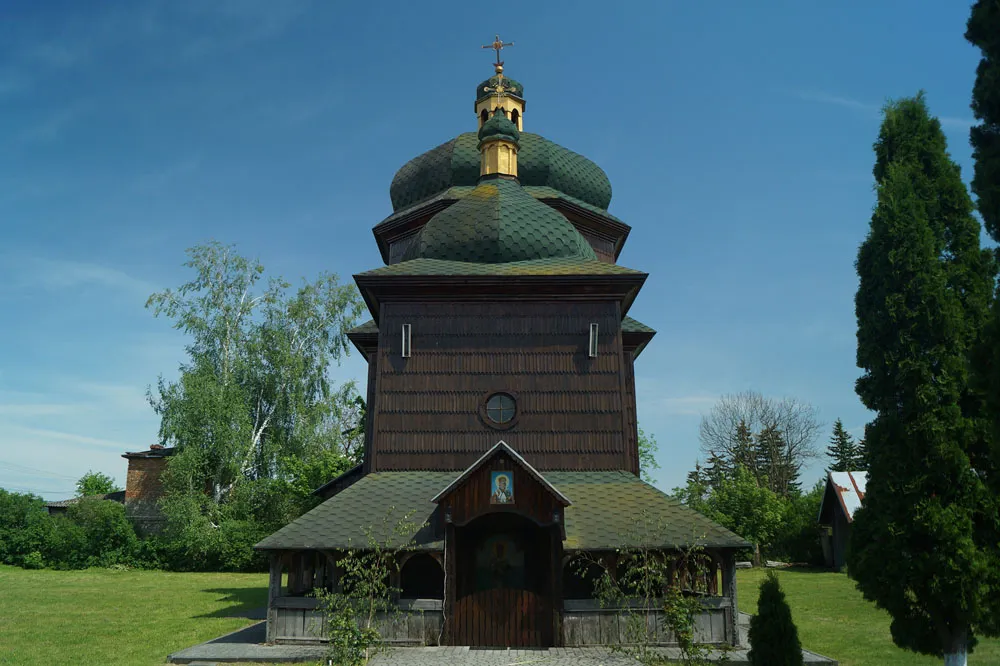
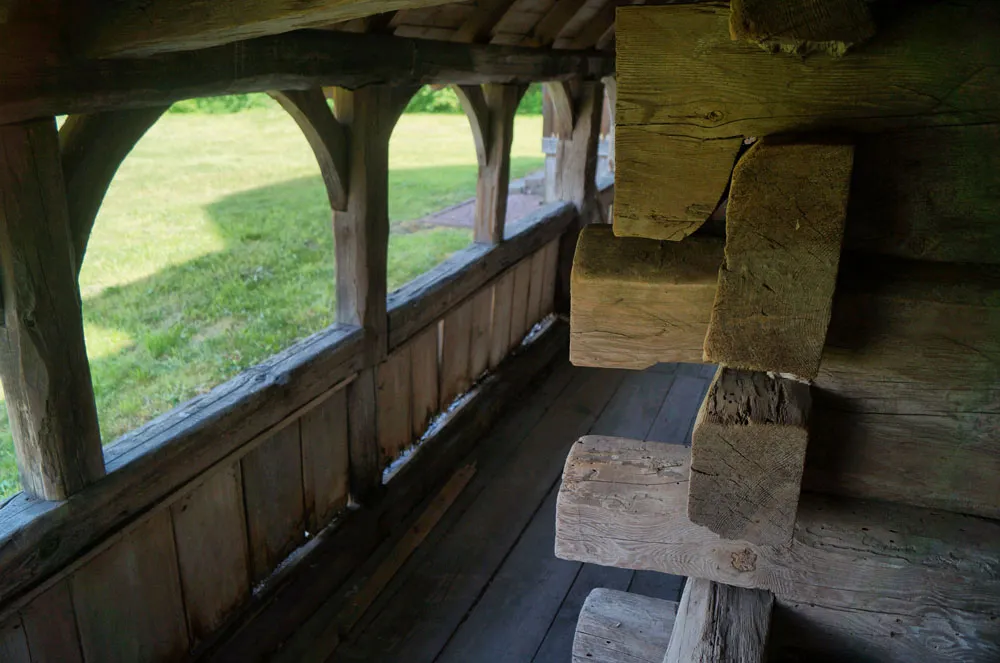
The date “1731” is marked on the church’s door frames and is considered the date of construction, although some sources date it to the 15th century.
A legend has come down to us. The town had a Jewish community, and of course the Jews lived next to one another. The church then stood on the Levada above the Buh. Once a great fire broke out in the Jewish quarter. Then one Jew ran to the church of St. Nicholas to pray for his house to be saved. All the houses burned down, but his remained intact. Strange also remain the facts that the wooden church remained unharmed during the fire of 1887, as well as in the First and Second World Wars, and in Soviet times the church remained active. Perhaps it is therefore fair to suppose, contrary to the opinion of the researcher Drahan, that a church built in the 15th century could not have survived to our time.
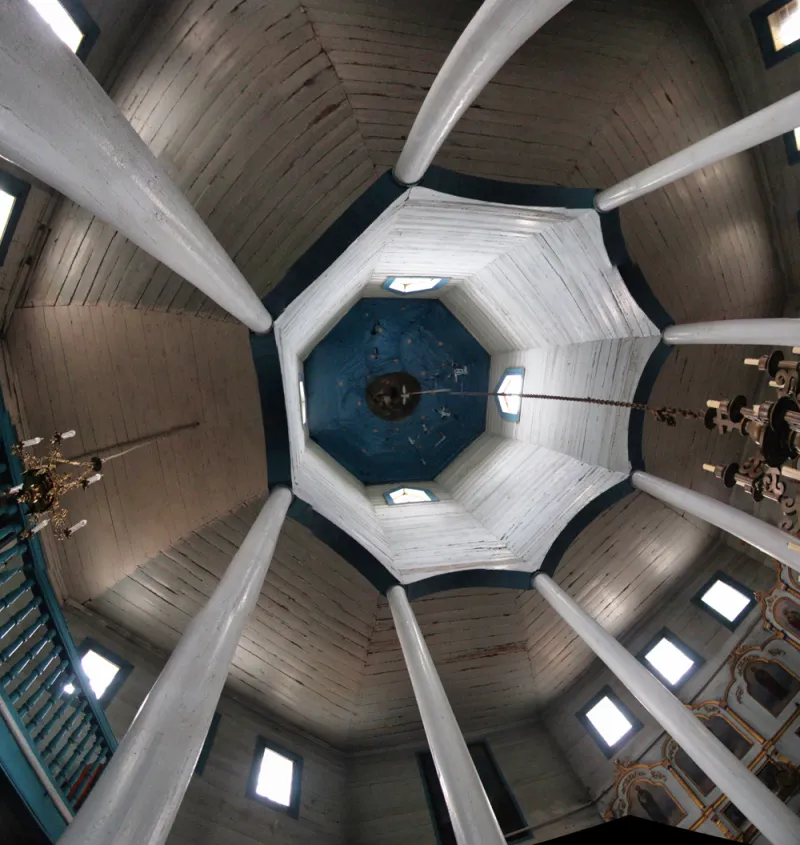
As already mentioned, the church stood on the Levada, in the suburb of Sasiv. It belonged to a women’s monastery. In the middle of the 18th century the church was moved to the centre of the town, and by order of Bishop Lev Sheptytskyi in 1759 the monastery was closed, its buildings sold for 2 thousand zlotys, and the nuns transferred to Slovita. After its relocation the church acquired Baroque multifaceted domes. The church’s interior is adorned with a seven-tier iconostasis made before the second half of the 17th century. The icons impress with their craftsmanship — “The Flight into Egypt”, “Christ and the Samaritan Woman”, “St. George the Dragon-Slayer” date from 1681, and “The Translation of the Relics of St. Nicholas” dates from 1685. They have not been repainted. Researchers believe they belong to the brush of Ivan Rutkovych of Bilyi Kamin or a very talented contemporary of his. In 1977 the state of the iconostasis was very unsatisfactory, and a scientific restoration production workshop from Lviv began restoration work.
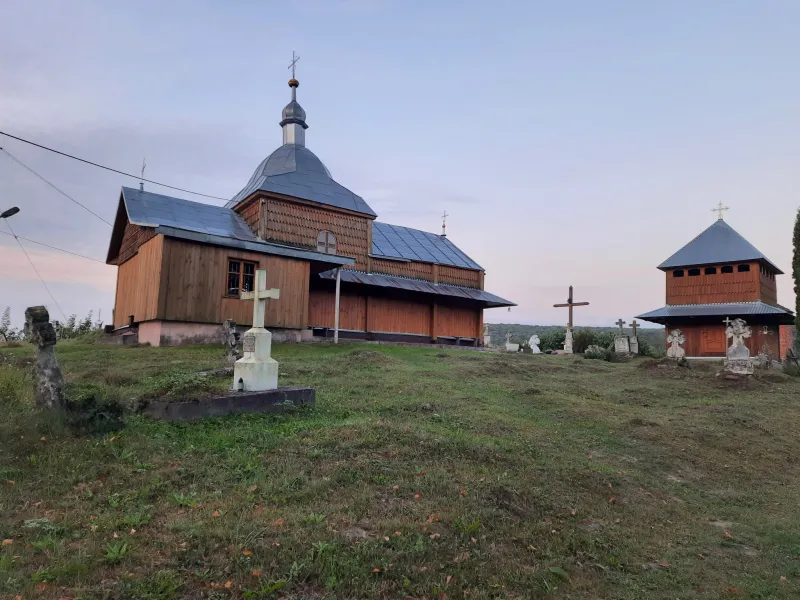
In 1910 the old wooden bell tower was dismantled and a new one, of masonry, was built in its place. In 1963 the St. Nicholas Church was entered in the register of architectural monuments. After that the domes and the skirt roof were covered with sheet metal.
From the 18th century until 1944 the church was a branch church, while the main services were held in the Transfiguration church. After the main church was destroyed, services were held in St. Nicholas Church and in the Roman Catholic church. In the mid-1960s the church was closed. Since 1990 the church has belonged to the local Greek Catholic parish.
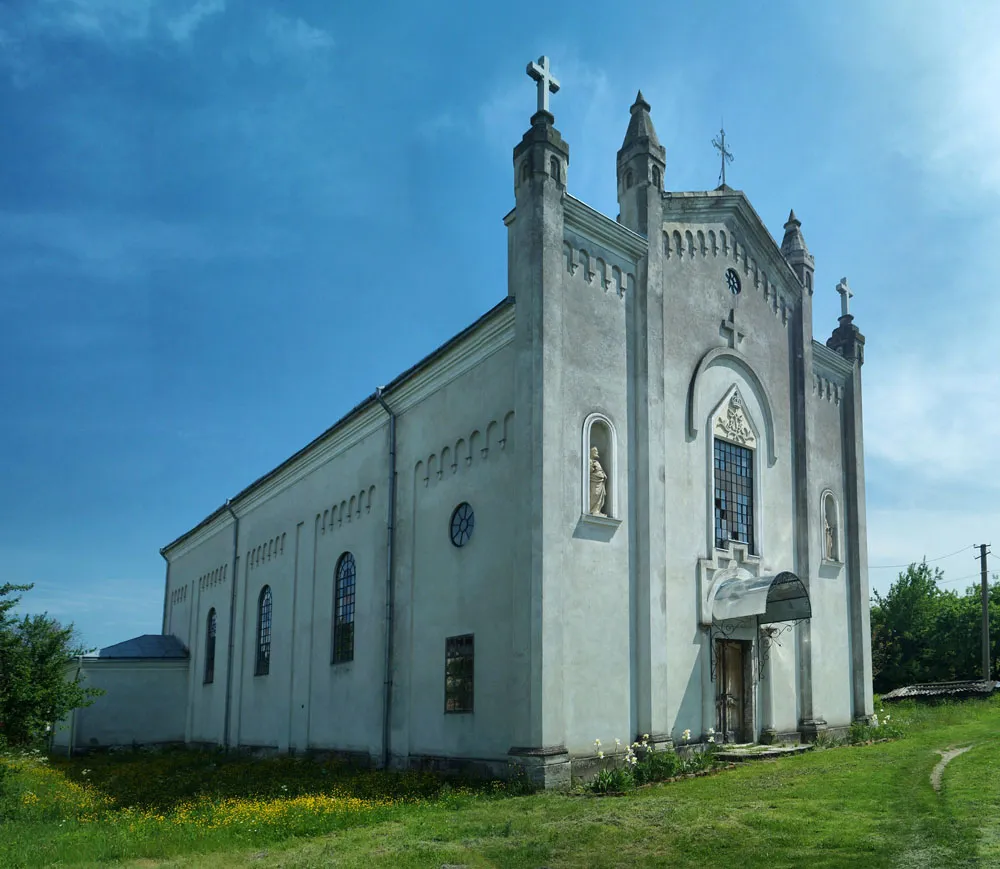
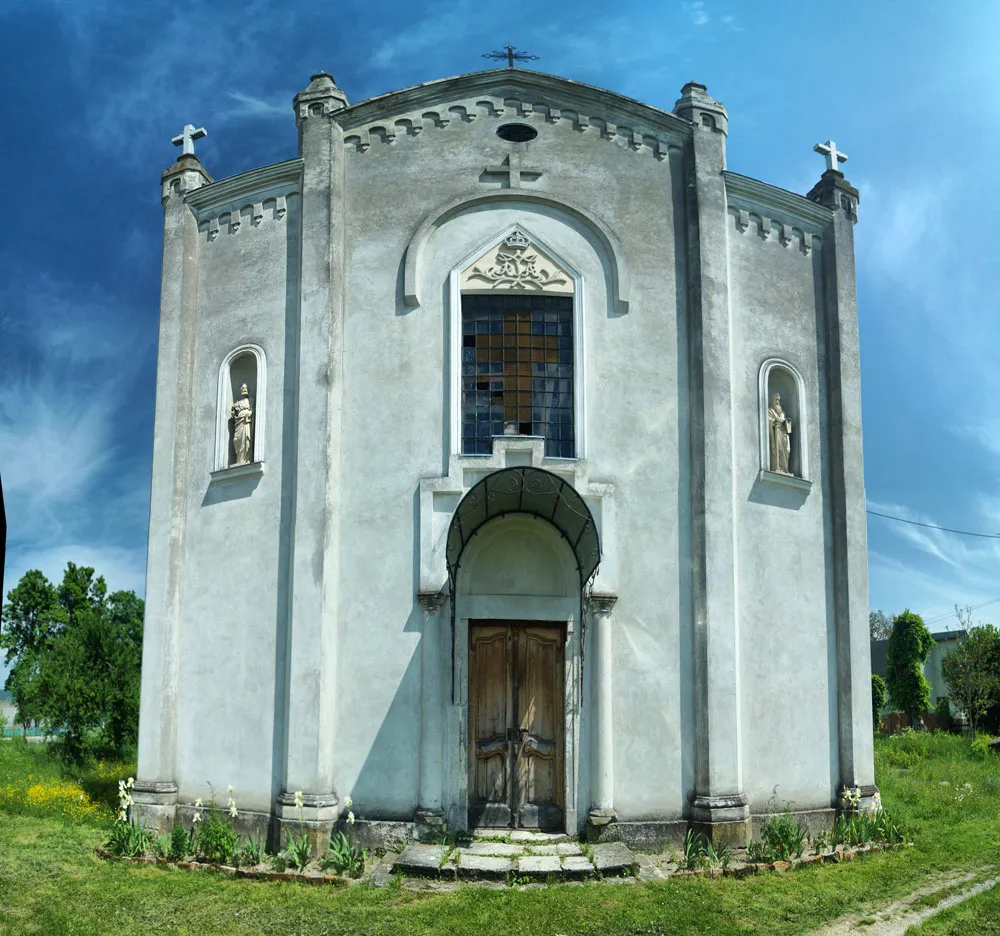
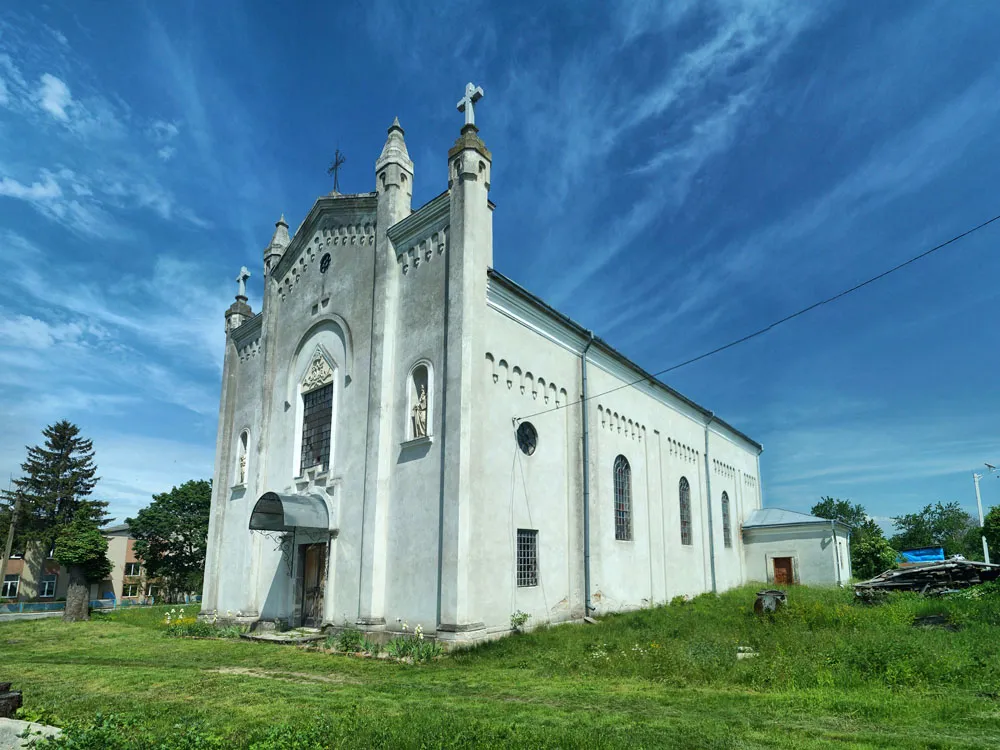
Church of the Nativity of St. John the Baptist
In 1628 a wooden church was built in Komariv with funds from Ivan Danylovych, and on 27 September 1631 a parish was founded here. Since the church was wooden, under the influence of natural factors (rain, snow, wind) the shrine building gradually began to sink, the roof to leak and the floors to rot — that is, it was in a terrible, dilapidated state and there was a probability of its collapse — so in 1693 a second wooden church was built with funds from the Polish king John III Sobieski. On 6 July 1766 Archbishop Wacław Sierakowski consecrated the shrine during a visitation to the parish. In the 100 years the church was in use, the building needed significant repairs. It was then decided to build a new, stone church. So during 1864–1868, at the expense of Count Wacław Baworowski, F. Kreghshaber and parishioners, a masonry church in the Neo-Gothic style was built in Sasiv and consecrated in 1873. In 1888–1893 the shrine was restored at the expense of the faithful and Count Wacław Baworowski after the substantial destruction caused by the fire of 28 July 1887. The last parish priest was Father Antoni Wensecki, who in 1946 left for Poland together with some Polish families. In Soviet times, from 1946, the church building housed in turn a workshop and a warehouse, and only in 2003 did the restoration of the shrine begin. On 26 June 2004 Bishop Marian Buczek celebrated the first Mass in the restored church. Today Sasiv is served by diocesan priests from the parish of the Assumption of the Blessed Virgin Mary in Zolochiv. Now the church opens its doors to parishioners only on feast days[15]. Until the Second World War a gilded silver tabernacle with the Sobieski coat of arms was kept here; its present whereabouts are unknown. Now the head of a figure of John the Baptist is kept here.
Photos by Roman Malenkov.