

A trip to Zarichanka (Lanckorun): from mystical 18th-century orgies and lustful sectarians to unique cross-shaped gravestones
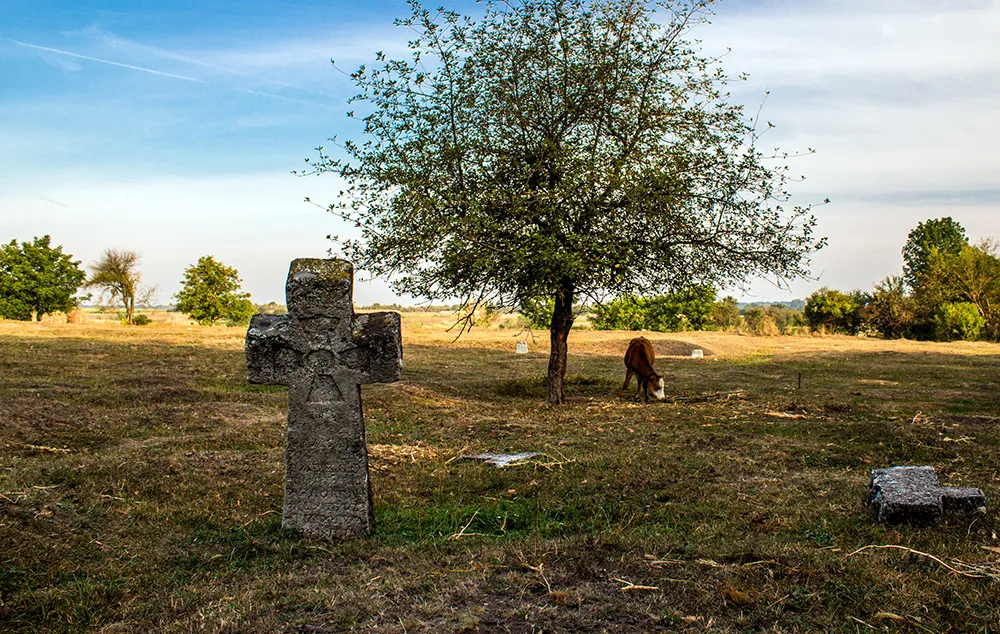
The village of Zarichanka, formerly a small town (until 1947 it was called Lanckorun), cannot today boast any especially interesting architectural or historical landmarks. There were quite a few once, but all of them vanished in the turbulent 20th century. Today only the old cemetery arouses interest. It really is very interesting and to a degree unique. At the very least, it is distinctive.
But before turning to cemetery studies, let us tell a mystical and licentious story that happened in this village in 1756. It is so vivid that we could not pass it by.
At the centre of this rather unusual and extremely scandalous story was the famous mystic, fraud and false messiah Jacob Frank (also known as Yaakov Leibovich).
In the mid-18th century the sect of the “Frankists” he created spread widely among the Jews of the Polish–Lithuanian Commonwealth and especially in Podillia.
The teaching of the “mashiach” Frank became the culmination of the development of “Sabbatianism”, a mystical current in Judaism founded by the well-known Talmudist and Kabbalist from Smyrna (Turkey), Sabbatai Zevi (also Sabbatai), who in 1665 proclaimed himself the very Messiah the Jewish people had waited for so long.
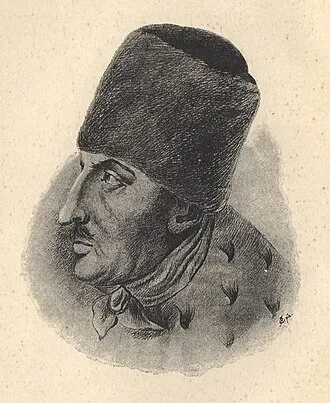
The essence of Sabbatai’s teaching (pictured) lay in developing the concept of “kelippot” (Hebrew for “shells” or “husks”). According to the Kabbalistic teaching of Isaac Luria, authoritative among both Hasidim and Sabbatians, the “kelippot” of sin hold within them particles of Divine Light, as a shell holds the kernel of a nut. That is, evil is good hidden in the shell of sin.
From this idea Sabbatai drew a rather paradoxical conclusion: the more one sins, the more good accumulates in the shell of evil. Accordingly, when the Messiah by his will breaks the shells, the kelippot, the more Divine Light (good) is released. So, gentlemen, let us sin as much as we can!
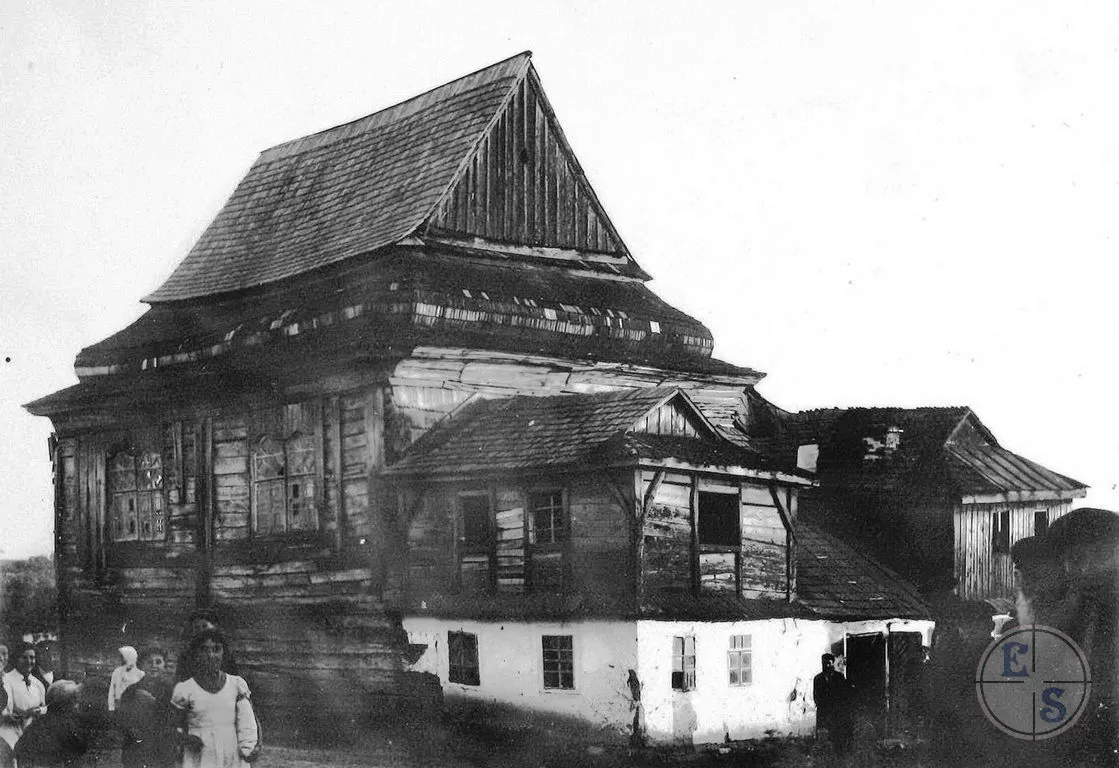
The 18th-century synagogue in Lanckorun
The new “Mashiach”, Jacob Frank, somewhat refined Sabbatai Zevi’s main idea that to reach the heights of righteousness one must first sin as much as possible. The main message with which Frank came to the people was: “I have come to free the world from all the laws and statutes that have existed until now”.
Frank urged his followers to immerse themselves in debauchery and other sins and to break every possible prohibition of the Torah, also because this would supposedly bring nearer the coming of the Mashiach-Messiah, who (according to one version) must appear when human corruption and sin reach their limit.
To hasten the coming of the Mashiach, the sectarians sinned as much as they could and even held ritual group orgies. The latter became known to the public after on 19 December 1756 the participants in one such sexual revel, held in the small town of Lanckorun (today the village of Zarichanka), were caught in the very midst of the proceedings by representatives of the Jewish community and the local authorities.
In the 18th century, under all laws, a ritual orgy was a terrible crime, and the participants were to be severely punished, while the organiser faced the death penalty. But Frank not only wriggled out of that predicament but also gained considerable profit from it… We will skip the further adventures of this false messiah; it would simply be a sin to tell about Zarichanka/Lanckorun and not mention such a detective-mystical page of its history.
A cemetery with Cossack crosses
The old cemetery lies right by the road that branches off the Ternopil–Kamianets-Podilskyi highway towards Skala-Podilska. It is clearly visible from the road.
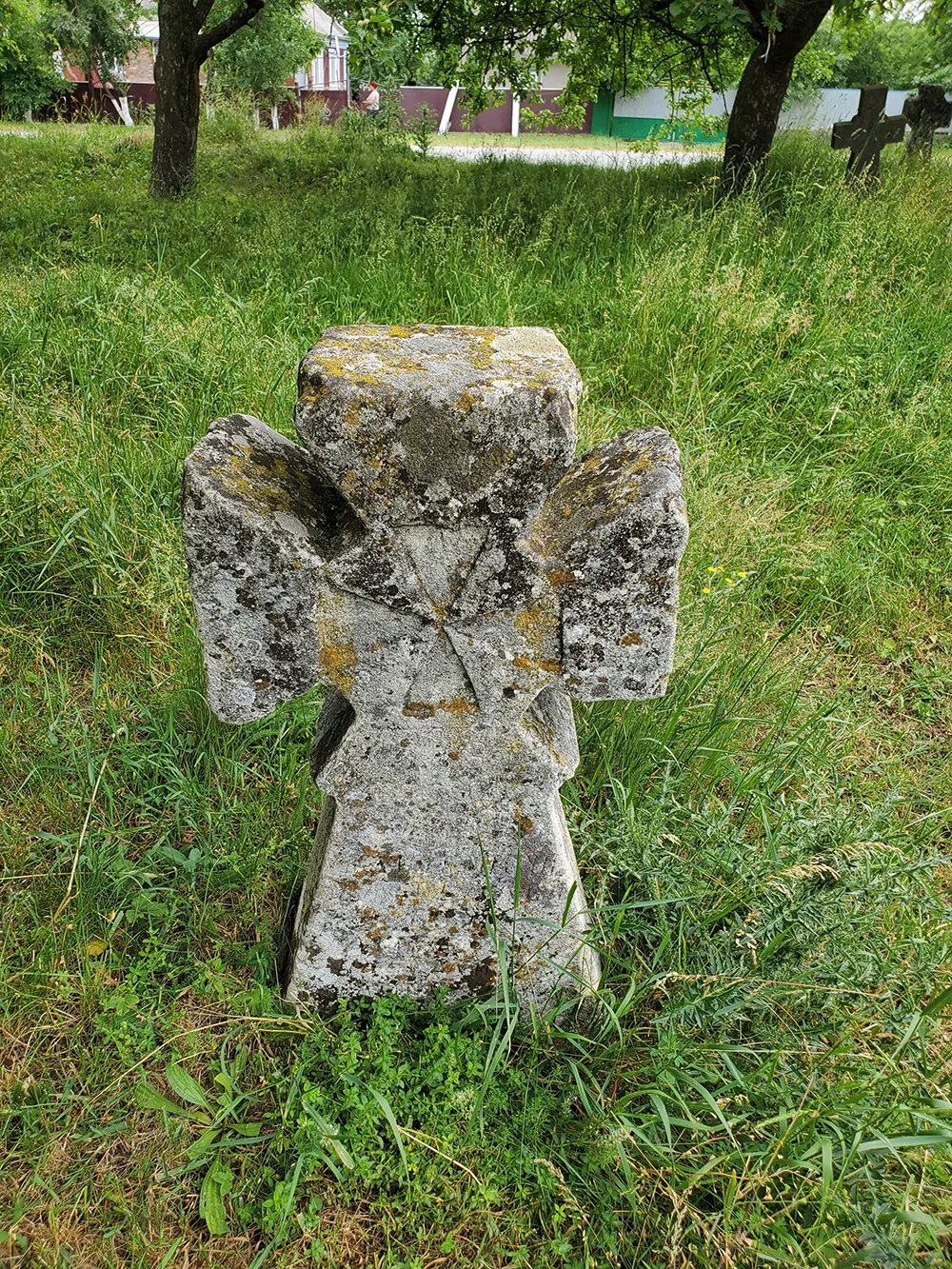
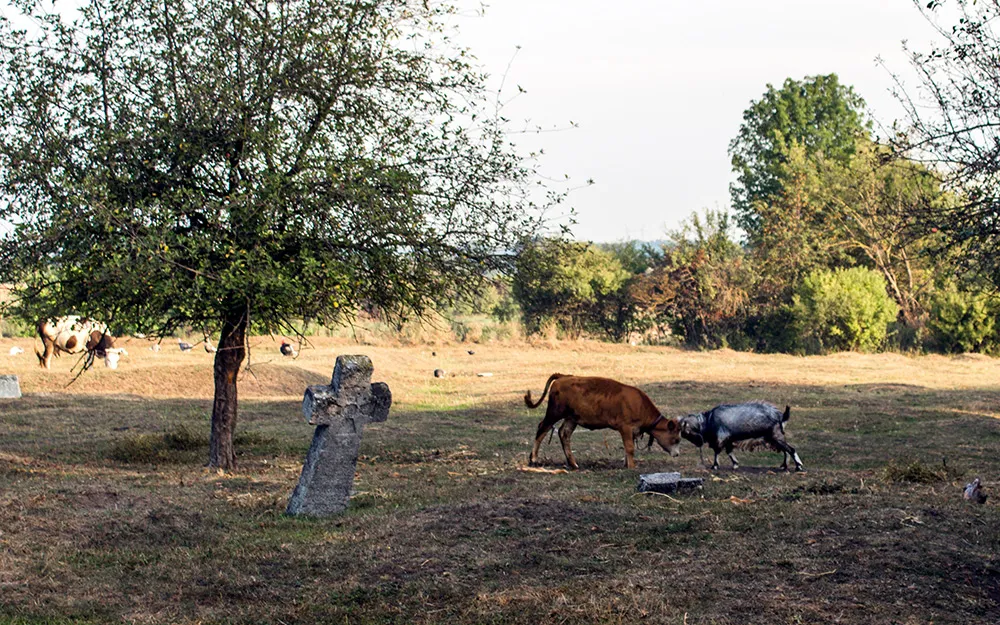
It cannot boast an especially venerable age (the oldest gravestones here date from the first half or the middle of the 19th century, whereas neighbouring Ivankivtsi or Kytaihorod have monuments from the late 18th century). Nevertheless, the absolute majority of the local cross-shaped gravestones are flat crosses typical of these lands, carved from a monolithic piece of limestone. But there the “typicality” ends.
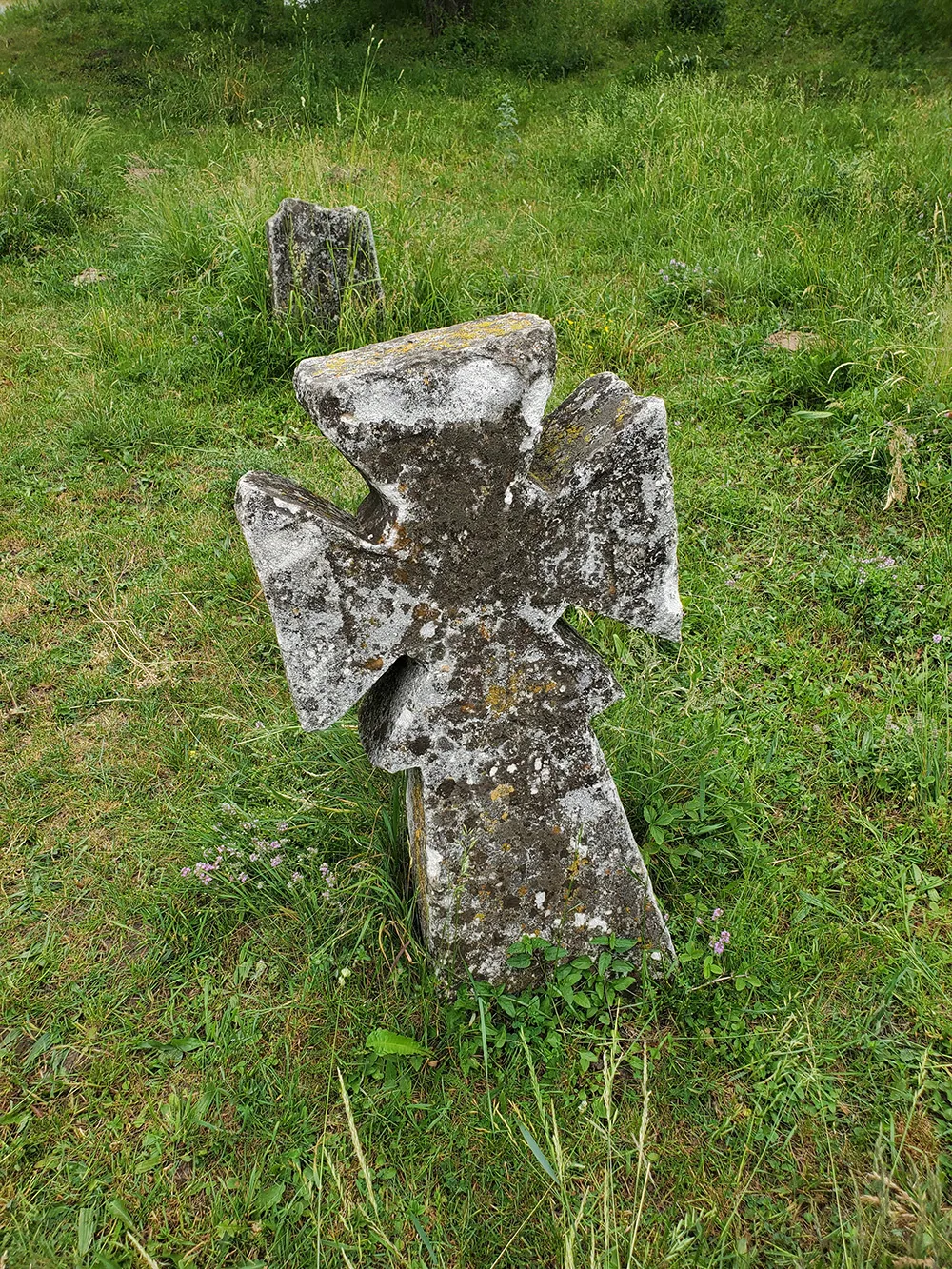
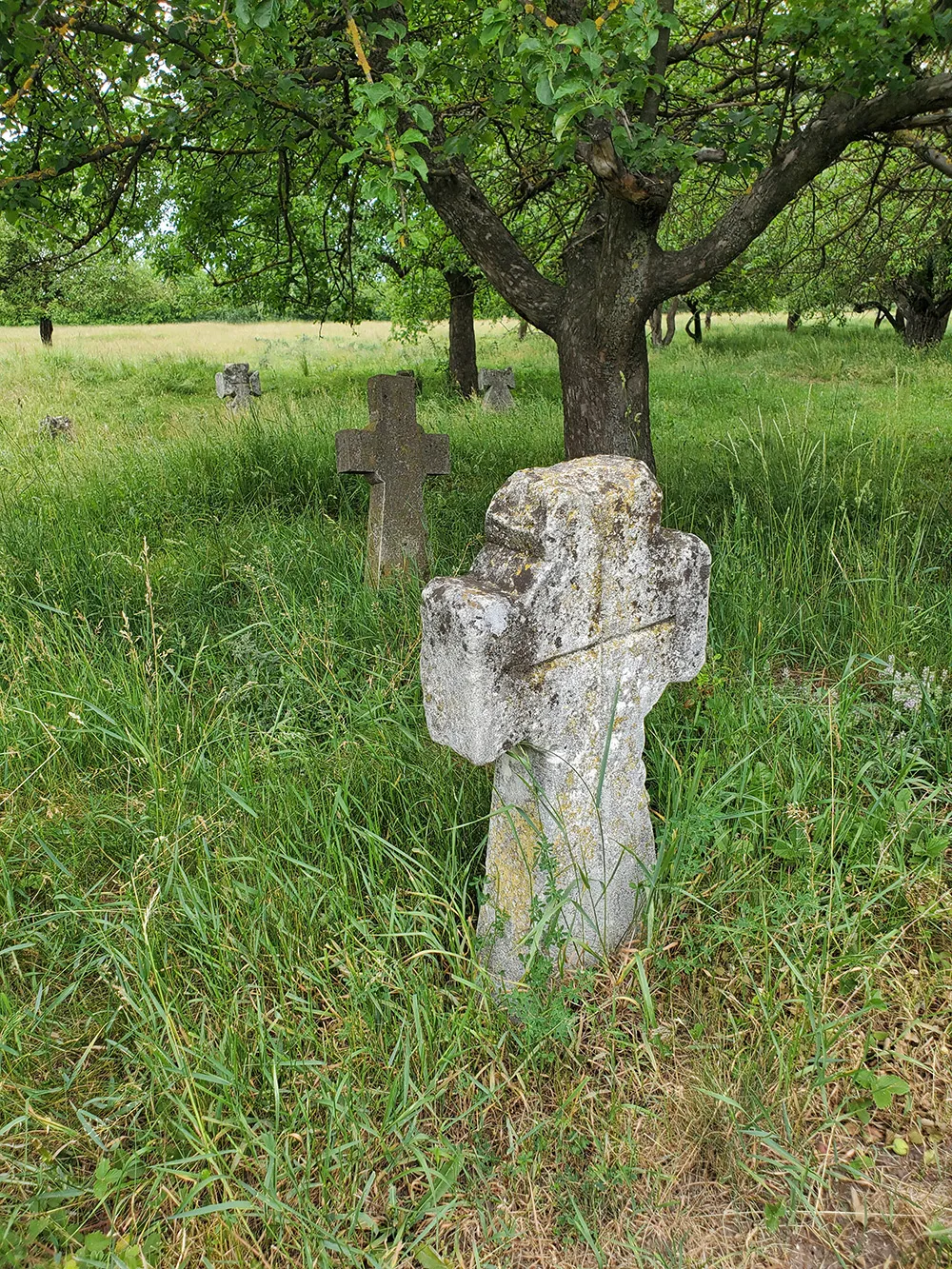
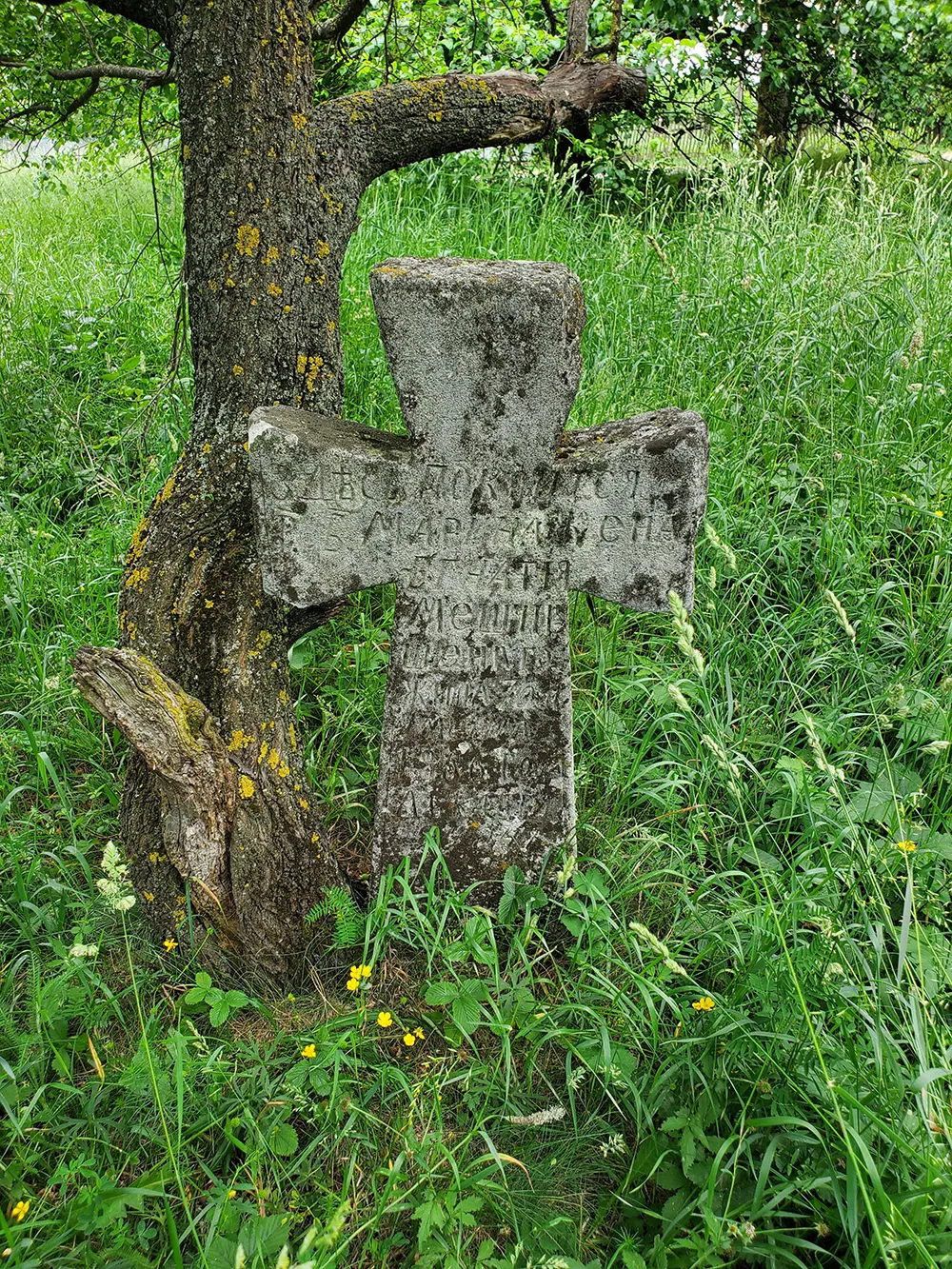
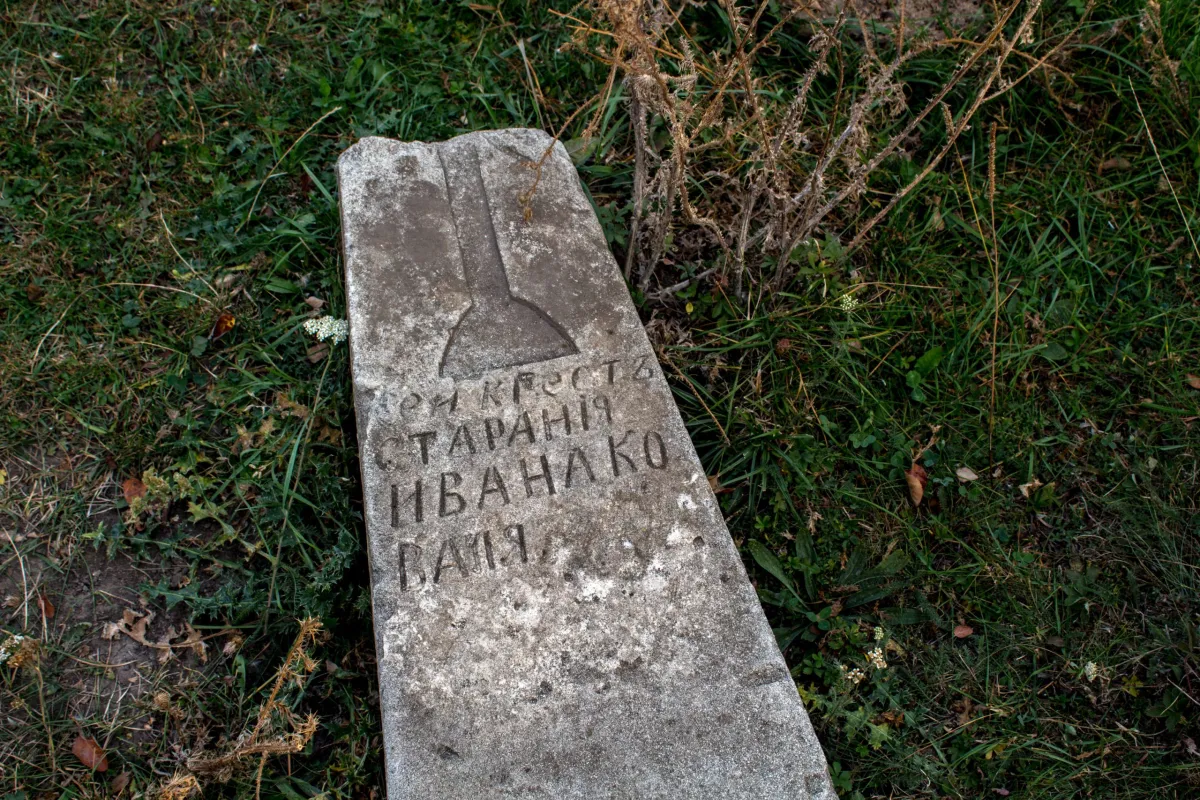
Whereas other cemeteries of this micro-region often have cross-pattée-like forms, in Zarichanka they are almost absent. Instead, the main mass here consists of paw-shaped crosses (or crosses with flared arms): their edges widen smoothly at the ends, resembling paws or trapezoids, but remain straight or rounded, without notches. In popular usage and in local-history literature, such archaic stone monuments are often loosely called “Cossack crosses”.
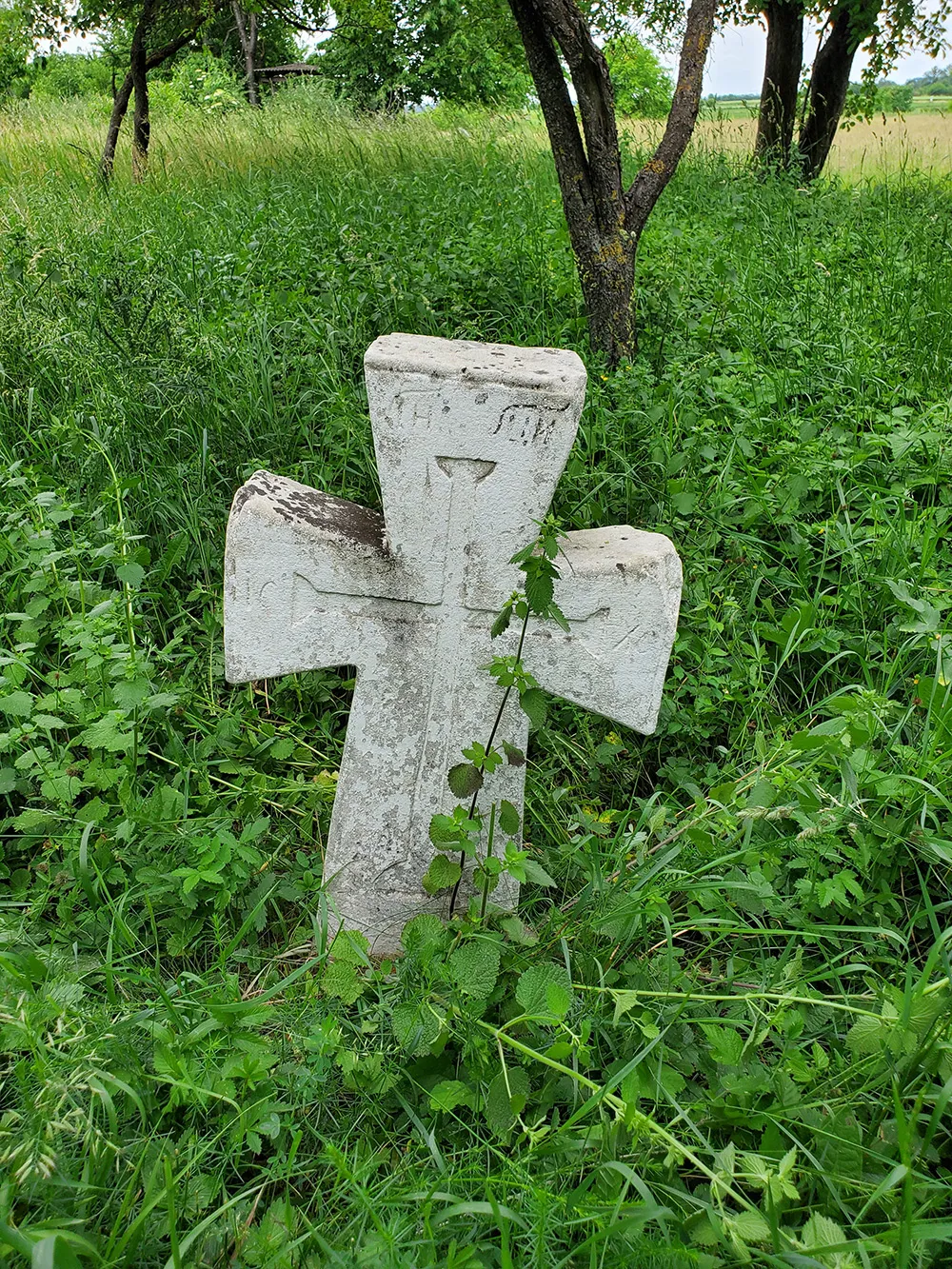
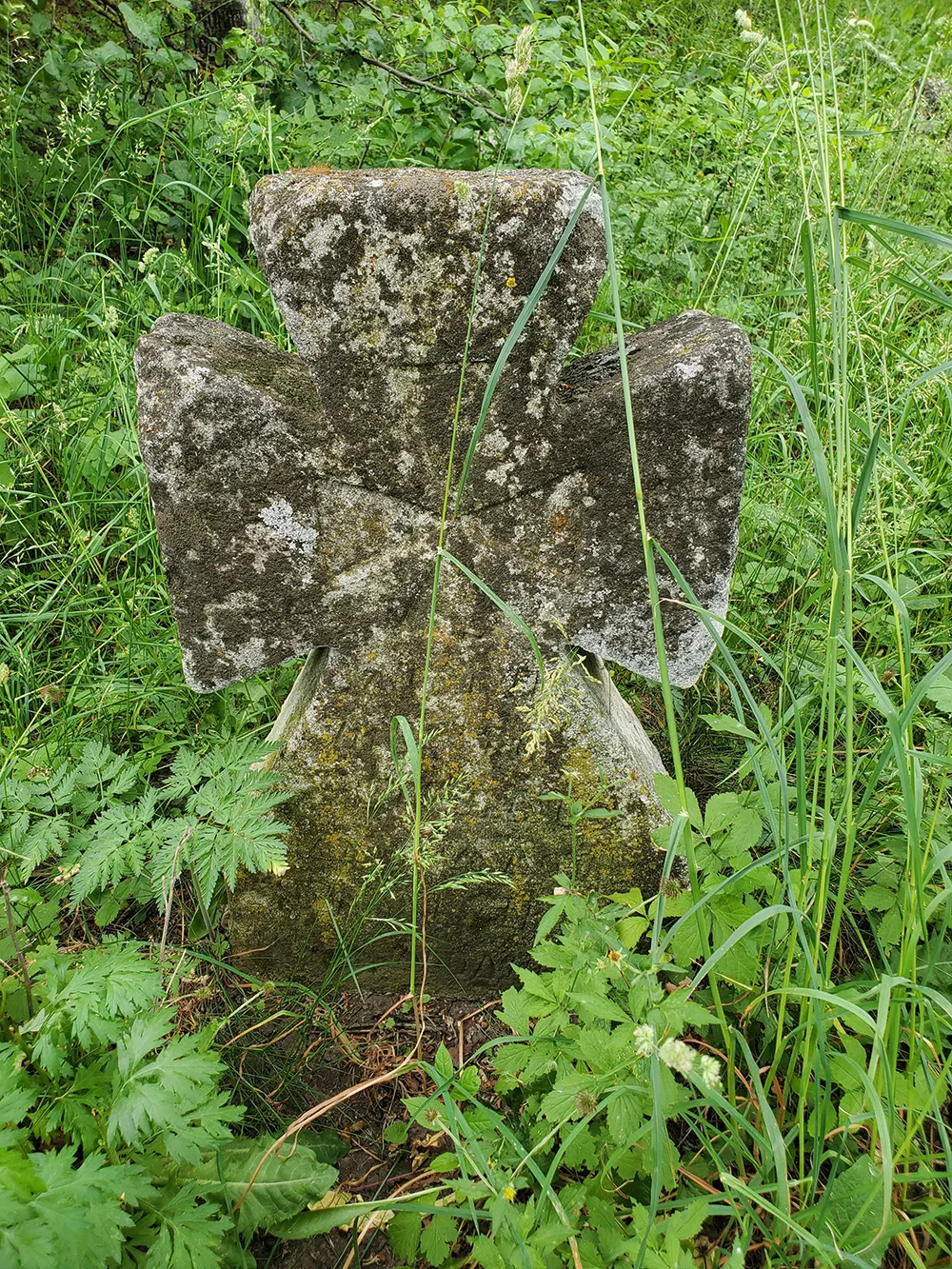
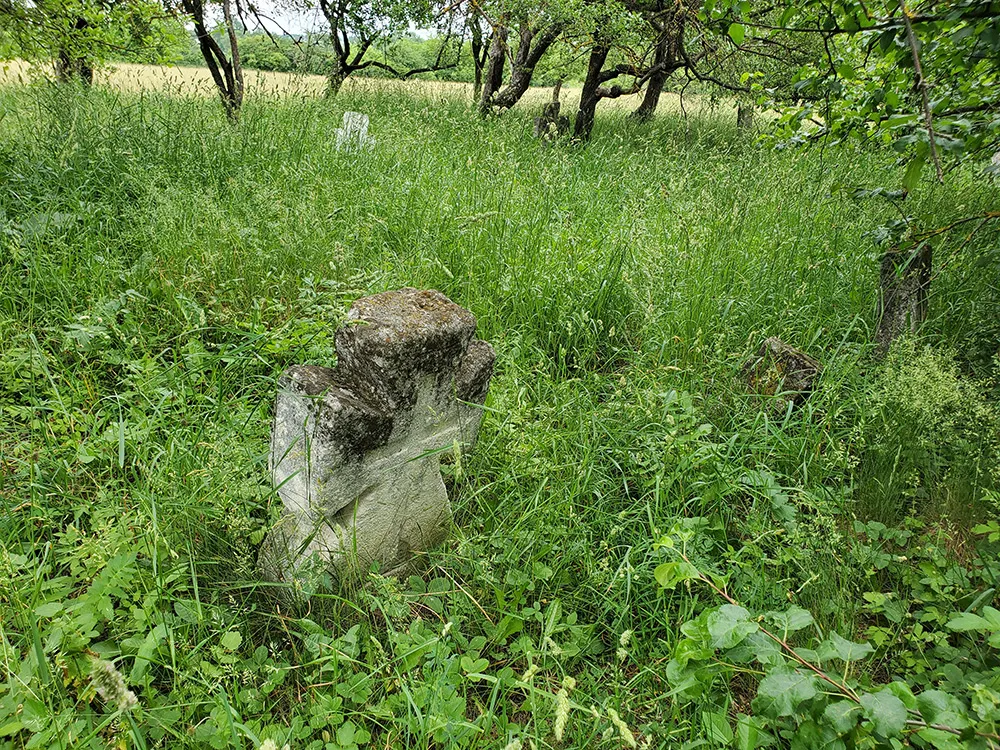
Interestingly, these paw-shaped crosses have one more feature: in many cases they are additionally decorated at the centre with a relief image of the same paw-shaped little crosses!
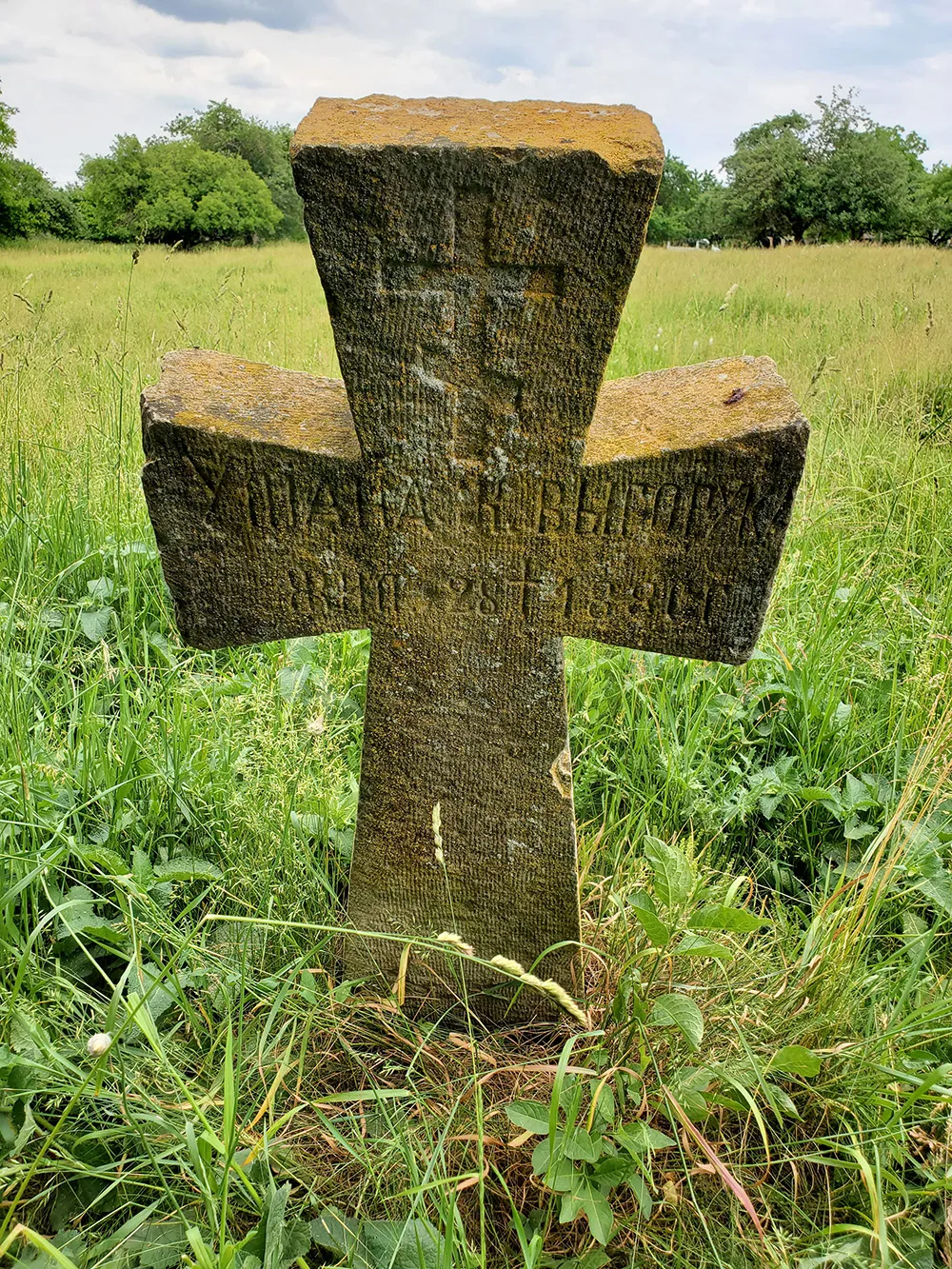
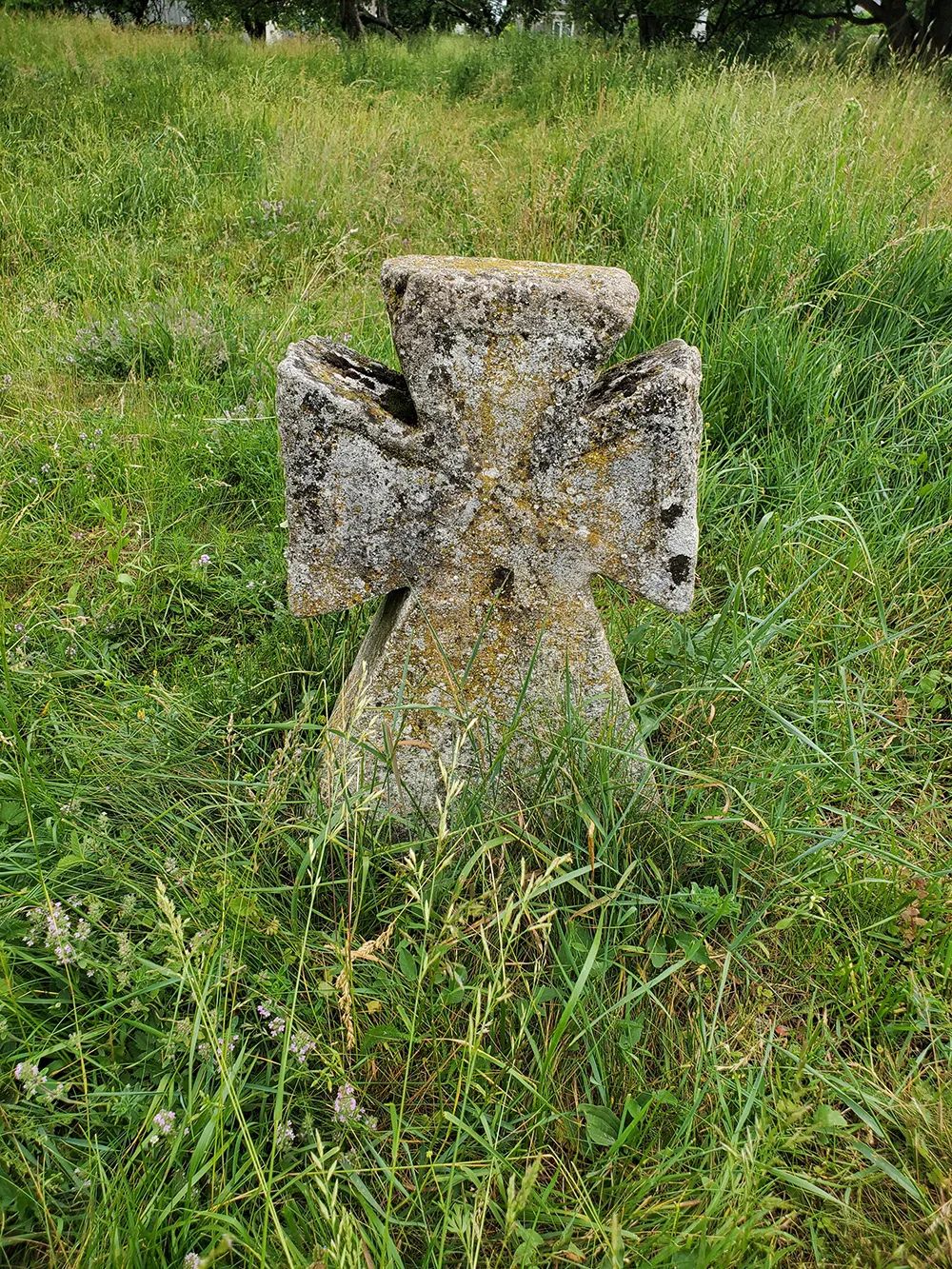
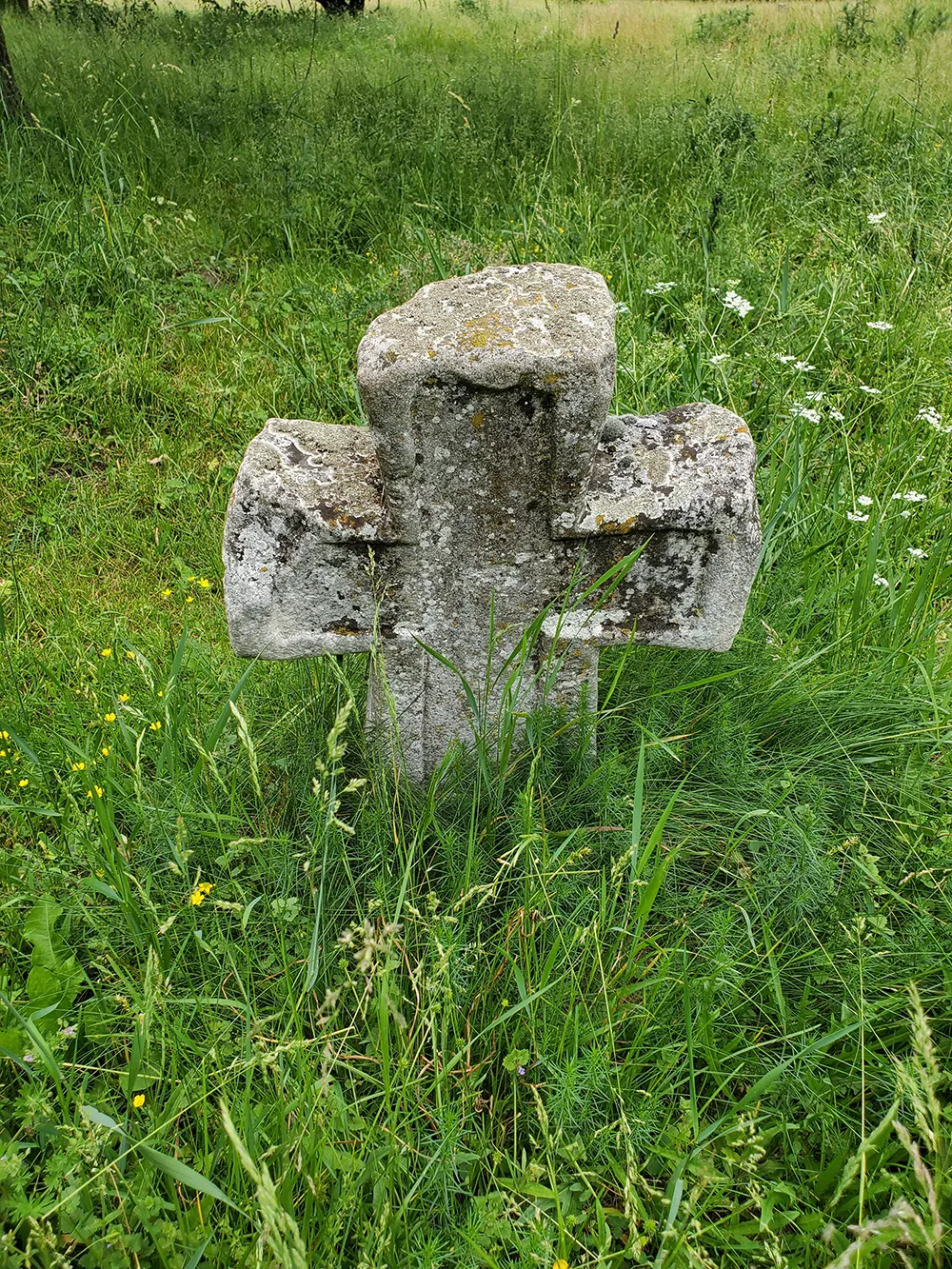
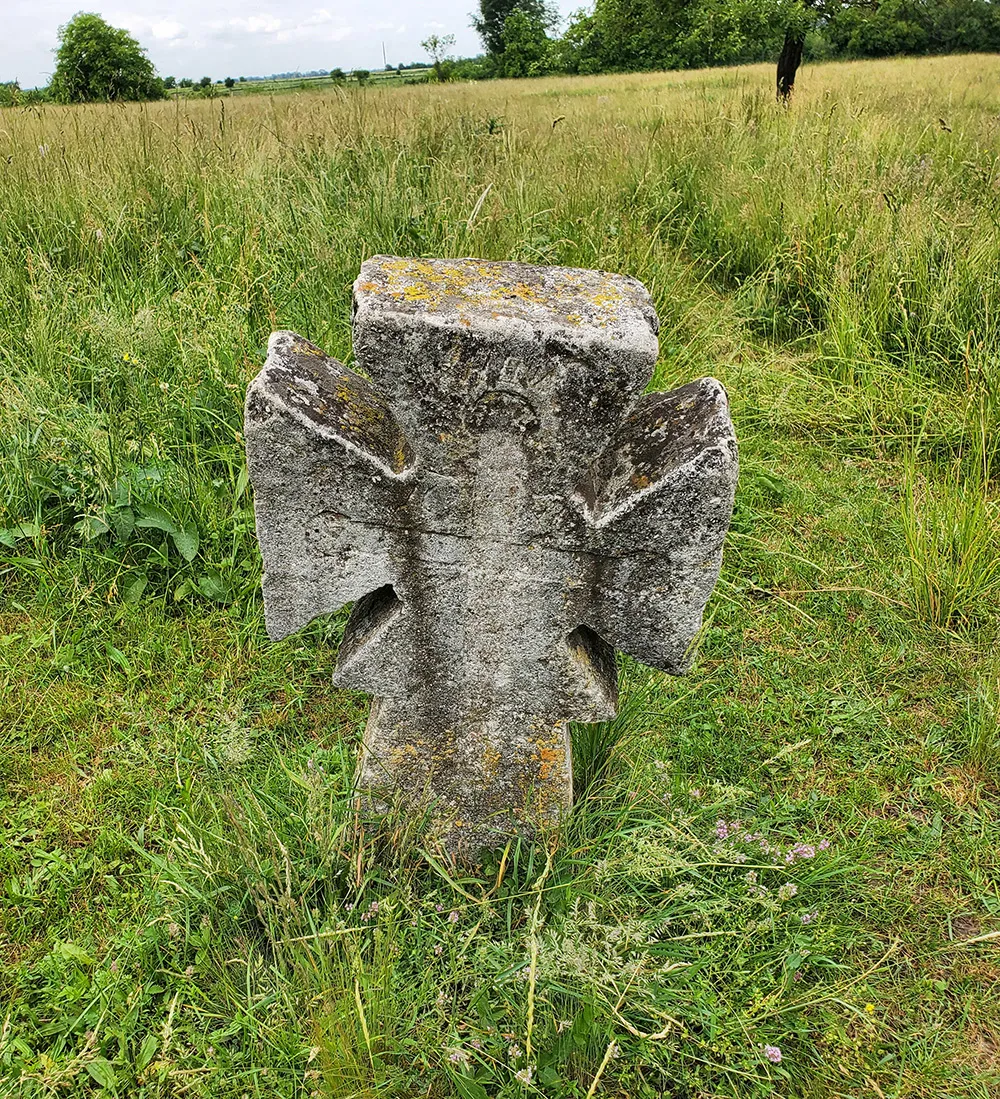
Why this is so, there is probably no deep sacred explanation. Most likely we are dealing with a local “fashion” tied to a particular master or a local centre of the stonecutting trade.
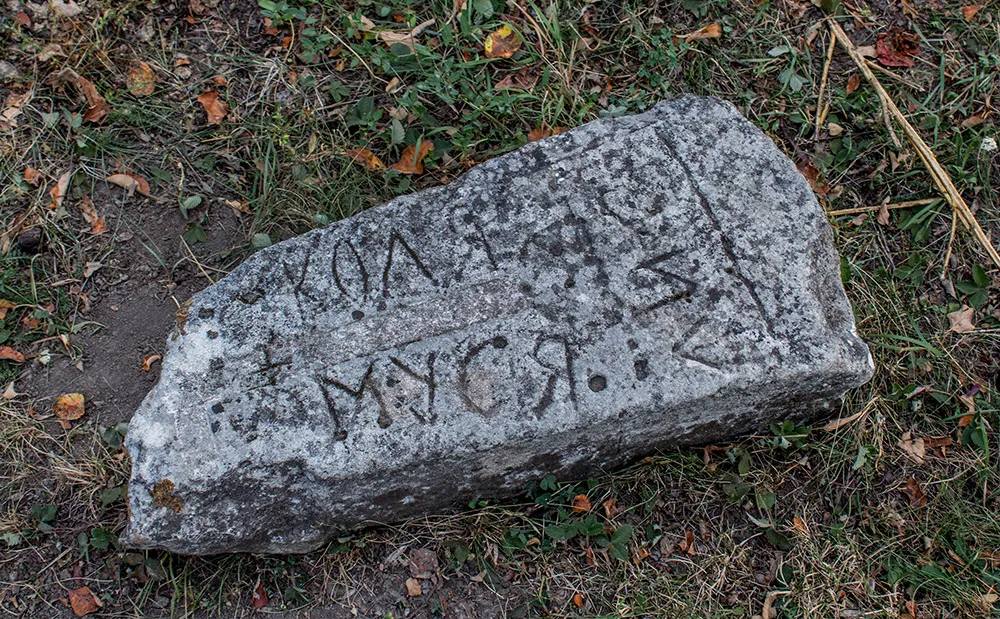
On the unpleasant side: the cemetery lies not on the outskirts, as is usual, but in a rather lively spot, because of which it suffers from vandalism in places.
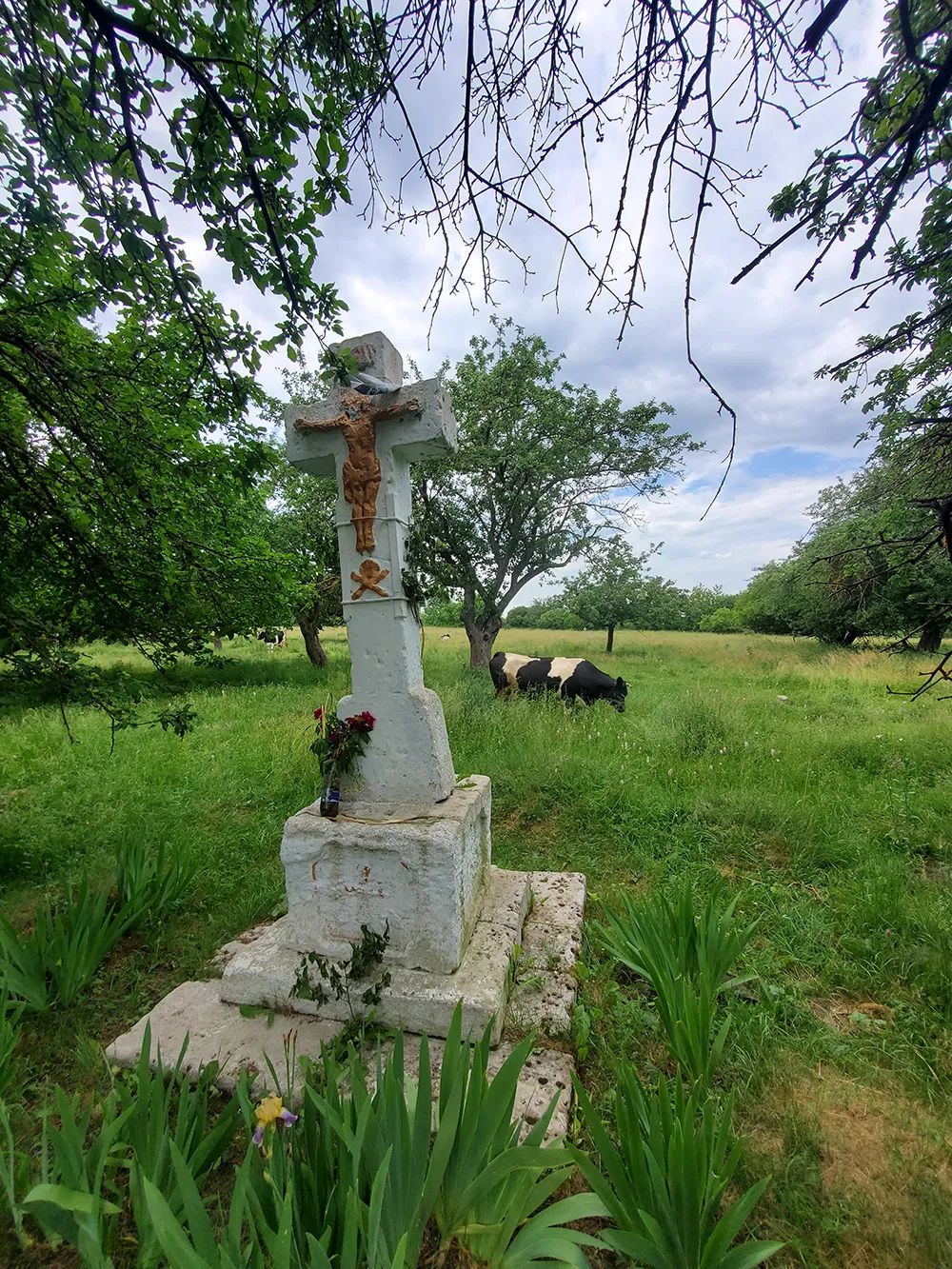
A small cross-shaped chapel is also interesting. It is not a gravestone but a sacred figure indicating that this territory is consecrated.
Text: Dmytro Poliukhovych
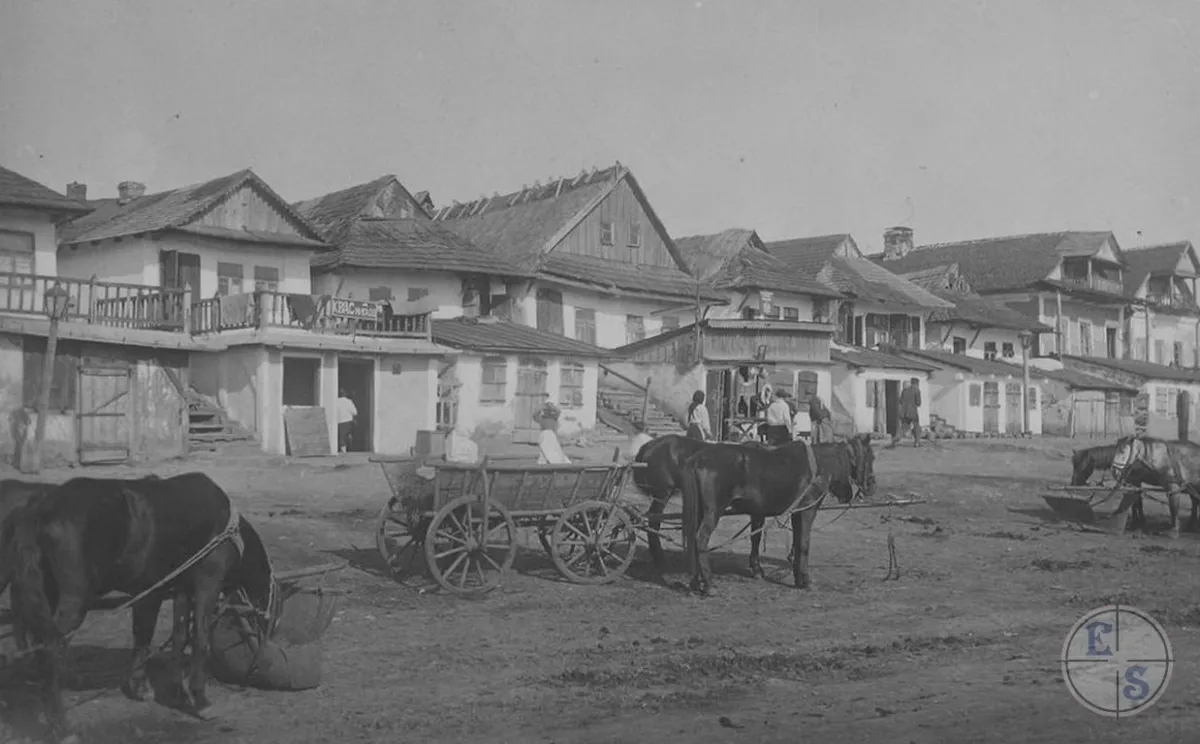
Photo of old Jewish Lanckorun: Pavlo Zholtovsky (1930s)
Modern photos: Roman Malenkov (summer) and Dmytro Poliukhovych (autumn)


