

Athens. Where civilization began

· 17 min read
First I want to deal with something that has long bothered me: why “Athens”, and why in the plural? The Greeks officially call it Αθήνα, Athina. The “th” is more or less understandable, a matter of how the combination “th” was rendered in translation; as the language has come to use it, so we say it. As for singular and plural, it turns out that until the 1970s the name of the city was also used in the plural in Greek, Ἀθῆναι, like other ancient poleis: Thebes, Mycenae, Delphi. Then the Greek rules changed, but other countries decided not to alter the established geographical name. Hence “Athens”.
How much there is in this word: Athens. From childhood I remember the song from the film “The Adventures of Electronic”: “they tell us Athens went to war against Sparta…” Then the history textbook, the earliest one, on the ancient world. And there is Athens. And if the main wonders of the world flash up somewhere, the Taj Mahal, the Egyptian pyramids, the Eiffel Tower, Big Ben, the Statue of Liberty, the Colosseum, almost always the Acropolis of Athens is added to this list, the standard of ancient ruins. Athens is the homeland of democracy and the cradle of civilization; the whole depth of the Western world came from the ancient polis of Athens. Great philosophers, Socrates, Pericles, Sophocles, Plato, Aristotle, Diogenes and many more, are connected with this centre of the ancient world.
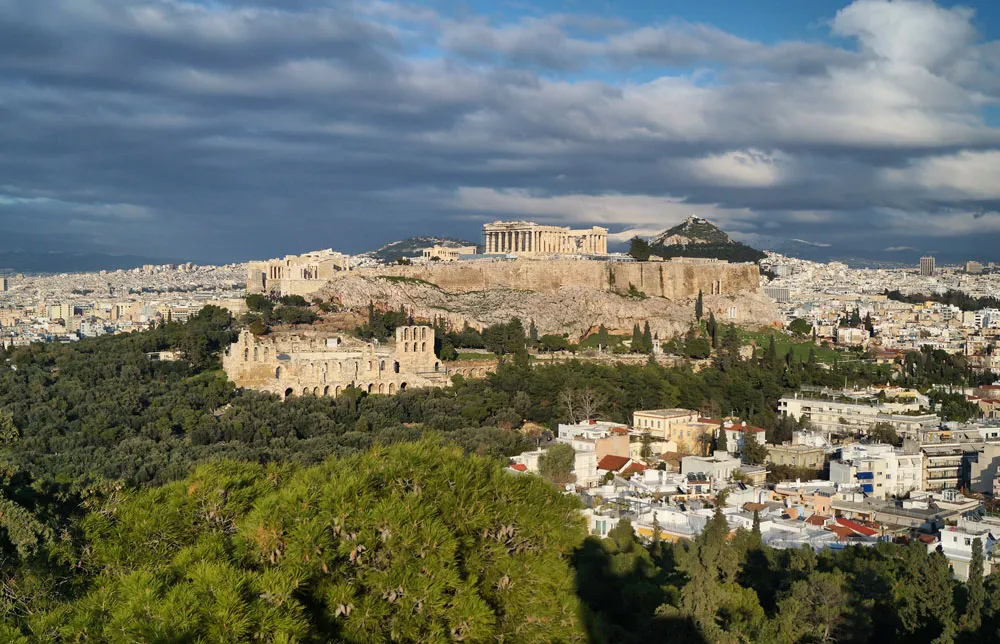
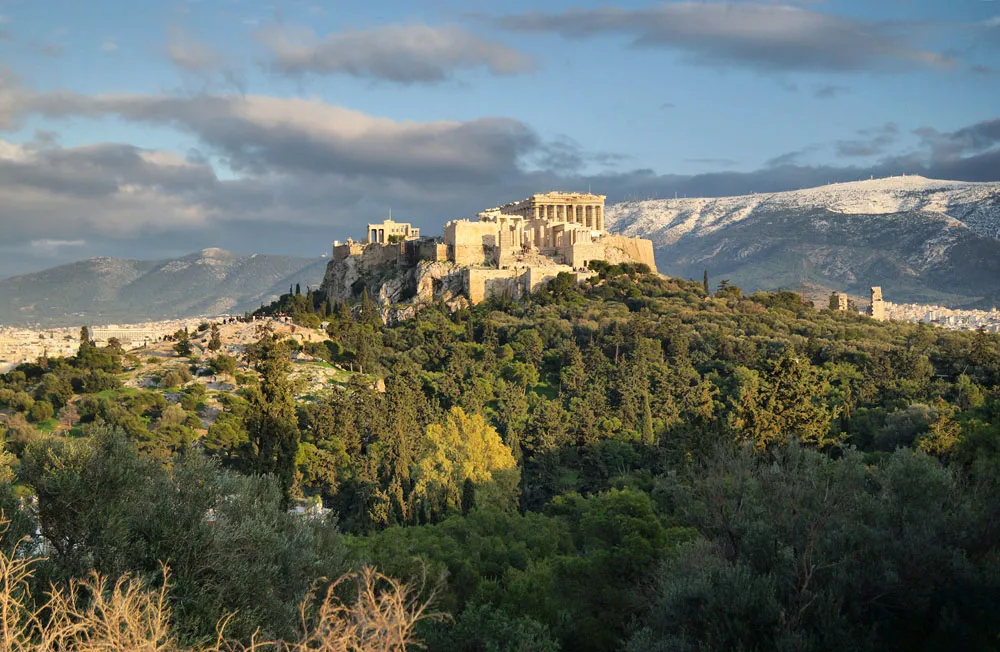
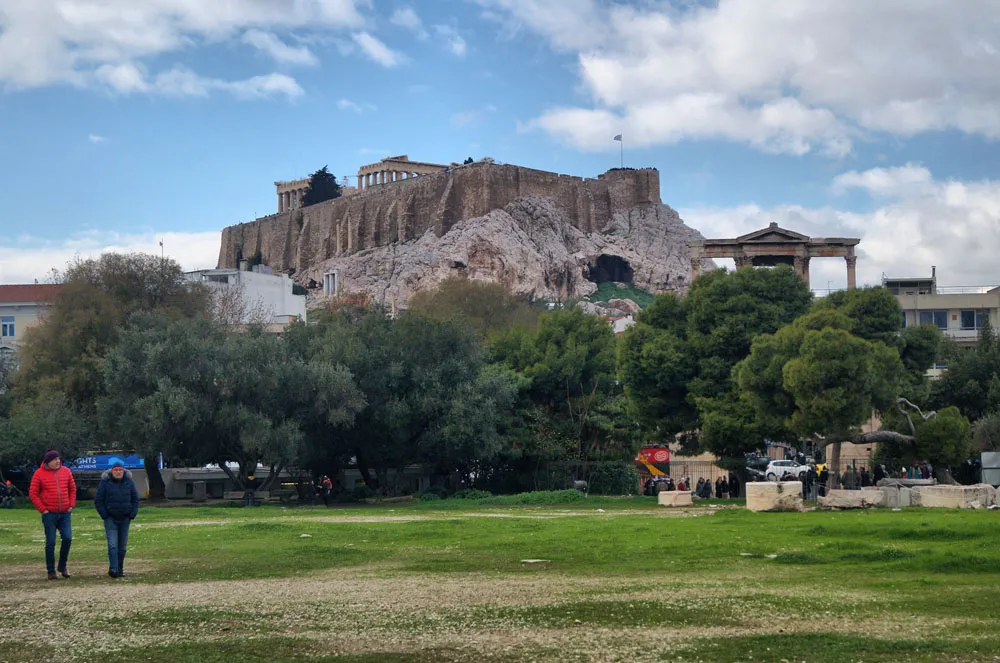
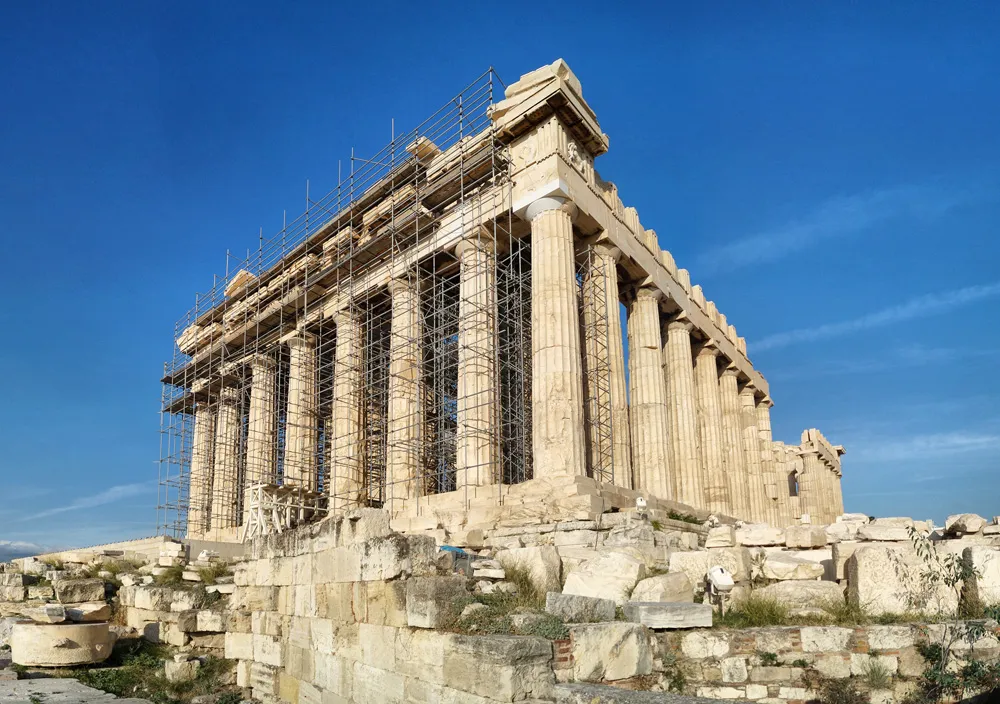
The main landmark of Athens: the Acropolis with the Parthenon
The city was founded by Cecrops, a deity born of Gaia, the earth, half man and half serpent. On the Acropolis he built a fortress which he called Cecropia. And Cecropia pleased the gods so much that they began a dispute over it. Poseidon and Athena in particular could not agree: each wanted to be the heavenly patron of the city. Zeus decided to reconcile the gods, so he invited Cecrops to the judgment so that he would decide who should be the ruler of the new city. Cecrops said: whoever makes the more valuable gift will rule. Poseidon struck the ground with his trident and a spring flowed from that spot. Athena struck the ground with her spear, and an olive tree grew from that spot. The goddess’s gift pleased Cecrops so much that he not only gave the city to Athena but also named it in her honour. That is how the greatest polis of the ancient world appeared: Athens. You understand that it is a legend, but still… Cecrops founded the first sanctuary of Athena on the Acropolis. In 438–431 BC the Parthenon was built on the site of the sanctuary, the greatest of the ancient temples that exist today. By the way, “Parthenon” translates from ancient Greek as “pure maiden” (more or less).
If we go not by myths but by the research of historians, it turns out that the date of the founding of Athens is not known, but it is known that in the 15th century BC the city already existed and was very influential. And in the 5th century, in the time of the strategos Pericles, it became the main centre of the Hellenic world. Those times are called the Golden Age of Athens. True, such a rich city could not fail to be a tempting morsel for enemies, and the main enemies in those times were the Persians. In 490 BC, 40 kilometres from Athens, the legendary Battle of Marathon took place, in which the Greeks defeated a much larger Persian army. Ten years later the Persians, led by King Xerxes I, nevertheless captured Athens: the sanctuaries on the Acropolis were burned, and the Athenians swore never to rebuild them. Then came the resounding Greek victory near the island of Salamis, not far from Athens, over the mighty Persian fleet.
In 431 Athens entered the Peloponnesian War against Sparta and its allies: “went to war against Sparta”. But it lost. The Spartans besieged and took the city. A third of the inhabitants died then, and the powerful defensive walls were destroyed. So ended the Golden Age of Athens.
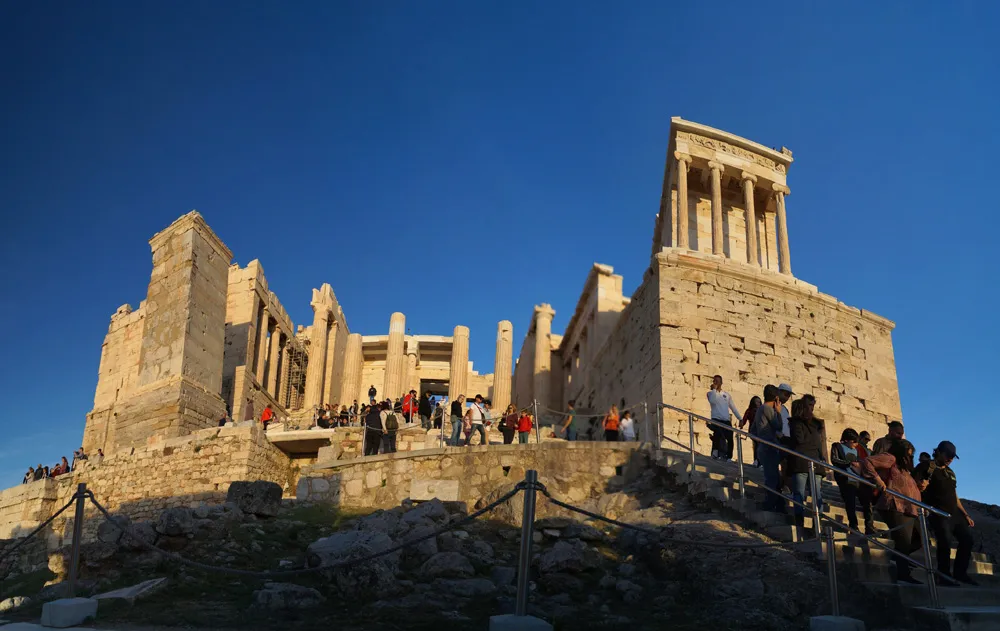
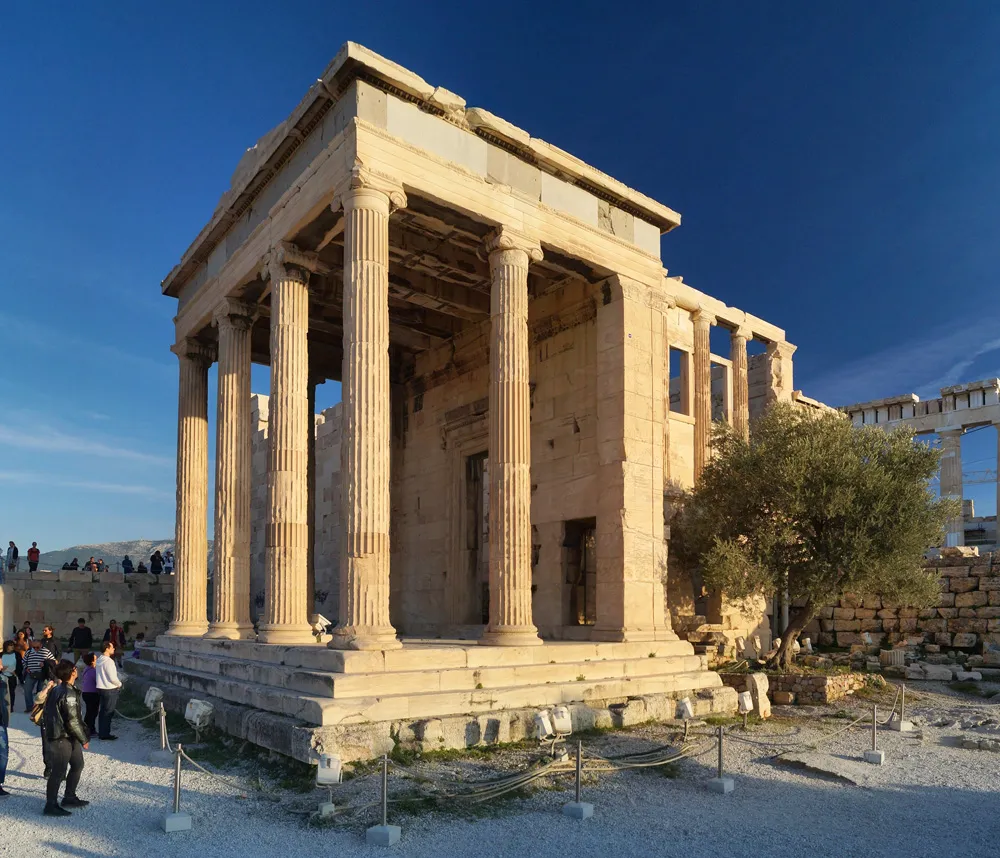
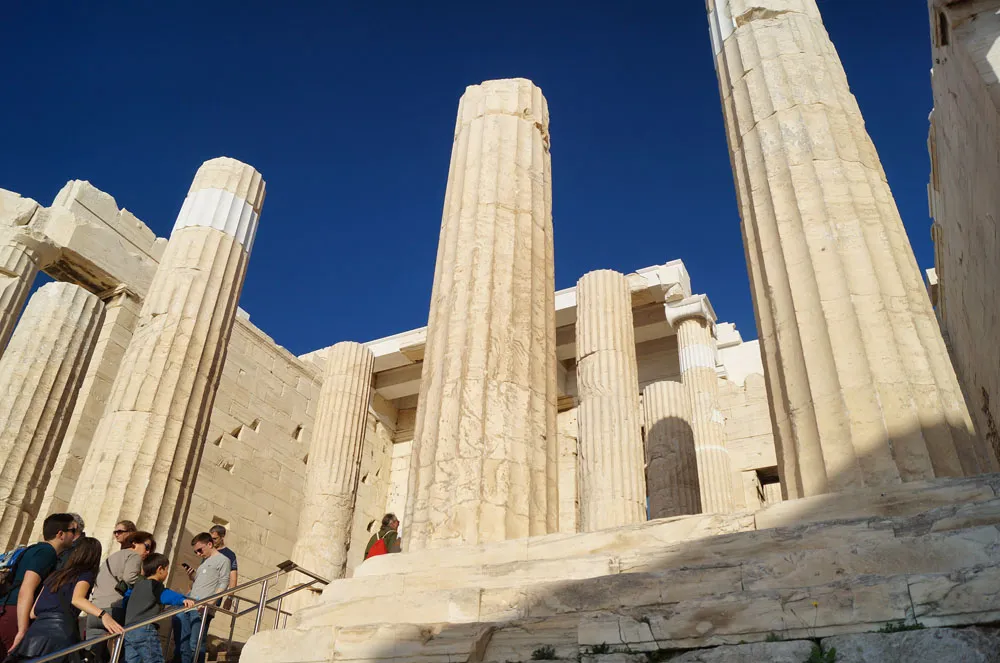
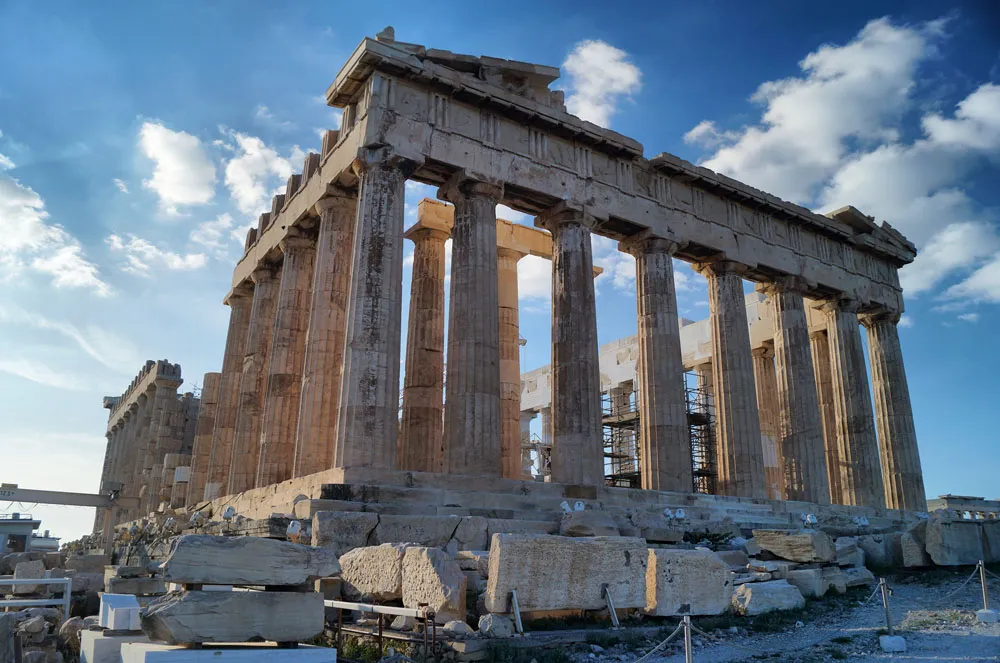
The Acropolis once more
In the 2nd century BC the period of Roman rule began, when Athens no longer had great significance in the world and gradually declined. After the Romans came the barbarians, the Goths and Heruli, who in 267 completely destroyed the polis. The great city was restored in Byzantine times. The great emperor Justinian took particular trouble: he closed the pagan philosophical schools and began the building of stone churches. In the peaceful centuries of the Byzantine period, when antiquity ended and the Middle Ages began, 40 churches were built in Athens, of which 8 have survived to our time. These are mostly relatively small Byzantine churches of the cross-in-square type. The most revered and valuable is considered the Church of the Holy Apostles, built in the 10th century on the territory of the Agora, below the Acropolis.
From the 12th century began a constant change of rulers of Athens and an era of ceaseless wars. Crusaders, Arabs, Franks, Catalans, Florentines, Venetians: whoever did not own this great city. The Acropolis was turned into a powerful fortress, whose walls have survived to our time; the Parthenon became the Catholic cathedral of Our Lady of Athens; new bastions and palaces of the city nobility appeared.
In 1453, after the Ottoman conquest of Constantinople, Athens received new rulers, the Turkish sultans. For a long time. A period of relatively calm, provincial life began. The mosque on Monastiraki Square is from the Turks, as is the general structure of the city. Many tourists say that present-day Athens is very similar to a Turkish city, in particular Istanbul. Although personally it reminds me more of Bursa. What can you do: 4 centuries of Turkish rule could not pass unnoticed.
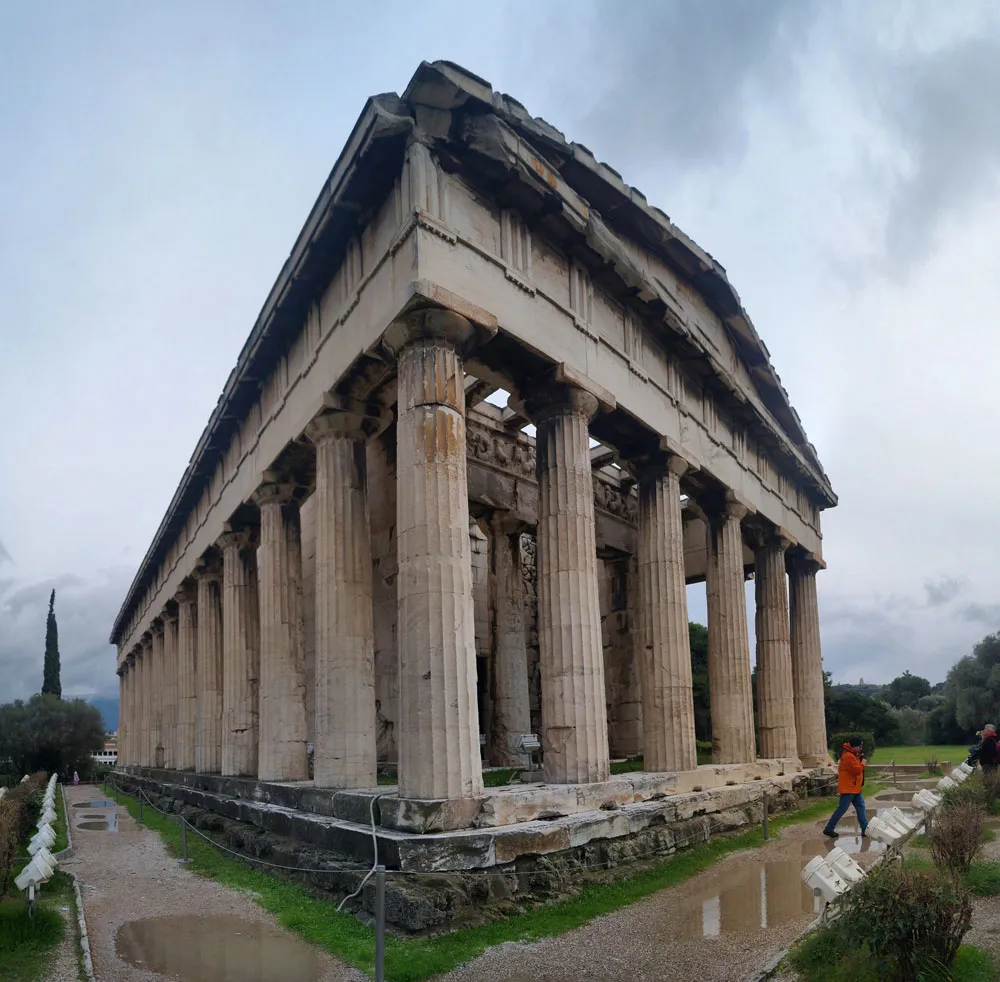
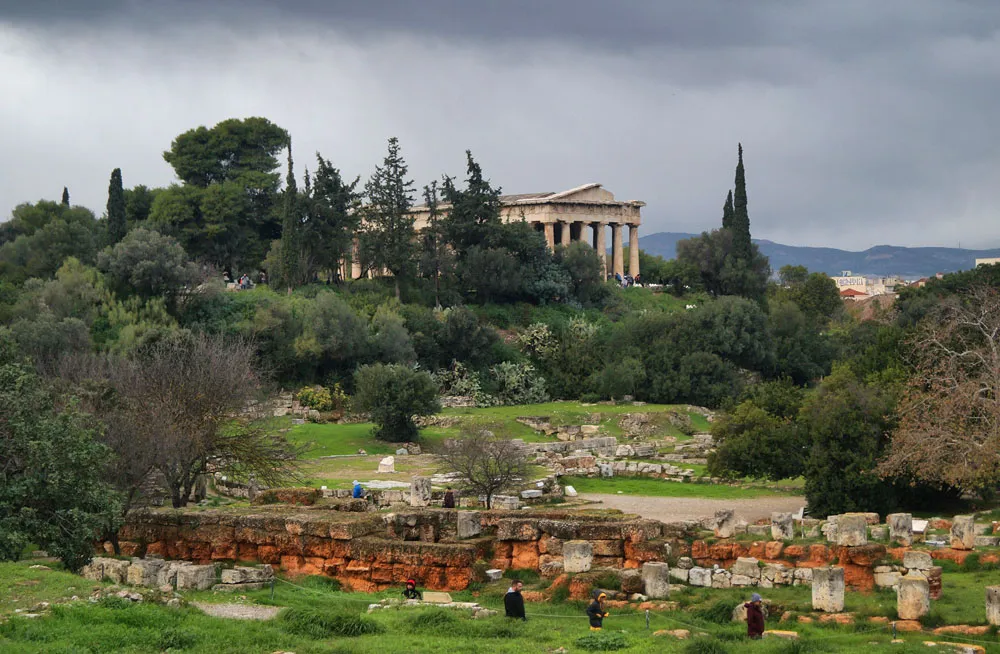
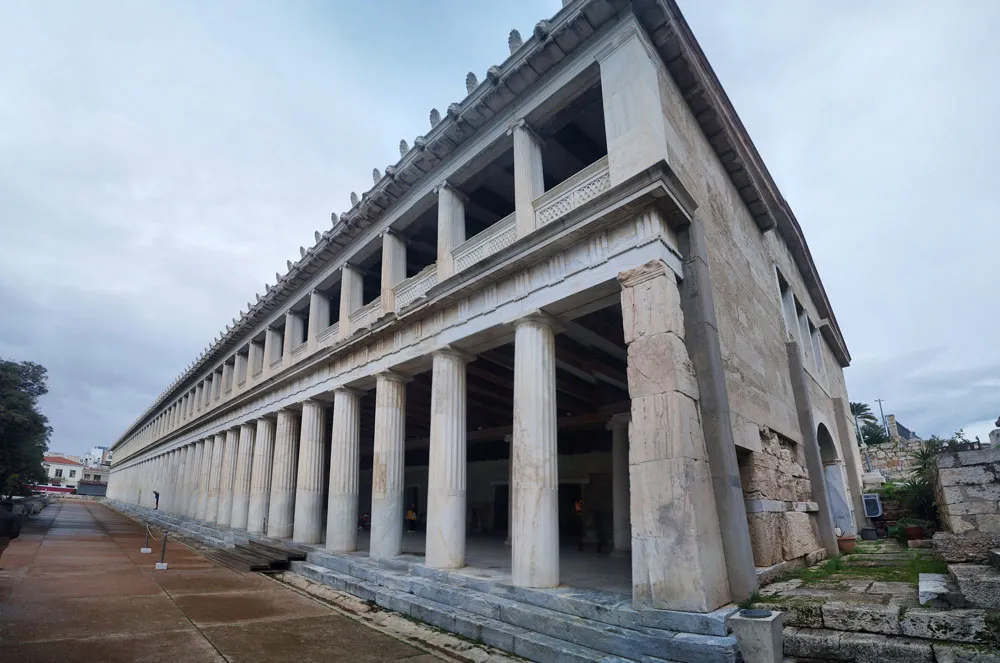
The Agora with the Temple of Hephaestus and the archaeological museum
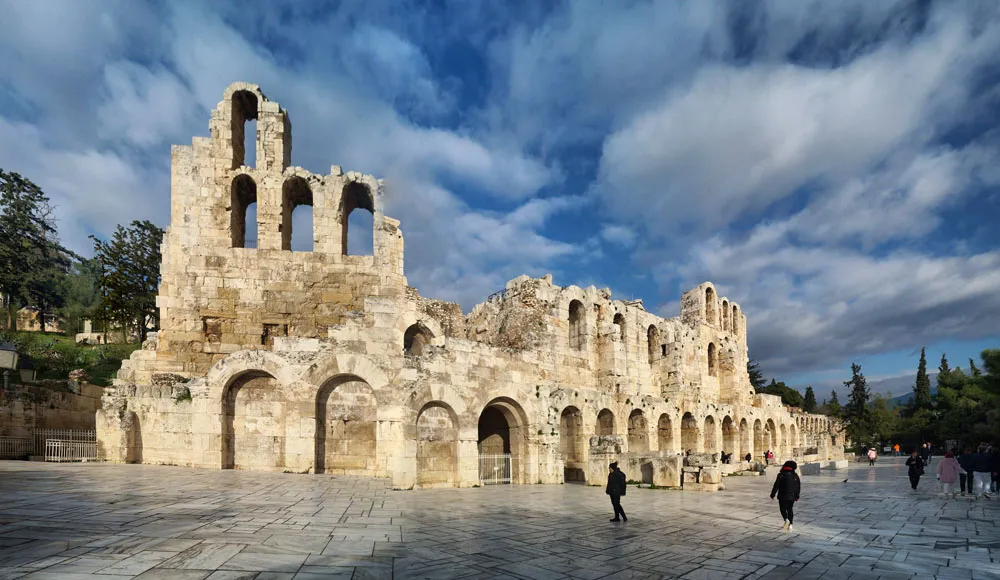
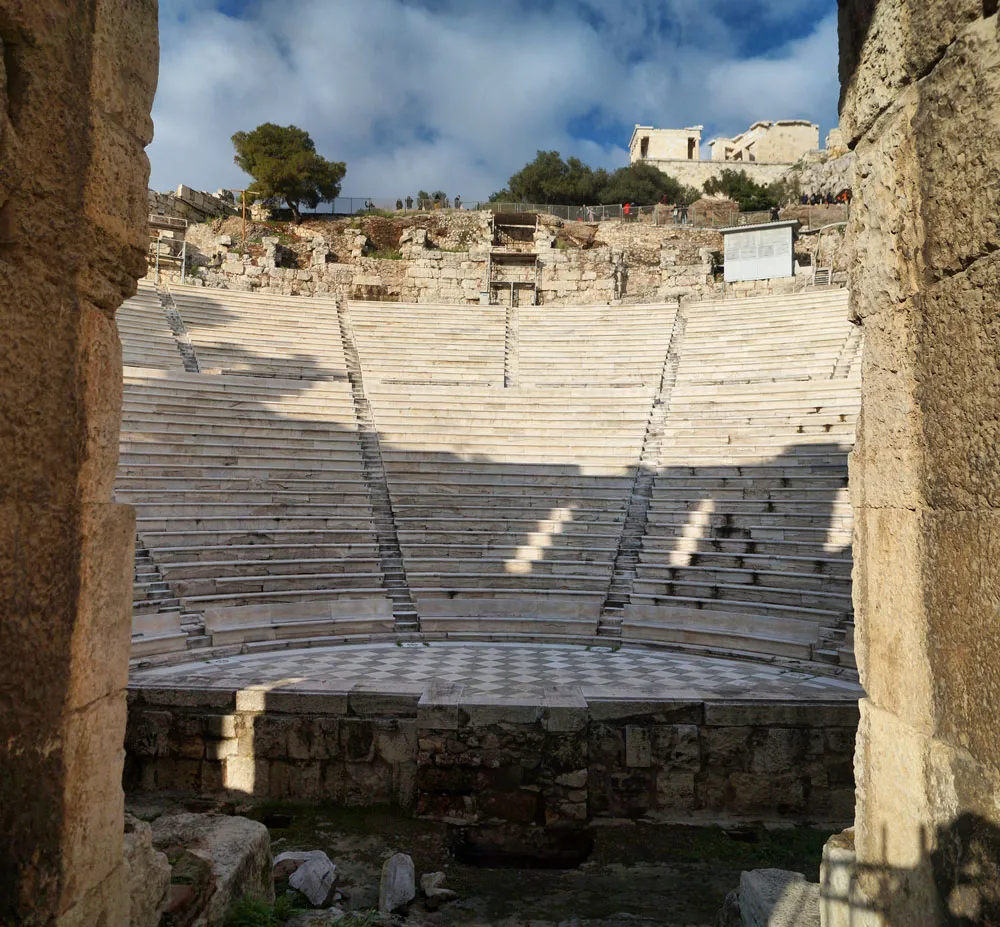
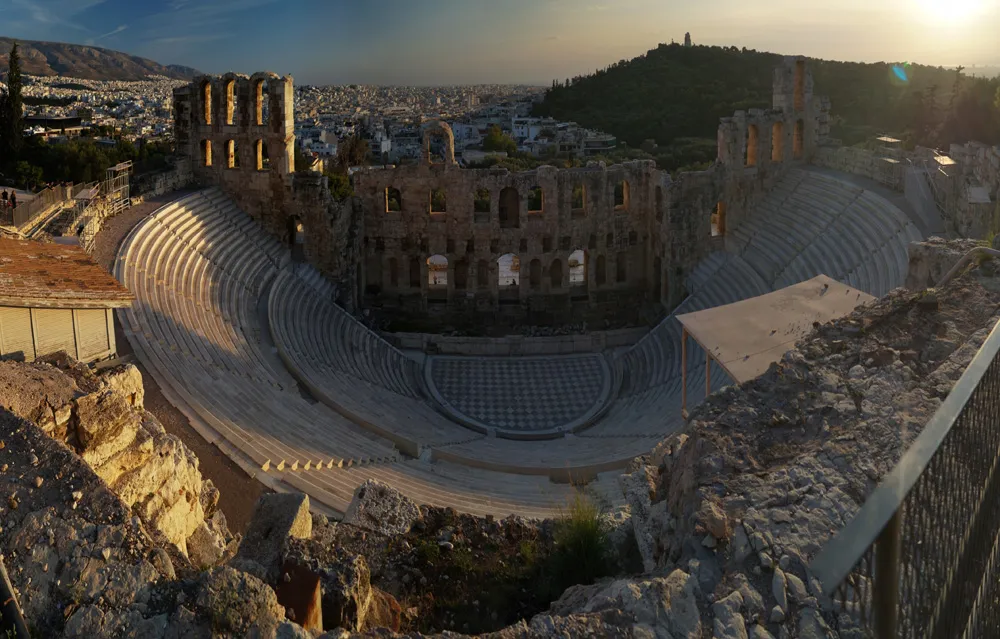
The Odeon
In 1826, for the fourth time in its history, Athens was completely destroyed. This was done by the Turks, during the Greek War of Independence. Almost no inhabitants remained in the city, and it is strange that it was Athens that was made the capital of the newly created independent Kingdom of Greece in 1833; at that time the city had only 5 thousand inhabitants. It was a tribute to tradition. From then on a new stage in the life of Athens began.
Present-day Athens is a huge metropolis in which more than 5 million people live. True, the official population of the city is 3.8 million, but Athens long ago “swallowed” the nearby towns and villages, and from the sea it has “grown” together with Piraeus, the largest passenger port in Europe, so many more people live in the agglomeration. The residents of Piraeus are categorically against being merged with Athens; they prove it especially at football matches between Olympiacos and PAOK or AEK. But you will not see any administrative border between the cities (theoretically it exists); the cities are joined by the metro and motorways. That is the truth of life: the bigger often swallows the smaller.
The prevailing buildings of Athens are uniform 5-to-7-storey boxes. There are no skyscrapers at all, and the largest buildings do not exceed 11–12 floors. If memory does not fail me, the tallest building is the Hilton hotel. Such are the building traditions, shaped by seismic activity and frequent earthquakes, from which the city often suffered.
Athens occupies an enormous area, covering with its buildings the whole undulating, hilly plain between the sea and the mountain range. From this bristle of buildings emerge the bare Mount Lycabettus, the Acropolis and a few less noticeable hills. It is from Lycabettus that you can see the best views in Athens. There, on the mountain, are fine viewing platforms, a restaurant and a 19th-century church. You must climb the mountain, either on foot or by funicular.
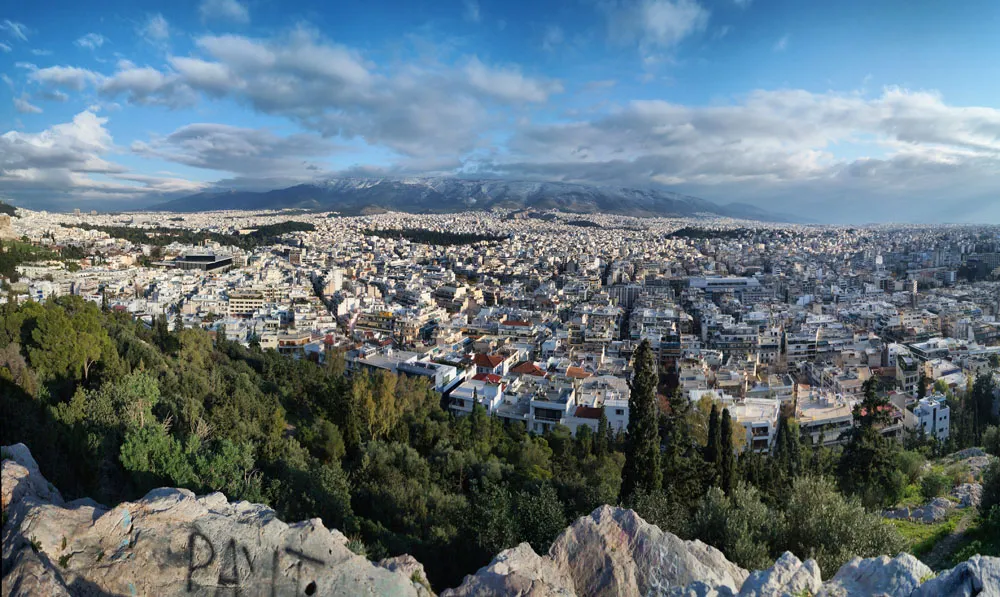
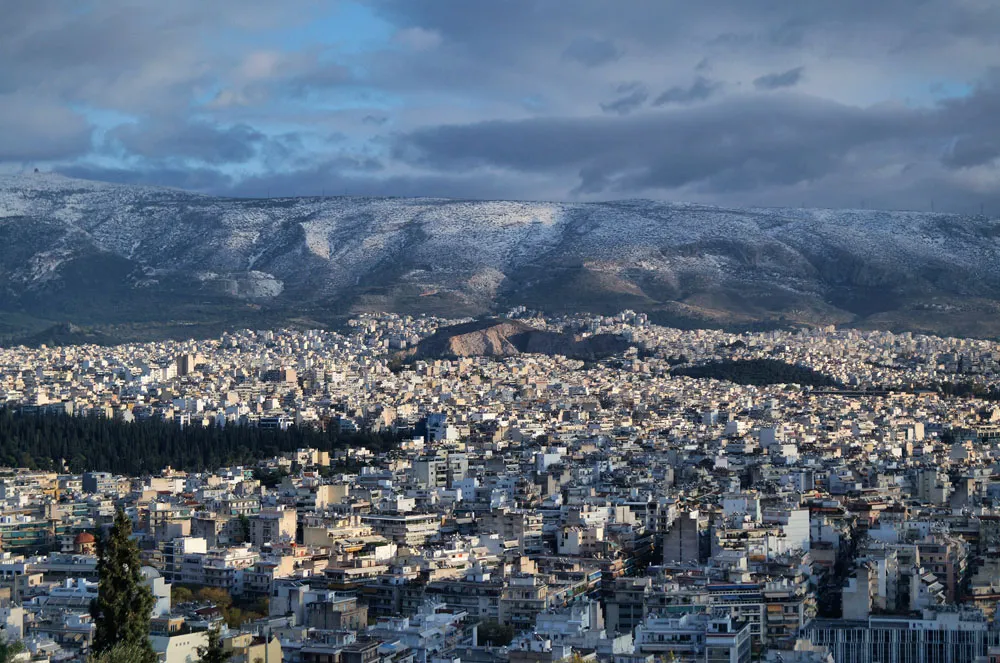
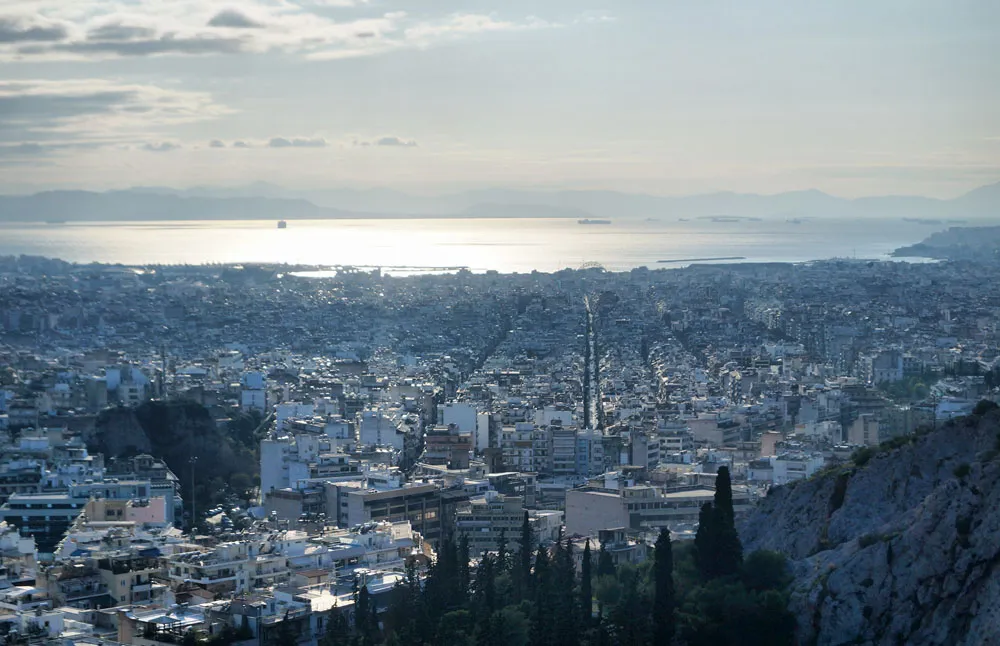
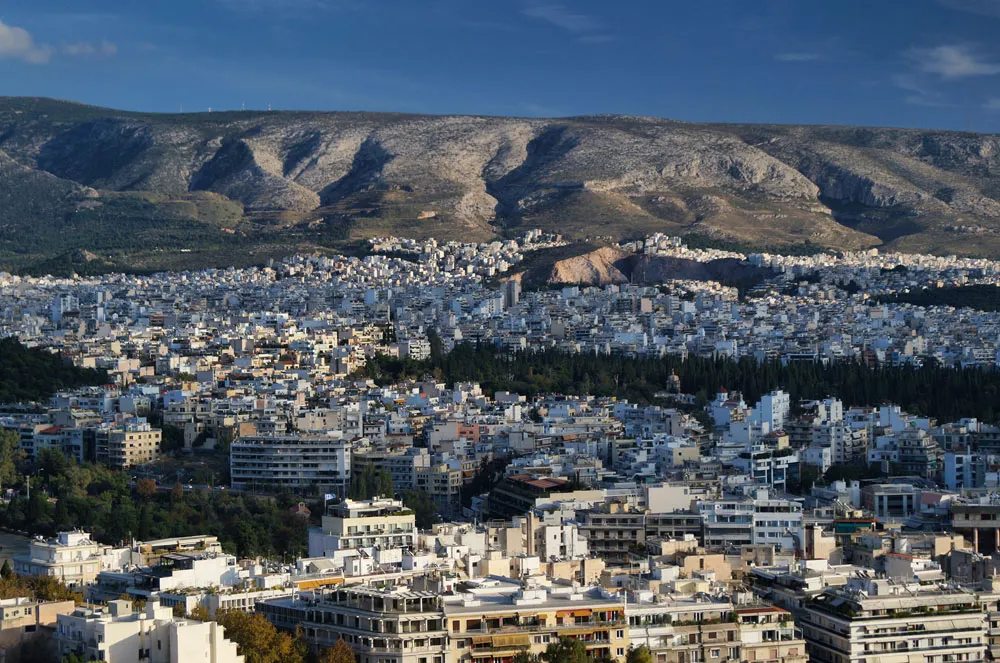
Athens is built up very densely; the streets are narrow and constantly climb uphill or roll downhill. The best way to get around such streets is by moped, so there are a huge number of mopeds and various scooters in Athens, the most in Europe. On the big roads, where there are 2–4 lanes in one direction, at traffic lights they all roll forward ahead of the cars, and when the light turns green they burst out like a swarm of bees, slowing down the general traffic. So bear in mind that travelling around Athens by bus in the daytime is a tedious and unpleasant business, considering that the whole city is one solid traffic jam. Better use the metro: the Athens metro is one of the most interesting in the world. Many stations host exhibitions and free museums; a great deal was found under the ground here when the metro tunnels were dug.
The main square of Athens is Syntagma (Constitution Square). Here stands the Parliament building, the former royal palace, built with money from the King of Bavaria for the first King of Greece, the Bavarian prince Otto. Placed on the Greek throne by the allies, the monarch, who was supposed to breathe new life into Greece and give it a constitution, surrounded himself with the Bavarian nobility and turned into an absolute dictator. He did issue a constitution after all, but did not win popularity among the Greeks by it. It is very strange to me how the hot-tempered Greeks put up with a hated, autocratic and weak king for as many as 30 years, overthrowing him only in 1862… The palace for the king was built to a design by Friedrich von Gärtner, and later the parliament was housed in it. In my opinion it is one of the dullest parliament buildings in Europe. That is, if you look at its architectural features; but the honour guard, who put on a real show here every Sunday at 11 o’clock, blocking the street and gathering thousands of spectators, makes the Greek parliament quite interesting for tourists. In general the guard changes every half hour or hour (the ceremonies differ slightly). The guard duty is carried out by the presidential guard, the evzones. These are tall fellows, no less than 187 cm in height, almost all of one face, in white uniform, tights and a skirt called a foustanella. On their feet are shoes with big pompoms. Once a sharpened blade was hidden in the pompoms, and each such shoe was a considerable weapon, especially considering their weight: each, studded with 160 nails, weighs 5 kg.
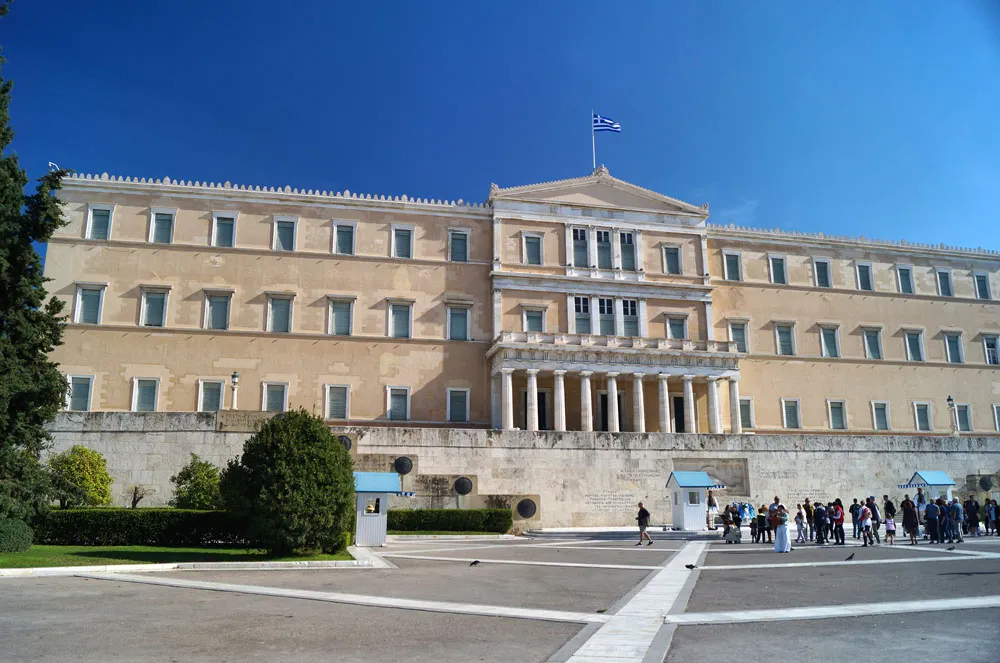
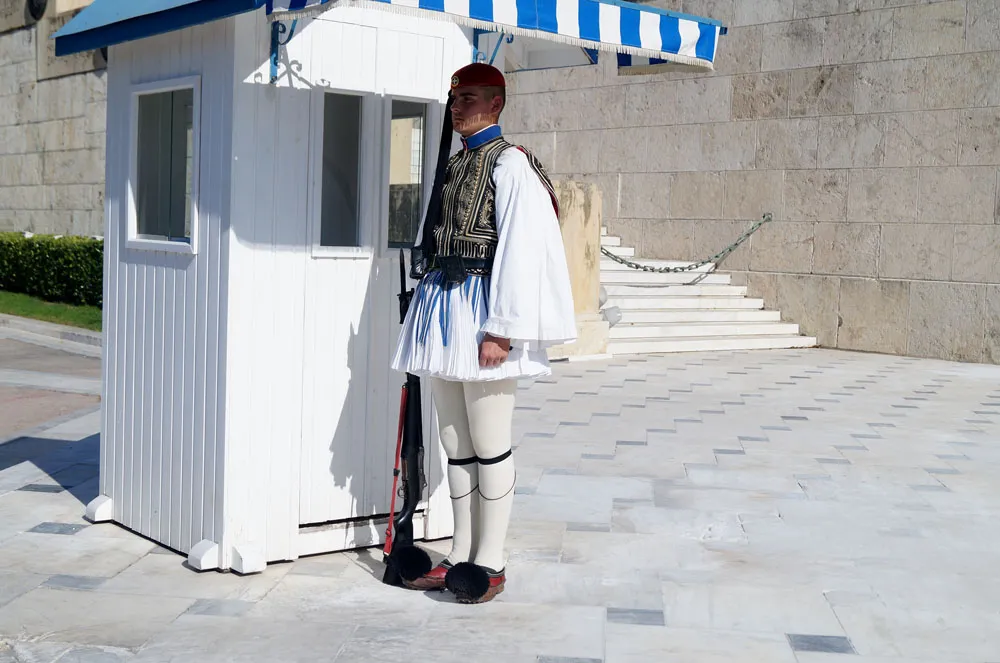
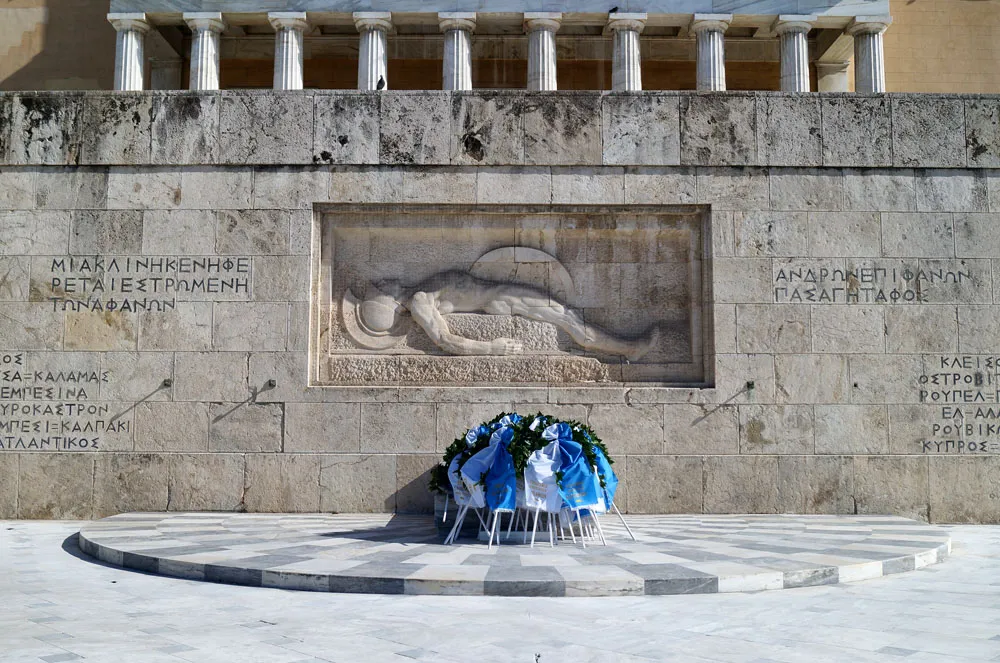
Syntagma Square and the Parliament
You look at the parliament building and are amazed once again at the Greeks: people who created the standard of beauty liked something like this… True, the other royal palace, which now houses the National Museum, is much more beautiful, and if we speak generally about the architecture of Athens, in its modern history, then everything is good there. The real pearls of the city are buildings by the outstanding architect Theophil von Hansen, an Austrian who was the son of a Norwegian and a Dane. This architect also worked in Ukraine: his masterpiece, the House of War Invalids, is now occupied by the University of Life Safety on Klepariv Street in Lviv. The architect is famous for his buildings in Vienna: the Museum of Military History, the stock exchange, the Palais of Archduke Wilhelm (now the OPEC headquarters), the Musikverein building. The master’s best-known building is the parliament building (the Vienna Reichsrat), but not everyone knows that it is very similar to von Hansen’s Athenian buildings: the university, the National Library, the National Academy and the Zappeion exhibition centre, fairy-tale structures in the Classicist style. To me the Austrian parliament and the Athenian university are twin brothers. Von Hansen worked in Athens for a long time, with good commissions, and only afterwards was invited to Vienna.
Another incredible building erected in the 19th century is the Olympic stadium, Panathenaic. Although it is not quite correct to speak of the building of this stadium in the 19th century, since it was built on the remains of a structure of the 4th century BC, excavated in 1869. With money from the rich man and patron Evangelos Zappas, the stadium was rebuilt in beautiful marble. In 1870 and 1875 the Zappas Olympics were held here, and in 1896 the Panathenaic became the arena of the first Olympic Games of modern times. In 2004 the Olympics took place here again. The handover of the Olympic flame to the country hosting the Games takes place here, and the stadium is also the finish point of the annual Athens Classic Marathon. Fantastic: a legendary stadium.
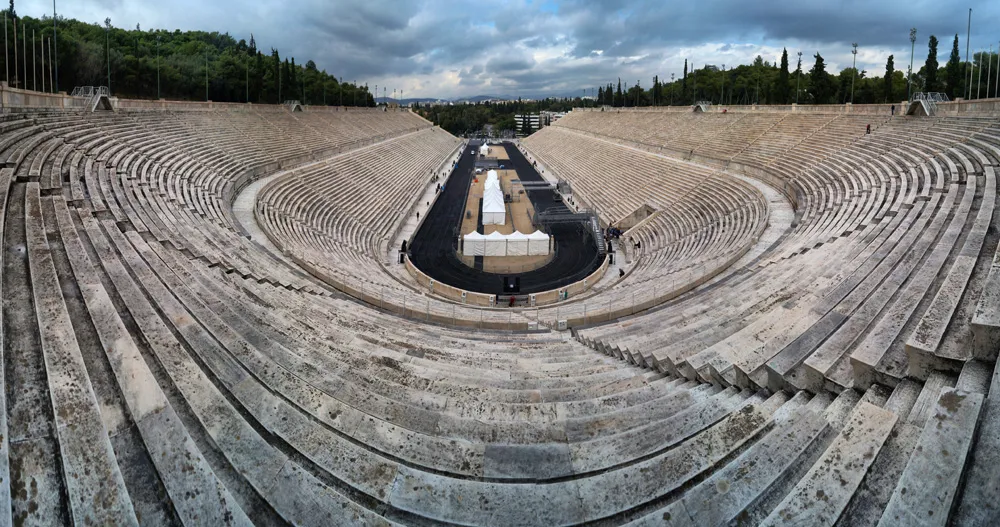
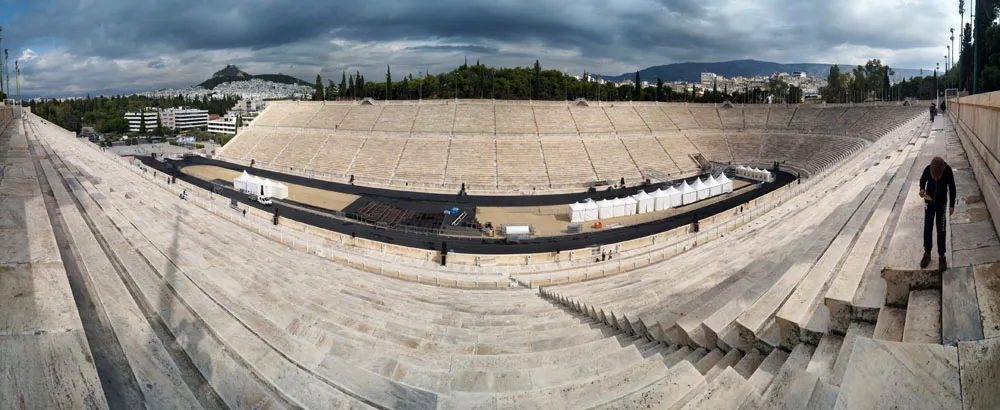
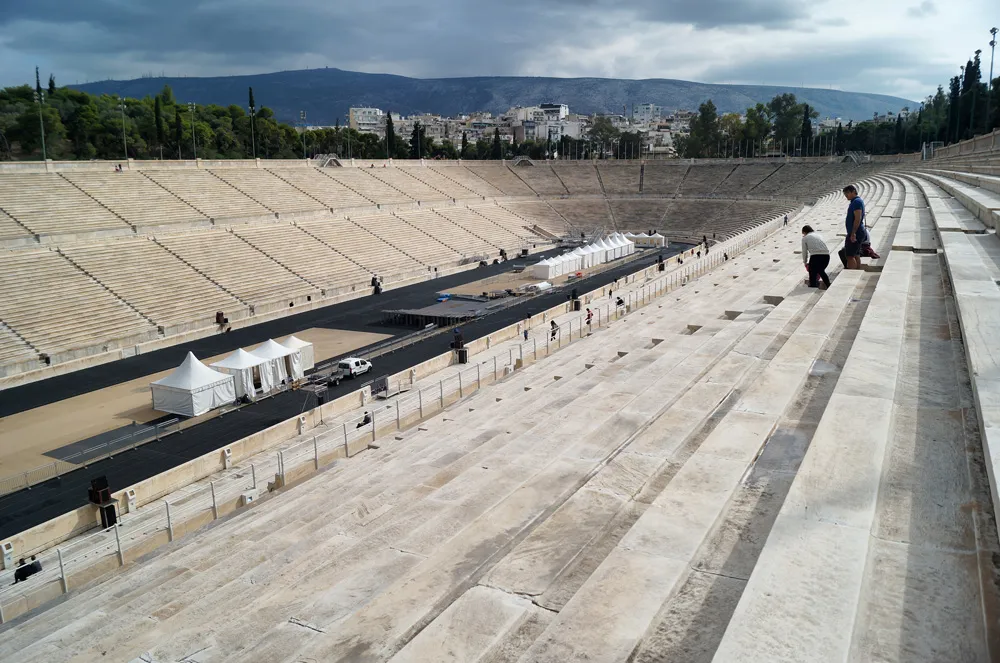
The Panathenaic Olympic stadium
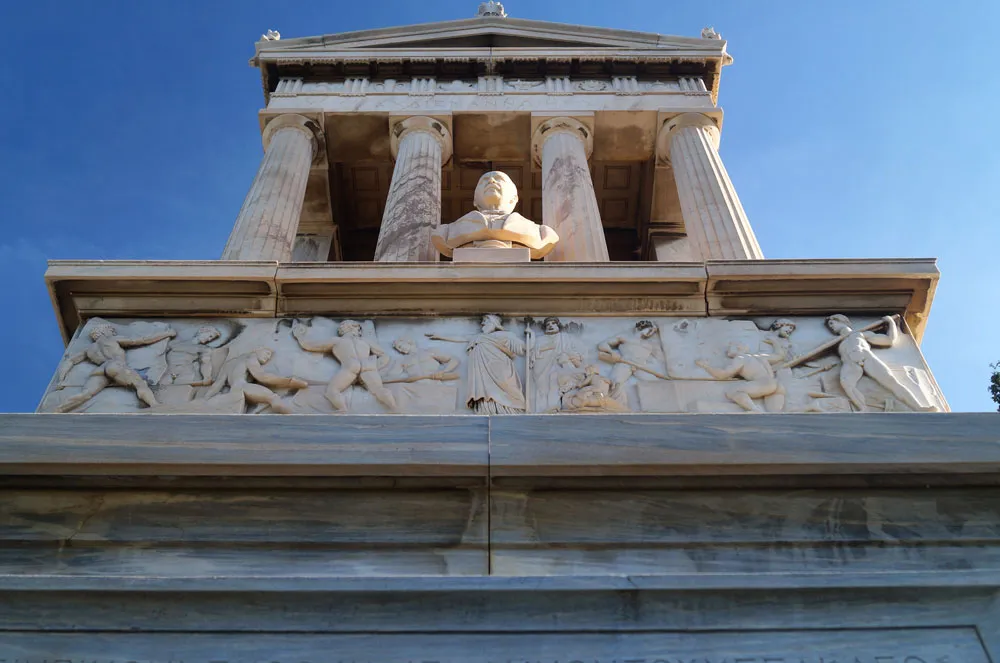
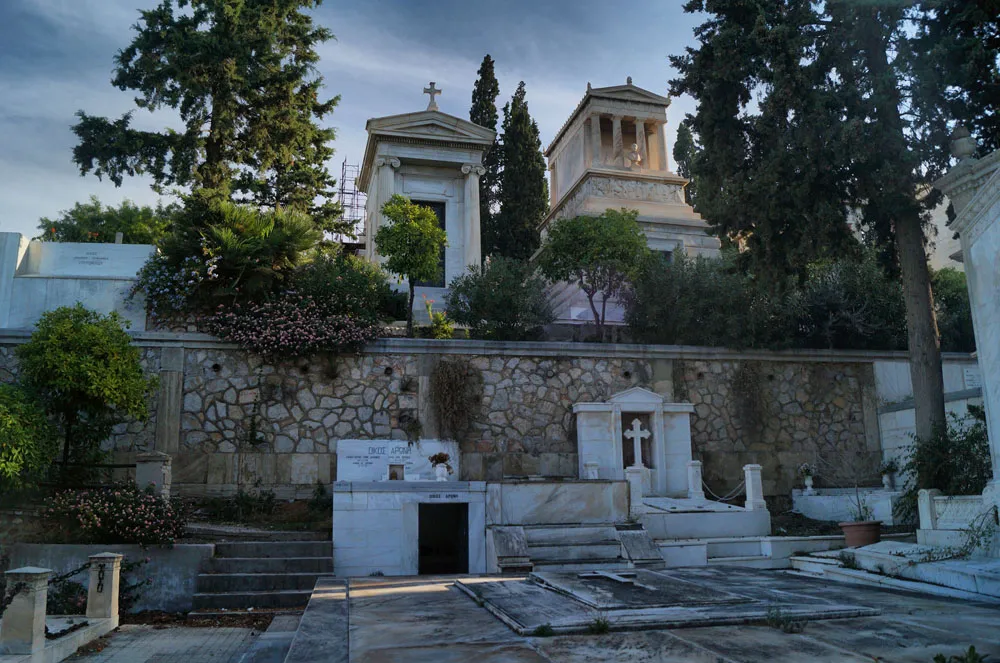
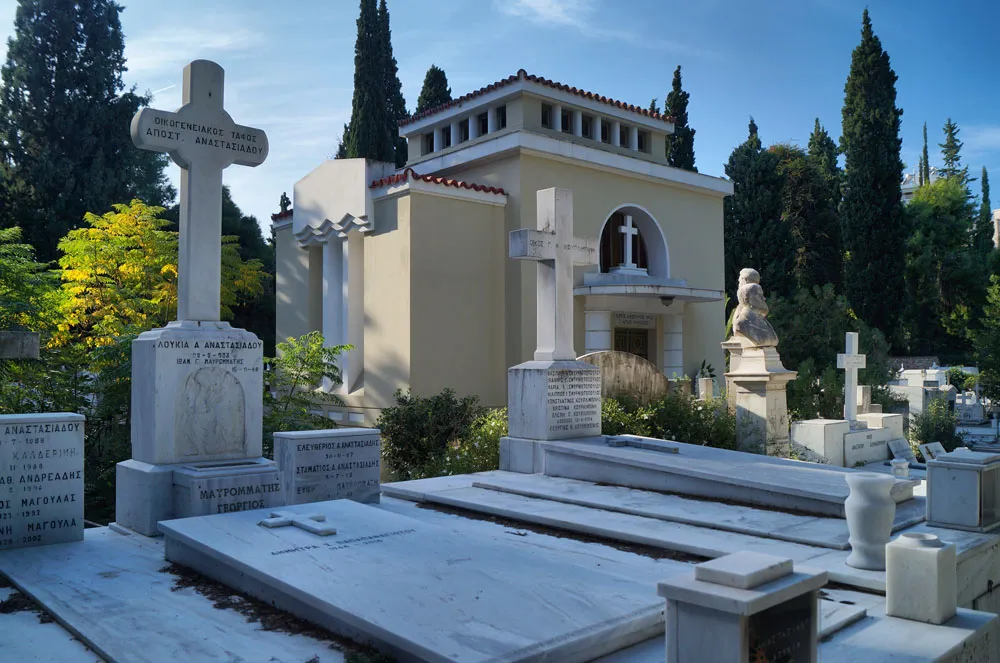
The First Cemetery of Athens
I recommend visiting the First Cemetery of Athens, a splendid necropolis where famous Greeks and foreigners were buried. The cemetery was founded by King Otto in 1837. The German prince dreamed of creating a cemetery like Père Lachaise in Paris. He could not do anything similar in his native Bavaria, so he did it in Greece. The necropolis is impressive: marble and masterpieces are everywhere, sculptures and architecture. One of the best-known tombs is the mausoleum of the outstanding archaeologist-adventurer Heinrich Schliemann, who died in Naples but, according to his will, was buried in Athens.
Among the most modern sites the most worthy of attention is the car museum, the Hellenic Motor Museum. I am not very fond of modern museums, but this one is very interesting: here you will see everything you had earlier seen only on television and in pictures, splendid limousines and sports cars, the best cars of automakers from all over the world: a bomb of a museum.
But whatever was built in Athens in the 19th and 20th centuries, everything is doomed to remain in the shadow of the city’s outstanding ancient monuments, the Acropolis and the Athenian Agora. In general an acropolis is the upper part of any city in Ancient Greece, usually fortified and surrounded by walls, occupied by temples and the dwellings of aristocrats. So it was at the most famous acropolis, the Athenian one, which is now written with a capital letter and considered a proper name.
The present buildings of the Acropolis are the legacy of the strategos Pericles, the legacy of the Golden Age of Athens and… the legacy of UNESCO. The main area is occupied by the Parthenon, the temple of Athena; the Propylaea, a huge ceremonial gateway; the Erechtheion temple (according to tradition, on its site there was once the grave of the founder of Athens, Cecrops); and the Temple of Athena Nike. A little lower, under the walls, on the south side, stands the ancient theatre, the Odeon of Herodes Atticus, built already in Roman times. To the west, on the neighbouring hill, stands an observatory, built in the 19th century to a design by the same von Hansen. From there it is wonderful to watch the New Year fireworks, which is what we did, welcoming the year 2020. What happy times they were: nobody had then heard of any covid.
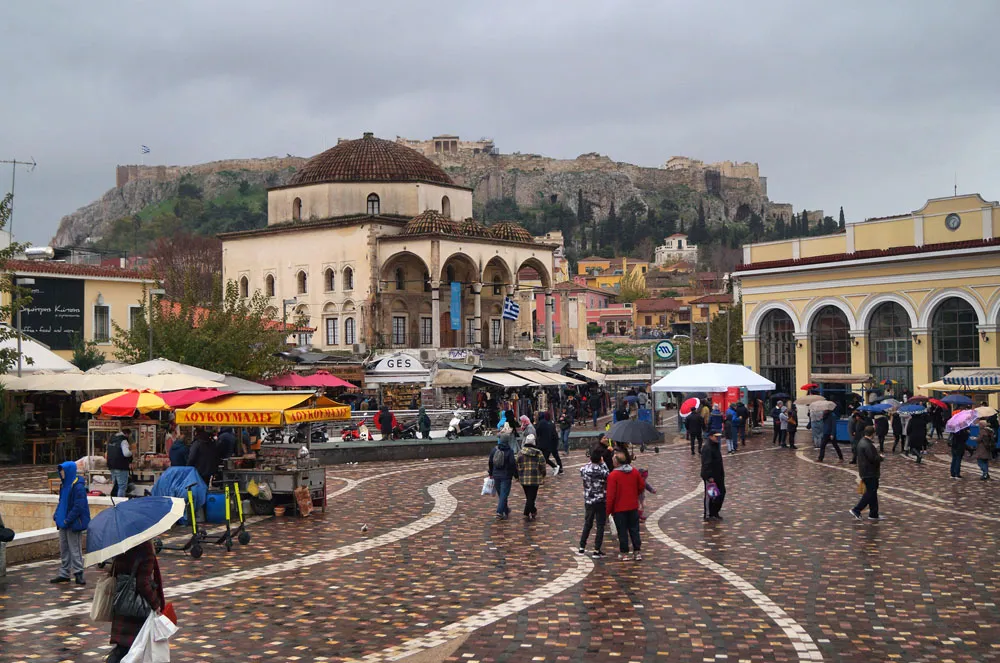
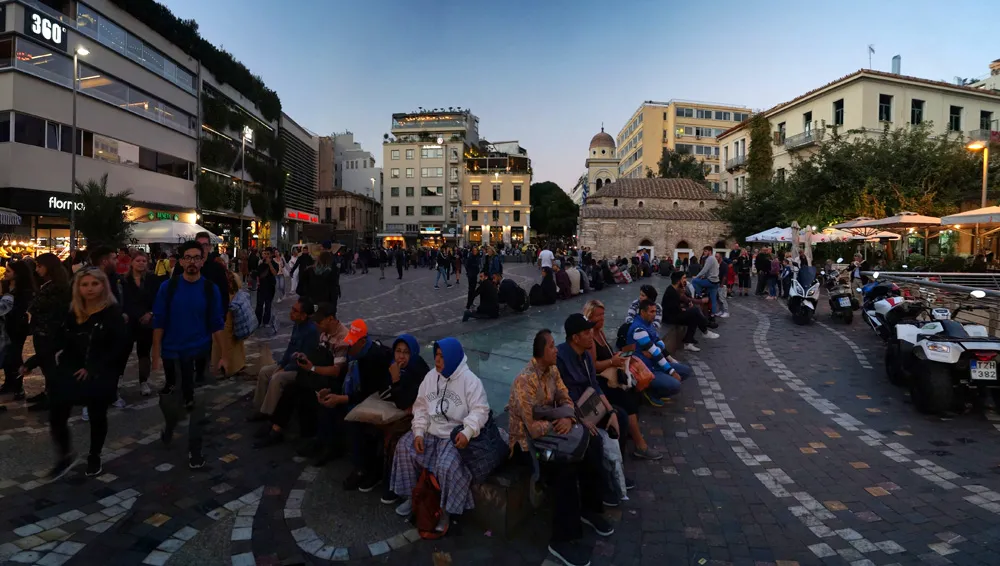
Monastiraki Square
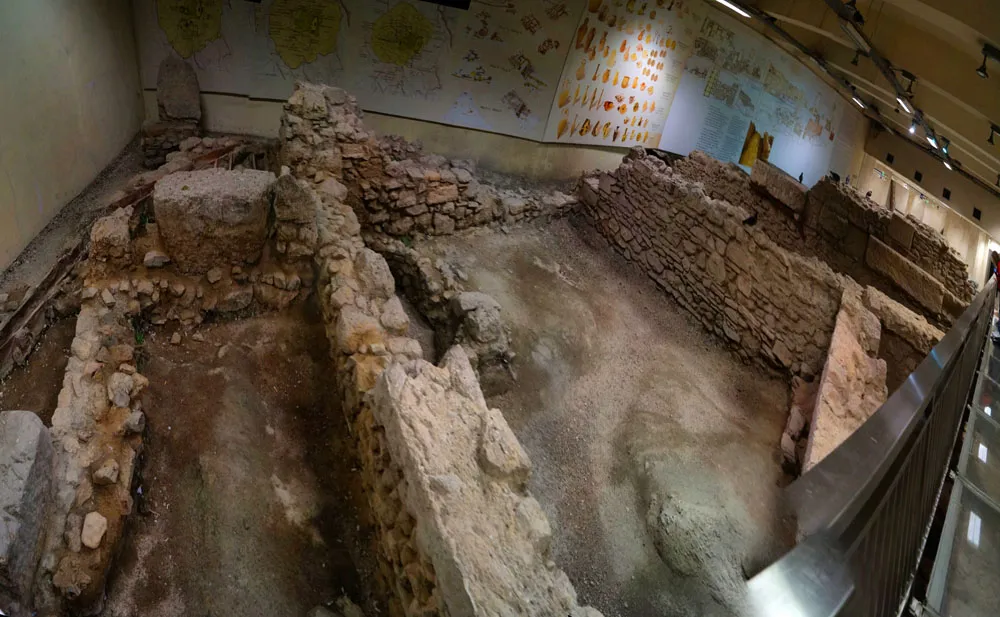
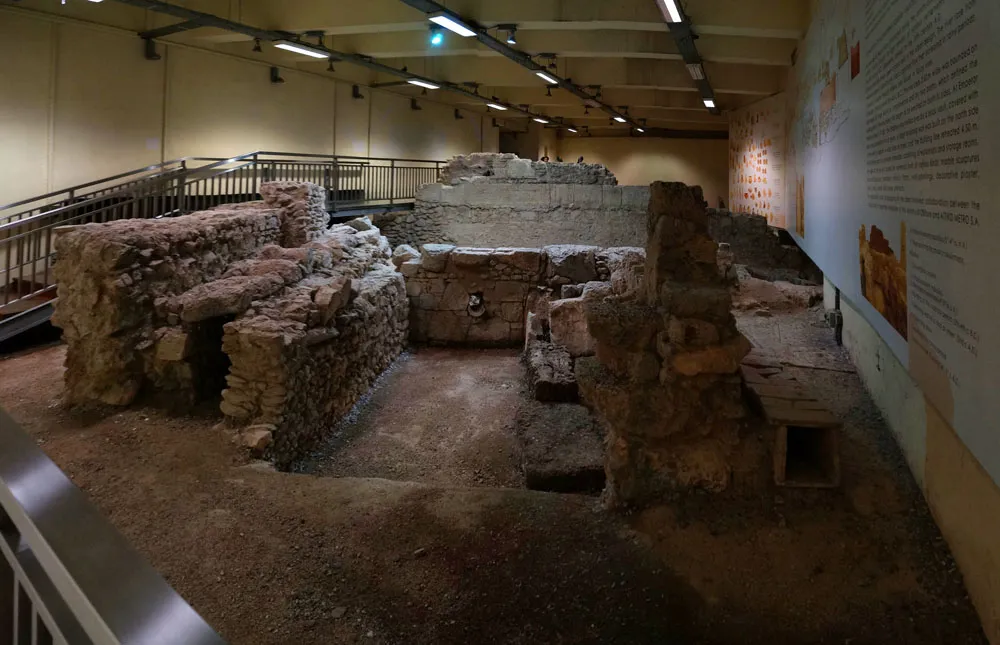
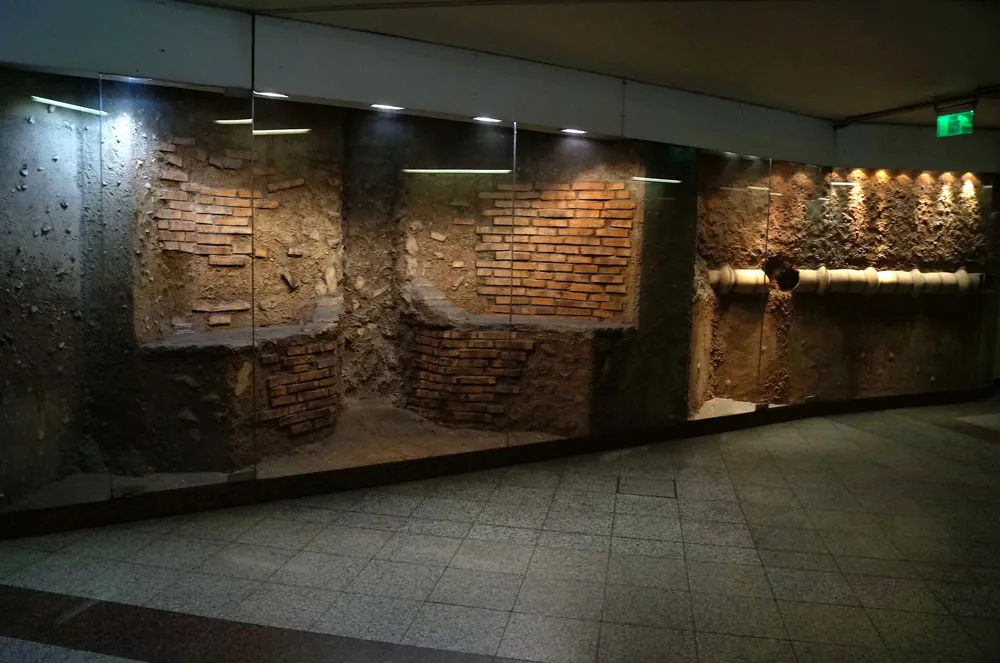
The Athens metro
The most interesting square of Athens is called Monastiraki: it is a patch of open space between the Acropolis and the market. Now there is a metro station of the same name here and always a crowd of people: tourists, dark-skinned refugees, vagrants, street musicians, everybody is here. By day and by night. On one side the buildings of the Athenian Agora come right up to the square, on the other are the rows of the big market, mostly souvenirs. And the whole district surrounding the square is traditionally also called Monastiraki. It is full of taverns, restaurants and souvenir shops.
As you guessed from the name, there was once a large monastery of Panagia Pantanassa here. In Ottoman times only one small church remained of it; it still stands at the edge of the square, a Byzantine church of the 10th century. In 1821, after the Greek revolution, the monastery was restored here, but already a small one, so instead of Megalo Monastiri (“the big monastery”, as it was called in Byzantine times) it became Mikro Monastiri, or Monastiraki (“the little monastery”, in our terms). Opposite the Orthodox church, on the other side of Monastiraki, a mosque has survived. Once, in the time of the Turkish occupation, there were many mosques in Athens. They were pulled down when the Ottomans were driven out, and one was left. The Tzistarakis Mosque, as it is officially called, is unofficially called the Cursed Mosque, because for its construction Pasha Tzistarakis used columns of the Temple of Zeus (the largest temple of Athens, built under the Acropolis by Emperor Hadrian; only about ten columns of the temple remain now), and this brought a curse on the city: the next year a plague epidemic began, so the mosque is Cursed. Now there is a museum here.
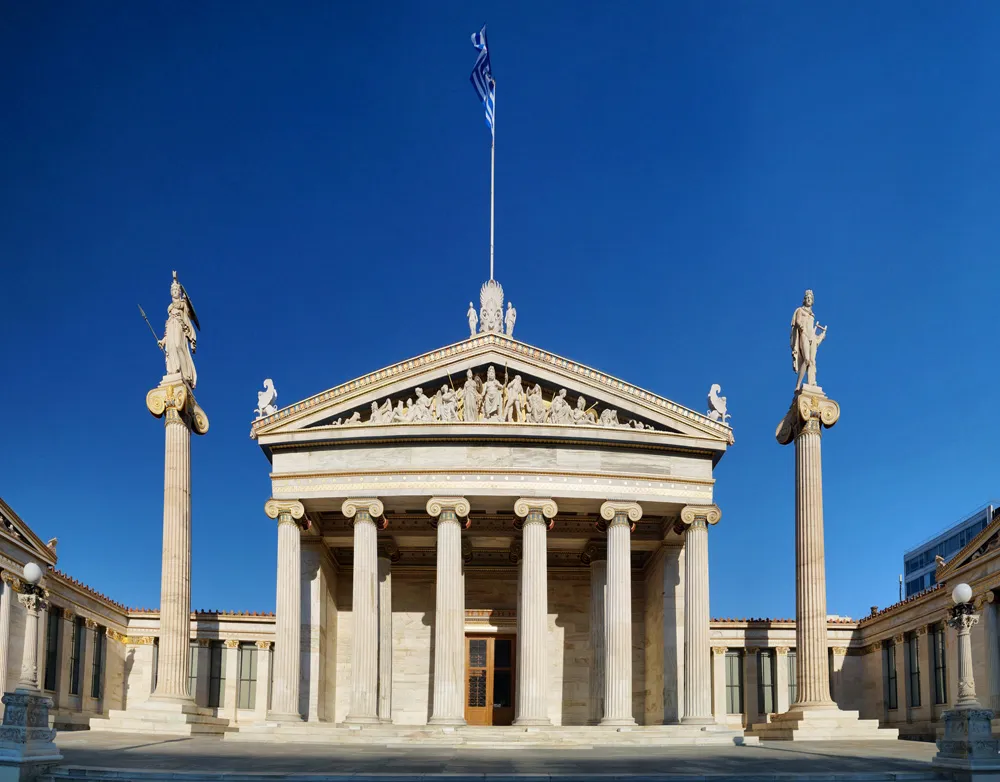
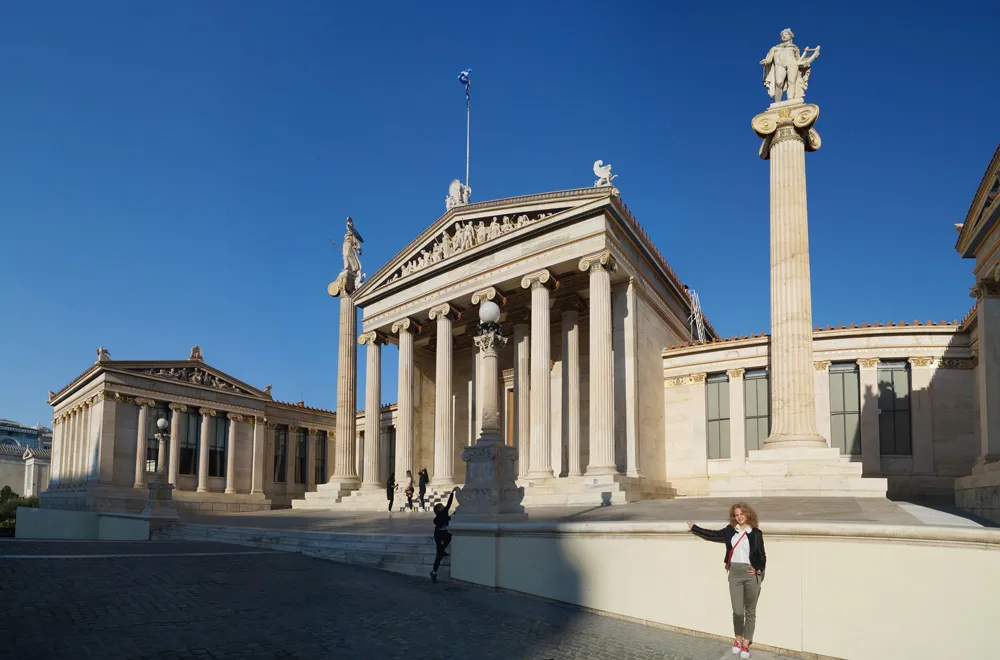
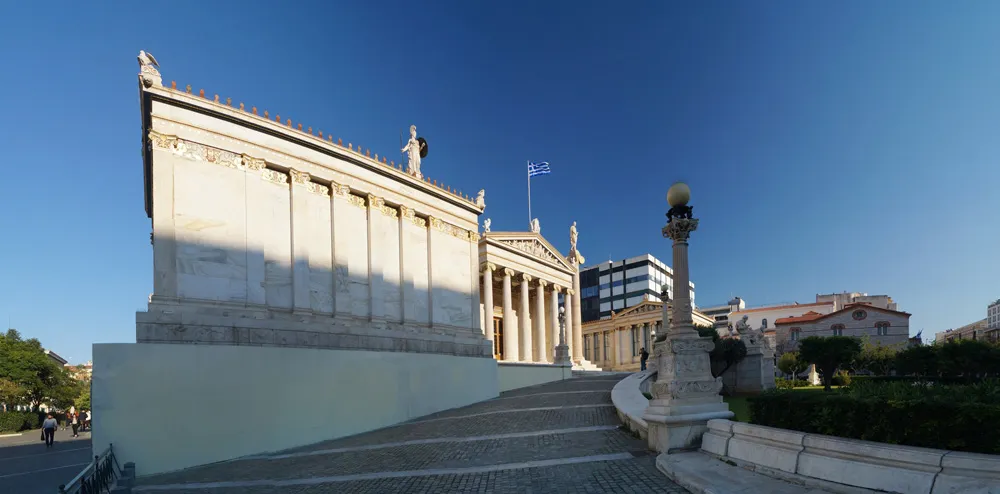
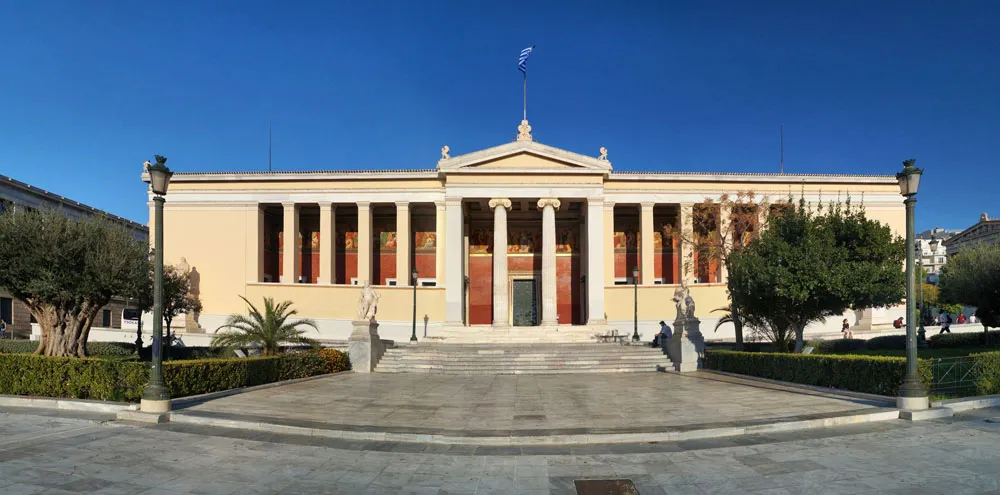
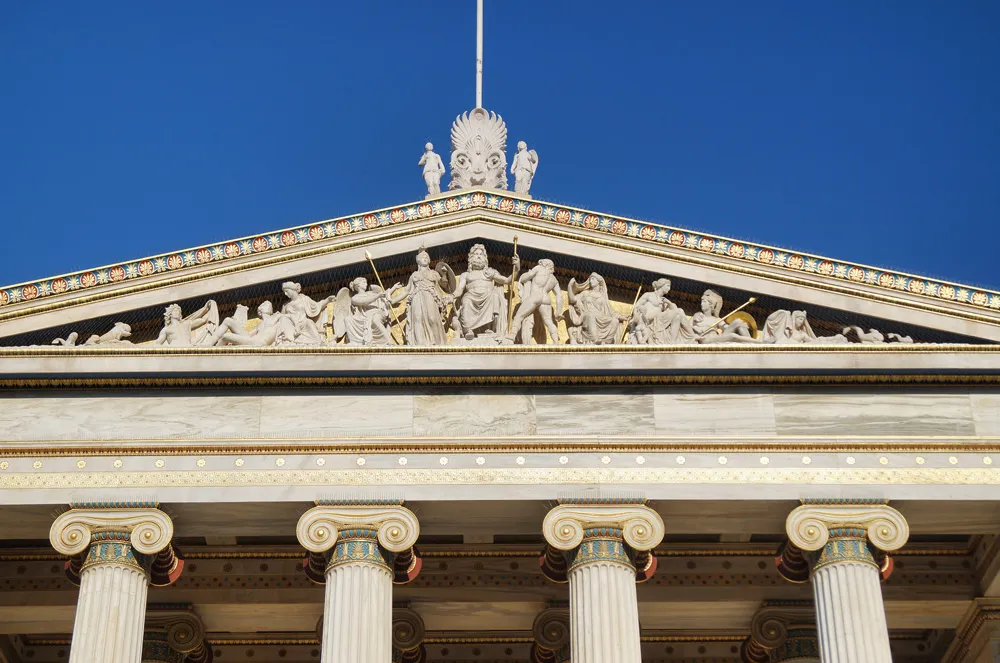
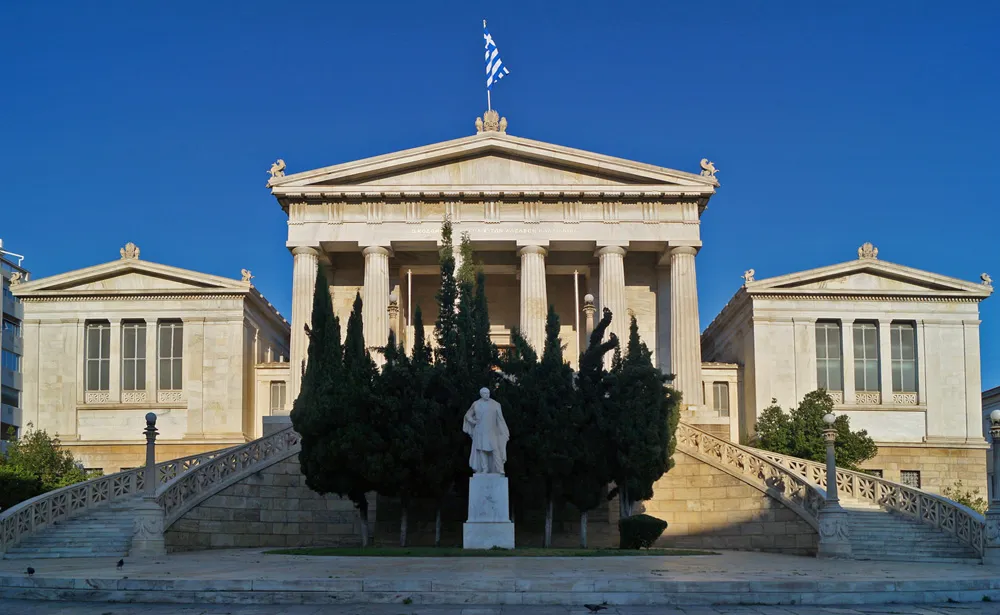
Von Hansen’s creations: the University, the Academy and the Library
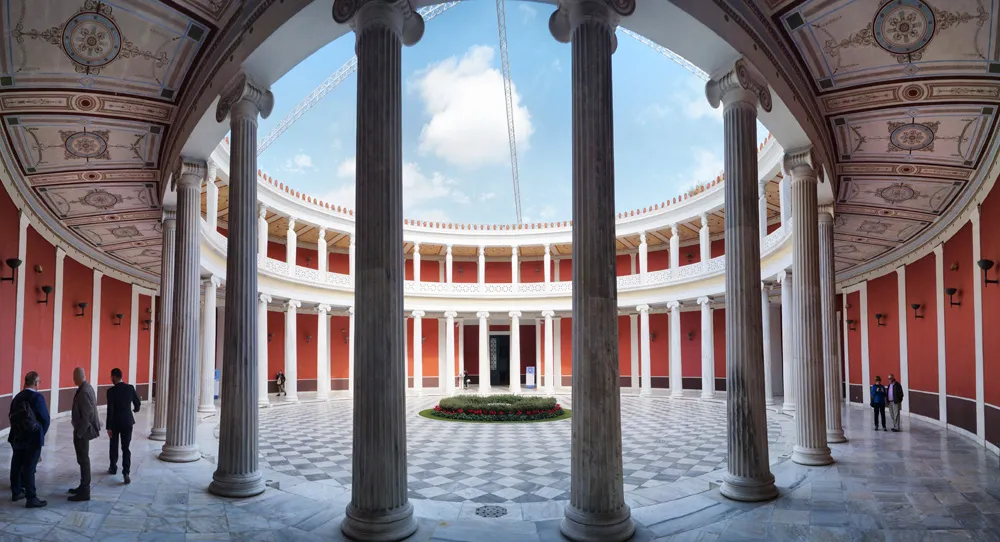
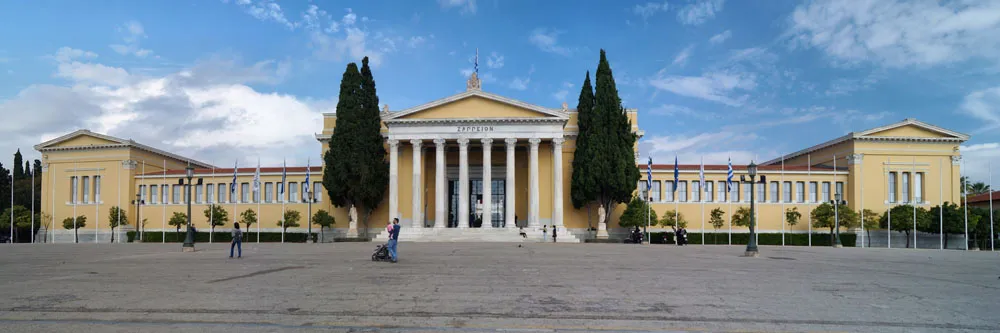
The Zappeion
Monastiraki is the main meeting place in Athens; the square is small and it is easy to find each other on it. 650 metres from the square, to the north, spreads the Central City Market. Here you can buy food: vegetables, fruit, greens, meat, fish. Particularly interesting is the fish pavilion: the proximity of the sea (4 km) has made fish and seafood extremely popular in Athens. There are plenty of small fish markets here, but the Central one is a real spectacle. What sea creatures are not here: any fish, I would not even name some of them; shrimp, both small as seeds and giant, bigger than crayfish; lobsters, spiny lobsters, squid, octopus, cuttlefish, live crabs, some big fillets and bacon-like cuts; everything laid out on ice, and in the morning it smells of sea freshness, whereas in the evening the smell here is very heavy, although it is most profitable to buy everything right at the end of the working day; the main thing is not to run into spoiled fish or octopus. We bought fish here, all kinds but most often dorado, shrimp, three or four kinds, cuttlefish, octopus and squid. With fish and shrimp it is quite simple: you fry the first in a pan, in batter, or bake it in the oven, you simply boil the shrimp, and that is all; but as for the other wonders, we had to ask Google, the all-knowing, for a recipe. So, the squid we simply fried with onion, a large octopus we boiled for two hours in wine, then fried a little in pieces, small octopuses we fried to a crispy crust, it seems in flour, and what we did with the cuttlefish I do not remember. In a week in Athens there was not a day when we did not visit the market, both buying and gawking.
South of the Monastiraki district, east of the Acropolis, lies the Plaka district. The most old residential housing has been preserved here, and the most tourists stroll here, not jostling as on Monastiraki Square but really strolling, since most of the narrow cosy streets of this district, like the street Plaka itself, which gave the district its name, are pedestrian. Once, probably in the 1970s, when it was fashionable to settle in apartments, most of the houses of Plaka were abandoned. In the 21st century, when the tourist boom began and the Chinese travelled everywhere, the abandoned houses were bought up, restored and given over to taverns, wine cellars, small hotels and souvenir shops. Many local houses stand on the foundations of ancient buildings; why let good things go to waste. Now archaeologists cannot get to those foundations, but in Athens there are so many such foundations that nobody will touch Plaka.
Text and photos by Roman Malenkov. From the book “10 countries after quarantine”.
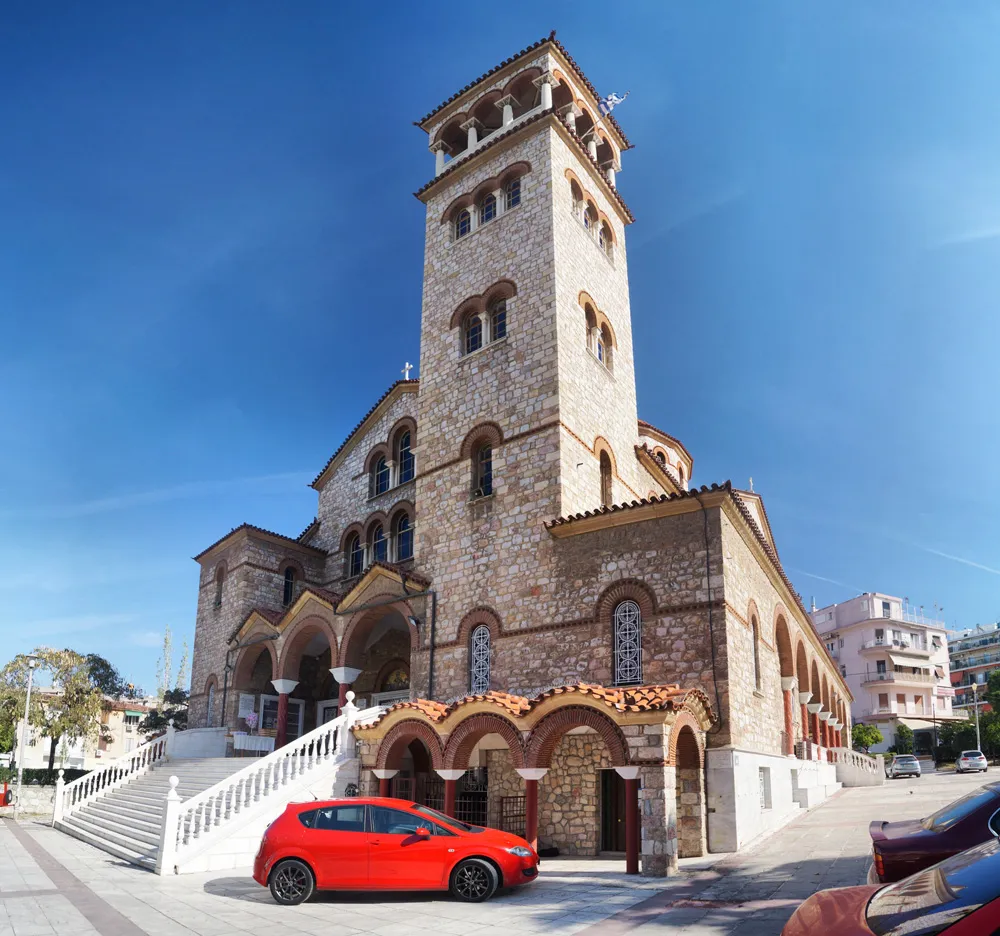
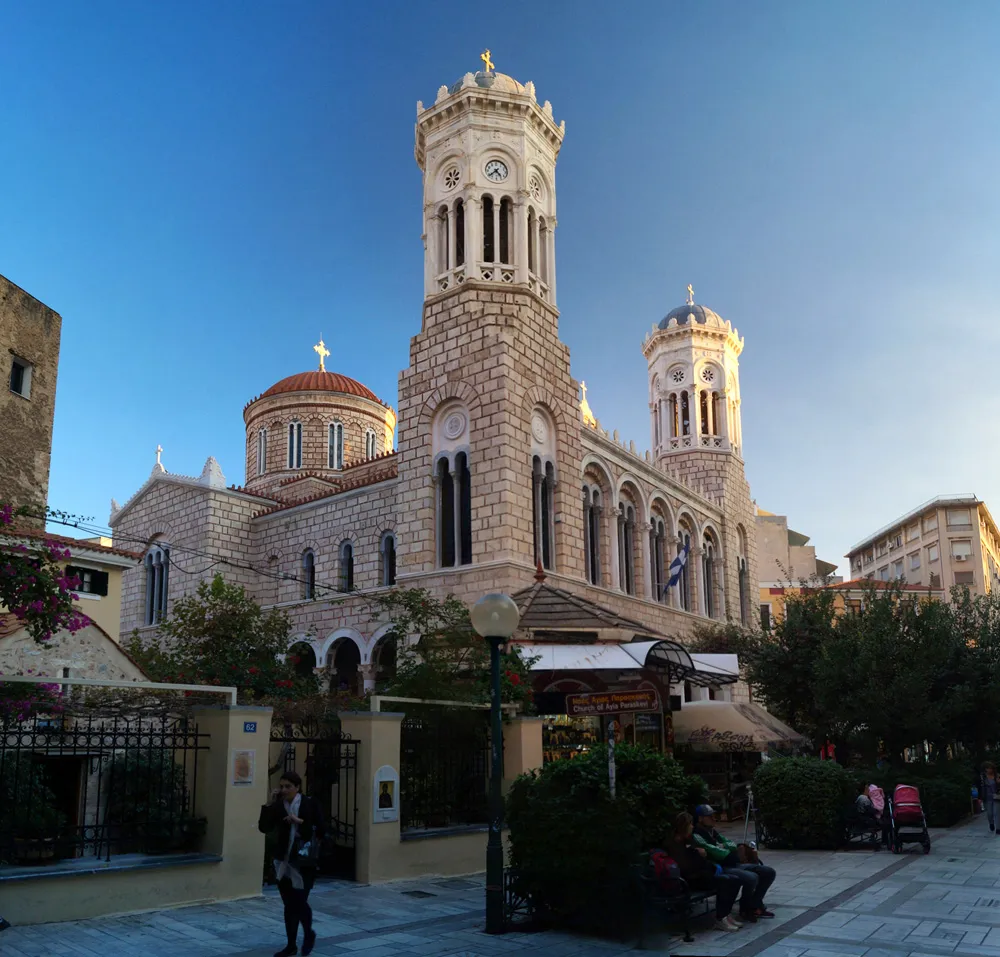
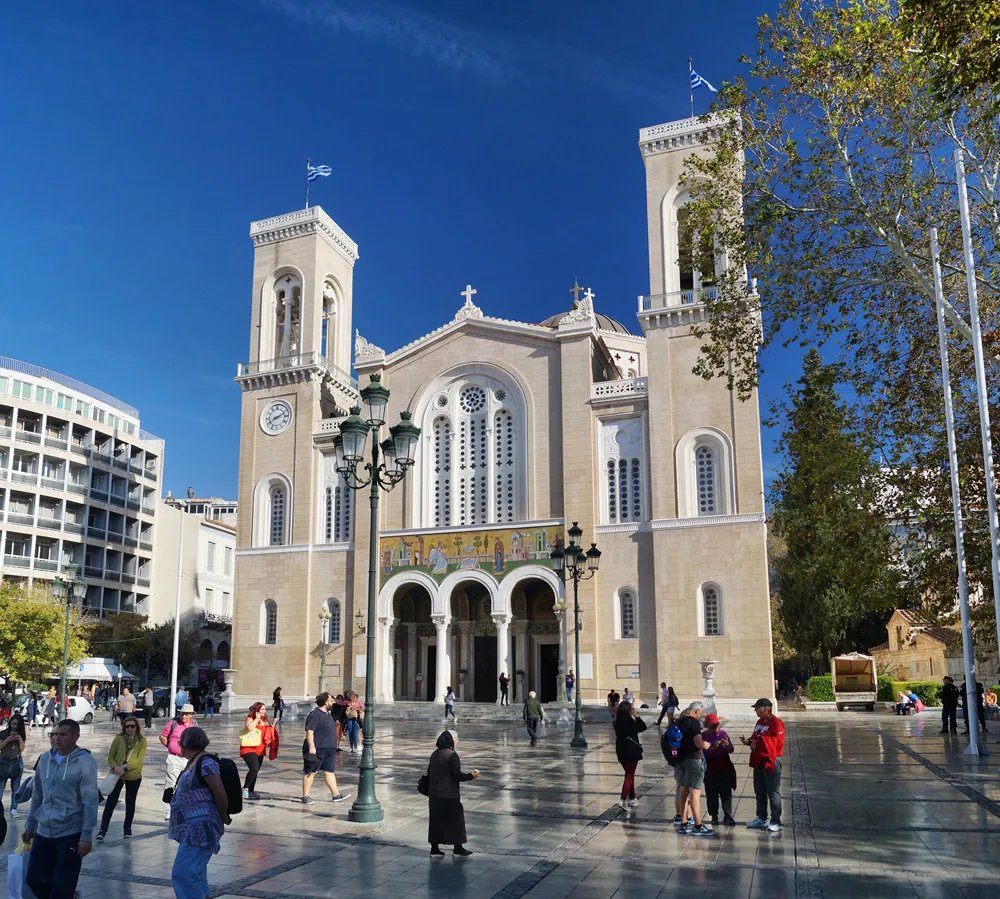
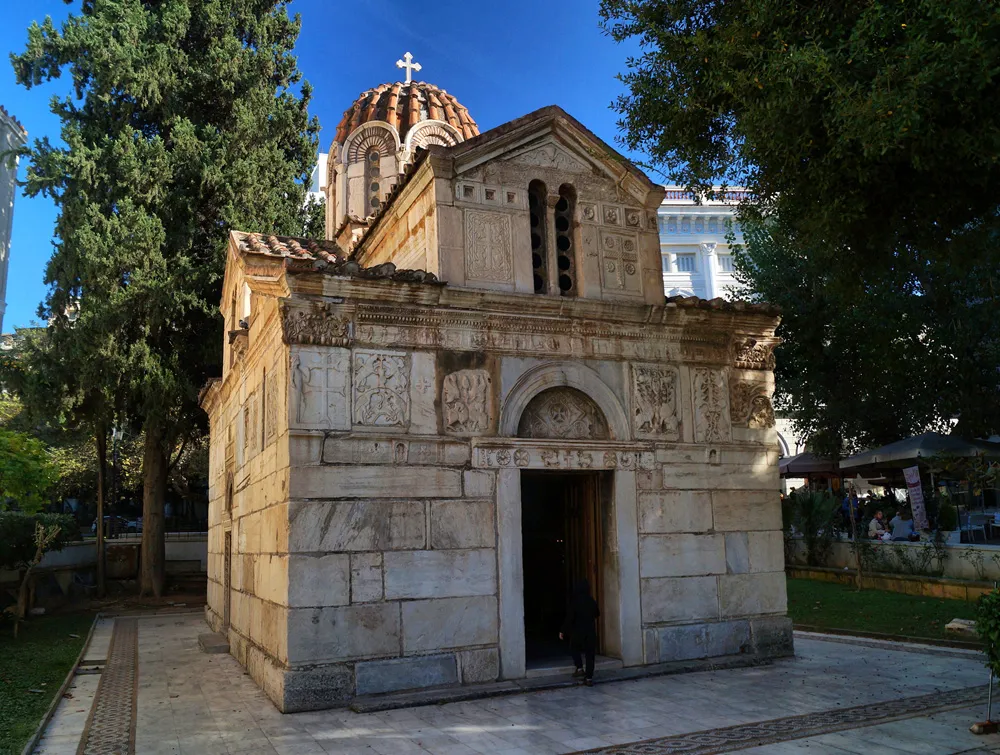
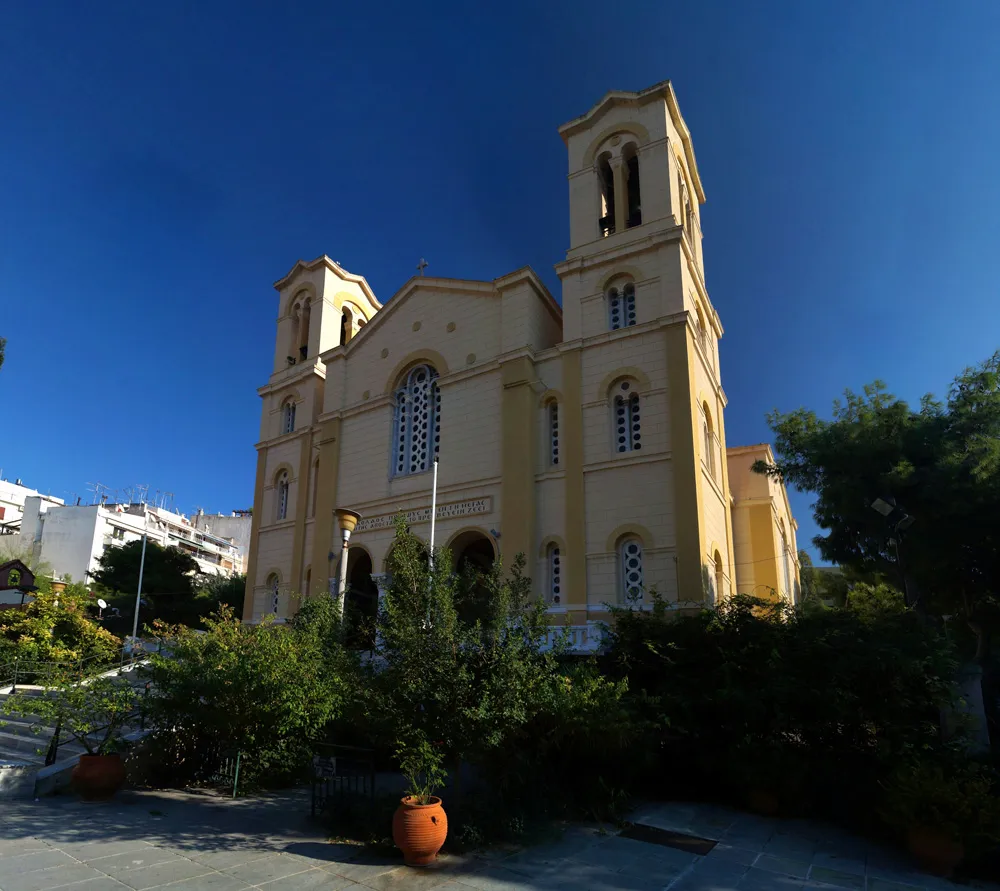
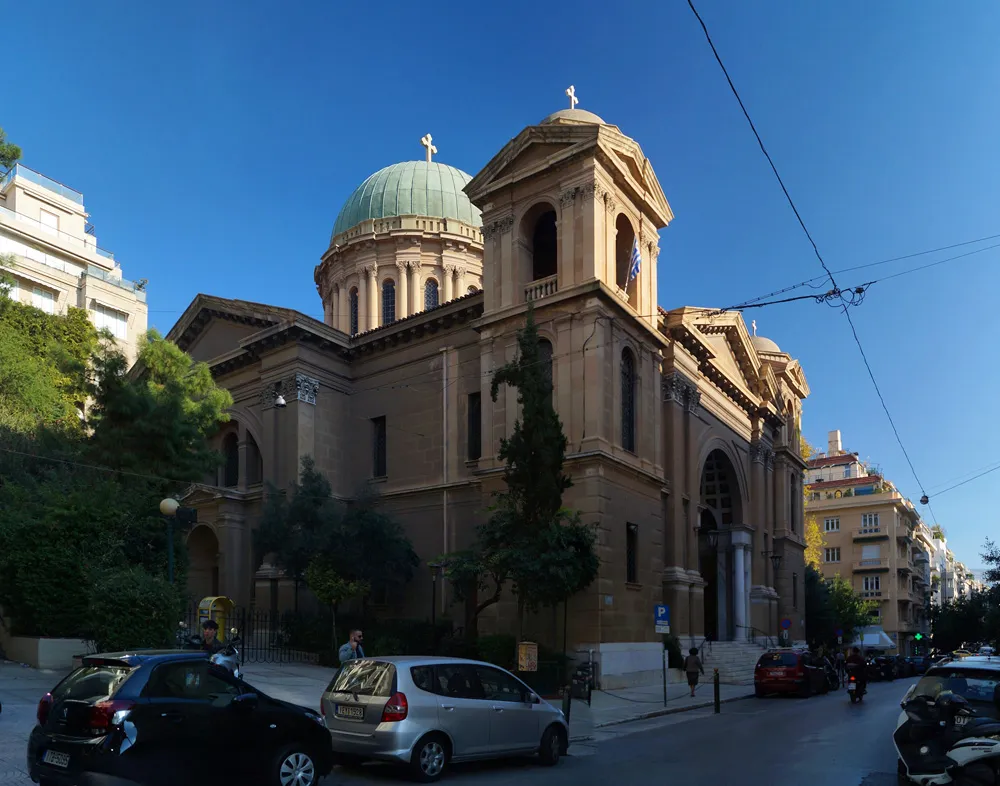
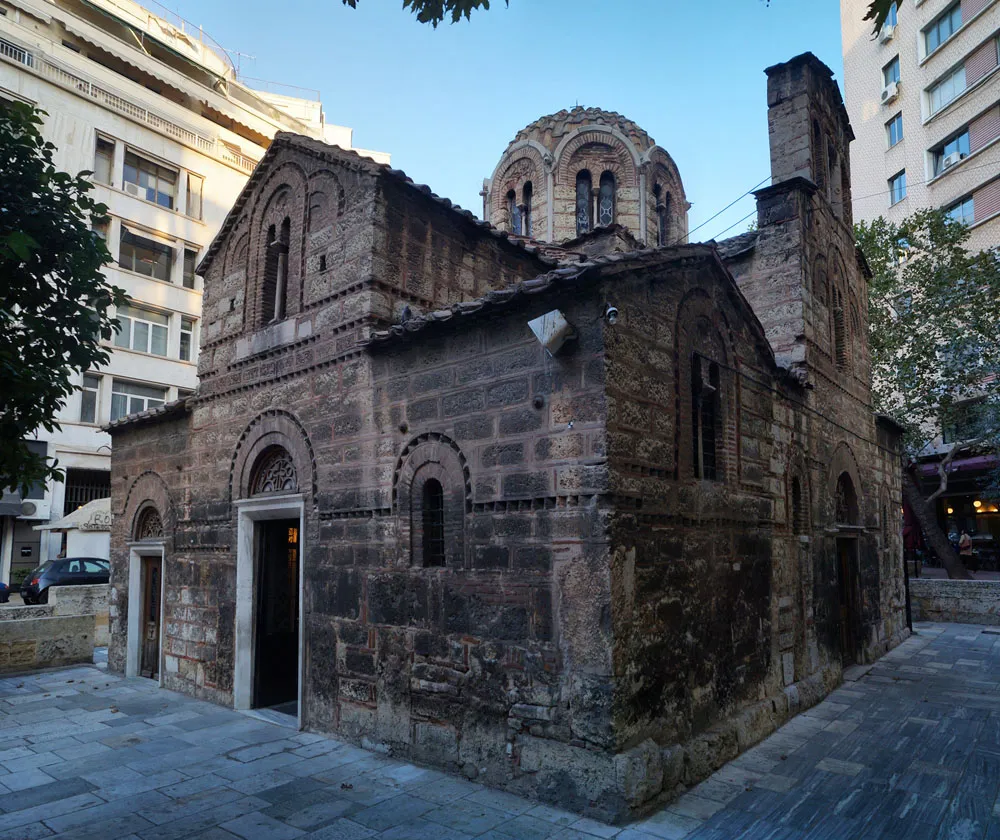
Some Athenian Christian churches
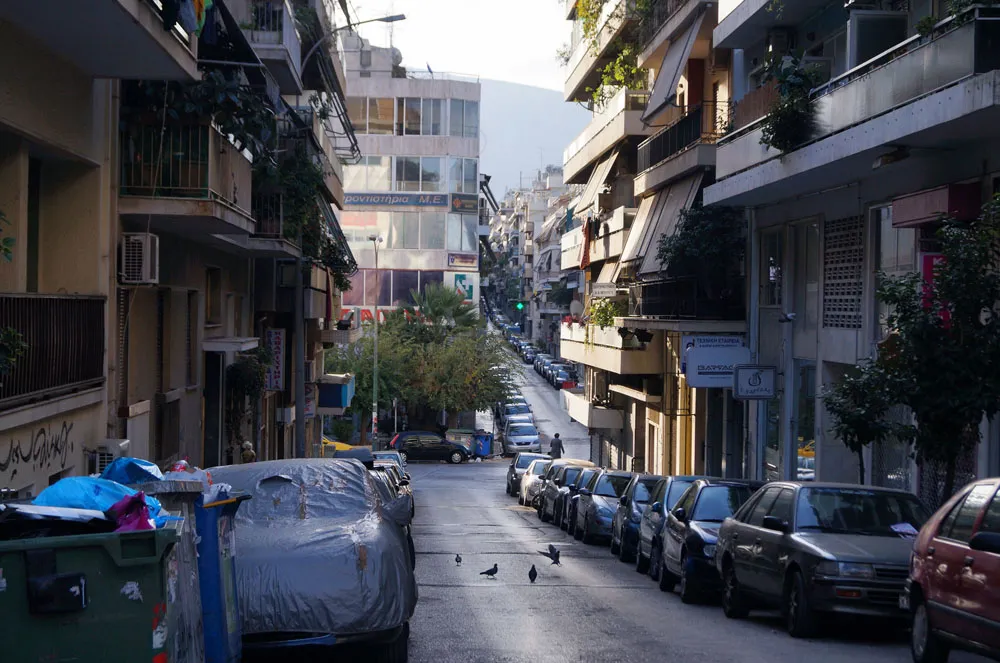
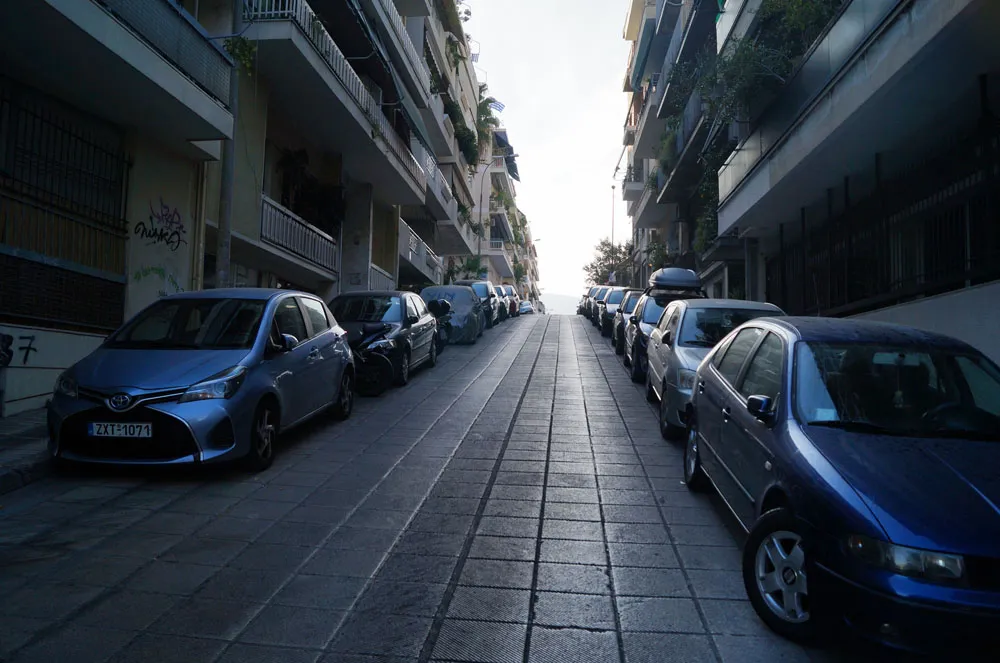
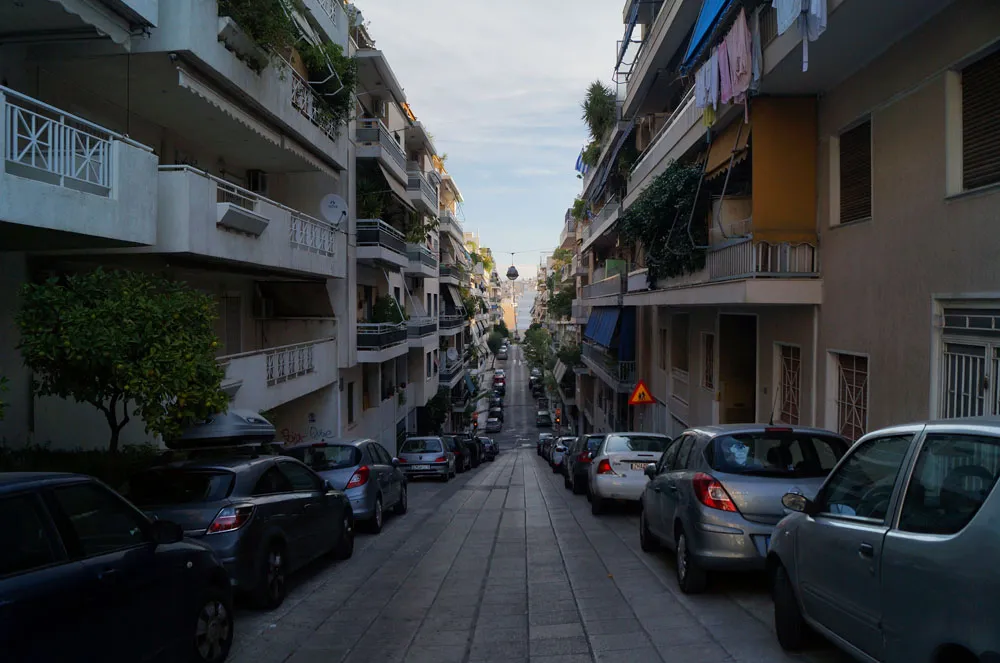
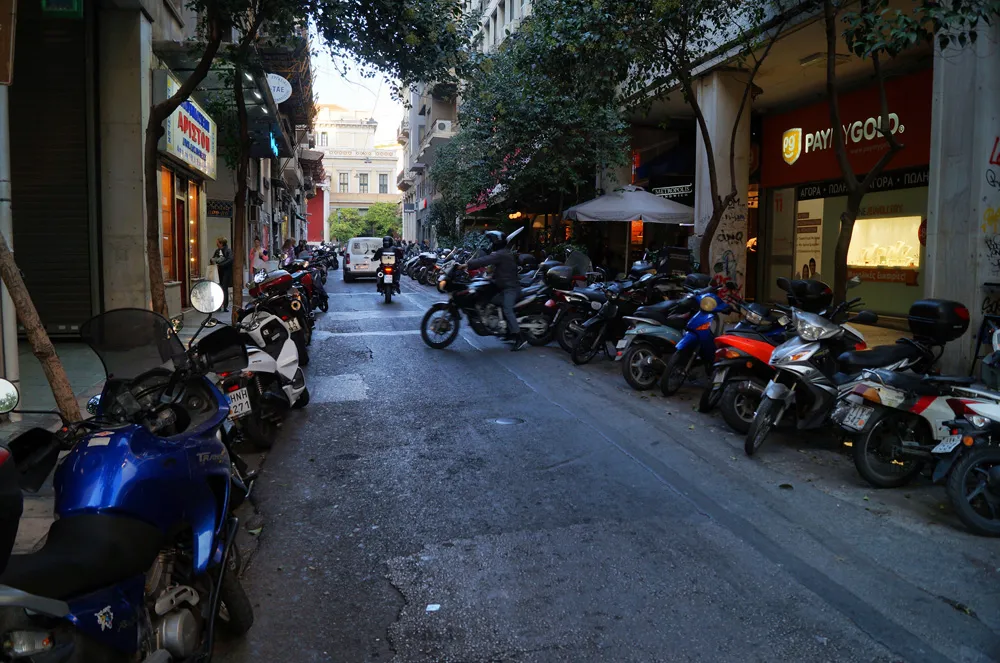
Ordinary Athenian streets
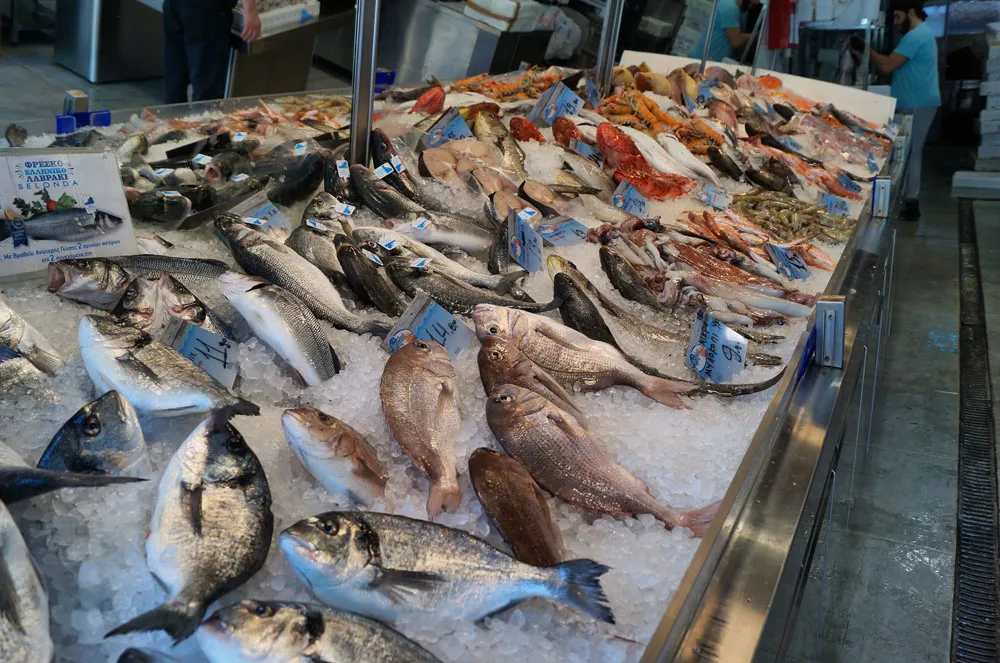
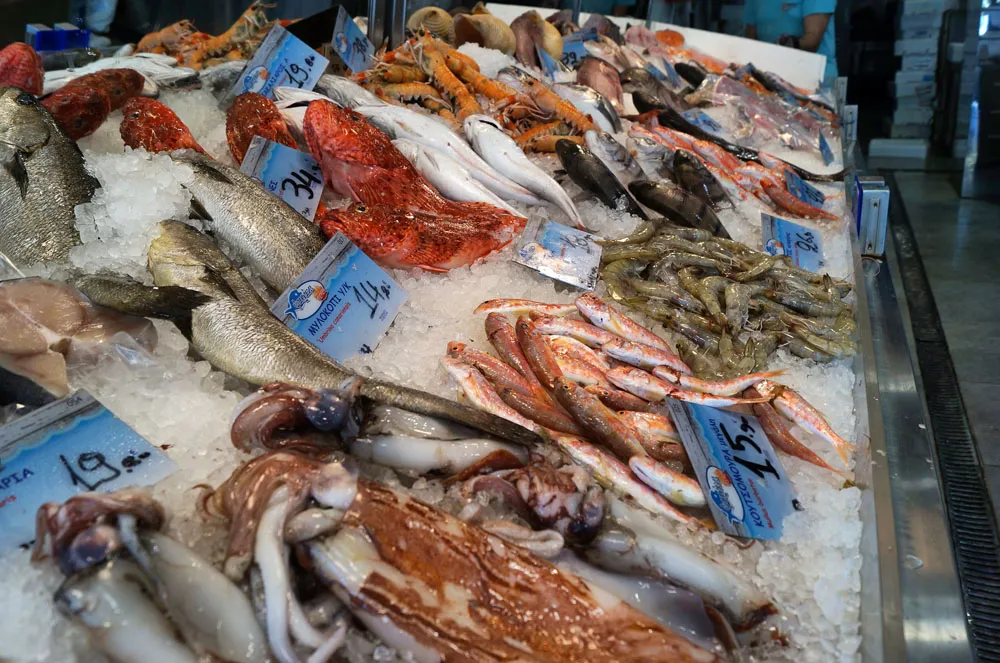
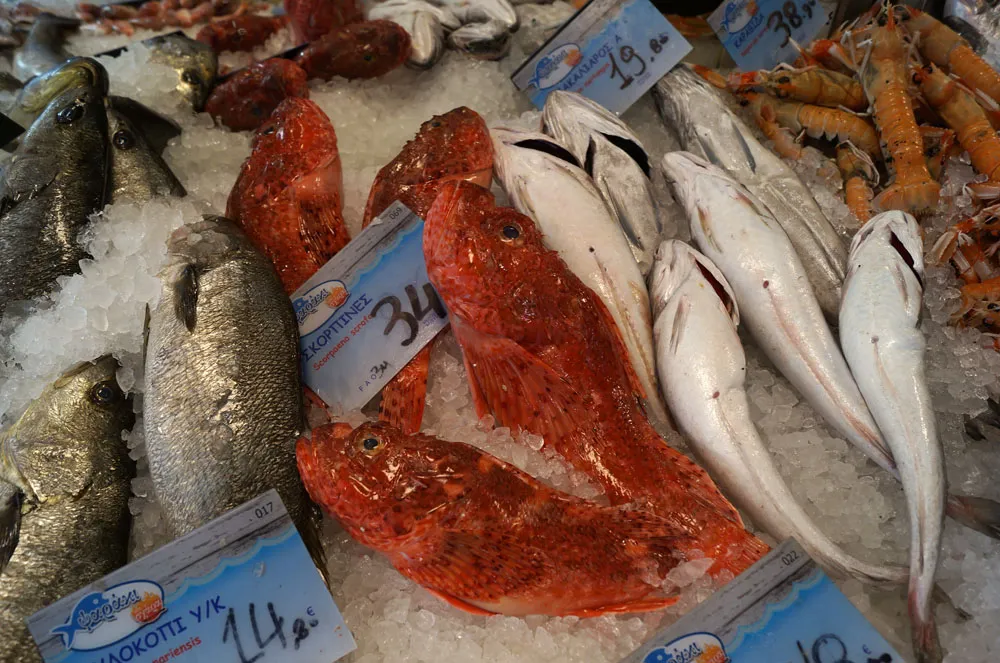
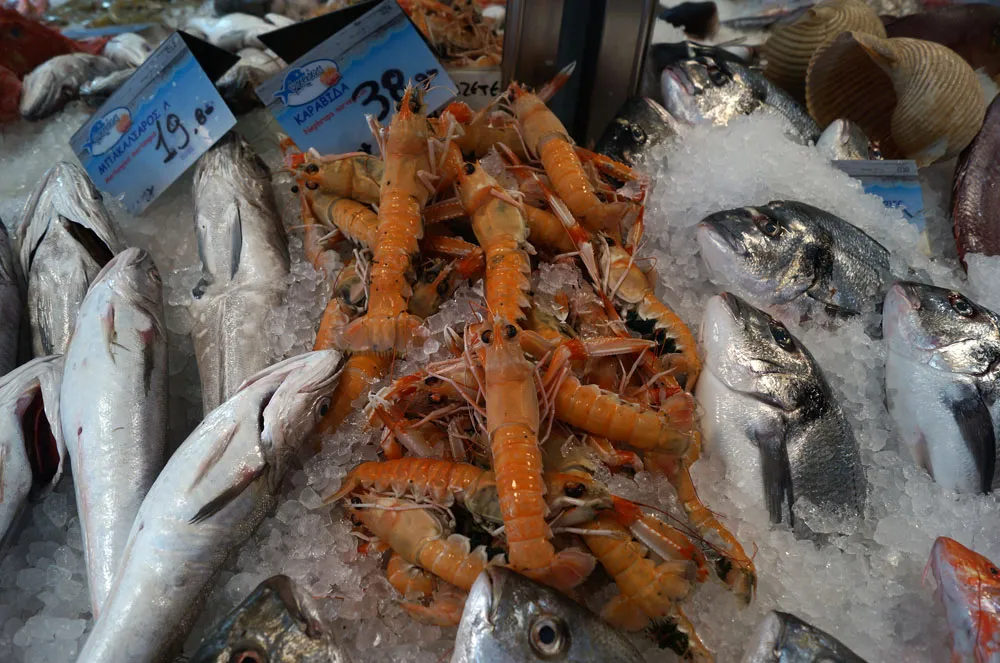
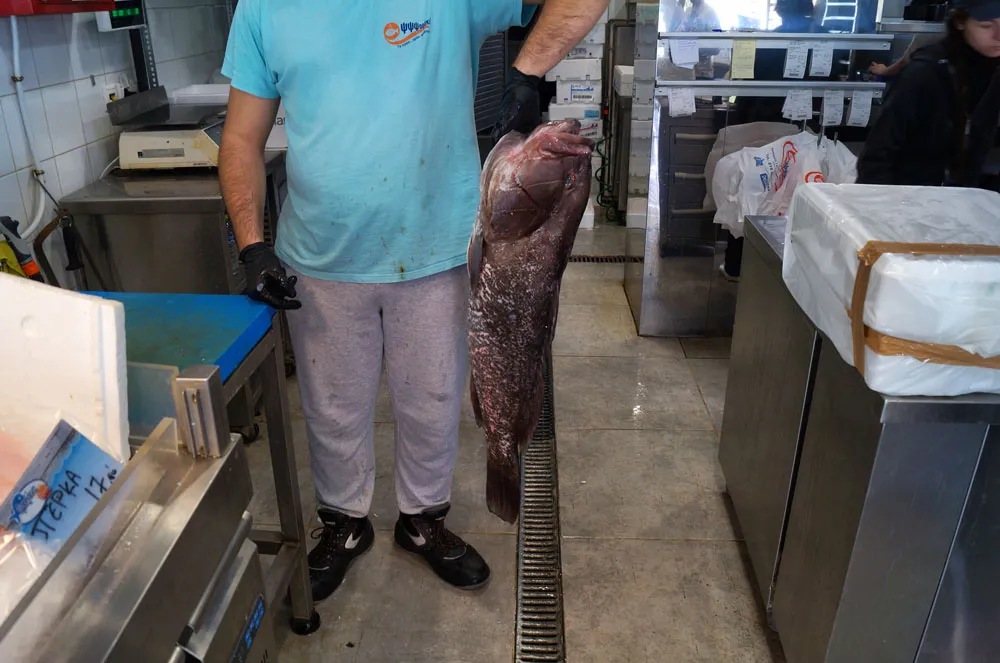
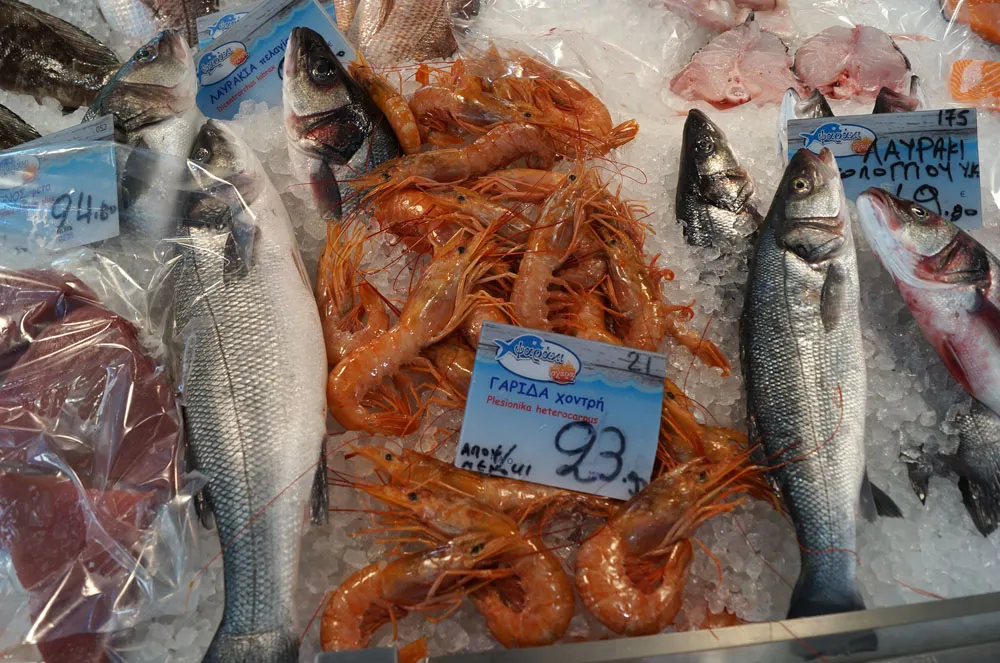
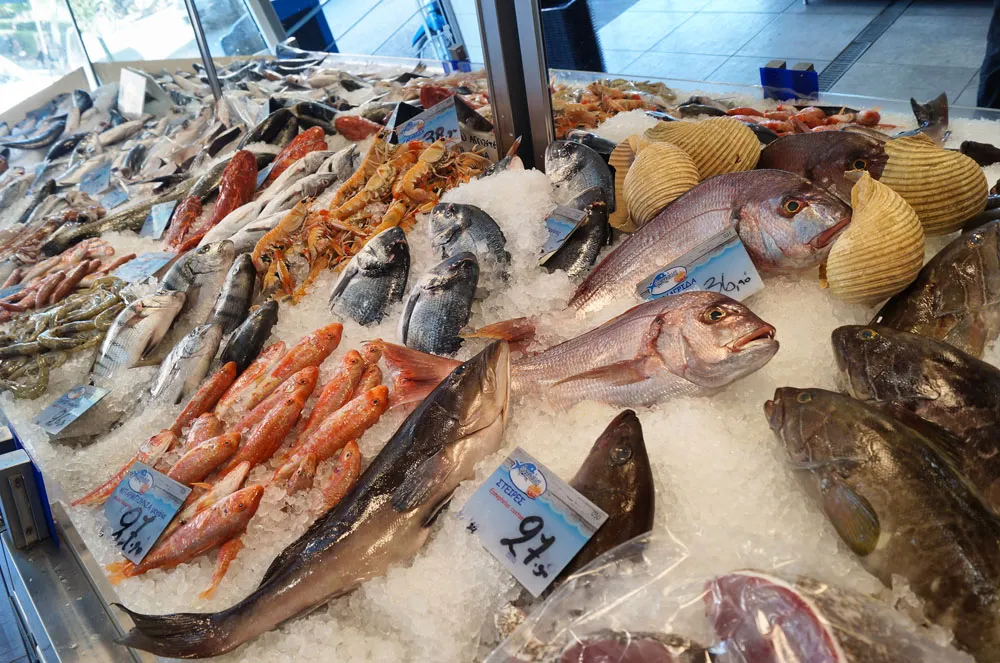
The Athens seafood market


