Andriivskyi Descent, 20-b – Mykola Hohol and Pronia Prokopivna
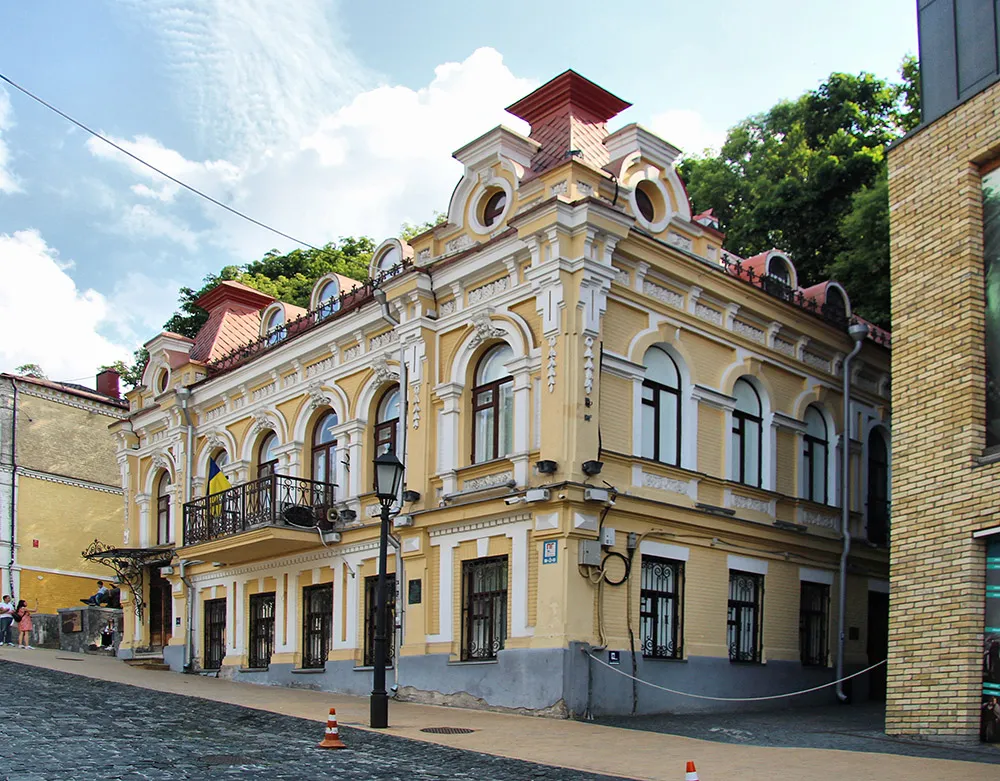
The residential building at 20-b Andriivskyi Descent was built at the turn of the 19th and 20th centuries. It adjoins the foot of Castle Hill – to the left of it begin the steps leading to the top. In March 2021 a monument to Mykola Hohol by Borys Dovhan was installed near the steps. At first the bronze writer held a quill in his hand, but it was stolen by some souvenir hunters.
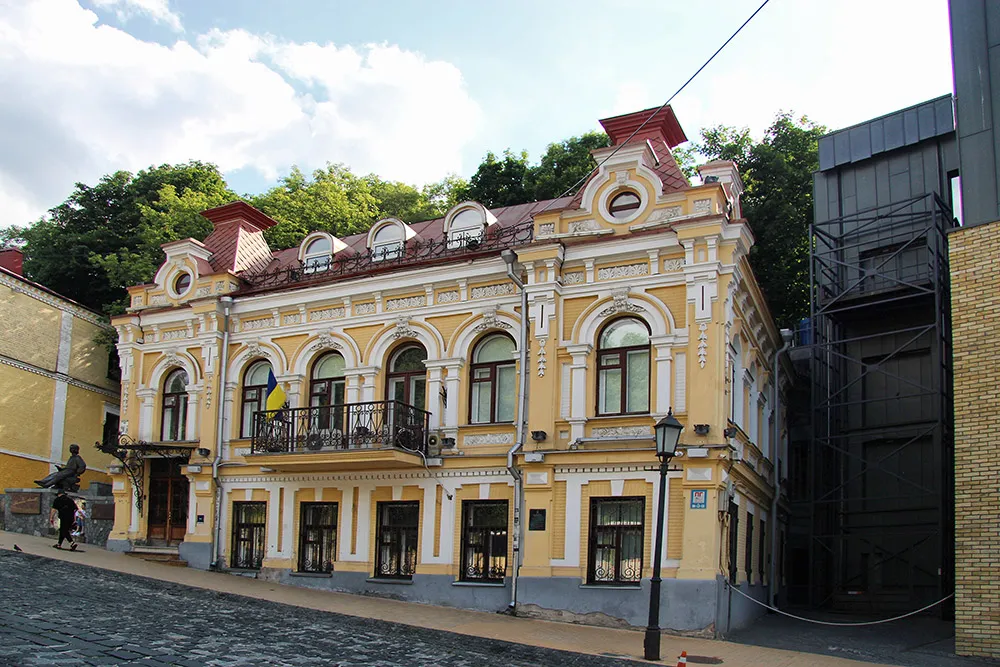
The building faces the red line of the street frontage. It once belonged to the well-known Kyiv jeweller, icon-workshop owner and public figure Ivan Shatrov. He used separate rooms for a jewellery workshop and an icon-painting workshop, as well as for a small home theatre.
The neighbouring buildings at 22, 22-a and 22-b also belonged to Shatrov. They were all once united into a single estate. In one of them lived the well-known Ukrainian musician Oleksandr Koshyts – a conductor of the Mykola Sadovsky Theatre and, from 1916, chief conductor of the Kyiv Opera. According to Koshyts, Shatrov bought the estate’s land from the Serkov-Sirko family. It was their daughter Pronia whom Starytskyi made famous in his play “Chasing Two Hares”.
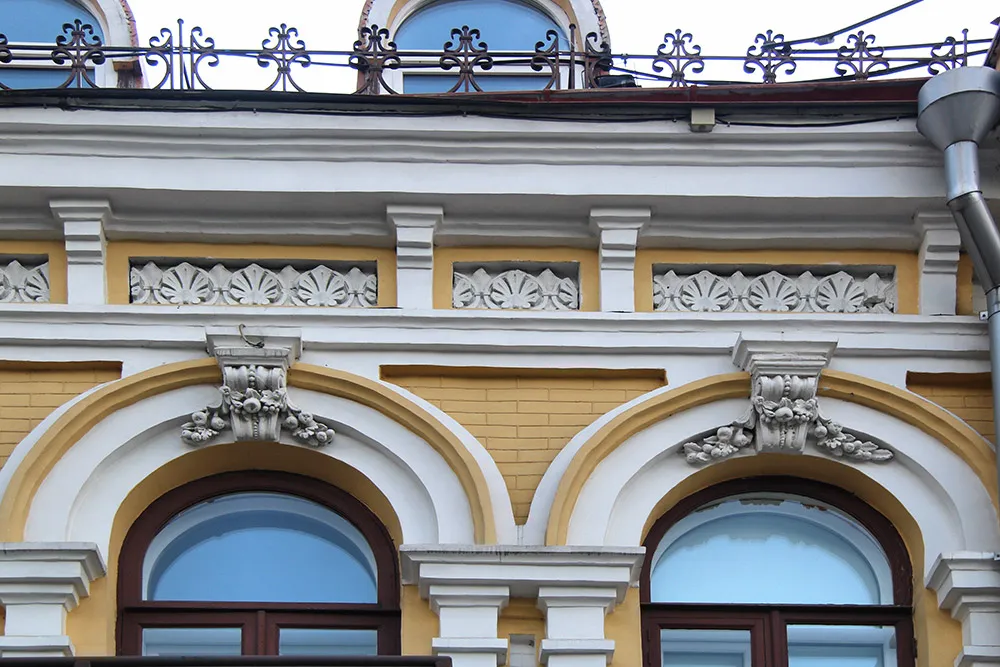
The building is two-storeyed and brick, with a wooden annex faced with brick at the rear, which has a partly glazed gallery at second-floor level. In plan it is trapezoidal. The main, symmetrically composed six-window facade is executed in Neo-Renaissance forms. The recessed central part of the facade is flanked by projections that turn into tall shaped gables with round dormer windows. At the centre of the facade is a wrought-iron balcony railing with a geometric ornament resembling palmettes surrounded by Z-shaped curls.
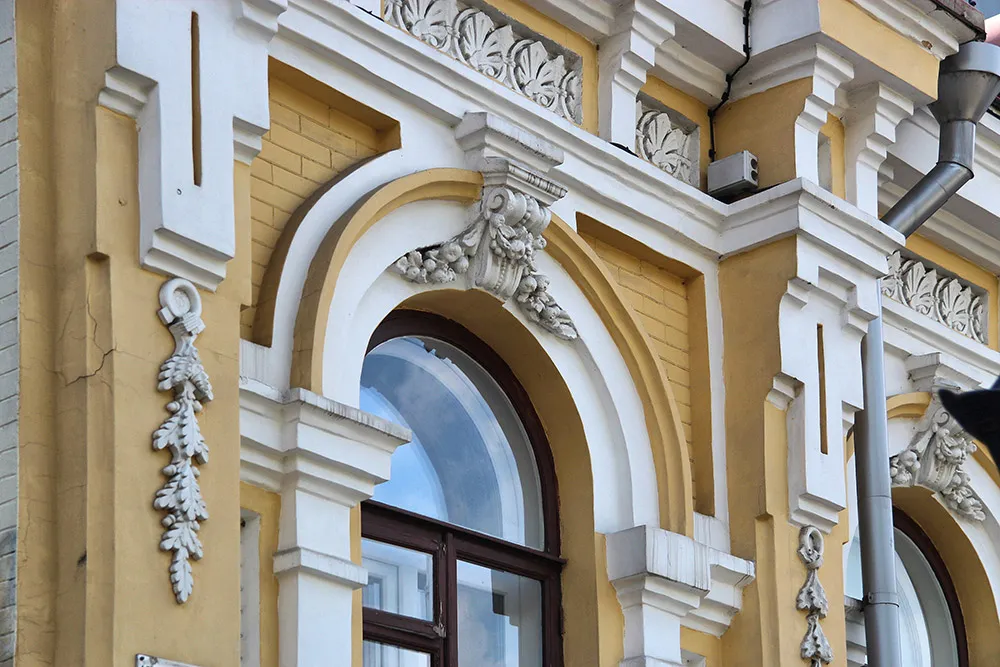
In the architectural decoration of the first floor brick decor predominates, while the second floor, separated from the first by a cornice, is more richly modelled.
Above the semicircular windows with profiled archivolts are keystones composed of brackets, fruit and leaves. A refined floral ornament of stucco inserts fills the niches in the frieze, the pediments and beneath the second-floor windows.
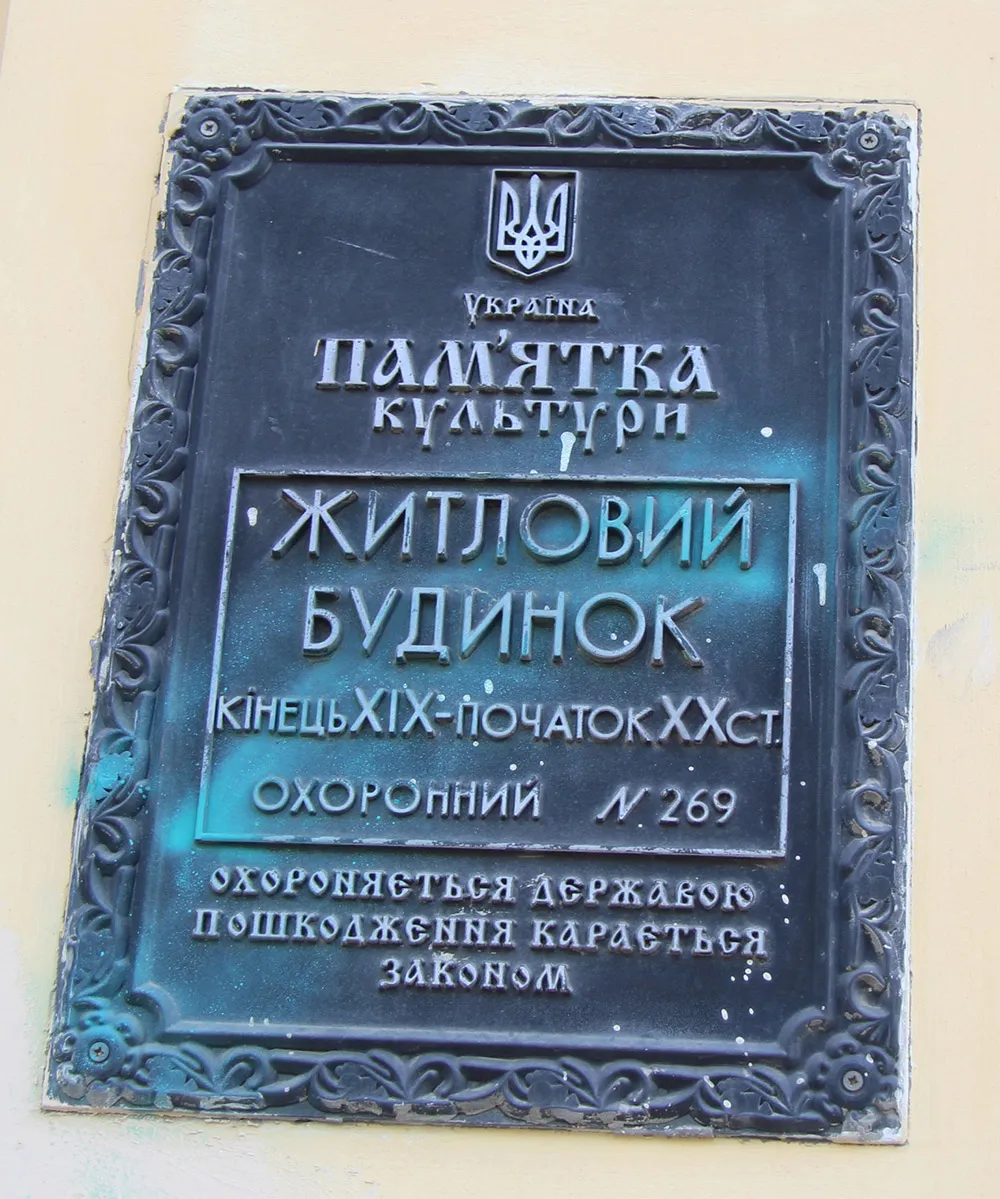
The monument is a successful example of the architectural solution of a building of the Eclectic period. In the mid-1980s the building was transferred to the Theatre on Podil.
Based on materials from pamyatky.kiev.ua