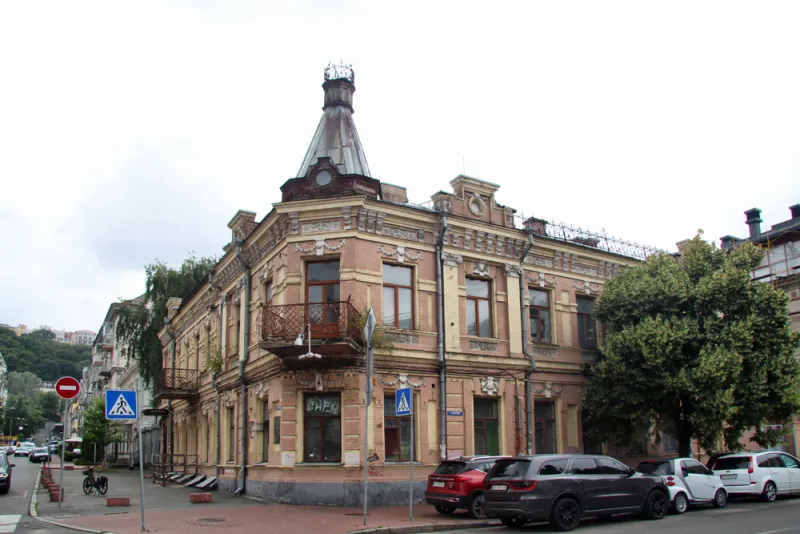
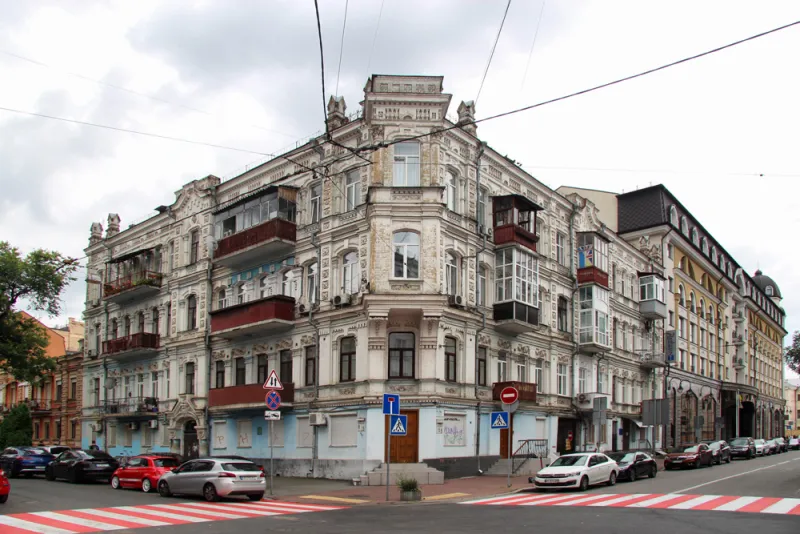
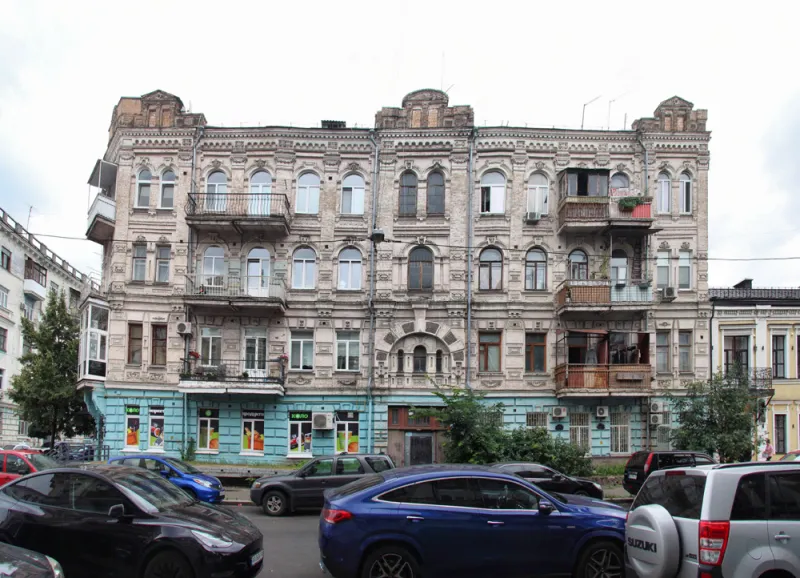
The building of the State Nobility Land Bank (Central Telegraph Office)
The origins of the extremely interesting building at 10 Volodymyrska Street go back to the Peasant Reform of 1861. Tsar Alexander II’s reform to free the peasants from serfdom was necessary but utterly ill-considered, like all reforms in Russia. Practically everyone was left offended and short-changed. The peasants, who supposedly received freedom, but practically without land and with burdensome redemption payments. The landowners also felt short-changed: they were used to the free labour of slaves and did not know how to run an estate in a new way. Yet they still wanted to go on living in luxury. And the best way out was to take a loan from a commercial bank. True, most of them could not repay it. What happened next was described very nicely by Chekhov in “The Cherry Orchard”.
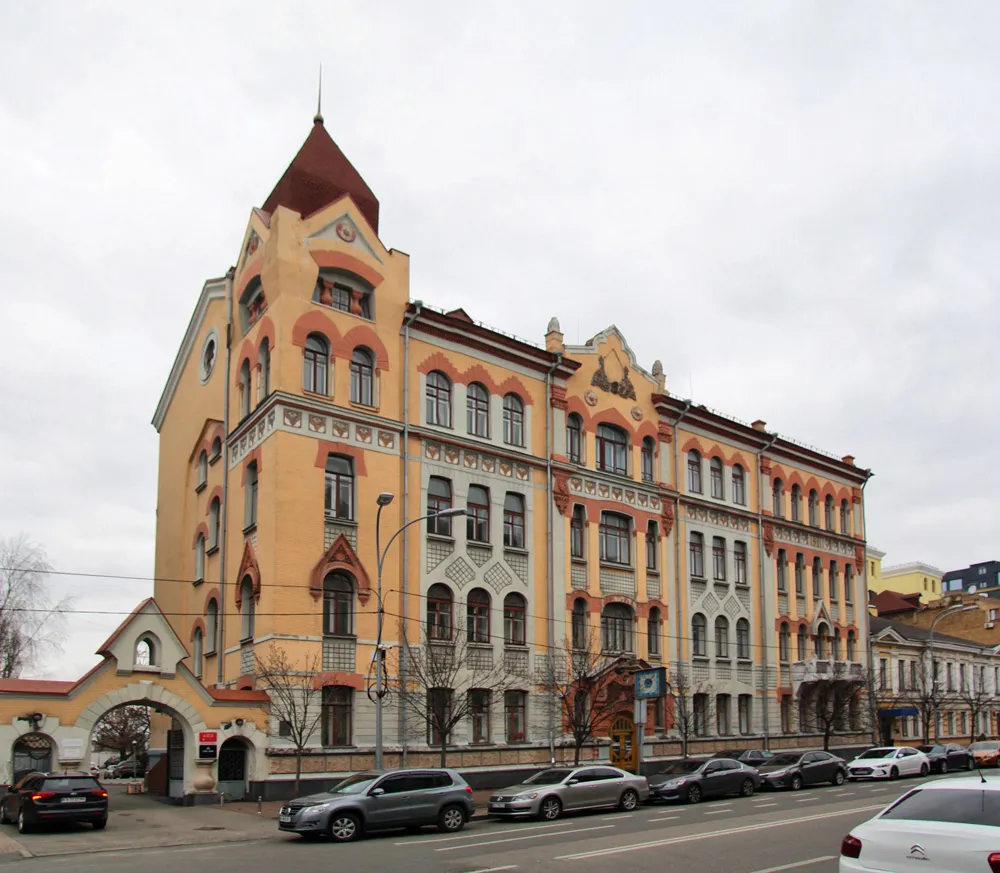
Photo: Roman Malenkov
The nobles turned to the tsar for help, both with individual and with collective appeals.
In particular, in 1883 Emperor Alexander III received a collective petition from the nobles of Oryol Governorate, on which he wrote the following resolution: “Indeed, it is high time to do something to help the nobility.”
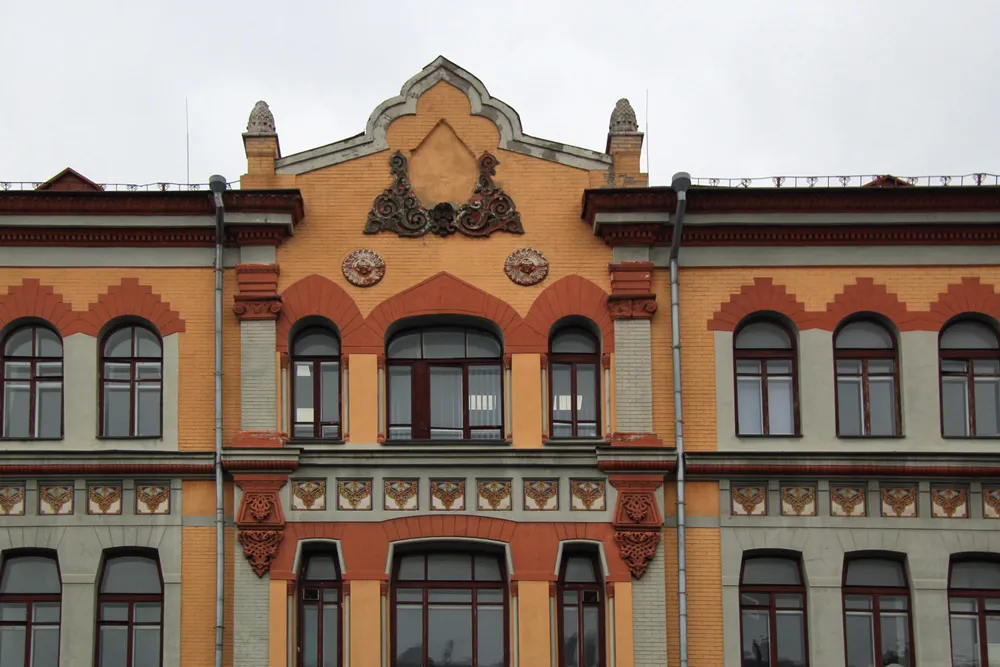
Photo: Roman Malenkov
As part of this assistance, the State Nobility Land Bank was founded as early as 1885. It was a purely “social” project. Against the security of their estates, nobles could take loans here at a rather symbolic interest rate, use the money to close their loans at commercial banks (which raked in a considerable interest), and then repay the loan to their “own” Nobility Bank together with the symbolic interest.
Before that, in 1882, the state Peasant Bank had been created, which issued long-term loans to peasants so that they could acquire land as private property.
At the beginning of the 20th century, people in Kyiv became concerned with building a separate, prestigious structure to house the branches of these respectable state banks. Until then the offices of these banks had been located in rented buildings. The construction of their own bank office lasted from 1910 to 1911.
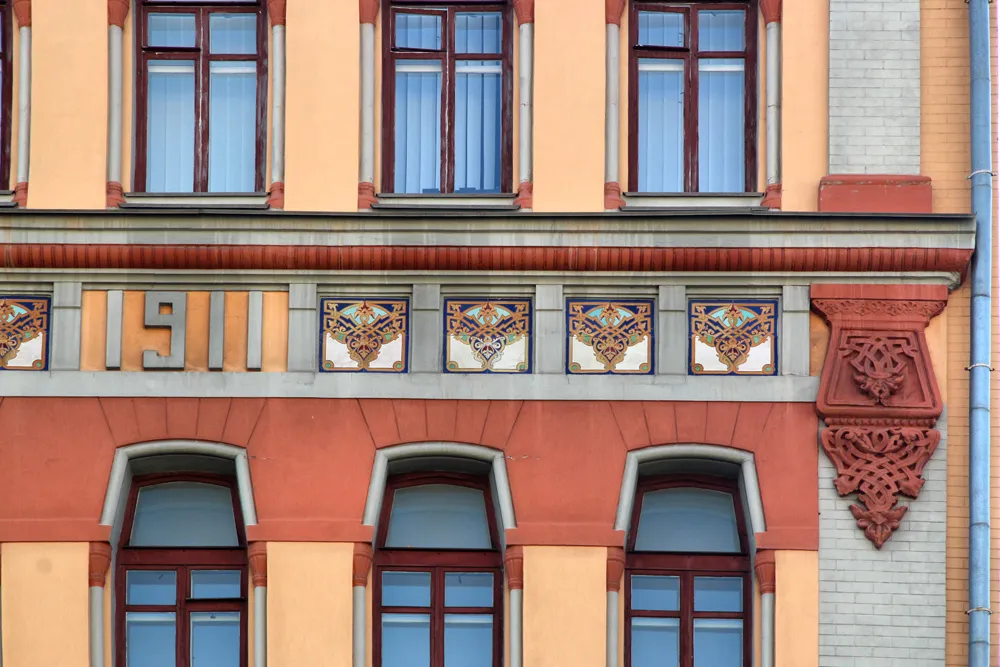
Photo: Roman Malenkov
A plot at 10 Volodymyrska Street was purchased for the construction. At that time a two-storey brick house stood there, which was demolished at once.
At that time historicism was in fashion in the Russian Empire. Considering that the building was to rise on the territory of the former city of Volodymyr, it was decided to play up this fact as much as possible in the architecture of the future bank premises.
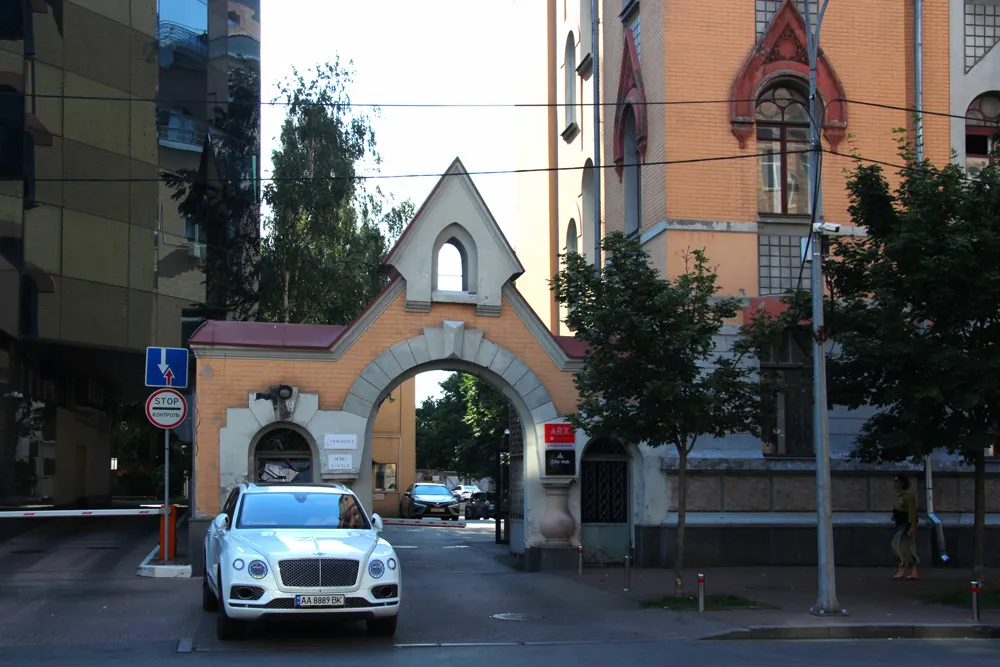
Photo: Roman Malenkov
The project was developed by the outstanding Kyiv architect and civil engineer Oleksandr Kobelev. The most famous of his buildings, also a bank, is the State Bank building on Instytutska Street. Today it houses the National Bank of Ukraine.
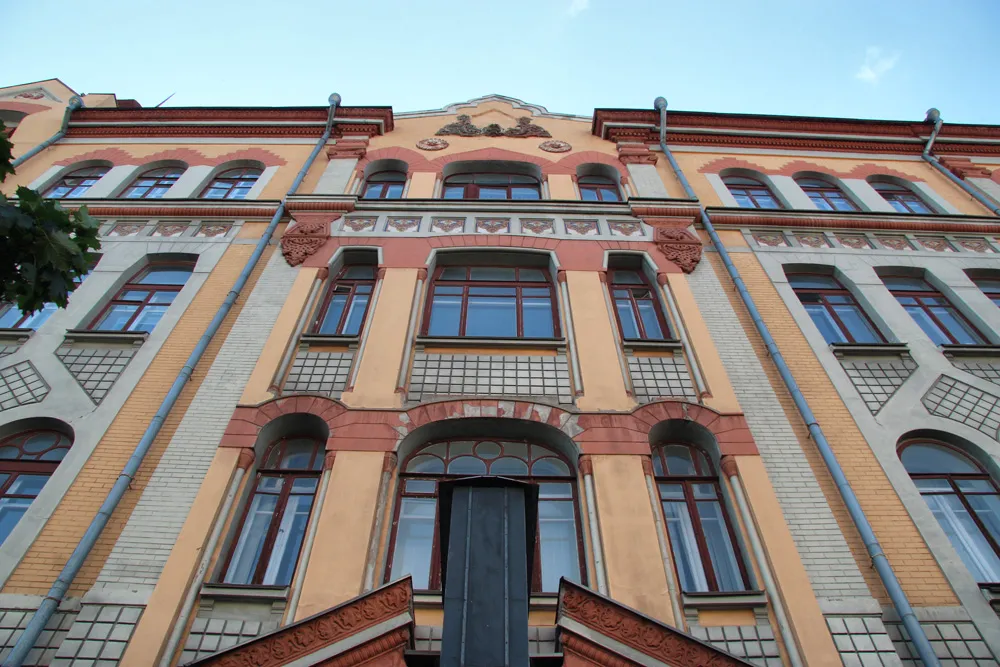
As already mentioned, the architect expressed as vividly as possible in his work the idea of continuity with the history of ancient Kyiv as the capital of Rus. The pointed tower took the form of a helmet of a prince’s retainer. The stucco and majolica decoration are made after motifs of Byzantine and Old Rus ornament.
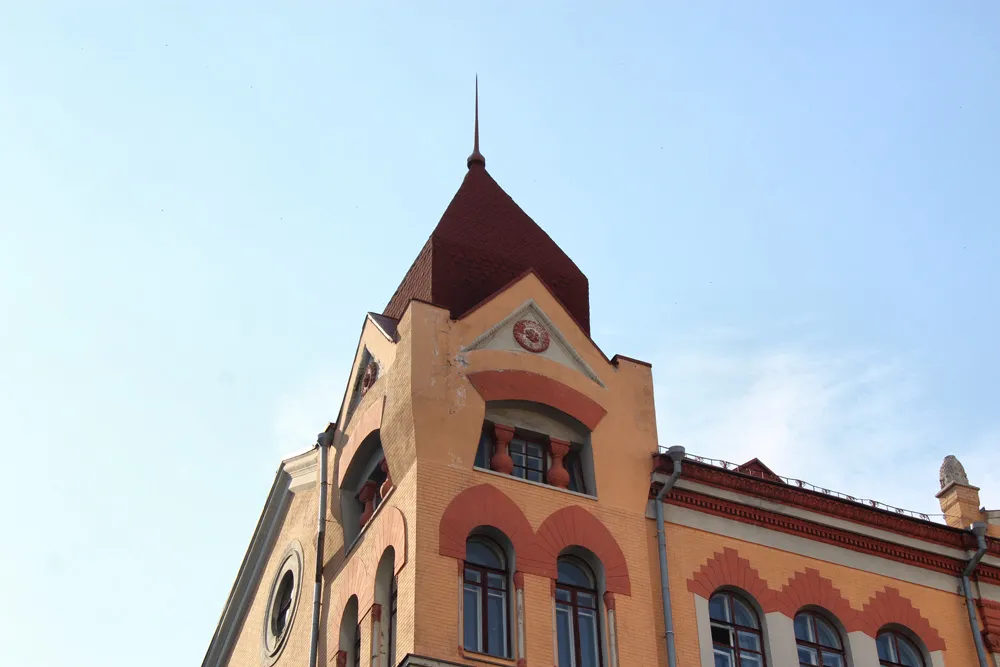
Photo: Roman Malenkov
The stone balustrade of the balcony was decorated with bas-reliefs in the form of Old Rus warriors.
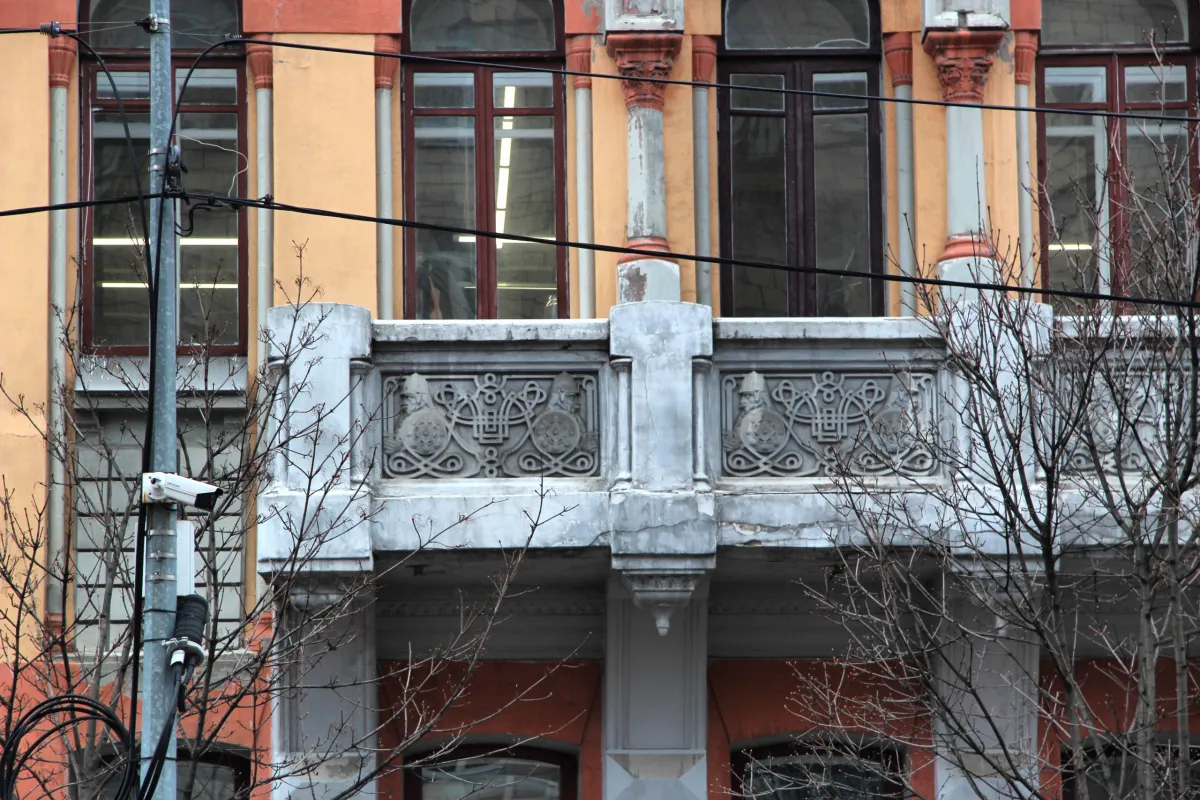
Photo: Roman Malenkov
Naturally, with the Bolsheviks’ rise to power everything was nationalized. And since the USSR had no need for a large number of different banks, the bank office was repurposed as the Central Telegraph Office.
In 1953 a fourth floor was added to the building. At that time architecture was still dominated by “Stalinist excesses”, which Khrushchev later crushed. So the architectural masterpiece was treated with respect. In particular, the tower was recreated in its original form, as was the shaped gable above the main entrance, and the entrance gate also survived.
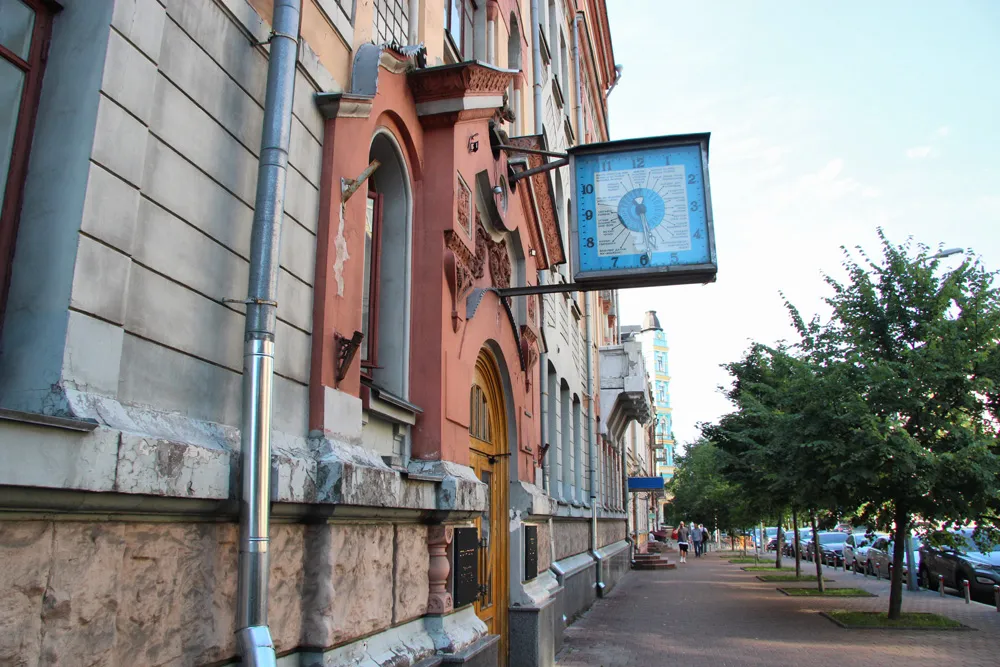
Photo: Roman Malenkov
At the same time the façade was adorned with a very interesting clock that shows the time in all the world’s most important cities.
Today the bank-telegraph building houses a whole scattering of rented offices.