The Contract House: contracts, musicians, concerts, the “black board” and marmalade
From the time Batu Khan destroyed the “upper city” until the second half of the 19th century, Market Square in Podil was the economic, cultural, spiritual and administrative heart of Kyiv.
The Kyiv Town Hall stood here, and from the 17th century until the early 19th century it housed the Magistrate. The Town Hall burned down in the notorious Great Fire of 1811, which destroyed almost the whole of Podil.
From 1798 to 1800 the first contract fairs took place in the Town Hall, and they gave Market Square its new name: Contract Square.
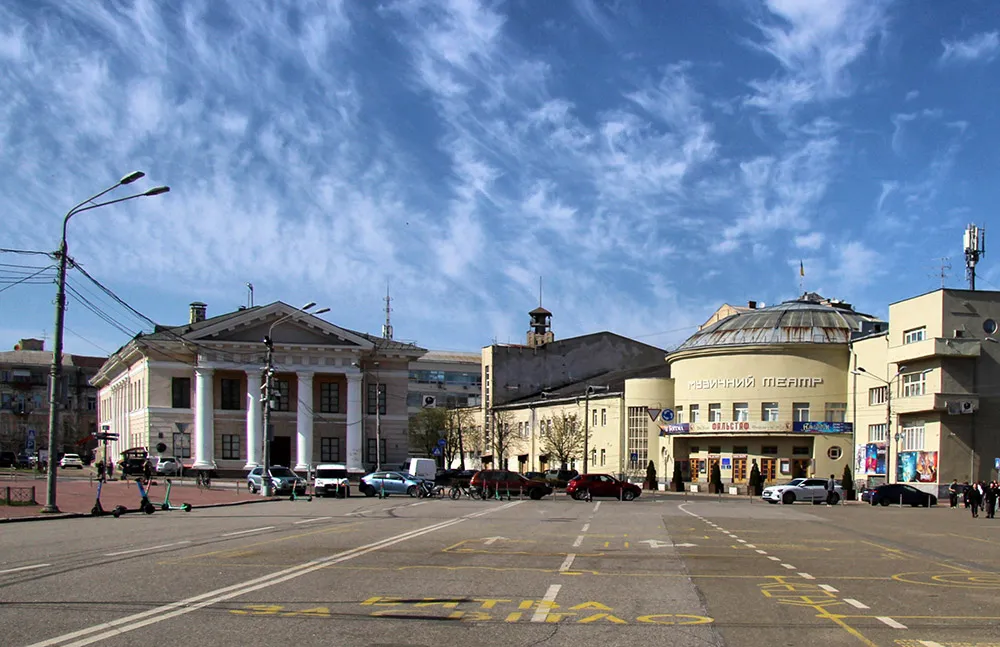
Before that, from 1774, the contracts had been concluded in the town of Dubno (in present-day Rivne region), which at the end of the 18th century became part of the Russian Empire. However, for a number of reasons the contract gatherings were moved to Kyiv in 1797.
At the contract fairs people concluded agreements (contracts) on the wholesale purchase and sale of agricultural, handicraft and industrial products, on the purchase, sale and lease of land and estates; agreements on mortgages and loans were signed, and even marital property documents (for example, when estates were handed over as a dowry, or, conversely, when property was divided in a divorce, and so on).
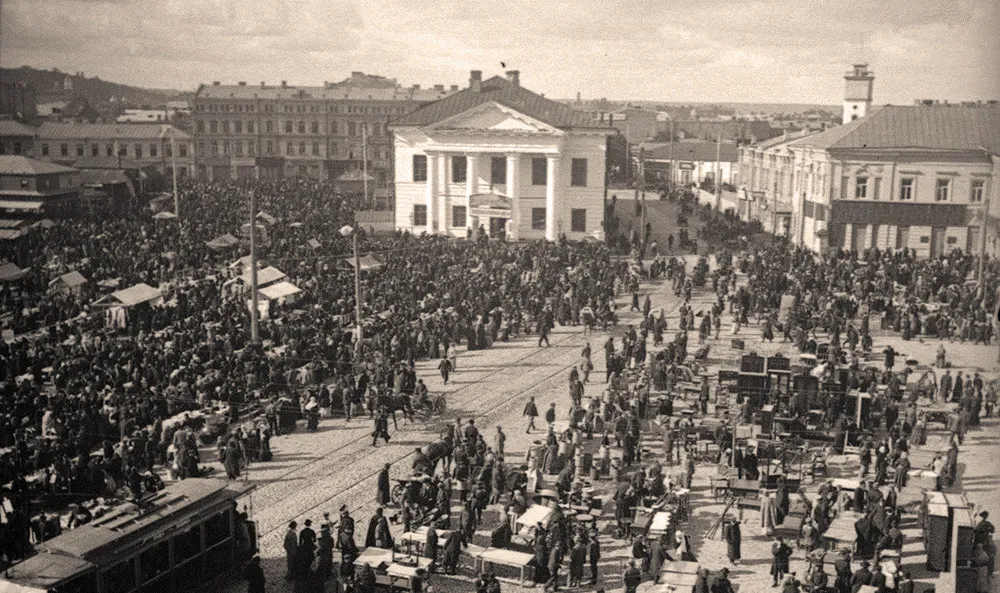
The Contract House and the fair. Early 20th century.
The contract fair was combined with an ordinary one. After all, many very wealthy people came to Kyiv from all over Ukraine, as well as from large areas of present-day Belarus and Russia. During the two-week “contracts” up to 18,000 people sometimes arrived. That was more than half the population of the whole city! The event poured a considerable amount of money into the pockets of the townspeople. For example, a house in Podil next to Contract Square was rented out for 2,500 paper roubles!
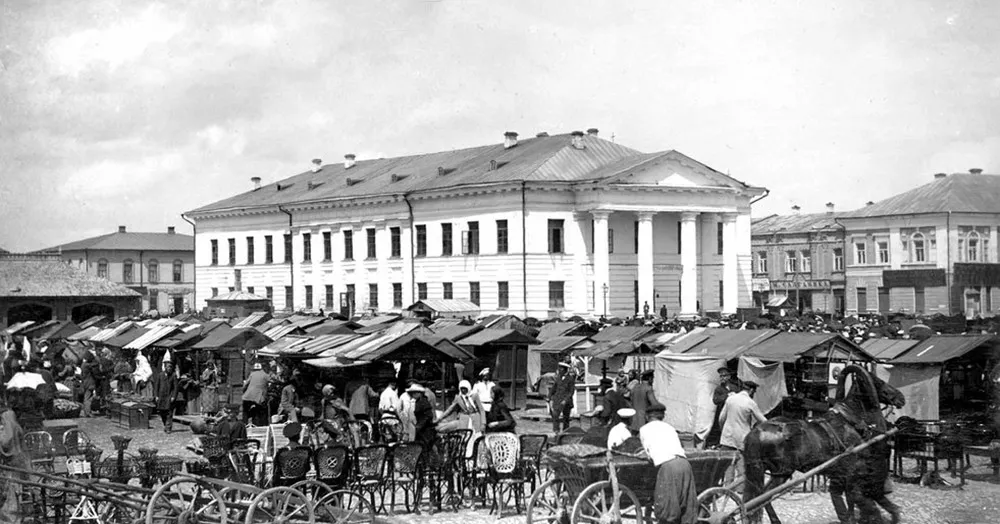
The first contracts were concluded in the Town Hall building. Later they were moved to a special two-storey building. Interestingly, purely economic business was combined here with cultural events. On the ground floor deals were made, while on the first floor performances by famous artists, theatrical shows and balls went on non-stop. It was Kyiv’s first public theatre and concert venue.
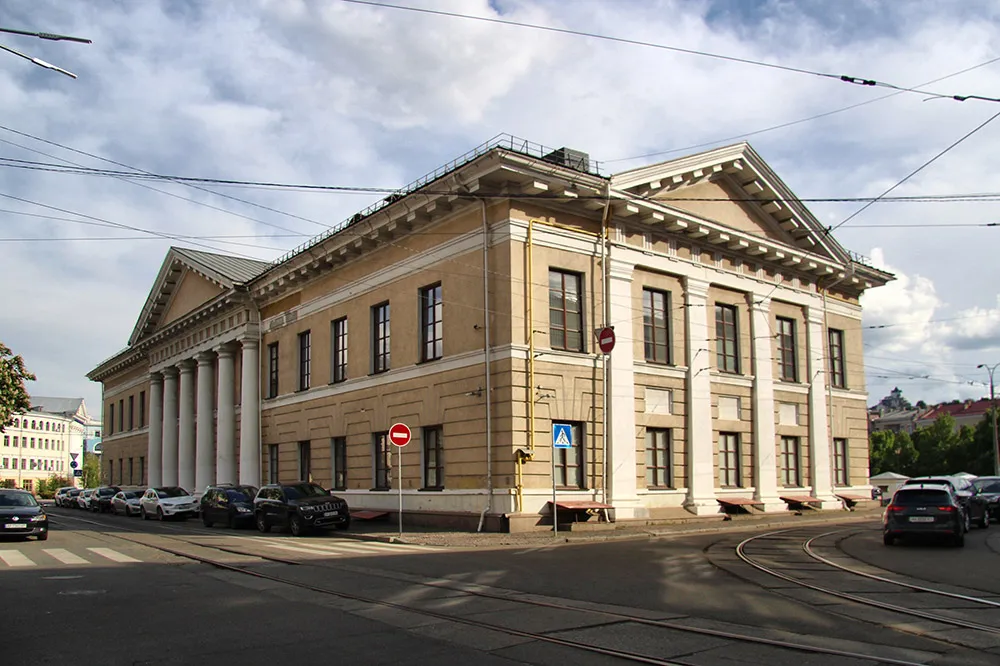
Among those who performed here were the Hungarian pianist and composer Franz Liszt, the Polish musicians, the brothers H. and J. Wieniawski, the violinist K. Lipiński (he was even considered a rival of Niccolò Paganini himself), the Belgian cellist F. Servais (the “cello Paganini”, author of the musical piece “Memories of Kyiv”), the Italian singer A. Catalani (1823), the Russian violinist H. A. Rachynskyi (in the 1820s), Italian opera and theatre troupes from Madrid and Warsaw, serf orchestras, and Ukrainian, Polish and Russian theatre troupes. In the 1890s the building hosted performances organized by the Kyiv Dramatic Society.
An interesting fact. The Contract House had a special board listing debtors and unscrupulous entrepreneurs, compiled by creditors. When concluding any large deal, its participants would always check this list. If a potential buyer or client was found on it (contracts were often concluded on credit), the signing of the agreement could even be cancelled.
It was then that Market Square became Contract Square (later renamed Oleksandrivska, in honour of the tsar).
The first Contract House, together with the neighbouring Town Hall, burned down in the catastrophic fire of 1811.
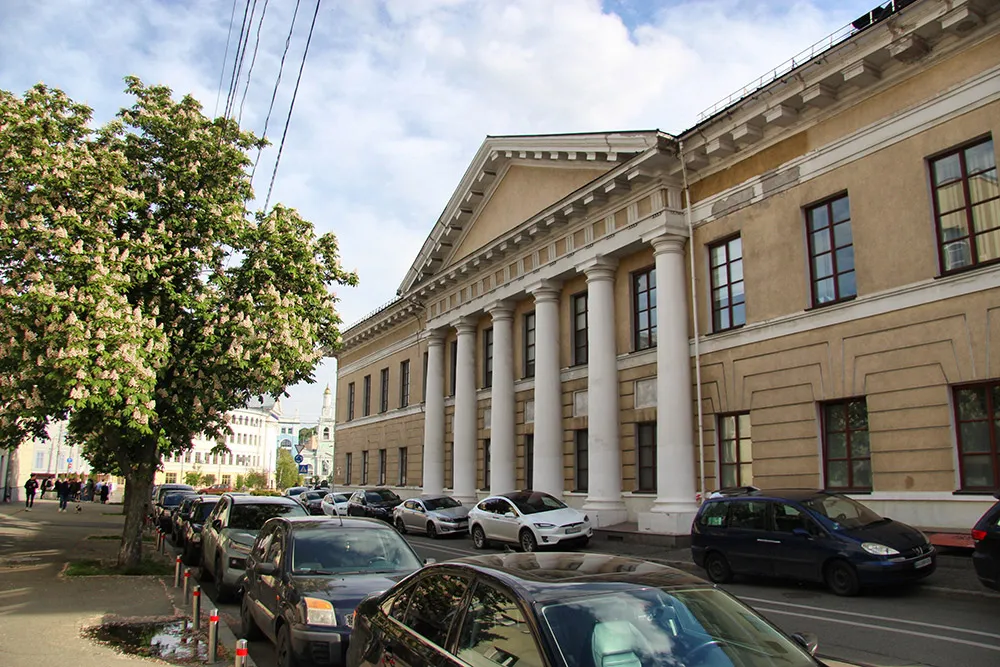
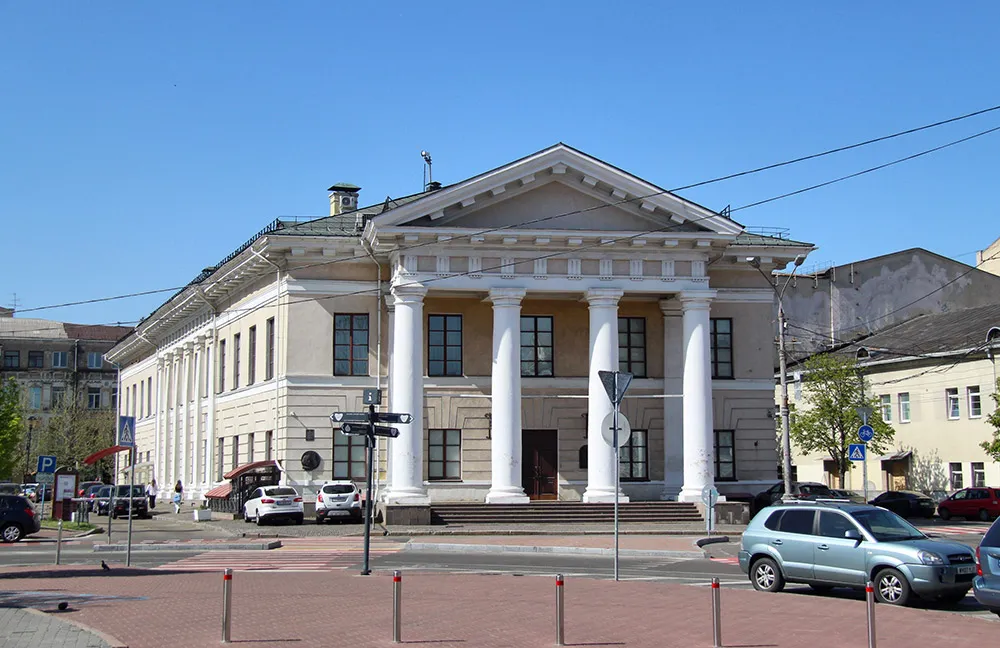
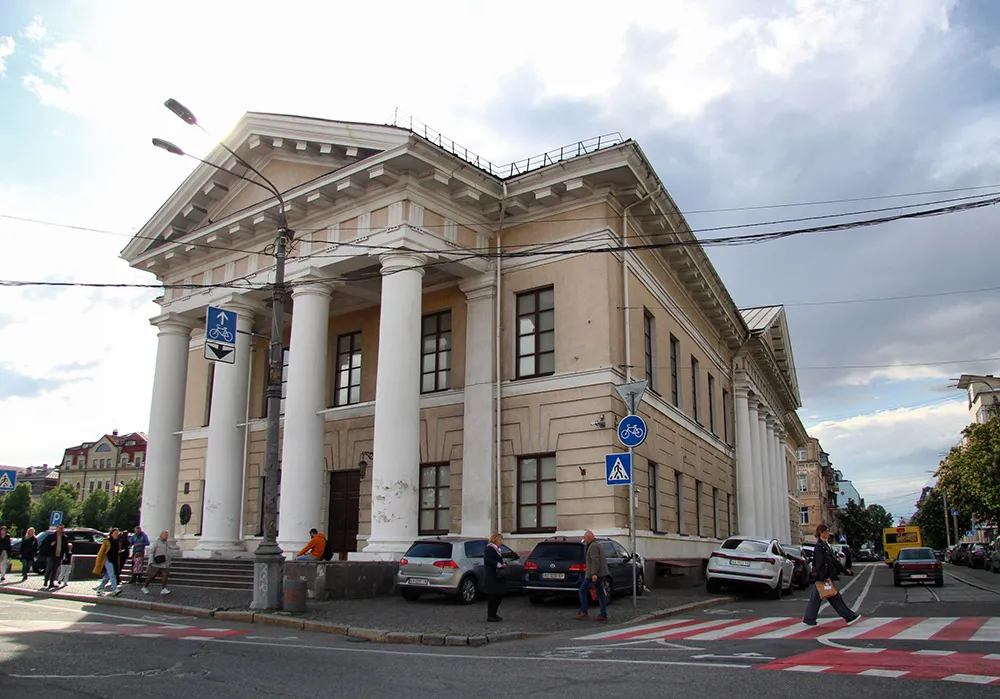
The new Contract House was built in 1814–1817 to a design by the famous architect of Scottish origin William Hastie. The construction was carried out by the Kyiv city architect Andrii Melenskyi.
An interesting fact: the stones of the dismantled Town Hall, which had burned down at the same time as the first contract house, were used to build the new Contract House.
The “British subject” William Hastie effectively directed all urban planning in the empire at that time and contributed to the development of almost 500 of its towns.
Andrii Melenskyi was the first chief architect of Kyiv (from 1799 to 1829). It was he who supervised the rebuilding of Podil after the catastrophic fire of 1811.
His works include the house of Nazarii Sukhota on Pokrovska Street, which after the fire that destroyed the Town Hall, and until the move to Khreshchatyk at the end of the 19th century, housed the Magistrate and, after Magdeburg law was fully abolished, the City Duma. Melenskyi also designed the Church of the Nativity of Christ on Poshtova Square and the rotunda church of St. Nicholas (Askold’s Grave), and so on…
According to William Hastie’s original design, a three-part magistrate complex was planned that would have occupied a trapezoid-shaped block on Kyiv’s main commercial square. But only the Contract House itself was built.
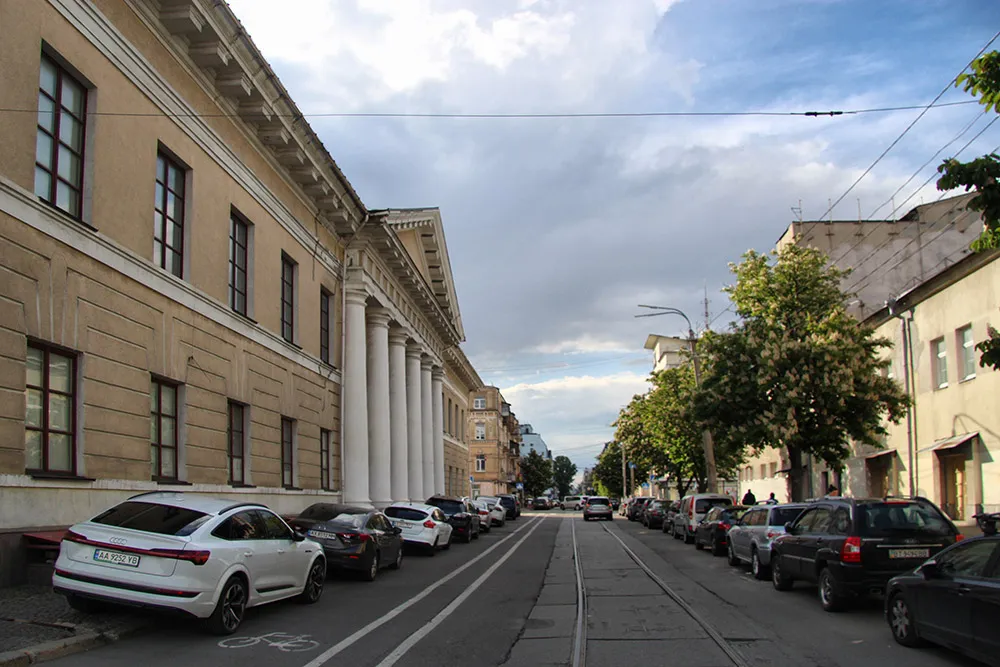
The Contract House was built in the Classical style. The main façade, facing the square, has a four-column portico of the Doric order, crowned with a triangular pediment. The irregular outlines of the plan (namely the oblique angles where the walls meet and the turn of the colonnade in relation to the axis of the whole building) are dictated by the shape of the building plot. The central sections of the north and west façades are adorned with porticoes of Doric pilasters, and the east façade with a portico of three-quarter columns.

For a long time the Contract House remained the centre of Kyiv’s economic life. But from the end of the 19th century it turned into a rather marginal fair of confectionery, sweets, marmalade and jam. In addition, sugar-factory owners periodically gathered in this sweet place to coordinate their actions (the volume of output, prices, beet purchase prices, and so on) within the All-Russian Society of Sugar Producers.
The cultural life has been described above.
After the fall of tsarism, the Contract House accommodated the Commercial Academy and the Commercial Museum. With the end of the NEP policy, and with it the Contract Fair, the building finally lost its original function.
Afterwards the building was used by various technical schools. From the 1980s the monument was in a rather pitiful state.
The well-known banker and statesman Vadym Hetman took an active part in reviving the Contract House: after the building was restored, from the mid-1990s the Interbank Currency Exchange began to operate there.
Unfortunately, today the appearance of the part of Contract Square where the building that gave the square its name stands is rather disfigured by the “half-ruined” Hostynyi Dvir, which is the centre of the square’s architectural composition. After the sad vicissitudes of the Yanukovych era, when there were plans to rebuild the monument into yet another shopping and office centre, since the winter of 2013 the monument has stood without a roof, windows or plaster. After the Revolution of Dignity, an attempt to “privatize” the building came to nothing. At present Hostynyi Dvir is state property and under the management of the Ministry of Culture. Unfortunately, the Ministry today has no funds even for conservation work, let alone restoration. Despite this, requests from the capital’s community to hand it over to the city, which has money and plans for the building, remain unheard. As a result, the historic heart of Kyiv remains disfigured by sad half-ruins…