The Kyiv-Podil bursa: Khoma Brut walked somewhere around here
In post-Soviet times vocational schools were contemptuously called “bursas”. Perhaps this was an echo of ancient times, when “bursas” meant dormitories for poor students, and the students themselves were “bursaks”. Because breaking into universities and institutes, even with the equality declared in the USSR, was not easy for schoolchildren from remote villages or working-class outskirts. Only one road lay open to them: to the “bursa” (a technical or vocational school).
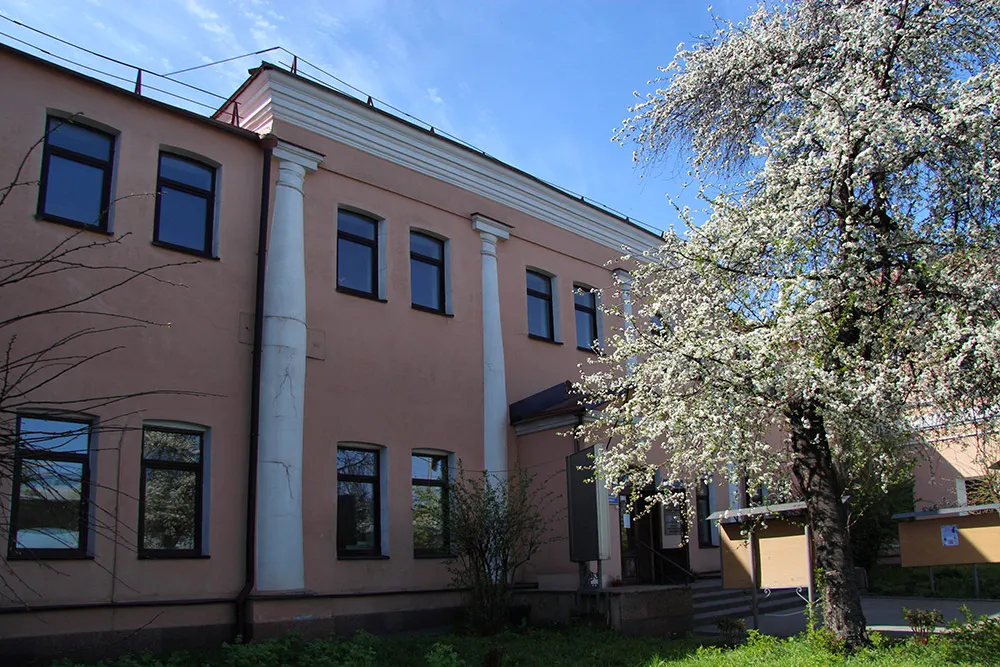
As for the real bursa on the grounds of the National University of Kyiv-Mohyla Academy, its history is quite ancient.
The first bursa for the Collegium, still wooden at that time, was built within the enclosure of the Brotherhood School Monastery by Metropolitan Petro Mohyla himself. Of course, he did not haul logs at the construction site, but he allocated funds for it and gave his blessing. In 1719, at the expense of Metropolitan Rafail Zaborovskyi and his predecessor Ivan Krokovskyi.
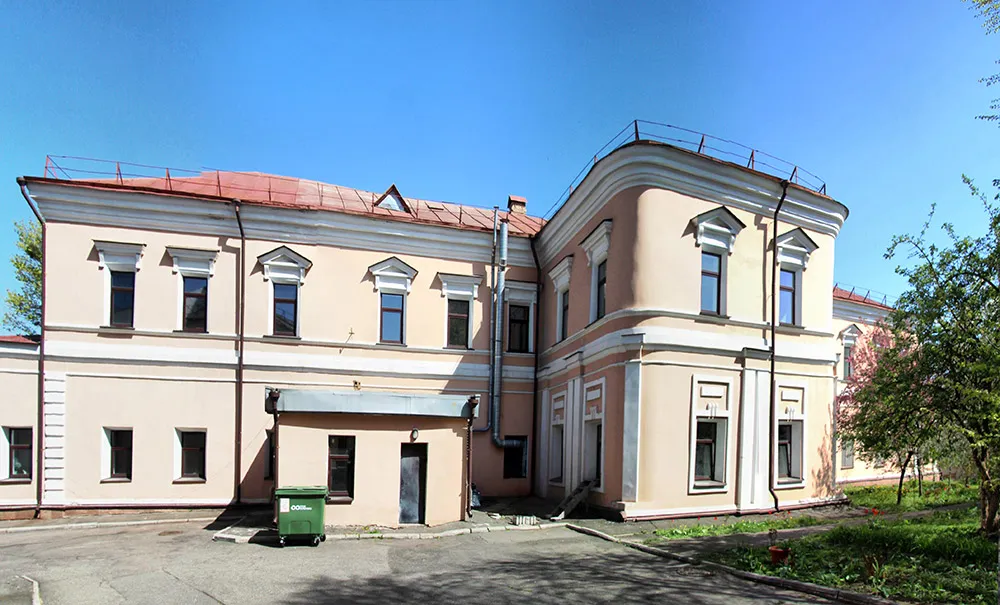
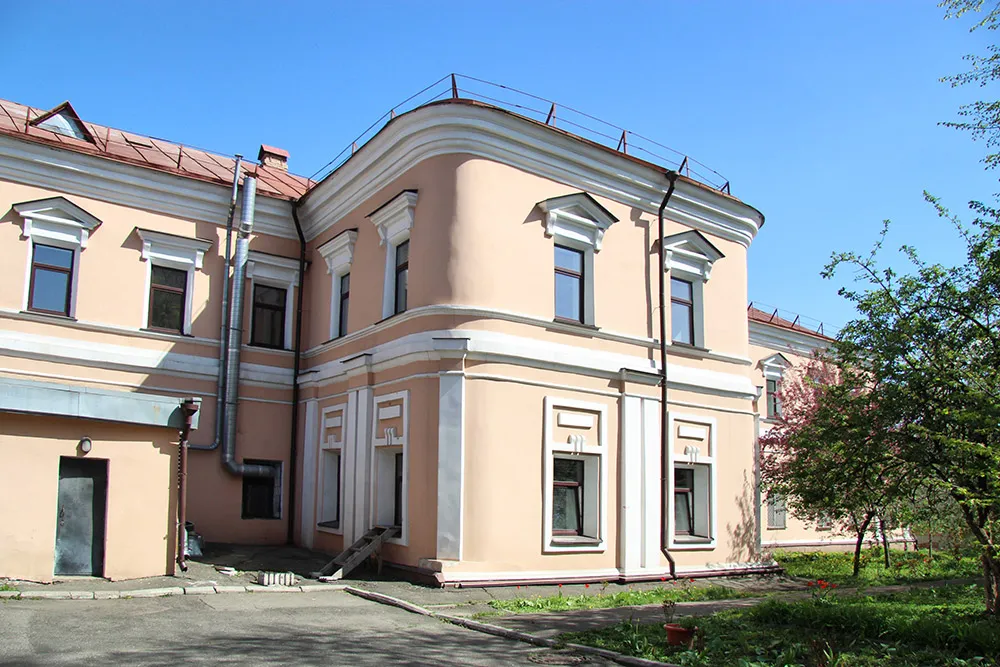
The rather harsh conditions in which the always half-starved bursaks lived formed an entire Bursak Brotherhood. Romantic sketches from the life of the bursaks of that time can be found in the works of Mykola Hohol (Gogol), Vasyl Narizhnyi and other authors. The eternally hungry but cheerful bursaks formed a distinctive clan (at times with a whiff of petty crime), without which it was impossible to imagine life in old Podil.
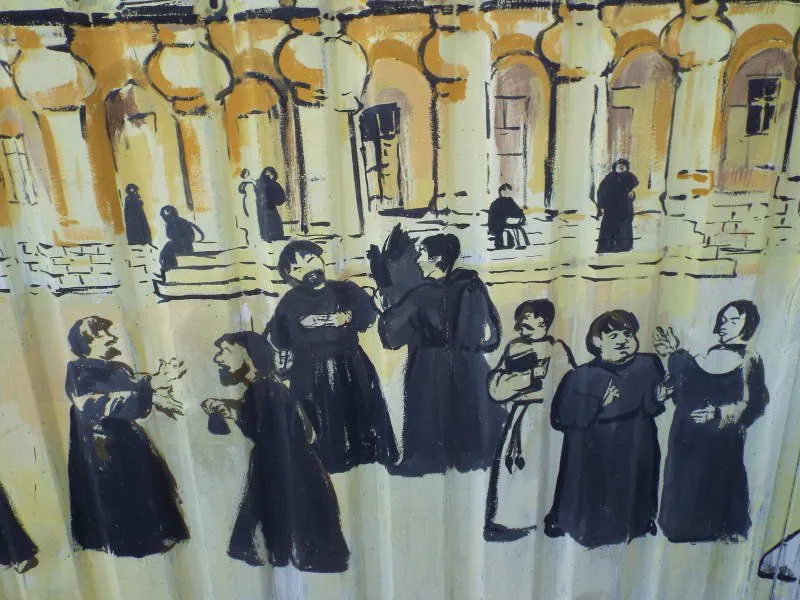
Bursaks in Podil, 17th century. An artistic depiction on Poshtova Square. Photo by I. Parnikoza, 2018 (myslenedrevo.com.ua)
In 1760 a plot of land near the Church of St. Nicholas Naberezhnyi was purchased, and in 1765 a new bursa on a stone foundation appeared. The woodwork was done by the master Petro Nedilko, the stonework by a pupil of the Academy, the outstanding architect Ivan Hryhorovych-Barskyi. Given the constant fires that devastated Podil with the regularity of suburban trains, it was soon decided to abandon wood, and in 1778 on the old stone foundation a fully masonry building arose, which we see today. Its design was prepared by the already mentioned Ivan Hryhorovych-Barskyi, and the funds were allocated by Metropolitan Havriil (Hryhorii Kremenetskyi).
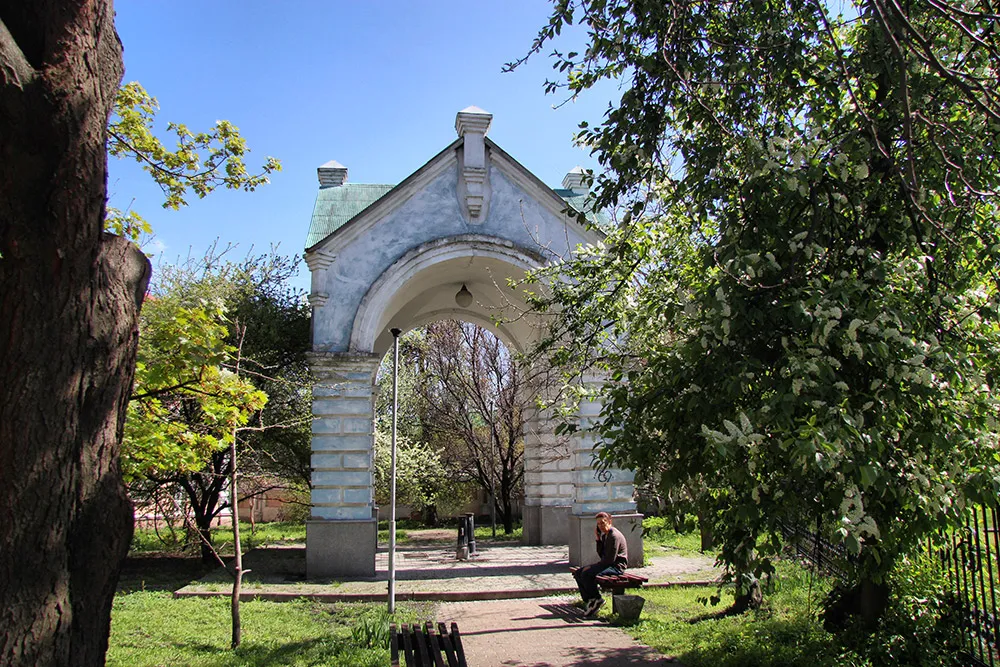
The elongated one-storey block had two side projections towards the street, decorated with Baroque pediments. In 1809–1811, to a design by the architect A. Melenskyi, a second storey was added and the building was dressed in the Classicist “attire” typical of the 19th century.
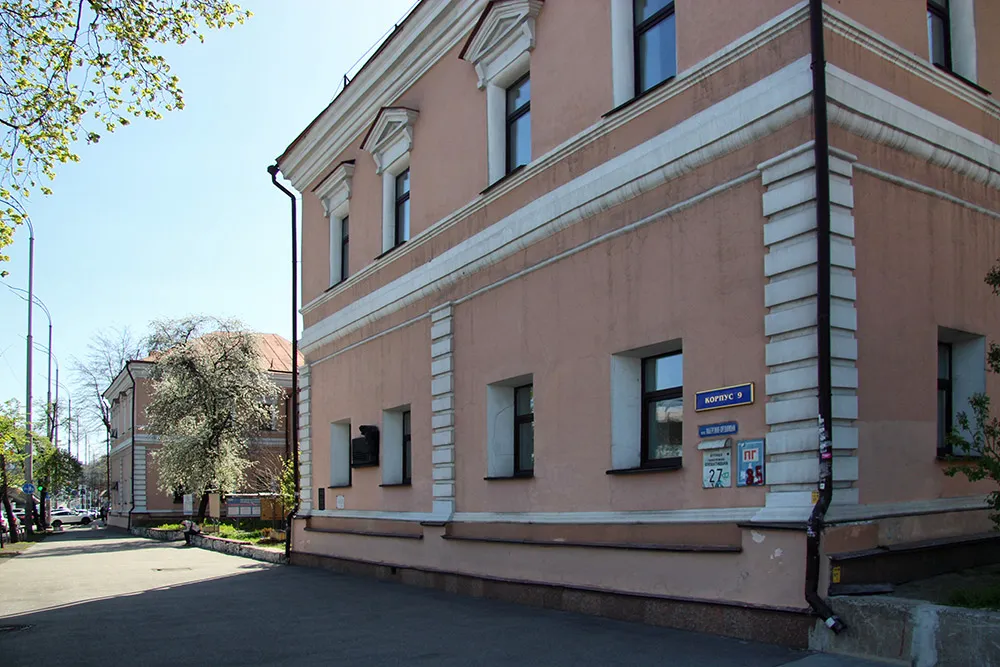
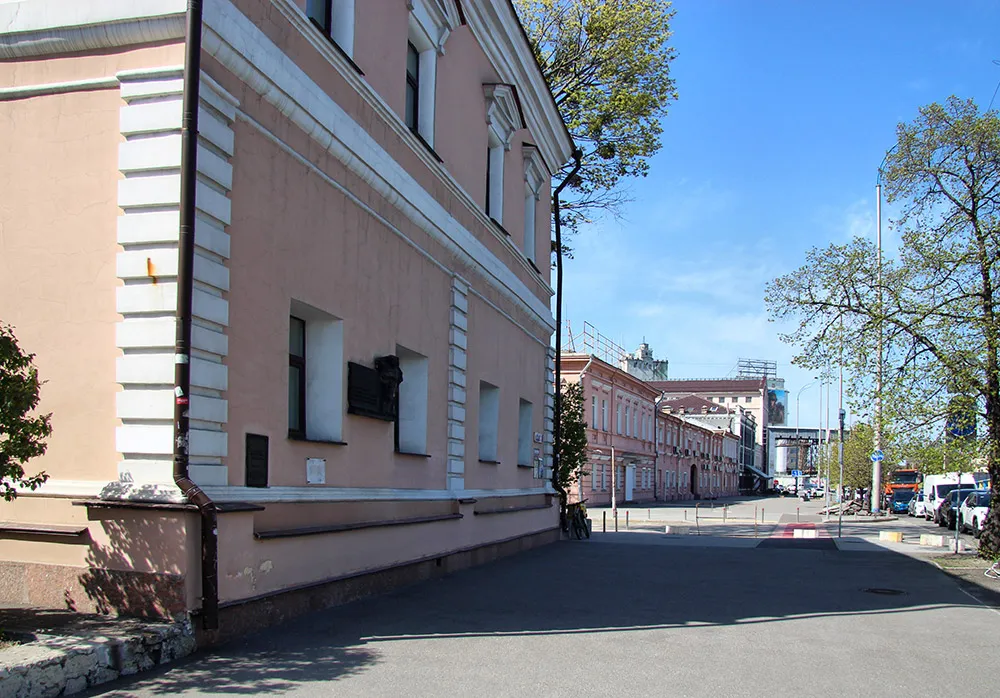
The central part is adorned with a four-column portico, and columns and small triangular pediments above the windows appeared.
In 1819–1832 a seminary operated within the walls of the bursa, then the Kyiv-Podil Theological District School.
In the mid-19th century the building was given over to a hospital. At that time, besides the internal re-planning, the portico was walled up.
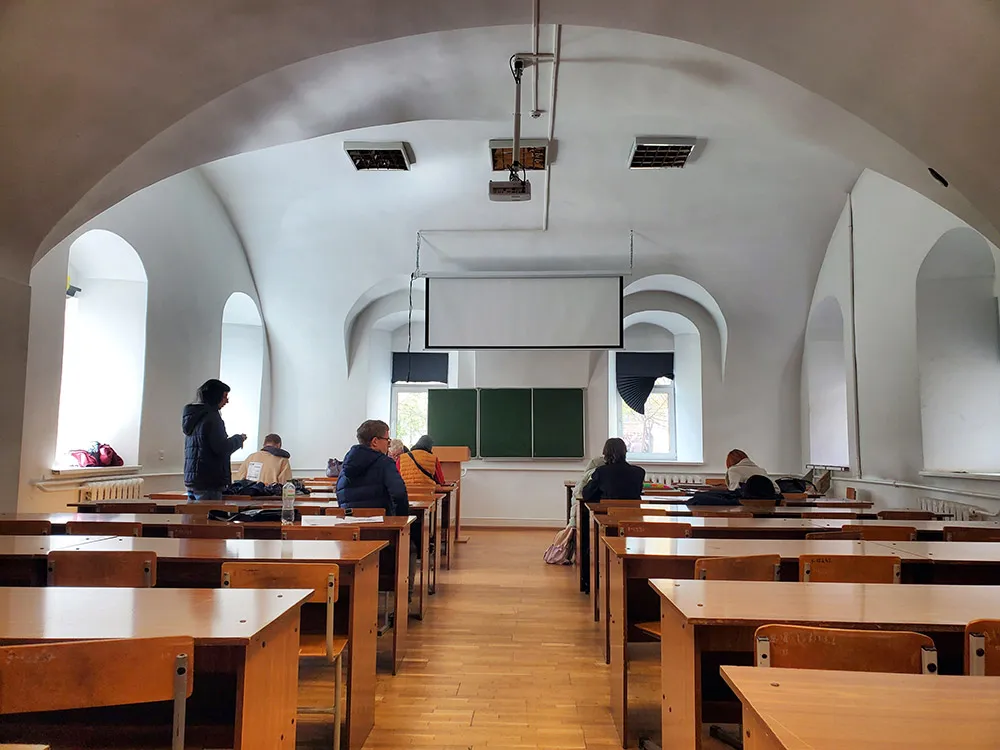
Today the building of the old bursa houses the Law Clinic of the Faculty of Law, the Admissions Committee, the Scientific and Pedagogical Centre for Pre-University Preparation and the Educational Studios of NaUKMA.