

The amorous adventures of King Stanisław August in Zhvanets, and what came of them
Today Zhvanets is a small town (with a population of perhaps fifteen hundred) in the Kamianets-Podilskyi district of Khmelnytskyi Oblast. It stands where the Zhvanchyk flows into the Dniester, hence the name. The first written mention of the settlement dates from 1431. The village of Zhvanets appears in a charter of King Władysław Jagiełło, by which he granted lands along the Dniester to the knight Świeca of Łęczyn. The village had a very convenient location and great strategic importance, so it soon grew into a sizeable town, which in 1646 was granted Magdeburg law by King Władysław IV Vasa.
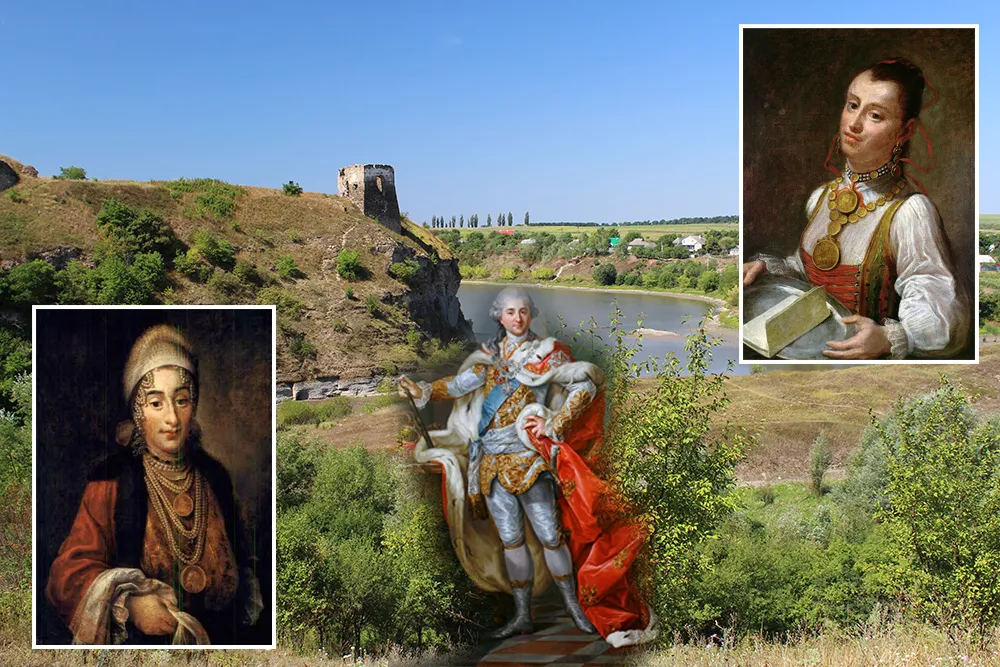
The ruins of the castle in Zhvanets and the dramatis personae…
The local castle was built as early as the 15th century, possibly on the site of an even older fortification. There are exotic theories that a fortress stood here already at the beginning of the 1st century AD, built, supposedly, by the Romans. In fact, not the slightest trace of a Roman presence has yet been found in Podillia, but never mind.
The place is almost too convenient: a towering rocky promontory protected on three sides by natural waters — the Dniester, the loop of the Zhvanchyk and the little Vilshanka river (this stream is also called the Karmelitka). Today neither the Zhvanchyk nor, especially, the Vilshanka/Karmelitka is impressive in size, but even in the mid-20th century they were quite respectable.
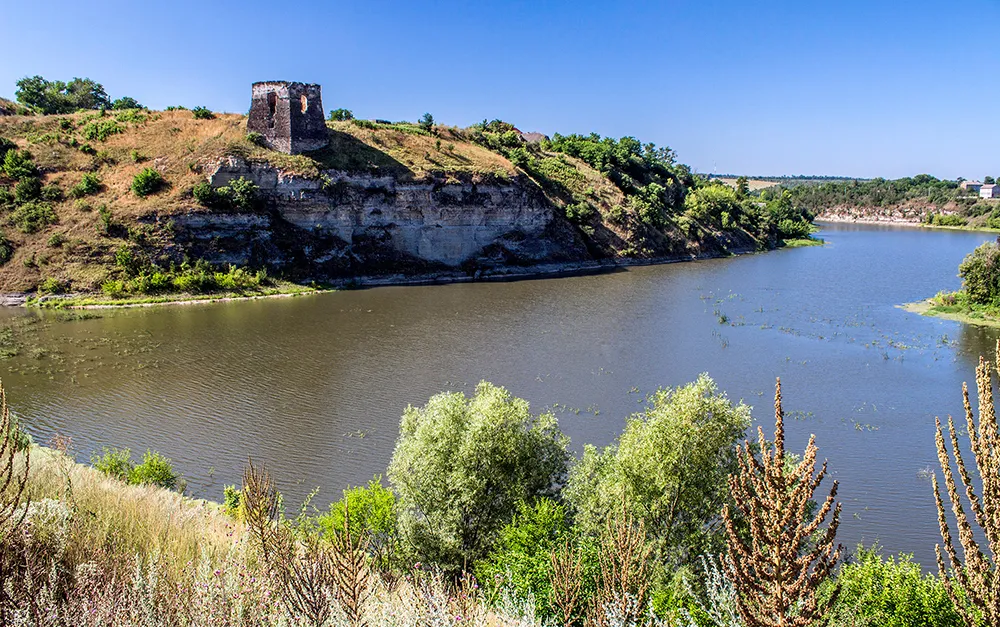
The Zhvanchyk is “propped up” by the Dniester reservoir, which is why it is so wide
The castle’s strategic position was also exceptionally advantageous: it not only controlled river traffic on the Dniester but also the traditional crossing. The ford across the Dniester was here, perhaps the only one along 100 km of the river in this area. From the opposite bank the ford was guarded by the famous Khotyn Fortress. Incidentally, it is clearly visible from Zhvanets.
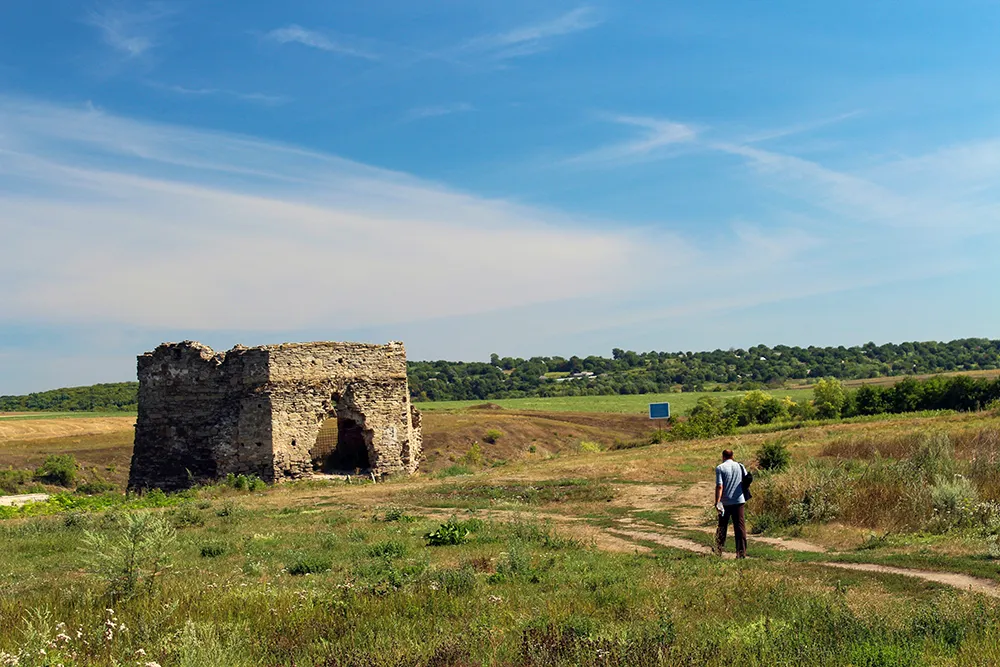
In the 16th and early 17th centuries Zhvanets (the castle and the town fortifications) became, after Kamianets-Podilskyi, the second most important strategic defensive hub of Podillia.
During the Khotyn War with the Turks (1621) the stronghold suffered somewhat, but not seriously. The castle was rebuilt by Stanisław Lanckoroński, who became the owner of the town in 1626.
The fortification fared worse during the Khmelnytsky Uprising. The destruction then was much more substantial. Before the damage could be repaired, the war with the Ottoman Empire began. True, the castle was not destroyed by the Janissaries. In 1672 the Turks took Zhvanets without a fight — the entire castle garrison, together with the local residents, retreated to Kamianets. There is no one to blame for cowardice here. The old fortification could not have withstood a full-scale Ottoman army. The Janissaries would not even have had to exert themselves much — within a few hours the castle would have been turned into rubble by the “topçu,” as the Turkish gunners were called.
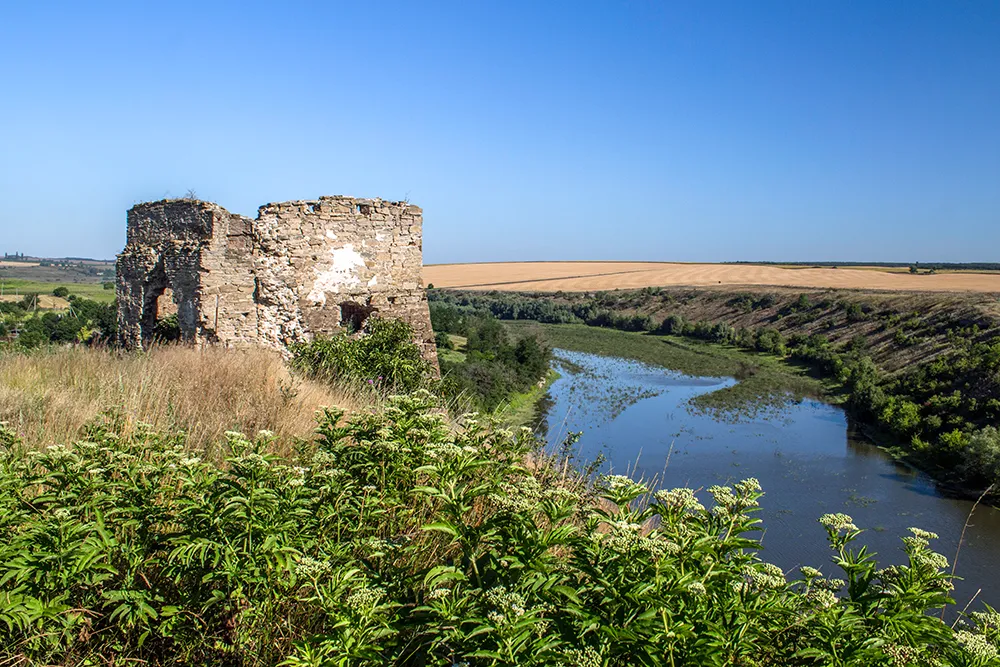
The greatest damage to the fortification was done not by the Turks but by the soldiers of Jan Sobieski, who soon recaptured the town. The future king understood well that he would not be able to hold Zhvanets, so he ordered everything burned and razed to the ground so that the Ottomans could not use the strategically important fortification.
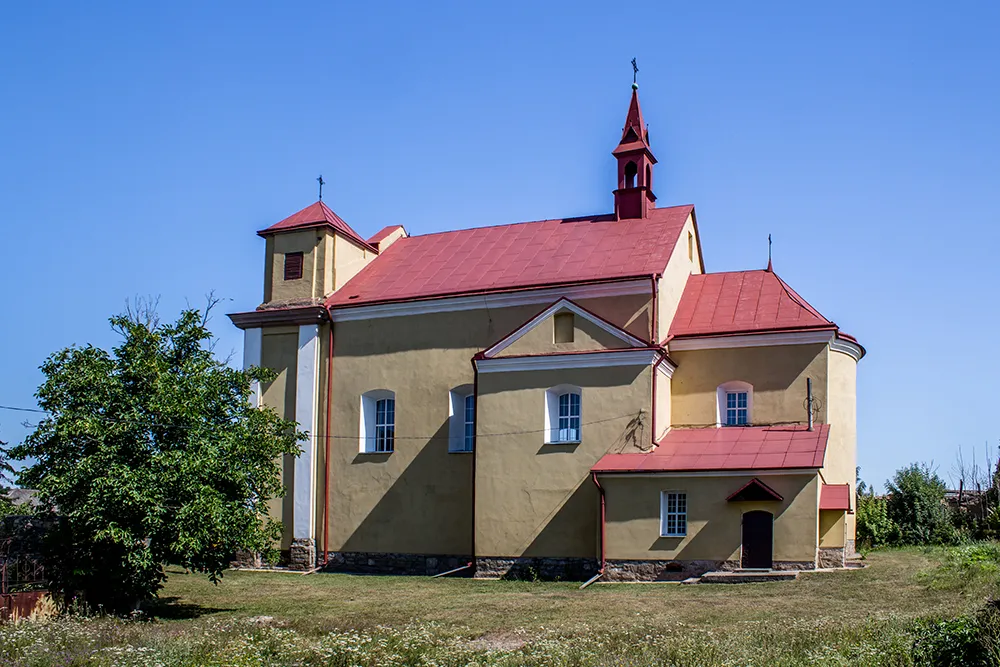
The Armenian church. 18th century
The history of Zhvanets is extremely interesting and eventful, and a sizeable book could be devoted to it. We shall dwell on just one rather amusing episode.
Zhvanets can rightly be considered the most “monarchical” small settlement in Ukraine, and perhaps in Europe. This does not mean at all that it is populated by monarchists. It is simply that a whole constellation of monarchs of various calibres from different countries managed to visit it. In 1621 Zhvanets was visited by the Polish prince Władysław (the future king of the Polish–Lithuanian Commonwealth Władysław IV and Tsar of Muscovy Vladislav Zhigimontovich); in 1653 King Jan Kazimierz and the Crimean Khan Islam III Giray were here. In 1672 the Turkish Sultan Mehmed IV was here (together with his army). In the autumn of 1842 the Russian Emperor Nicholas I visited Zhvanets. The emperor was so impressed by the town that he wanted to build a gigantic fortress occupying both banks of the Dniester and fully controlling traffic along this waterway. The Russians even managed to draw up a complete construction project, but it was never carried out.
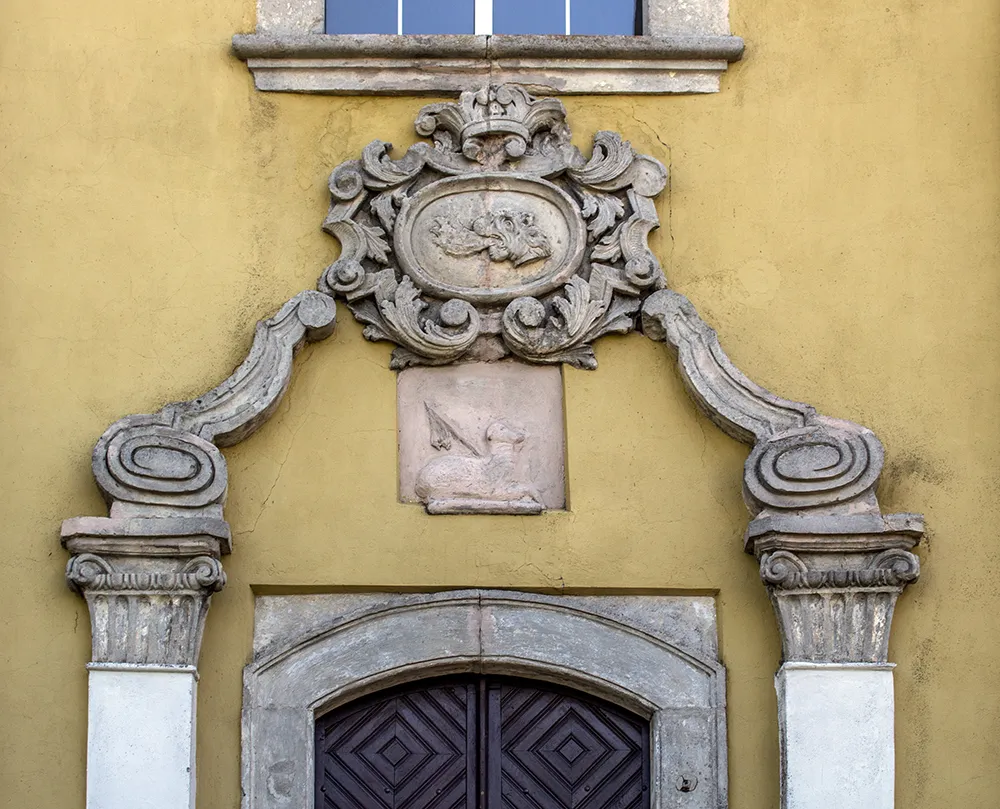
The Armenian church
The hetmans Petro Sahaidachnyi, Bohdan Khmelnytskyi and Petro Doroshenko also visited. The hetmans, note, were by no means monarchs, although they had power and armies that most of Europe’s “dwarf” crowned heads would have envied.
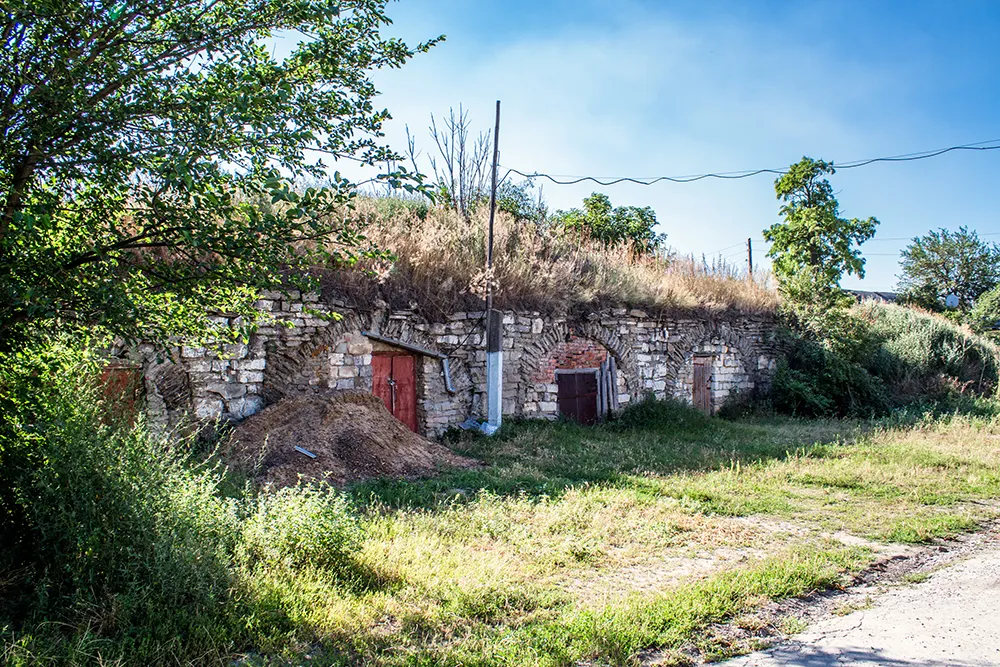
The trading rows. 18th century
The most interesting and colourful visit proved to be that of the last king of the Polish–Lithuanian Commonwealth, Stanisław August Poniatowski. The monarch visited Zhvanets in the autumn of 1781. This happened during his visit to Kamianets, where he was to meet the heir to the Russian throne, Grand Duke Pavel Petrovich (the future Tsar Paul I), who was travelling incognito. Incidentally, it is possible that the tsarevich Pavel also visited Zhvanets, adding to the distinguished list of royal persons who came here.
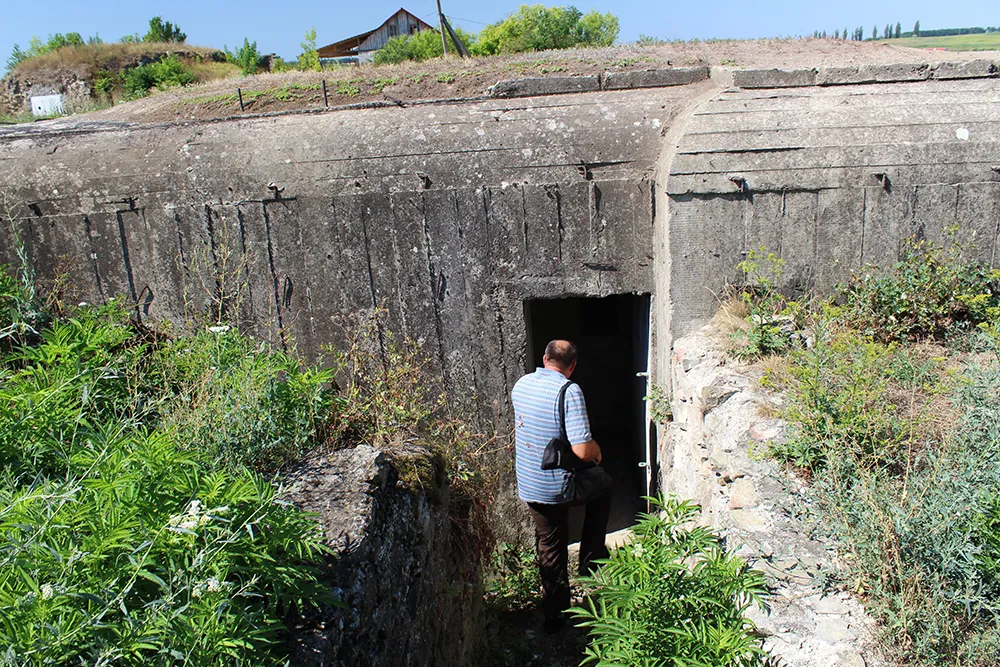
A Soviet pillbox. There are several of them in Zhvanets
The king was a thoroughly gallant, handsome man, a society lion, a clever fellow and… and, after all, a king!
Young ladies lost their heads over him. Including the Russian Empress Catherine II, who, according to one version, became his first lover. The appearance of SUCH a gentleman in a provincial town caused a furore among its female population.
Stanisław August, note, did not miss a single skirt either. We shall not reproach him with immorality. Let us recall that the 18th century went down in history as the Age of Gallantry. In the aristocratic circles of the time, the absence of mistresses and amorous intrigues was considered more a flaw than a virtue. Indeed! Faithful husbands could even be accused of sodomy.
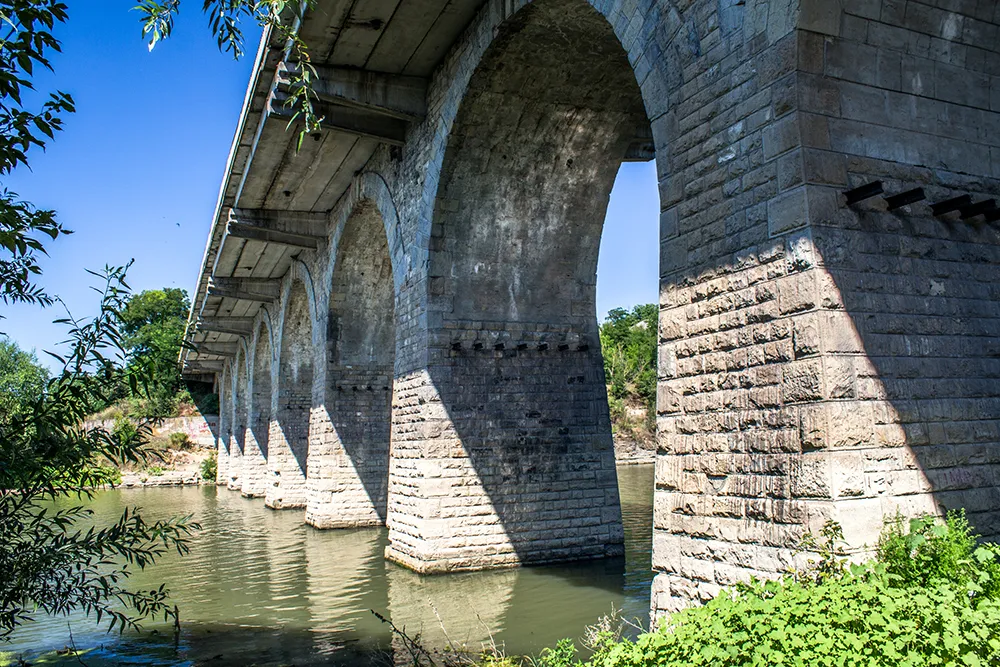
A railway bridge of a non-existent railway. Why that is so is a separate story
The best-known mistress and favourite of Poniatowski was the famous Princess Izabela Lubomirska, née Czartoryska — one of the most famous women in the 18th-century Commonwealth, whom her contemporaries called the “Polish Marquise de Pompadour.”
Still, in his attitude to the fair half of humankind His Royal Majesty was a rather democratic man. If a girl or a young married woman was pretty, lack of aristocratic origin played no role for him.
The consequence of the royal love affair in Zhvanets was two portraits of women painted by the court artist Krzysztof Radziwiłłowski. One depicts a certain Chajka (in Polish: Chajka), the daughter of the “merchant Abramek of Lviv,” and the other her daughter Ela. These are believed to be the earliest portraits of Jewish women from a small town. Let us recall that the beliefs of Ashkenazi Jews forbid depicting people.
Today these portraits can be seen in the National Museum in Warsaw. Earlier these paintings adorned the walls of the royal palace. Note that not every mistress of the monarch, even a highly titled one, was granted such an honour. Evidently Chajka and Ela lodged in the king’s heart for a long time.
On the back of each there is an identical inscription: “Roku 1781 dnia 14 listopada z rozkazu Najjasniejszego Pana KrólaJ Mosci zwiedzajccego brzegi Dniestru w Żwanca przedstawiona Chajka córka Kupca Abramka Lwowskim zwanego tym portretem odmalowana przez urodzonego Krzysztofa Radziwillowskiego.”
Thanks to this thoroughly “tabloid” story, today we can not only admire the famous beauties of Zhvanets but also learn about the features of Jewish women’s fashion in the second half of the 18th century.
It is still unknown what these provincial Jewish women found so attractive about the crowned libertine. Perhaps their exotic appearance. And it is not only a matter of the bright oriental beauty of the daughters of the Old Testament tribe.
The king had probably long since grown sick of the mannered court beauties, dressed in the standard way according to the latest Paris fashion. And here was something new.
As can be clearly seen in the portraits, before meeting the king Chajka and Ela not only dressed in their finest but also hung a great deal of jewellery on themselves. All these old medals, coins, ducats and pearls, with which they were festooned like Christmas trees, were a marvel to the crowned guest from Warsaw.
On Ela, in particular, we see a heavy necklace made of large gold coins. Right at her neck we see a huge gold medal with two profiles. As historians have established, this is the coronation medal of Jan III Sobieski and Marie Casimire of 1676. Such medals were struck in silver and gold. Their owners often gilded the silver ones. But the medal around Ela’s neck is most likely gold.
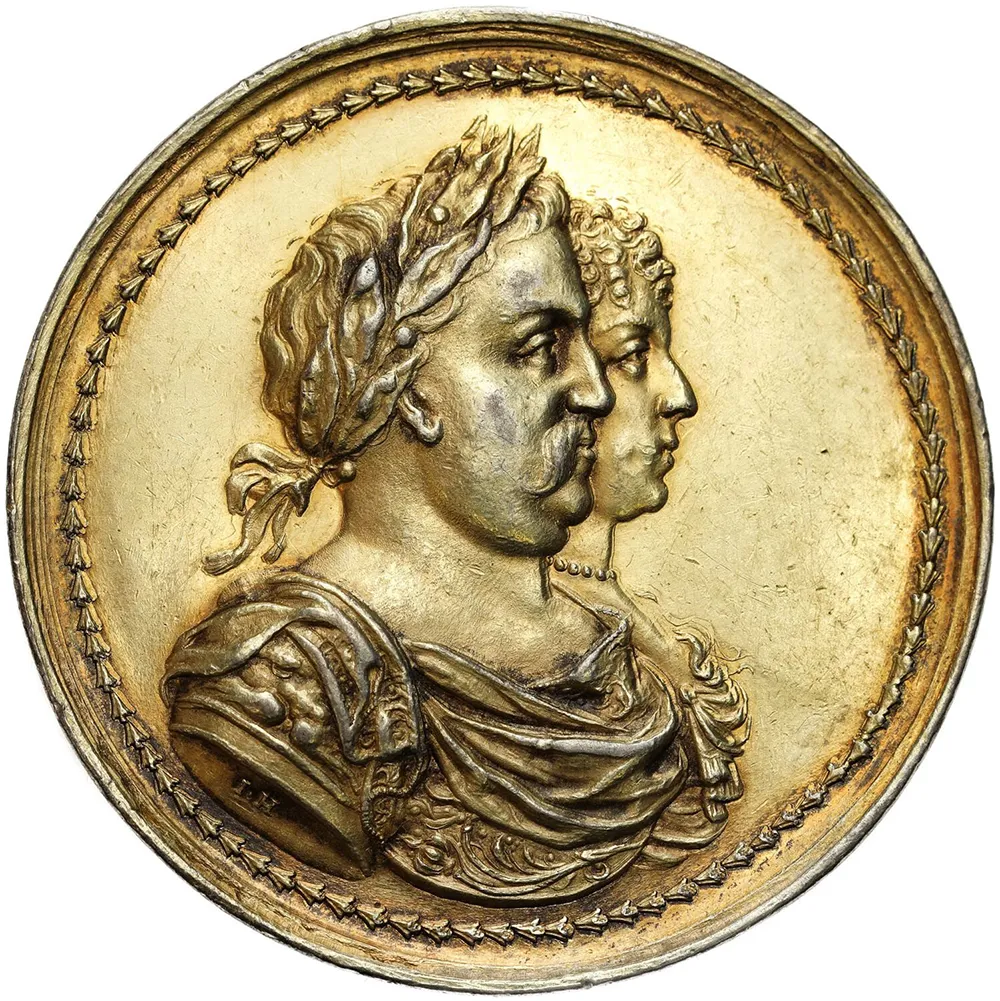
Unfortunately, it has not been possible to establish which medal Ela’s huge gold ducat was made from, or which medals adorn Chajka’s chest.
Historians still debate how the beauties of Zhvanets entertained the king — in turns or together. One thing remains beyond dispute: they made an unforgettable impression on His Majesty. It is also unknown how Stanisław August thanked the merchant Abramek or his son-in-law. In the 18th century, note, such expressions of gratitude, like debauchery in general, were a matter of good manners, so husbands often deliberately slipped women or daughters into the beds of high-ranking persons. We suspect that the merchant Abramek and his son-in-law, unknown to historians, ended up with a handsome profit from this romantic adventure.
Dmytro Poliukhovych


