Lubny. Art Nouveau and Ukrainian Art Nouveau

· 7 min read
Here is what Wikipedia says about Lubny (2021)
Lubny (earlier called Lubno, Lubni) is a city in Lubny district of Poltava Oblast, Ukraine, the administrative centre of the Lubny urban hromada and Lubny district.
By population it is the fourth city in the oblast after Poltava, Kremenchuk and Horishni Plavni. As of 1 March 2012, 47,845 people lived in Lubny.
Today the city is an important economic and cultural centre of the oblast and of the whole country.
A historic settlement[4]. Former residence of the Wiśniowiecki princes, capital of the “Wiśniowiecczyzna” in 1639–1648. The “Lubny Republic” was proclaimed in the city and existed from 1905 to 1907.
Lubny is the oldest known town in the Poltava region.
The city was founded by Grand Prince of Kyiv Volodymyr I Sviatoslavych in 988 in honour of the adoption of Christianity, as one of the fortresses of the Sula defensive line to protect the southern borders of Kyivan Rus from steppe raiders. At first it was a small wooden (“lubianyi”, bast) fortress above the Sula (in the area of the “Verkhnii Val” tract).
In August 1107 near Lubny, Grand Prince of Kyiv Sviatopolk II, together with Volodymyr II Monomakh and other princes, inflicted a heavy defeat on the Polovtsians commanded by Boniak and Sharukan.
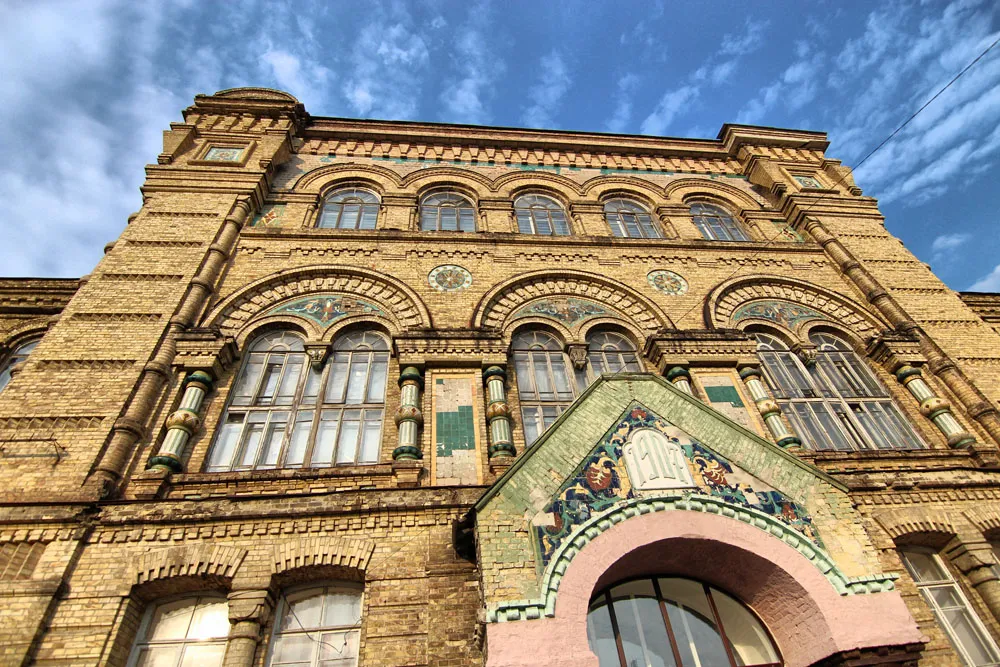
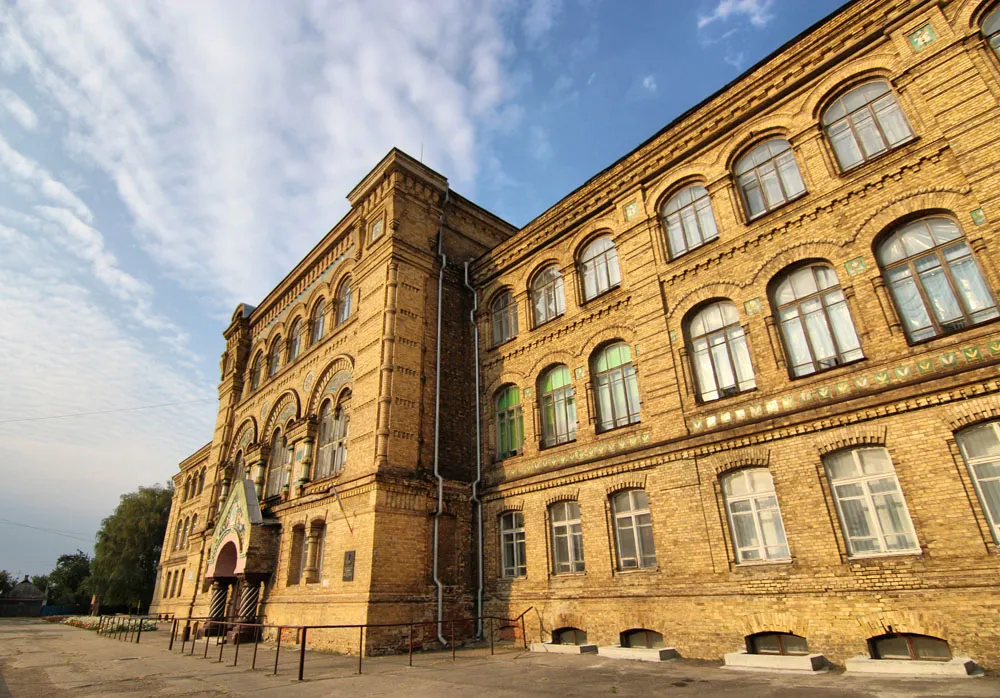
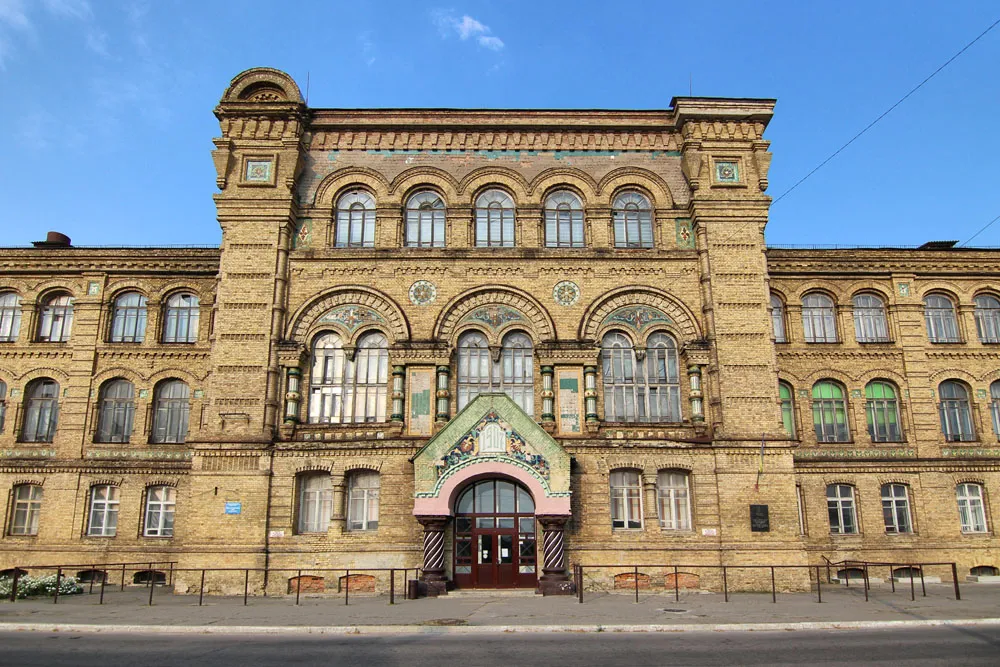
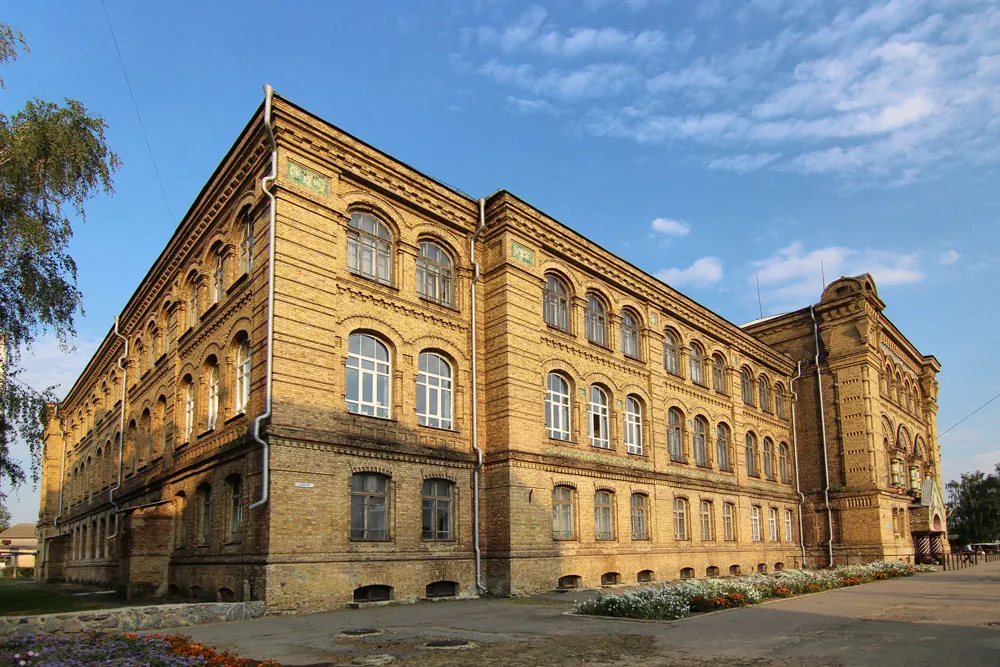
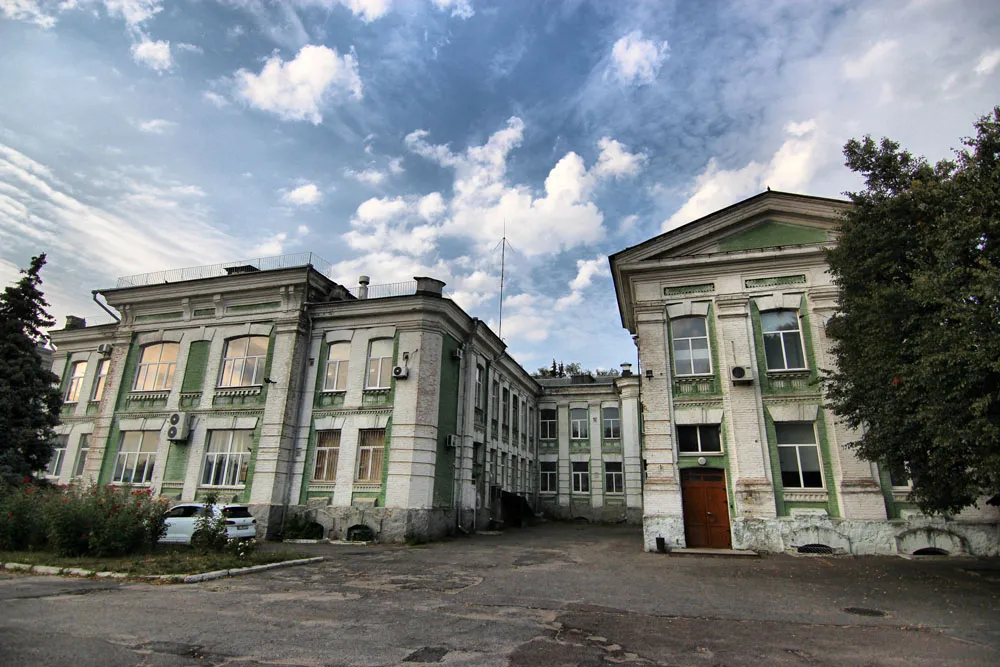
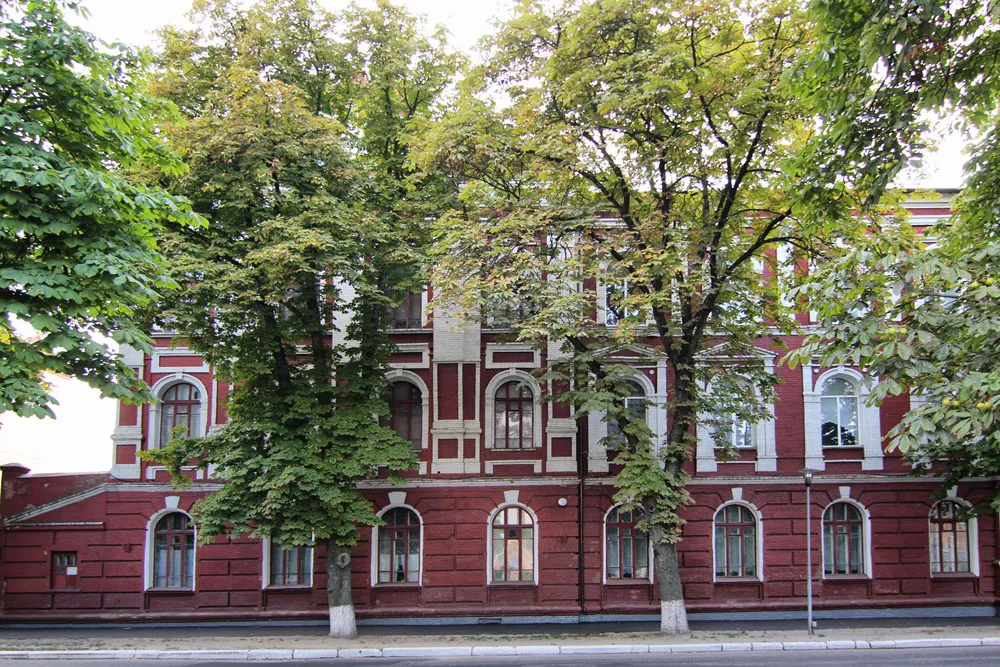
The former diocesan school
In 1239 Lubny was destroyed by the Mongol-Tatar invasion, but thanks to its rich natural surroundings – forests, marshes, rivers (the Sula, Vilshanka, Lubianka, Kamianyi Potik and others) – the population was not completely exterminated and the town continued to exist.
A castle was built here in 1589 by the starosta of Cherkasy, Prince Aleksander Wiśniowiecki (for a time Lubny was even called Oleksandriv in his honour). Over time the town developed – already in 1591 it had Magdeburg rights, its own seal and coat of arms. The town was governed by the Wiśniowiecki magnates. One of the finest castles in Europe, that of Jeremi Wiśniowiecki, was built here.
In 1596, in the Solonytsia tract near Lubny, took place the last battle of the peasants and Cossacks led by Severyn Nalyvaiko against the Poles, the so-called Battle of Solonytsia.
In the 1630s Lubny became the centre of powerful peasant-Cossack uprisings led by Karpo Skydan, Pavlo But, Kyzym and Yakiv Ostrianytsia.
From 1638 Lubny was the sotnia centre of the Lubny town sotnia within the Pereiaslav Regiment; according to the register it was headed by Hryhorii Vorona.
In 1648–1781 Lubny was the centre of the Lubny Regiment.
During the National Liberation War of 1648–1654 under Bohdan Khmelnytskyi, the Lubny Cossack Regiment distinguished itself.
The main shrine of the region was the incorrupt relics of Patriarch of Constantinople Athanasius III Patellaros, buried in the Mgar Monastery in 1654.
From 1709 the city had one of the first field pharmacies in Ukraine and botanical gardens for growing and using medicinal plants, founded on the orders of Tsar Peter I.
Before the Battle of Poltava in 1709 the city was the largest in the territory of present-day Poltava Oblast.
In 1734 the Lubny Treaty was signed in the regimental city, which confirmed the restoration of the Zaporozhian state within its 1709 borders on condition that the Zaporozhians left the protectorate of the Ottoman Empire. It was one of the greatest successes of the Hetmanate’s diplomacy in the post-Poltava era.
In 1751–1773 the Lubny regimental judge was the Ukrainian jurist and statesman Vasyl Stefanovych.
From 1781 Lubny was a city of the Kyiv Viceroyalty, and later the centre of Lubny county in the Poltava Governorate.
According to data for 1859, the city had 3,995 inhabitants (2,096 male and 1,899 female) and 358 households; there were 6 Orthodox churches, a hospital, a clerical school, a county school and a parish school, a post station, 2 factories, a state reserve pharmacy, and 4 fairs a year were held.
In 1885, in the village of Kruhlyk near Lubny, Kateryna Mykolaivna Skarzhynska opened the first private museum in the history of Ukraine on Ukrainian lands.
The famous Lubny boys’ gymnasium was founded in the city; many of its graduates and pupils are known far beyond Ukraine.
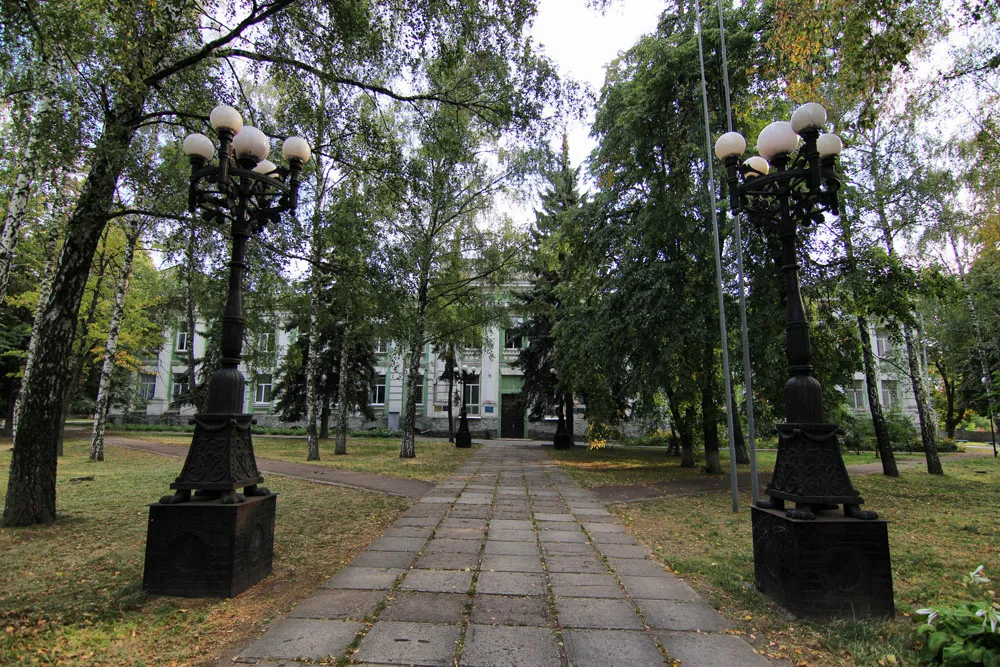
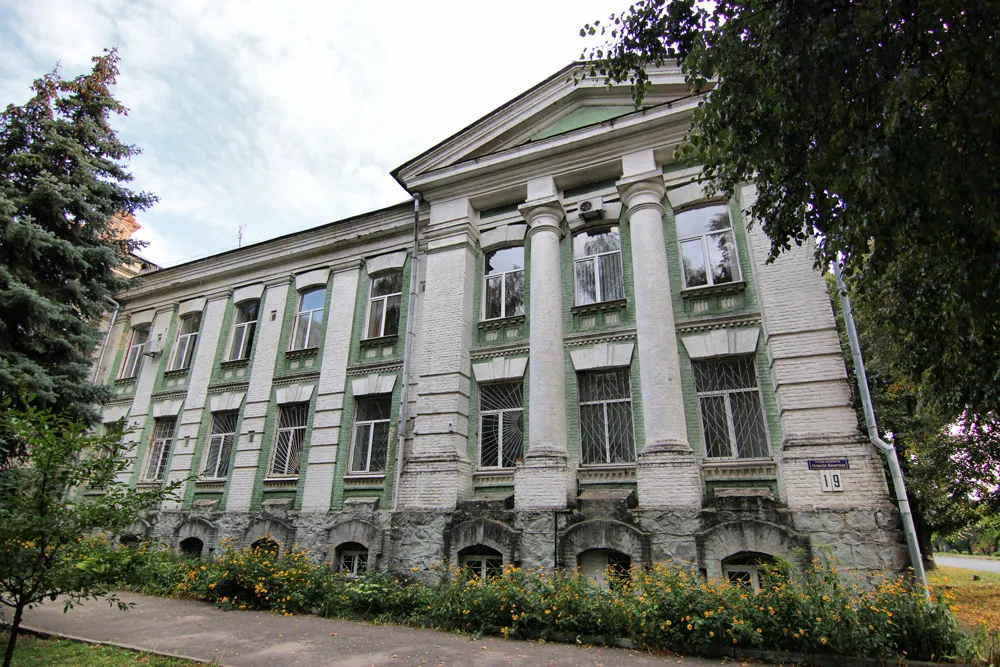
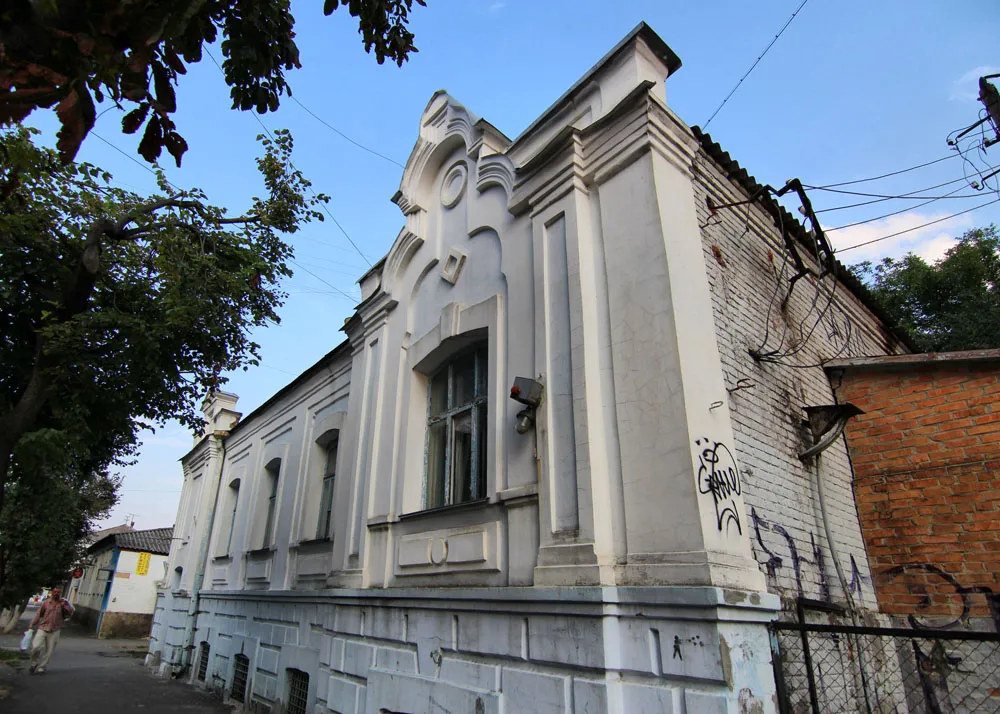
The main landmark of Lubny is considered to be the former diocesan school, built in the brick Art Nouveau style. It is a splendid building, similar to the building of the university in Kropyvnytskyi.
In 1902 the 12th diocesan congress of the clergy decided to open a diocesan school in Lubny.
It opened in 1907. Such schools were opened mainly to provide free education for the daughters of the Orthodox clergy, but for a certain fee girls from other social strata studied there too. The course of study (6 classes, plus an additional 7th class to train parish-school teachers) was close to that of a girls’ gymnasium. But perhaps the main task of this school was to prepare educated wives for priests. The subjects taught were: Scripture, Russian language, mathematics, geography, general and Russian history, pedagogy, penmanship, church singing, needlework and housekeeping, and music (piano and violin were taught).
The project for the building was created by O. M. Beketov. In 1920 a teachers’ institute was housed in this building.
To train subject teachers for the then most widespread seven-year general school, teachers’ institutes with a shortened course of study (2.5–3 years) were created, which gave an incomplete higher education.
From 1932 to 1941 – the Lubny State Pedagogical Institute
Today General School No. 10 operates here. Text from Wikipedia.
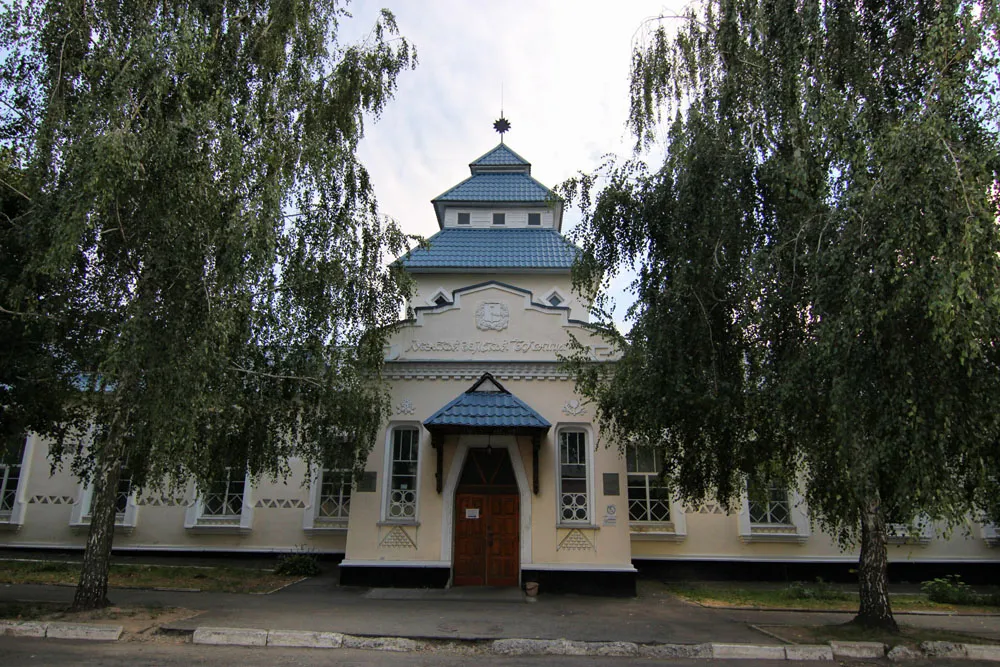
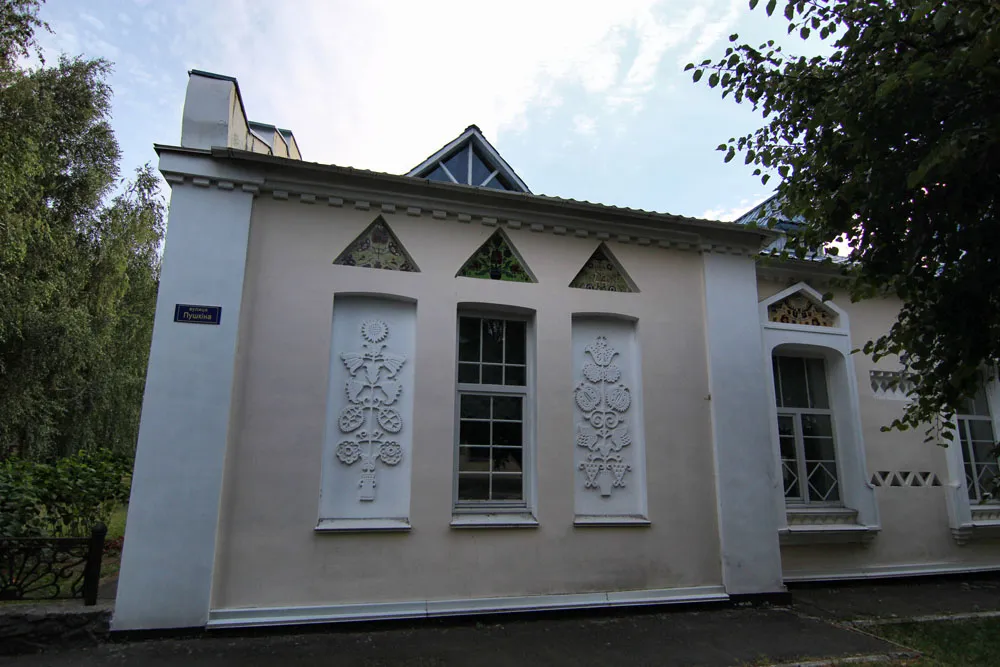
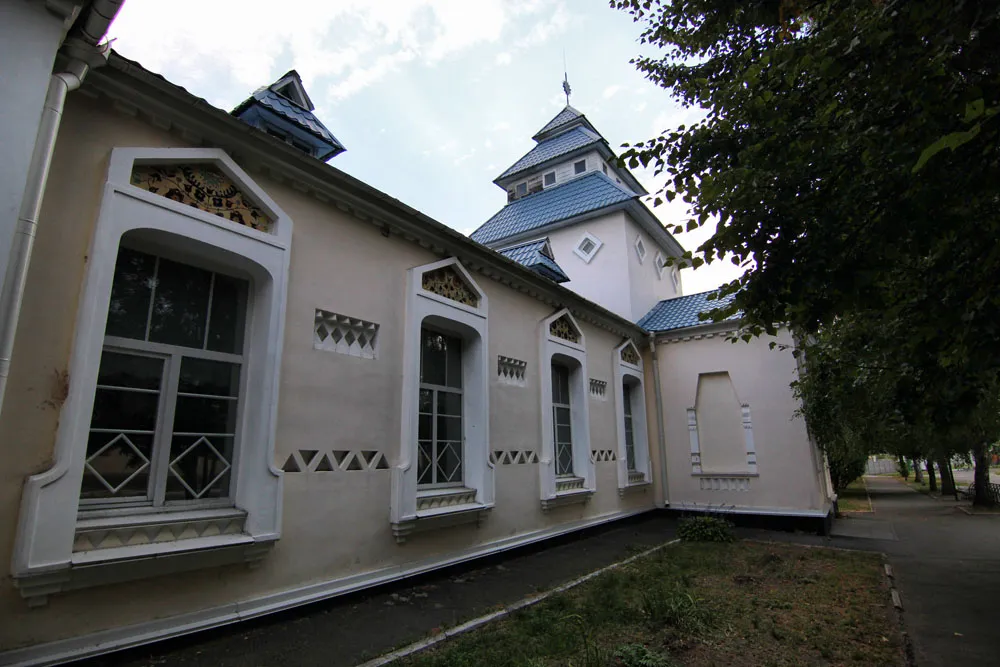
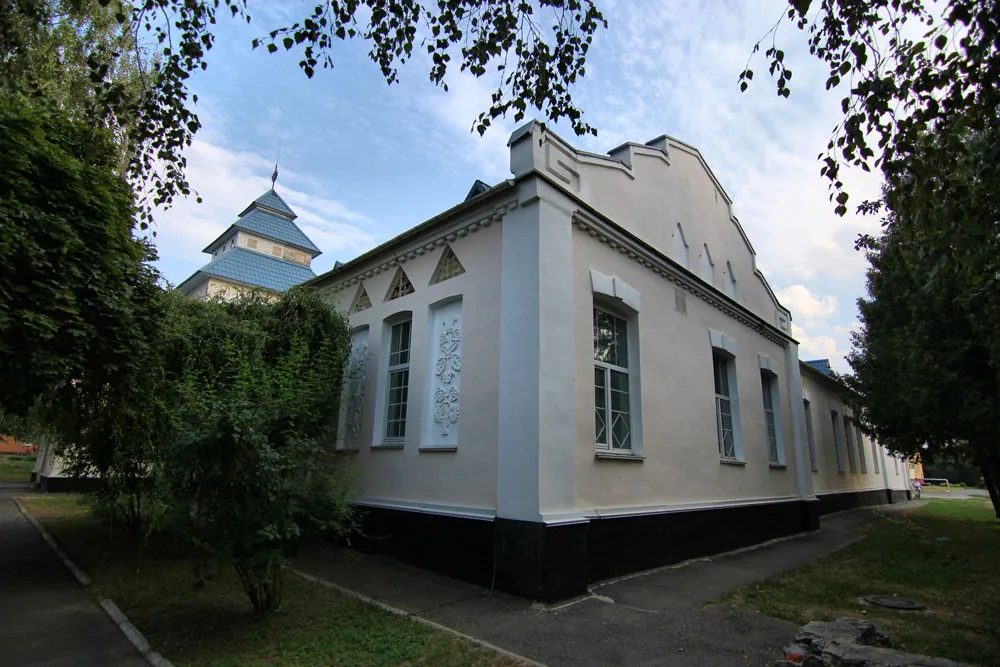
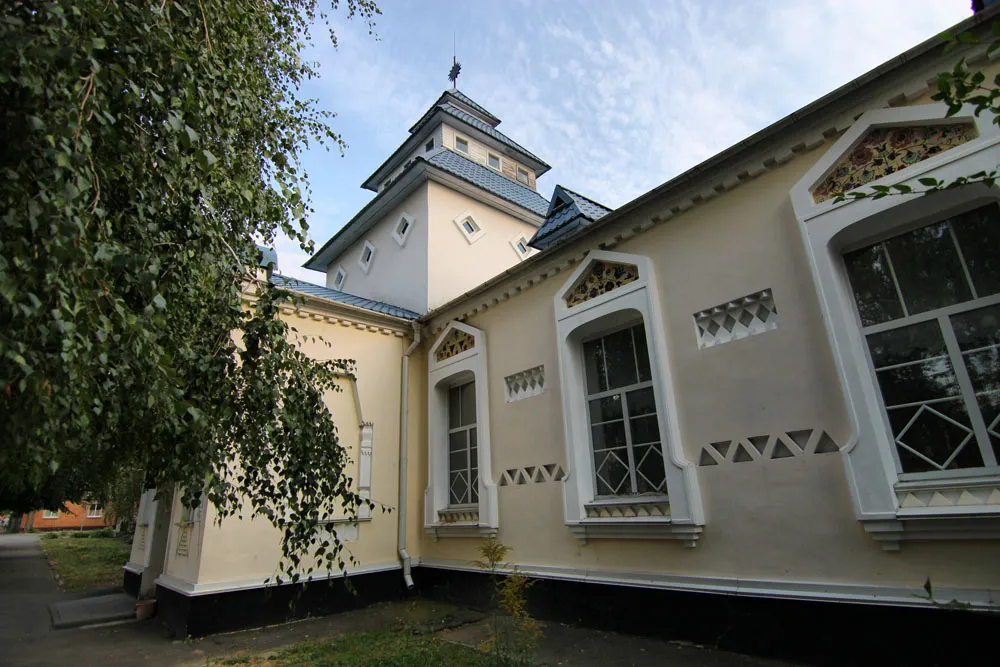
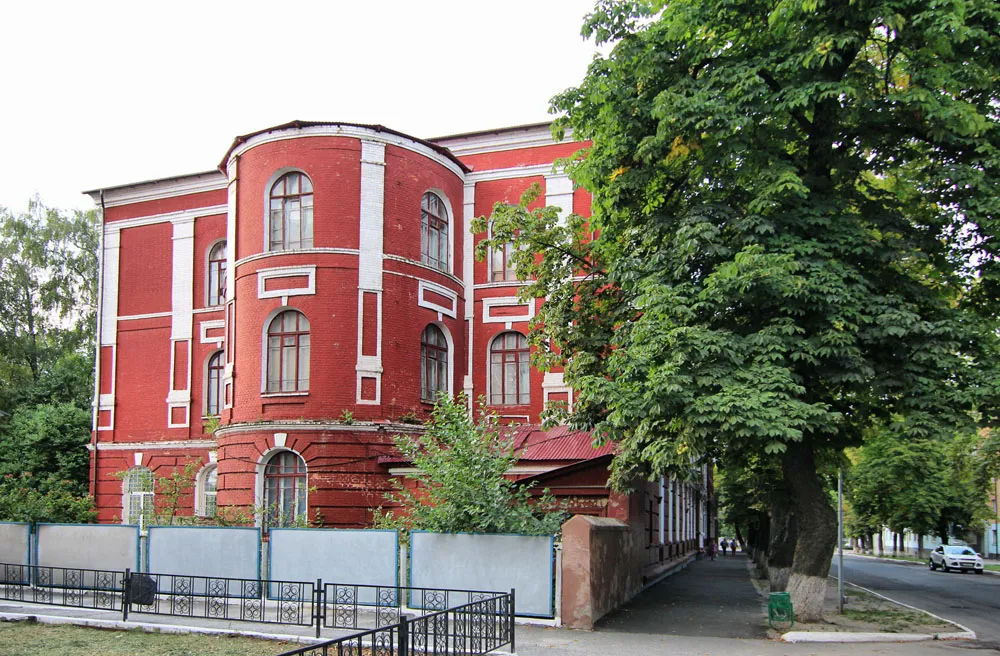
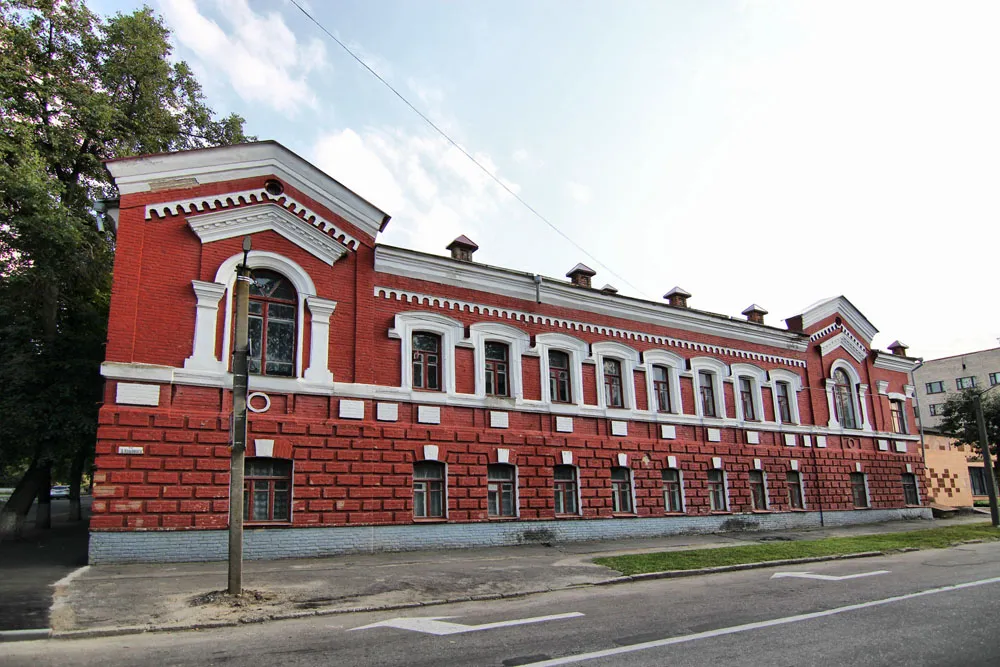
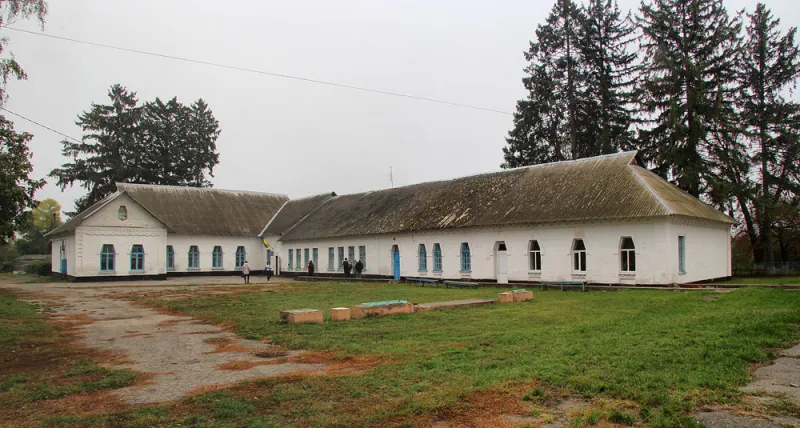
For Ukraine, the most valuable landmark of Lubny is the former zemstvo hospital, built in 1913–1915. Here is what Andrii Vlasenko writes about it on the website “The Garden of Ukrainian Art Nouveau”.
We would gladly call the zemstvo hospital in Lubny the best pre-Soviet creation of Diachenko, if there were anything to compare it with – after all, only a tiny minority of his early works has come down to us. So all that remains is to imagine what wealth and beauty present-day Ukraine has been deprived of because of the amnesia and degeneration of a significant part of the nation. Of the nation itself, not of individual officials and party bosses. For example, the beautiful Klymov house in Kruhlyk near Lubny, which Chepelyk wrote about as extant, most likely vanished already in independent Ukraine, or rather was dismantled by “good peasants” who did not take a single photograph to remember it by. Incidentally, the same peasants in the same Kruhlyk have for many years stubbornly been heaping rubbish on the grave of the benefactress Kateryna Skarzhynska (read about her at least on Wikipedia), who at her own expense opened schools, theatres and museums for their ancestors (in particular, her collection formed the basis of the Poltava local-history and art museums) and generally gave the poor her last penny…
But enough lamentations. Let us rather treat ourselves aesthetically in the amazing Diachenko hospital, where an ordinary outpatient clinic now operates.
Let us give the floor to the same Viktor Chepelyk, infinitely in love with Diachenko’s work.
“It was a house distinguished by the particular beauty and sturdiness of its plastered walls, whose whiteness contrasted well with the grey-green-blue tiled roof, adorned with a well-painted and sculpturally modelled water tower, which nicely emphasised the main entrance with its trapezoidal portal and carved doors. Above them a Baroque-patterned pediment curled in a lively line. On the gable end shone another lavish pediment, and above the windows majolica insets with flowers and birds were displayed. On the main portal Shevchenko’s famous motto was carved: ‘In your own home – your own truth, and strength, and freedom!’ This house burned down during the Second World War; in the 1950s it was rebuilt with many losses – without the tower, without the larger pediment, without the coloured roof, without Taras Shevchenko’s saying so dreaded by totalitarians. Its purpose was also changed – it was turned into a school.”
But the world is not without miracles. A miracle happened in Lubny too, already in independent Ukraine. However, as always, a miracle needs an instrument in God’s hand. The landmark was returned to an almost pristine appearance by the Lubny architect Iryna Kazakova – initiator, coordinator and author of the project to rebuild and restore Diachenko’s masterpiece. The work was done in the hard and utterly “sinless” 1990s by means of a communal volunteer effort (toloka), so the opening of the renovated hospital in 1998 became a truly all-Lubny celebration.
Long live Ukrainian Art Nouveau!
Andrii Vlasenko, “The Garden of Ukrainian Art Nouveau”.
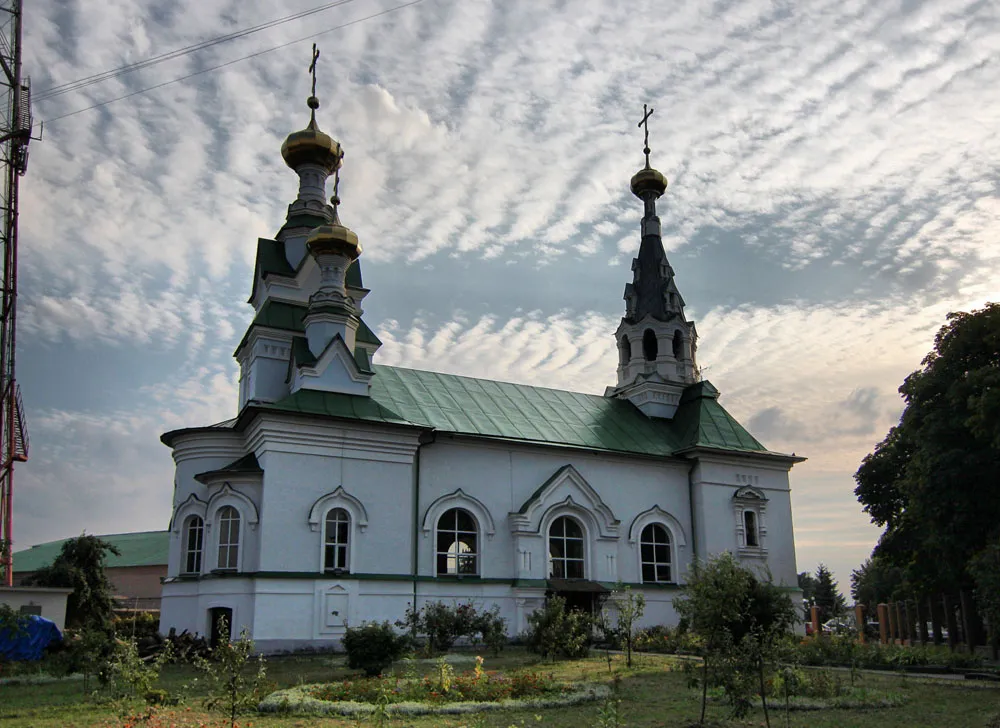
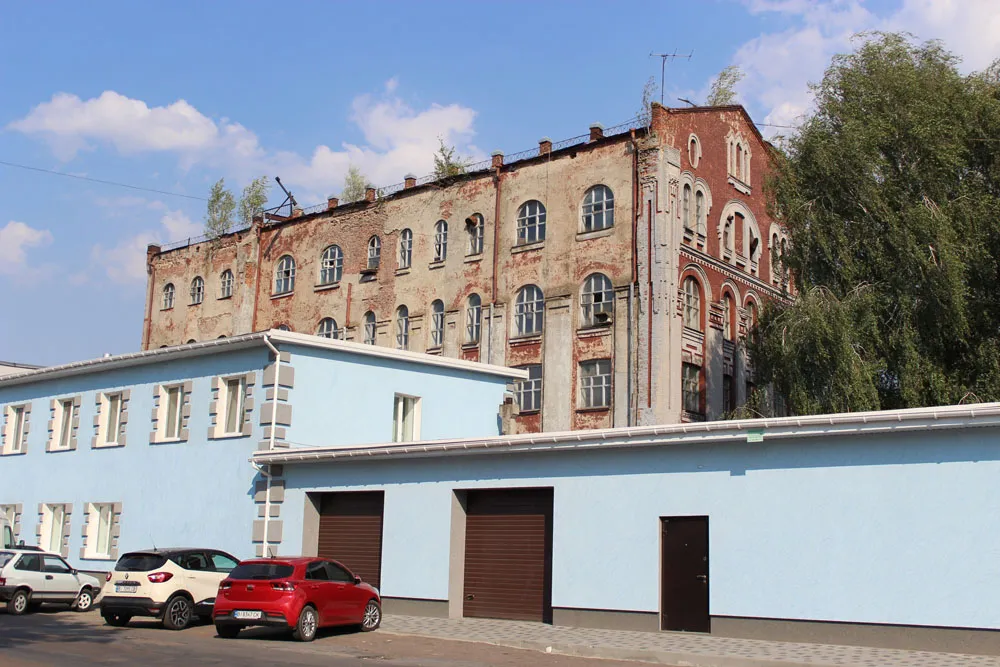
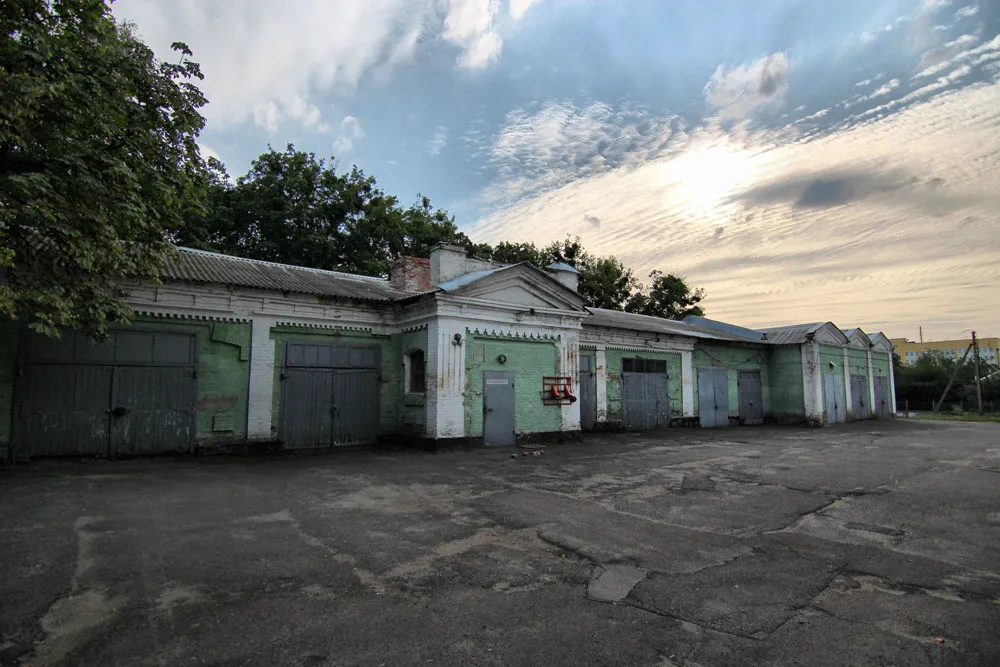
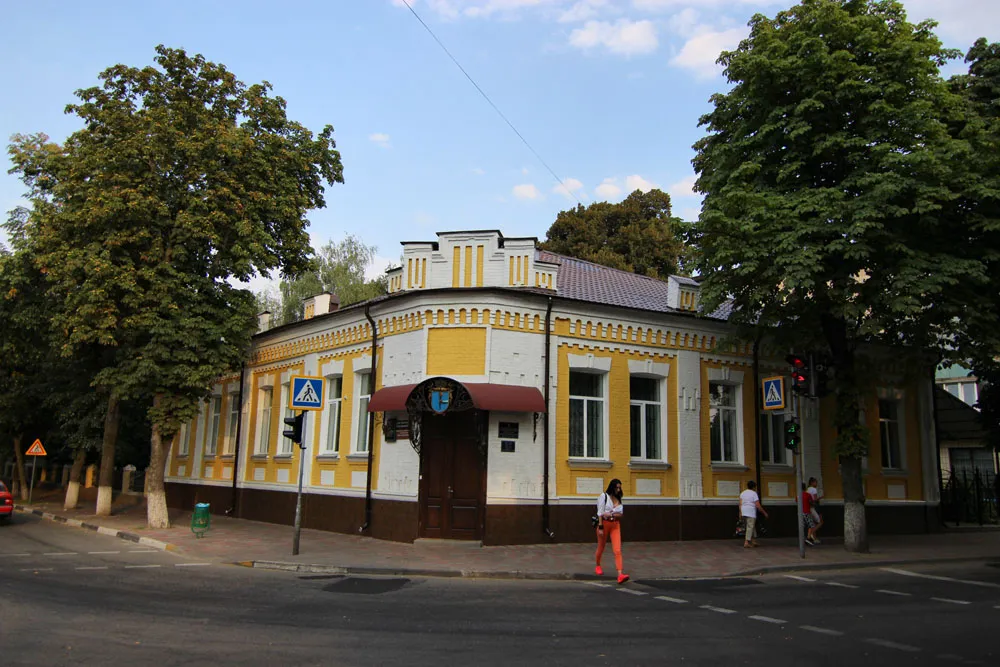
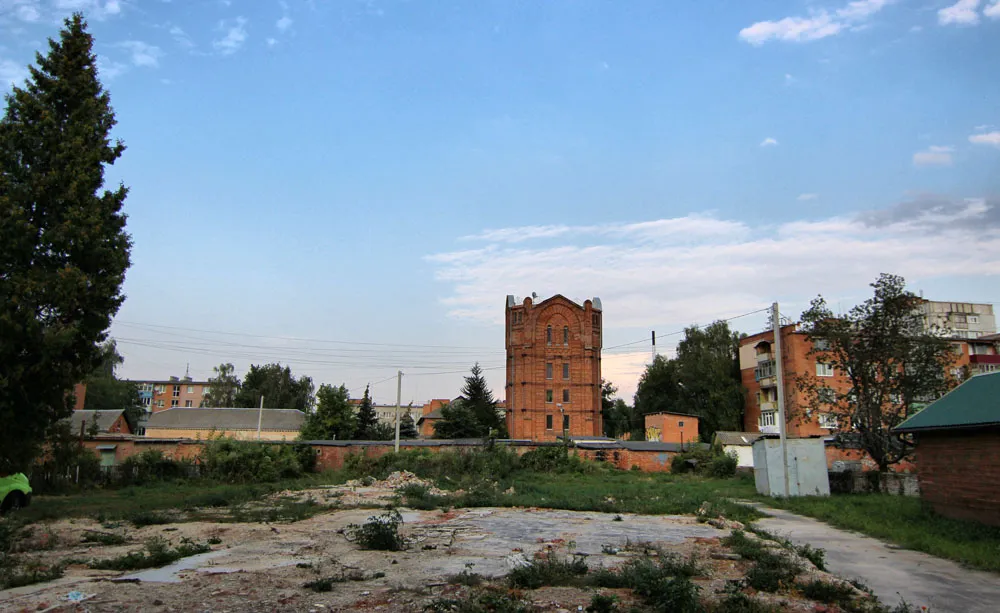
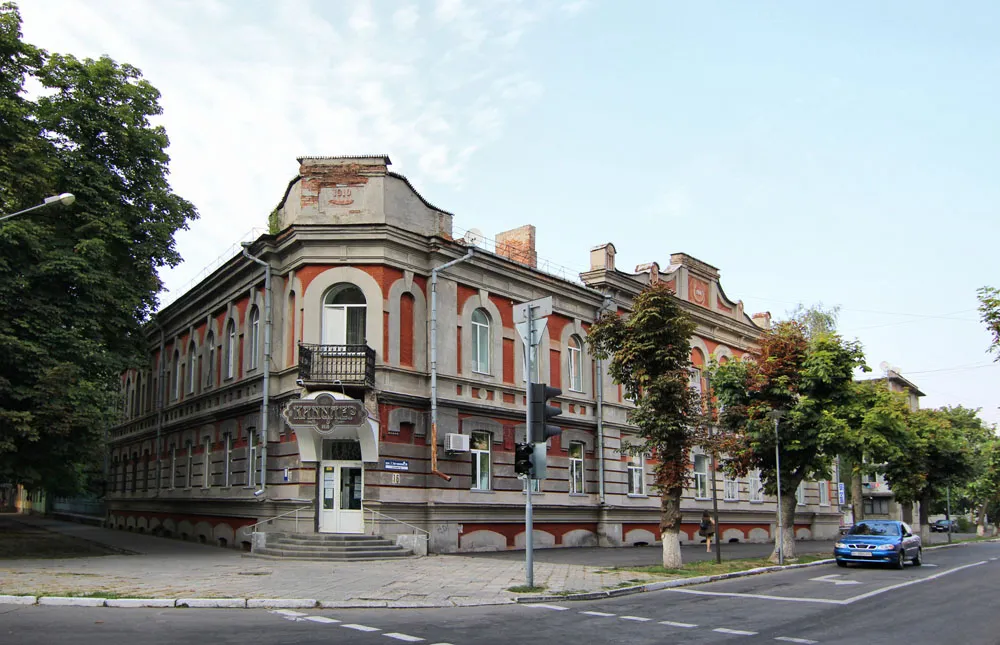
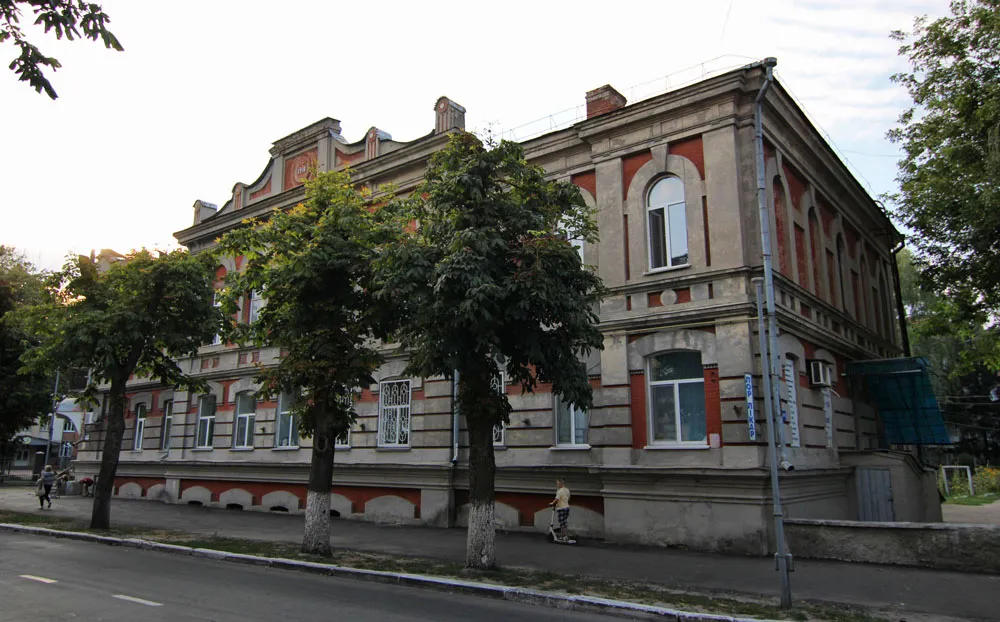
Lubny has other interesting sites as well, for example the Church of the Nativity of the Virgin built in 1899, residential and administrative buildings of the late 19th and early 20th centuries, and a steam mill.
Photos by Maksym Nazarenko.