

Mala Luka: a “knightly” chapel and a six-year-old girl killed by the Russians

· 5 min read
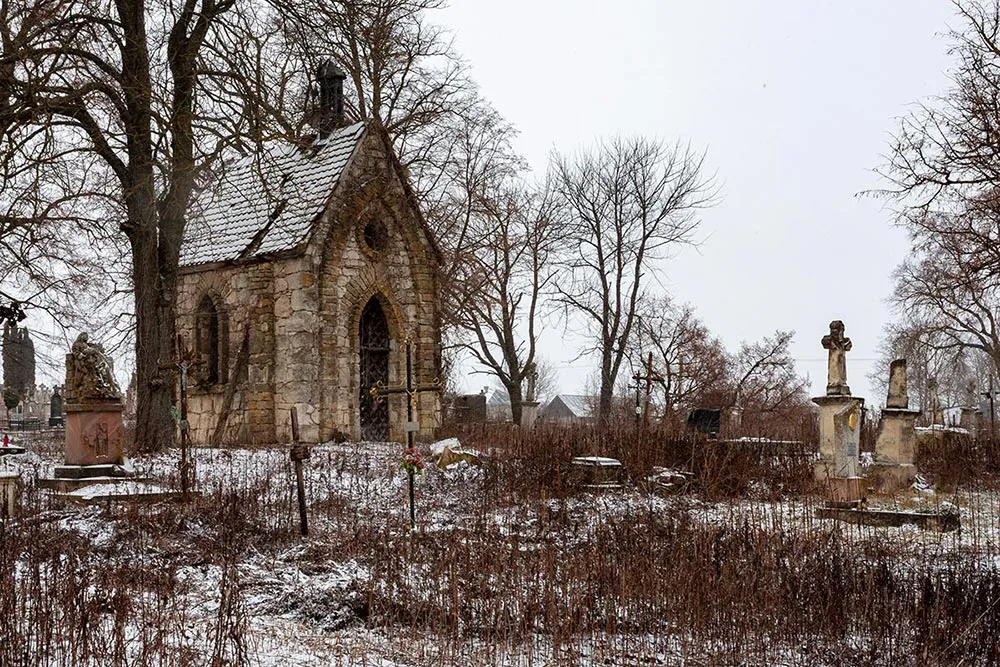
Members of the Ukraine Incognita team explored the old cemetery of the village of Mala Luka in the Hrymailiv community of Ternopil Oblast. The necropolis is unique and very interesting. You can read about it and about the other highlights of this village on the website of RISU. Here we present a more extended account of this necropolis.
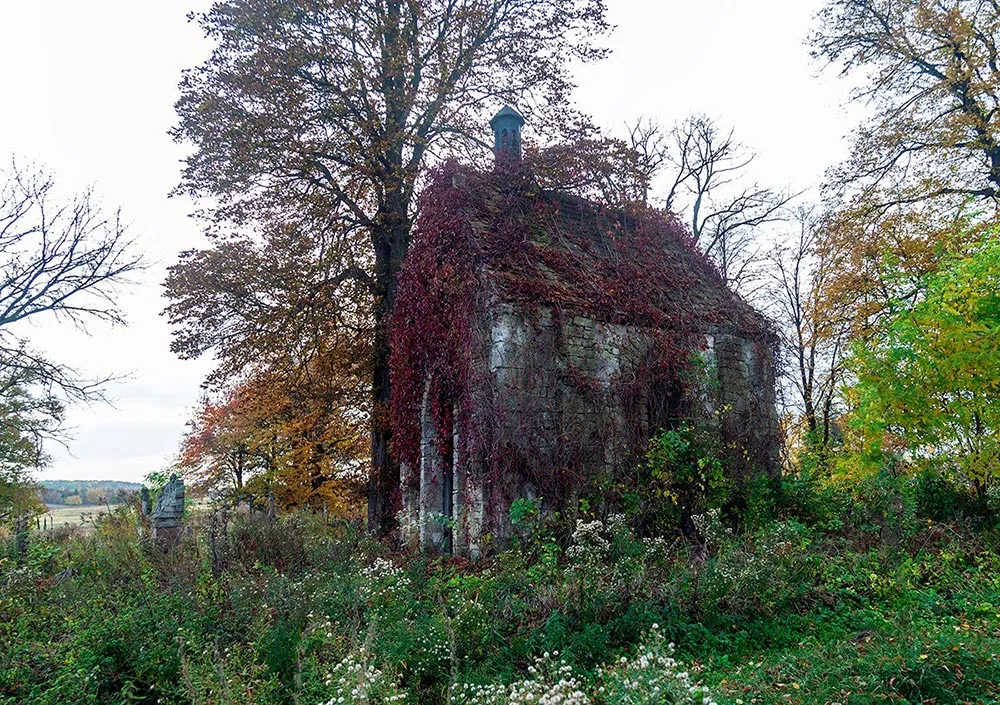
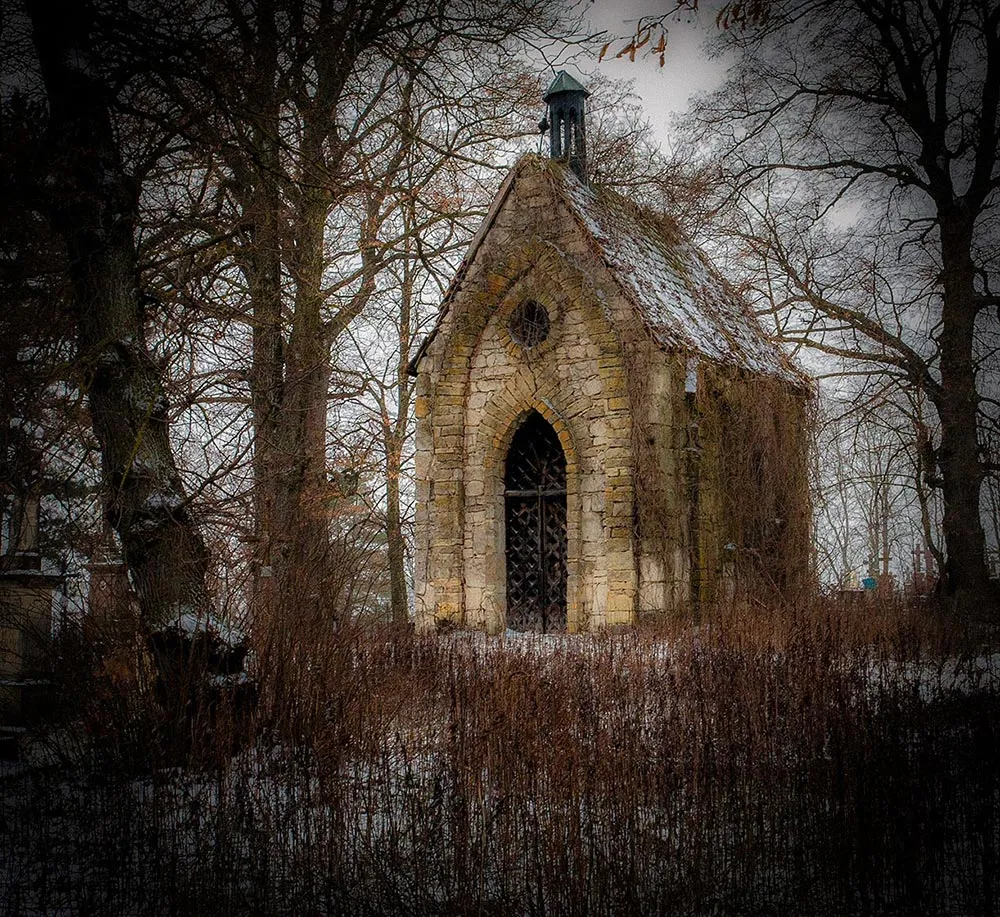
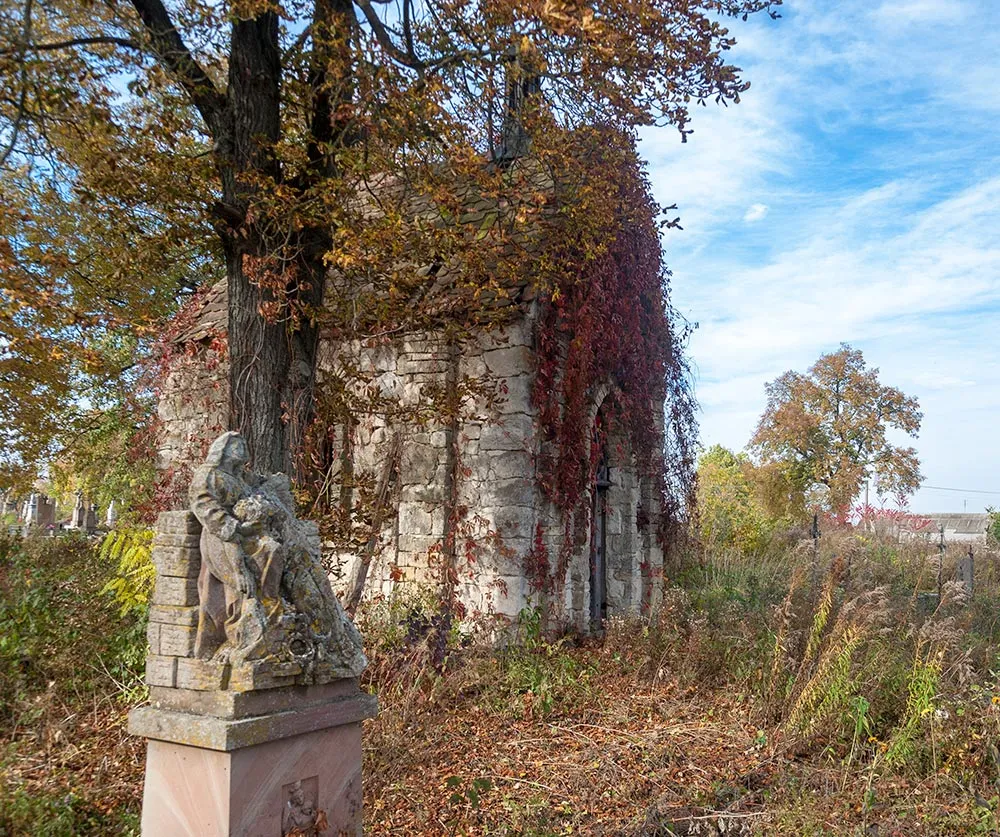
The most interesting object here is the chapel-mausoleum of the Zabielski family, counts well known in Galicia, of the Trzaska coat of arms.
They were by no means poor people, so they could easily hire the most renowned architects.
The Zabielskis could quite easily, with no noticeable effect on their purse, have commissioned something richly decorated, with lavish carved details, bas-relief sculptures and other architectural flourishes. Anyone who has visited the old cemeteries of Galicia can imagine what is meant. But, most likely, the architect was given the task of making something unlike everyone else’s, and at the same time something that would convey all the sadness and grief of the last resting place of members of the counts’ family.
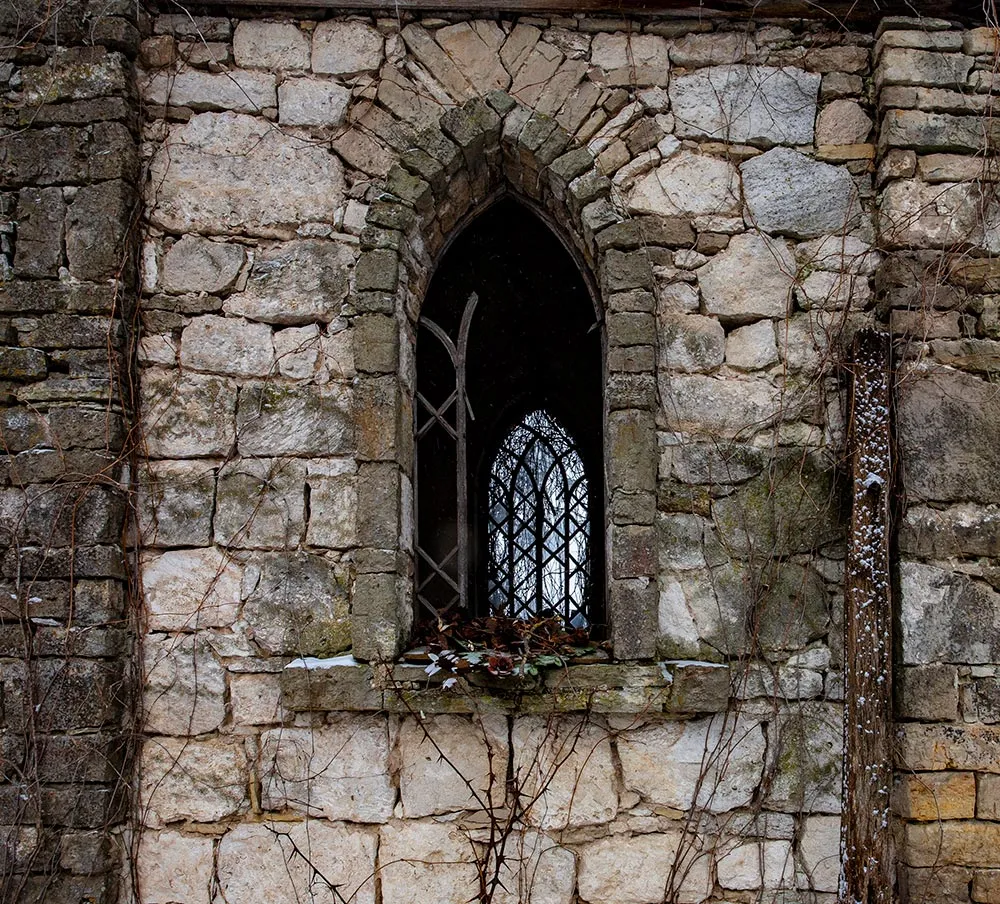
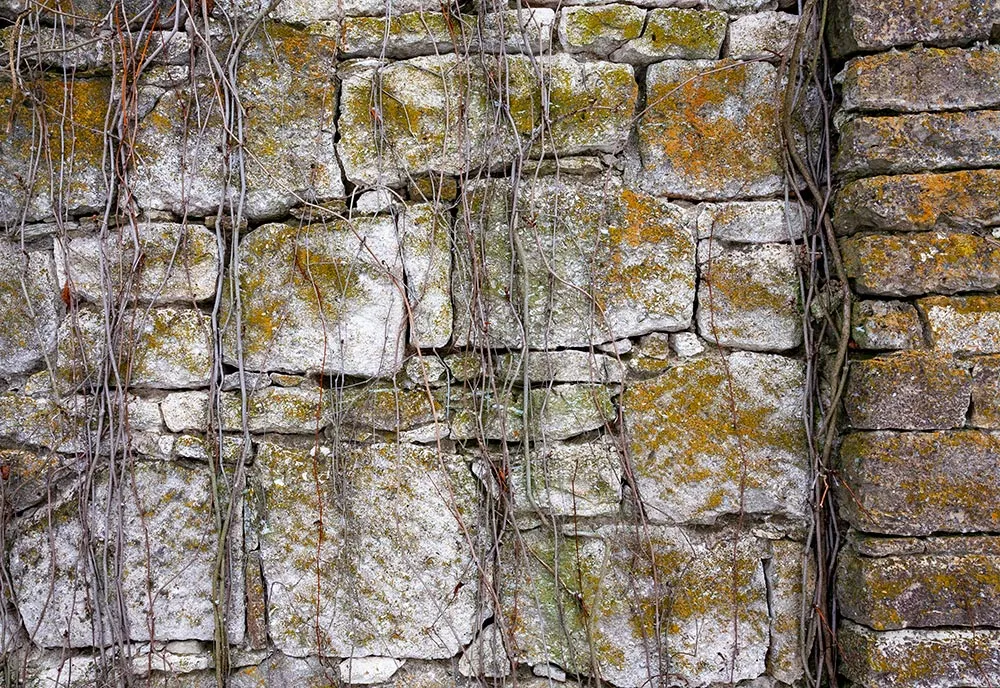
The unknown master coped with the task successfully and creatively; hardly any other structure would arouse so many emotions.
It is possible that the clients were fans of the works of Walter Scott or of chivalric romances. Accordingly the building appeared in the ostentatiously archaic form of village churches of the time of the knight Ivanhoe.
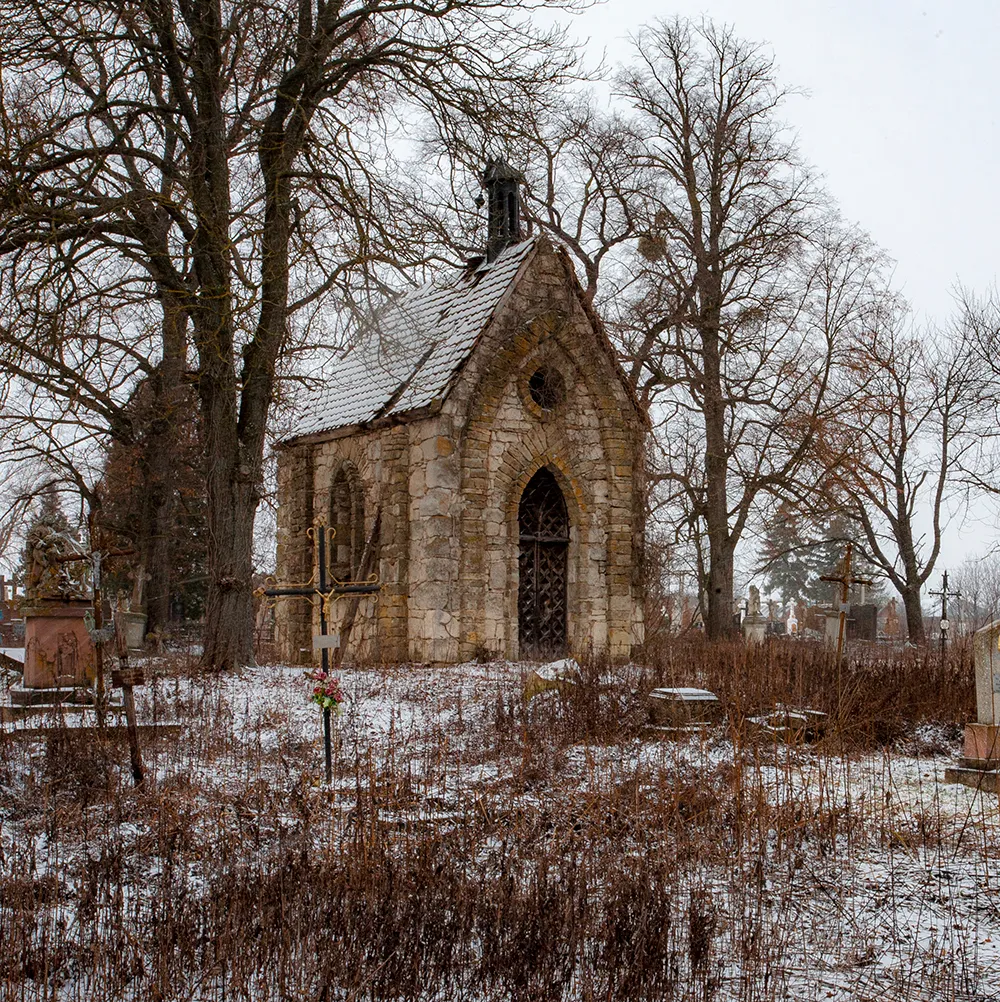
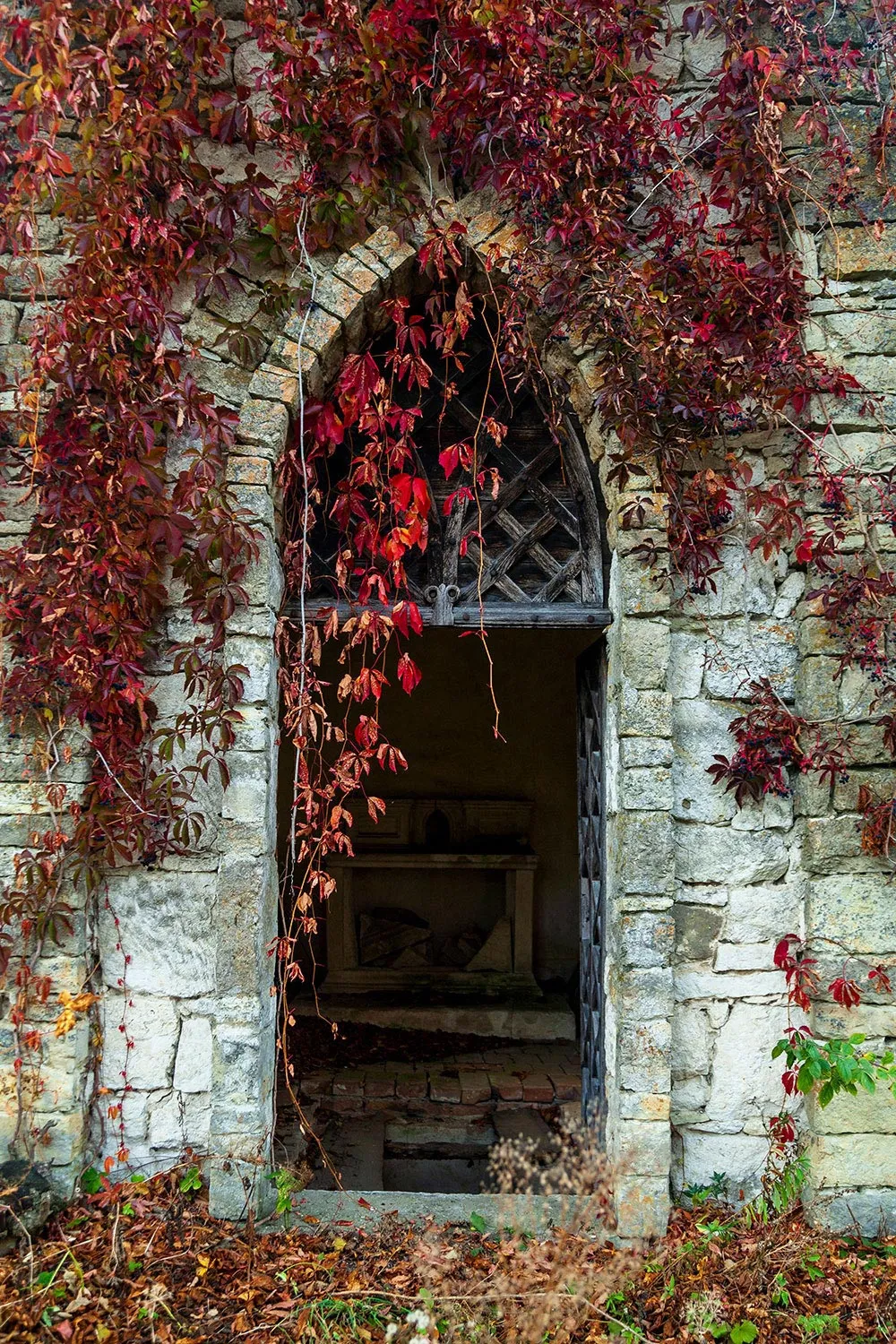
The demonstrative archaism can be seen already in the masonry. The walls of the chapel are laid of barely dressed blocks of various sizes and also of quite small undressed stones. It is clearly visible that this is a means of artistic expression rather than an attempt to save on building materials. The architect also very successfully combined lighter and darker stone. The difference between them is slight, only about a single tone, but overall it gives the building a severe beauty and harmony. The combination of stones of different shades and shapes completely replaces carved decoration. Considering the labour involved, this cost considerably more than simply inserting a monolithic carved block. The door also copies a medieval castle gate.
In fact, putting up such a chapel cost more than an ordinary one. A mausoleum is the threshold of eternity. Who in their right mind would economize on eternity?
The only refined architectural detail is the window frames. Even the glass has survived in places. But the forged iron cross on the ridge turret clad in copper sheet fell long ago; the wooden frame that held it rotted away.
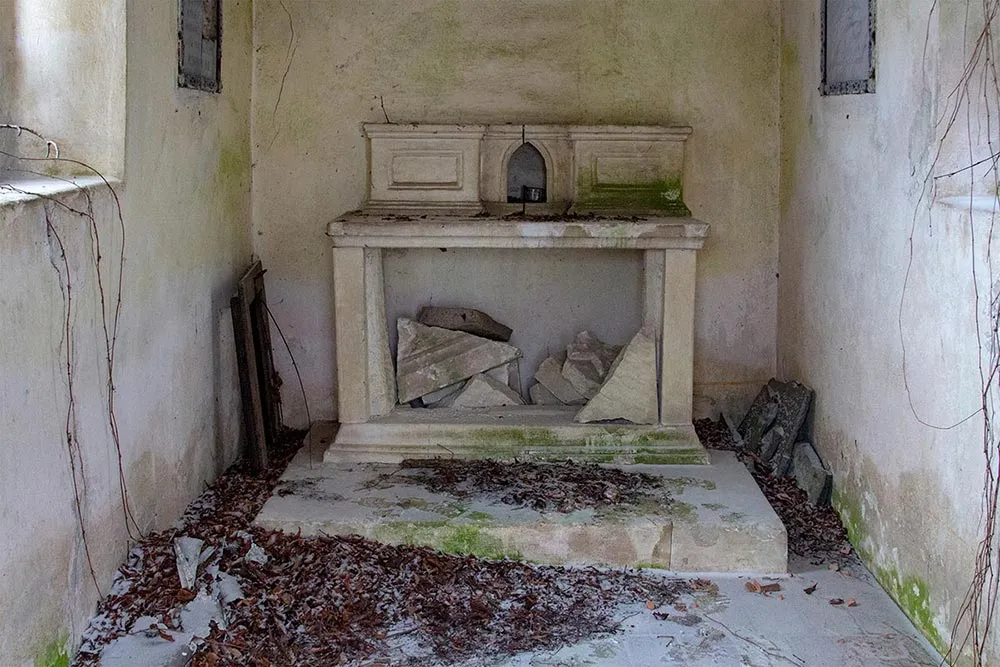
The small altar has survived almost completely. True, the icon, or perhaps the Crucifix, that was above it has disappeared. Only rusty fixing hooks stick out of the wall.
The crypt under the floor of the chapel is currently open. It seems that once the passage was simply covered with thick oak planks, which were then paved over with brick. Old-timers say that some 30 years ago coffins with skeletons could be seen there, but afterwards they were reburied.
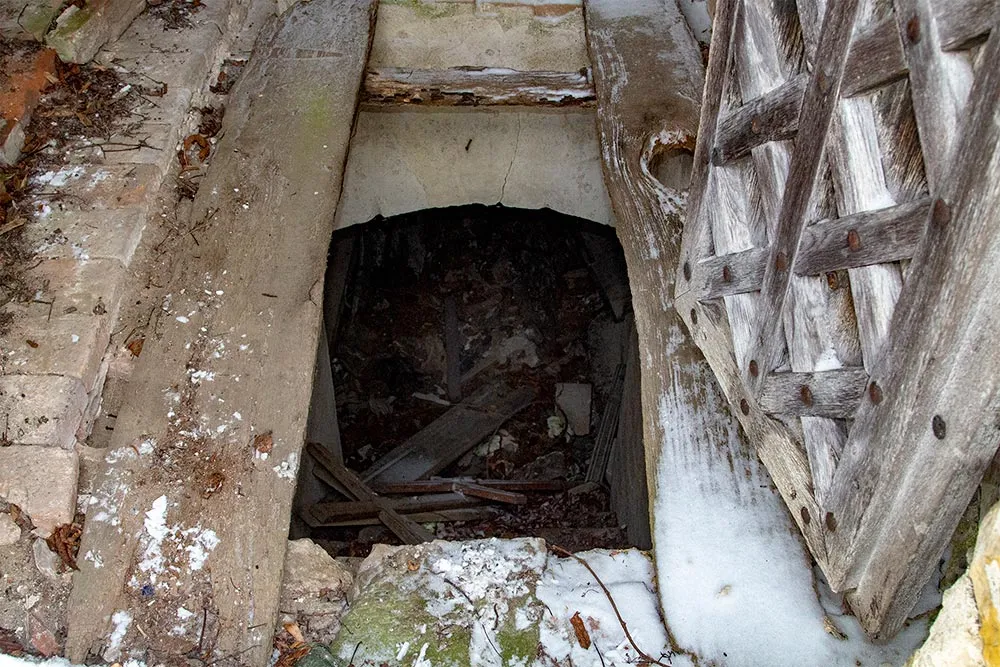
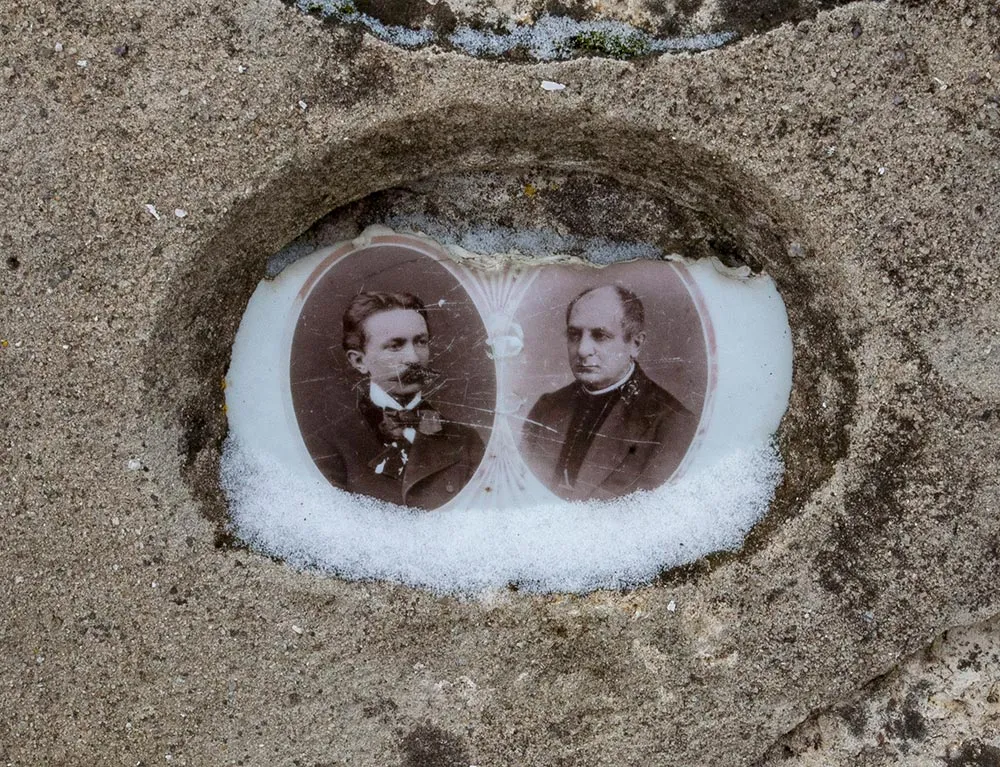
Probably four people were buried in the mausoleum. In particular, Ignacy Zabielski (died 1880), Aniela Zabielska née Jankowska (1887), Jacek Kieszkowski (1900) and Nikodema Kieszkowska née Zabielska (1932) once found rest here. This is stated on the plaques. Judging by the date of the earliest burial, the chapel was built around 1880.
The old part of the cemetery turned out to be fairly well kept and free of the bushes traditional for abandoned village necropolises (credit to the local villagers for this). We did not manage to find any gravestones particularly interesting from an artistic point of view. It is an ordinary mixture of stone and cast-iron crosses and monuments crowned with figures of saints. Epitaphs are in Polish and Ukrainian, with more in Ukrainian. As of the early 20th century Poles made up only 20% of the village population.
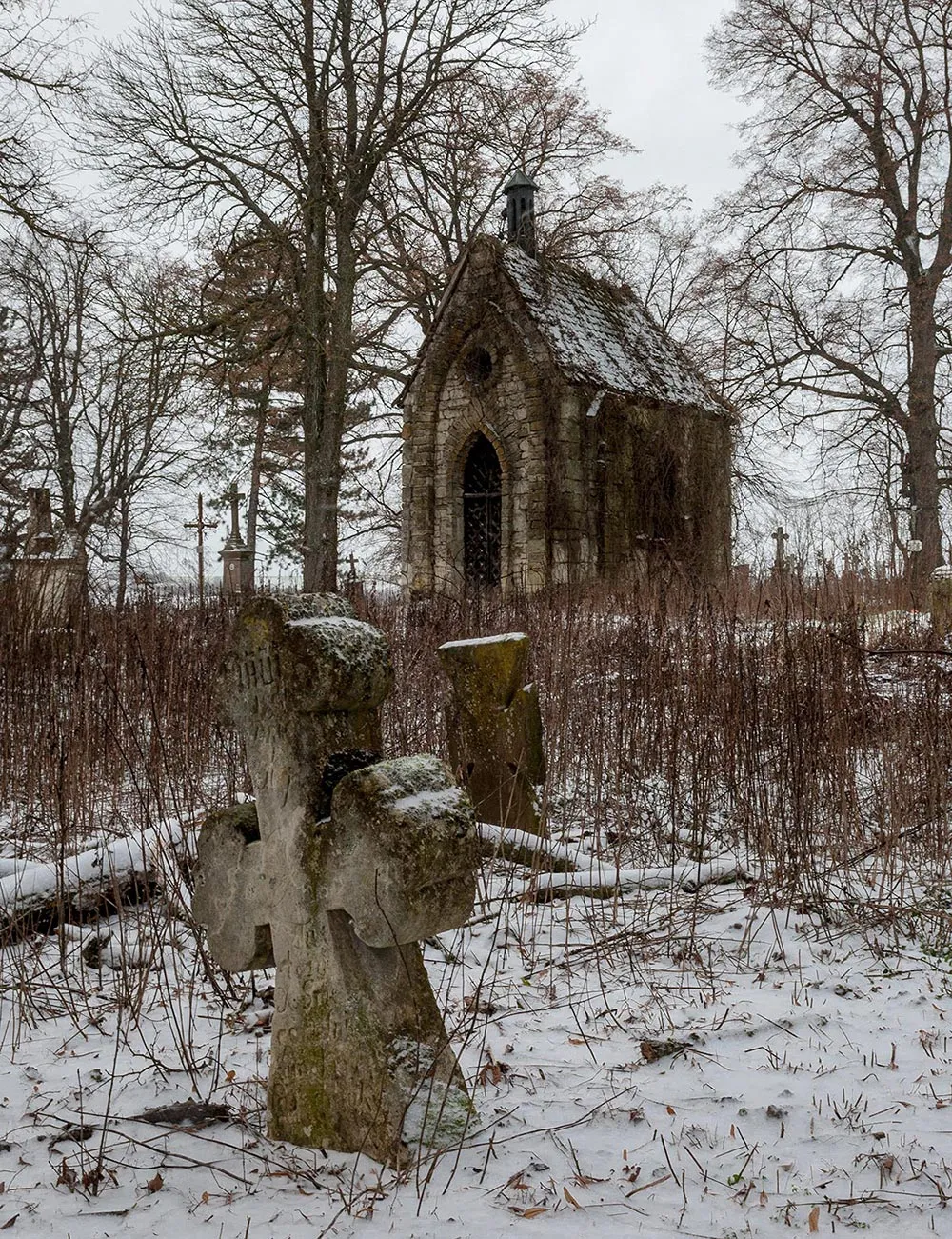
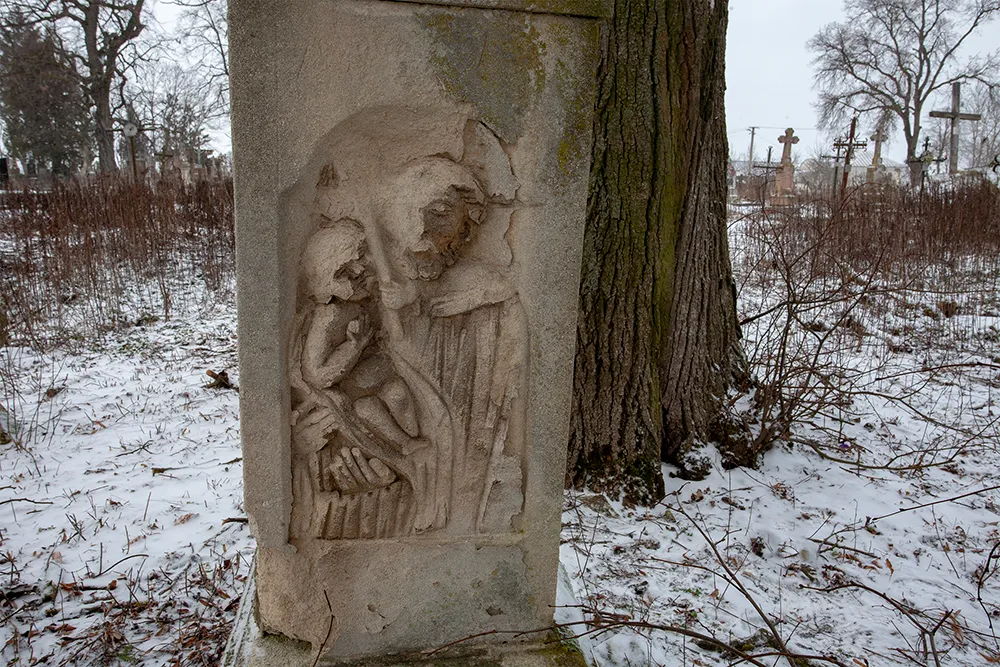
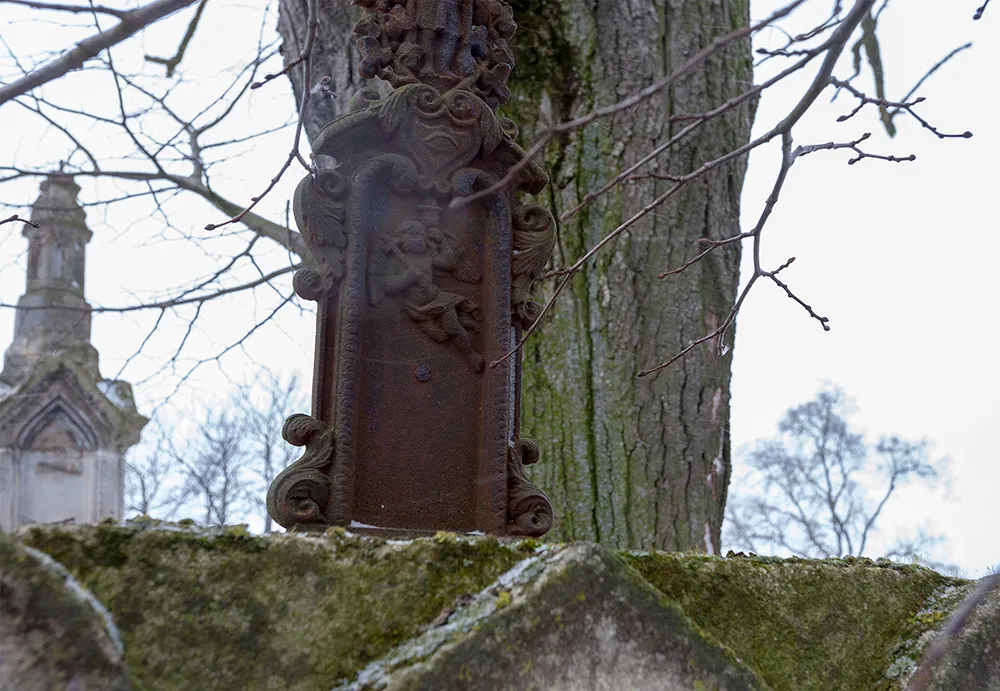
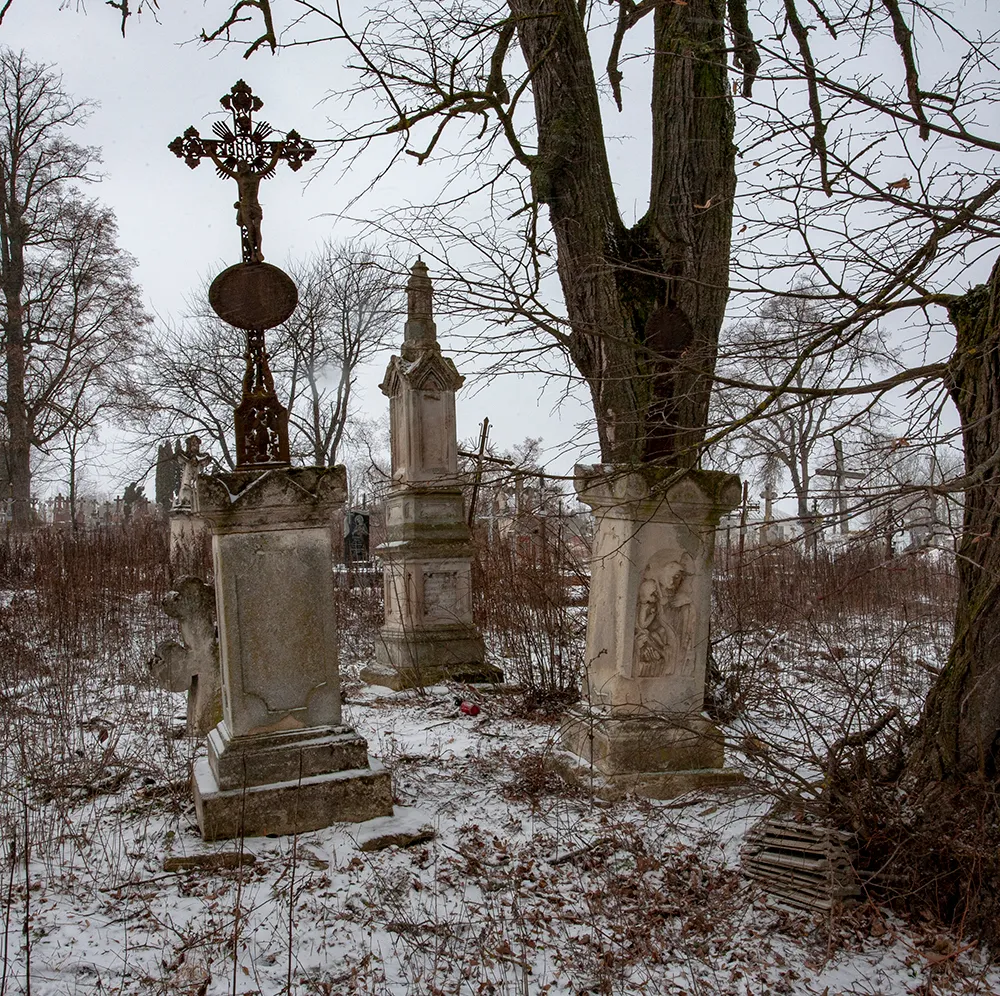
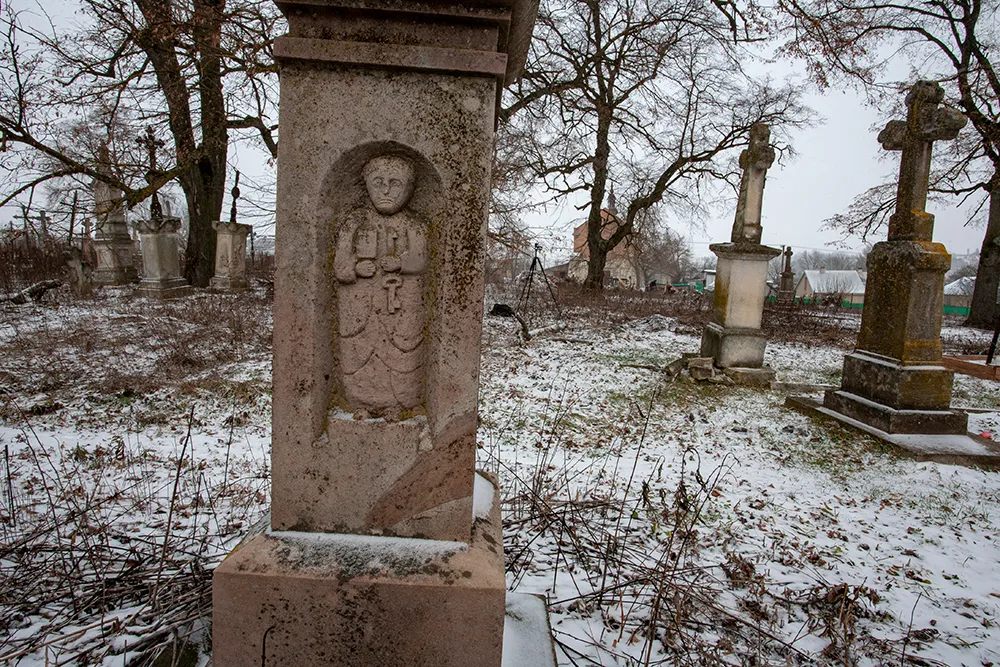
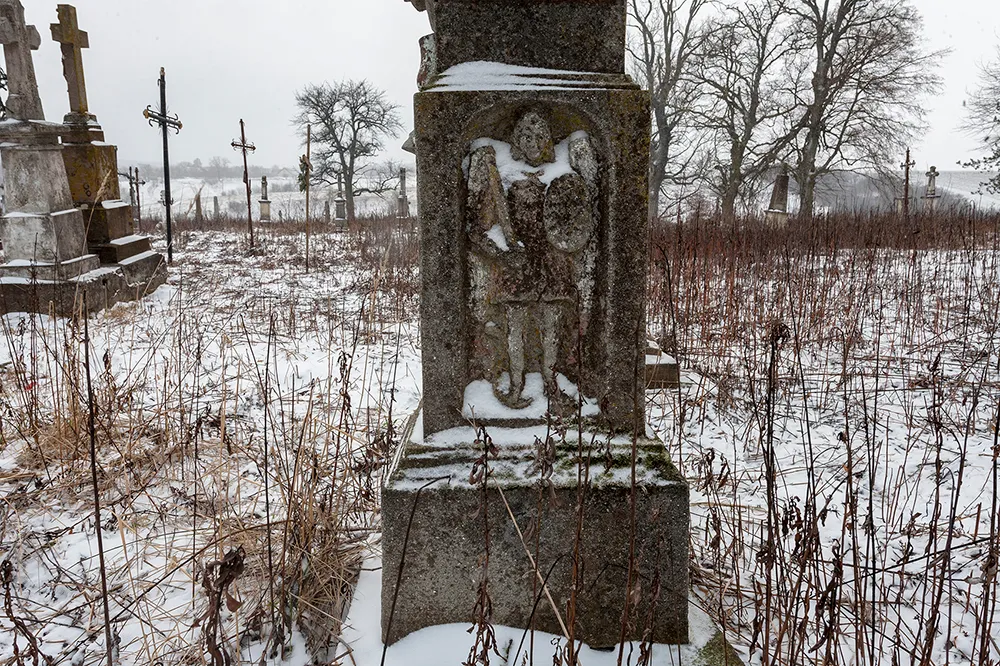
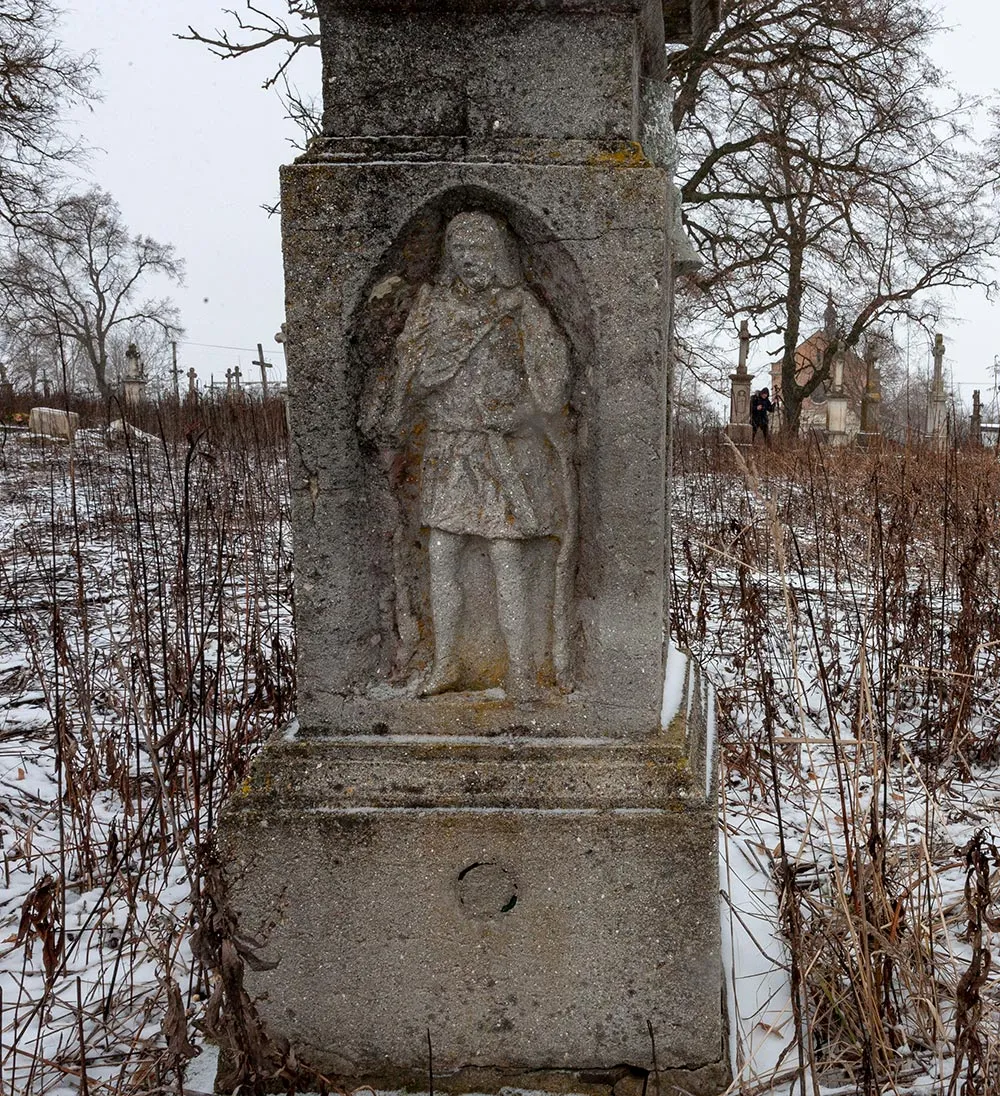
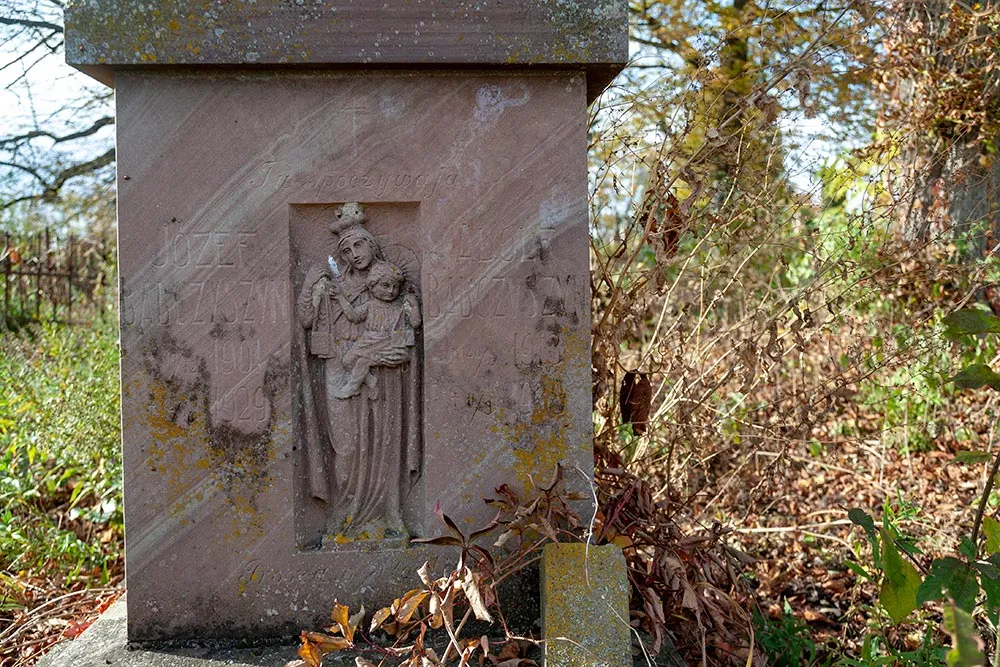
There are, we note, very few sculptures. So the figure of St. Anne, made in a pleasant naive folk style, immediately drew attention. The epitaph beneath it was simply shocking!
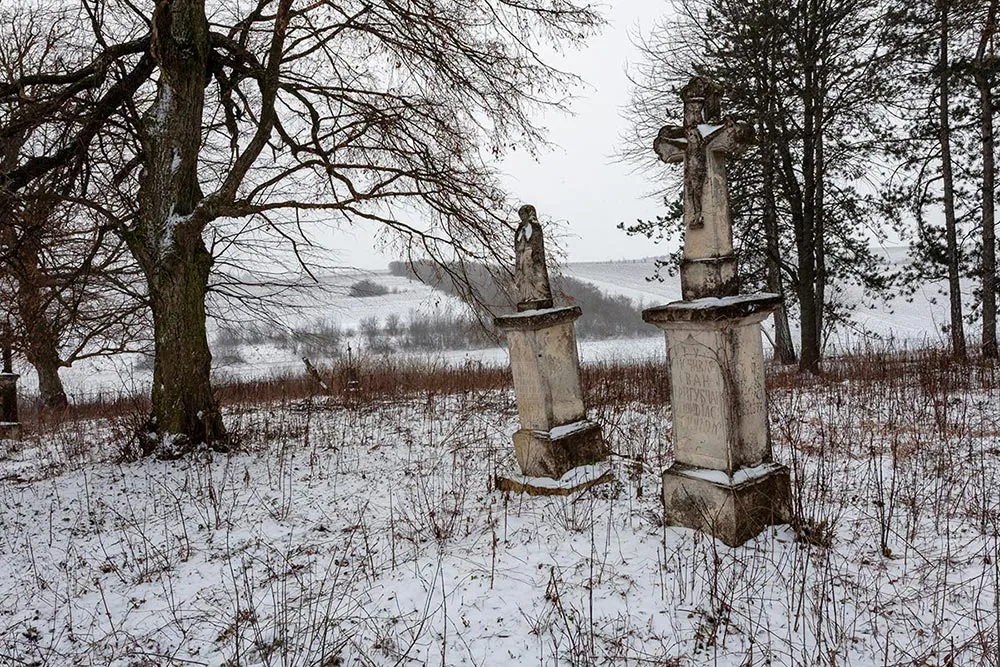
The inscription on the pedestal reads (spelling and style preserved): “Here rests Anna Kyryliv, born in 1914, met her death from a Russian grenade in 1920”
A terrible and tragic testimony to the events of the turbulent 20th century.
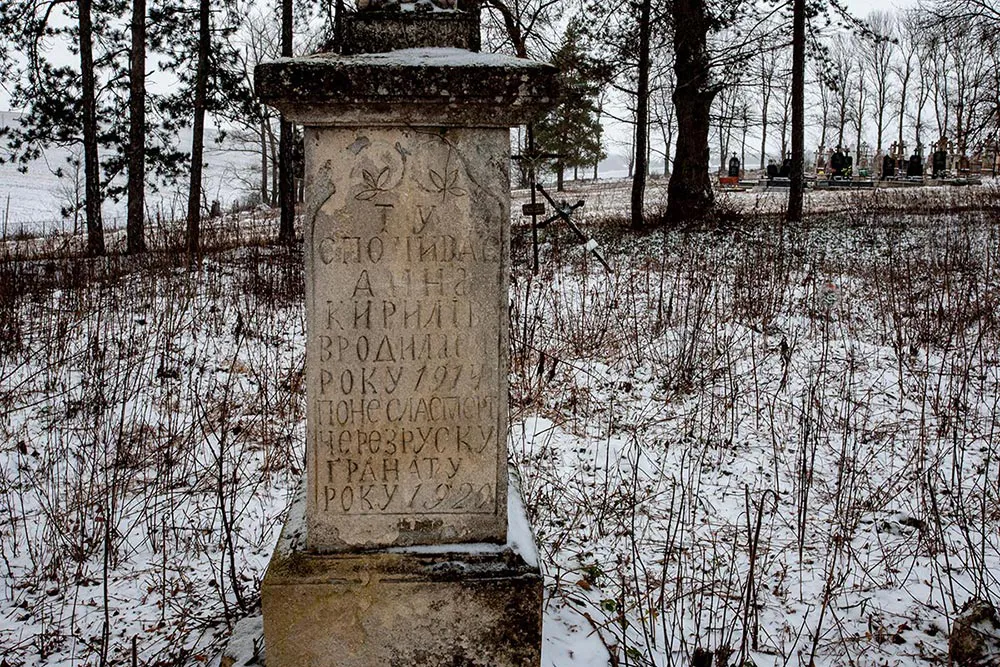
At that time a “grenade” meant not quite what it does today. What is now called a “grenade” was then called a “hand bomb”. In this case the “grenade” is an artillery shell.
The six-year-old girl died during the Russo-Polish war, at the moment when, preparing to cross the Zbruch, the Russians launched a powerful artillery strike on the villages along the river. As usual, it was mostly civilians who suffered from it.
In this case the “red” Russians were no different from the “tsarist” Russians. In particular, in 1914, in the very first days of the World War, Russian artillery razed to the ground the historic centre of Husiatyn, a town on the Zbruch not even three dozen kilometres downstream of Mala Luka. And this despite the fact that apart from the police and a small detachment of border guards, no armed formations of the Emperor were observed in Husiatyn at that time, and there was no military need for a massacre in which many civilians died.
So there is nothing new in the atrocities and crimes, including the shelling of peaceful towns and villages, that the Russian invaders commit today. Russians have always been like this, under the tsar, under Lenin, under Putin. Leaders change, but the Russian people remain the same… A sad proof of this can be seen in Mala Luka.
Dmytro Poliukhovych
Photos: February and end of October 2023


