Brodsky’s Mill on Poshtova: from bodily bread to spiritual bread
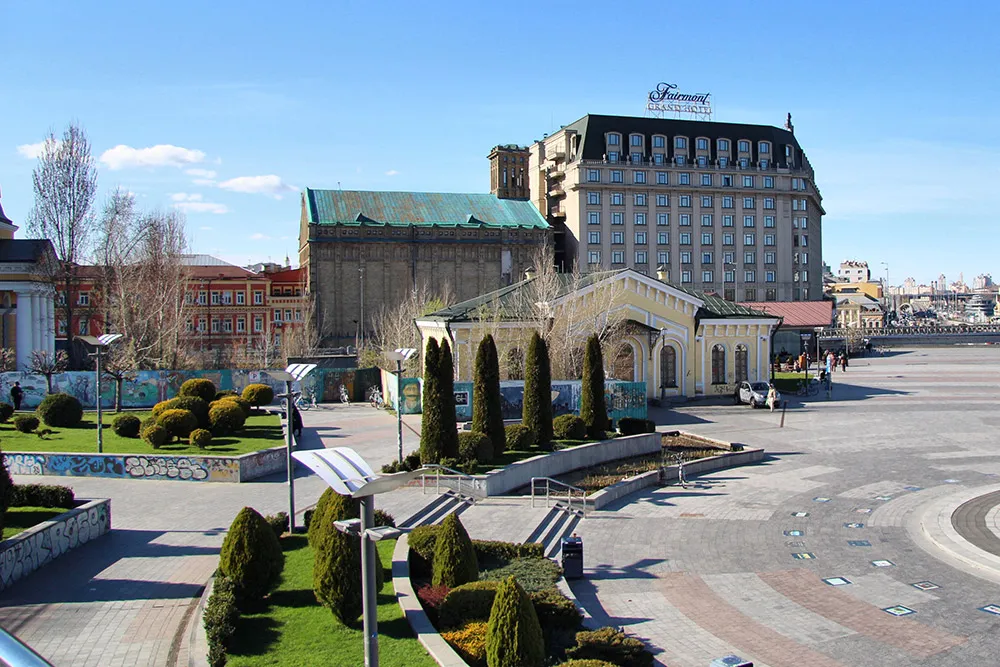
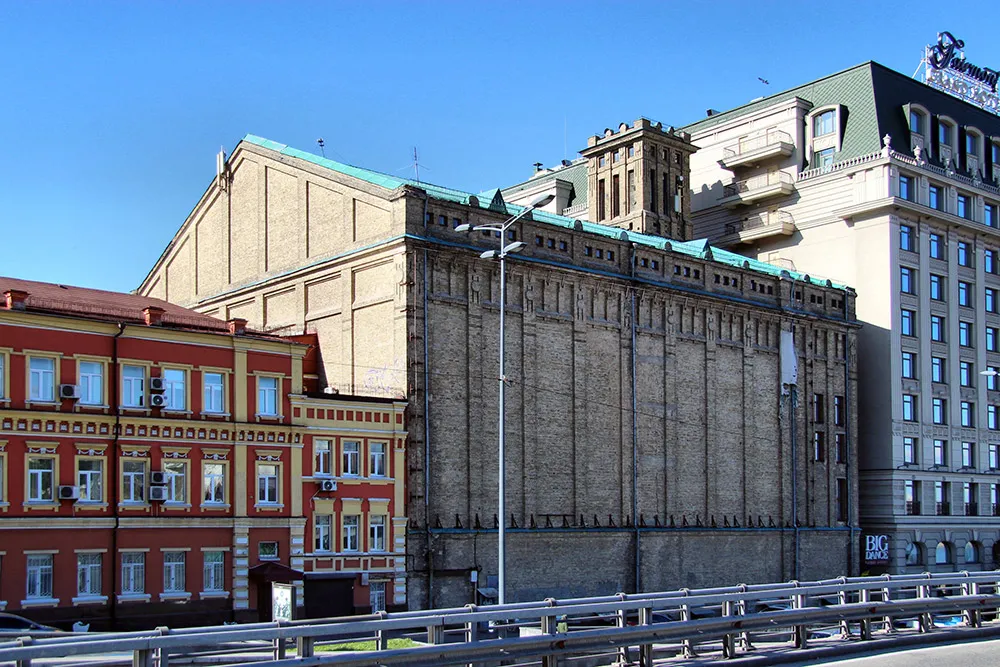
The building of the former grain elevator of Brodsky’s Mill on Borychiv Descent was until recently the main landmark of Kyiv’s Poshtova Square. This unique example of early 20th-century industrial architecture is one of the few structures on Poshtova to have survived a series of wars and fires. The elevator was once part of the complex of buildings of the famous “Kyiv Steam Flour-Milling Mill Company,” better known by the short name “Brodsky’s Mill.”
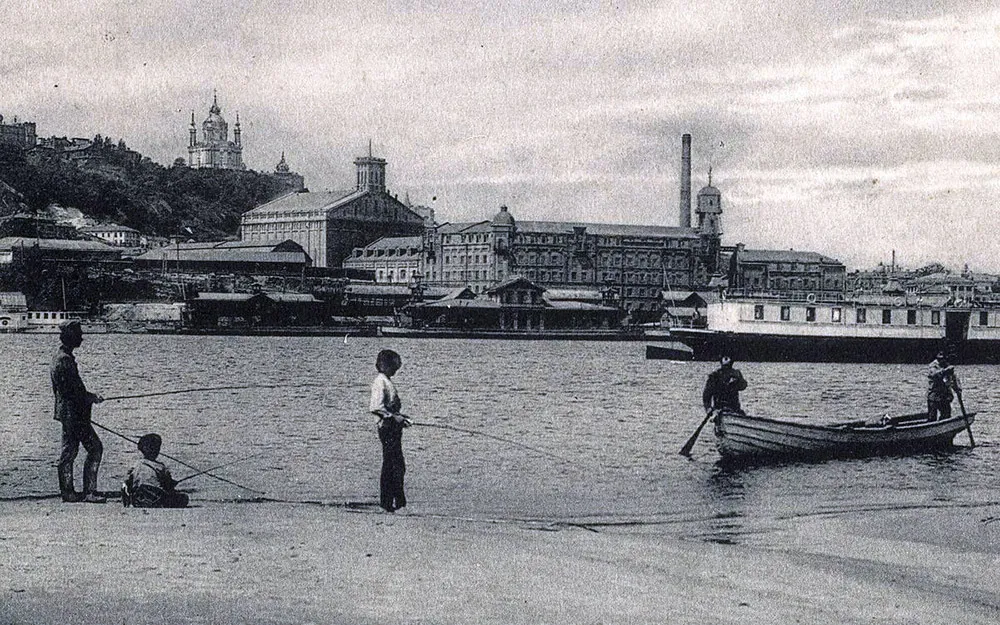
Brodsky’s Mill. Early 20th century. Photo: Wikipedia
The first mill, equipped with the most advanced European machinery, appeared on this site as early as the mid-19th century. It was the work of a merchant of German origin, Andrii-Hans Gleiser. The site for the enterprise was no accident, since a large river port lay nearby. Barges moored almost under the mill’s windows made it very convenient to deliver grain and, conversely, to ship out the finished product. Coal for the steam engines was also cheaper to bring in by river. Besides, Kyiv itself, a sizeable city, consumed a great deal of flour. Needless to say, the enterprise at once became successful and profitable.
Despite the success of the business, in 1860 Andrii-Hans Gleiser for some reason sold the mill to Adolf Schedel, a fairly well-known merchant of the time. The sale was arranged on credit for a term of twelve and a half years. However, after Schedel missed several payments, the mill returned to its previous owner. After Gleiser’s death in 1864 the mill was put up for auction, where it was bought by Amalia Bonadurer — incidentally, the daughter of the above-mentioned Adolf Schedel.
In 1870 Madame Amalia sold the mill to Izrail Brodsky, the famous founder of a dynasty of millionaire sugar manufacturers; after his death the enterprise was inherited by his elder son Lazar. He greatly expanded his father’s legacy. The mill’s territory grew all the way to Borychiv Descent. In 1888 a new four-storey mill building appeared on Naberezhno-Khreshchatytska Street. But not for long. Within three years it burned to the ground. In 1892–1895 a huge, five-storey mill building rose at the corner of Naberezhno-Khreshchatytska Street and Borychiv Descent, and along the front of Borychiv Descent a brick elevator with three wooden towers.
In the estate-based (sosloviye, in Russian) and rather antisemitic society of the Russian Empire, it was not easy for a Jew, even one with millions in his accounts, to do business. So the Brodskys’ family enterprise (Lazar himself, his brother Lev and other relatives) was joined by a respected aristocrat, Prince Viacheslav Tenishev. As a result, in 1892 the joint-stock “Kyiv Steam Flour-Milling Mill Company” was formed, which after the founder’s death (1904) took the name of Lazar Brodsky.
To convey the power and grandeur of the enterprise: as of 1914–1915 the mill employed 185 workers and specialists. The machines were driven by a steam engine and three diesel engines with a total power of 1,750 horsepower, and from the side of today’s Ihorivska Street a special railway spur ran up to the mill’s grounds. The mill’s output was 3 million poods a year!
Note that the exploitation of the workers here was terrible. Loaders, for instance, received 75 kopecks a day. For that money they had to haul five-pood sacks for 12 hours, with short breaks.
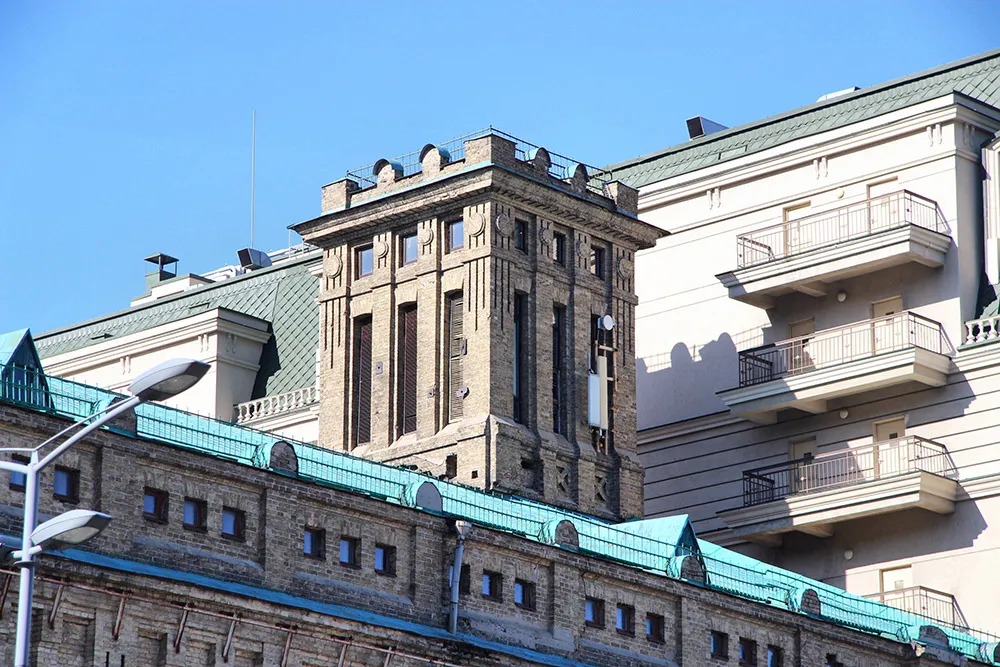
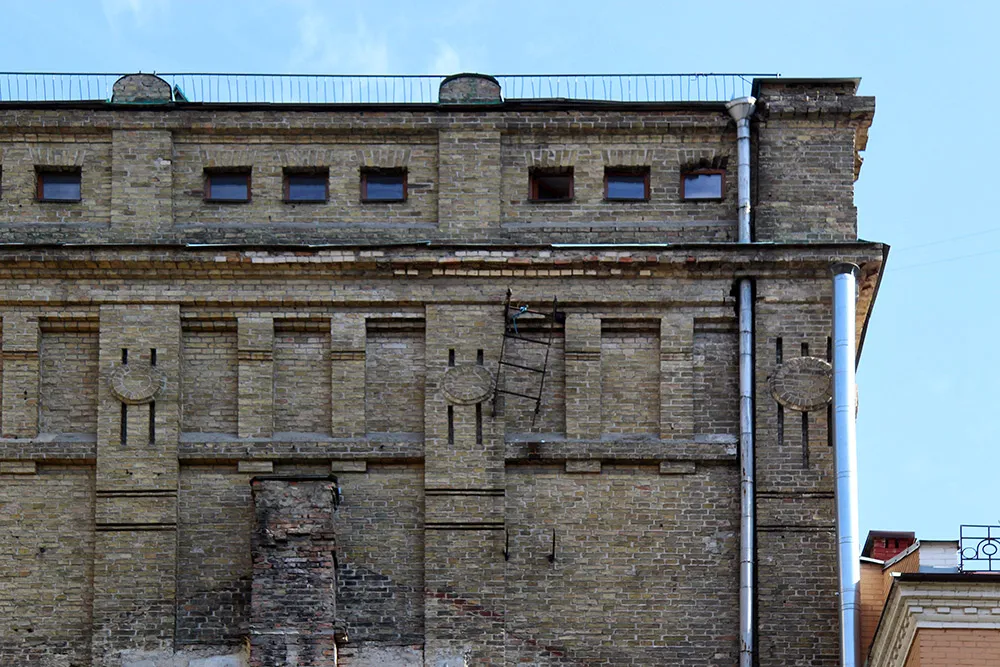
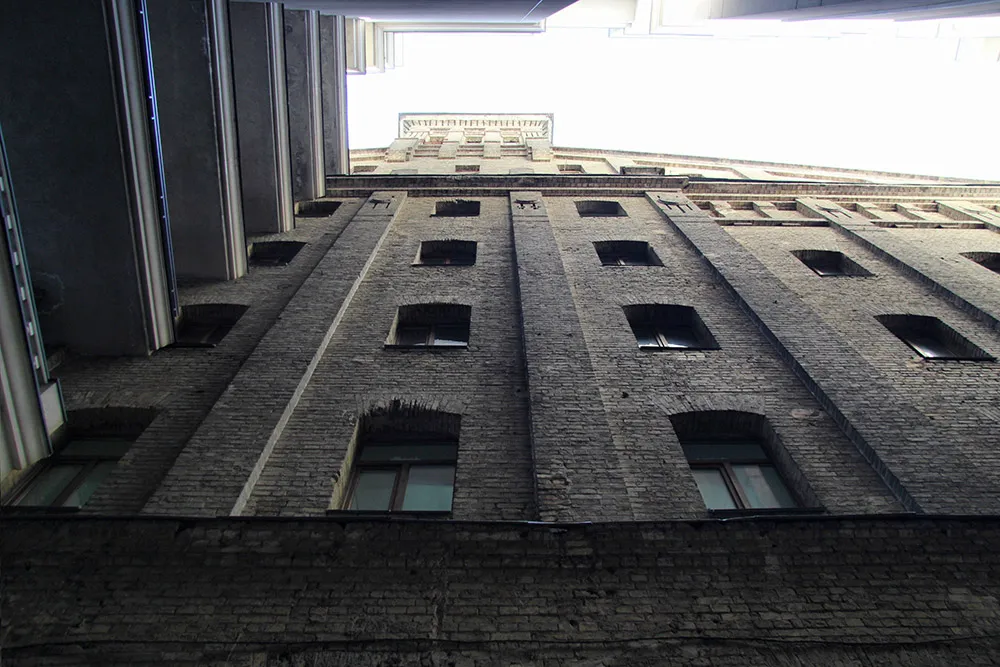
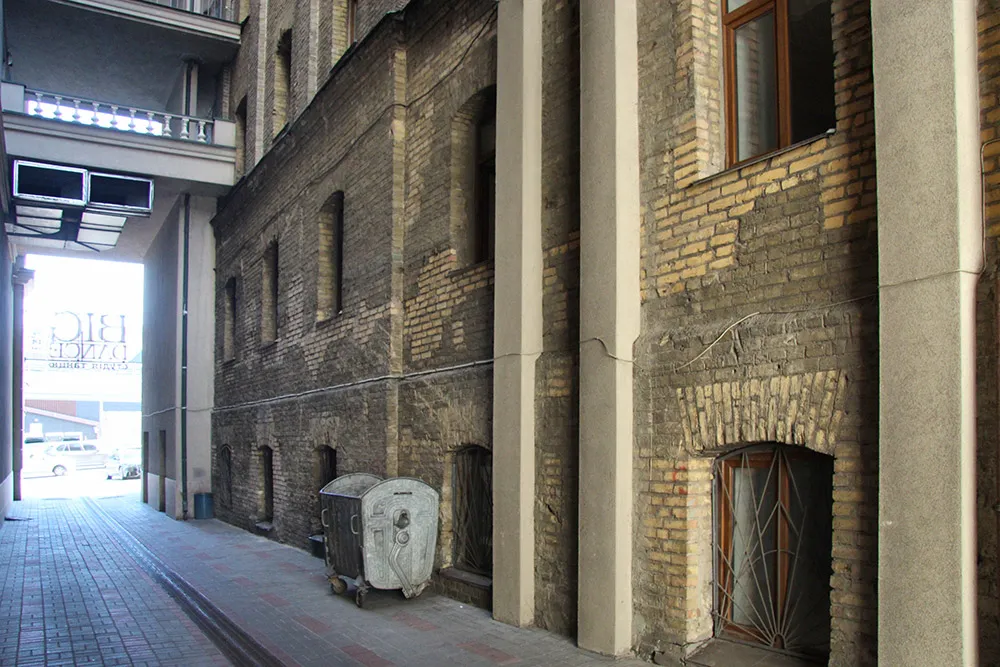
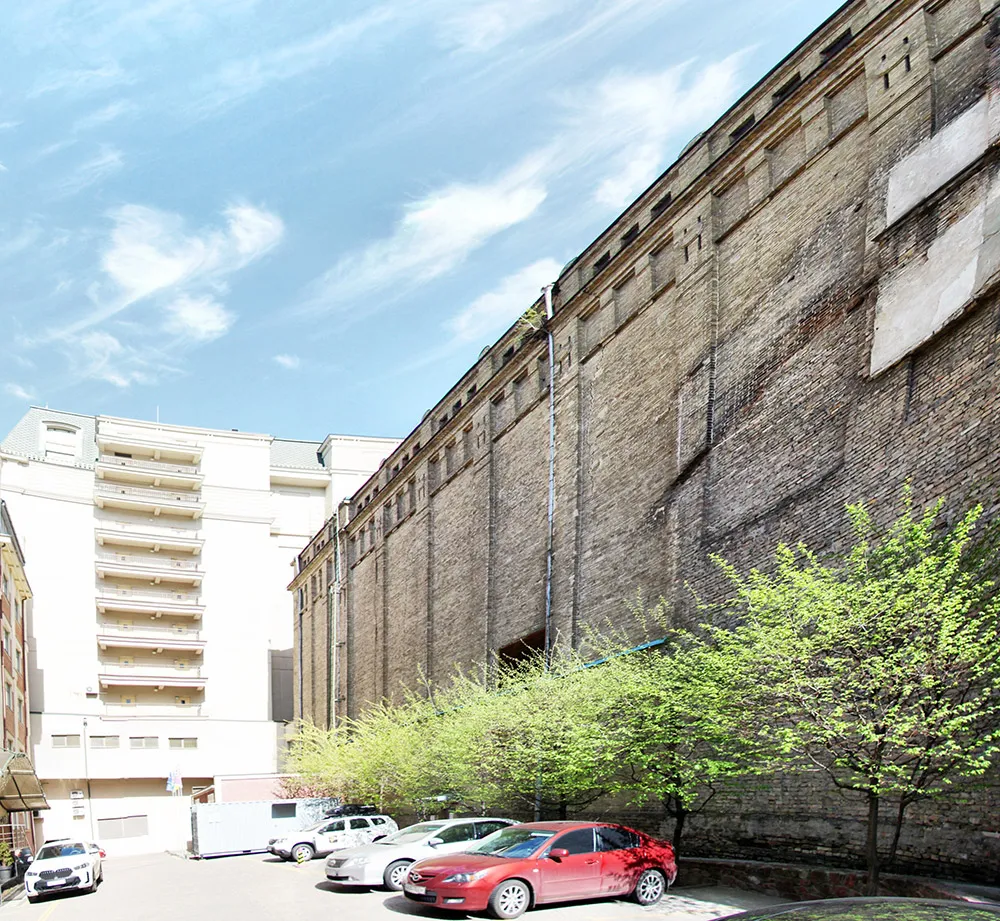
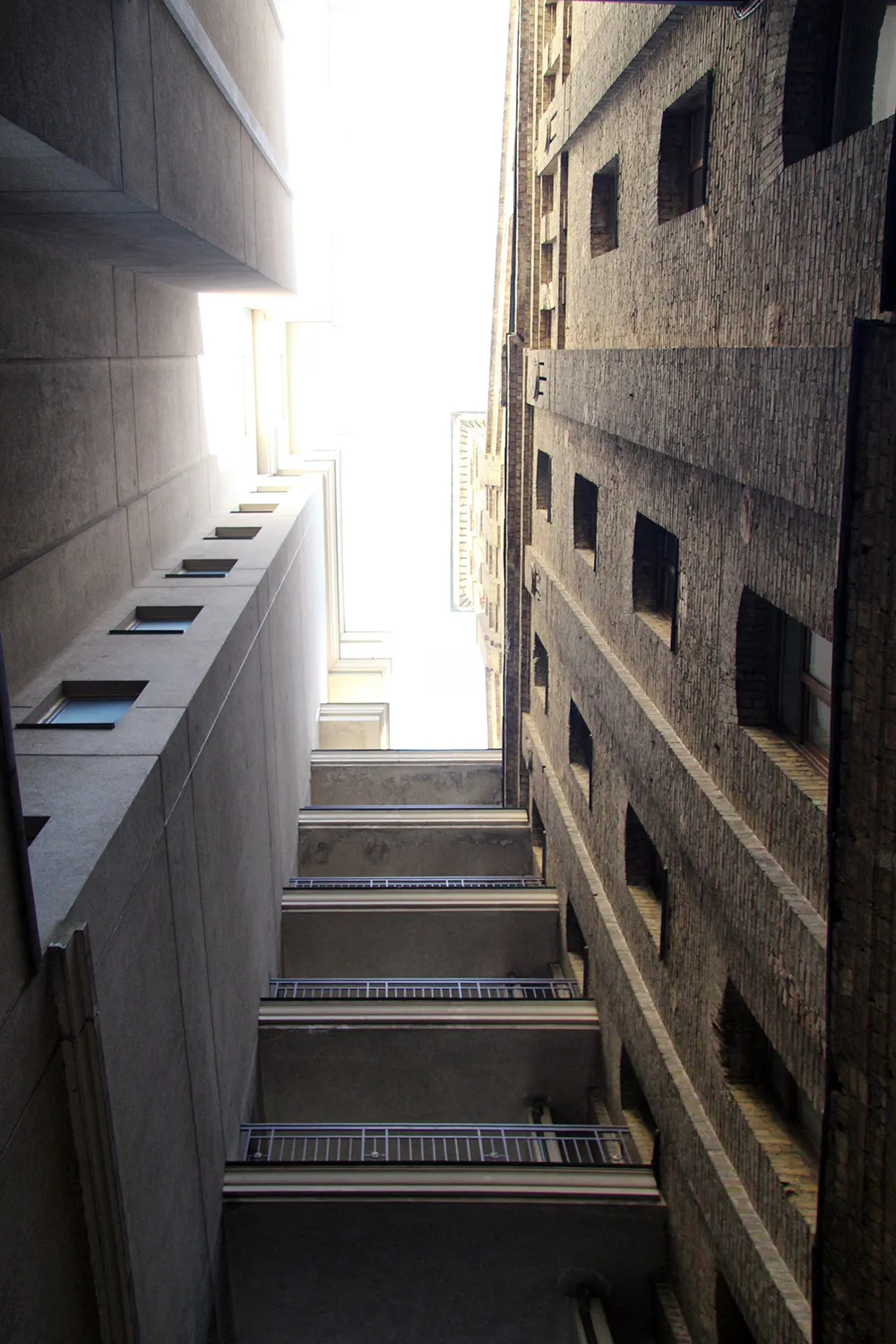
In 1906 the elevator burned down, but within a year a new one rose on the site of the fire, the one that has survived to our day. The authors of the design of the new building were the engineer Ch. Volkenstein and the Kyiv provincial engineer Volodymyr Bezsmertnyi, who also supervised the construction. It is interesting that, designing the structure, its creators paid enormous attention to fire safety (the mill had, after all, already burned twice before). And they went about it wholeheartedly. The third fire (discussed below) did destroy the mill, but the elevator stood firm!
As for the architecture, let us quote the researcher of Ukrainian architectural modernism Tetiana Skibytska:
“A blind volume of basilican type, topped by a quadrangular tower on the embankment side, has a three-tier horizontal division into a plinth, a main part and a crowning part. The main element of the severe planar modelling of the exposed-brick facades is the pilasters of the two upper tiers, the even rhythm of whose divisions is adorned with niches under the cornice of the main part and the attic windows of the crowning part. The only purely decorative motif is the flat discs on the pilasters of the tower, adorned with triple vertical rods as a kind of hallmark of the Secession style.”
The mill operated until the end of the Civil War. In 1920 a fire destroyed the main building and a number of auxiliary ones. The elevator stood firm. Flour production was never resumed afterwards. The former elevator was eventually adapted as the book depository of today’s Parliamentary Library. Now books are stored here instead of grain.