Nescheriv. Monastery of the Transfiguration of the Saviour

· 4 min read
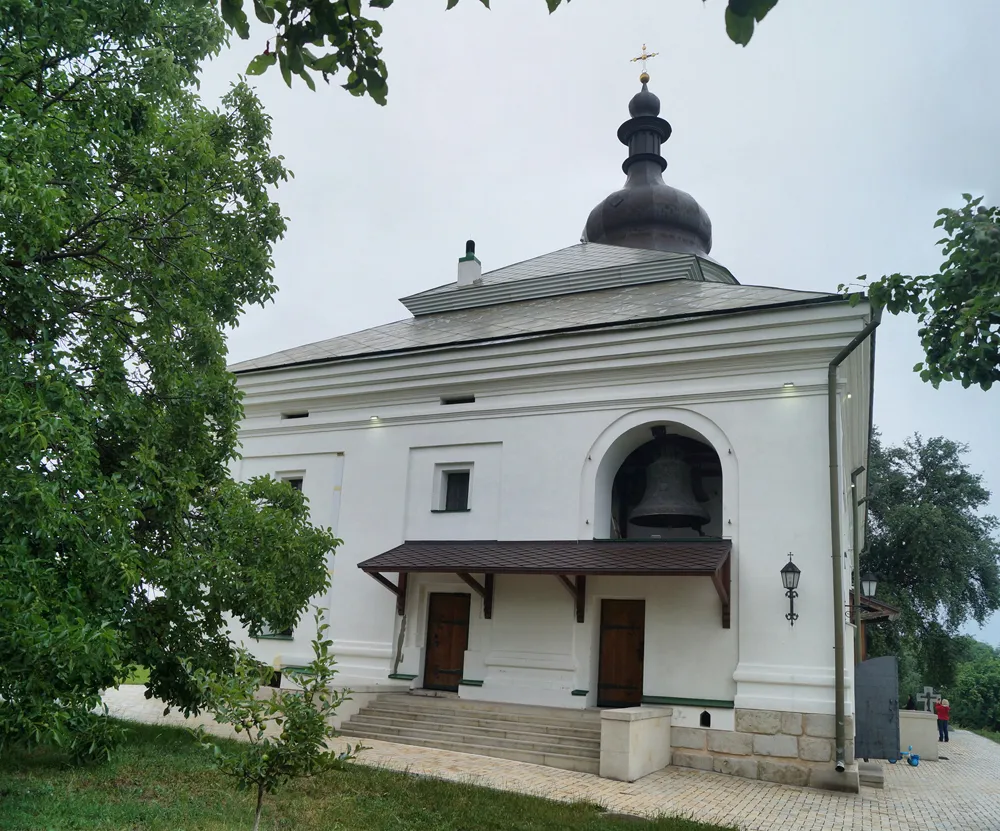
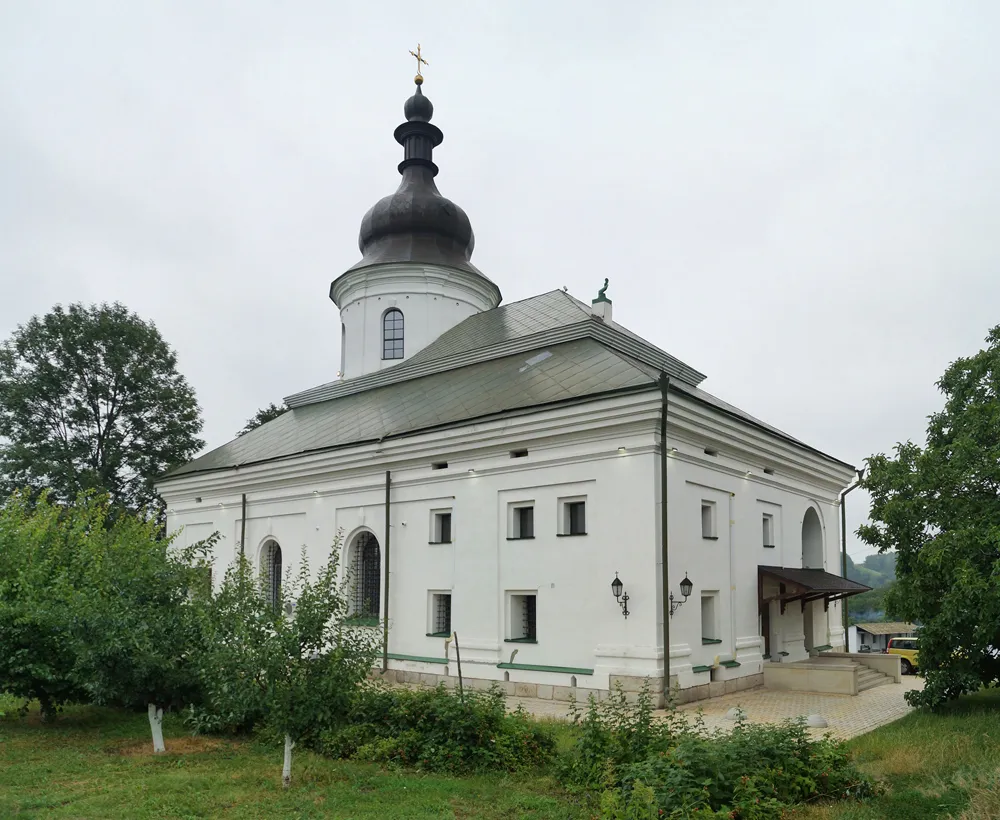
In 1794 the landowner and philanthropist Ivan Pavlovych Hudym-Levkovych (for a time a Kyiv sotnyk and head of the nobility of Kyiv district) built the Church of the Transfiguration in the village, a unique example of the transition from Ukrainian Baroque to Classicism, shaped like a ship (as a symbol that the church leads a person across the stormy sea of life to a quiet harbour). For the construction of the church, 36 desiatinas of land and a large sum of money were allocated. Besides the main altar of the Transfiguration of the Lord, the church had several side chapels, in honour of St. Paul the Confessor, the holy Great Martyr and Equal-to-the-Apostles Thecla, and the Beheading of the Holy Prophet John the Baptist. A bell tower with wooden shutters was also built into the church building. Later the church’s founder Ivan Pavlovych Hudym-Levkovych, his brother Maksym Pavlovych and his son Ivan Ivanovych, who looked after the church, were buried on the church grounds. Besides the nobles, the underground crypt beneath the church holds burials of clergy (which, unfortunately, were plundered under Soviet rule). It is known that one of the first rectors of the church was Archpriest Petro Hrybenovskyi (died 1888). A parish school for children operated at the church.
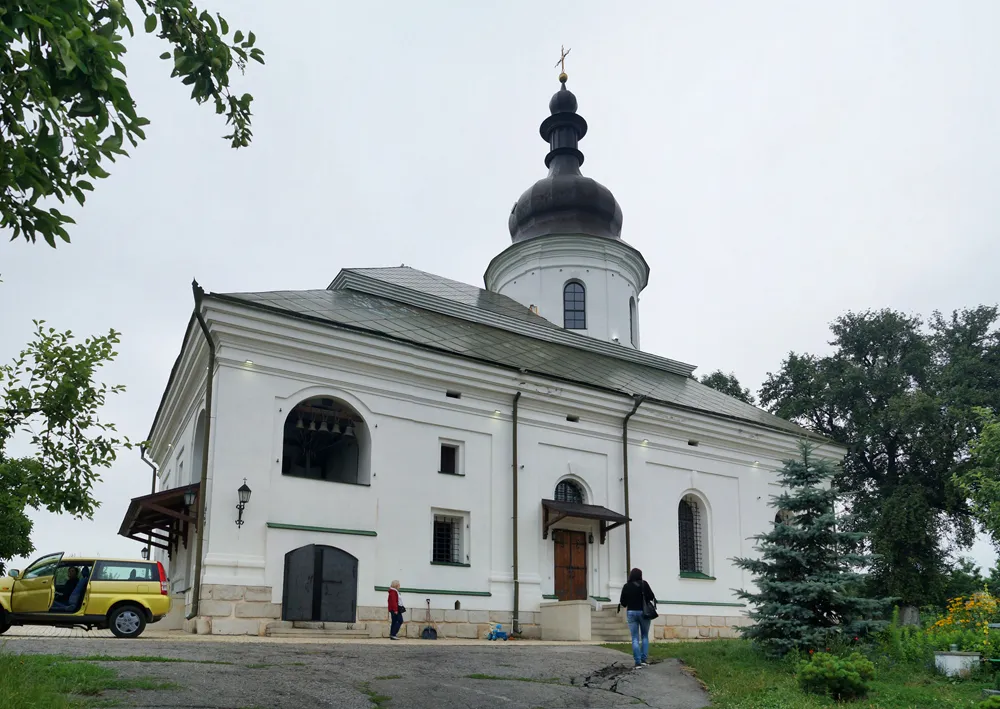
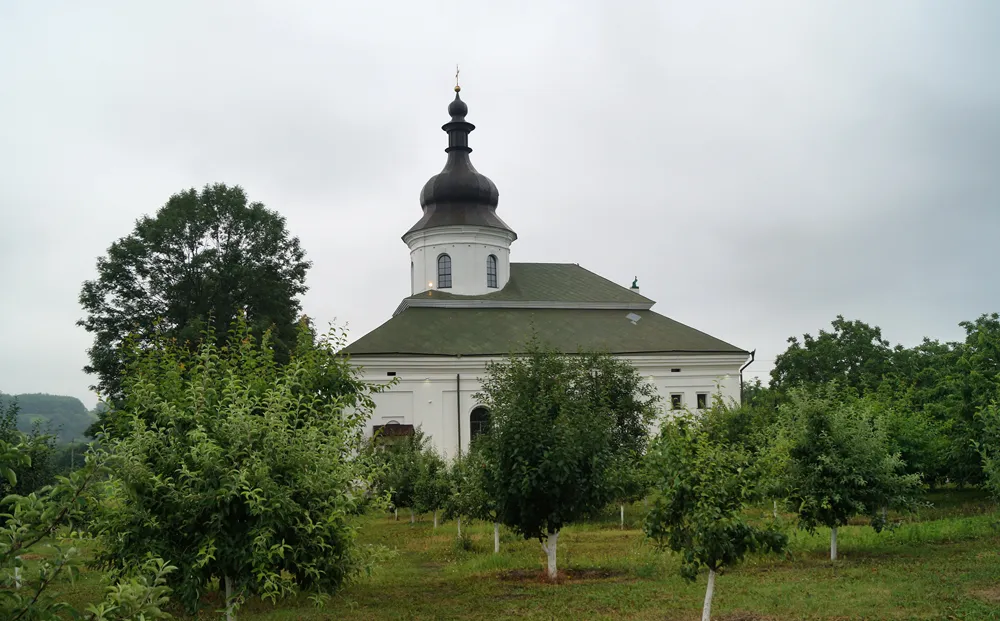
In the 1960s the Soviet authorities took the church away from the faithful and turned it into a grain store. The church was badly neglected, and by the 1970s it was in a dilapidated condition and no longer used. It was half-ruined, having lost its internal and external splendour. In 1988 the building was returned to the church community, and in the 1990s, under Archpriest Serhii Ohla as rector, the church building was rebuilt in its original form. Later, in 2004, a rural Skete of the Transfiguration of the Saviour of the Kyiv Holy Trinity Ionynskyi Monastery was established on the basis of the church. A year later the skete was turned into an independent monastery. Both monasteries jointly, with the participation of patrons, carried out significant restoration of the church. Besides the main altar, the side chapels in honour of the Beheading of the Holy Prophet John the Baptist were restored, and in 2013 a side chapel of the Holy New Martyrs and Confessors of Russia was established in the former basement. At the same time the monks furnished cells and did various domestic work. Orthodox volunteers often help them with this.
The Church of the Transfiguration is a quite unique architectural masterpiece. Its rectangular body has no projecting altar apse, and the drum of the pear-shaped dome is shifted to the east and slightly pressed into the high four-pitched roof with a break, while the height proportions are maintained (the smooth transition of the high roof from the massive body to the balancing slender dome “softens” the might of the structure, as if gathering it up to the sky). The eastern half of the church has tall arched windows in one tier, the western half has arched and square ones in two tiers. In the south-western corner of the building, at the level of the second tier, a bell tower is built in (it does not project beyond the façades and does not extend across the whole width of the church). The dome is topped with a gilded cross.
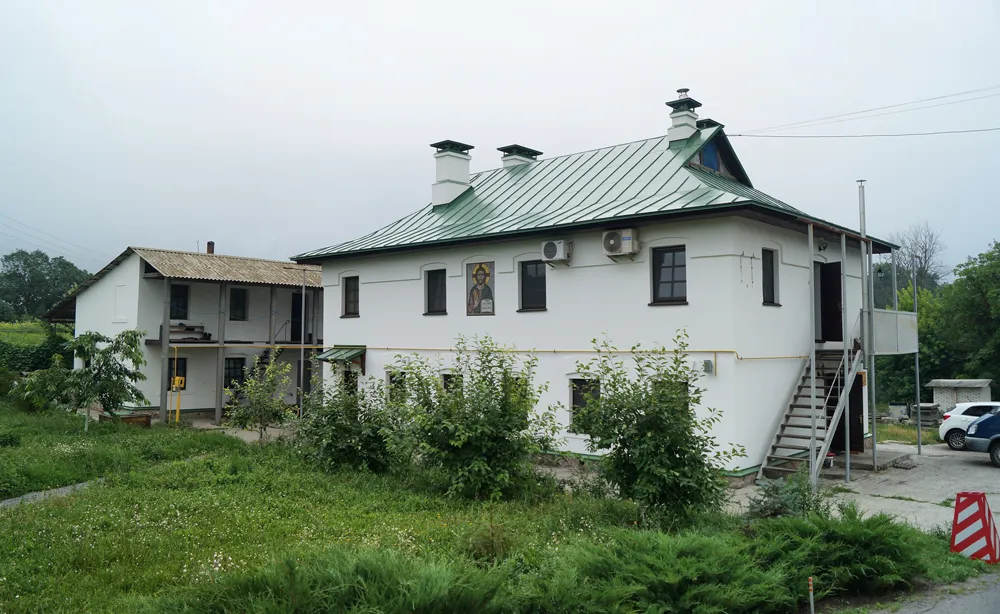
Near the church the monastery erected stone crosses in memory of the church’s patrons and on the grave of soldiers shot by the German occupiers during the German-Soviet war. Also next to the church stands a stone chapel in the shape of an apse for open-air services. Nearby are 2 monastery buildings.
Interesting facts:
At the Skete of the Transfiguration, a church shelter for cats operates with the blessing and support of the skete’s superior, Archimandrite Ioasaf (Peretiatko). In May 2016 the shelter housed 34 cats.
The film “Elder Paisios and I, Standing Upside Down” by director Oleksandr Stoliarov was shot at this monastery.
Text from Wikipedia. Photos by Roman Malenkov
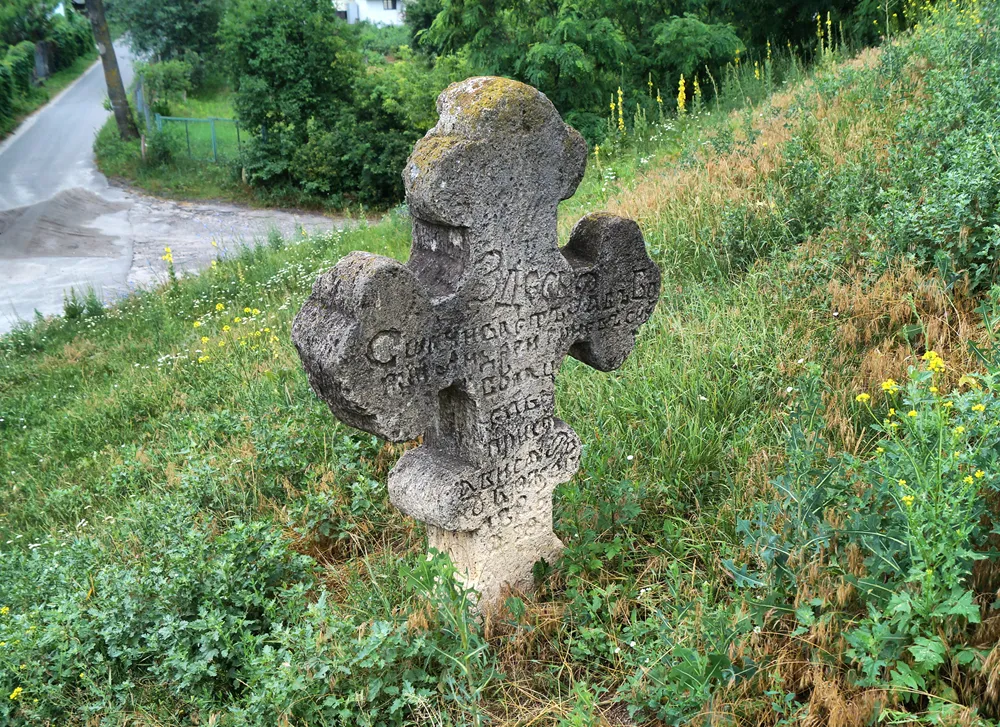
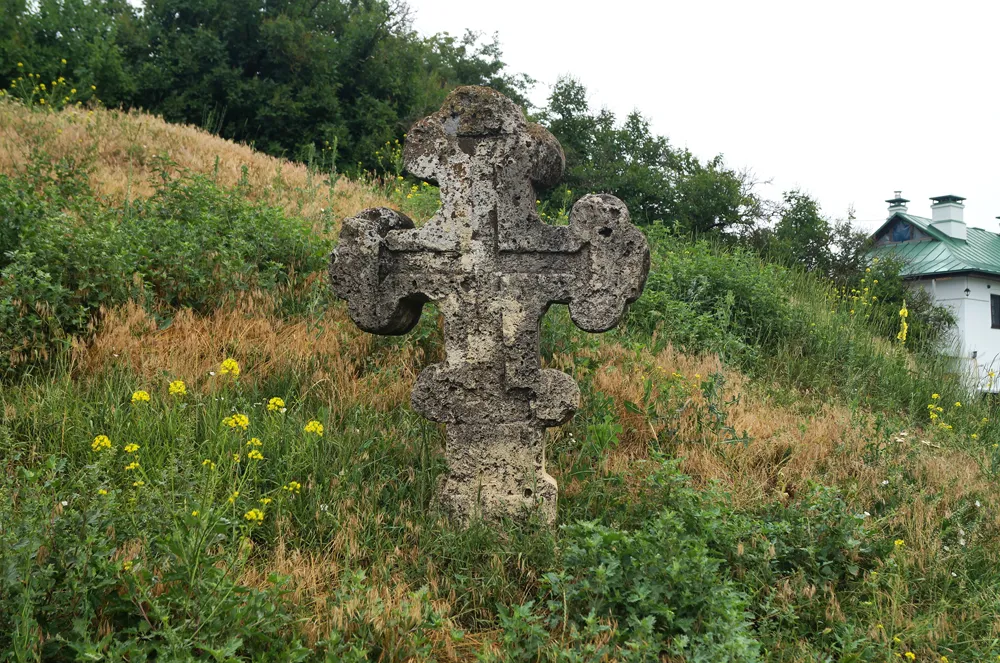
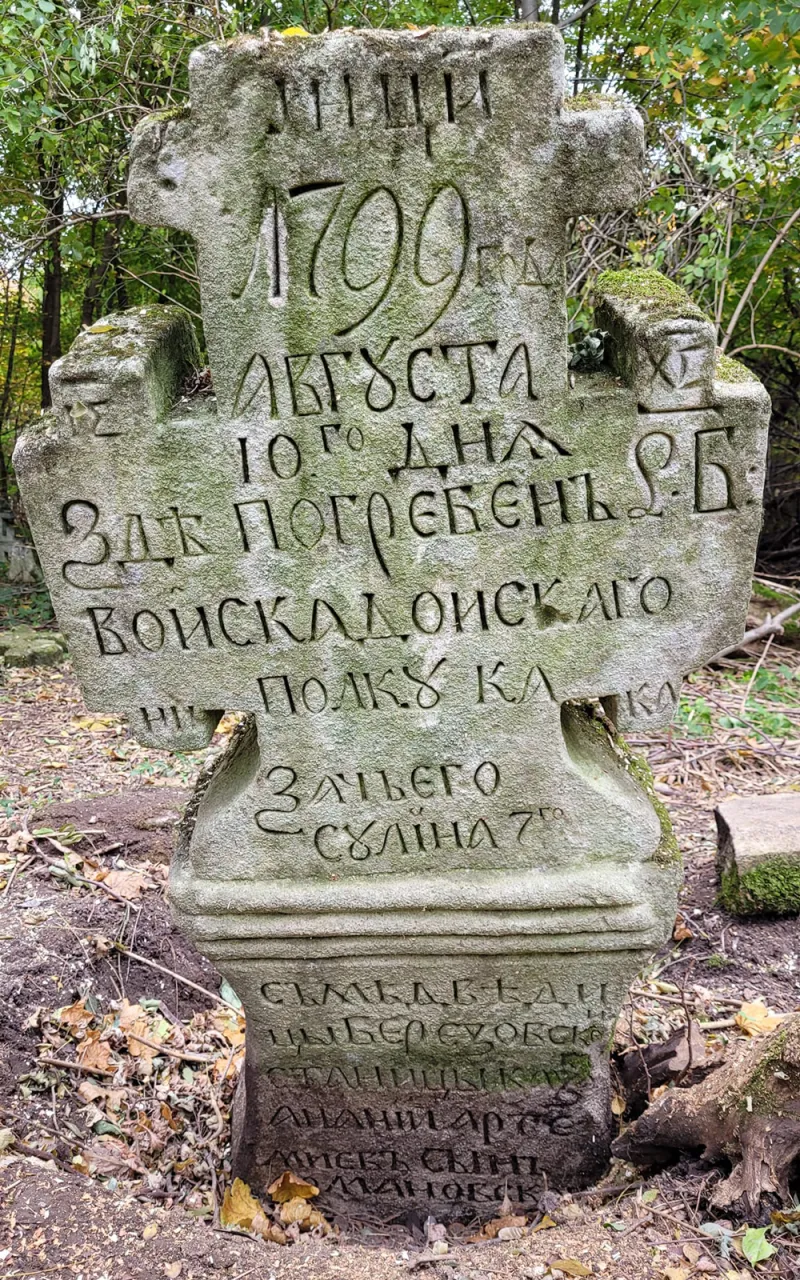
On the monastery grounds, besides the church, there is another unique monument of Ukrainian history and lapidary art. It is a stone cross of the ancient Ukrainian form on the grave of the priest Andrii. It was erected in 1825.