

In the footsteps of the Vynohradsky family. A major expedition to the village of Kutkivtsi in Podillia
The Vynohradsky family left a considerable mark on the modern history of Kyiv. The banker Mykola Vynohradsky, in particular, was the founder and first director of the Kyiv Land Bank. Although this institution was not a top-tier one, it enjoyed considerable prestige. Suffice it to say that the building that today houses the Cabinet of Ministers Club (7 Instytutska Street) is the former office of this financial institution.
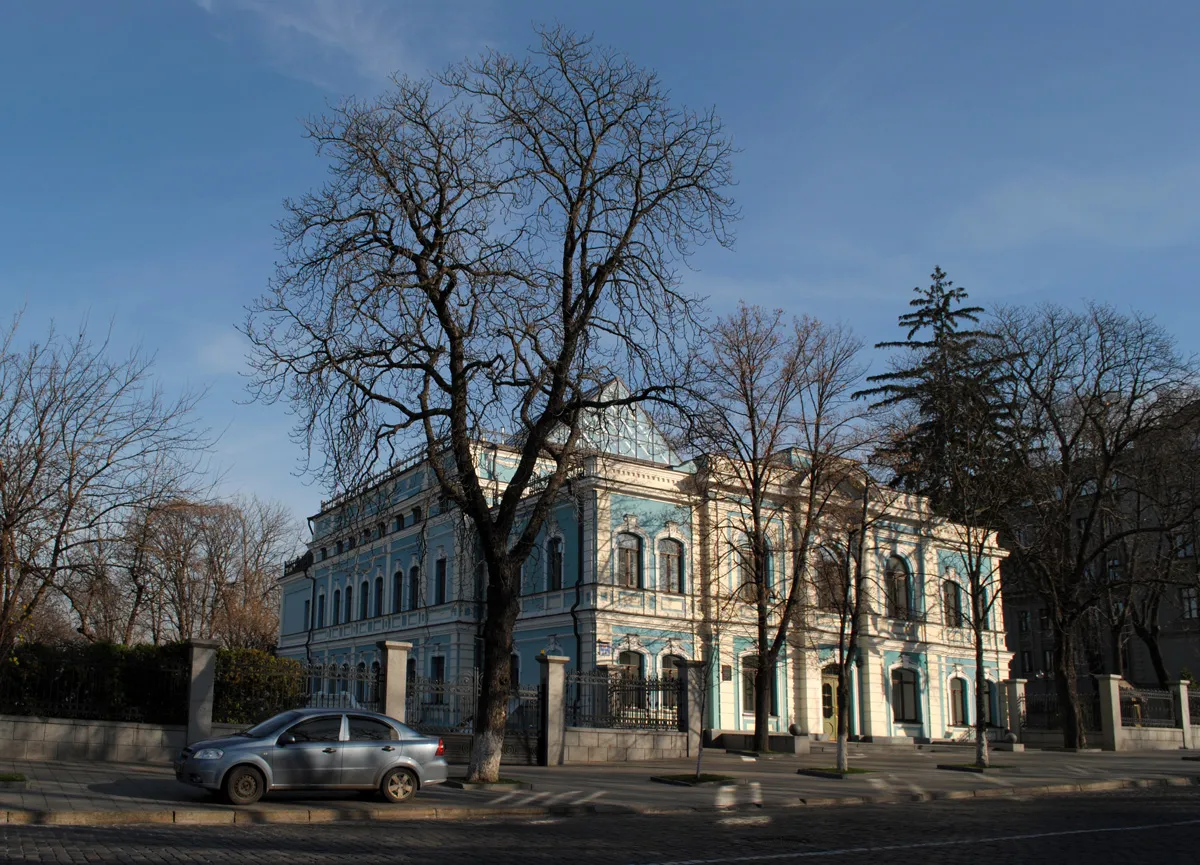
The Cabinet of Ministers Club. Photo: Wikipedia
The family is also connected with the address 8/14 Velyka Zhytomyrska Street. In 1858 this estate at the corner of Velyka Zhytomyrska and Volodymyrska streets was bought for 400 silver roubles by the collegiate counsellor Mykola Vynohradsky together with his wife Natalia Viktorivna.
However, as a banker Mykola Vynohradsky became known not for the best reasons. In particular, owing to his miscalculations in the security system and his inept personnel policy, the bank’s chief cashier once made off with a million roubles (how many millions of dollars that would be today is frightening even to imagine) and vanished without trace in time and space with this astronomical sum. He vanished rather well. They searched for him for a long time… but never found him. Which, in the absence of biometric passports and with the said sum in hand, was not much of a problem back then.
What Mykola Vynohradsky actually became famous for was his sons.
Oleksandr Vynohradsky: a cultural revolutionary
The elder, Oleksandr Vynohradsky (1855–1912), was an outstanding Ukrainian conductor and public figure who, at the turn of the 19th and 20th centuries, carried out a genuine cultural revolution in Kyiv, turning it into one of the brightest musical capitals of Europe. Having headed the local music society, he raised the level of the Kyiv symphony orchestra to the highest world standards and boldly oriented its repertoire towards the European modernism of the day. Moreover, he did not hesitate to invest his own money in his projects without the slightest hope of even getting it back.
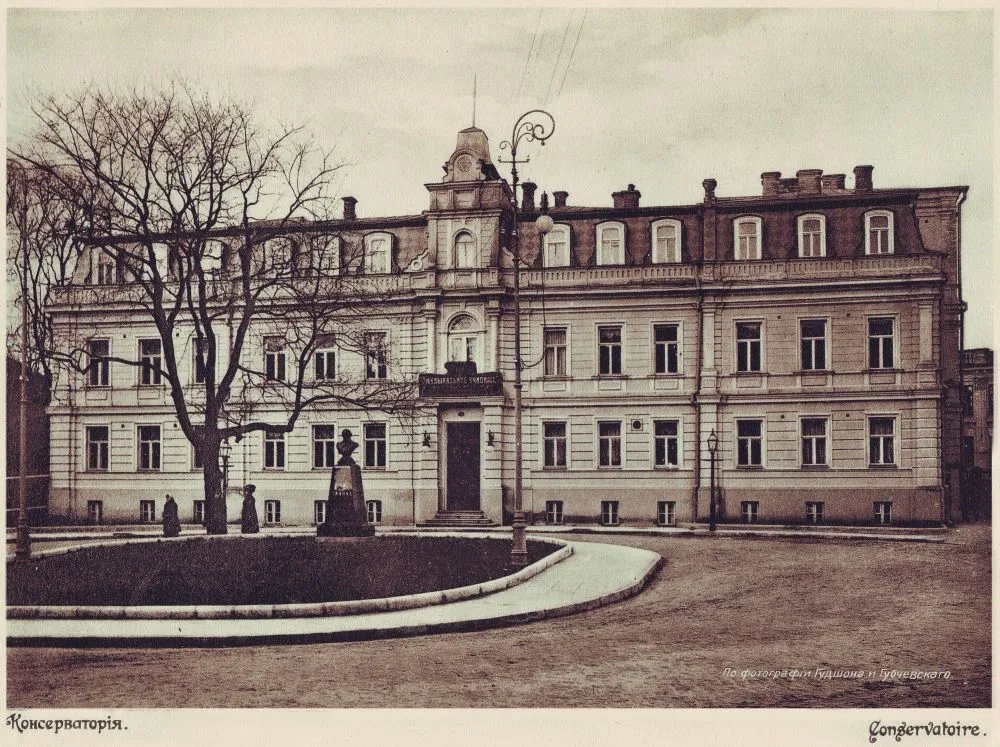
Thanks to his boundless energy and international prestige, Kyiv became a must-visit stop on the itineraries of leading foreign performers and composers.
Vynohradsky himself became the first Ukrainian conductor to be actively invited to lead the best orchestras of Paris, Vienna, Berlin and Prague, where he triumphantly introduced European audiences to the high classics and inscribed Kyiv for ever into the context of world music.
Oleksandr Vynohradsky was one of the chief lobbyists for the idea of turning the Kyiv Music School into a conservatory. The initiative was warmly supported by the musical community, but Oleksandr Mykolaiovych did not live to see its official legal formalisation. He was buried at the Askold’s Grave cemetery. Unfortunately, under the communists this grave was destroyed together with the entire necropolis.
Serhii Vynohradsky: a scientist of Nobel stature
The younger son, Serhii Mykolaiovych Vynohradsky (1856–1953), became famous as an outstanding microbiologist. Unlike his elder brother, his professional career was never connected with Ukraine. He worked in St. Petersburg, Strasbourg (then under the German Empire), Zurich and, after emigrating, in France.
In Brie-Comte-Robert he organised and headed the soil microbiology laboratory of the Pasteur Institute, where he ended his scientific career.
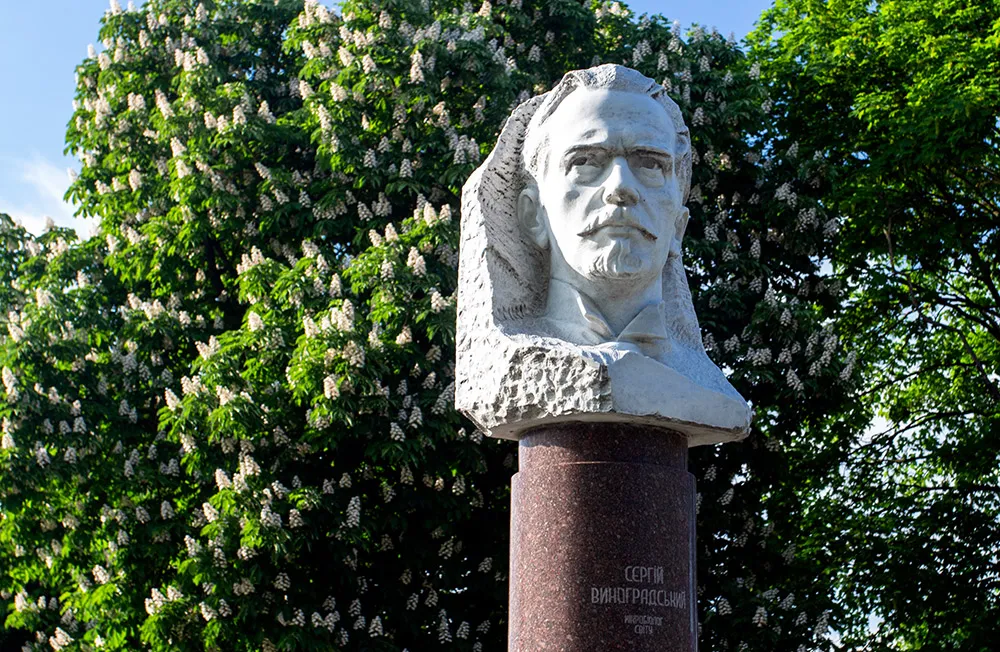
Monument to S. Vynohradsky in Horodok
In 1887, in Strasbourg, the Kyiv-born Serhii Vynohradsky discovered the phenomenon of chemosynthesis, the ability of microorganisms to synthesise organic substances using the energy of oxidation of inorganic compounds. This discovery was truly of “Nobel stature”, but the Nobel Prize was established only in 1901. Under its statutes, discoveries made before the award was introduced are not considered, so the scientist formally could not become a laureate. Had he made this research a little later, he would have had every chance of becoming a Nobel laureate.
Podillian estates and Kutkivtsi
In August 1859 the head of the family, Mykola Vynohradsky, decided to buy some land in Podillia and acquired a large estate in the village of Kutkivtsi (it cost him 48,910 silver roubles), and soon afterwards a number of surrounding villages as well. In 1871 he bought the neighbouring town of Horodok with its environs and became one of the richest landowners in this part of Podillia. True, he did not enjoy this for long, as he died prematurely in 1877. Kutkivtsi and its surroundings passed to the elder son, and Horodok to the younger.
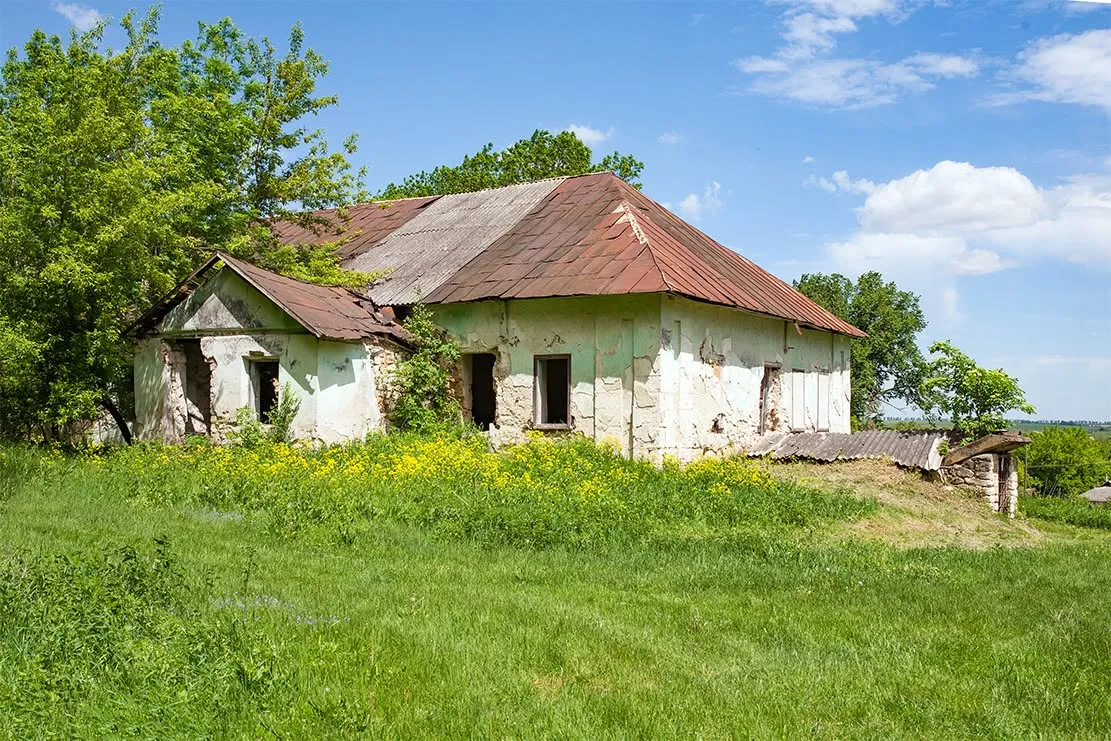
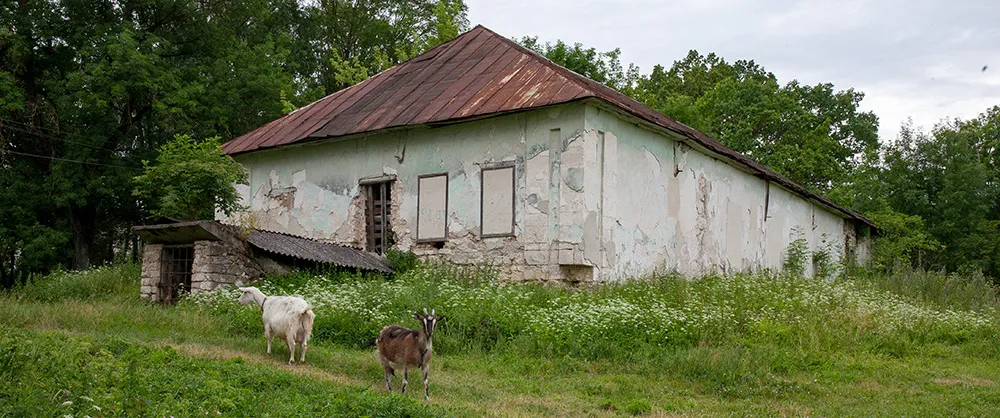
The “manor house” in Kutkivtsi. In fact, only a quarter of it is in the frame. It is quite long
However, from 1905 it was Serhii Vynohradsky who mostly ran the affairs of the Kutkivtsi estate; for health reasons he had left his job at the Institute of Experimental Medicine in St. Petersburg and moved to the bountiful Podillia. Which is quite logical: while Oleksandr Mykolaiovych was soaring on Parnassus among the muses, his scientist brother dealt with practical matters on the spot.
The specific houses where the Vynohradsky family lived have not survived in Kyiv or elsewhere in Ukraine, or cannot be clearly identified. The only address of this well-known family to have come down to our day is the village of Kutkivtsi in the Khmelnytskyi region. The old Vynohradsky house can still be seen here. Unfortunately, today it is a half-ruin.
Let us quote the memoirs Serhii Vynohradsky left about his stay in Kutkivtsi in 1870:
“The honeymoon months of village life began: complete freedom, riding about and galloping on horseback, endless walks across the fields, especially the hills, of which Zamkova had a romantic prestige because a castle had once stood on it and a treasure was supposedly hidden somewhere in a secret cellar. What was going on in the cramped house where the family huddled was of no interest; we came home only to eat…”

The hills near the village of Kutkivtsi
An interesting observation by the scientist about the local peasants:
“A crowd came with wreaths (the harvest festival), and money had to be given for refreshments upon accepting the wreaths. Instead, Mother, excited, with her crimson blush, with tears in her eyes, brings out money once, goes for more again, and ends up stuffing banknotes left and right, evidently emptying her entire household purse. I stood aside, not knowing what to think… Yet it looked as though with her generosity she was trying to earn indulgence for her position as a landowning lady”.
Serhii Vynohradsky’s mother, Natalia Viktorivna Vynohradska (née Skoropadska, 1835–1916), lived a long life. She came from the renowned hetman family, was a society beauty and was also famous for her incredible kindness. In Kutkivtsi old-timers still tell how local children once eagerly waited for the old lady to arrive in the village for the summer holidays. Whenever she went out anywhere, she always kept a large box of sweets in her britzka, which she generously handed out to all the little ones.
What remains of the estate?
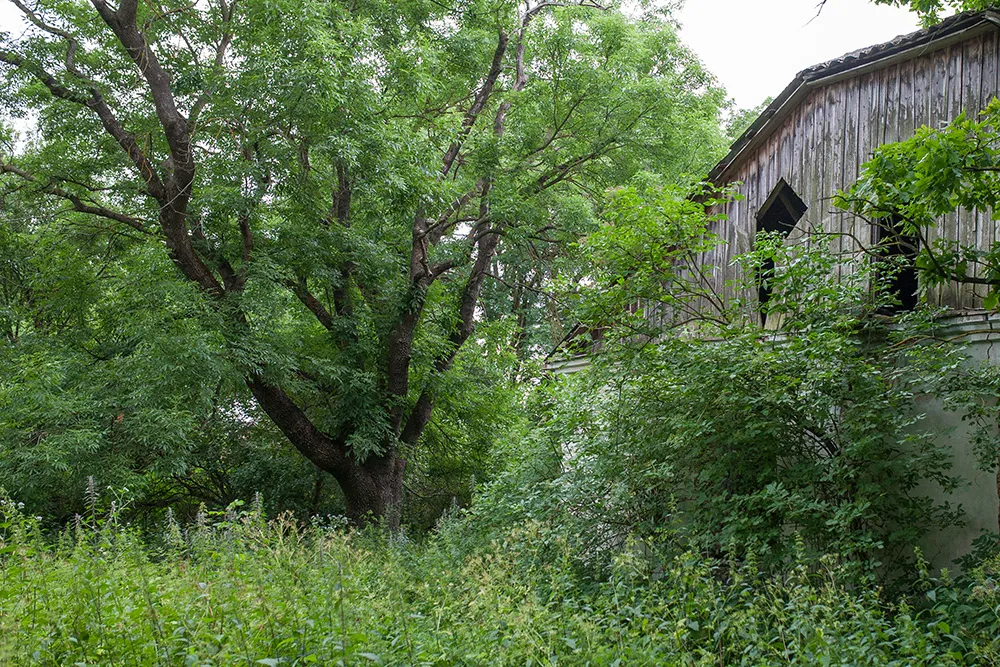
Surprisingly, the old “manor” estate has survived quite well. There are remains of a park with ancient oaks, lindens and ash trees.
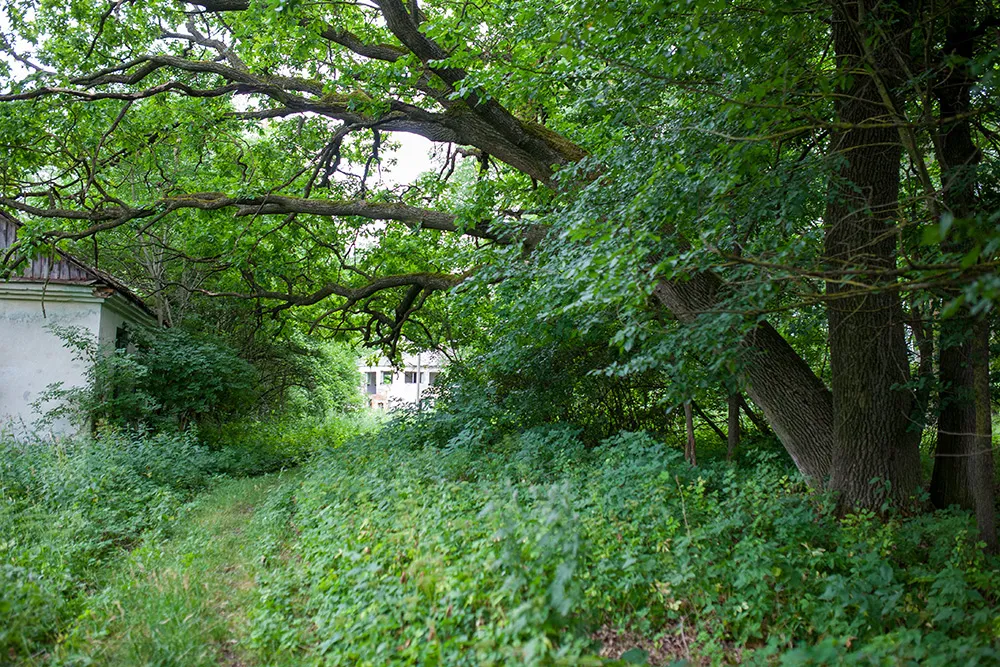
A stone fence has also survived. However, fences hardly surprise anyone: they are very often the only thing left of aristocratic nests smashed in the post-revolutionary years. Suffice it to recall the neighbouring Ostapkivtsi, Nove Porichchia, or Sharivka
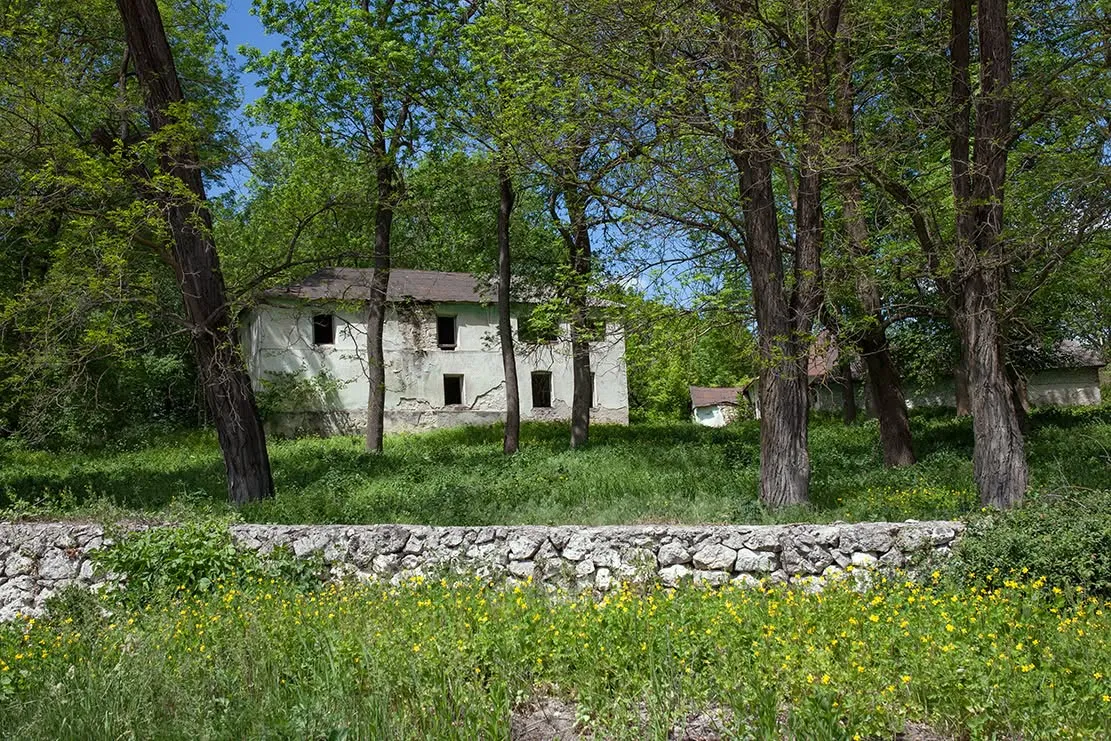
Until 2001 one could even see an extraordinarily beautiful “manor” gate. Unfortunately, the then head of the vocational school (in the new modern fashion, a “lyceum”) ordered it dismantled. What offended his eye so much about it is hard to say.
The old one-storey “manor house” has also survived, built under one of the village’s earlier owners. Under which of the whole series of owners who held Kutkivtsi from the end of the 18th century until the estate was bought for debts from the landowner Ludwika Kaczalska is hard to say. However, the building’s architectural features make it possible to date its construction to the late 18th to the first third of the 19th century.
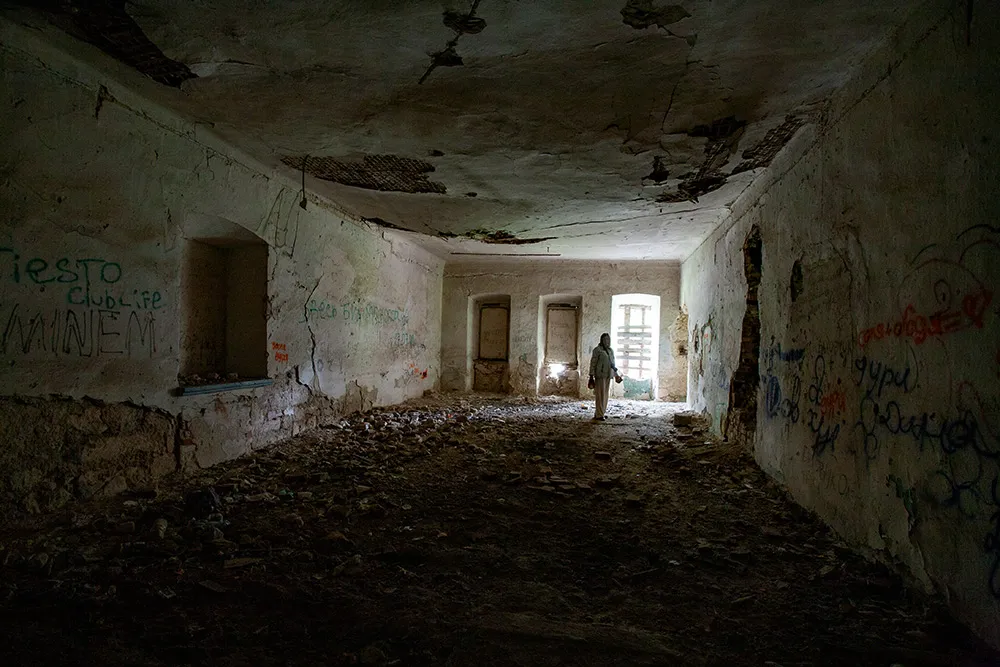
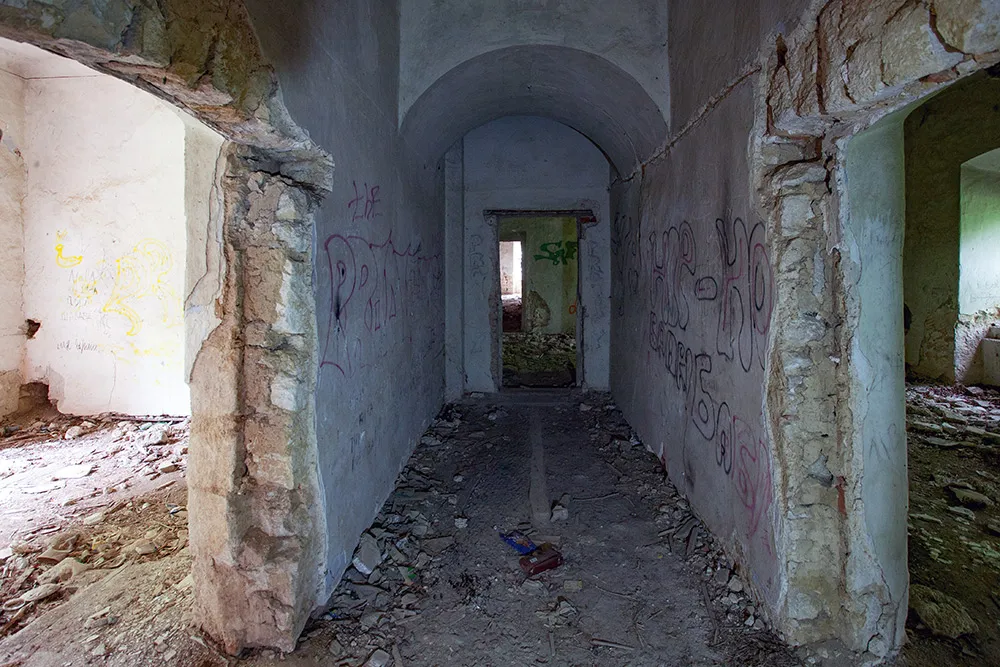
Note: as for the “cramped house where the family huddled” that Serhii Vynohradsky writes about in his memoirs, all that comes to mind is the sacramental line “Your Halia is spoiled” (a Ukrainian film quip about someone being picky). The house is, of course, far from the Zhurovsky palace in neighbouring Lisovody or, still less, the Orlovsky palace in Maliivtsi… But it does not look at all “cramped” or a place where one “huddles”.
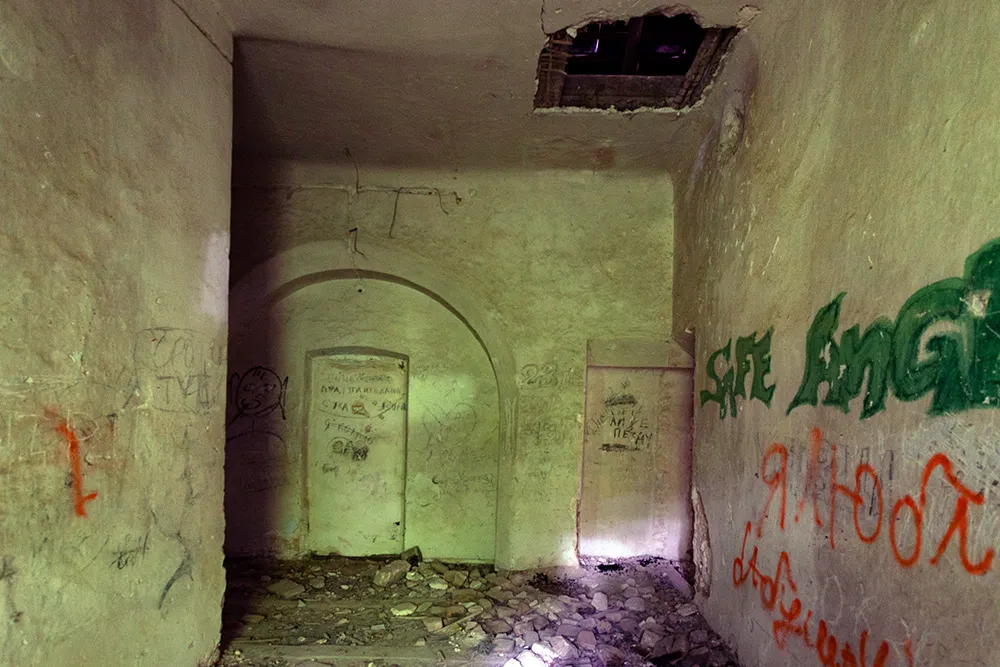
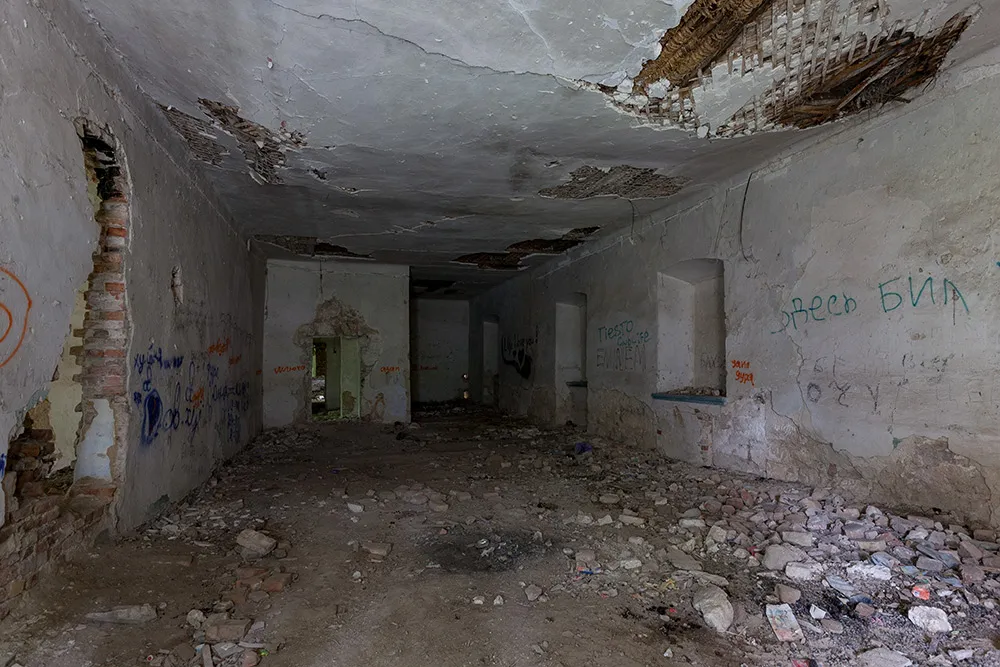
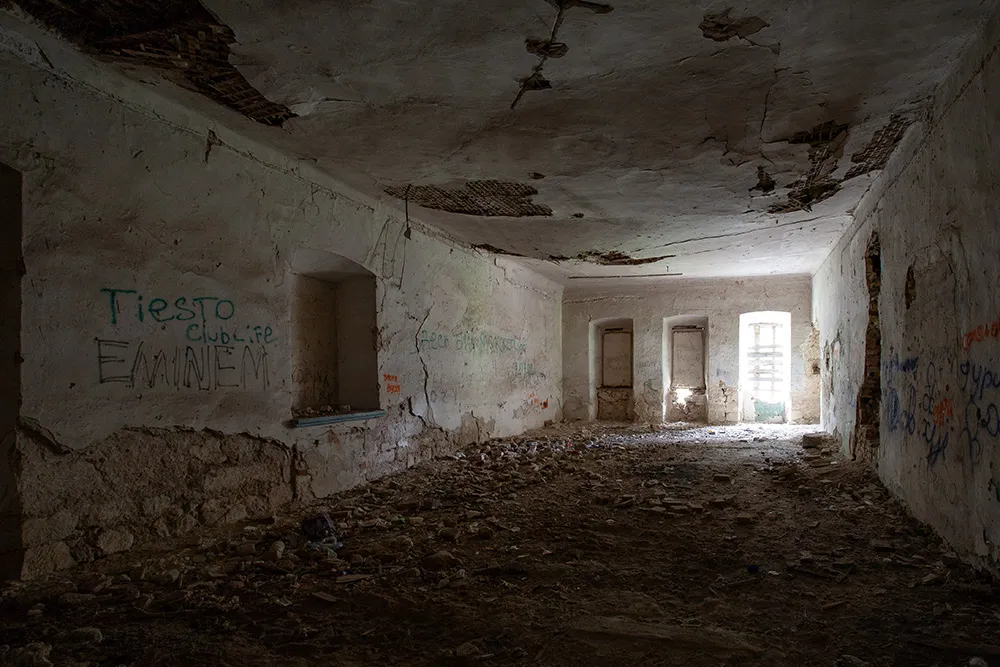
In particular, the drawing room is striking in size. One could even hold a provincial ball in such a room! Now it is dark and sad here (the windows are for some reason bricked up), but once it was flooded with streams of sunlight.
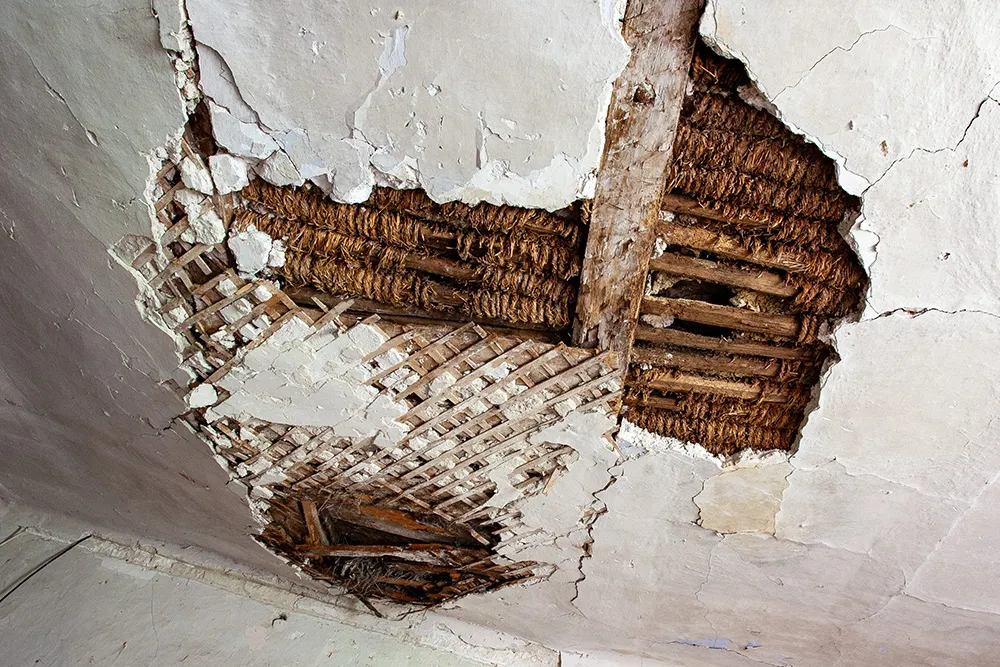
The ceilings here, by the way, are around four metres high (if not more). In places the plaster has fallen off, revealing a rather interesting structure of the ceiling. To make it retain heat, sizeable poles wrapped in hemp fibre were used for thermal insulation.
Among the interesting finds are several unusually large and wide bricks (unfortunately without maker’s marks). Such bricks were used from the end of the 18th century through the first third of the 19th century. But the greatest delight was a very beautiful ceramic tile from the early 20th century that once adorned a stove or fireplace. The find is pleasant in itself and is of museum quality. And considering that it is connected with the famous Vynohradsky family, it is doubly pleasant.
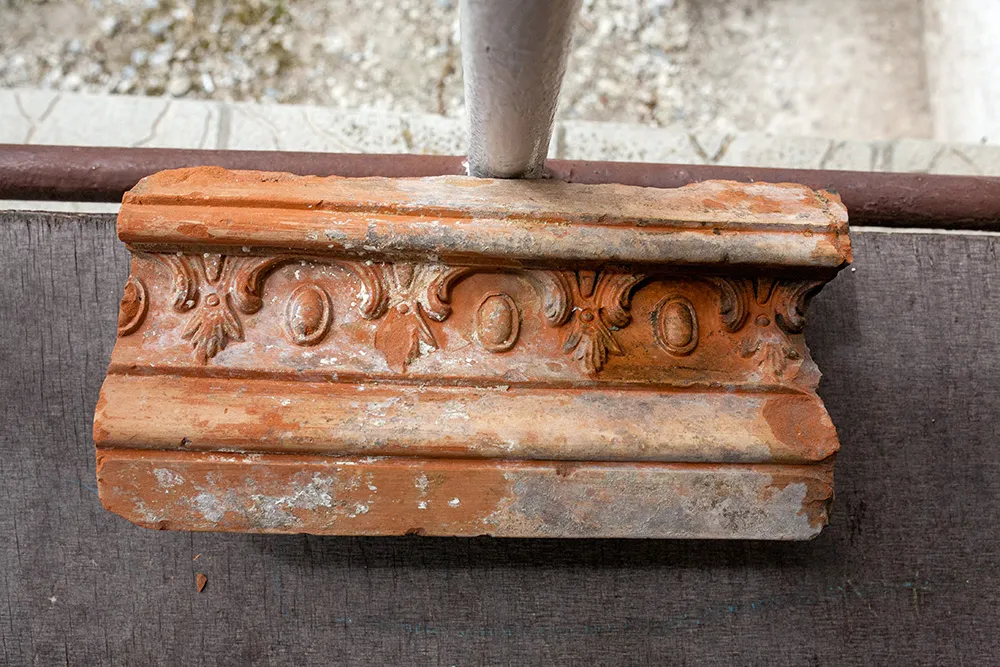
The tile (already cleaned)
The cellar, the “manor kitchen” and French technology
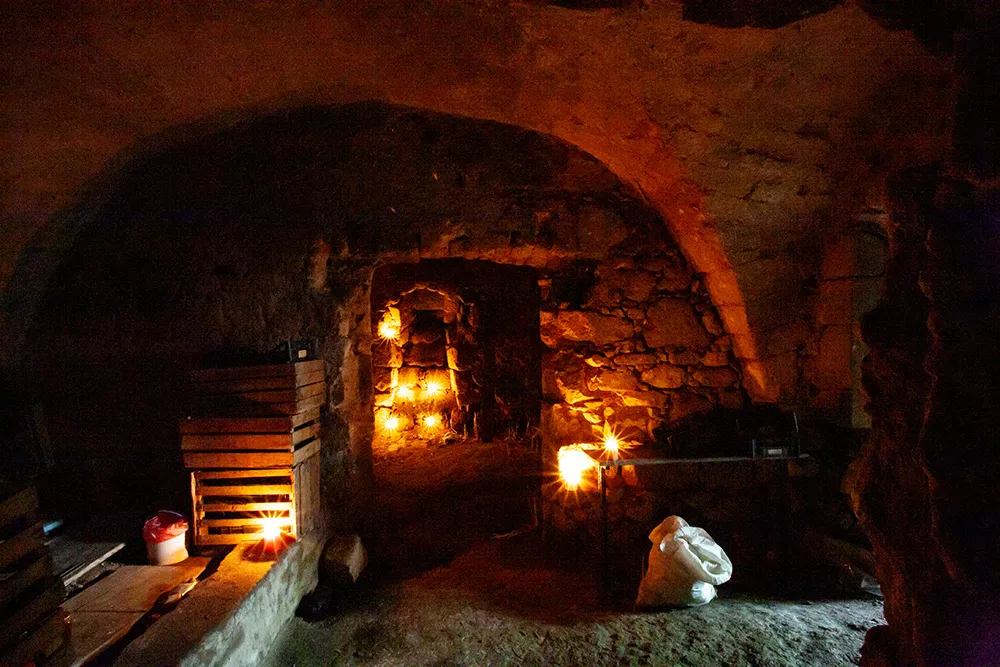
The old cellar under the house, meanwhile, is still used for its purpose today: potatoes, preserves… All as it should be. The basement consists of three small underground rooms covered with very textured vaults.
Next to the one-storey house we see something two-storey, clumsy and of baffling architecture. This is the former “manor kitchen”, which was also the estate manager’s “office”, extended, built upon and rebuilt more than once in Soviet times. Recall that kitchens usually stood separately so that the gentry would not be bothered by the smell of burnt onions and other cracklings.
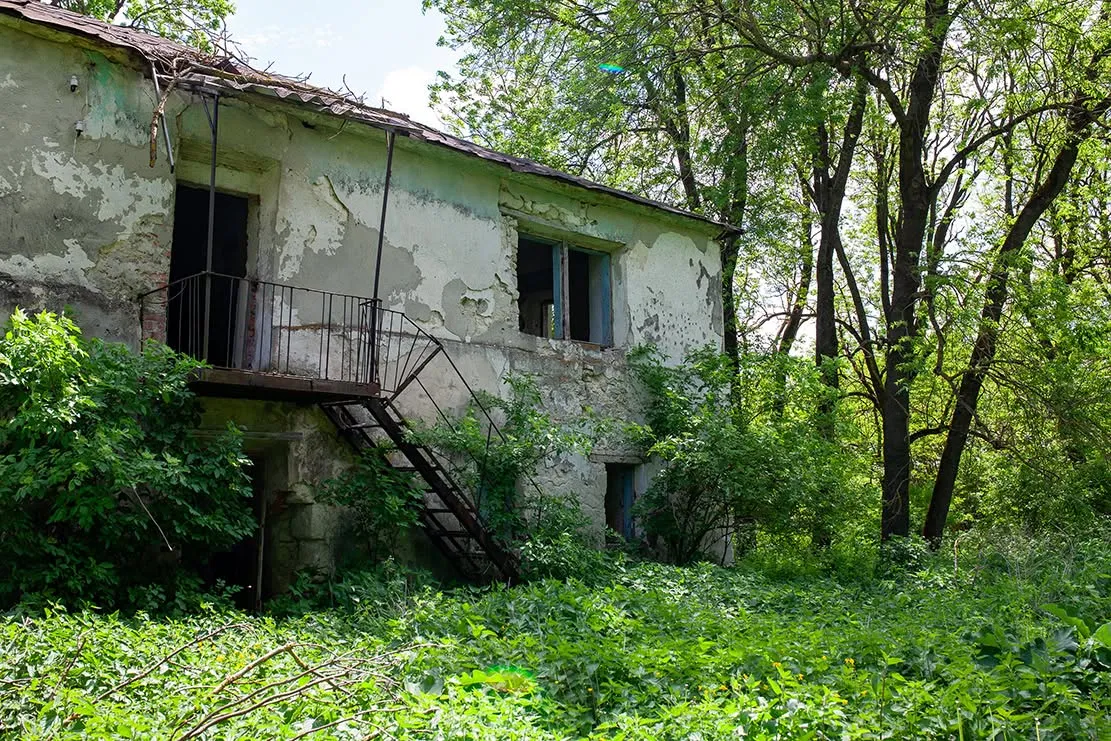
The former kitchen
According to Kostiantyn Dykunets, former head of the village of Kutkivtsi and a connoisseur of the village’s history, at the beginning of the 20th century the estate was one of the most technically “advanced” in this corner of Podillia.
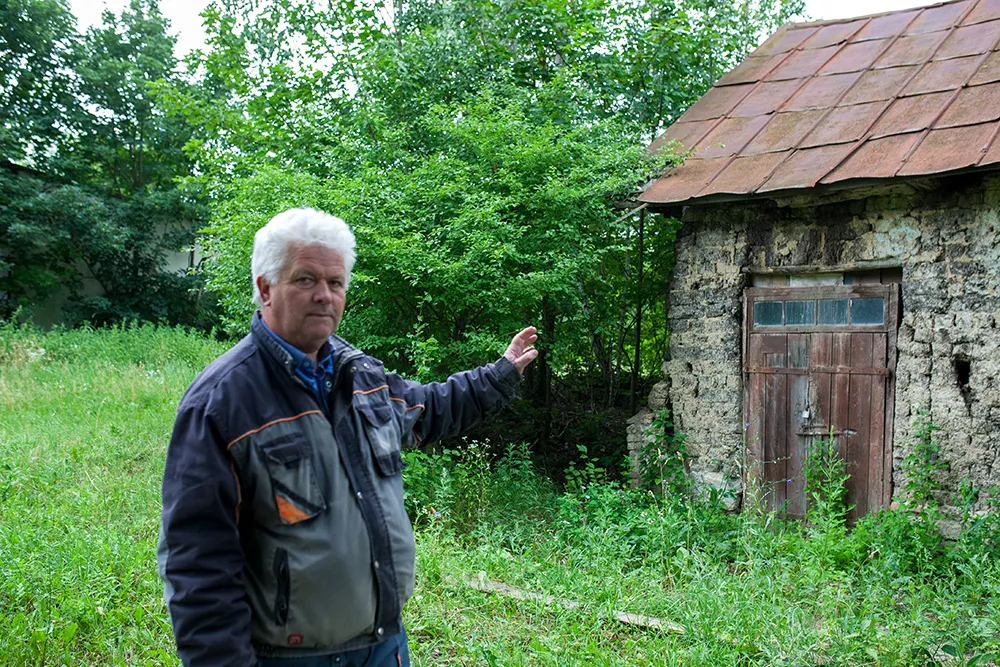
Kostiantyn Dykunets shows where the water tower stood
There was even its own water supply. In particular, an openwork steel windmill tower (brought all the way from France itself) pumped water into a water tower, from which it was piped both to the manor house and to other service buildings.
Serhii Vynohradsky’s unexpected legacy
When in 1905 Serhii Vynohradsky moved from St. Petersburg to Podillia and decided to direct his energy to developing his own farm, he faced two fundamental problems: first, his manager was robbing him; second, there was a catastrophic shortage of skilled staff. To solve the labour problem effectively without spending his own money, the landowner took a rather ingenious step.
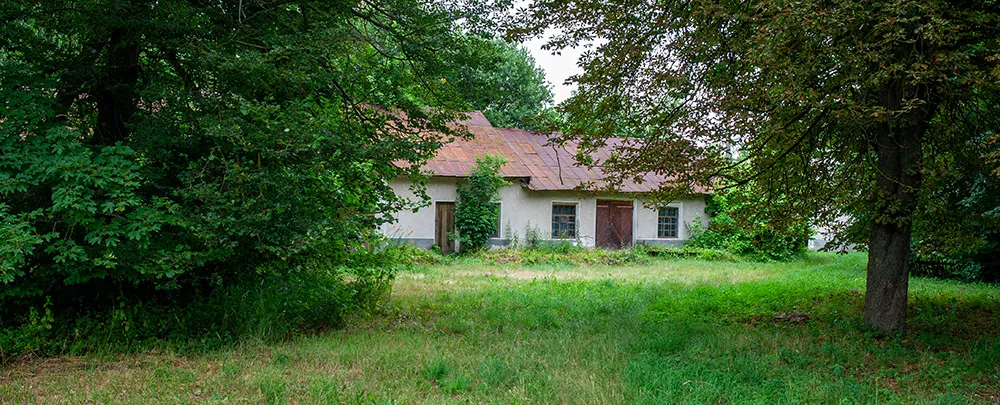
The building of the old school that S. Vynohradsky once “pushed through”
As Kostiantyn Dykunets told us, Serhii Vynohradsky used his authority as a scientist, multiplied by connections in the highest echelons of power in St. Petersburg, to persuade the local zemstvo to organise a one-class ministerial public school in Kutkivtsi. In that same year, 1905, it opened on the grounds of Oleksandr Vynohradsky’s estate. Probably Serhii Mykolaiovych found the right arguments to convince his elder brother, who, by the way, also needed educated workers.
The school in Kutkivtsi was not a purely theoretical educational institution like the parish schools. Peasant children were also taught here the basics of rational farming and proper crop rotation, practical vegetable growing and gardening, as well as specialised trades then actively developing in the Kamianets district: beekeeping and silk farming.
As for silk farming: as late as the 1980s one could still see near Kutkivtsi a distinctive mulberry plantation with century-old mulberry trees that had enormously thick, gnarled trunks and branches. And who would not get “twisted” if every year your branches were broken off to feed the voracious silkworm caterpillars?
Since Kutkivtsi was one of the largest villages of the Vilkhovets volost, this school served as a base centre for the surrounding area. The provincial zemstvo supported it financially, allocating funds for the purchase of good-quality craft and agronomic equipment. Children from neighbouring settlements (for example, Zakupne), where there were no schools of their own yet, also came here to study. The institution successfully combined basic ministerial education (reading, writing, arithmetic, religious instruction) with a full cycle of training for a literate land manager, which created its lasting reputation as an “agricultural school”.
From agricultural school to “bursa”
The agricultural school, once created at Serhii Vynohradsky’s initiative, operated both after the revolution and even after the Second World War. Sometime in the 1950s–1960s, on the territory of the former estate in Kutkivtsi, a secondary vocational school No. 31 (SPTU No. 31), famous throughout the region, was opened, later reformed into the Kutkivtsi Vocational Agrarian Lyceum.
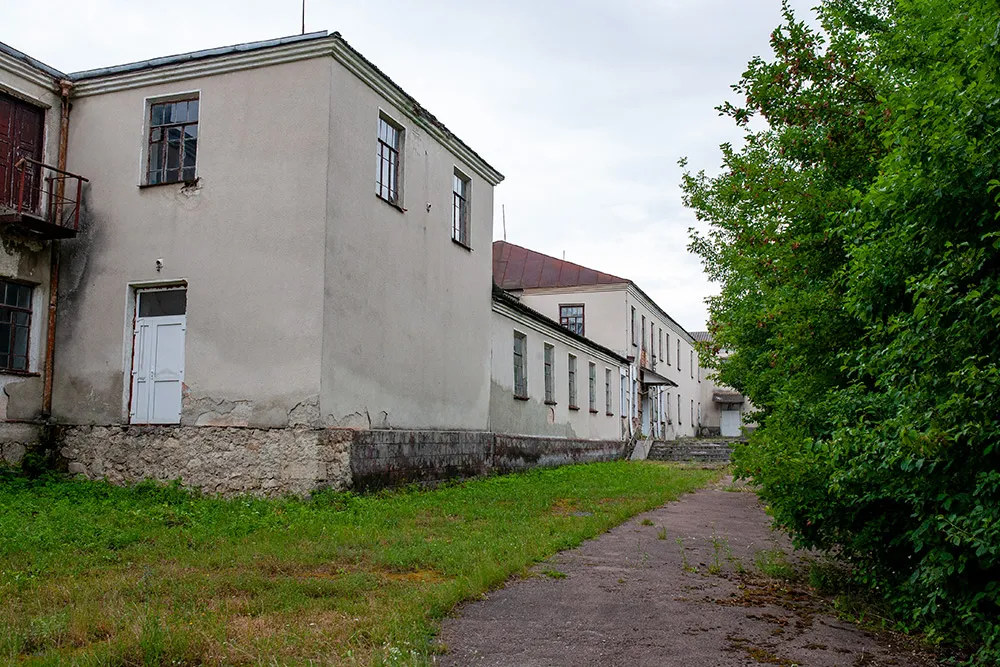
One of the Lyceum’s buildings
On 8 December 2009 the lyceum was liquidated as a legal entity, and its entire property complex was attached to the neighbouring Lisovody Vocational Agrarian Lyceum. For a few more years some practical classes took place here, and now the buildings are “mothballed” (in fact, simply abandoned). Today the grandiose complex of this once-renowned institution, which could quite deservedly claim the title “Legacy of Serhii Vynohradsky and his brother Oleksandr”, is gradually being swallowed by exuberant wild vegetation.
What else is interesting in Kutkivtsi?
The main historical highlight of Kutkivtsi is the monument to Pylyp Konoval, a native of this village and the only Ukrainian awarded Great Britain’s highest decoration for military valour, the Victoria Cross.
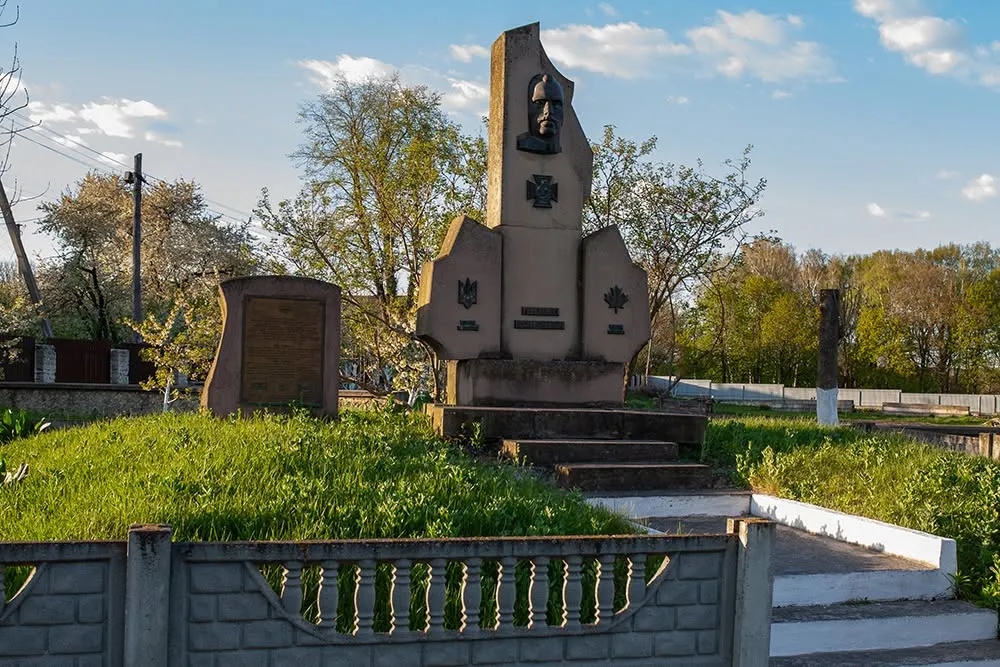
In August 1917, during the battle for Hill 70 near the French city of Lens, Konoval single-handedly destroyed several machine-gun nests and at least 16 enemies, saving his unit from inevitable heavy losses. On 15 October of that year, King George V, presenting him with the Victoria Cross, personally shook the hero’s hand and said: “Your deed is one of the most important in the history of my army. Accept my gratitude.”
Historical fact: Victoria Crosses are cast from the bronze of trophy cannon captured from the Russians during the siege of Sevastopol in the Crimean War. The metal is kept in a special store in Donnington and is used only in exceptional cases. In prestige this award stands above all other British orders and medals; in all of history it has been awarded slightly more than 1,350 times.
In Canada, one of the branches of the Royal Canadian Legion is named after Pylyp Konoval.
Churches, tiles and a mysterious cross
The village also has an interesting old Roman Catholic cemetery, where nobles from a good ten surrounding villages were once buried.
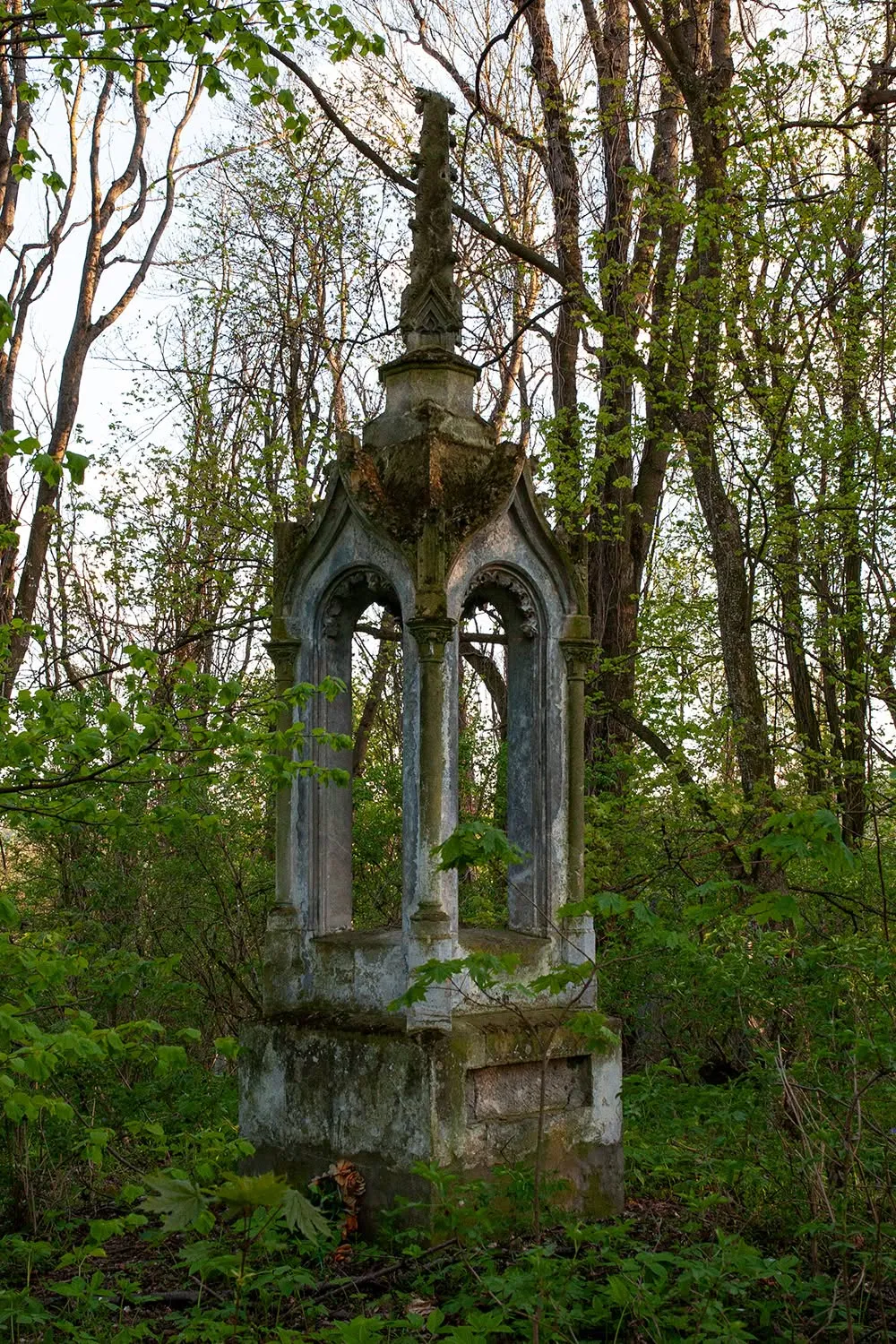
The Church of the Exaltation of the Holy Cross, however, despite its venerable age (1789), is unlikely to impress anyone with its architecture. After a fire in the 1950s it was radically rebuilt as a village club, as a result of which the building completely lost its Baroque beauty and former decoration.
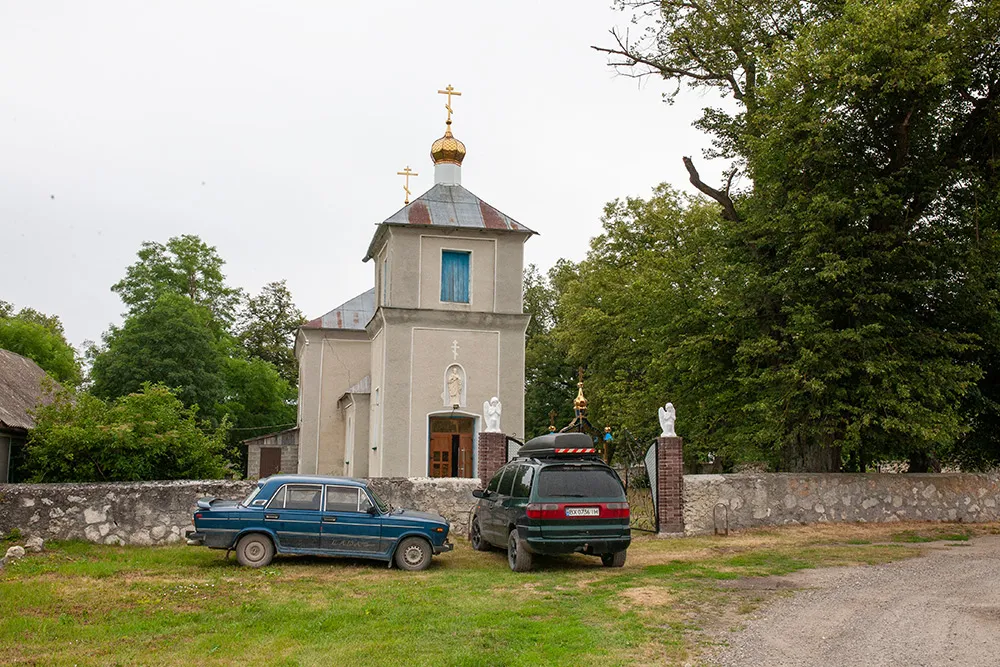
By contrast, the Church of St. Paraskevi (Piatnytska), built in 1870, is quite interesting. Unfortunately, its authentic murals were “improved” a few years ago by a new modern renovation. Still, among its unique details a very beautiful tiled floor has survived here.
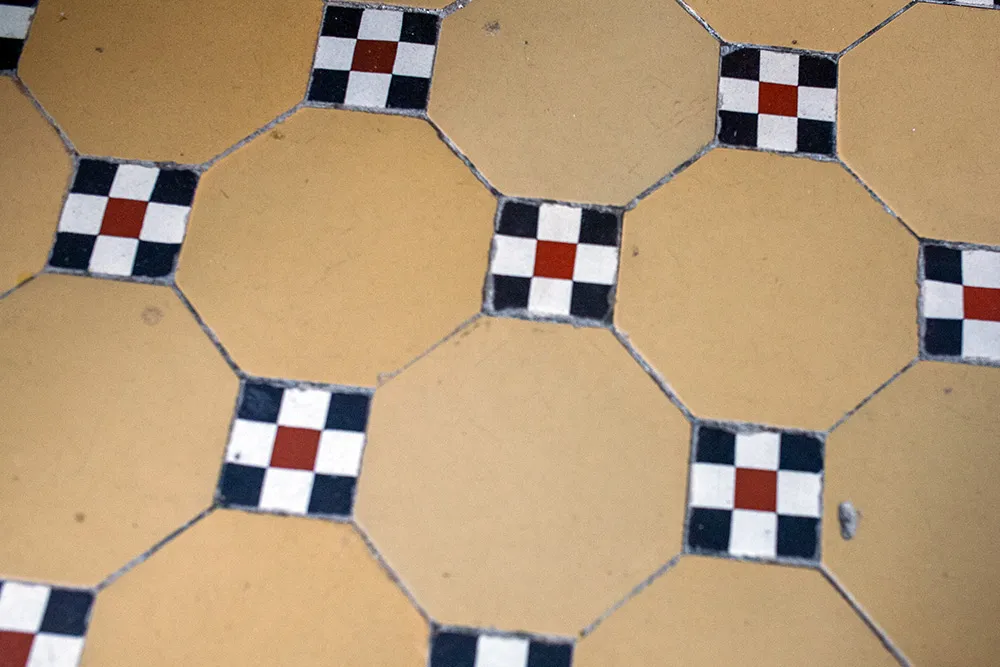
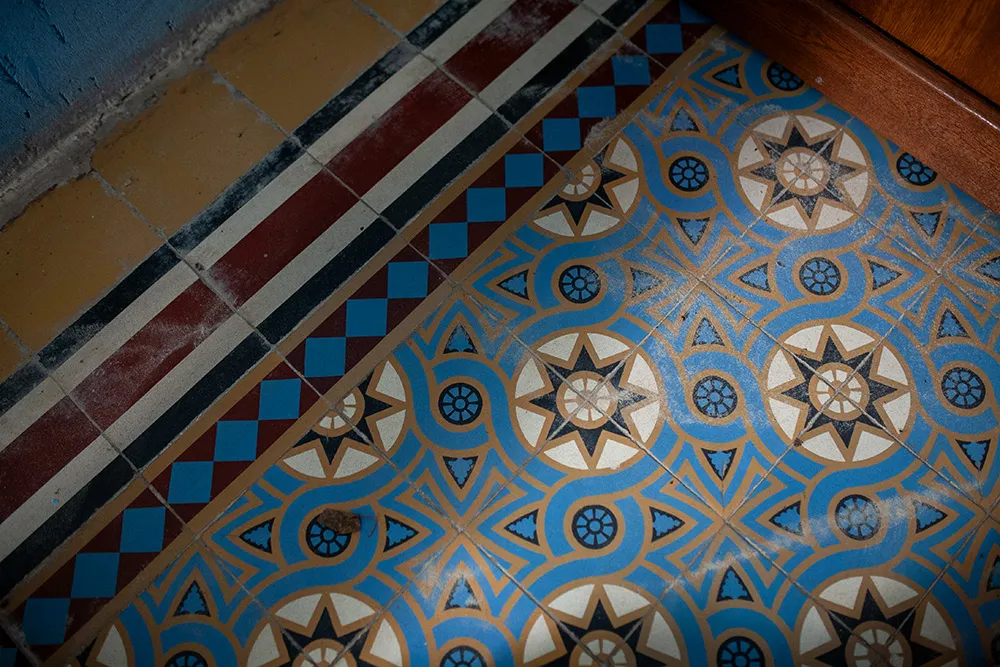
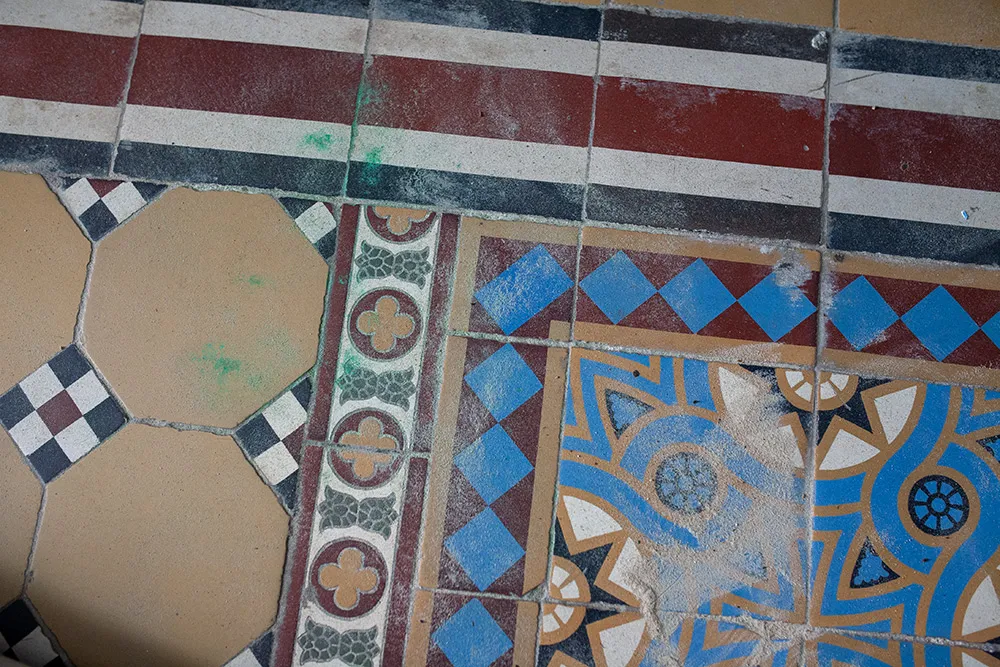
At present it is almost entirely covered with carpets and runners, but if you fold them back, incredible beauty is revealed. According to tradition, it was the Vynohradsky family who donated a great deal towards the building of this church, including for the purchase of these very tiles.
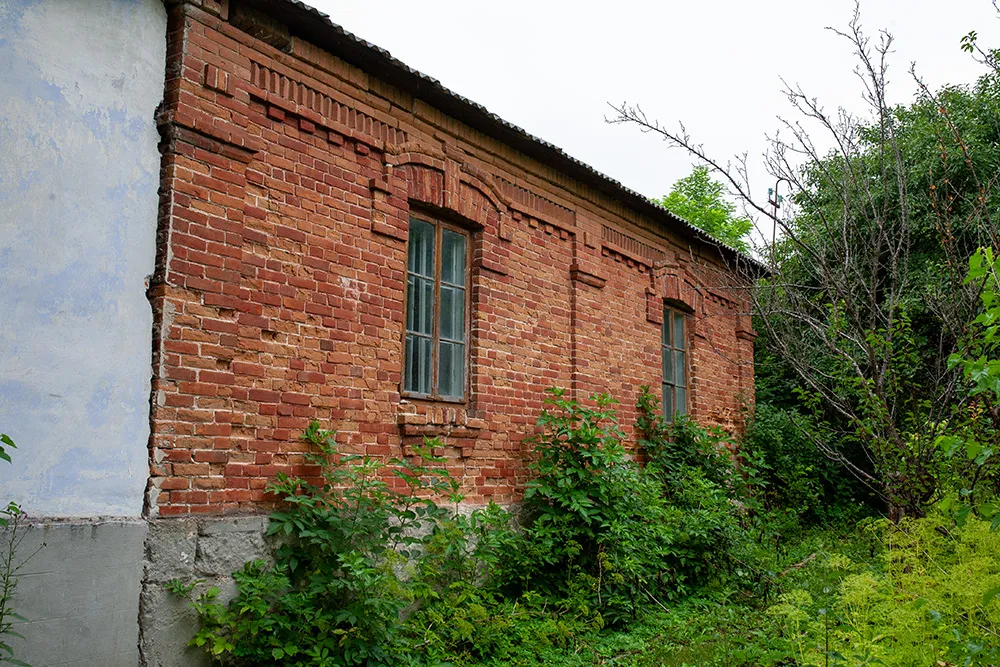
The priest’s house, built of red brick in the Historicist style, is interesting. Until recently the local pharmacy operated in it.
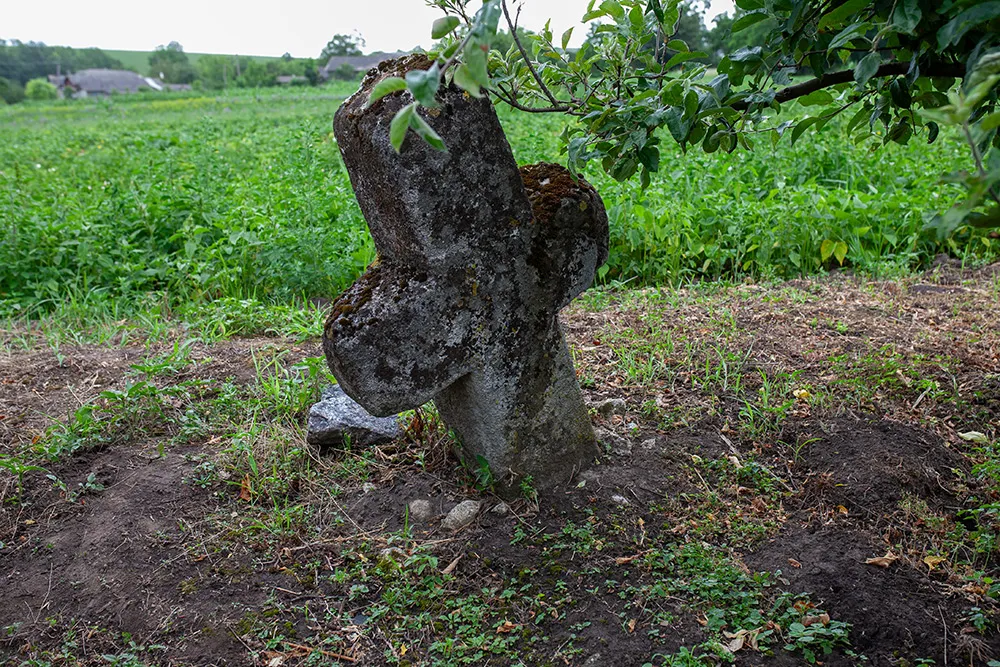
Nearby (about 150 metres from the church), in one of the neighbouring peasant yards, stands a lonely stone cross without any inscriptions. Interestingly, it has a very archaic form, atypical for this corner of Podillia. According to local legend, it was erected at the burial place of some “stranger” who died right in the middle of a field. However, we may be dealing with a so-called “plague cross”, that is, a monument at the site of an out-of-cemetery burial of a victim of some ancient pestilence.
The Castle and the Baba
Kutkivtsi also has two unique natural monuments: the hills Zamok (the Castle) and Baba. True, since Serhii Vynohradsky described Zamok in his memoirs, this toltra (limestone ridge) has lost a good half of its area. Regrettably, along with an ancient hillfort.
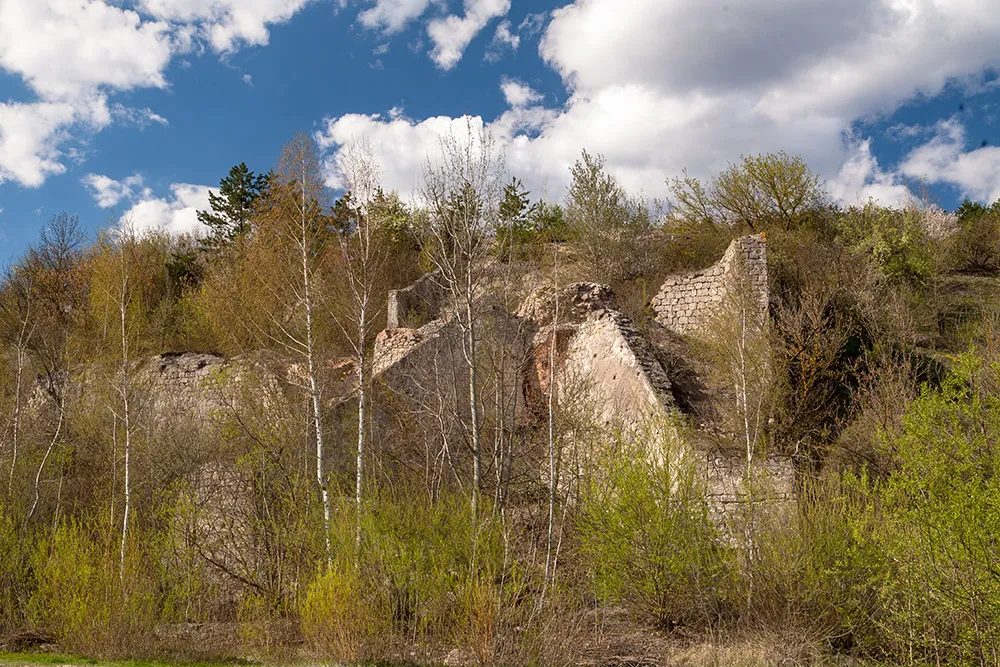
They were “eaten” by a quarry. In exchange, this hill acquired grandiose ruins of lime kilns in which lime was burned in the 1960s–1970s.
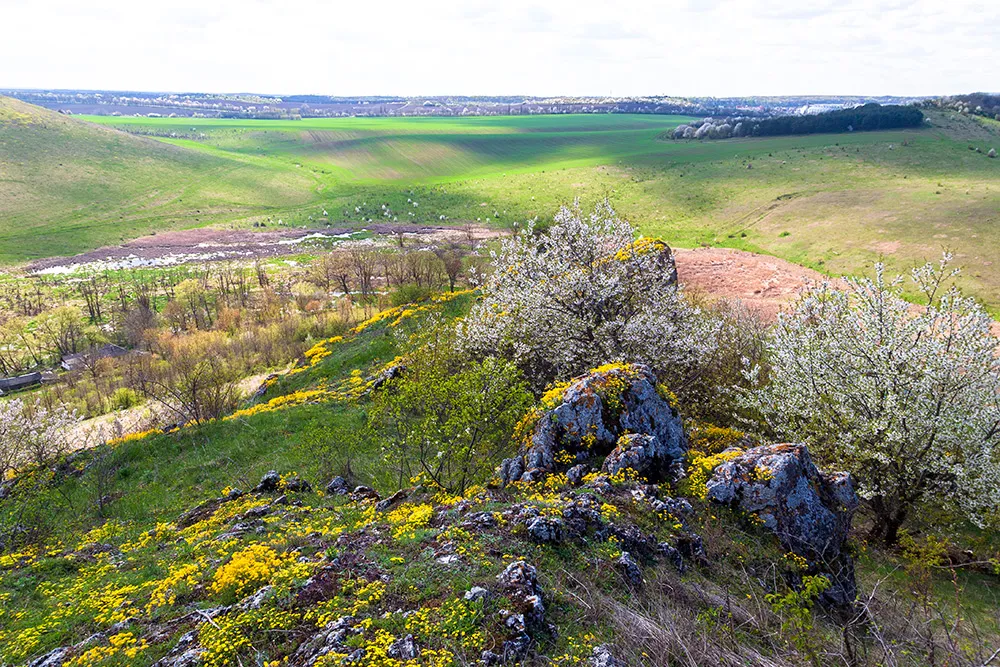
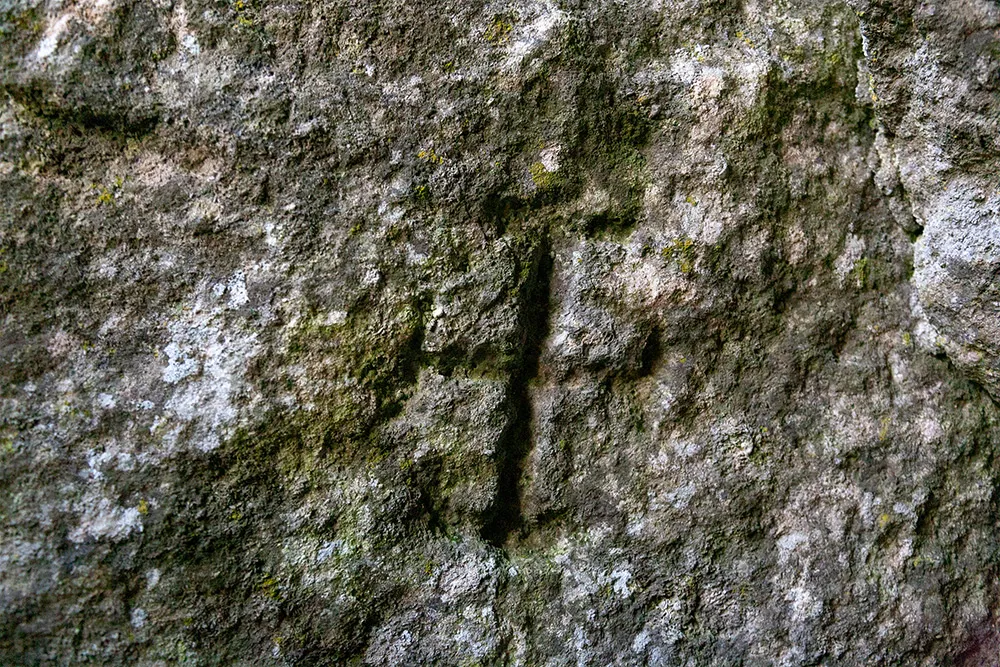
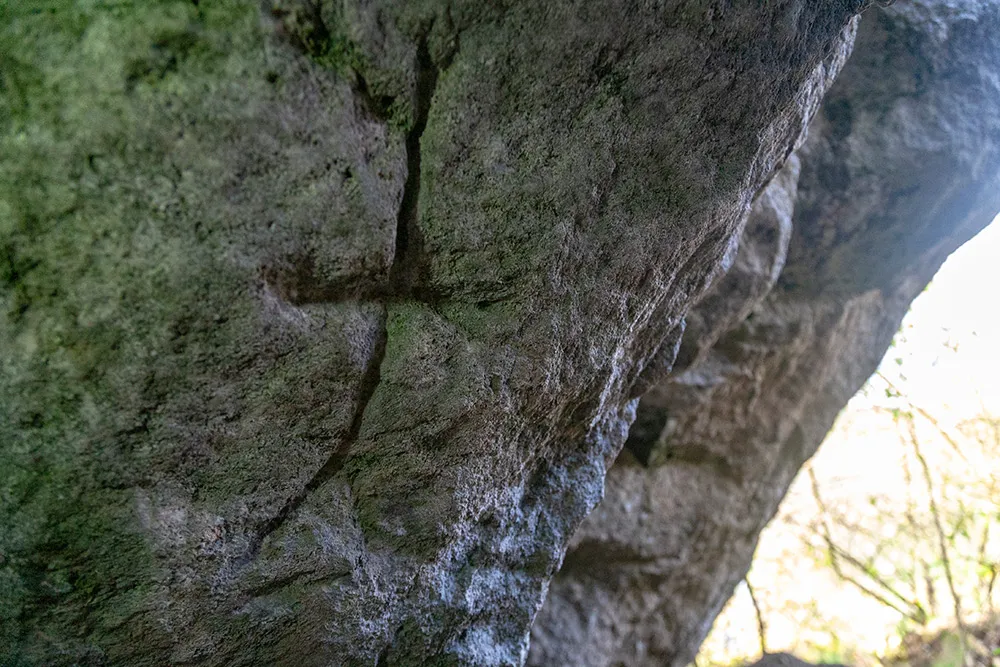
The neighbouring “Baba”, by contrast, was only slightly “nibbled” by the quarry, although it destroyed an ancient pagan sanctuary together with the idol-baba (stone statue) that gave the hill its name. “Baba” is one of the most beautiful toltras of the Toltry Ridge. It is also unique in that a dolmen-like stone formation and a hermit’s cave with cross-petroglyphs carved directly into the rock (pictured) have survived here.
Text and photos: Dmytro Poliukhovych


