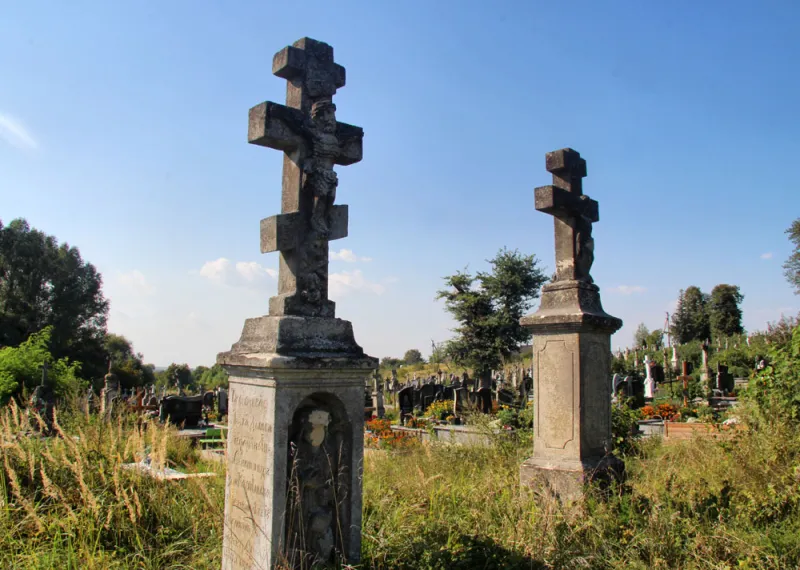
Old cemeteries of Ukraine. Cossack

· 10 min read
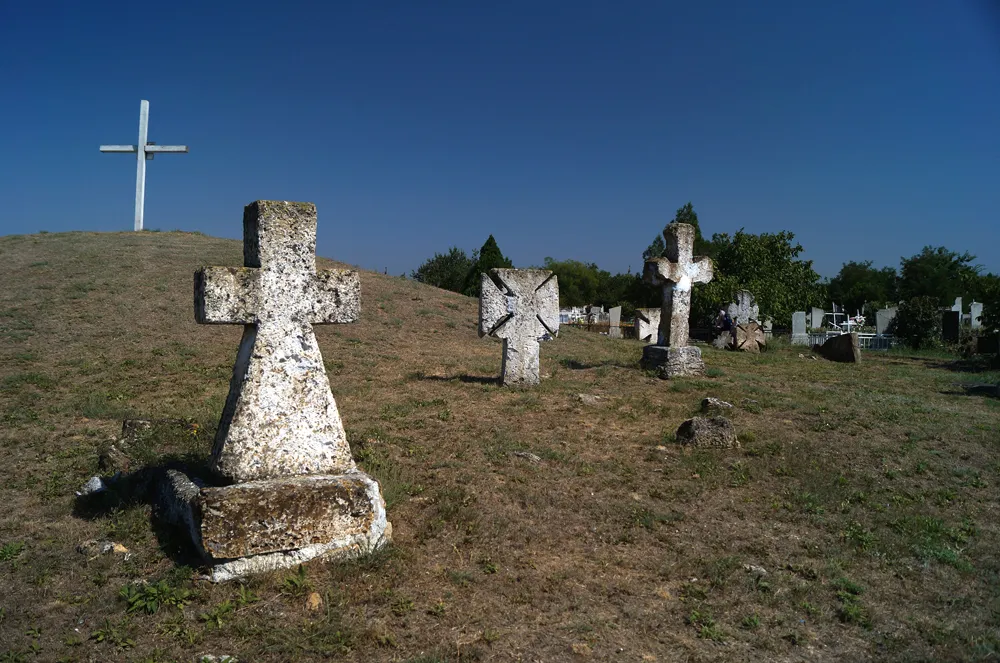
The village of Zahnitkiv lies in the north-west of Odesa Oblast, some 600 metres from the Moldovan border. Beyond it is unrecognised Transnistria, and there is no road there. To reach Zahnitkiv, unless you have a GAZ-66, you can only go from the former district centre, Kodyma, and the road is a very merry one: first battered asphalt, then a poor concrete road, then crushed-stone surfacing, a bit of dirt road, and all of this keeps changing. The constant bumps and potholes make the passengers seasick, they are sorry they set out at all, but nobody is going to turn back now. And here at last is our destination, Zahnitkiv. The church is not very interesting, and we head down to a deep ravine where abandoned limestone quarries lie, but our attention is caught by an old cemetery located almost in the centre of the village. What is it?
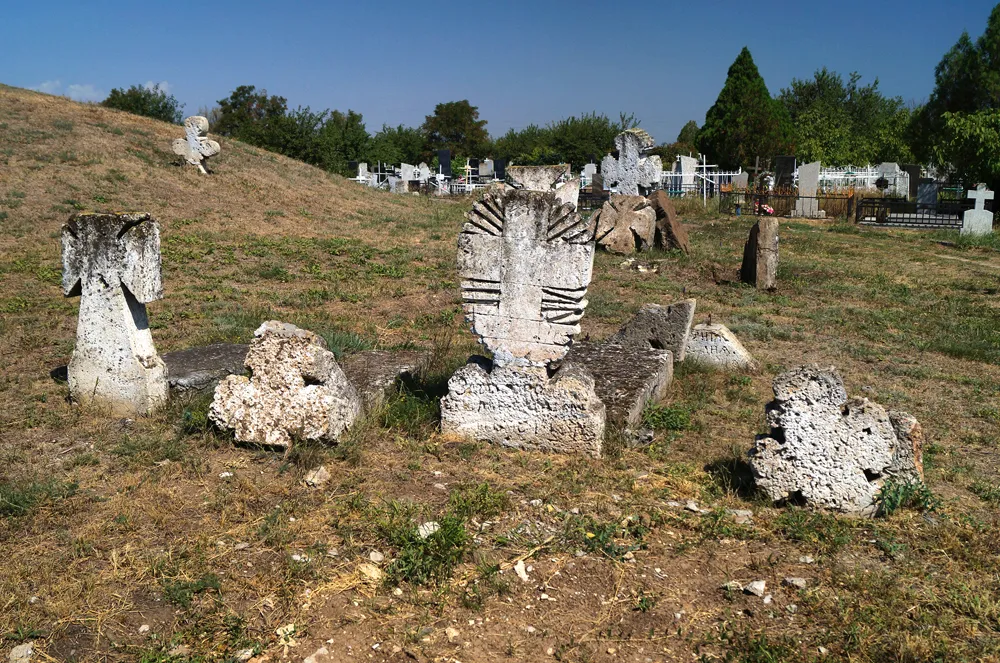
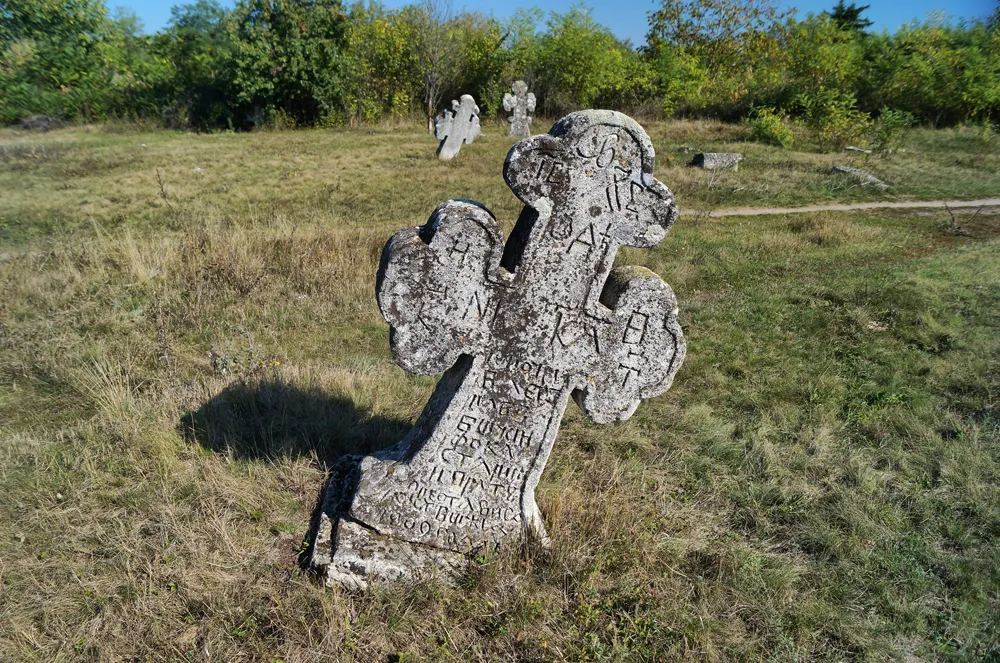
We slowly walked into the cemetery, enchanted by the magic of ancient crosses hewn from stone. I have been to many cemeteries in many countries. Jewish matzevot, Polish tombs, colourful cemeteries in Spain and Italy, in Turkey and Jordan, the amazing khachkars in Armenia, but I had never seen anything like this: the pulsating course of history of the crosses in Zahnitkiv made me look differently at the Ukrainian ethnos, at the people, at the nation. What kind of cemetery is this, we asked the locals. “Oh, that’s the old one, the Cossack one.” Cossack?
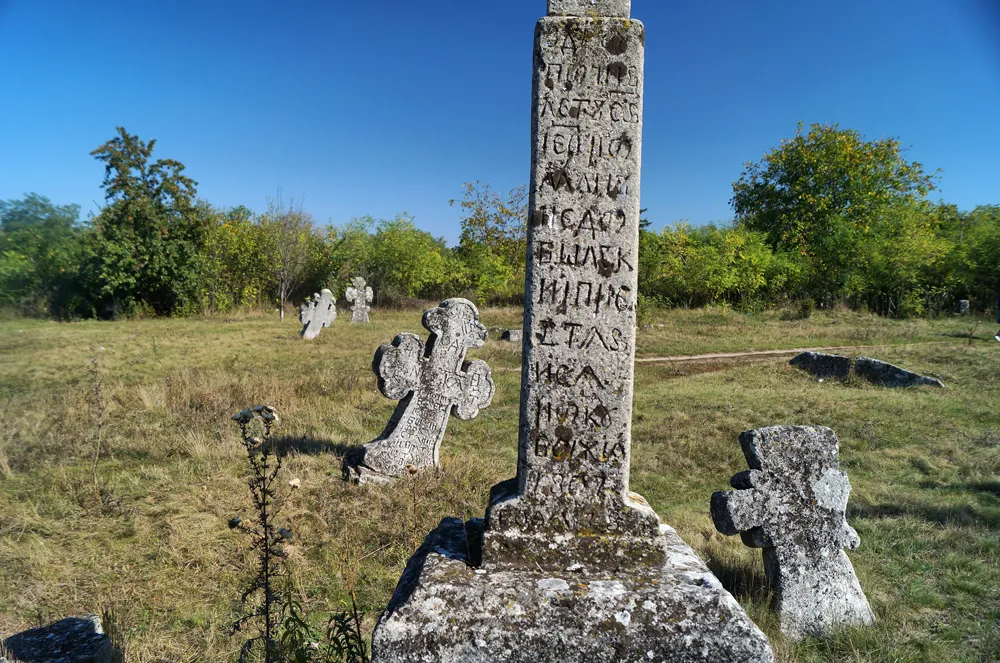
Zahnitkiv
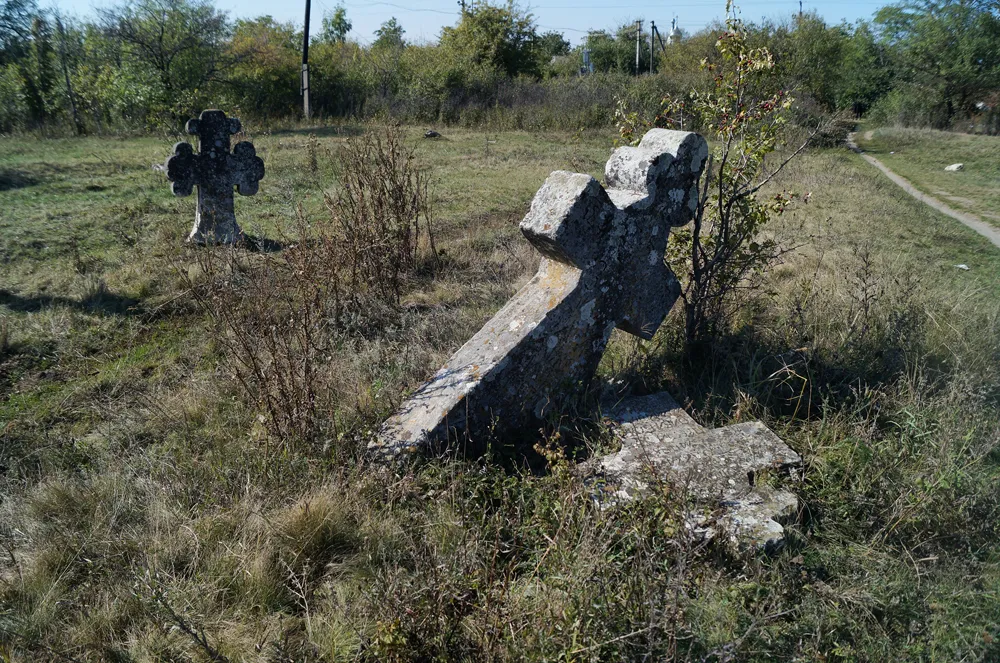
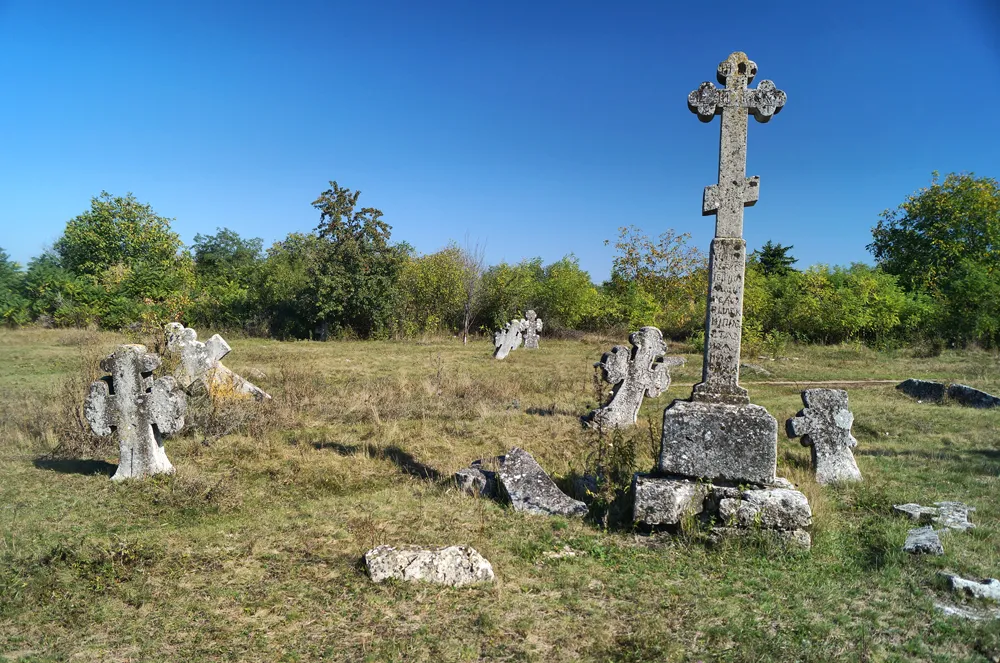
It was worth going to Zahnitkiv for this one cemetery alone, although we had not known about it. It is an incredible monument that is not included in the register of monuments, and few people know about it. Why is it Cossack, why is it called that?
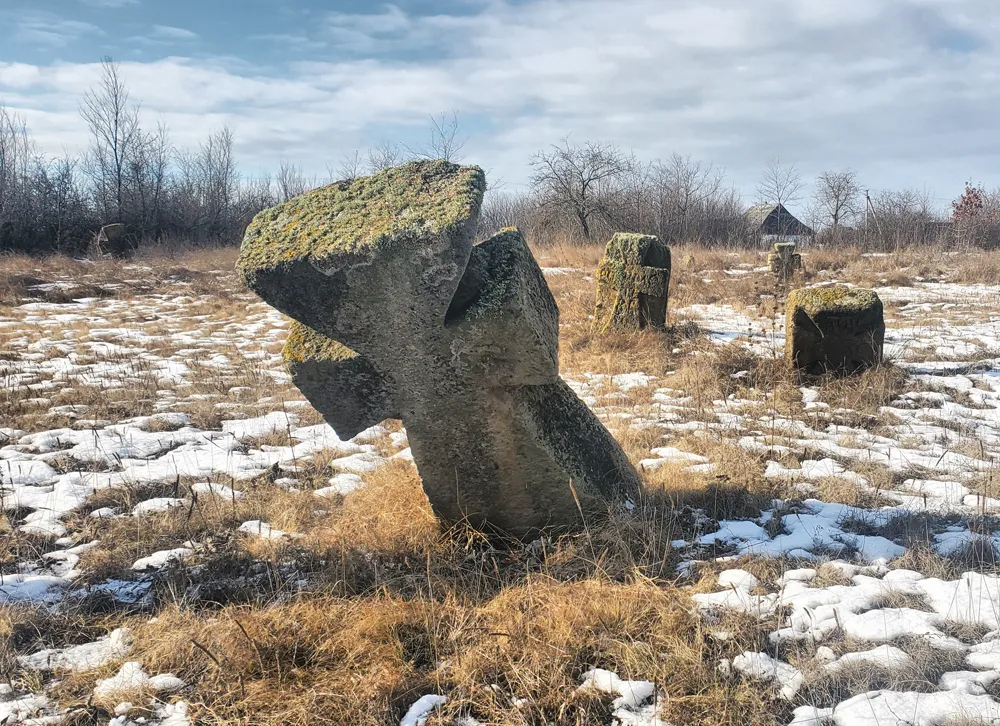
After the Russians destroyed the Zaporozhian Sich, a significant part of the Cossacks went south, to the territory of the Ottoman Empire, where they received permission to settle and began to engage in farming, fishing and crafts. In Zahnitkiv the Cossacks took up the quarrying of building stone, limestone. In time they became monopolists in this hard trade. They were called stonecutter Cossacks, and they were the first to begin placing on graves large crosses hewn from solid stone blocks. They were buried in this same cemetery, so the cemetery came to be called Cossack. Later the descendants of those Cossacks were buried here, and later still their descendants’ descendants; so from generation to generation the cemetery remained Cossack, although after the abolition of the Sich none of these people belonged to the Cossack estate.
The crosses in the cemetery at Zahnitkiv are genuine works of folk art, and on many of them one can still make out the inscriptions: who is buried and when. Most of the crosses are dated to the nineteenth century, and many have been toppled; the locals say it was the Communists who toppled them, and it was very lucky that the cemetery was not destroyed completely… After Zahnitkiv began my fascination with the old Ukrainian cemeteries that people call Cossack.
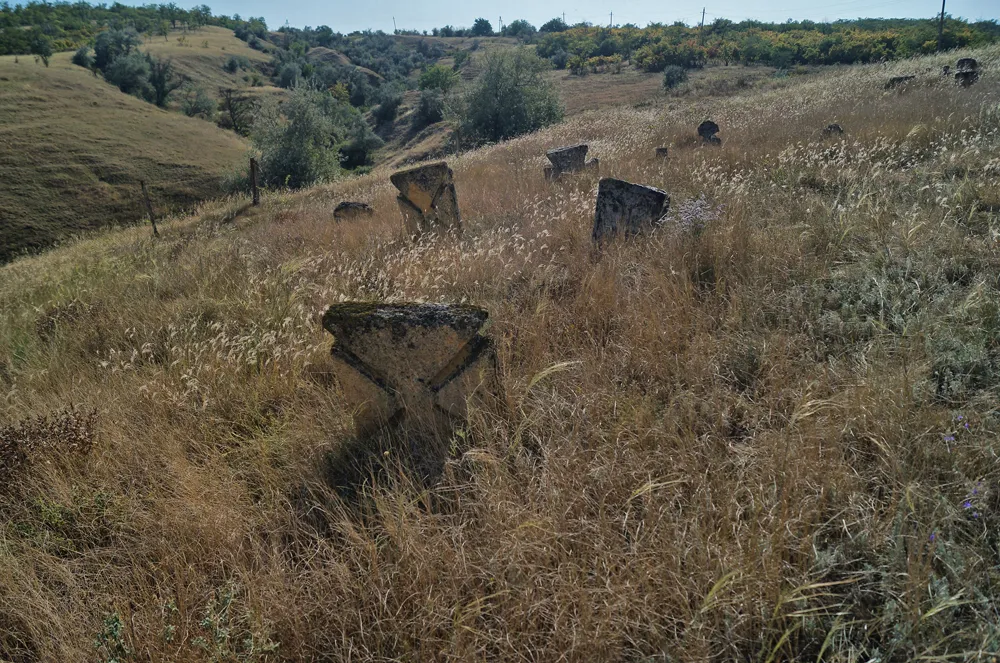
Malynivka
I want to dot the i’s right away, to avoid needless arguments: in most cases these cemeteries are called Cossack by local residents, and almost none of them can explain why they are called so, because in the 19th century, the period to which most burials date, there were no Cossacks, at least officially, in the Right-Bank Ukraine: the Cossack estate was preserved on the Left Bank, in the Poltava and Chernihiv governorates. There are several versions explaining the origin of Cossack cemeteries. The first is that the cemeteries were founded precisely by Cossacks who came to settle after the abolition of the Zaporozhian Cossacks, and Cossacks were the first to be buried in these cemeteries.
Another version is that Cossacks owned the mines and quarries where stone was extracted, and they were also master stonecutters, skilfully making various stone items, including grave crosses, to order for wealthy peasants. Such crosses were usually called Cossack. They were very expensive; it is written that they could cost up to 25 roubles, and a peasant did not earn that much in a whole year, so the money was gathered for a long time, probably by the whole family… Such cemeteries were traditionally also called Cossack. Cemeteries with burials of representatives of the Buh (which existed until 1817), Black Sea and Danube Cossack hosts were also called Cossack. All these Cossacks and their descendants founded cemeteries where the crosses had a special form. Today this form is called the Cossack cross.
The Cossack cross is a symbol of the Cossacks, the Zaporozhians and the Ukrainian military in general. This cross derives from the cross of the Templars, although the crosses of other knightly orders, the Teutonic Knights and the Hospitallers, had a similar form. Most stone crosses on Cossack graves in the 18th century had precisely the form of the Cossack cross. Today the Cossack cross is the emblem of the Armed Forces of Ukraine, it is depicted on the coats of arms of many oblasts, districts and towns of Ukraine, and used in many state awards. This cross is often placed on historical memorials and on the graves of prominent Ukrainians.
After the abolition of the Zaporozhian Sich a significant part of the Cossacks went beyond the Danube, to Turkish lands. Later those Cossacks settled along the whole Black Sea coast up to the Dniester Estuary, and together with the Cossacks, Cossack cemeteries and crosses spread. In the Soviet period they were destroyed: crosses were used to build dams and foundations. Fortunately, some of the cemeteries have survived. This is an incredible Ukrainian heritage that must be protected, but in 90% of cases the cemeteries are not even entered in the registers of monuments.
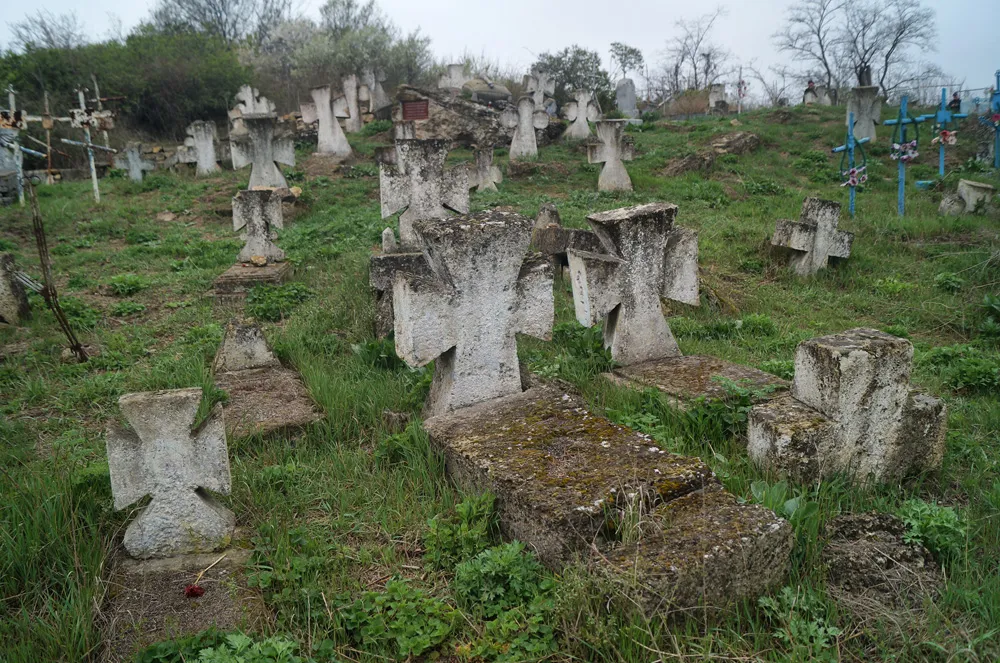
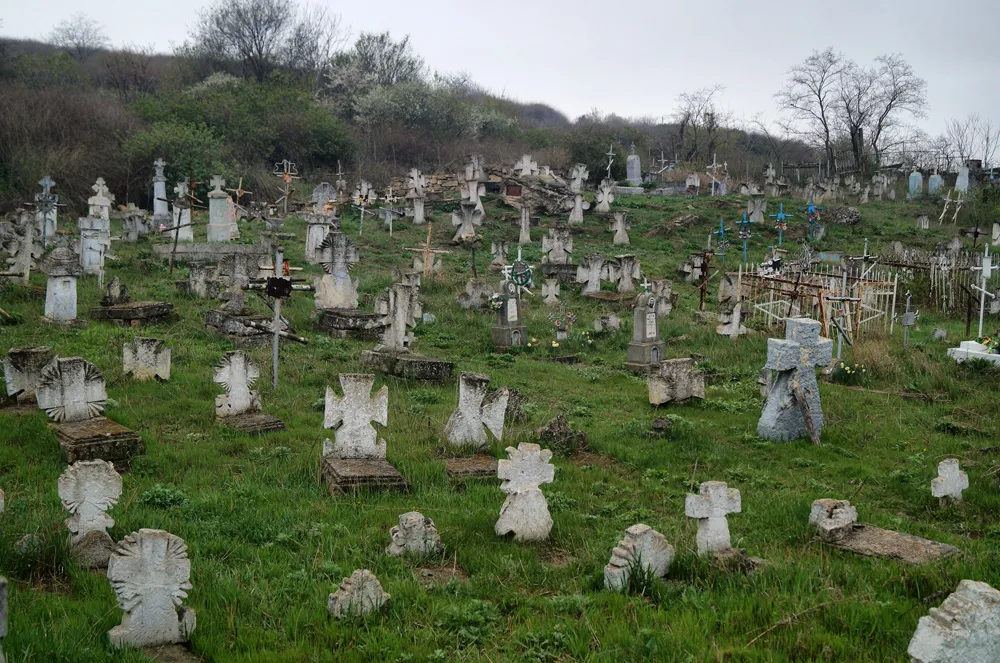
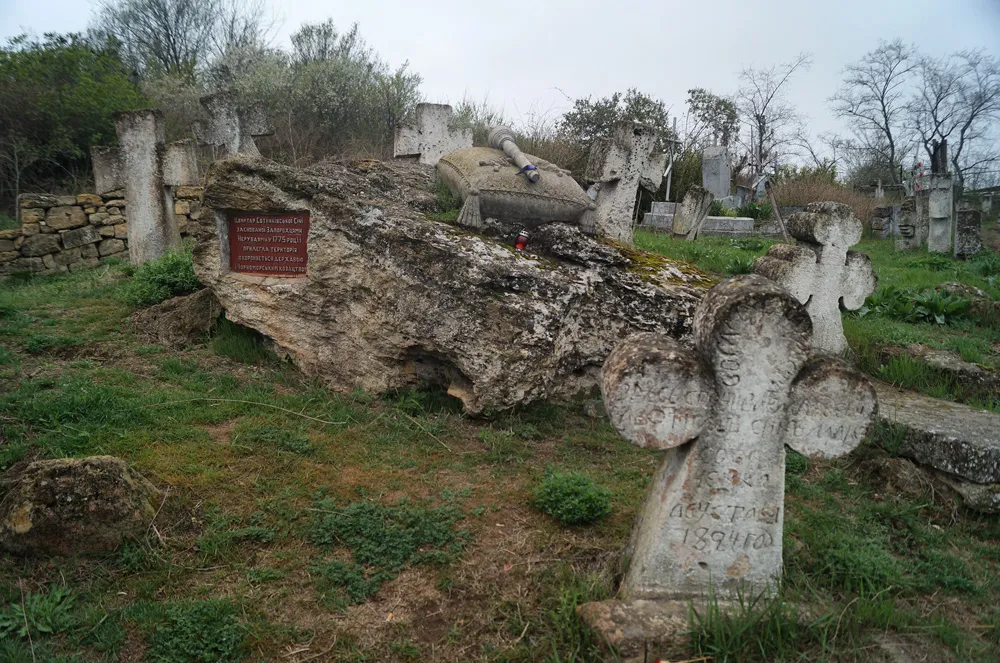
Sotnykivska Sich. Mali Kuialnyk (Odesa)
This is incredible. A piece of Ukraine’s history: the Sotnykivskyi cemetery (sich) is the largest surviving Cossack cemetery in Ukraine. It lies on the outskirts of Odesa, which was once the village of Mali Kuialnyk. Long before the Russian occupation-colonisation, Cossacks lived here, on the edge of Khadzhybei. Catherine forced them to sign documents that they would never take up arms; that was the condition for staying instead of being dragged off to the Kuban. And the Cossacks became Nerubais. Instead of sabres they took picks and saws into their hands: the Odesa catacombs are their handiwork. The Nerubai Cossacks built Odesa. The owners of the large networks of galleries in which the stone used to build the city was quarried were Cossacks buried in this cemetery. For example, Shmyhora and Hetmanenko.
The oldest cross in the cemetery dates from 1791; it was placed three years before the founding of Odesa. The Cossack settlement itself is dated to the 1770s. In all there are more than five hundred burials in the cemetery, and about two hundred are crowned with stone crosses with four, six and eight ends. Often these are not only Templar but also Maltese crosses.
The Sotnykivskyi cemetery is relatively little known, although it is one of the most valuable monuments of the Odesa region. And its condition is so-so. Though in 2020 it already looked better: volunteers mowed the weeds in a clean-up day and whitewashed the crosses (though I like that much less). The cemetery lies near the Khadzhybei road, at its intersection with Respublikanska Street.
Large Cossack cemeteries lie near Odesa in Usatove and Nerubaiske; these too are villages of the Nerubai Cossacks who worked the Odesa catacombs. In seven local history expeditions, we, the “Ukraine Incognita” team, saw and photographed about fifty Cossack cemeteries in the south of Ukraine, most of them in Odesa Oblast. Some of them we found unexpectedly, by chance, for example in Malynivka and Revova, and of course in that same Zahnitkiv.
Kolodyste
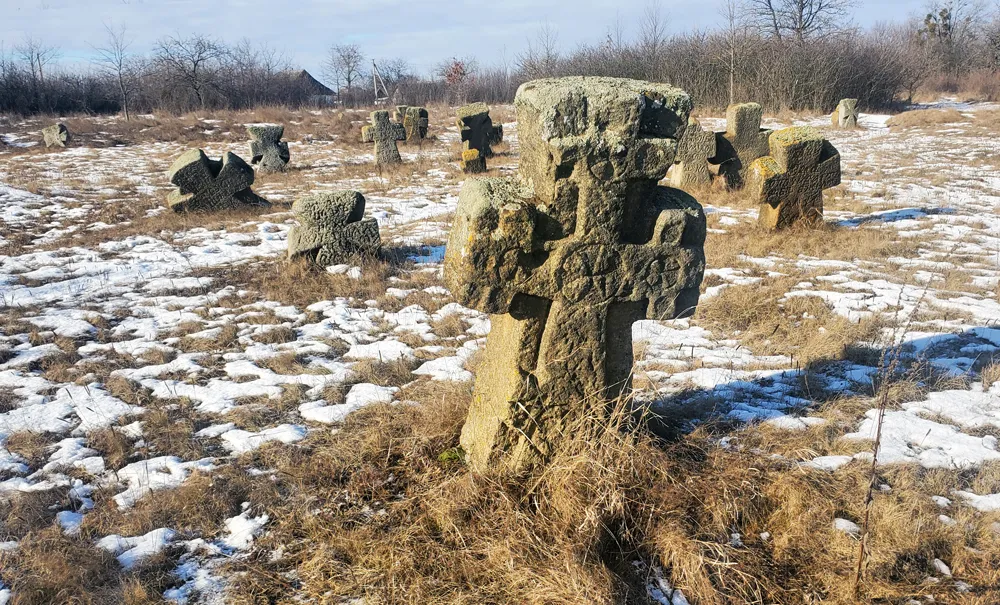
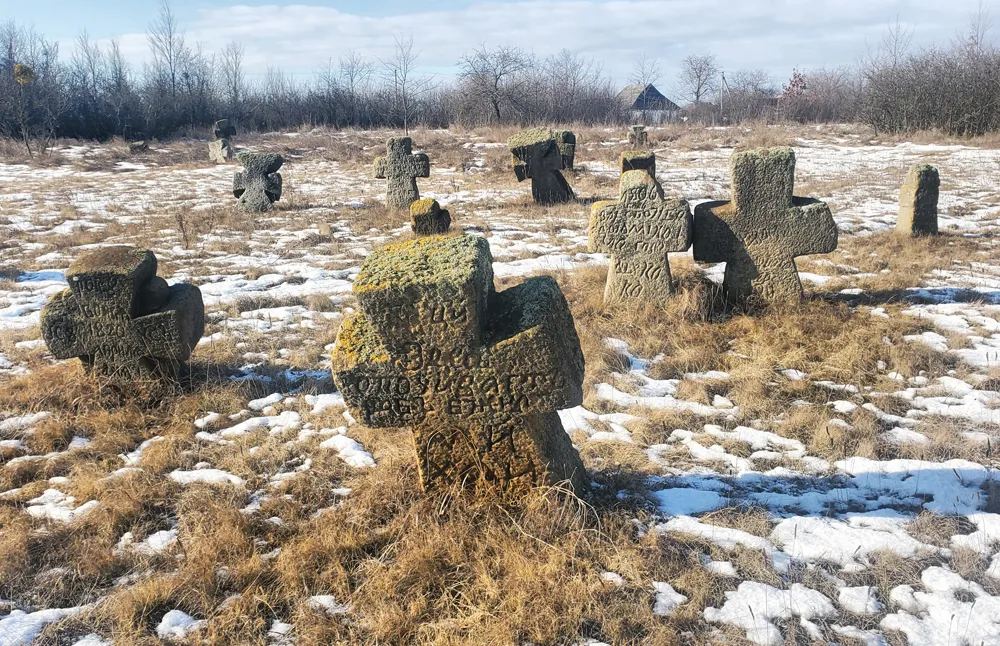
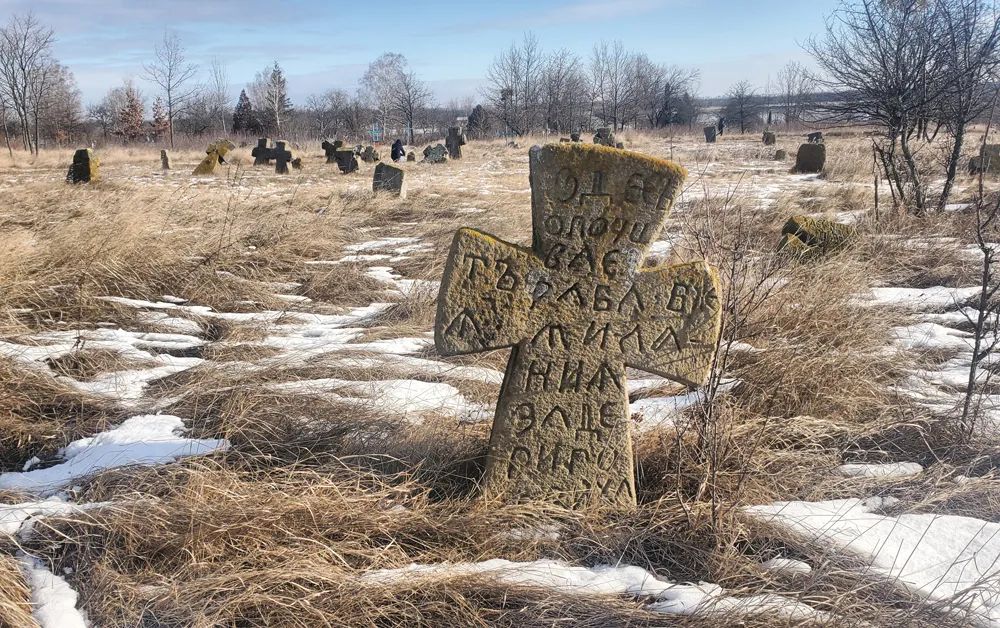
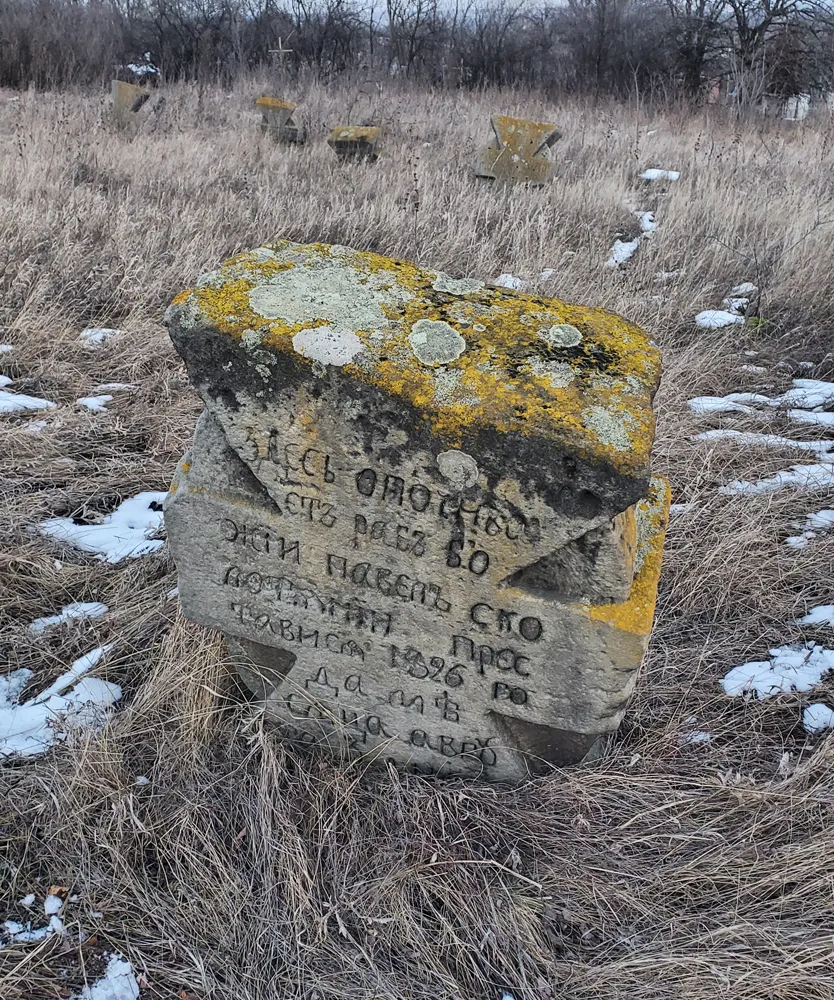
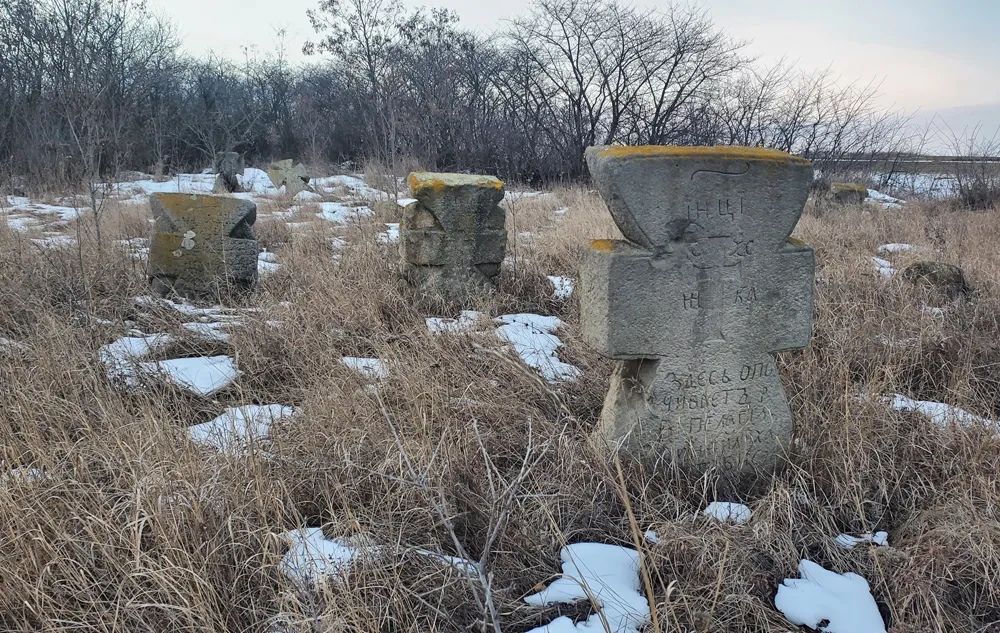
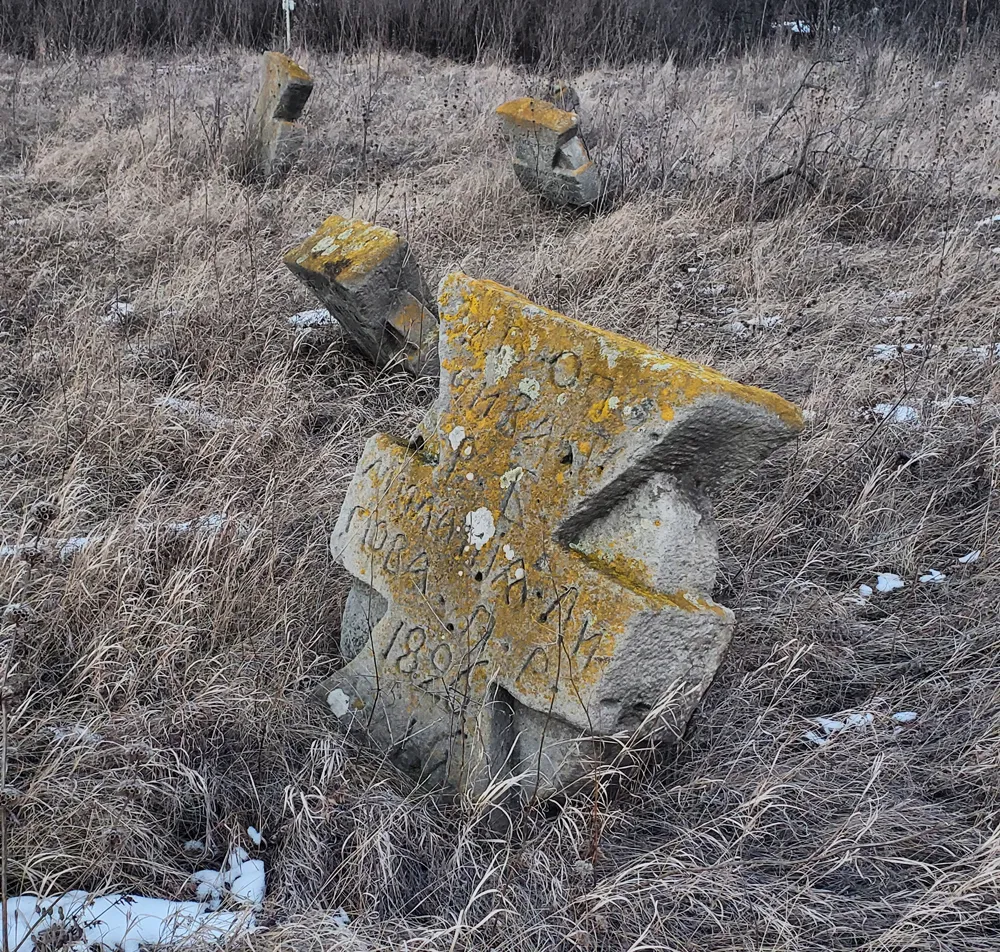
Quite recently we were told about a large Cossack cemetery in the village of Kolodyste, in the Cherkasy region. It is absolutely unknown to the general public. We set off for Kolodyste almost immediately. I will note that in the neighbouring villages we also found cemeteries with Cossack crosses: twelve of them. According to local residents and local historians, these cemeteries were laid out at the end of the 18th century, together with the founding of the villages themselves. Indeed, the villages were founded on abandoned lands, on the border with the Wild Field. Some of the settlers were state peasants, some were individual farmers, but, according to many historians, most of the settlers were landowners’ serfs; officially there was not a single Cossack here, so a legitimate question arises: who put up huge crosses of Cossack form in such significant numbers? A real detective story takes shape here. There was also the question of the stone, the sandstone from which the crosses are made. It is atypical of areas located within the Ukrainian Crystalline Shield, but we established that the stone is nevertheless local, quarried from pits near the villages; in particular, we were shown such a quarry near Kolodyste.
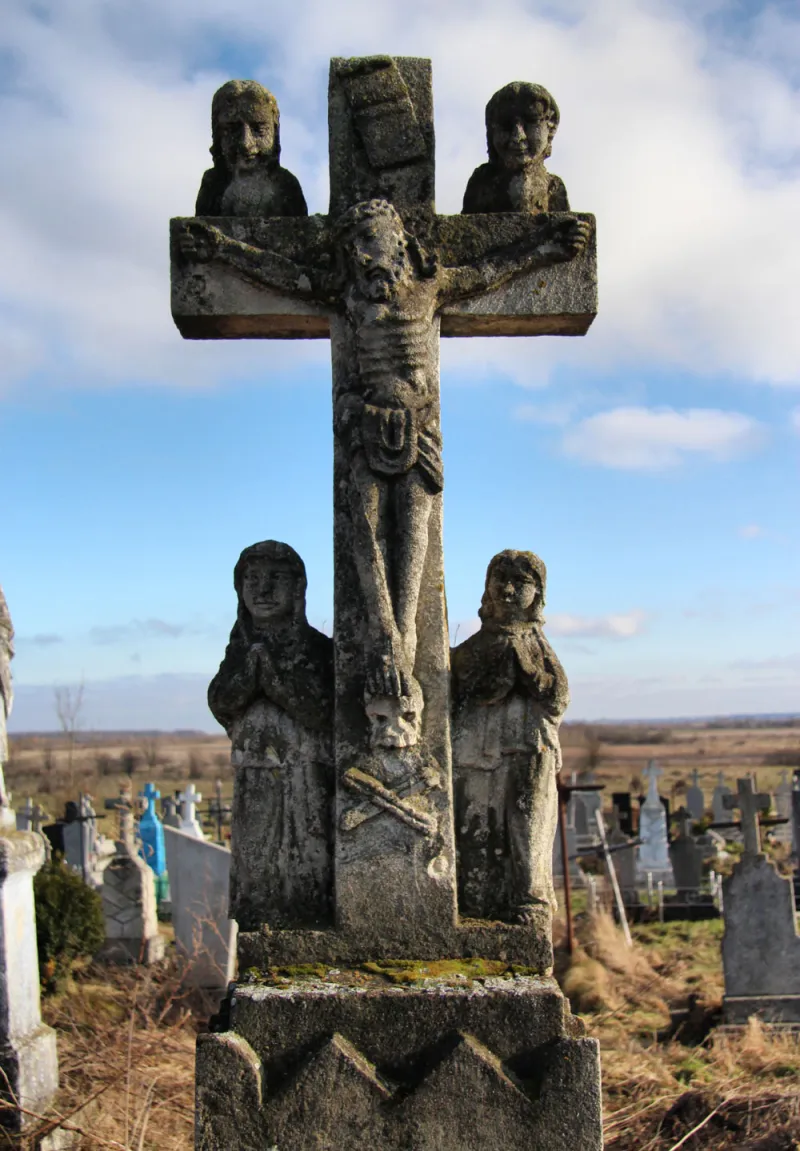
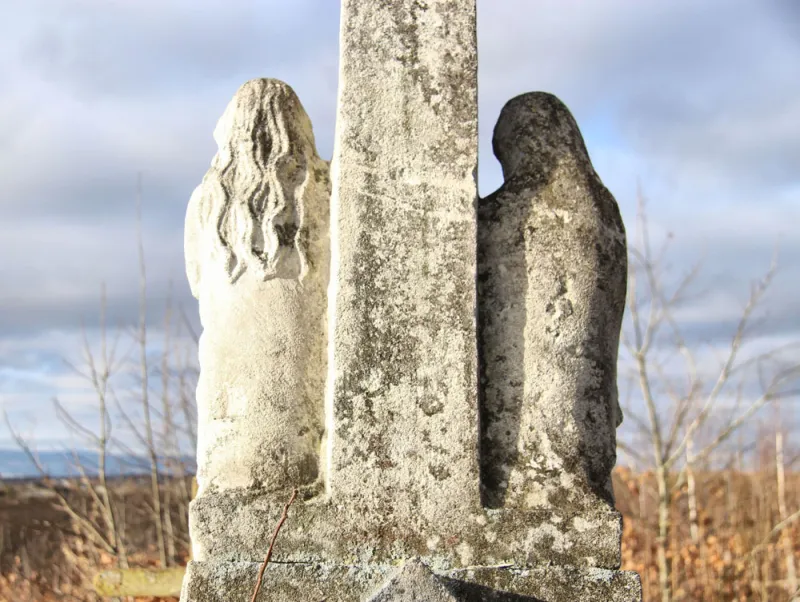
The local population calls all the old cemeteries Cossack. The largest of them, in Kolodyste, is an incredible monument of the Ukrainian people. Here we counted up to fifty large crosses. It is possible that there are more in the thickets and in the ground. I have not seen similar monuments anywhere else. Such things change one’s worldview: you begin to understand that the Ukrainian people were not merely buckwheat growers and ploughmen; only great nations pay such respect to their dead. And the cemetery in Kolodyste is indeed a mark of respect. From whom, and with what money? For now we do not know exactly. Many of the graves certainly hold free peasants, and perhaps descendants of Cossacks. Local residents claim that in Kolodyste there were almost no serfs, that the village lived by free Cossack custom, which is confirmed by the placement of the houses at a considerable distance from one another, indicating large land allotments. The local historian Andrii Savranskyi told us that the residents of Kolodyste were quite well-off and had a lot of land, so they could afford large crosses in the cemetery. But where do such forms come from? One should not believe in coincidence, as if some talented local stonecutter carved Cossack crosses; this was certainly a tradition brought from somewhere to these lands, abandoned after the Tatar raids in the 18th century. So we have a heap of riddles worth solving. Why this form, which contradicted the diocesan-synodal Russian church tradition? Who made them? Where did the peasants get the money for such large crosses?
Zalizniachka
The cemeteries in Kolodyste, Yerky and Zalizniachka are ready-made tourist magnets. Their cultural and historical value for Ukrainians is hard to assess, but these treasures of the nation are not even included in the registers of monuments. Tourists do not know about them at all. The same can be said of other Cossack cemeteries, and not only Cossack ones. To remedy the situation the non-governmental organisation “Ukraine Incognita” (ukrainaincognita.com) launched the project “Old Cemeteries of Ukraine”, which aims to create a public register of old cemeteries, with an emphasis on Cossack cemeteries, to put them on maps and to carry out historical research on these sites.
In our next expeditions we plan to visit the Cossack cemeteries of the Vinnytsia region. To be continued.
Photos and text by Roman Malenkov. The article was published in the magazine “Vichnyi Mandrivnyk” (“Eternal Traveller”)