

The cemetery in Kozivtsi village: naive folk art and a mysterious grave (photo report)
The village of Kozivtsi, in the Terebovlia area, lies not far from Sorotske, known for its neo-Gothic church (“Ukraine Incognita” has told its story more than once). The local cemetery is right by the road (49°24’06.2”N 25°47’16.1”E). We planned to look in here for 10–15 minutes at most, but the visit dragged on for more than an hour. The necropolis turned out to be very interesting, and one gravestone is quite unique and mysterious.
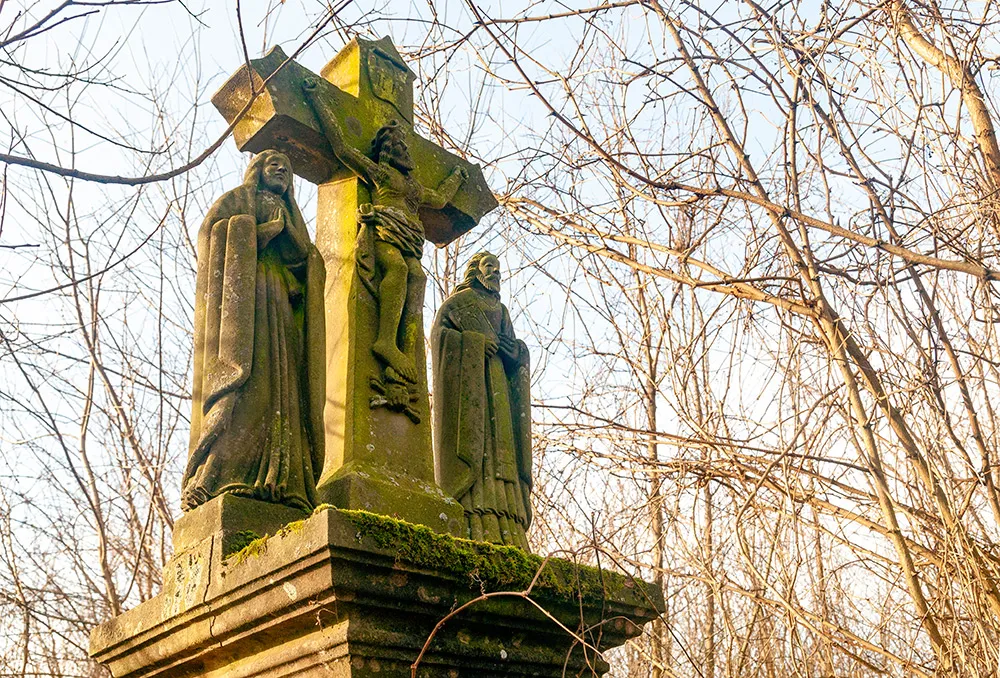
In the territory of the former Russian Empire (Khmelnytskyi, Vinnytsia, Zhytomyr oblasts, etc.), old necropolises show a clear division into Polish (Roman Catholic) and “Ruthenian” (Orthodox) parts. Quite often “Polish” and “Ukrainian” cemeteries are even located in different corners of a town.
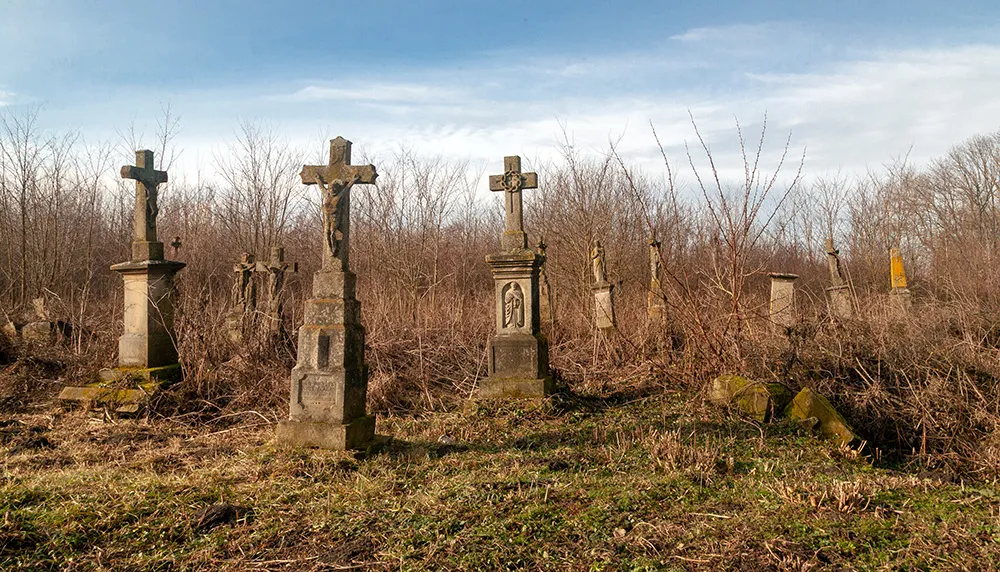
In Galicia such a clear division is rare. Usually cemeteries are mixed, and gravestones with Polish epitaphs and with Ukrainian or Church Slavonic ones stand side by side without any system. The old cemetery in Kozivtsi (from the mid-19th century to the early 20th century) was exactly like that: mixed. Most of it is overgrown with dense thickets (we even saw a roe deer but failed to photograph it), so we had to push our way through. It is evident that the area is cleared periodically, but 3–4 years are enough for it to turn into impassable “jungle”.
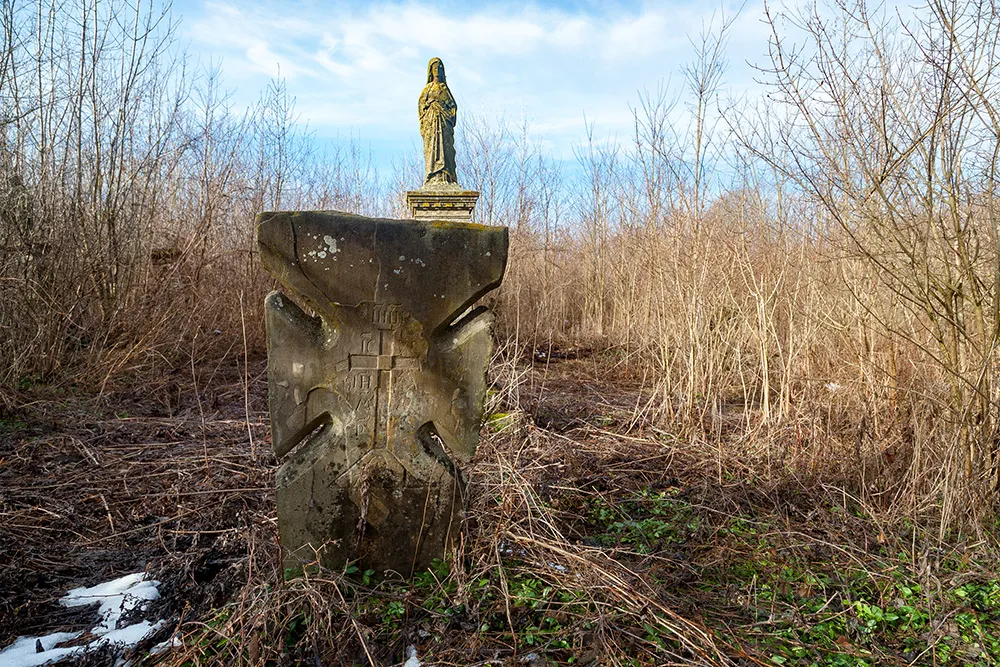
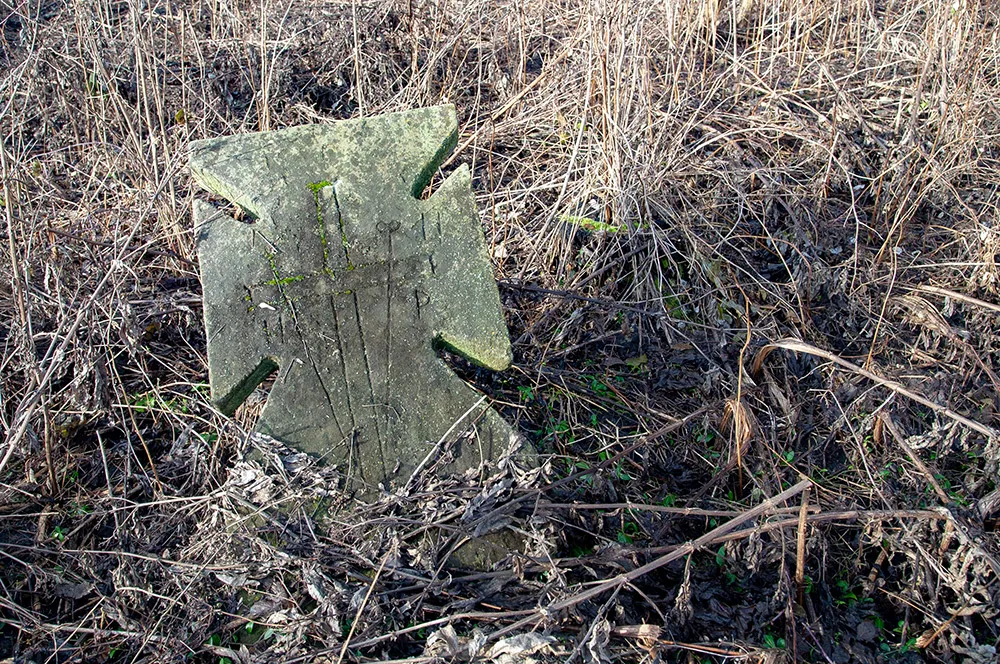
Such crosses are traditionally called “Cossack” ones, but these have nothing to do with the Cossacks
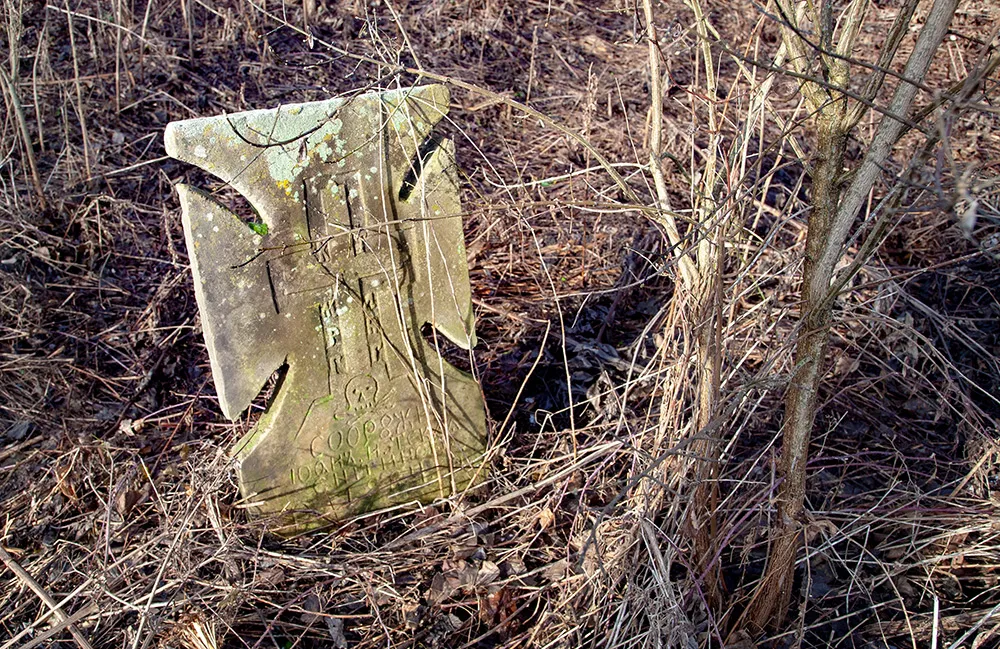
What impressed us most about the cemetery were the figures. Monuments with sculptures are traditional in the necropolises of Galicia, but the local figures were mostly distinguished by their originality. They tend more towards the style of folk naive art. In addition, most of them were carved not from limestone but from Terebovlia sandstone, which is more resistant to external influences. Accordingly, many sculptures looked new although they were a century or a century and a half old.
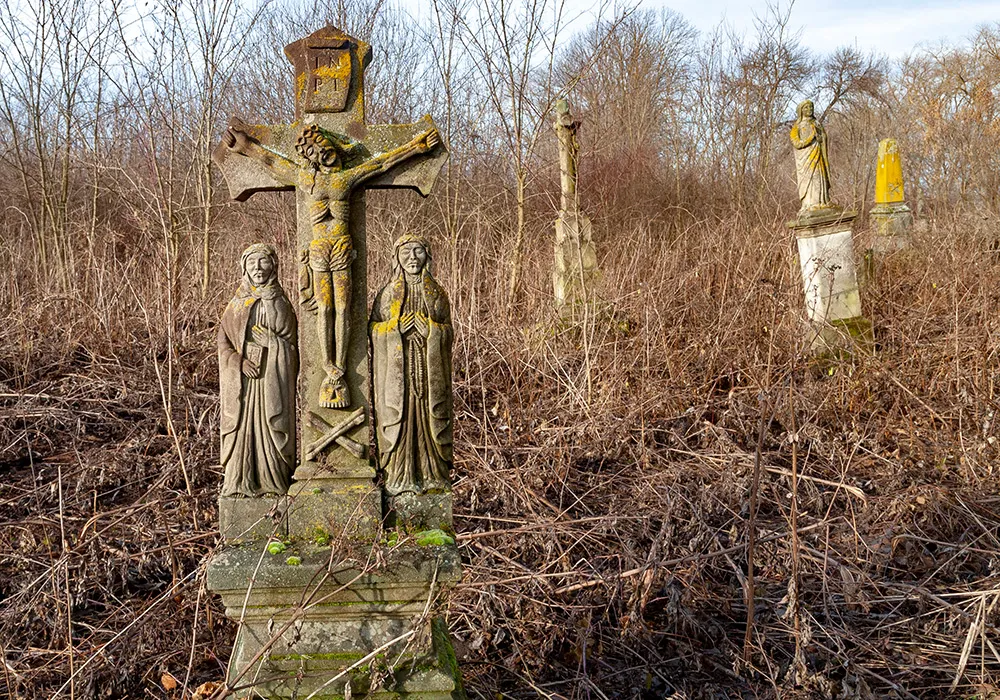
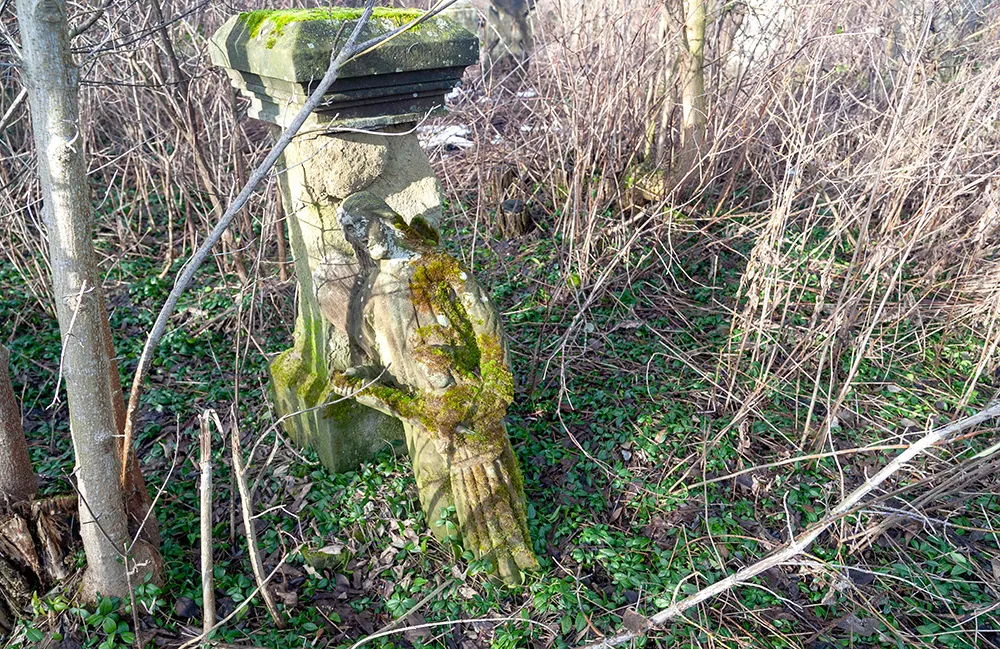
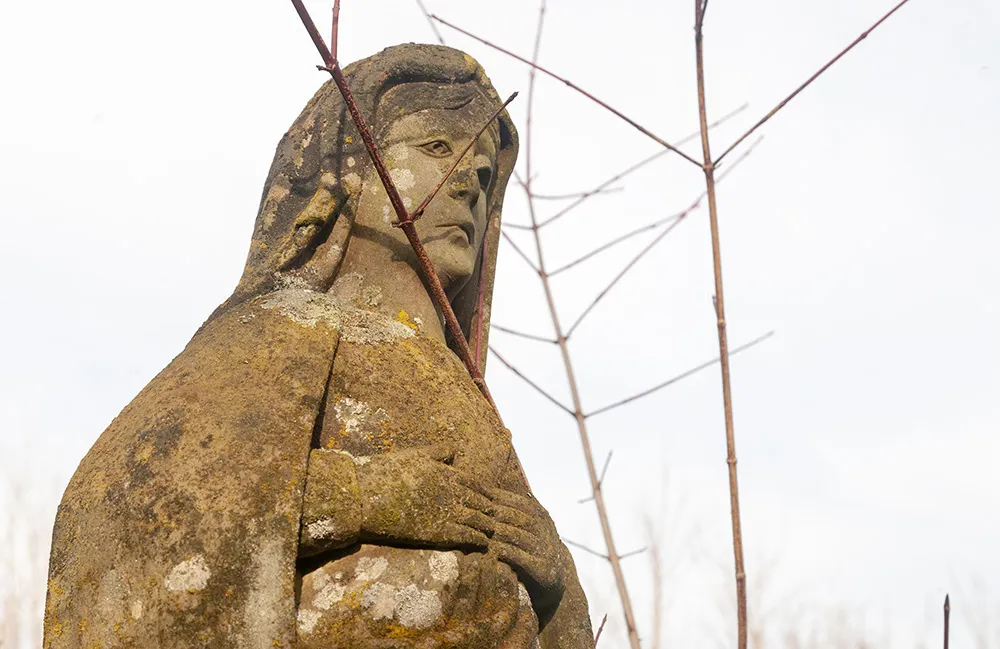
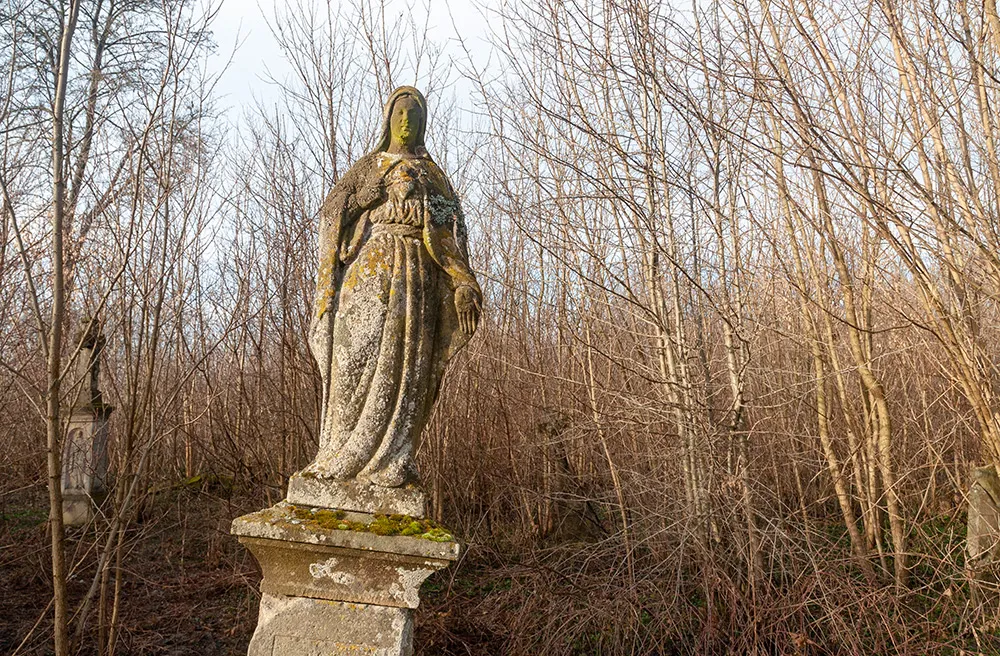
Given the absence of any inscriptions, this is probably not a gravestone but a sacred Roman Catholic figure for prayer
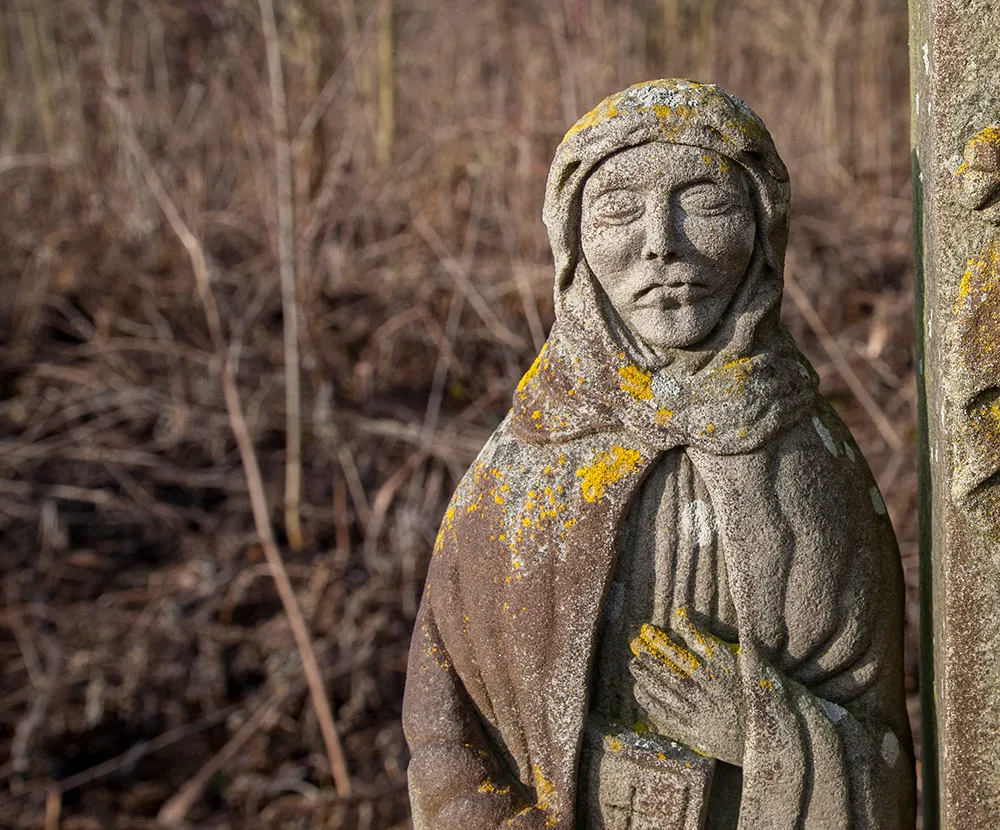
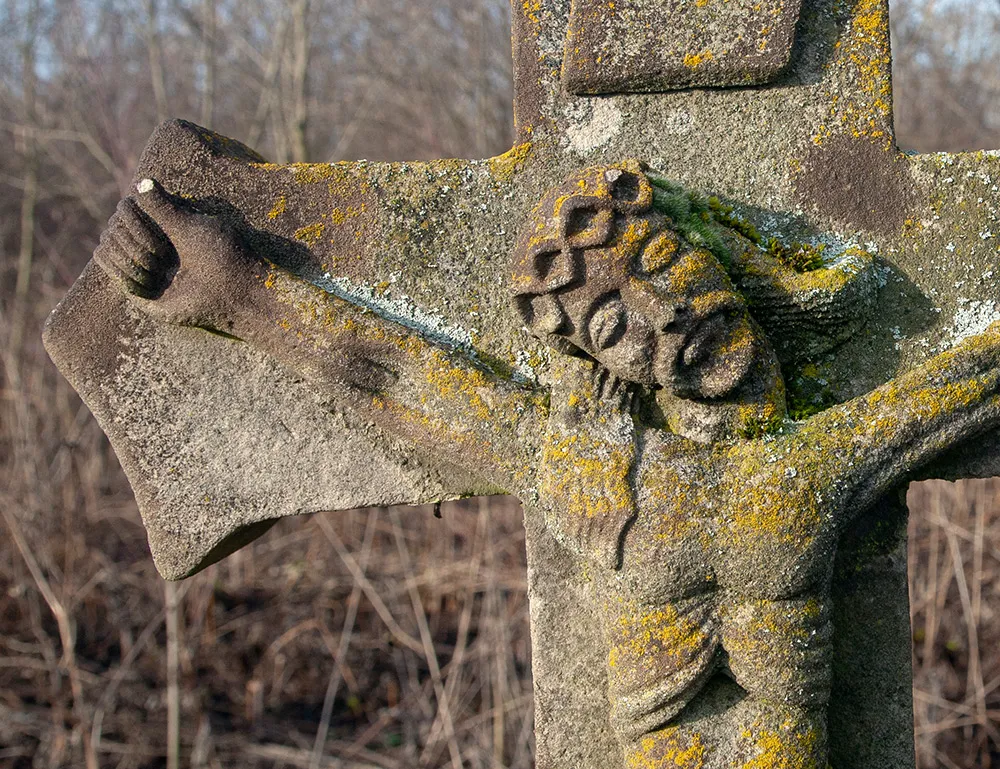
And these are gravestones and their details.
Incidentally, in the necropolis we were lucky to find one more St. Thecla, also in a very naive style. The first is a few kilometres away, at the exit from the village of Sorotske.
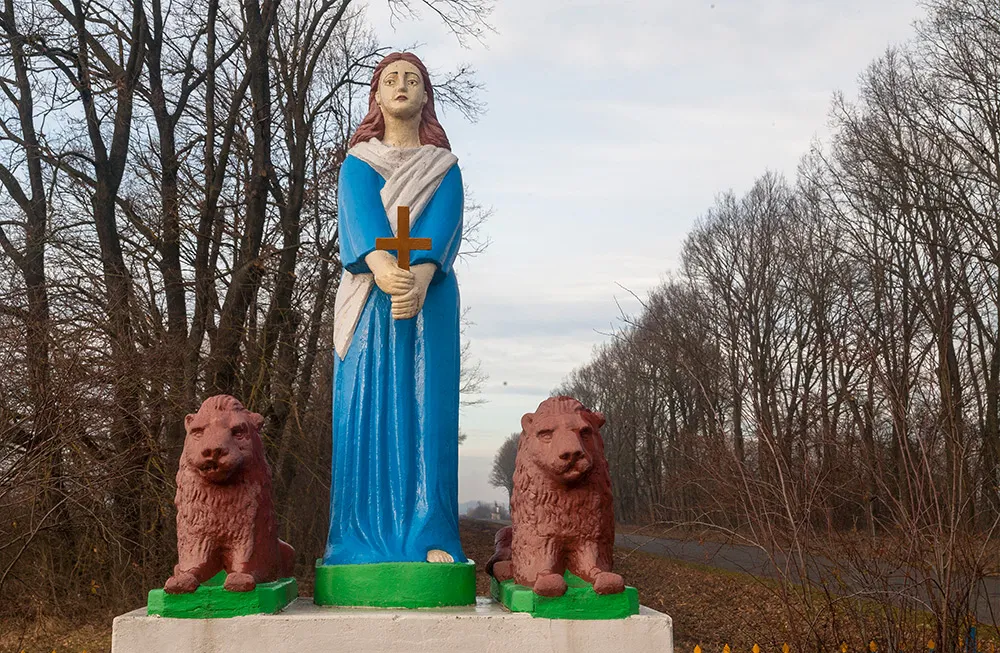
St. Thecla and the lions from Sorotske
Probably the craftsman reasoned that if a lion is an animal similar to a cat, it must be the same size. So the composition here would more correctly be called St. Thecla and the Kitty.
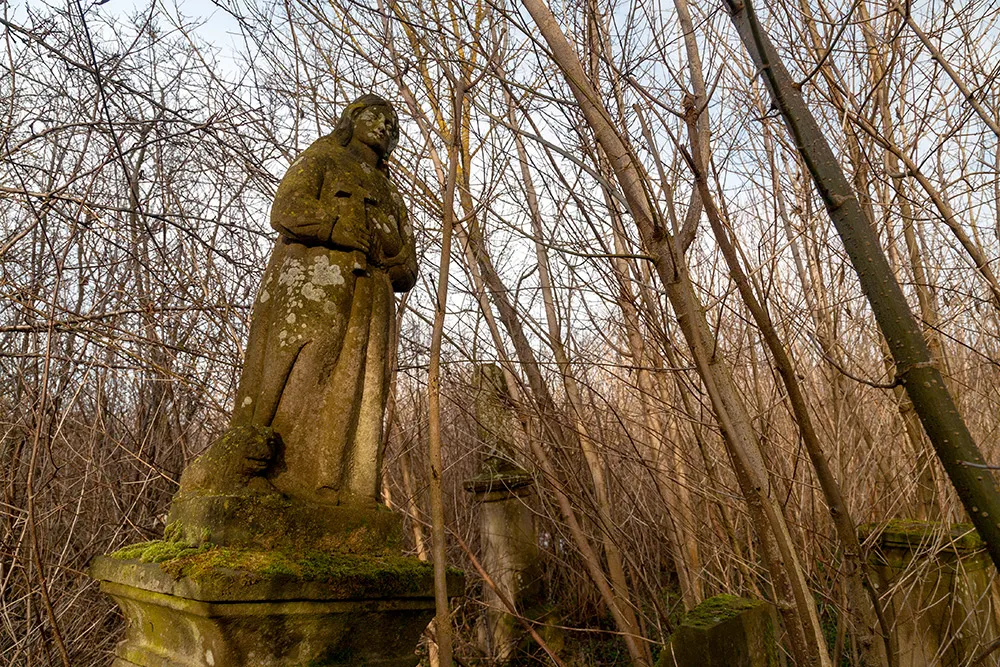
St. Thecla and the lion
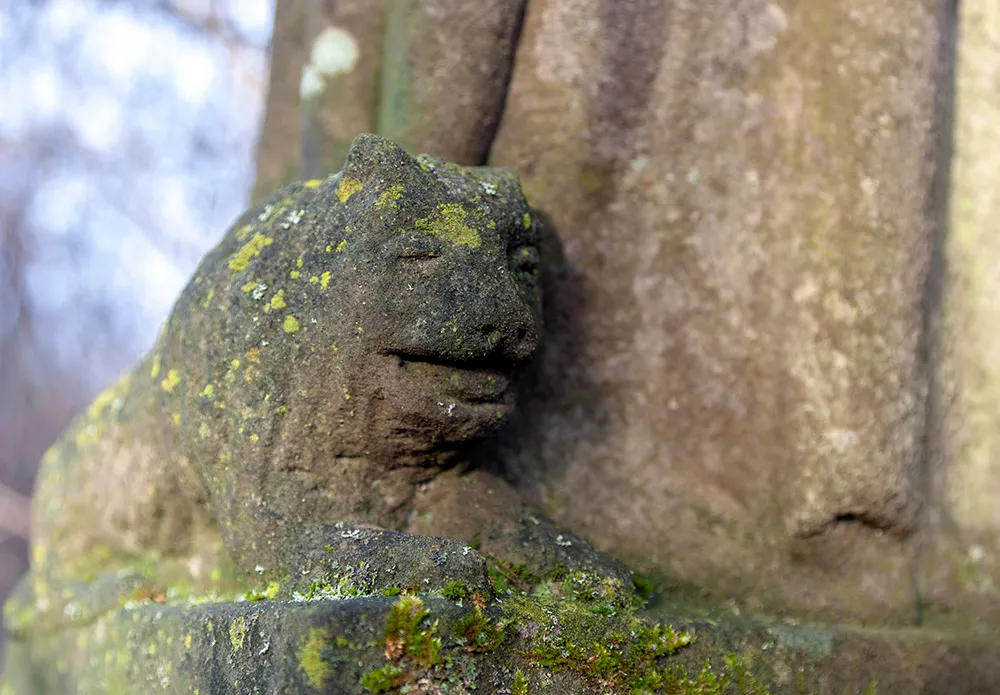
“The kitty”
The mysterious grave
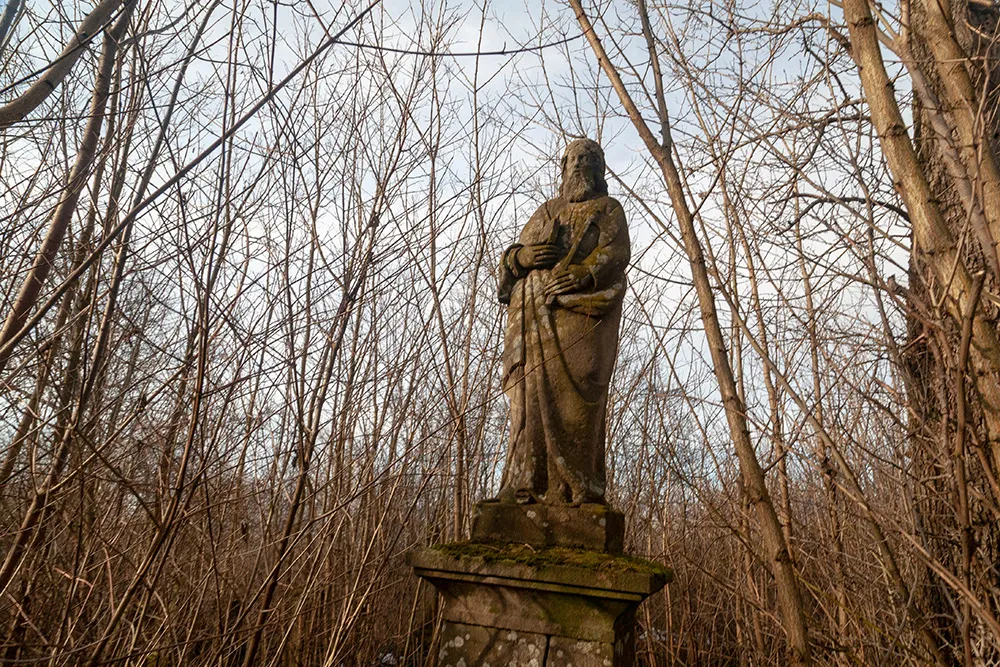
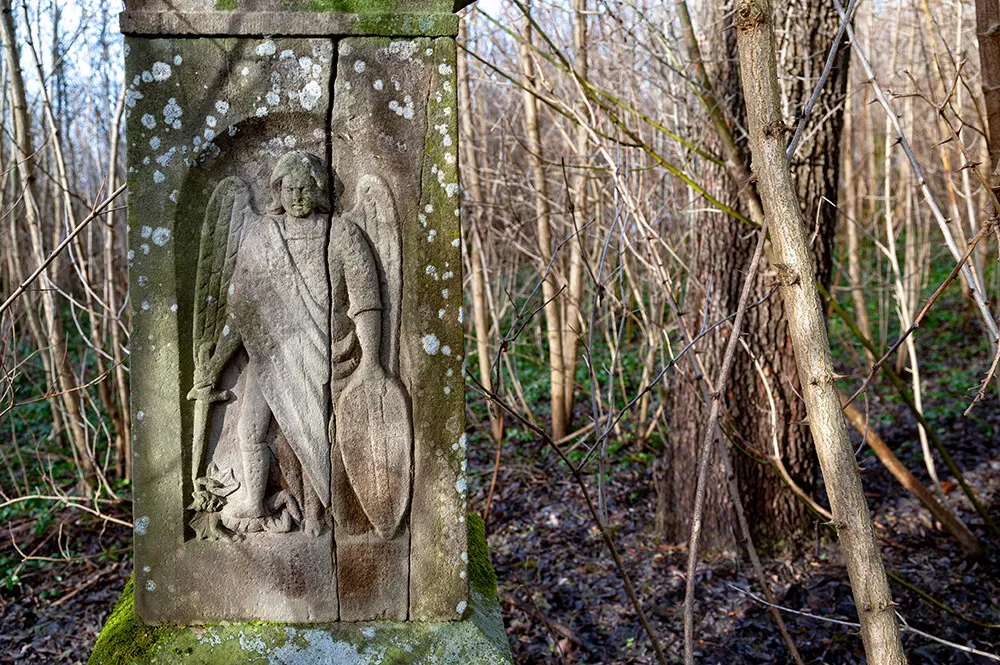
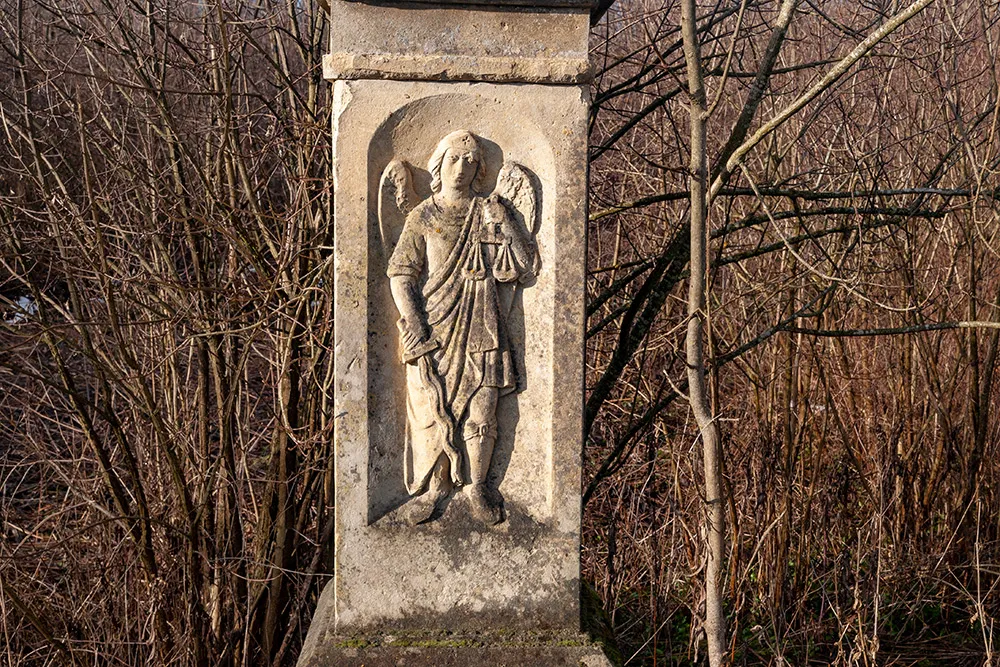
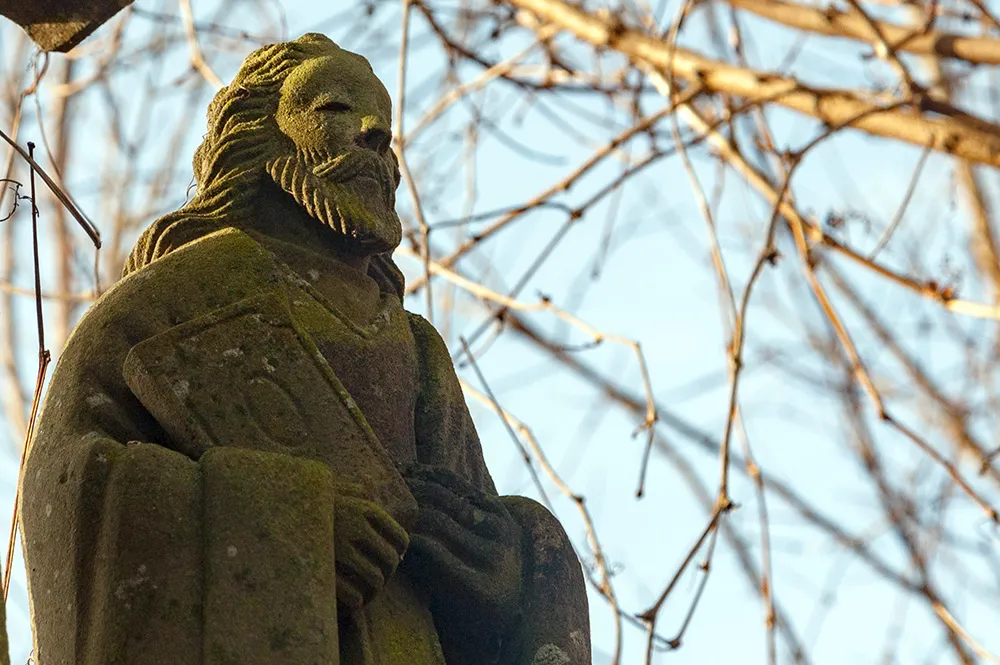
The most interesting and unique burial turned out to be a grave decorated with a figure of the Apostle Matthew holding a book and an axe (photo above). The pedestal of the gravestone is adorned with a very beautiful bas-relief of the Archangel Michael striking Satan with a fiery sword. It was this that first drew the attention of the author, who is fond of this subject and has already collected a considerable number of photographs of the said pair. But the main thing was hidden in the epitaph, made in both Polish and Ukrainian.
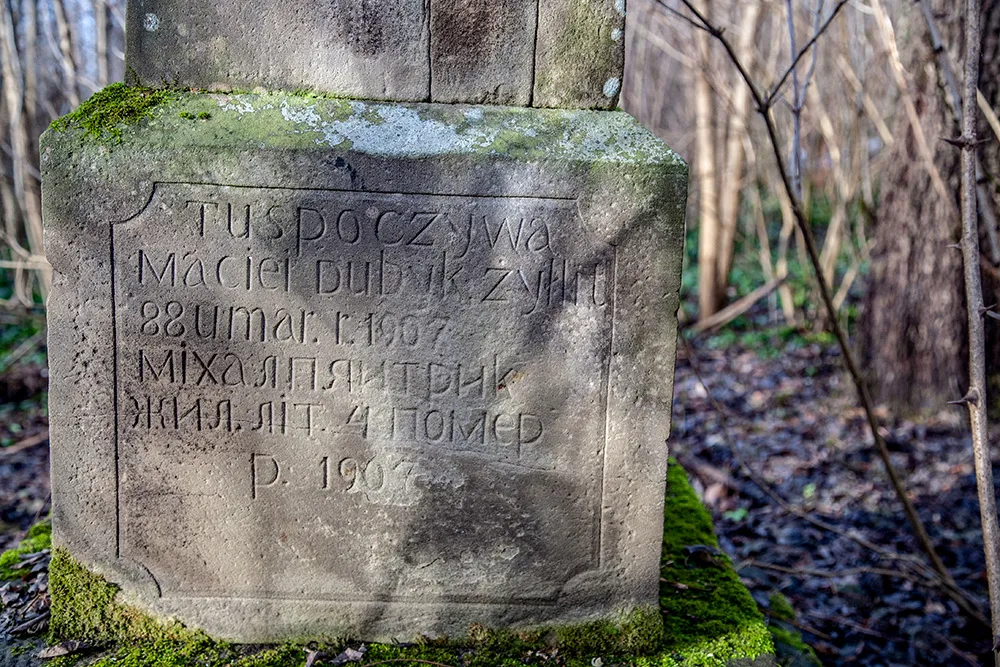
On the old necropolises of Galicia, Ukrainian epitaphs duplicated in Polish are not unique, although not very common. But here it was different! The first (Polish-language) part of the epitaph states that here rests Maciei Dubyk, who lived 88 years and died in 1907.
The surname Dubyk, we note, is quite common in the Ternopil region and is borne by both Poles and Ukrainians.
The second part of the epitaph, in Ukrainian: “Mikhal Piaitryk. Lived 4 years. Died 1907.”
This explains the depictions of the Apostle Matthew and the Archangel Michael on the gravestone. But the burial itself raises numerous questions. The main one is why an 88-year-old Polish grandfather and a 4-year-old Ukrainian boy were buried in one grave. Parish registers could shed light on the riddle of their deaths. Unfortunately, in the fairly large digitized archive of parish registers, the records concerning the village of Kozivtsi for this period are missing.
Only one cautious assumption can be made. At that time an epidemic of typhus raged in the Ternopil region, and the boy and the old man became victims of the plague. Cholera is also not excluded: in those years the sixth pandemic of this disease swept across Europe. However, the author found no information about an outbreak of this disease in the Terebovlia area in 1907.
For now, the double international burial is quite a mystery.
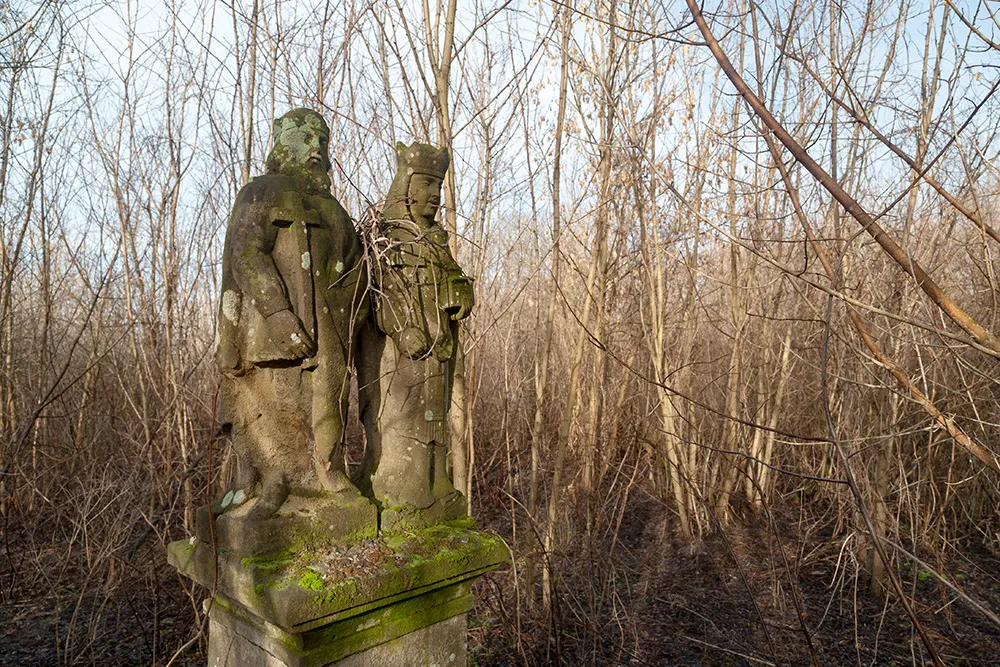
In the same cemetery there is another double burial, probably connected with the same epidemic. Volodymyr and Olha Zadorozhni, who died in 1906, are buried there. The gravestone is adorned with very interesting figures (also in the naive style) of the holy equal-to-the-apostles princes Volodymyr and Olha.
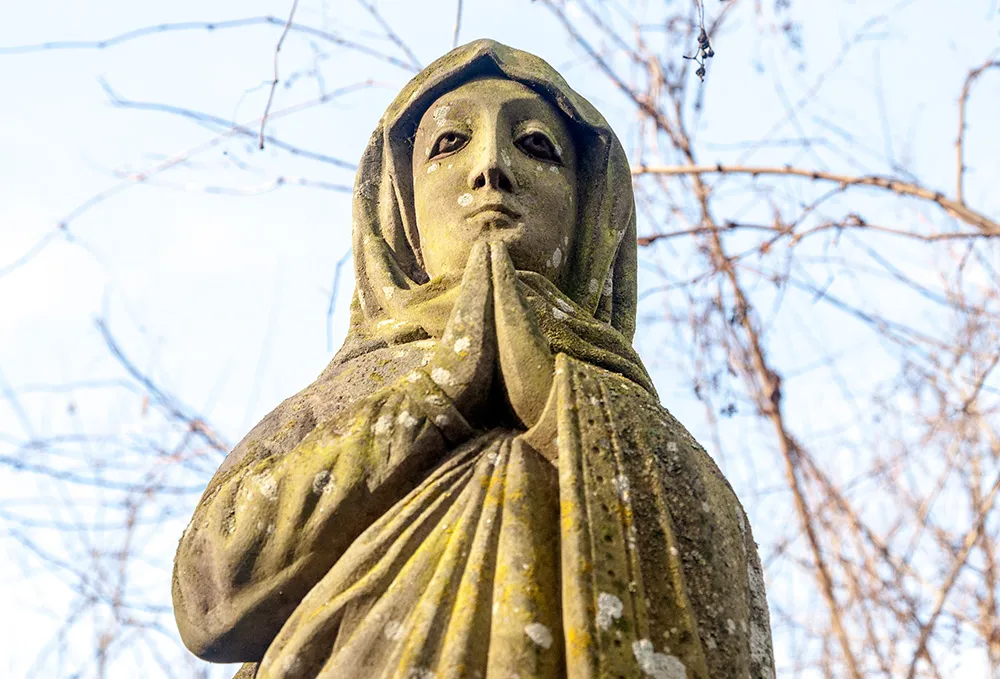
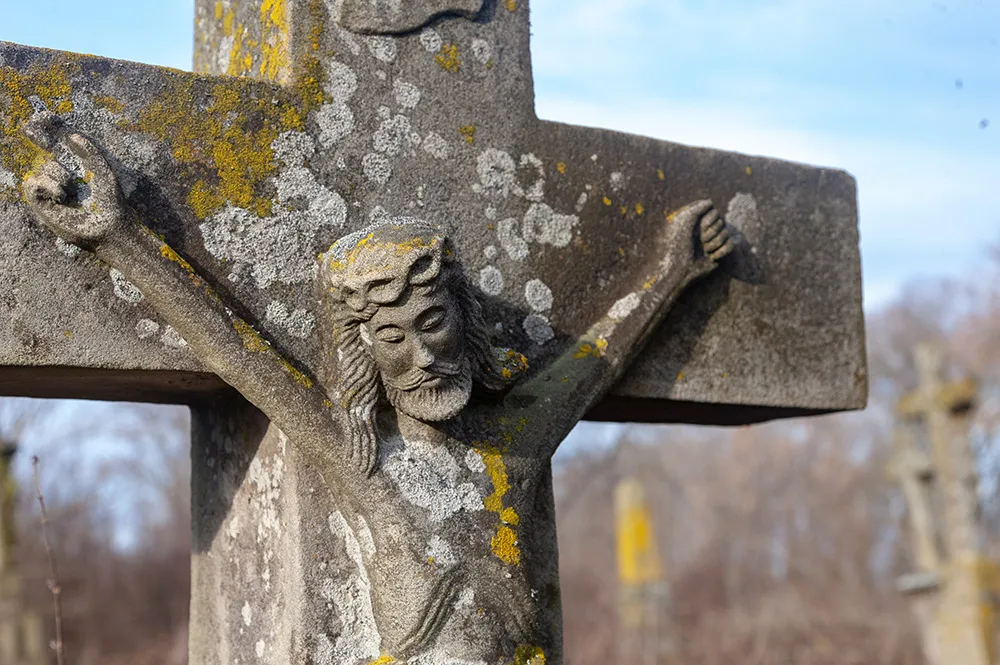
Besides gravestones, the Kozivtsi cemetery also has several sacred figures that probably served as chapels. In particular, right at the entrance to the cemetery we see a stone crucifix with figures of the Most Pure Virgin Mary and the Apostle and Evangelist John on either side (about it at the very beginning). There is no hint of any epitaph on the pedestal, so it is hardly a gravestone. The type of the Crucifixion and the Latin letters “INRI” on it directly indicate that it is a purely Roman Catholic (Polish) monument. The composition, we note, is very beautiful and textured, and is executed in the style of folk primitivism/naive art.
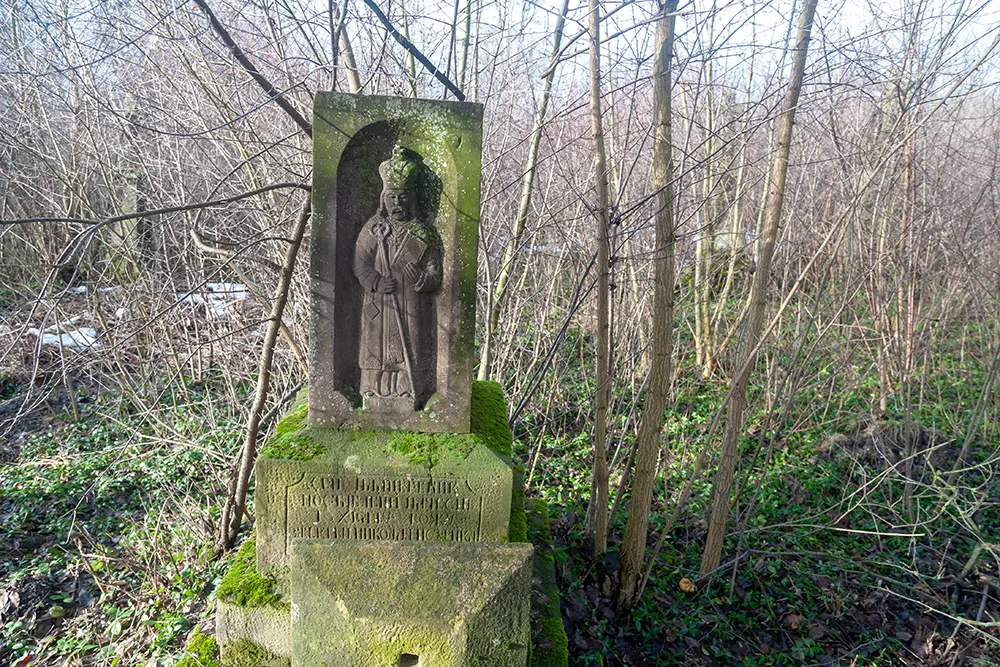
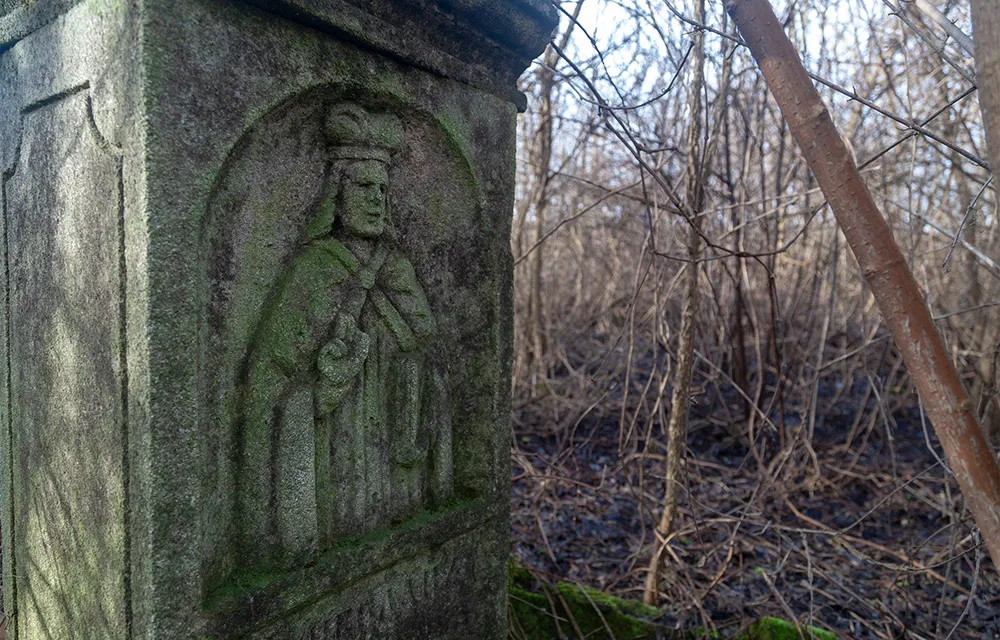
A little further on is a similar monument, erected by Ukrainians. Unfortunately, only the pedestal has survived, with a bas-relief of St. Nicholas and the inscription “This monument was erected to the honour and glory of God from the donation of Nykolai Petryk”. Might he be a relative of the aforementioned Mikhal Piaitryk from the double burial? For there was as yet no established grammar at that time, and these may simply be different spellings of the same surname.
Which image stood on it is, unfortunately, unknown.
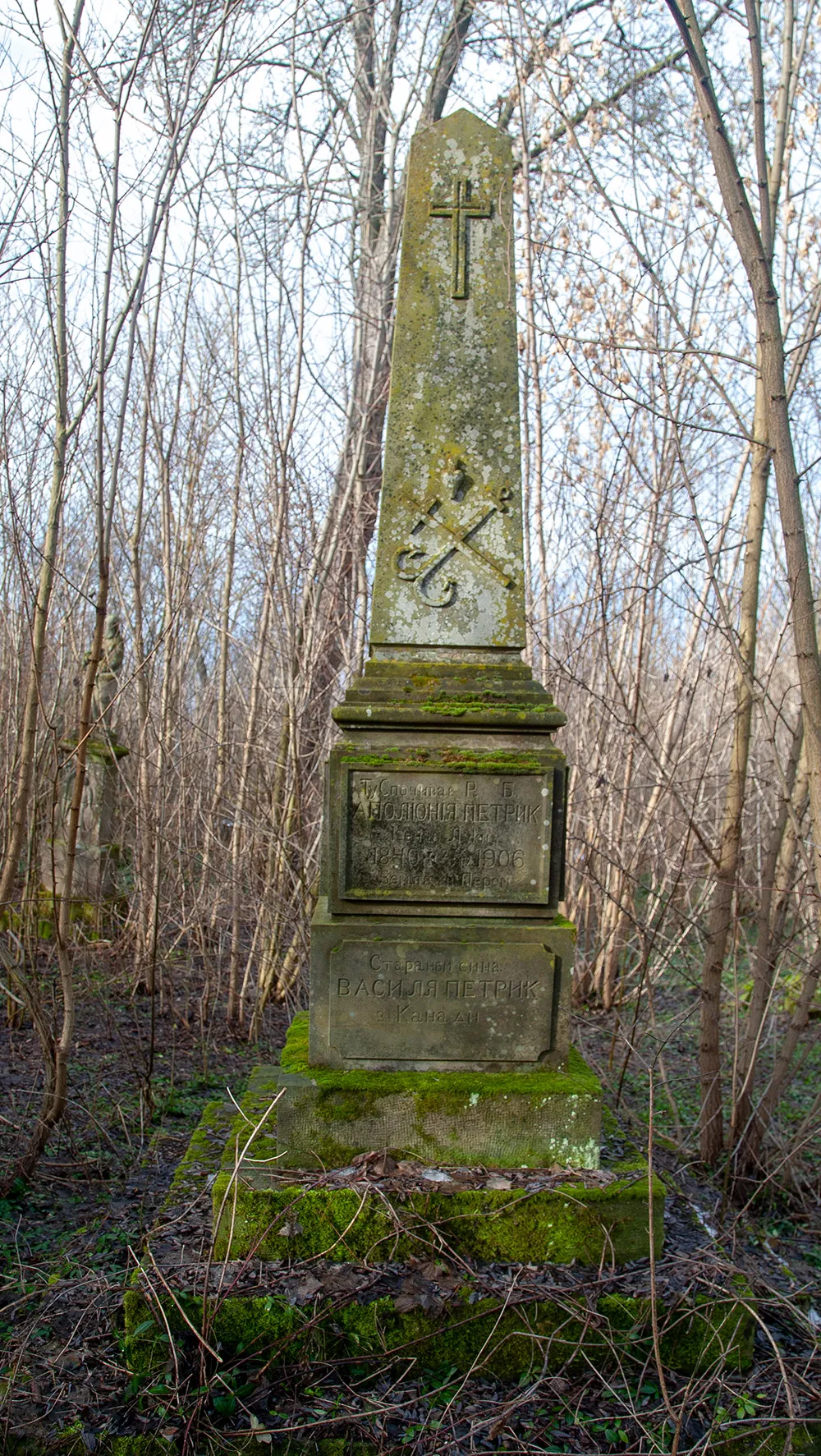
The monument on the grave of Apolonia Petryk was erected by her son Vasyl from Canada.
Our kind all over the world…
Text and photos by Dmytro Poliukhovych


