Turkey. Kars

· 5 min read
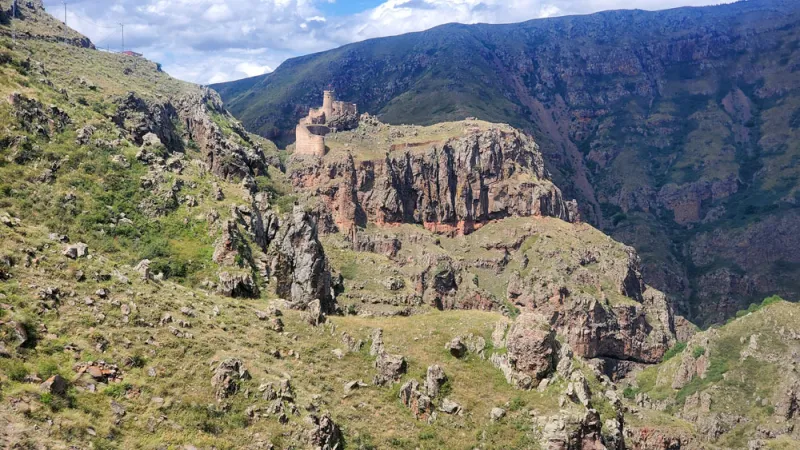
I liked Kars very much. It is relatively small (100,000 inhabitants), cosy and well kept, with good roads (unlike neighbouring Doğubayazıt), varied cuisine and two historic centres. One centre is now a huge recreation zone and a treasury of architectural monuments, the largest of which is the fortress.
The construction of the first fortress is attributed to the Urartians, who are credited with building all the castles and fortresses of eastern Turkey. Then came a long period of Armenian rule here — in the 10th century (928–961) Kars was even the Armenian capital, ruled by kings of the Bagratid dynasty. Later Kars was for a long time the capital of the Armenian principality of Vanand, after the capital of Armenia had been moved to Ani.
Some scholars claim that Kars was not dependent on Ani, and that after Byzantium captured Ani in 1045 the title King of Kings returned to the prince of Kars. In 1064 Ani was captured by the Seljuks. The king of Kars, Gagik-Abas, immediately tried to pay homage to the Seljuk leader Alp Arslan, sending envoys with gifts and letters, saying that he agreed to be a vassal so that they would not besiege Kars… In 1065 the city was taken by the Byzantines, and a year later by the Seljuks.
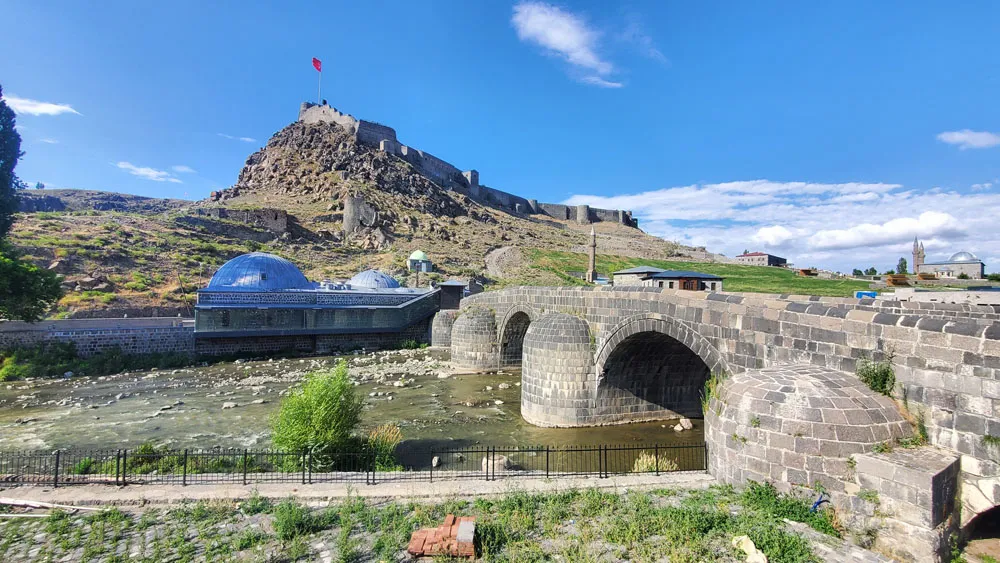
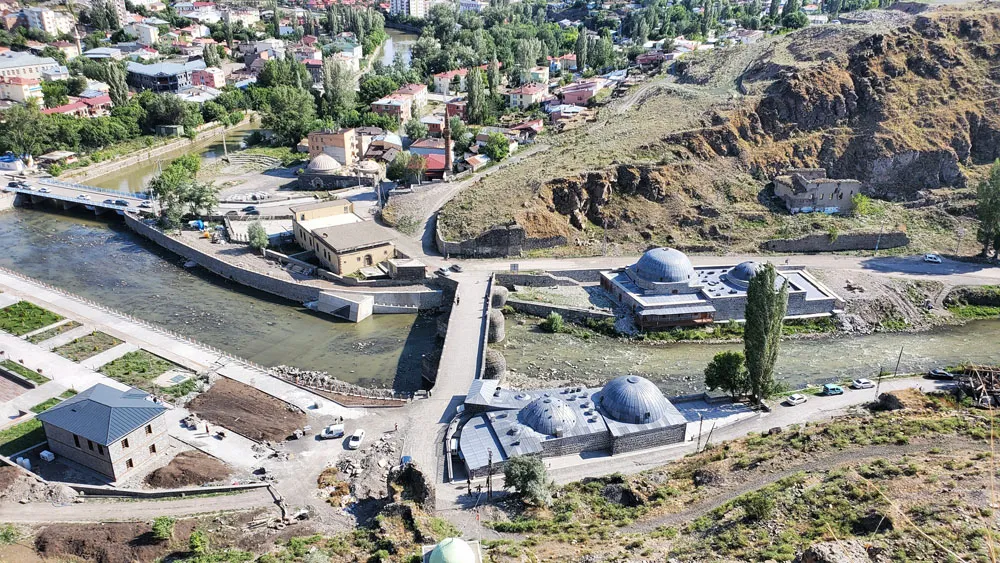
Taşköprü bridge and the castle
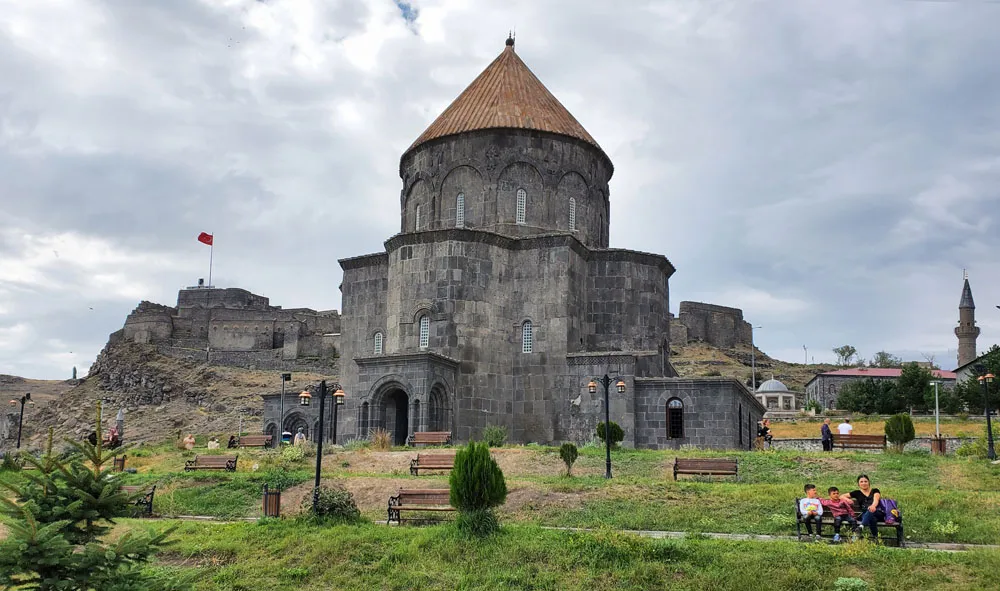
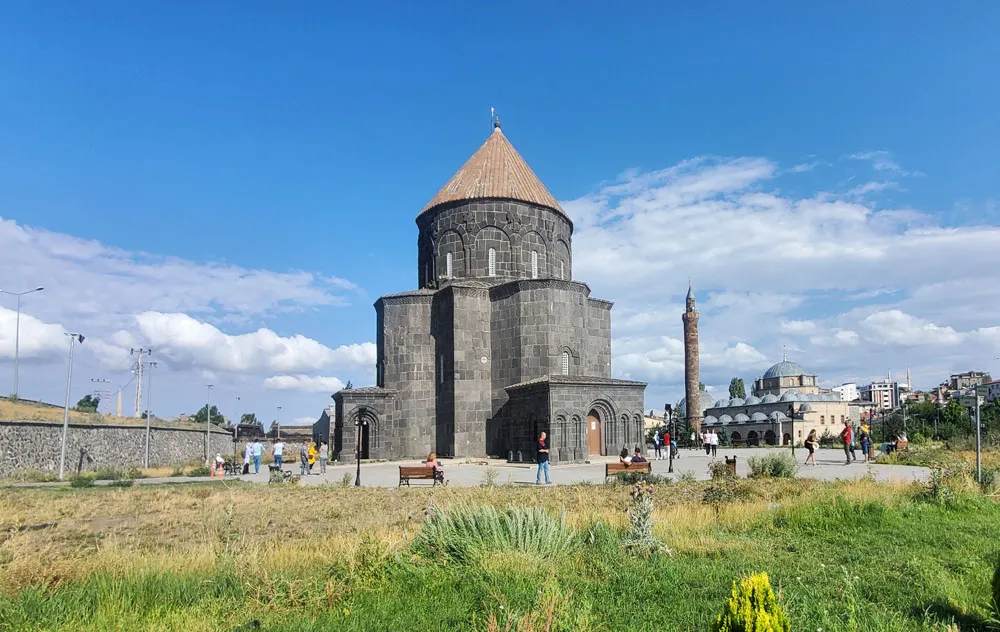
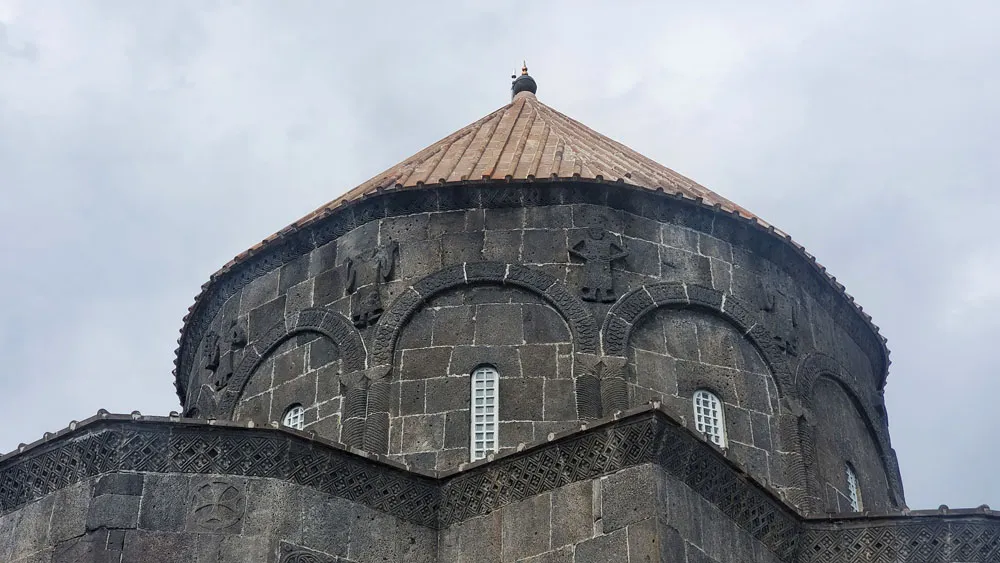
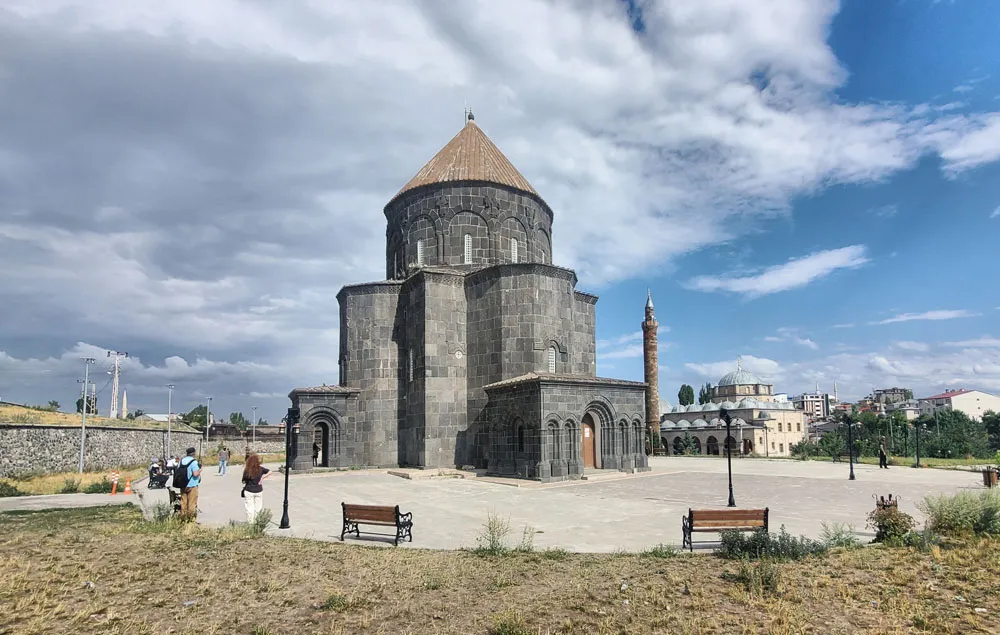
The Armenian cathedral
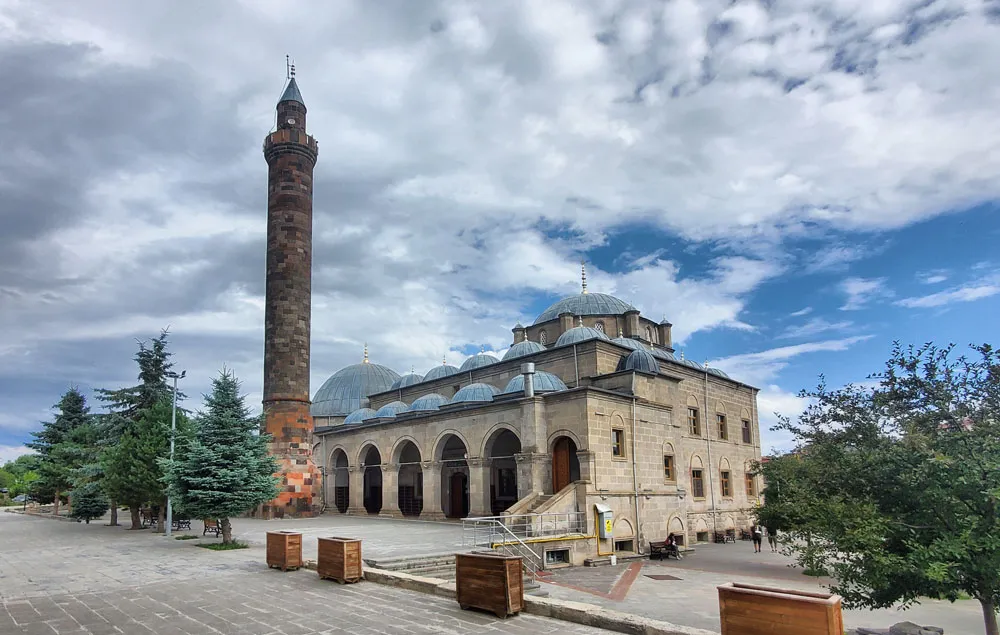
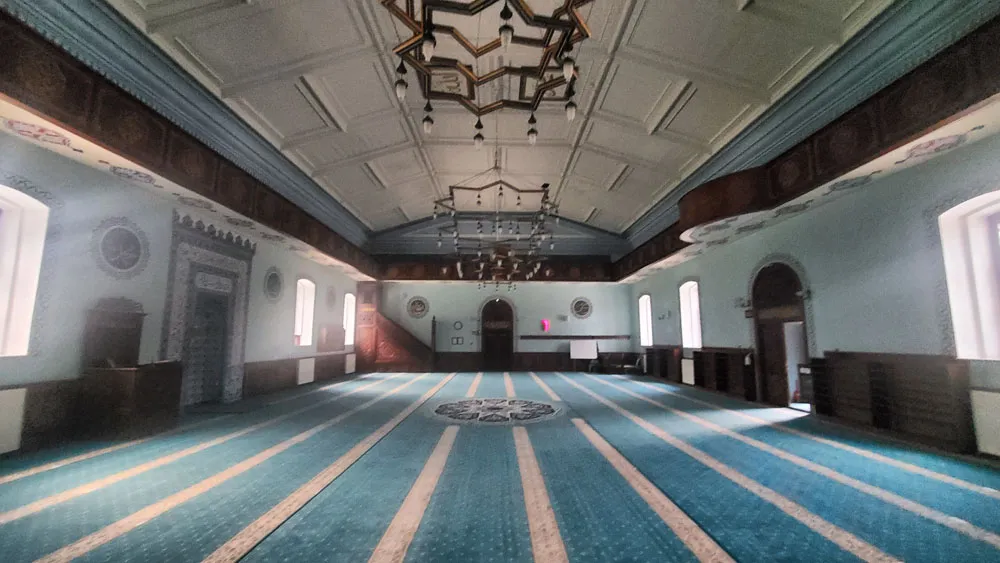
Evliya Mosque
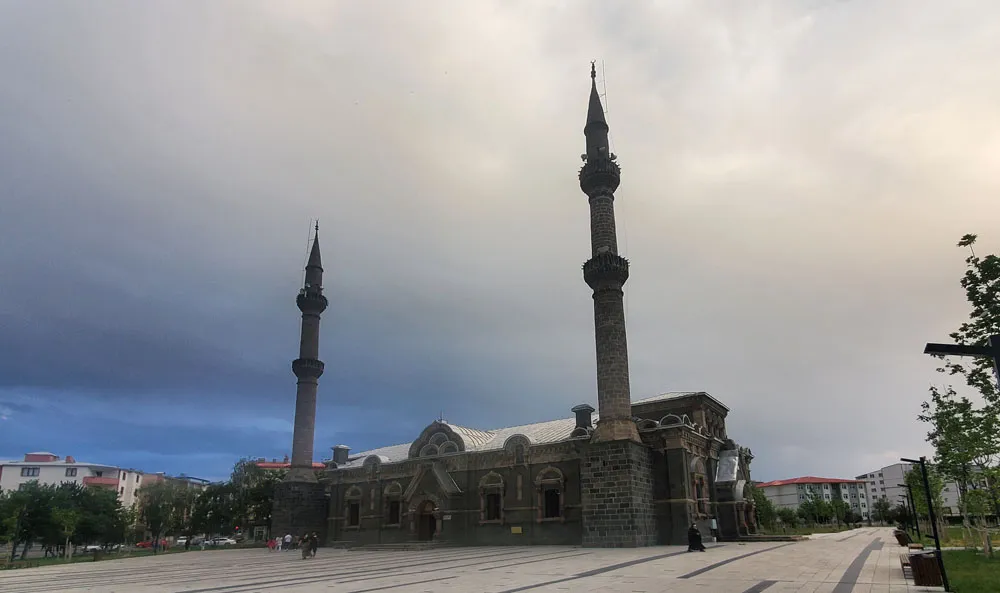
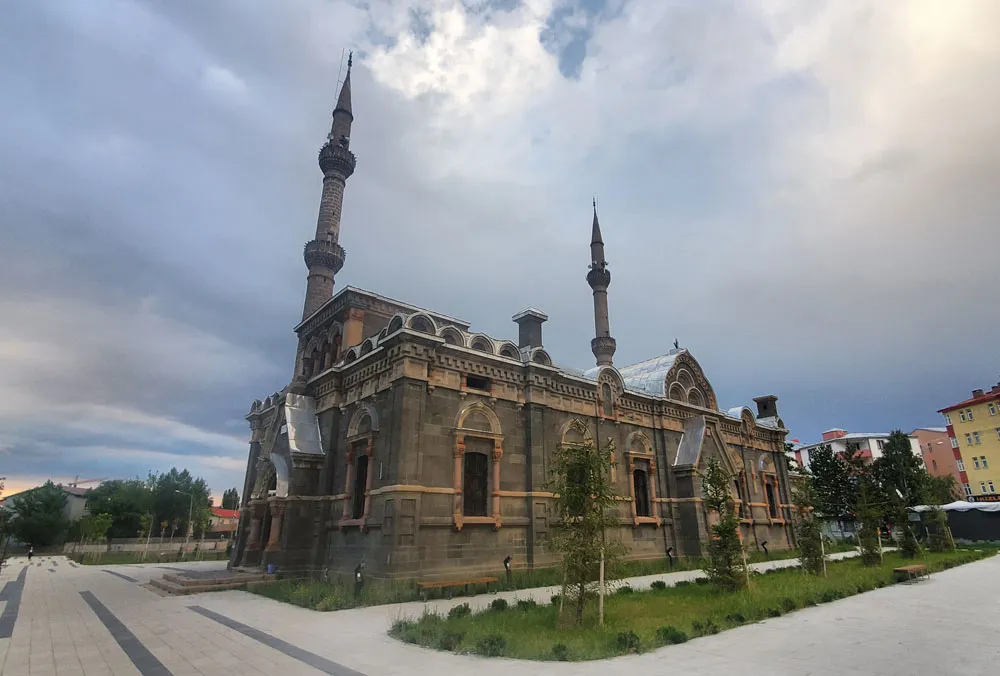
Fethiye Mosque (a former Russian church)
On the territory of the principality of Vanand the Seljuks created a separate emirate with its capital in Kars. This emirate was a vassal of the Saltukid dynasty and existed until 1206, when it was captured by the Georgians led by Zakare. And in 1242 Kars was destroyed by the Mongols.
After the Mongols came the Georgians again, then the city was seized by Tamerlane, after whom Seljuk rule returned, which was replaced by the rule of the Persian Safavids in 1555. Then followed a long carousel in which the Ottomans replaced the Persians and vice versa. Finally, from the 17th century the city became Ottoman.
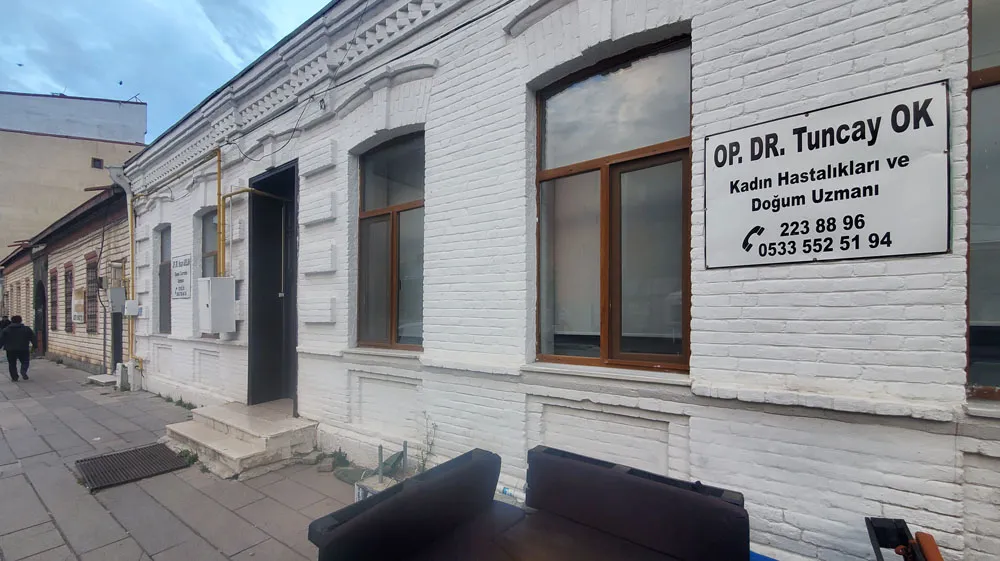
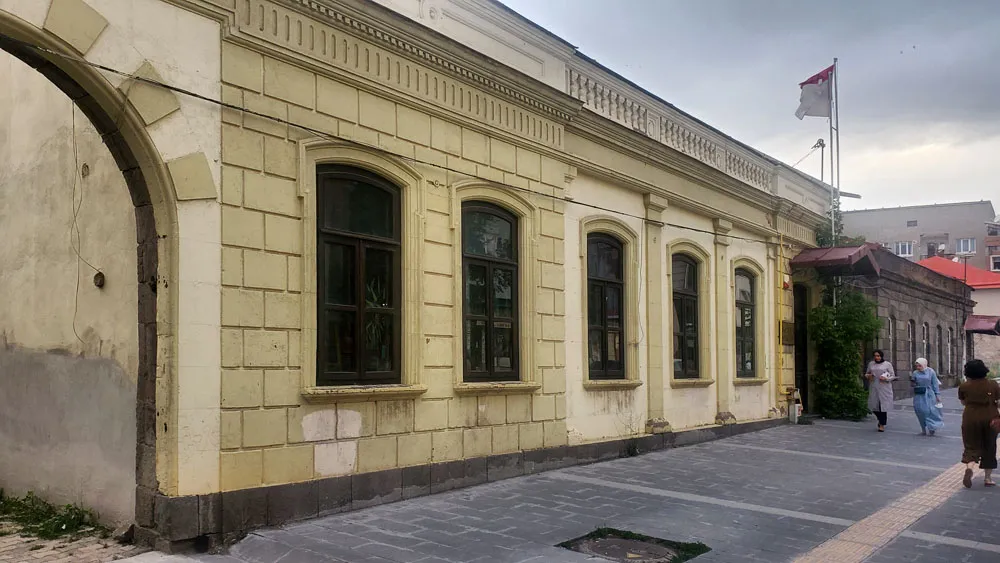
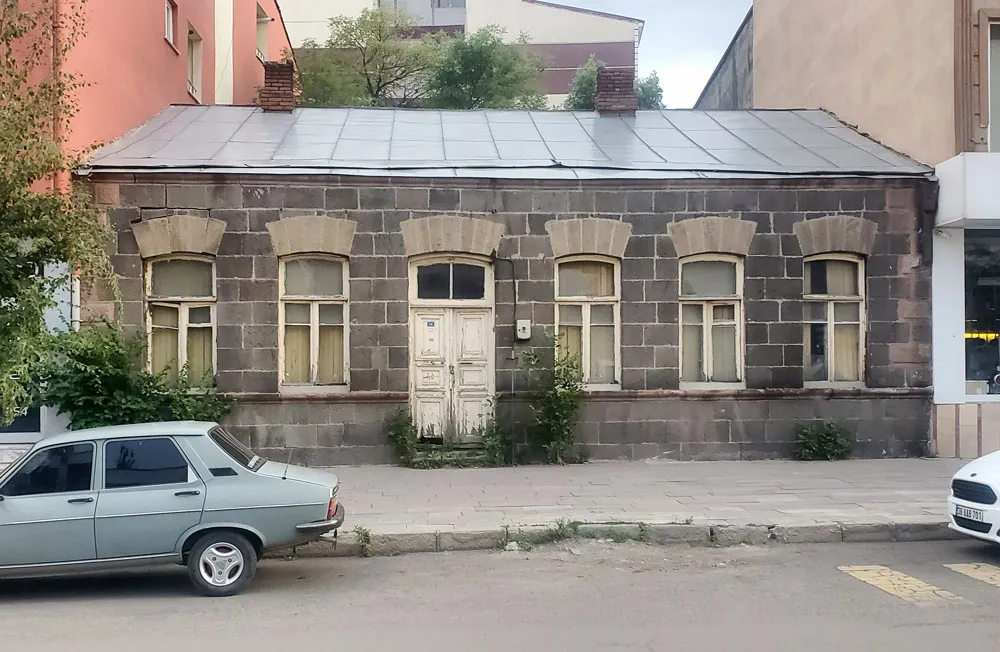
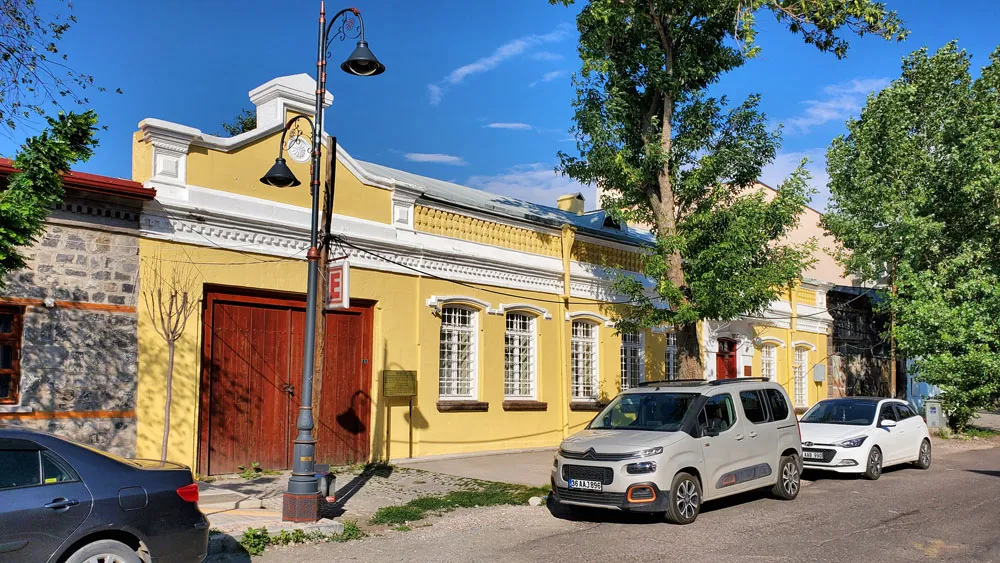
From the end of the 18th century began a period of constant wars between the Ottoman Empire and Russia, and almost always these wars affected Kars. 1807, 1821–1823, 1828, 1855, 1877–1878 — in all these military campaigns Kars was stormed and besieged and repeatedly came under Russian occupation. From 1878 until the end of the First World War Kars was Russian. It was then that all sorts of eclectic-modernist buildings were put up in Kars, which the Turks now call the Baltic style. Part of Kars still resembles a provincial town of the Russian Empire — for example, on some streets of Kars you can feel as if you were in Kropyvnytskyi, Mykolaiv or Tarashcha. The main monument of the Russian occupation period in Kars is the military Cathedral of Alexander Nevsky. Two minarets were added to it, and today it is the Fethiye Mosque. It is a mosque in the Russian Art Nouveau style, with kokoshnyk gables. There is nothing else like it anywhere. Well, actually there is a similar one in Sarıkamış, and that is all.
In 1919 Kars became part of socialist Armenia, then the Turks won it back… Finally, in 1921 the well-known Soviet-Turkish treaty was signed in Kars, under which Kars passed to Turkey for good.
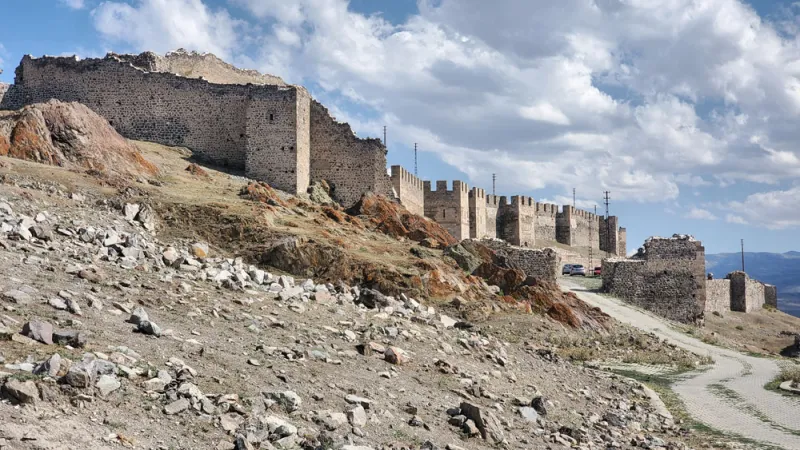
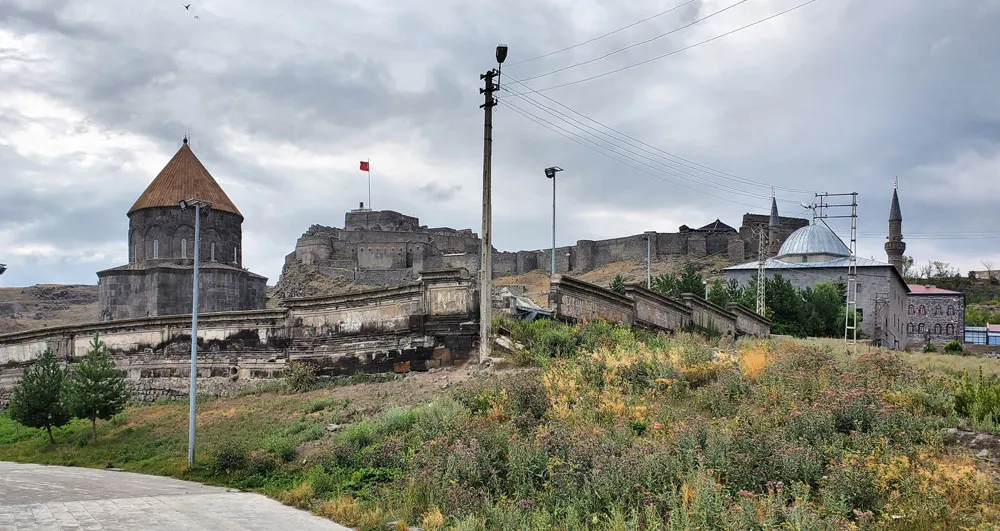
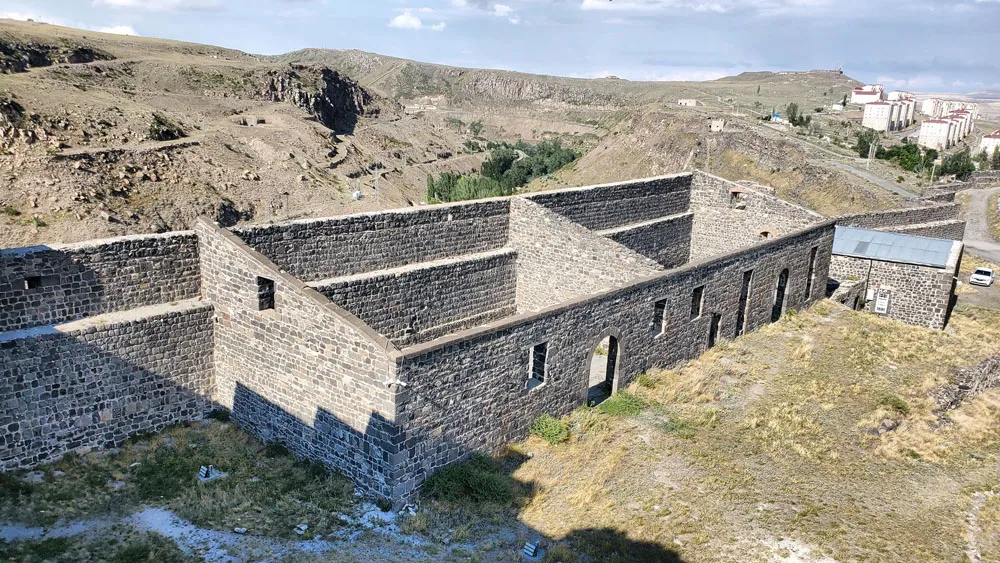
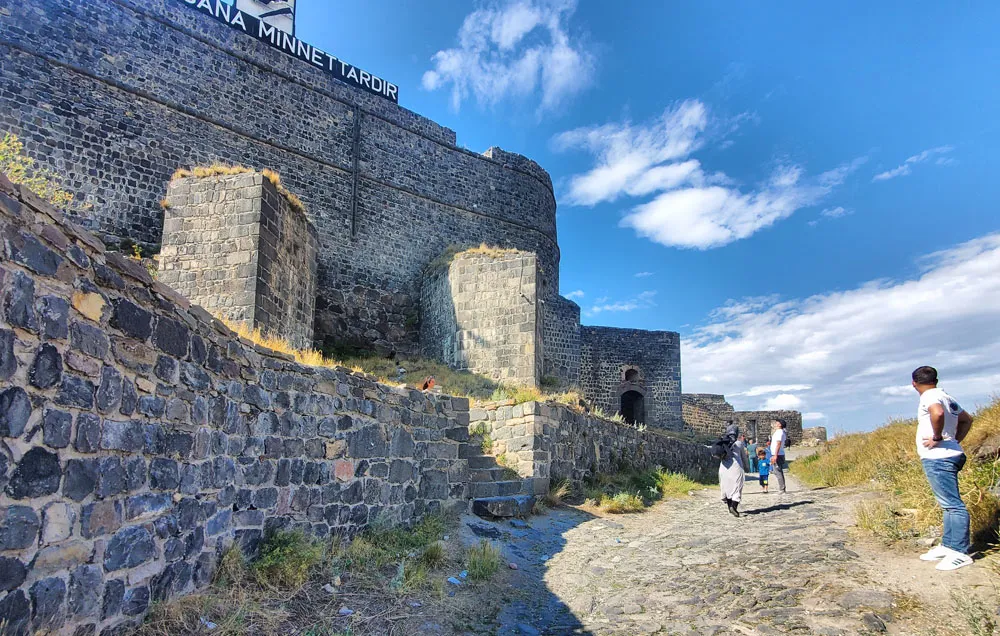
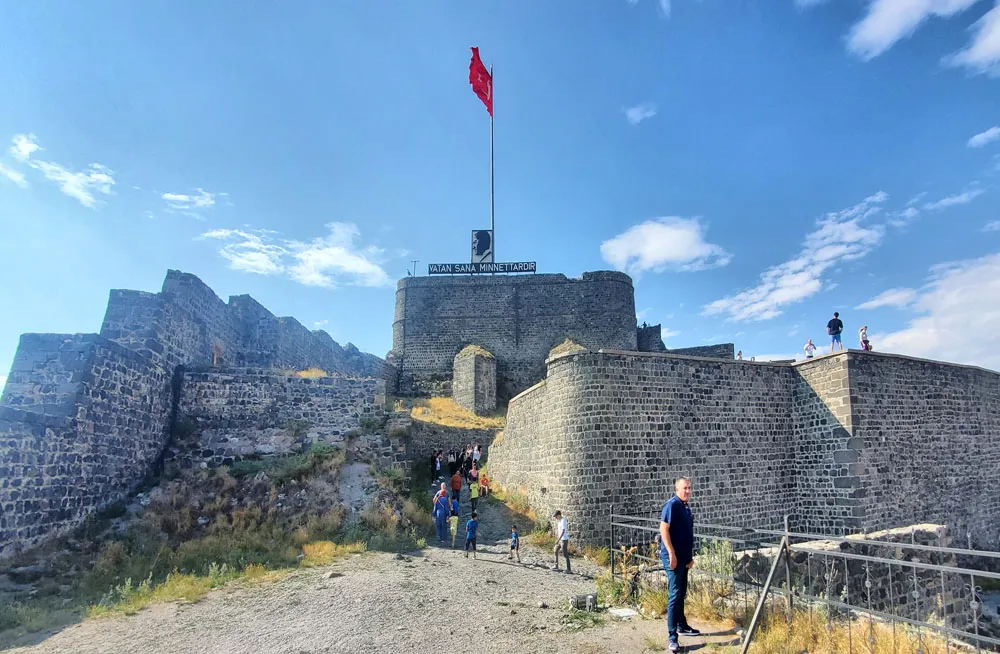
The castle of Kars stands on a high hill in the centre of the city. Almost all the castle buildings inside the walls have survived, although most are without roofs, windows and doors. On the castle grounds there is a restaurant and several fine viewpoints. I strongly recommend climbing up to the castle, and from below it is best photographed from the old Taşköprü bridge, which was built over the Kars river in 1725.
Many Turkish sources state that the present walls of the castle were built by Sultan Murad III, but this is not certain, since khachkars are walled into the walls in several places, which testifies to their Armenian origin. Although Murad did considerably reconstruct the walls, and later the castle was extended several more times, until it lost its fortification function in the 19th century. Then a new fort was built on the hill opposite the castle, and a whole network of forts was built around the city.
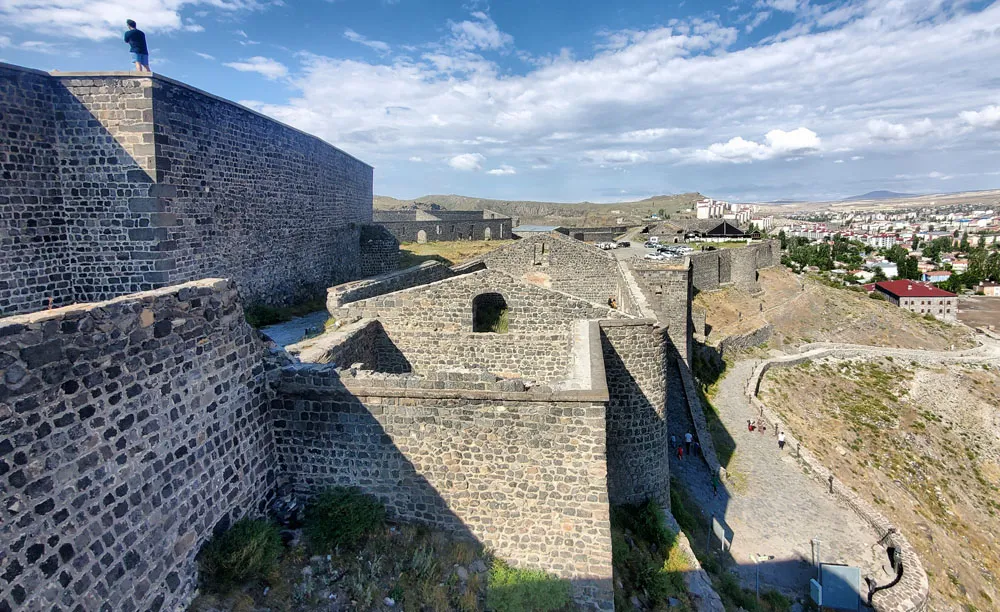
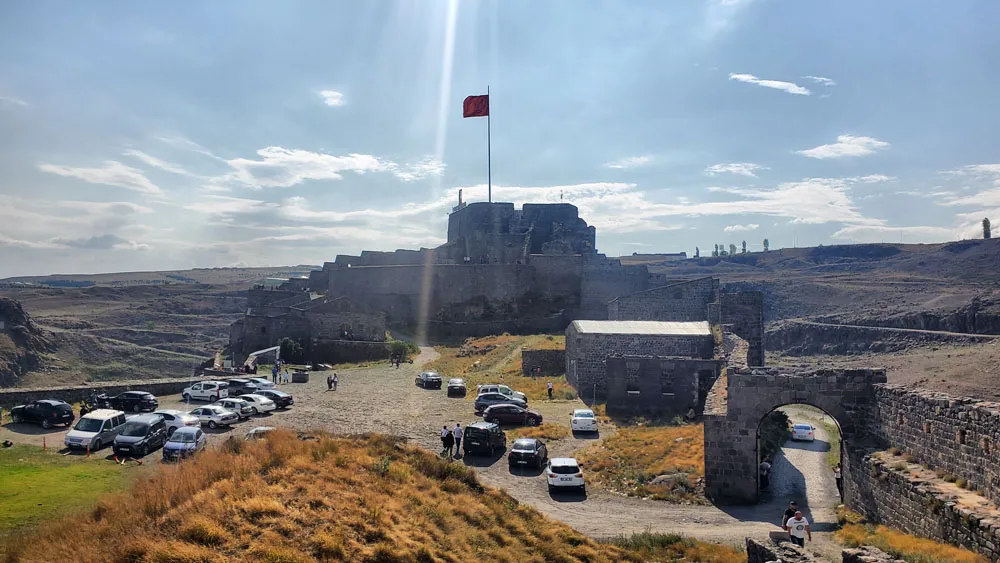
In front of the castle, towards the city, lies a large square on which, and near which, most of the sights of Kars are located. Here are several notable mansions and the Beylerbey Palace. There is a whole host of hamams (baths), türbes (mausoleums) and camis (mosques). I recommend paying attention to the Evliya Mosque, built in 1579 in the Ottoman style.
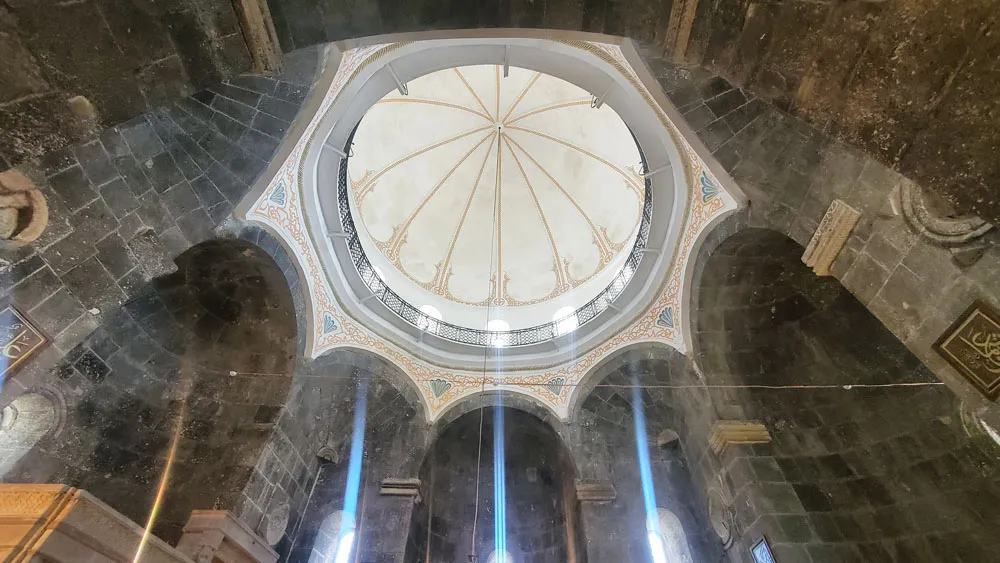
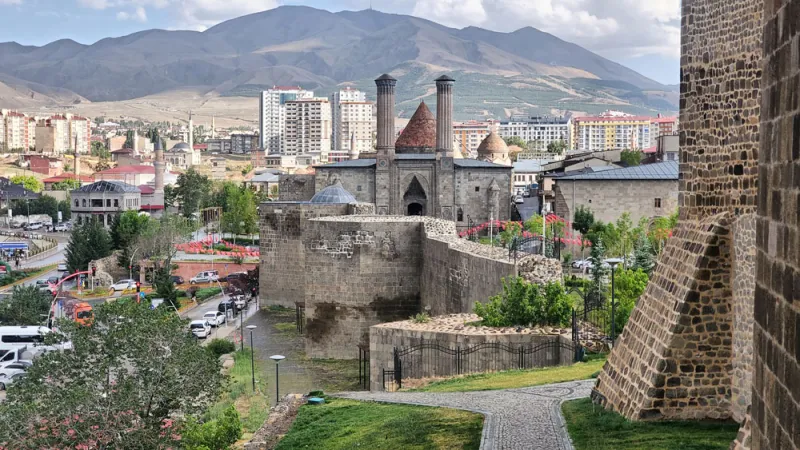
The most important monument of Kars, along with the castle, is the Armenian Cathedral of the Holy Apostles — Surb Arakelots. It was built by the Bagratid king Abas in the 930s. Black basalt walls, a conical roof and a tetraconch plan (a four-sided structure within a four-sided one) — it is an incredible building, the result of a synthesis of Byzantine, Armenian and Georgian cultures. The drum of the church still bears 12 bas-reliefs of the apostles. In 1579 the Armenian Christian church was turned into a Muslim one. In the 19th century the Russians made it an Orthodox cathedral, and in 1919 it returned to the Armenians. Today it is the Kümbet Mosque. The caretaker (or perhaps a priest) is friendly and does not hide that it was an Armenian cathedral, although very often the Turks try not to mention the Armenians, as if they had never lived here.
Kars features in Orhan Pamuk’s novel “Snow”. The outstanding writer tells of a series of suicides of women that took place in the city, which a journalist from the capital, Istanbul, came to investigate. Kar means snow in Turkish — in the novel it falls constantly, but I have not finished reading it yet, and I do not want to spoil it.
P.S. Pamuk’s Kars is such that you want to go there again. In winter.
Text and photos by Roman Malenkov.