Turkey. Erzurum

· 5 min read
Erzurum is the largest city in the north-east of Turkey; according to statistics, in 2020 it had 670,000 inhabitants. It is also one of the highest-lying cities: the average elevation of Erzurum’s streets is 1,890 metres above sea level. Erzurum occupies a plateau that abuts the mountains. The city’s territory is quite flat, although it lies at a considerable altitude.
Erzurum has some of the harshest climatic conditions in Turkey. In winter snow lies here for three months and it is very cold. This area was once called the Turkish Siberia, although when we were here in July 2021 there was terrible heat, +43 degrees Celsius. This shows how continental the climate is: cold in winter, heat in summer.
The name Erzurum comes from Persian, Arz-e-Rum, the land of the Rums (Romans, that is, Byzantines). Rum was the name for the Romans and Byzantines (the Eastern Romans). Until 1071 the city belonged to Byzantium and was called Theodosiopolis (after the emperor Theodosius). After the Battle of Manzikert, which took place precisely in 1071, these lands were seized by the Seljuks, although even before that Erzurum had changed hands many times: the Hurrians, Assyrians, Cimmerians, Scythians, Macedonians led by Alexander, the Seleucids (Greeks), Romans and Byzantines. In 633 Erzurum was conquered by the Arabs of Umar ibn al-Khattab…
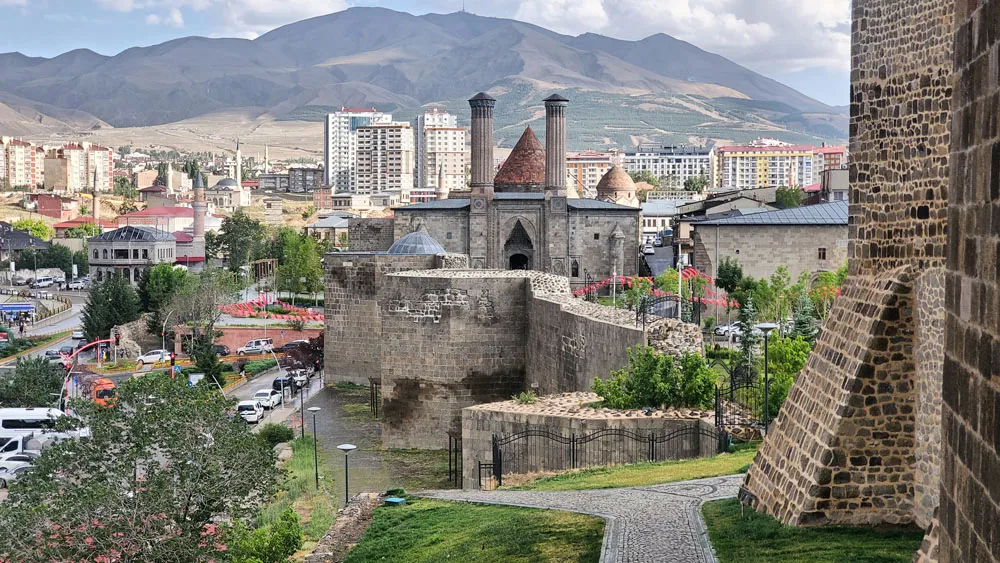
Madrasa with two minarets
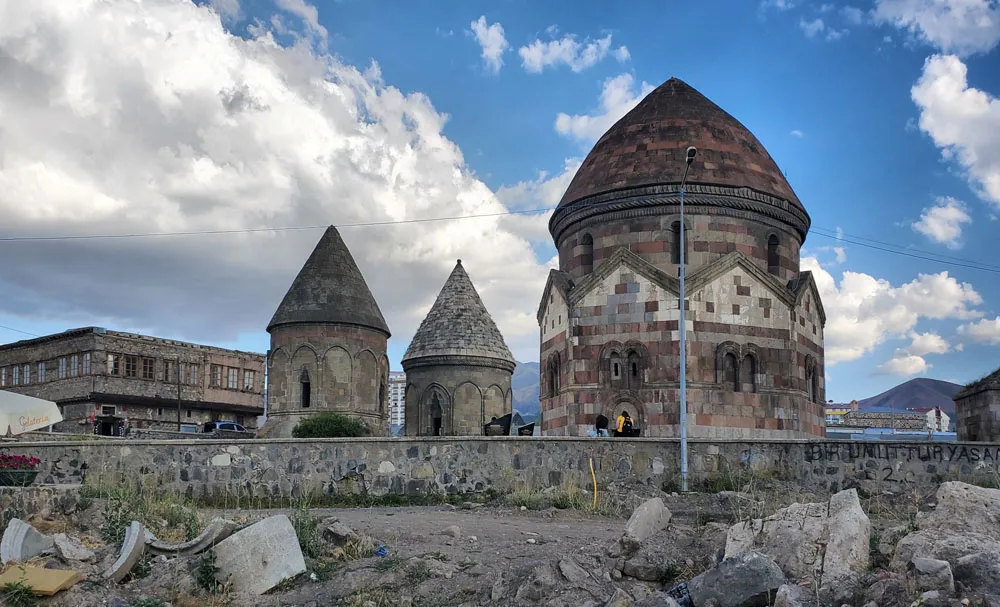
Tombs
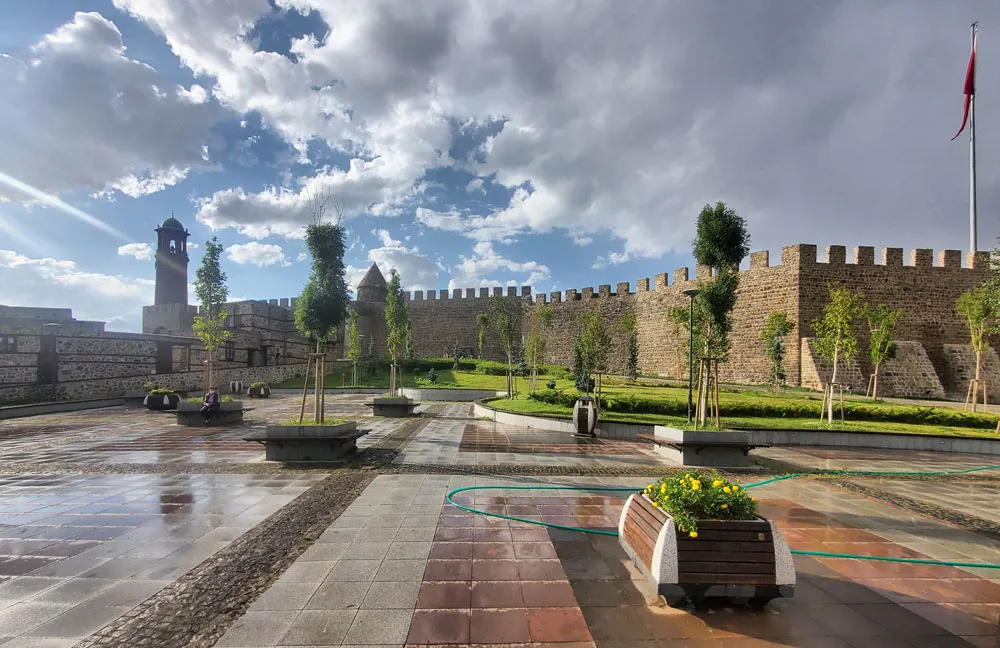
Fortress
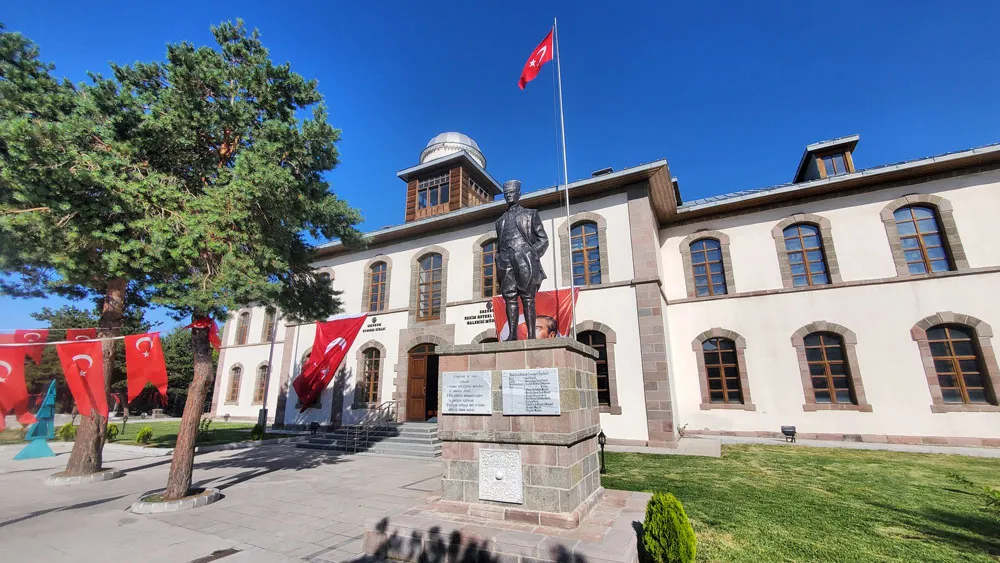
Congress Building
From the end of the 11th century Erzurum belonged to the Seljuks, although it was periodically conquered by the Mongols, the Georgians, Timur’s Turkmens, or the Persians. In 1514 the Ottomans captured Erzurum for the first time, and from the reign of Suleiman I the Lawgiver (Kanuni), whom for some reason we call the Magnificent and the Russians call “Velikolepny”, right up to the present day Erzurum has remained under Turkish rule. Actually, no, I am lying: in the 19th century the Russian Empire twice seized Erzurum for short periods, and in 1916, during the First World War, in the course of the Erzurum Offensive, after defeating the Turkish army, it held the city for almost two years.
Until 1915 a considerable part of Erzurum’s population, and in some periods the majority, was Armenian, as across the whole of eastern Turkey, which was once part of Greater Armenia. Accordingly, the centre of Erzurum was built up with Armenian residential houses; very few of them remain now, as everything was demolished.
Everything changed in the 19th century, when mass pogroms of Armenians began. In 1895 the Erzurum massacre took place, when 60,000 Armenians were killed in Erzurum, Trabzon and Erzincan. 1915 was even more terrible, when all the Armenians of Erzurum were killed or deported by order of the Young Turk government. Most sources claim that deportation too was most often death for the Armenians… Since 1915 there have been no Armenians in Erzurum.
Erzurum is a very beautiful city. I had long wanted to visit it. I did, and I did not regret it.
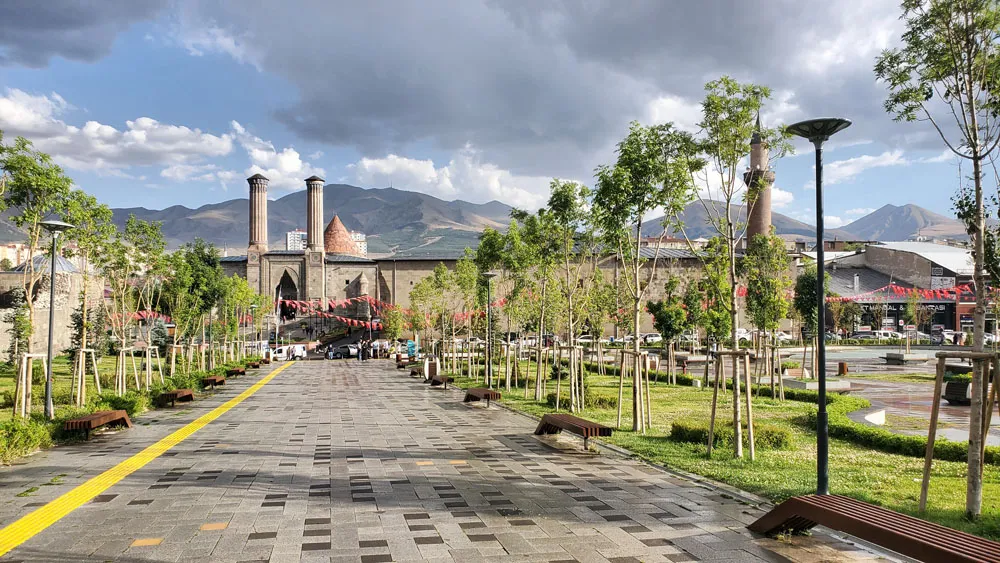
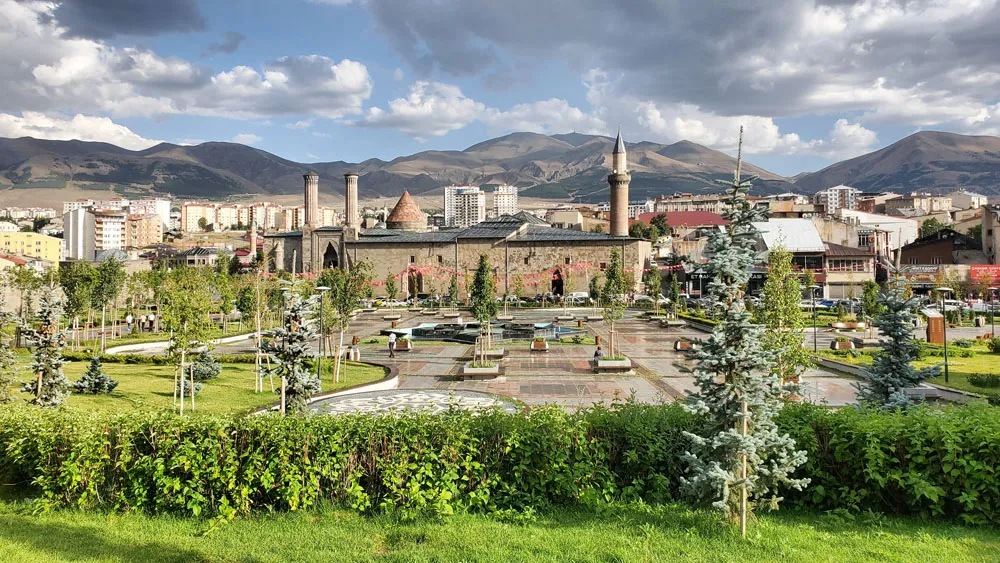
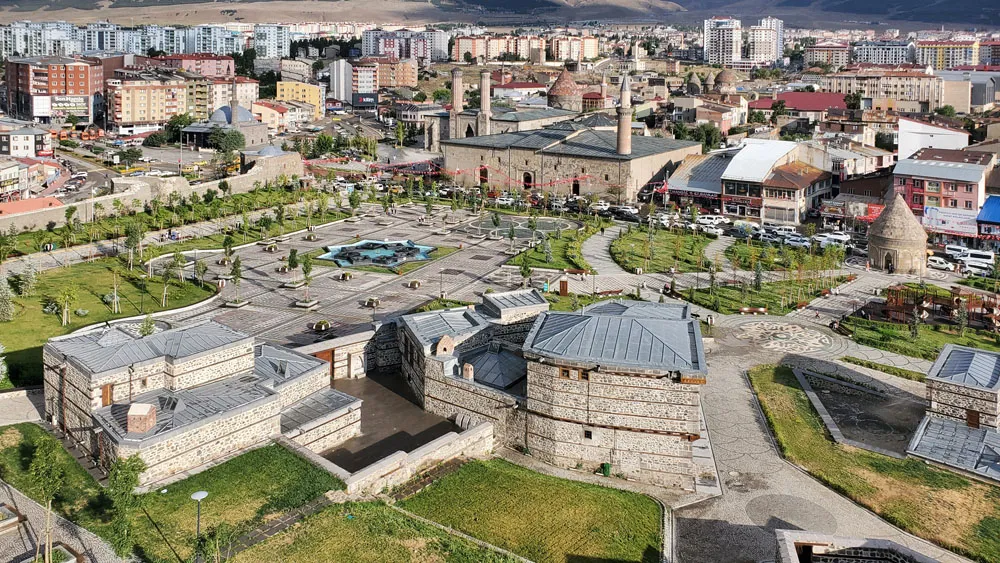
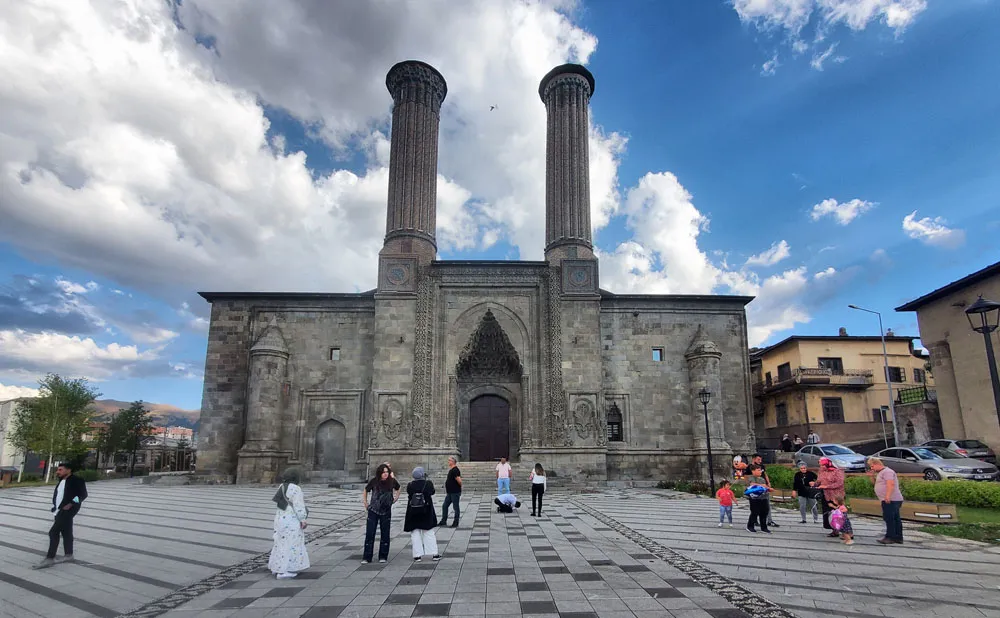
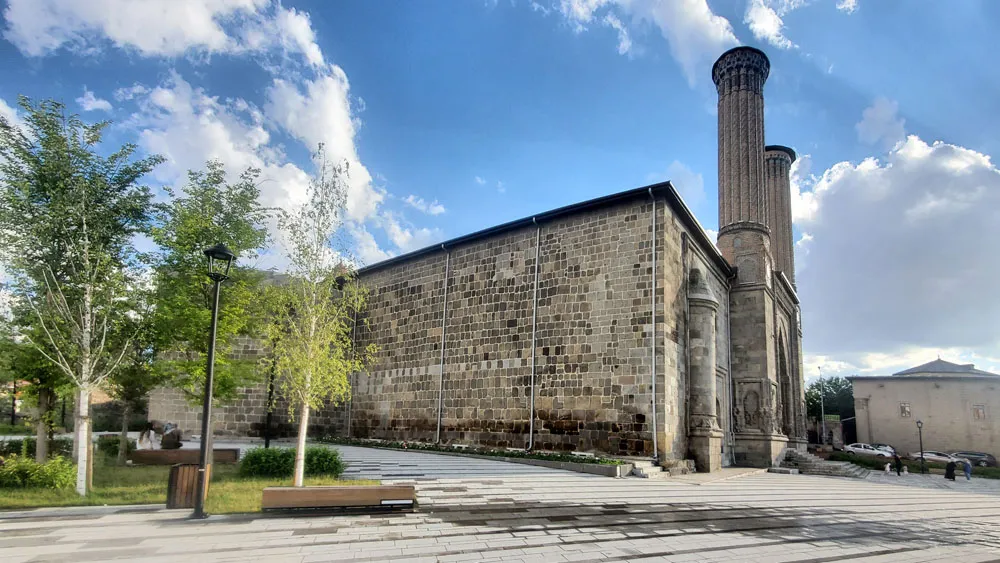
The symbol of Erzurum is the madrasa with two minarets, Çifte Minareli Medrese. It is an incredibly beautiful building, erected by the Seljuks in the centre of Erzurum. The madrasa was built from 1253 to 1291. The minarets are 26 metres high. Like the entrance portal, they are decorated with fairy-tale carving. The madrasa has two storeys, an inner courtyard, 37 rooms and a mosque. During the Russian occupation the madrasa was plundered. They say that part of its treasures is still kept in Russian museums.
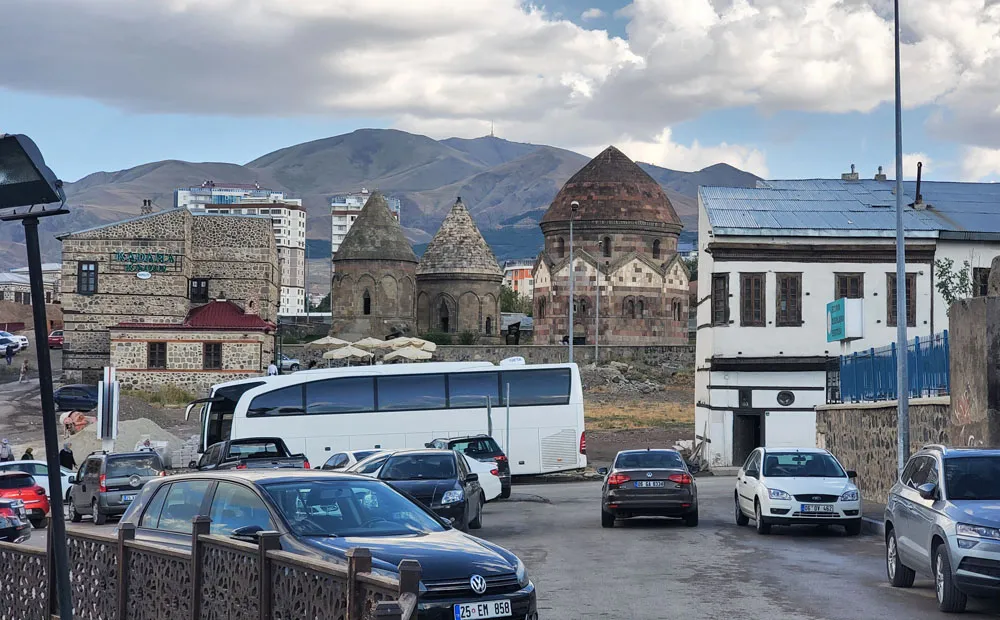
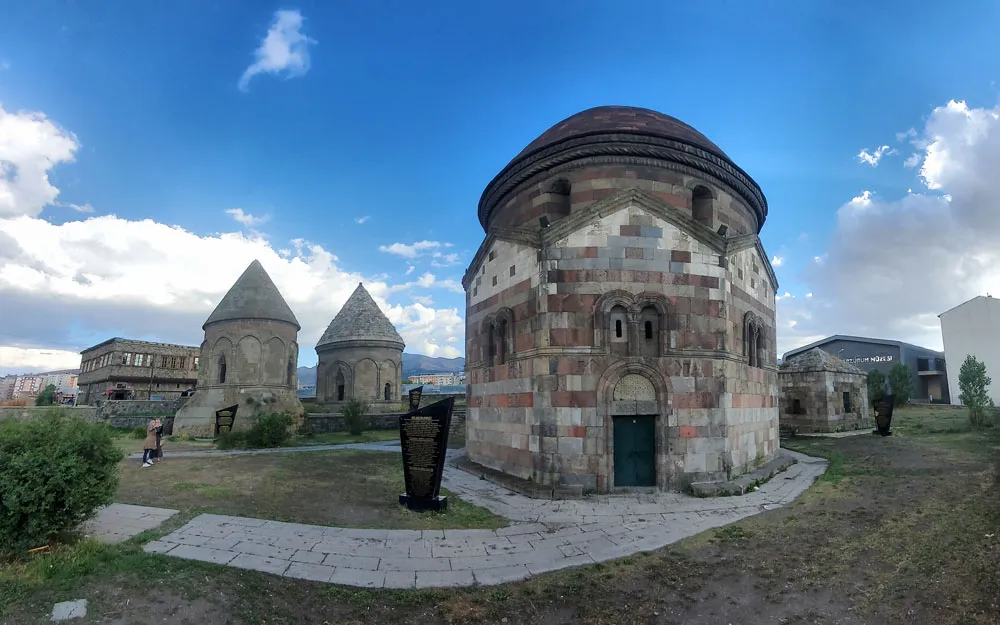
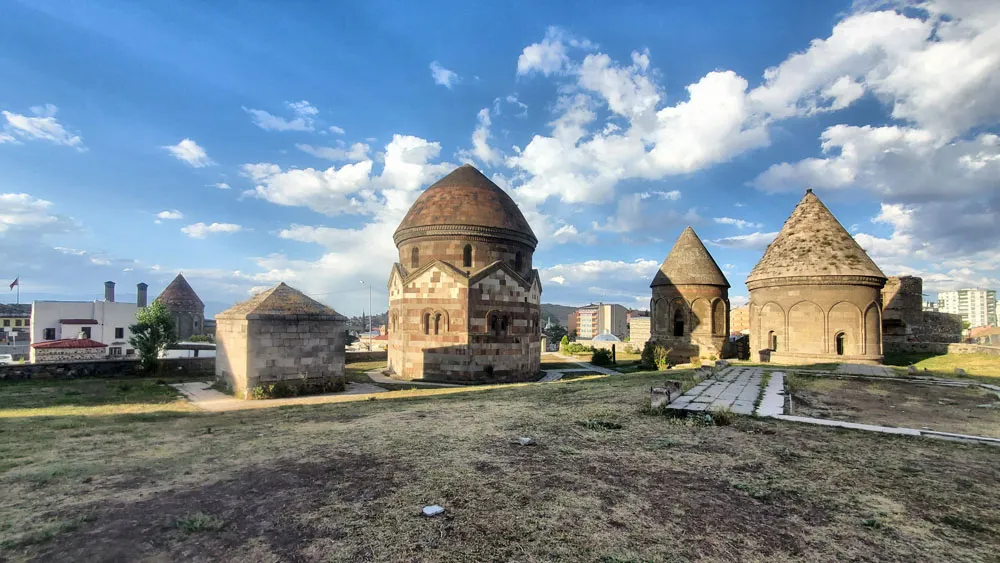
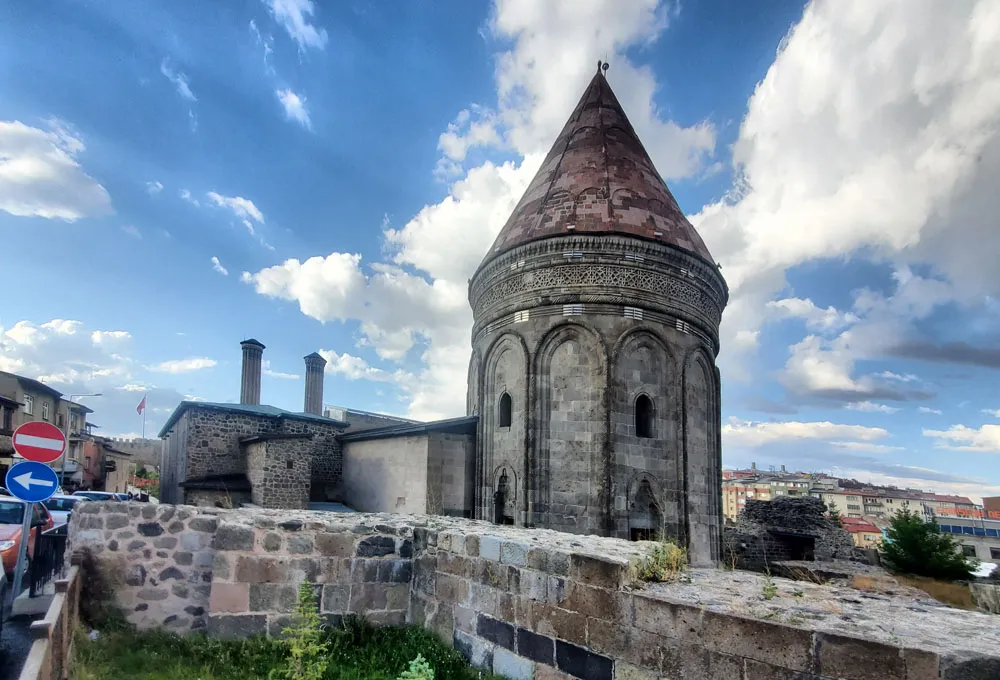
Behind the Çifte Minareli Medrese lies an area with Islamic mausoleums. There are four mausoleums here, three of which are true architectural masterpieces. The mausoleums were built in the 12th-14th centuries, but who was buried in them is not known for certain. They write that the largest tomb belongs to Emir Saltuk. The complex is called the Three Domes.
To the right of the entrance to the madrasa is the main mosque of Erzurum, the Ulu Camii (what else could it be called). It was built by Emir Saltuk Nasreddin Aslan Mehmet in 1179. The mosque is large in area (51 by 54 m) but squat. The building has 40 columns. To the east of the mosque, about three hundred metres away, stands another masterpiece madrasa, the Yakutiye (1310), and opposite it, across the square, the fortress.
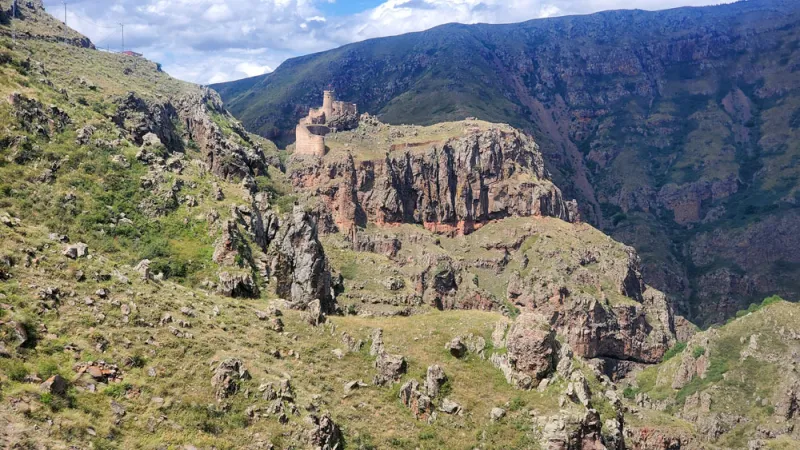
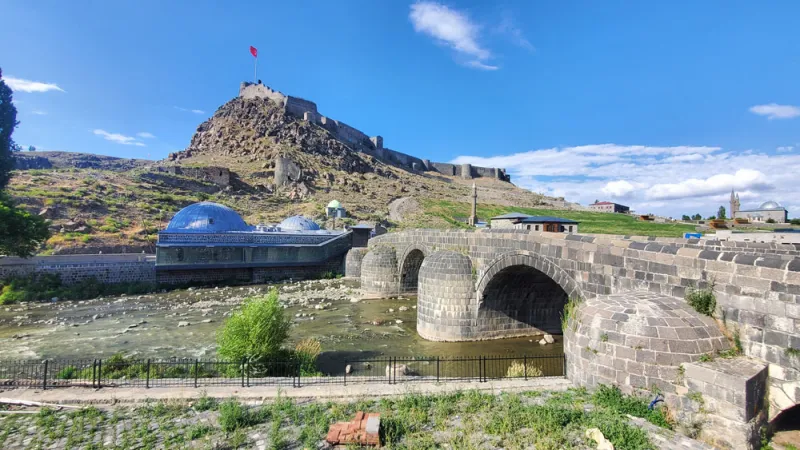
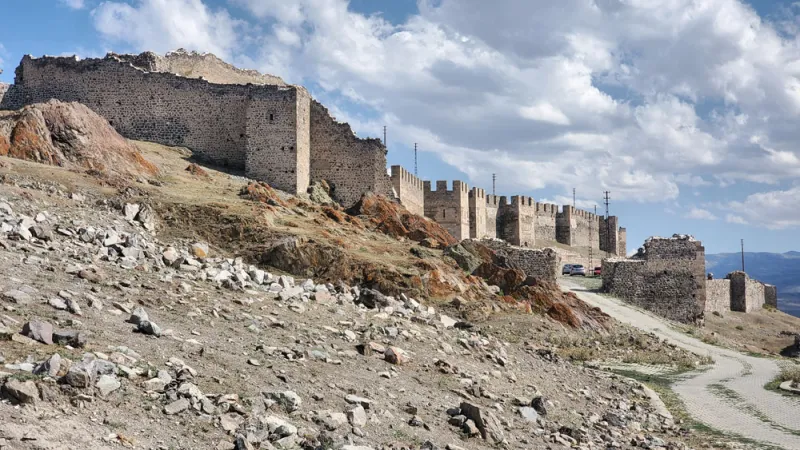
The fortress in Erzurum was built by the Urartians 2,500 years ago. Of course, perhaps only the foundations of that stronghold survive. The present fortress, which is only the citadel of the old one, was built by the emperor Theodosius in the 5th century. It was repaired many times later but preserved the general structure of its layout. Of the interior buildings only a mosque survives, very similar in architecture to Armenian churches (probably the Armenians drew up the design, which testifies to their considerable influence on the life of the city up to the 19th century), and a clock tower, which is an Ottoman fashion: they put up such towers all over the empire in their time. You can climb the tower, and you should, because the views from here are splendid: you can see the city and the mountains that surround it.
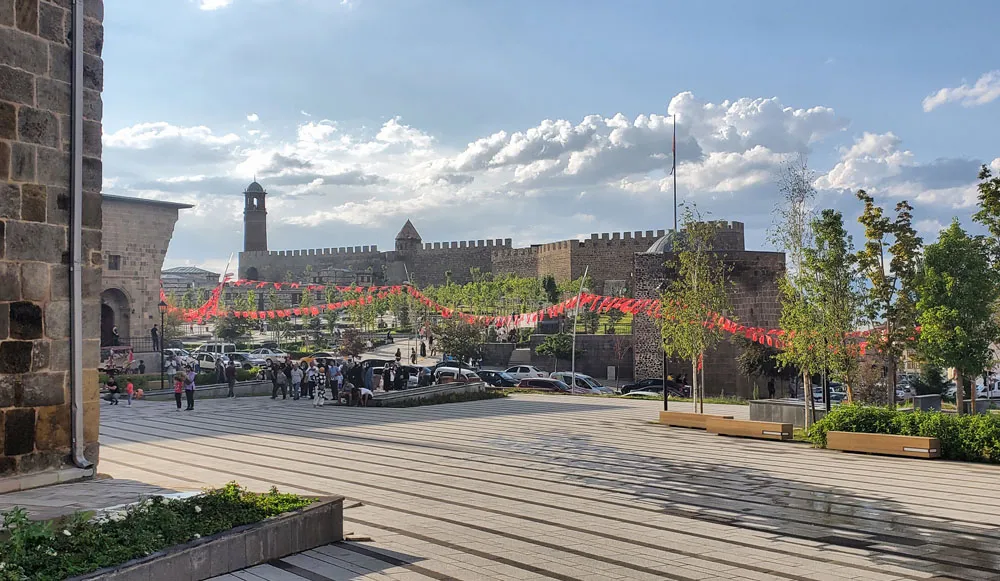
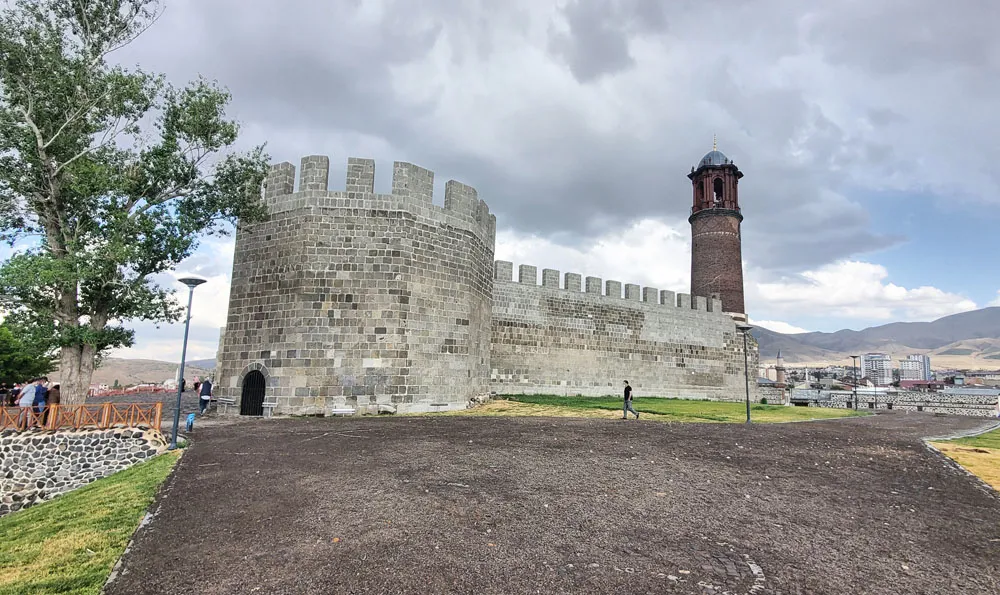
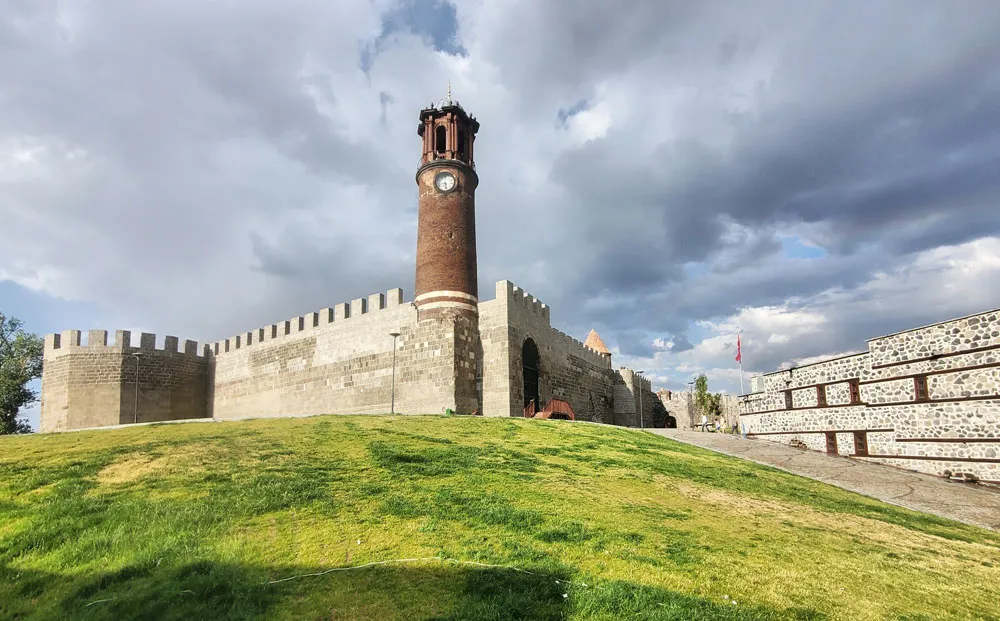
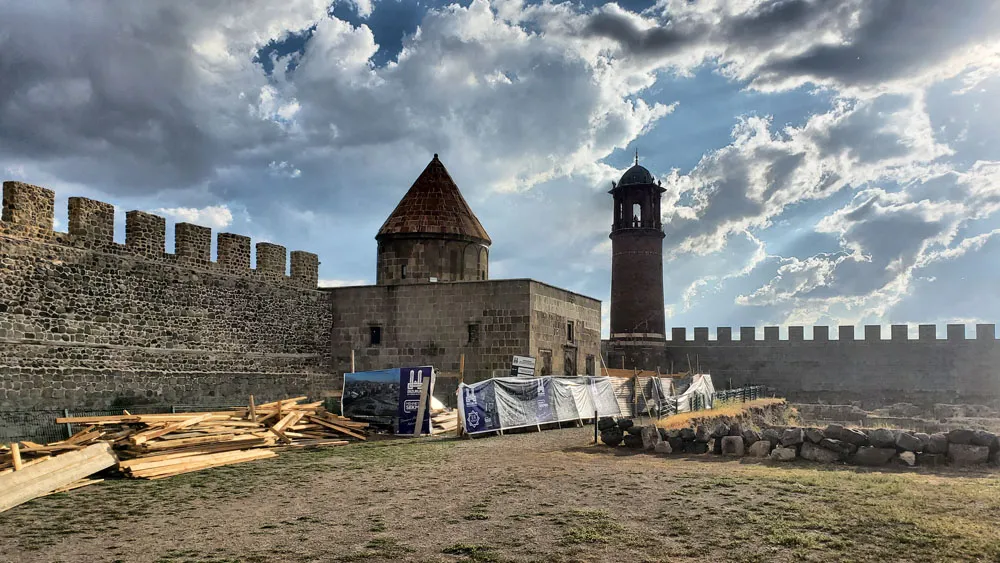
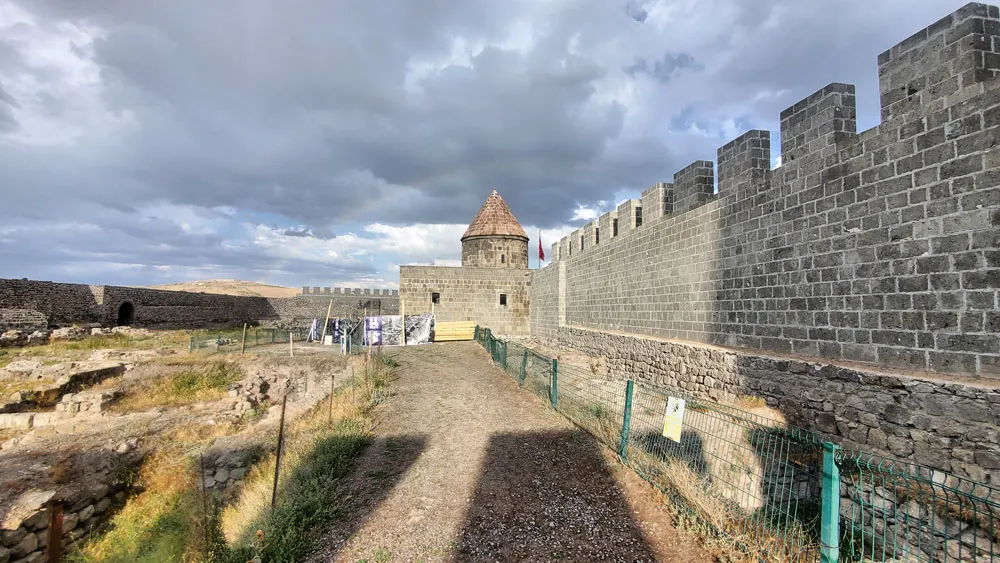
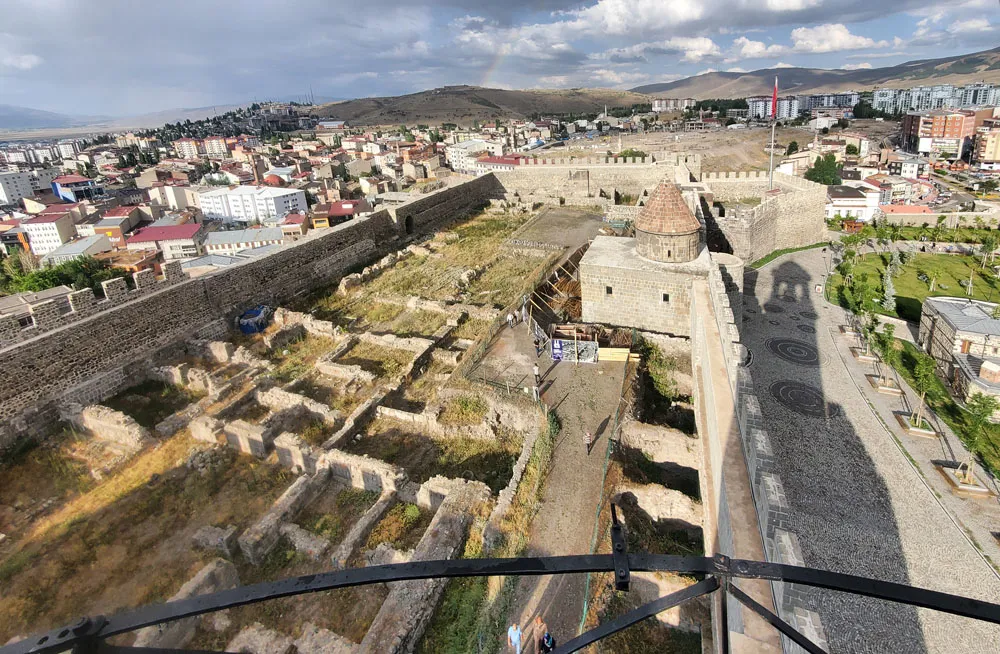
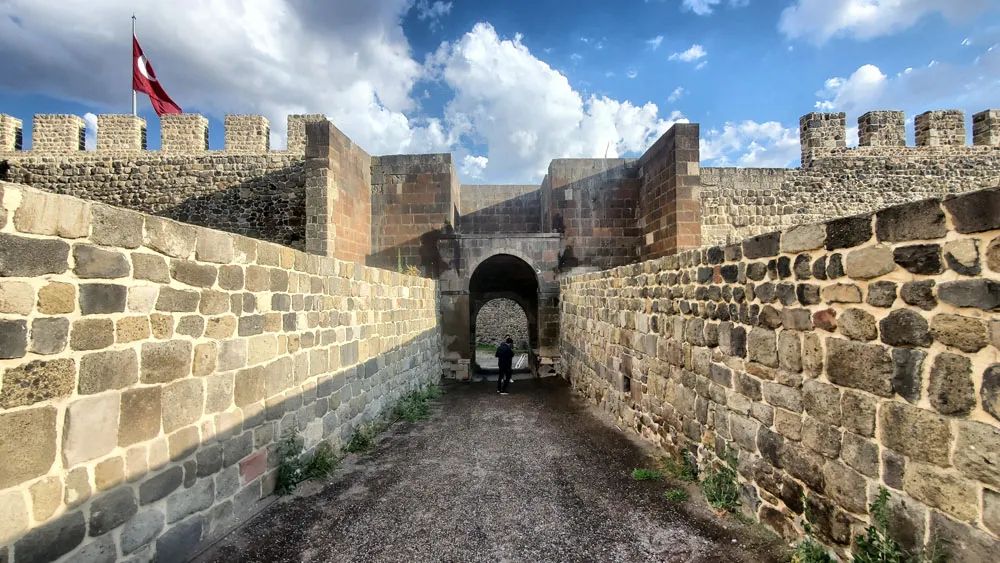
Erzurum has a great many sights, and around it is a system of forts that are now turned into military memorials.
Bastion stone-and-earth forts are called tabya in Turkish. The word comes from Arabic and means a place or building constructed for the temporary shelter of soldiers and the conduct of war, in order to defend a strategically important place. In the second half of the 19th century, under Sultan Abdulaziz, 21 such tabyas were built. We visited two of them, at an altitude of over 2,000 metres: Aziziye and Nene Hatun. These forts lie to the east of the city.
I must also mention one more sight of Erzurum: the Congress Building, where in 1919, during the war with Greece, when a considerable part of Turkey was occupied by Greek troops, a congress of communities was held and Mustafa Kemal, the future Atatürk, was elected chairman of the proto-government of the new country (which did not yet exist). Our hotel stood across the road from the Congress Building, which now houses a museum.
Text and photos by Roman Malenkov.