Church of the Exaltation of the Cross in Konatkivtsi: a wooden sailing ship of faith
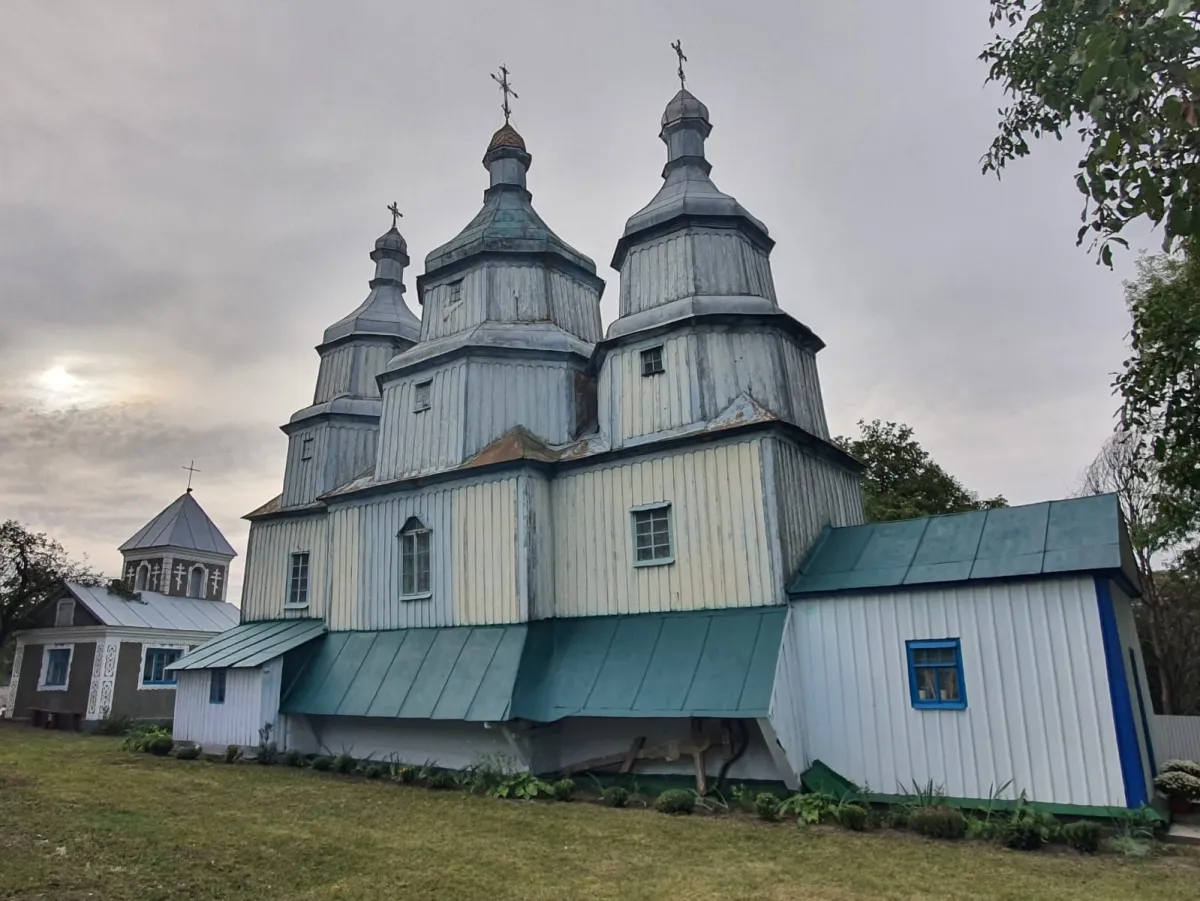
In the valley of the village of Konatkivtsi (Vinnytsia Oblast, Sharhorod area), among sunflower fields and dense orchards, rises the wooden Church of the Exaltation of the Cross, one of the most exquisite shrines in Ukraine. Its image is not just an architectural heritage but a poetic symbol of a spiritual ship gliding towards the archipelago of the Kingdom of God.
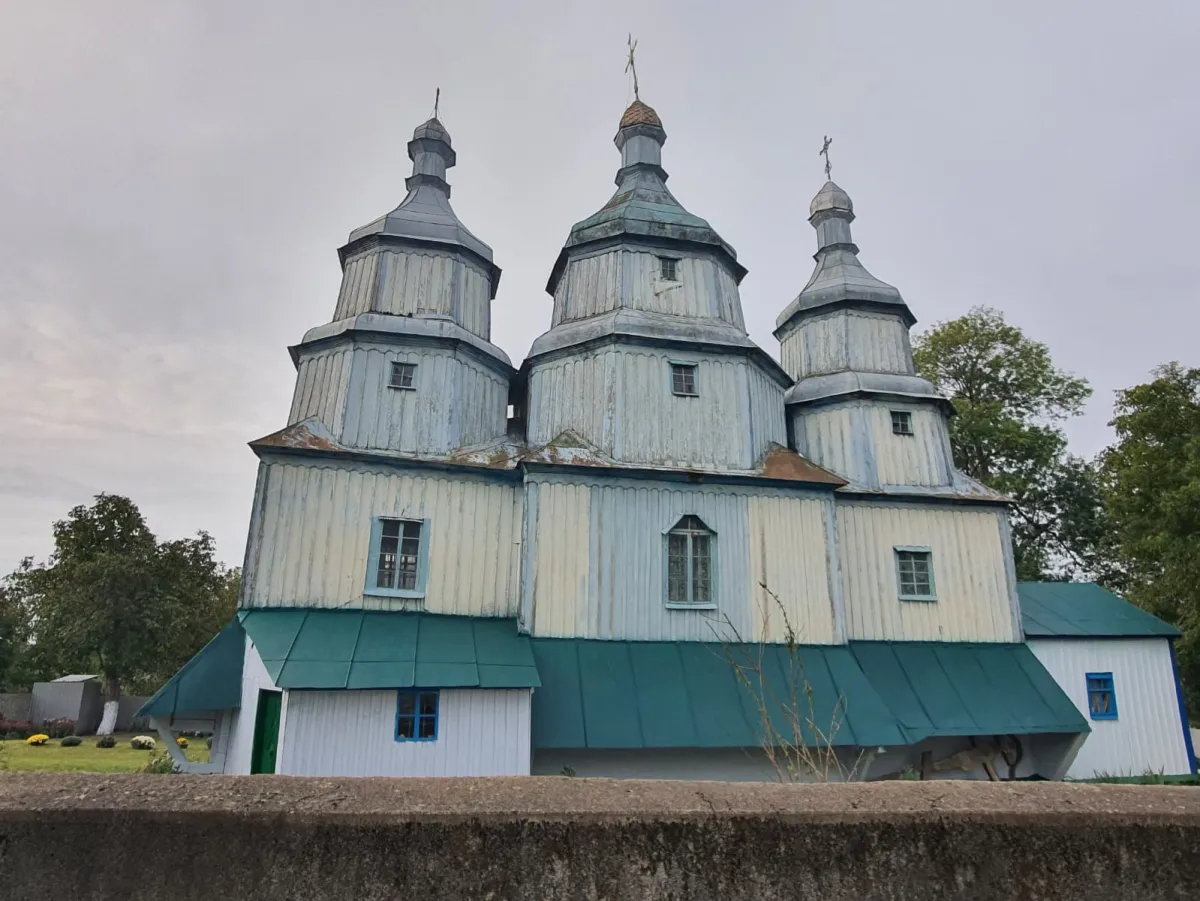
“Have you ever seen another church more like a marvellous sailing ship of God, gliding across the ocean of time and space towards the longed-for archipelago of the Kingdom of God?” ask the authors of the study “KONATKIVTSI – the only village on the planet”, struck by the plasticity of the church’s forms and its symbolic depth.
The first wooden church in Konatkivtsi lasted until 1770, when it was dismantled because of its dilapidated condition. On its site, with funds from Princess Lubomirska and local parishioners, construction began on a new shrine: the Church of the Exaltation of the Precious and Life-Giving Cross of the Lord. It was consecrated on 1 June 1775. At first it belonged to the Uniate Church, but after Podillia was annexed to the Russian Empire in 1795 it was forcibly transferred to the Russian Church.
“This church of the Exaltation of the Lord’s Cross was built in the year of God 1775, on the 1st day of June…” reads an inscription on the door jamb, preserved to this day.
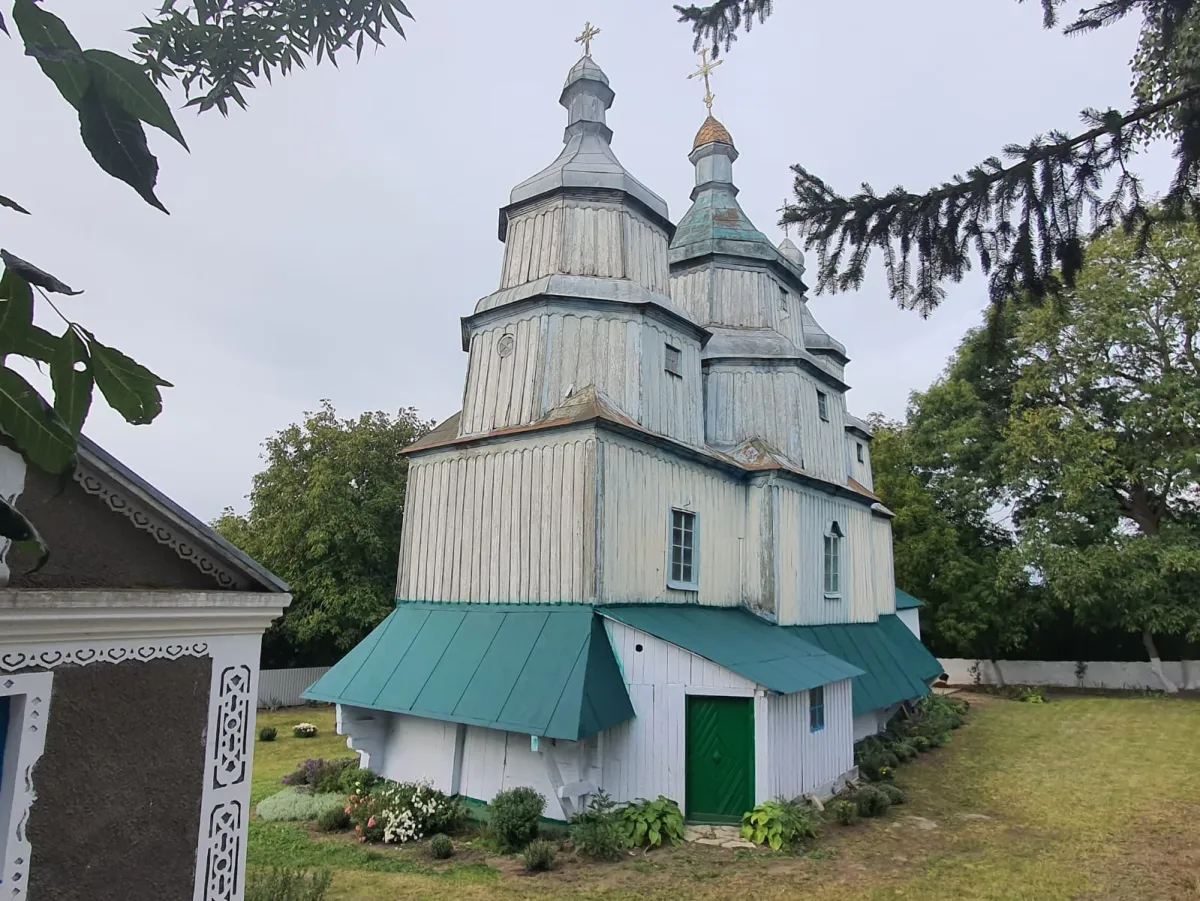
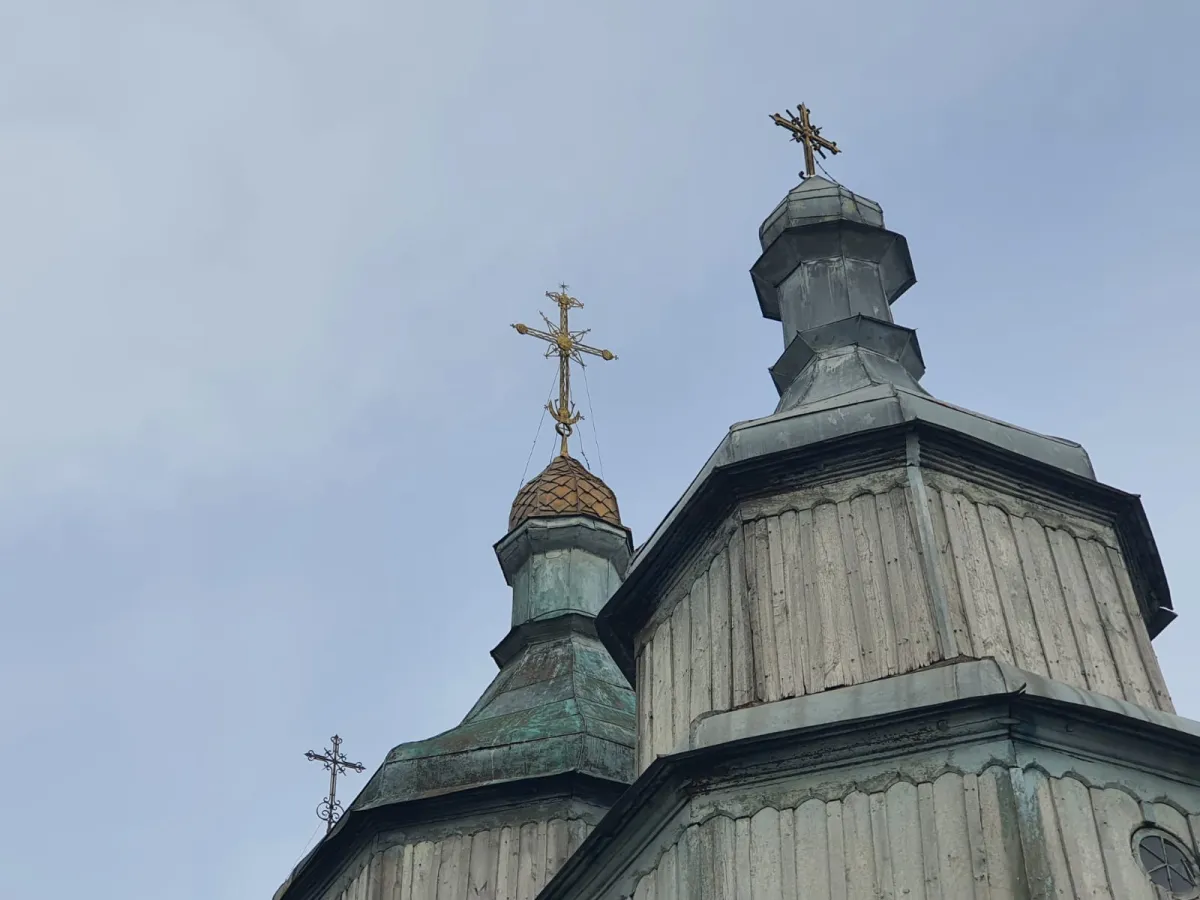
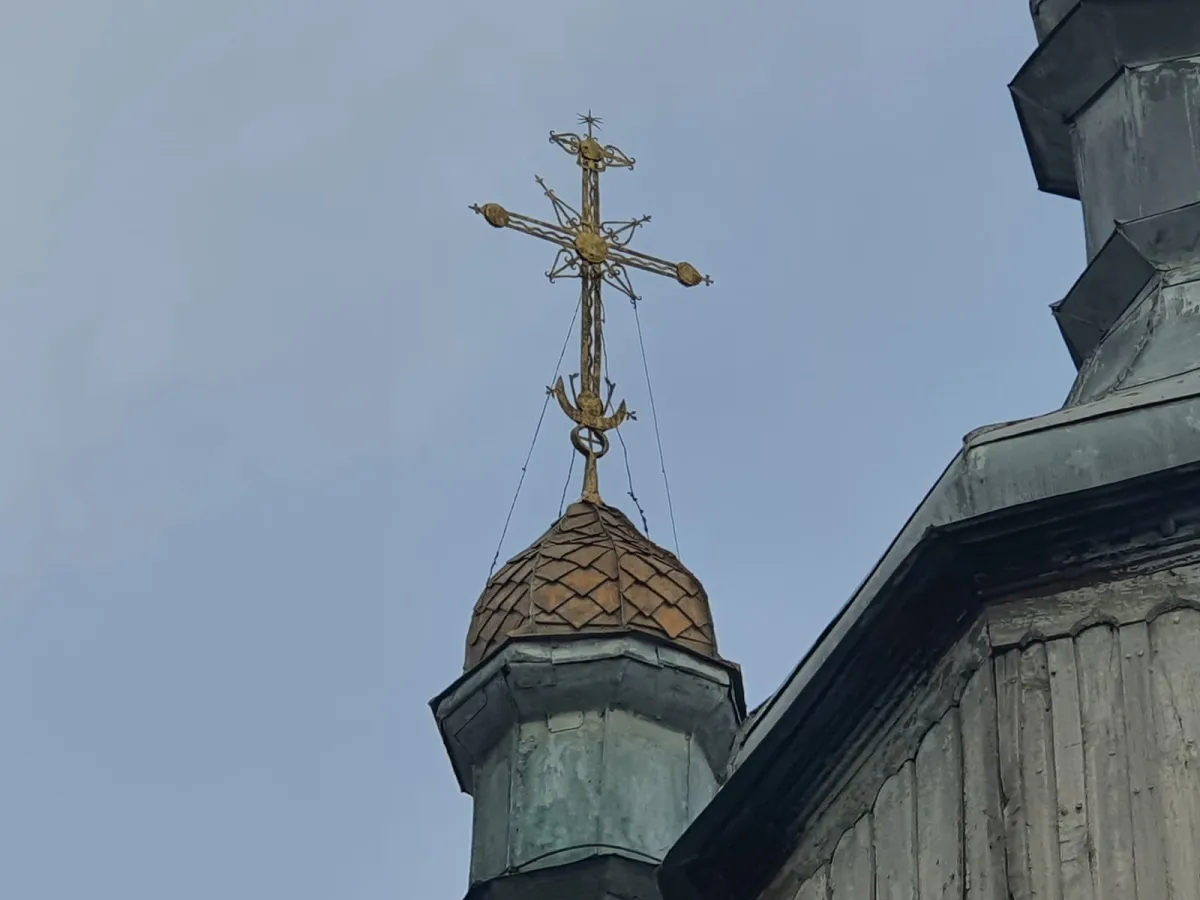
The church is a three-part composition of three log-built towers, two tiers of octagons, domes and tiny cupolas. The wide skirt roof (opasannia), the vertical board cladding, the contrast between the massive beams of the lower tier and the streamlined forms of the upper parts: all this creates the image of a light, plastic ship that seems to grow out of the ground.
“The silhouette of the church is slender, like a three-masted sailing ship. The very wide skirt roof embraces the log structures and emphasises the graceful silhouette soaring upwards. Shaded by the bright southern sun, the lower tier, with the ends of the thick log beams projecting like a ladder beneath the skirt roof, not sawn off in small steps as in Lozova but left at full cross-section, creates a sharp contrast with the diminishing volumes, clad vertically and divided horizontally by breaks. After the lower squares come two tiers of octagons, then domes, and then cupolas that seem tiny. The plasticity of soft streamlined forms gathered into a compact volume creates a complete, expressive image,” wrote Dmytro Malakov in the book “Across Eastern Podillia” (1988).
The interior is no less solemn: high, tinted grey, decorated with green, blue and brown crosses. The volume of the narthex is joined to the nave by a shaped arch cut directly through the log wall.
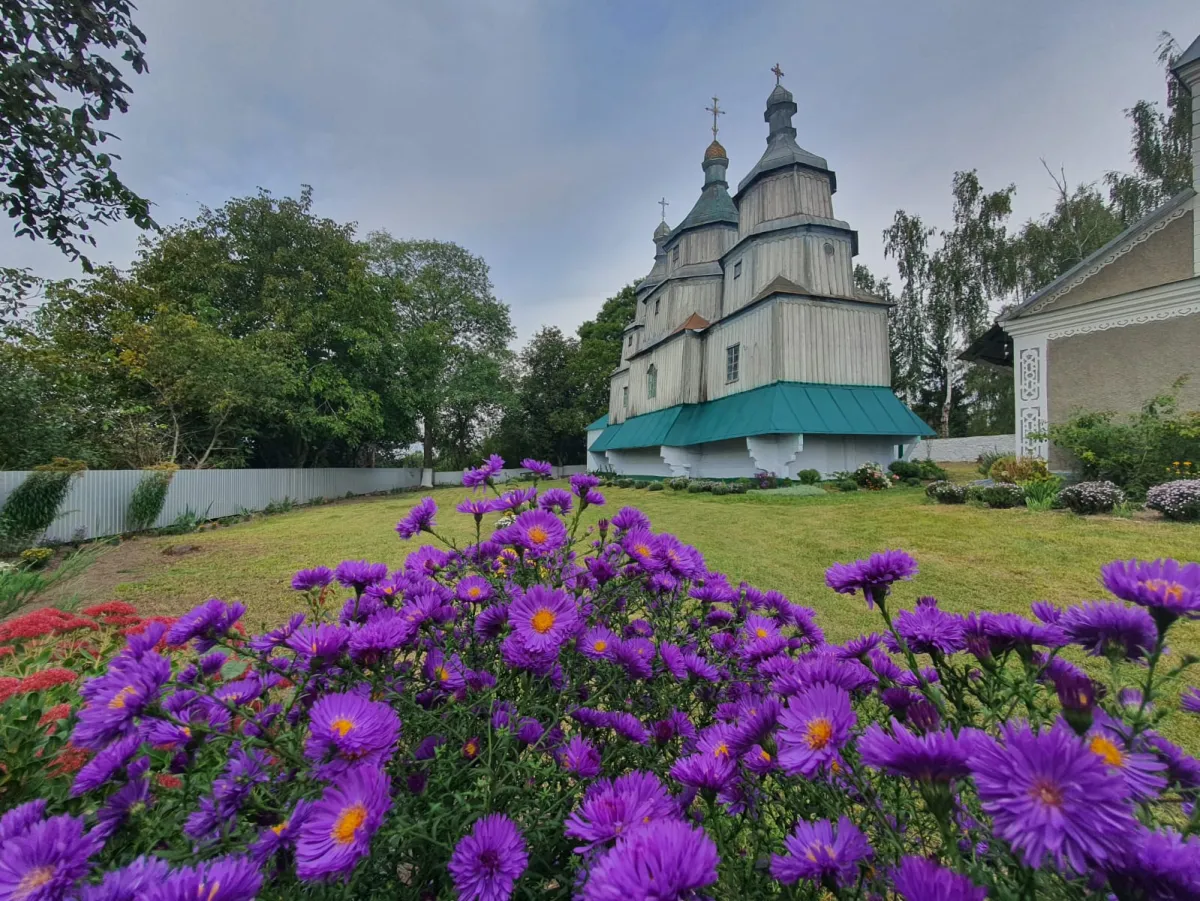
“The population of Konatkivtsi consists exclusively of Little Russian peasants of the Orthodox confession… and the parish church, rising quite clearly above all the orchards and houses” wrote Yukhym Sitsinskyi in 1901.
Despite its uniqueness, the Church of the Exaltation of the Cross still has no national protected status. Local residents raise funds for its upkeep, but this is not enough. A new masonry church was recently built in the village, and now services are held in the old church only once a year, on the feast of the Exaltation, the church’s patronal day.
Photos: Maksym Nazarenko