How the Cossacks liberated Vienna and saved Europe: one of the greatest and most important battles in history

· 7 min read
In the middle of 1683 the Ottoman forces achieved significant success in their advance on Europe, reaching the capital of the Habsburg Empire, glorious, splendid, wealthy Vienna.
It was then perhaps the most coveted target for the conquerors.
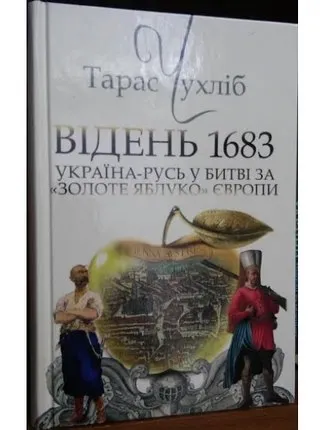
As the historian Taras Chukhlib writes in his book of the same name, it was the “Golden Apple of Europe” that the invincible Ottoman Empire most wanted to seize.
The Grand Vizier of the Porte, Kara Mustafa, was so sure of his victory that he was in no hurry and literally savoured every day of the siege of Vienna, tightening the ring ever closer. One after another the suburbs fell at the feet of the Turks, followed by districts of Vienna itself. The imperial court had long since left the city and left only a few soldiers and loyal patriots to hold the defence. The defenders’ strength dwindled every week. On top of that, the disease that spread through the capital mowed down the townspeople and left almost no hope of holding the then capital of Europe.
The consequences could have been fatal, and the course of history could have gone quite differently…
Had the Polish king Jan III Sobieski, who gathered (including in Ukrainian lands) an army of more than 22,000, not set out to rescue his fellow Christians.
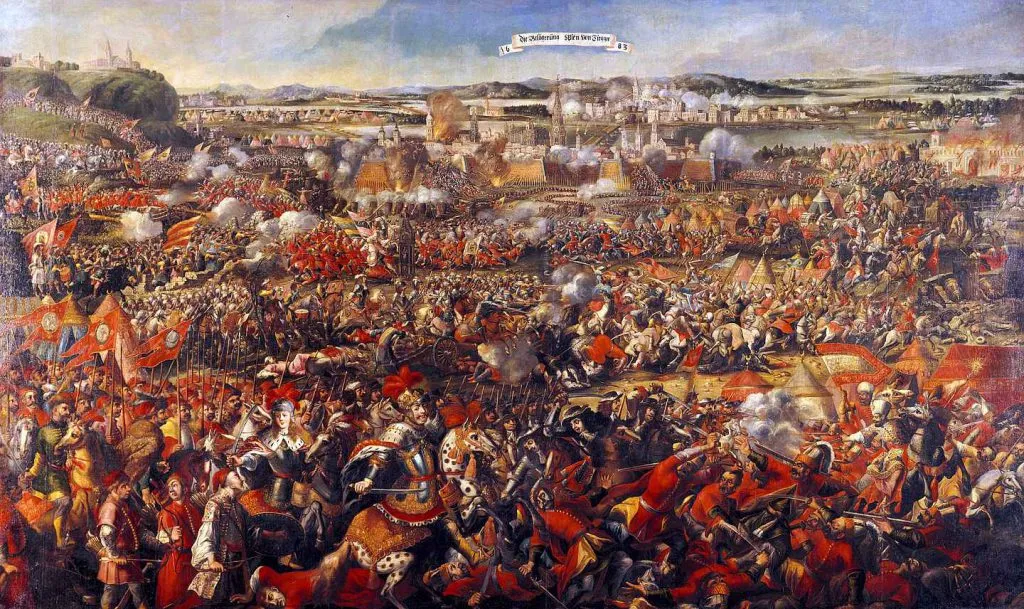
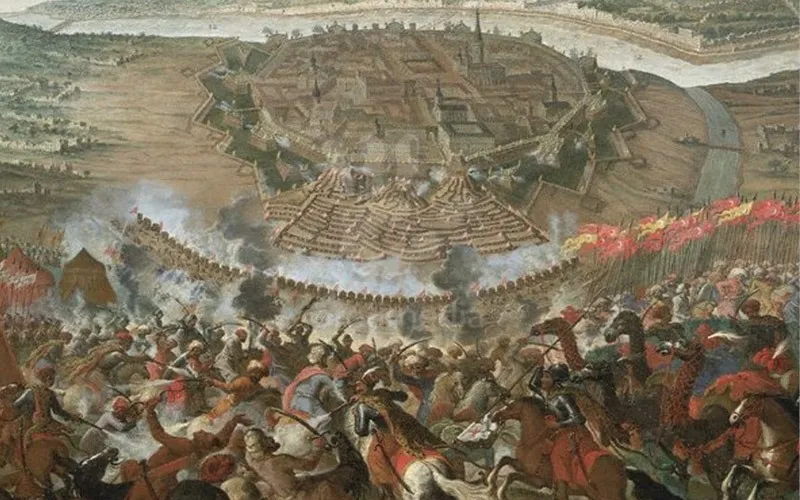
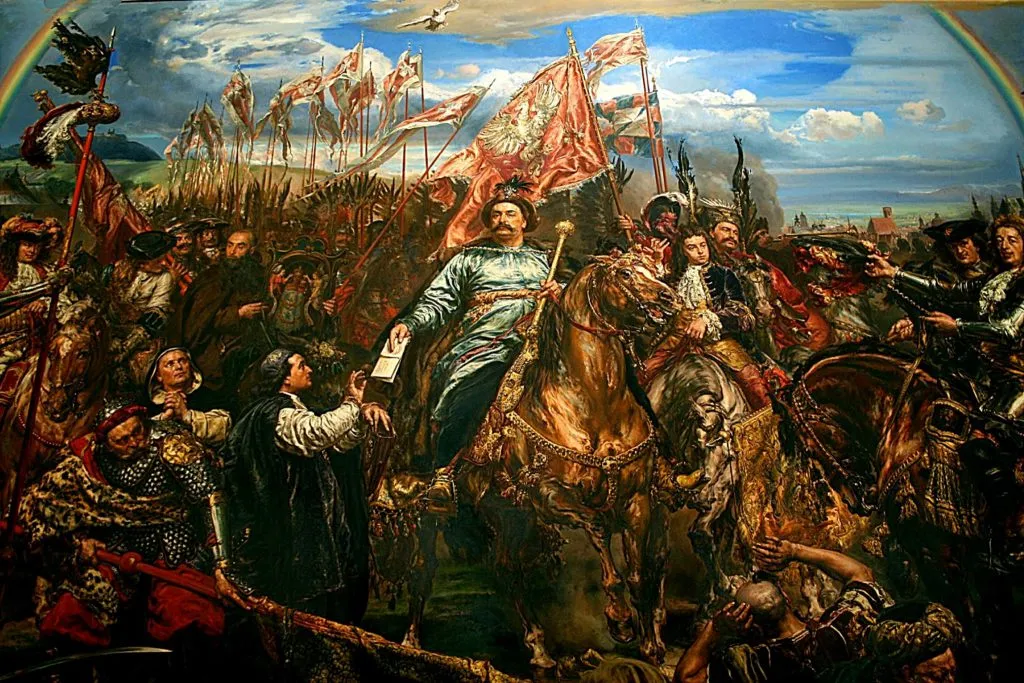
Together with the Austrian and German troops, the army led by Jan III Sobieski was almost half the size of the Ottoman army of more than 160,000.
But they decided to act at once, trying to surprise the enemy. The assault by the united army on the Turkish positions began on 12 September 1683.
The attack was so decisive, and the actions of the advance detachments, among which the Cossacks stood out for their audacity, striking straight at the very heart and being first to approach the tents of the Grand Vizier, that in a single day they managed to cause panic in the enemy’s ranks. The Turks, previously self-confident and now frightened, began an immediate retreat, and the European army pursued them.
The fighting continued for a long time, and the Cossacks distinguished themselves with numerous local victories along the path of the Ottoman retreat. Many chroniclers record that the Ukrainians won glorious spoils in those battles, liberating town after town from the Turkish occupation and driving the Turks all the way to the Black Sea.
The mentioned Taras Chukhlib wrote a great deal about the participation of Ukraine’s representatives in the victory of the European coalition of states over the Ottoman Empire at Vienna: “alongside three hundred Cossacks (among them the names known today are Colonel Apostol, centurions Chomukha and Potarenko, and rank-and-file ‘lads’ Mykhailo Movchan, Taran and Yarema) more than 10,000 nobles and peasants of Ukrainian/Ruthenian origin from the Kyiv region, Volhynia and Bratslav region, as well as Podlachia, the Chełm region, the Lviv region, the Ternopil region and other lands of Eastern Galicia fought in this ‘Battle of Nations’ of 1683”.
Chronicle:
“…he broke the peace with the Turks, since the Turk had marched on the Christian emperor and subjugated the whole Hungarian land, and then the vizier came to the imperial capital Vienna and besieged it hard there. Even the emperor, after clashing with the Turks in battle several times, was forced to withdraw from the city, to go away and hire mercenary soldiers, and then to organize a counter-attack again. For the common Christian cause, for the liberation of that Christian city, many Cossacks too went there of their own accord. Those Cossacks were paid handsomely. And when the Polish king Jan Sobieski came up to Vienna with the Polish army, they so crushed the Turkish force that the vizier himself, abandoning camp, cannons and tents, barely escaped with a small detachment. A pursuit was sent after him. It fearlessly entered the first town it came to, feared no counter-attack, and ruined and laid it waste.”
The defeat at Vienna became for the Ottoman Empire the beginning of a loss of positions in Central and South-Eastern Europe and the shattering of its dreams of the right to be the sole master of the Roman-Byzantine heritage.
The victory at Vienna contributed to the appearance in the world of numerous publications, books and studies in which Jan III Sobieski (born in Olesko, Lviv Oblast) was exalted as an outstanding commander who determined the fate of the struggle against the Ottoman threat to Europe.
Part of the success belongs to the Ukrainians too.
Author: Ihor Poluiektov
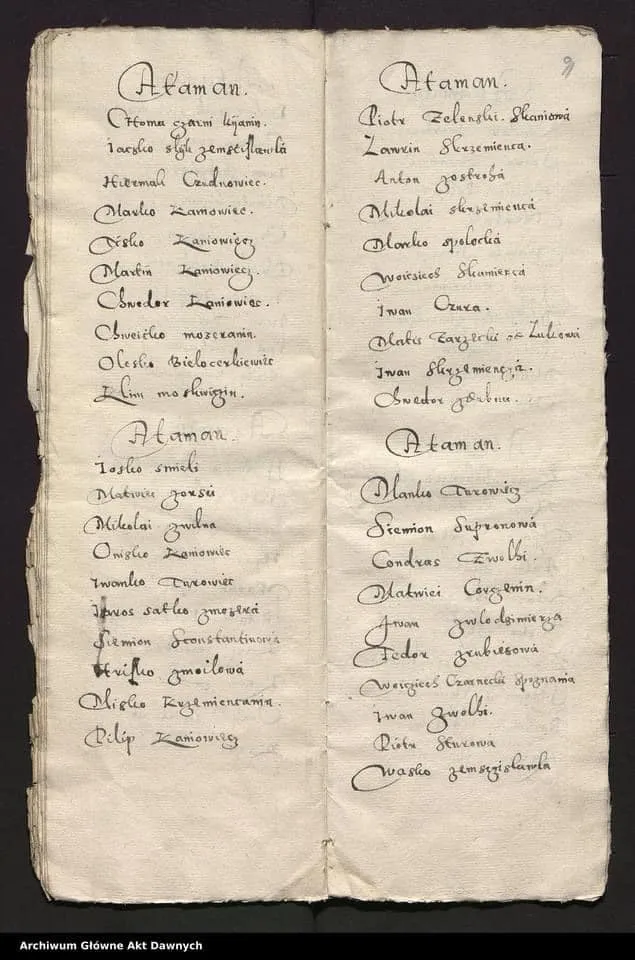
IN THE TOWN OF YAVORIV IN THE LVIV REGION THE COSSACK REGISTER OF PARTICIPANTS IN THE BATTLE OF VIENNA WAS DRAWN UP
The document entitled “Register of the Zaporozhian Cossacks of Centurion Potapenko” was drawn up on 27 March 1683 in the royal castle in the town of Yavoriv in the Lviv region. The Register included the following participants in the battle of Vienna on 12 September: centurion Yakiv Potapenko, osaul Fedir Lytynsky, standard-bearer Lukash Hrytskevych, otaman of the 1st kuren Ivan Stoliarenko and the Cossacks of his kuren – Hrytsko Mortkovych, Martyn Zabrodsky, Lukian Kravchenko, Aloizii Zasulych, Ivan Kotlovych, Lesko Cherniak, Yakiv Pokhylenko, Fesko Slavatsky, Andrus Luchyka, Savka Havrylovych. The 2nd kuren, headed by otaman Ivan Kosenetsky, included the Cossacks Petro Andrusevych, Havrylo Metelsky, Demian Pokhylenko, Fedir Andrulenko, Ilko Moskal, Omelian Shybka, Stepan Karpovych, Mykyta Danylchyk, Kyryl Khvatko, Semen Bulysenko. The 3rd company, headed by otaman Kyryl Klosovsky, included the Cossacks Samiilo Maksymovych, Demian Smolenko, Yevtukh Matviienko, Karp Maksymenchyk, Illia Boremkovych, Samiilo Havrylovych, Yarmola Omelchenko, Ivan Boloshenko, Denys Zlotar, Fetsko Yarmolchyk, Yakiv Zalizniak, Semen Skorupenko, Kharko Ostushets, Yarmola Kyiashkevych, Kuchma Hlynianchyk. The 4th kuren, headed by otaman Yatsko Fedorovych, included Danylo Mykhailovych, Bohdan Kharchenko, Omelko Sekerchyn, Tomash Zhuchko, Stepan Ivanchuk, Yakym Bondarenko, Lesko Latonkevych, Dmytro Raichenko, Fedir Zherebylovych, Denys Holodnyi, Vasyl Stavchuk. To the 5th kuren of otaman Danylo Pavlytsky belonged Yakiv Skrypkevych, Opanas Samoilovych, Andrii Dukhonosets, Karp Lavrynovych, Khvedko Kampanchyk, Lavrin Hrynkevych, Andrushko Yakovchyk, Kyiash Dubivka, Semen Borshchevych and Yatsko Sliusarenko. The 6th kuren, headed by Mykyta Usanovych, included Mykhailo Stefanovych, Dmytro Yatskovych, Fedir Korytenko, Onysko Pavlovych, Demian Kurylenko, Yakym Vasylchuk, Vasyl Drabynka, Kyryl Kosarzhenko, Havrylo Leshchenko, Maksym Fedorenko and Samiilo Drozd. The 7th kuren of otaman Naum Mikhnenko included Yatsko Matviievych, Vasyl Doshenkovych, Andrii Yakymovenko, Kuzma Bochenka, Denys Zaichenko, Ostap Potymich, Mykhailo Dymytrak, Fedir Sytnytsky, Omelian Mukhovetsky, Savka Dmukhovych, Kornii Yavorchyk and Zakharko Mkhyretsky. The 8th kuren, headed by Samiilo Donets: Stefan Krotskovych, Yatsko Shybalchyk, Naum Kurylenko, Yevtukh Danylevsky, Yatsko Havrylenko, Senko Kurylovsky, Vasyl Zhydenko, Yakym Samotushets, Andrii Naumelych. The Cossacks of the 9th kuren, headed by otaman Fedir Zymnytsky, were Savka Korniienko, Vasyl Zhukovych, Demian Yevtushenko, Semen Kotliarenko, Petro Shpakovych, Ivan Rutynets, Semen Trymailovych, Bohdan Saponosenko, Denys Svatenko and Opanas Stetskevych. The 10th kuren of Tymosh Popenko: Ivan Mrokovych, Khvedko Kharkevych, Taras Ivanovych, Ostap Butenko, Denys Bilotserkovych, Semen Vasylevych, Martyn Savchych and Vasyl Surmenko. The 11th kuren of otaman Havrylo Demchych enlisted the Cossacks Semen Luska, Semen Sydorenko, Maksym Zakharchenko, Opanas Lytka, Semen Havrylovych, Demian Kostevych, Kornii Fastovets, Ivan Pavolotsky, Kharko Shershyn, Havrylo Buzytenko, Pavlo Skrobchyk. The 12th kuren of the Zaporozhian Sich company was headed by otaman Lesko Kopytnyk, and the Cossacks here were Fedir Moisiievych, Danylo Yakovchyk, Lukian Ostapetsky, Omelian Makovchyk, Andrus Peredailo, Ilytsia (Ilica) Savchenko, Ivan Opanatovych, Denys Kurylovych, Maksym Holdetsky and Semen Kypratenko.
Translated from Polish by Taras Chukhlib.
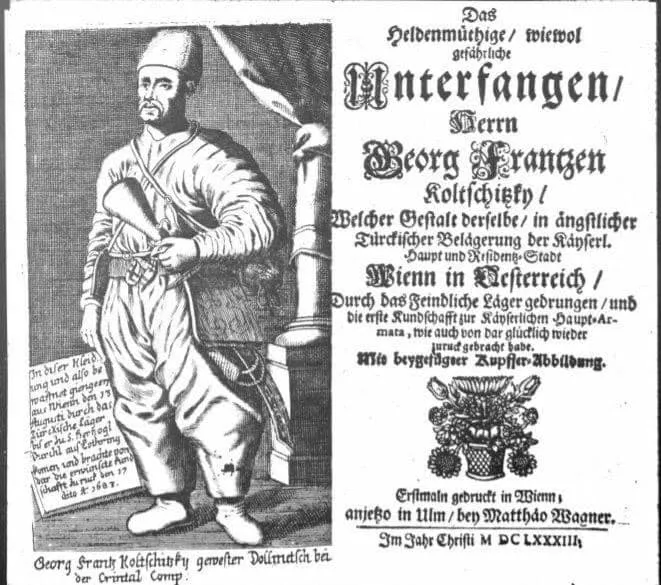
…while reading the works of Taras Vasylovych (Chukhlib) on the Battle of Vienna of 1683, as well as other works on the subject, I came across a description of the heroic deed of our Yurii Kulchytsky. I then devoted a lot of time to searching for numerous works describing his feat and his life. I found many interesting works by émigrés. Whole collections were published in honour of the glorious victory, in which Ukrainians were active participants and Yurii was one of the main identified heroes. And already then I wanted to find the original of the unique work that the hero himself, Kulchytsky, decided to publish in Vienna right after those events in order to glorify himself for the ages.
And when Taras Vasylovych once asked his audience on Facebook whether anyone had found the original of this unique work, I set myself the goal of finding it at any cost )
And what do you think?)
The Cossack said it, the Cossack did it! ?
I found that work in the archives and shared it with Taras Vasylovych.
Here I post a screenshot of the first page:
“The Heroic Efforts of Mr Georg Franz Kolschitzky, How He Made His Way Through the Enemy Camp During the Turkish Siege of the City of Vienna”, in the form of a brochure that shaped the image of this esteemed gentleman and made him a hero of the whole Christian world
Continuation: