

Yazlovets, the hidden relic of the Armenian well
“Ukraine Incognita” has told you more than once about the wonderful village of Yazlovets in Ternopil Oblast. It used to be a renowned town whose merchants rivalled even Lviv itself!
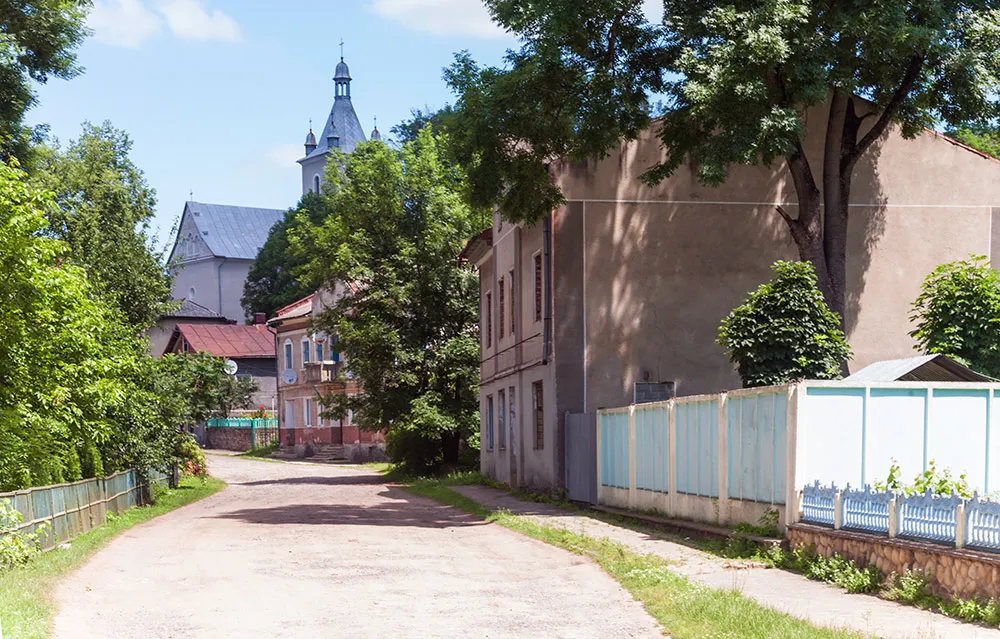
Honestly! Given that Yazlovets stood on the busy trans-European highway “Via Regia” (the Royal Road), the little town grew and prospered quickly. In 1461 the Lviv merchants complained bitterly to King Casimir IV Jagiellon that the fairs in privately owned Yazlovets were causing considerable losses to royal Lviv and, accordingly, to the monarch’s treasury.
The town’s decline began during the Turkish invasion and intensified under “Granny Austria”. The last nail in Yazlovets’s coffin as a town was hammered in by the Russians when, in May 1916, heavy “Ilya Muromets” bombers practically razed it to the ground. In Russian staff reports this crime against civilians figured as: “cutting off by fires the only convenient route for transferring Austrian reserves”.
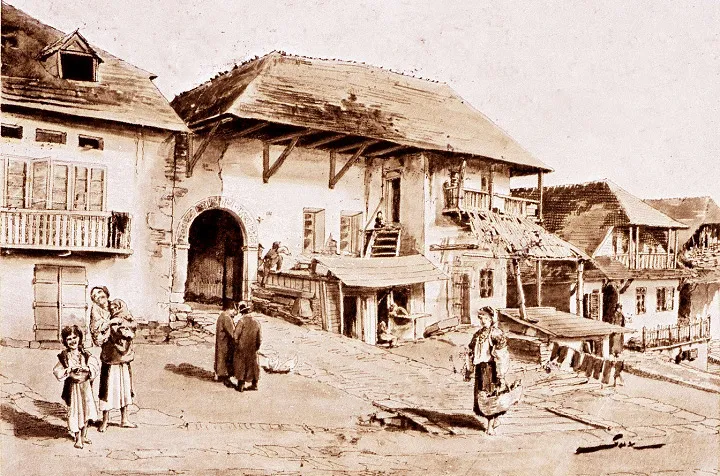
Yazlovets before the bombing. In the Jewish shtetl, Armenian features are still clearly visible, notably the framing of the gateways
Yazlovets never recovered from that destruction.
The Russians, let us recall, smashed all of the town’s Renaissance buildings, which were famed for the wonderfully beautiful carved frames of windows, gates and doors. This was the work of the Armenians, who were very fond of such architectural flourishes. And there were quite a few Armenians in Yazlovets. At the beginning of the 17th century the town was the “Armenian capital” of all Podillia: the see of the Armenian archbishop was located here.
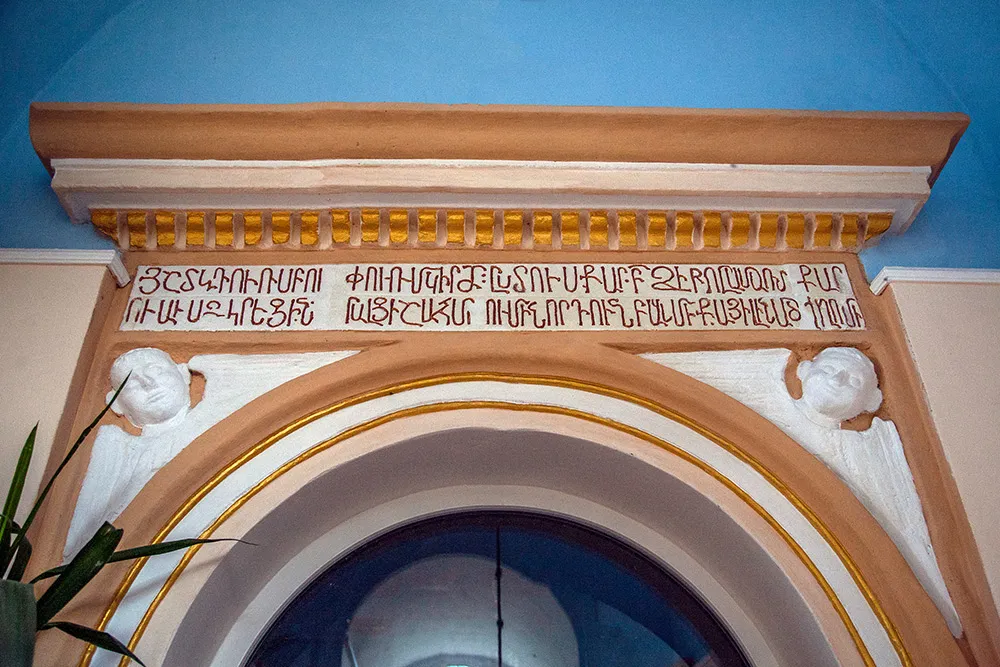
Today the only Armenian heritage left in the former town is the Surb Nikoghayos church (now St. Nicholas Church of the Ukrainian Greek Catholic Church), built as early as 1551. In the “New” (lower) part of the castle, on the inner side, you can also see another Armenian relic: the decorative framing of a gateway. It once adorned a Renaissance Armenian townhouse destroyed by the Russians. In the early 1920s it was chiselled out of the ruins and moved to a new place. Unfortunately, the other carved beauty for which the little town was once so famous is lost forever.
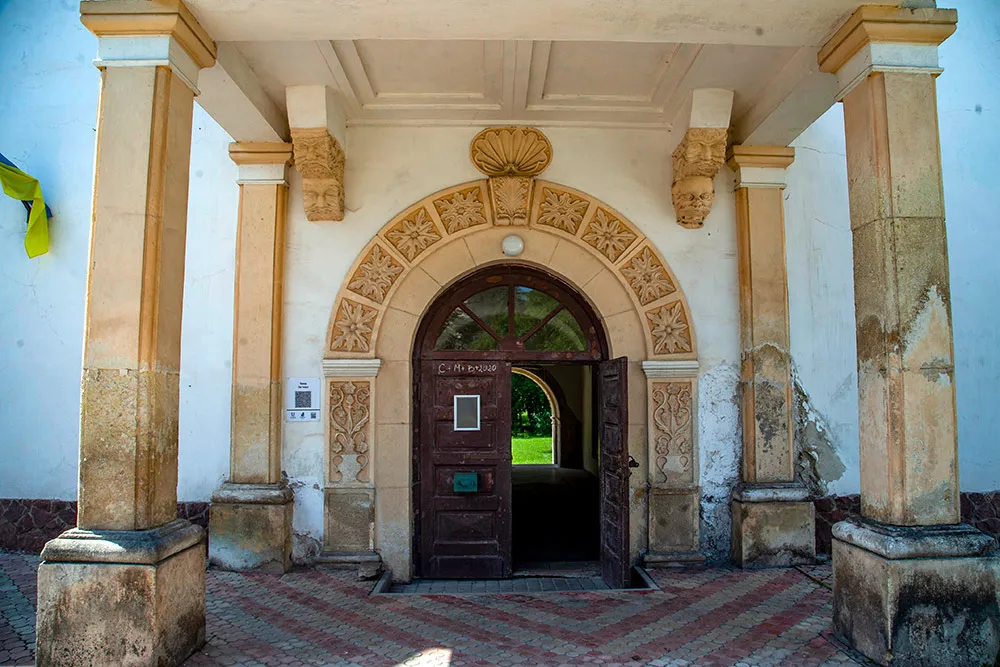
The decoration of an Armenian townhouse, moved to the castle
Few people know that Yazlovets has one more unique Armenian relic. We stress that the word “unique” here is not the usual exaggeration in such cases but an established fact. This monument is among the least known to the general public. Not only the numerous tourists who have recently become frequent guests here but also most local residents have no idea of it.
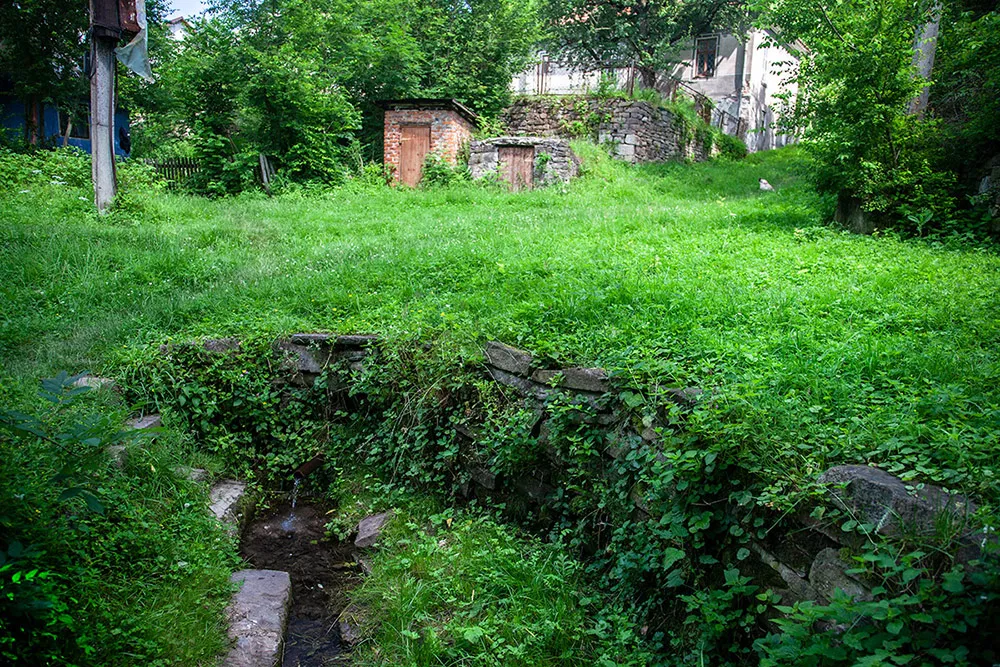
The Armenian well
Not far from the former Armenian church you can also see the “Armenian well”. Outwardly it is a traditional spring of the kind called a “tsiurkach” in Podillia: a low stone wall with a cast-iron pipe from which water streams (trickles). In fact it is a rather complex hydraulic structure, built by the industrious Armenians as early as the 17th century. It is just that its main part is hidden from human eyes. In particular, before reaching the pipe, the water collects in a sizeable underground reservoir. And it flows into the reservoir from a powerful spring hidden in a small masonry structure. From the outside the latter resembles the entrance to a village cellar. The door is padlocked, and few people know what is inside.
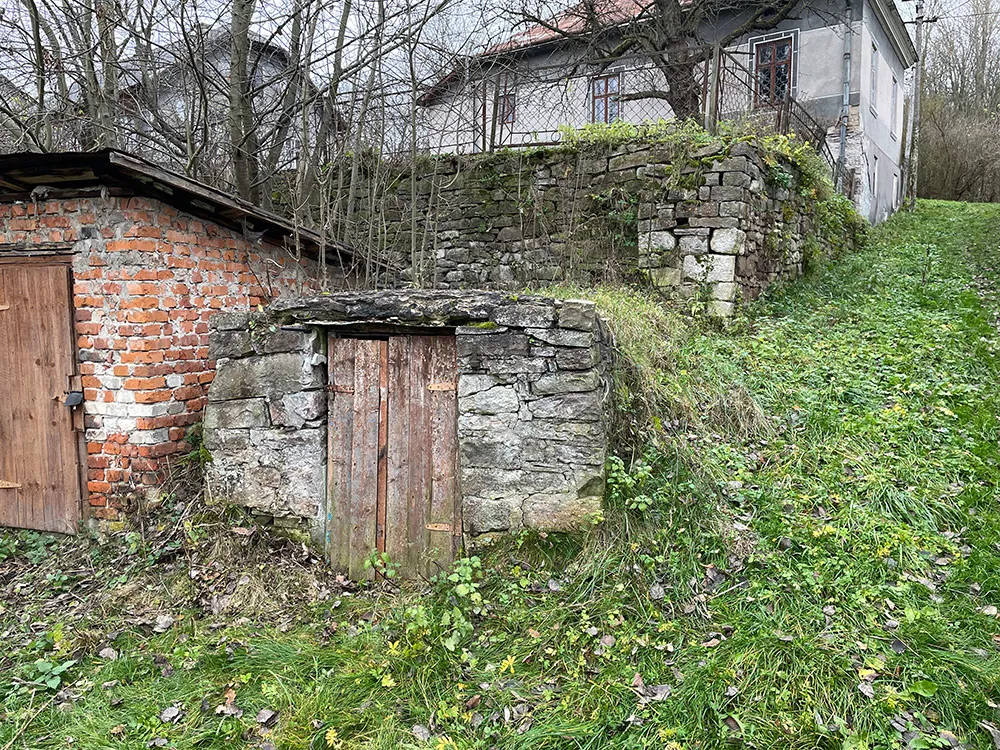
The hidden spring. Nearby is a shed for the pump that supplied water to the school
If anyone is lucky enough to peek inside, they can see a carved slab with inscriptions engraved in Latin and Armenian. The expedition of the “Ukraine Incognita” NGO team managed to do so.
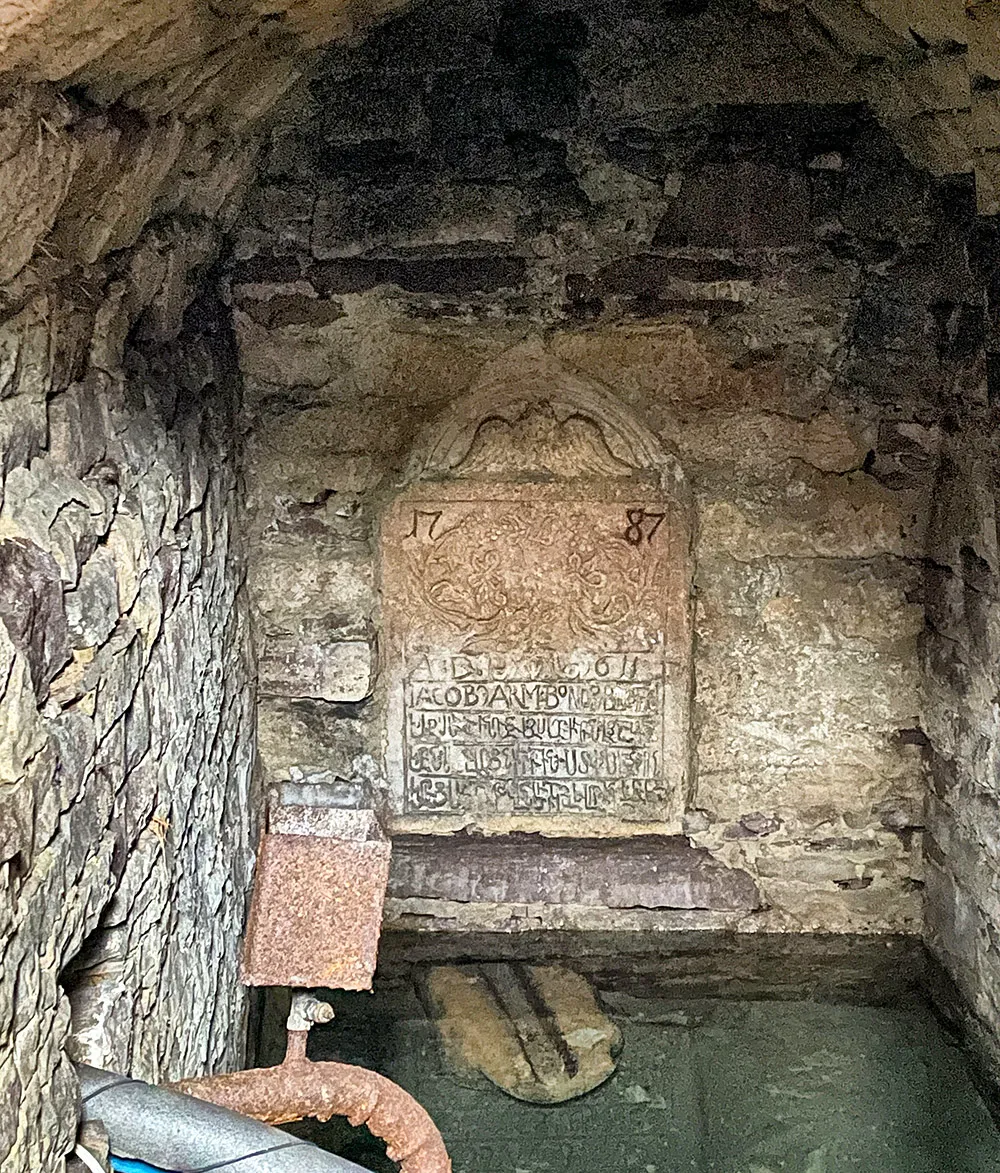
The top of the plaque is decorated with an eagle (a dove?) with outspread wings, beneath which is a cross adorned with whimsical plant decoration. Next we see an inscription in Latin: “The Armenian Hakob built this in 1611 for the good of the community.”
Below it, in Armenian: “This cross and the spring built are the work of Hakob and his brother Stepan. Completed in the Armenian year 1000 and 60. Abram [the master stone carver] carried it out with devotion.” The date 1787 is the year of a further reconstruction.
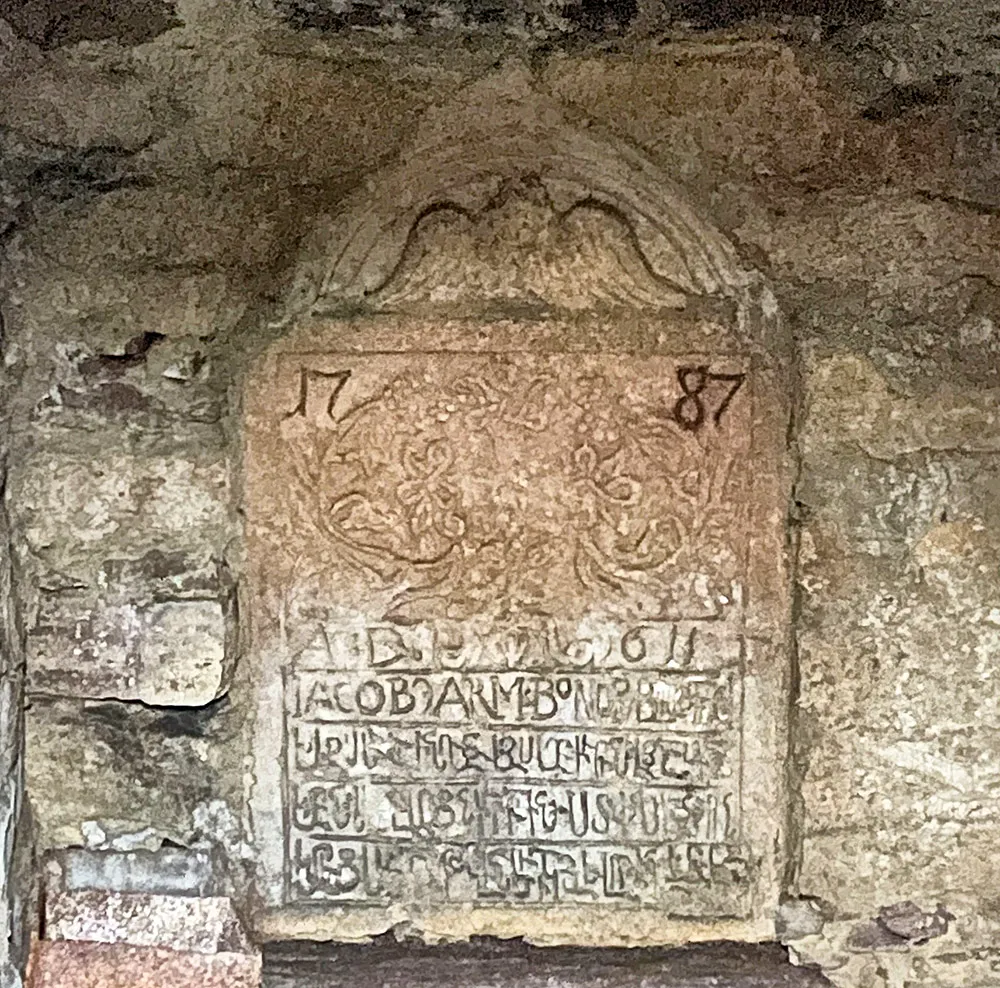
It is interesting that structurally this plaque is very similar to the tombstone of the famous Polish composer Mikołaj Gomółka (1535–1609), set into the wall of the neighbouring Church of the Assumption of the Blessed Virgin Mary (1590). The tombstone, most likely, was also made by Armenian craftsmen.
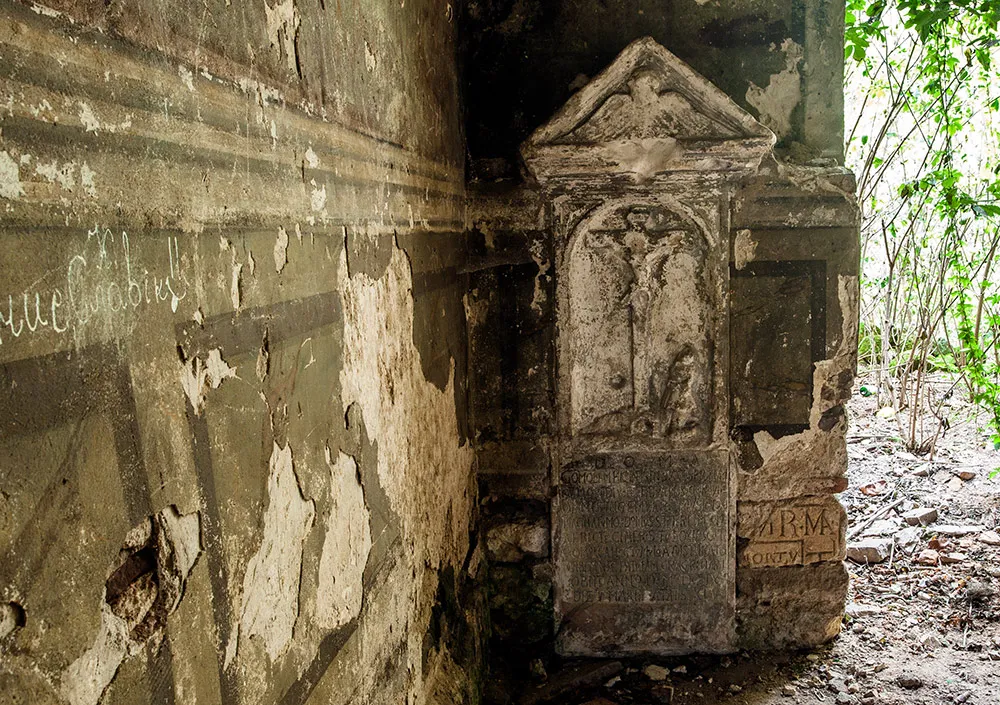
The tombstone of the composer Mikołaj Gomółka
In general, as researchers believe, the carved decoration of both the church and the gate of the “old” (“upper”) castle is also the work of Yazlovets’s Armenian craftsmen. In stone work they had no rivals at that time.
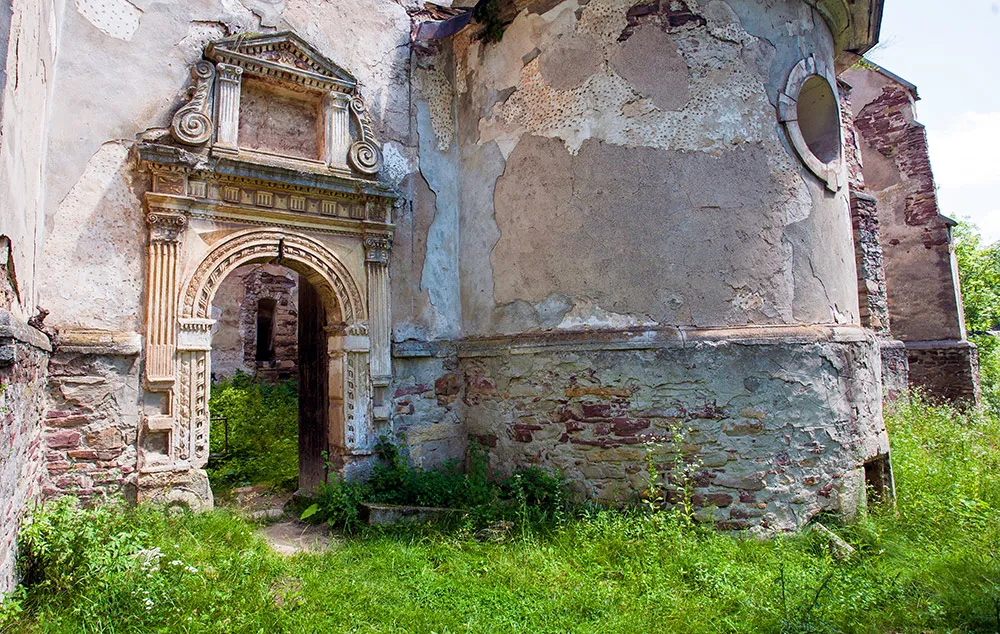
The church. Probably also the work of Armenian craftsmen
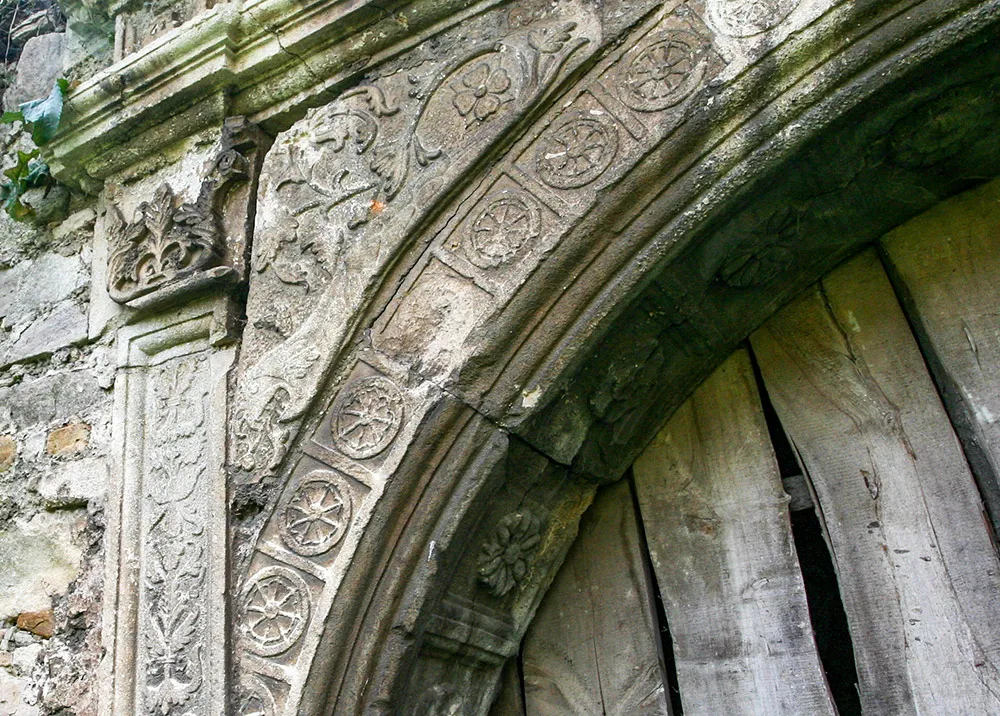
A fragment of the castle’s decoration
Text and photos from earlier trips: Dmytro Poliukhovych
Photos of the well and the plaque: Roman Malenkov


