Expedition to Mykolaiv region with Lexus. German heritage and more

· 20 min read
I was once on scientific expeditions in Mykolaiv region – on my part these were observations of the changes in the landscapes of the Southern Buh valley as the Oleksandrivka Reservoir filled with water. It was then that I first understood what a fairy-tale region this is and what potential it has – agrarian, energy, industrial, nature conservation and, what matters especially to me now, tourism and local history. A mass of old, little-known buildings in almost every village, numerous stone ruins of water mills, pontoon bridges, ferries and rocks – granite canyons and rock outcrops everywhere. Super!
Then there were numerous trips to the canyons (Aktove and Petropavlivka), to Ochakiv and its surroundings, to Kinburn, to Olbia, but, however you look at it, Mykolaiv region remained a blank spot, because most of the region’s territory, with its terrible roads, did not invite travel – like the cartoon hero Shrek it seemed to say: don’t settle in comfortably, you are not welcome here…
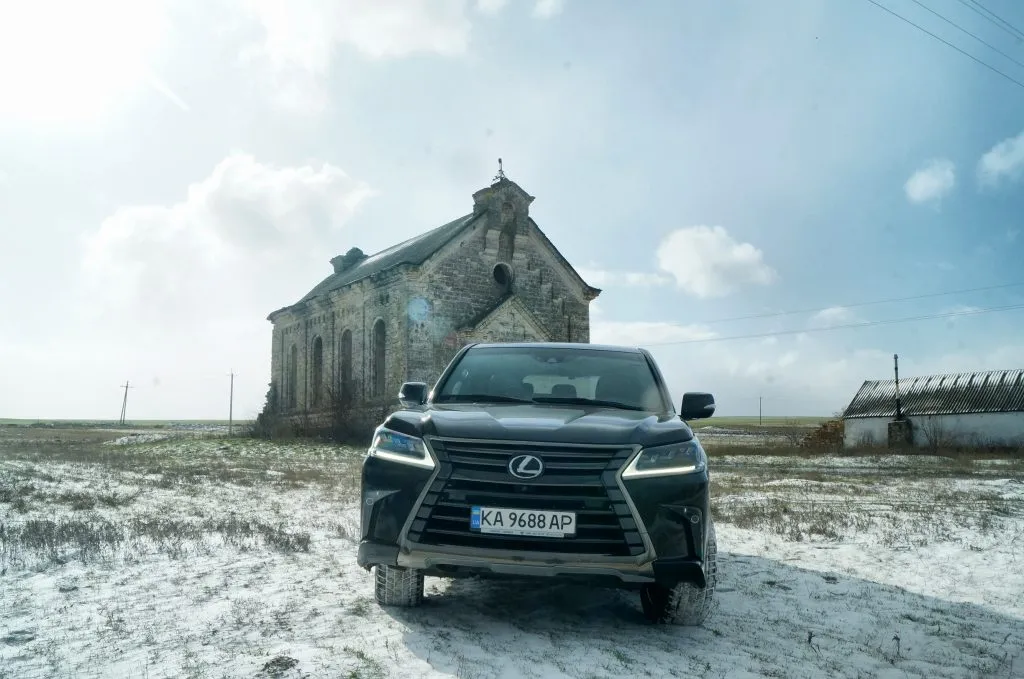
Near the Lutheran church in the village of Shliakhove.
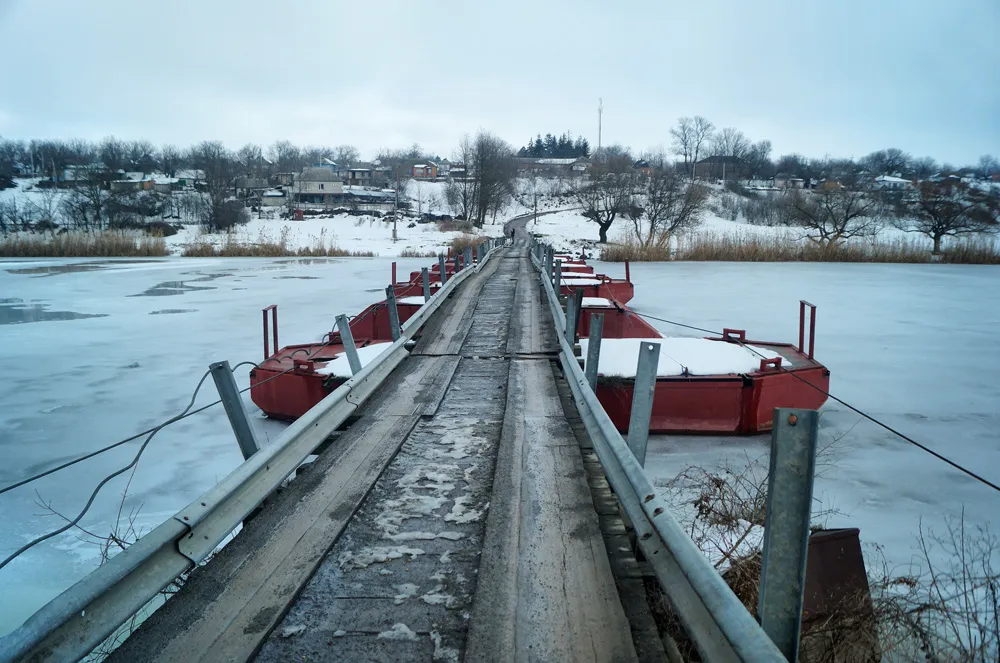
The pontoon bridge in Chausove.
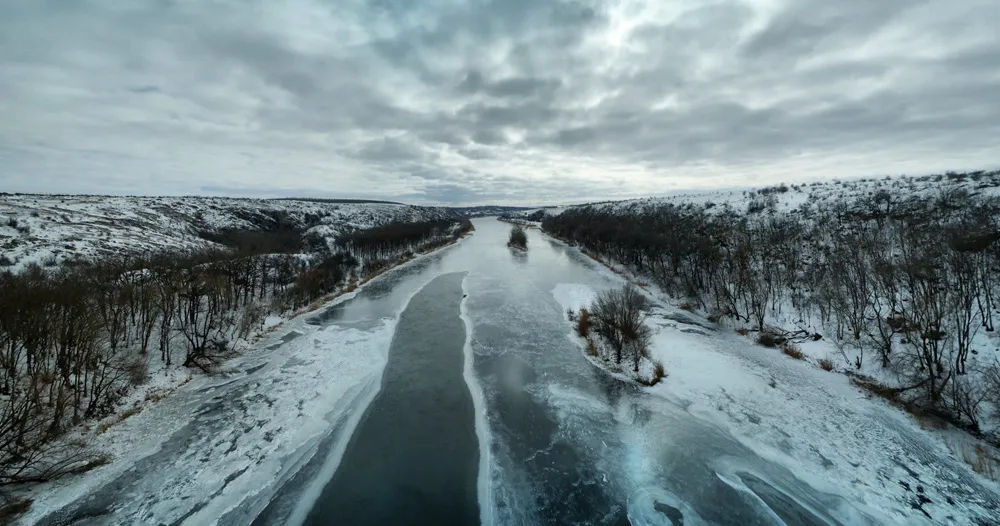
The Southern Buh near the village of Ivanivka.
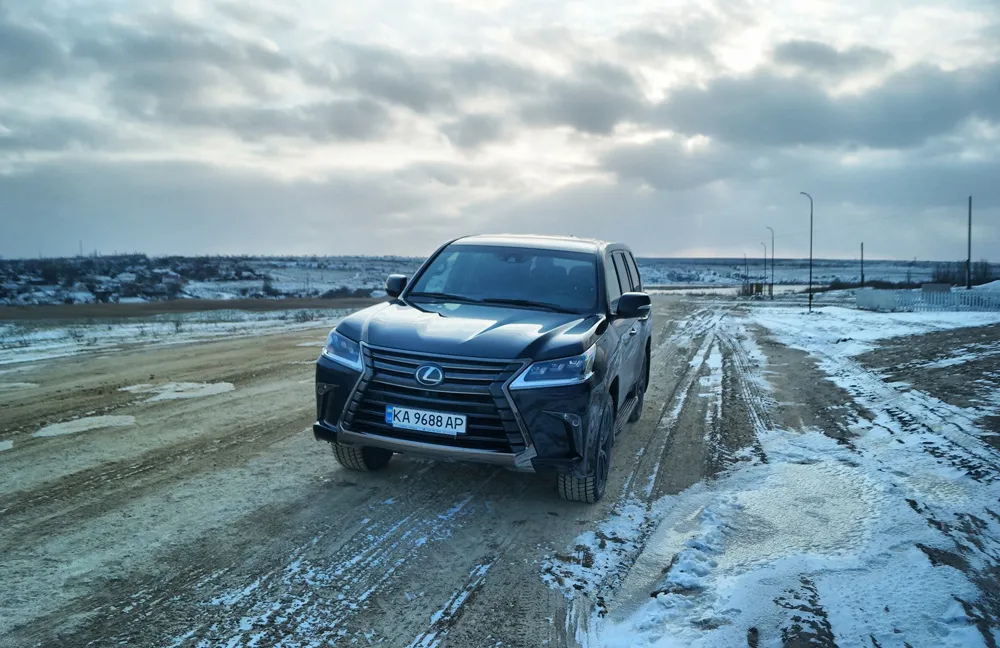
For a local-history expedition to the unexplored districts of Mykolaiv region we needed a good SUV, and we asked Lexus for one. Wow, you will say, what an ambition. And why not? We are among the main explorers of local-history curiosities of Ukraine in recent years, we travel a great deal, we test Ukrainian roads… Lexus agreed to provide us with a car for the expedition, and not an ordinary one, though they have no ordinary ones there – their largest and most expensive model, the Lexus LX 450 d SUV, a diesel with a 4.5-litre engine.
In Kyiv it had been snowing for the n-th day, and we immediately felt the advantages of the car in city driving under a blanket winter storm warning, when all the roads were at a standstill, all the verges were buried in metre-high snowdrifts, and every turn or zigzag meant a skid in some car – some car, but not this one. The Lexus held the road firmly in the turns, as if nailed to the asphalt. This was helped by one more nuance, which we called a trick from Lexus – the three ground-clearance levels of the air suspension. At the lowest level the clearance turned the off-roader into almost a passenger car that holds the road firmly in turns and at high speed, even in snow, while at the highest level the car becomes long-legged, like a Defender or some UAZ, without losing the elegance of a Lexus. The clearance level is changed with a small lever on the dashboard, where there are as many levers and all sorts of buttons as on an aircraft control panel.
And I want to mention one more aspect – when in slow city traffic or in a jam you switch on your turn signal, indicating your wish to change lanes, almost immediately someone in the next lane slows down and lets you in. Try doing that in a Lanos… A trifle, but a pleasant one.

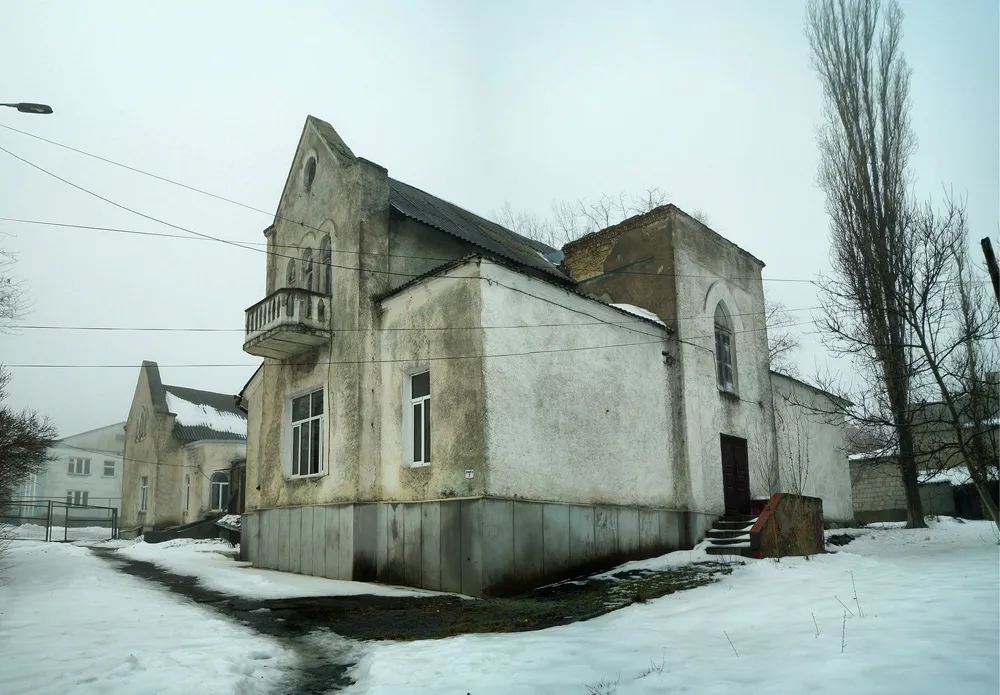
Shyshkin’s palace in Domanivka.
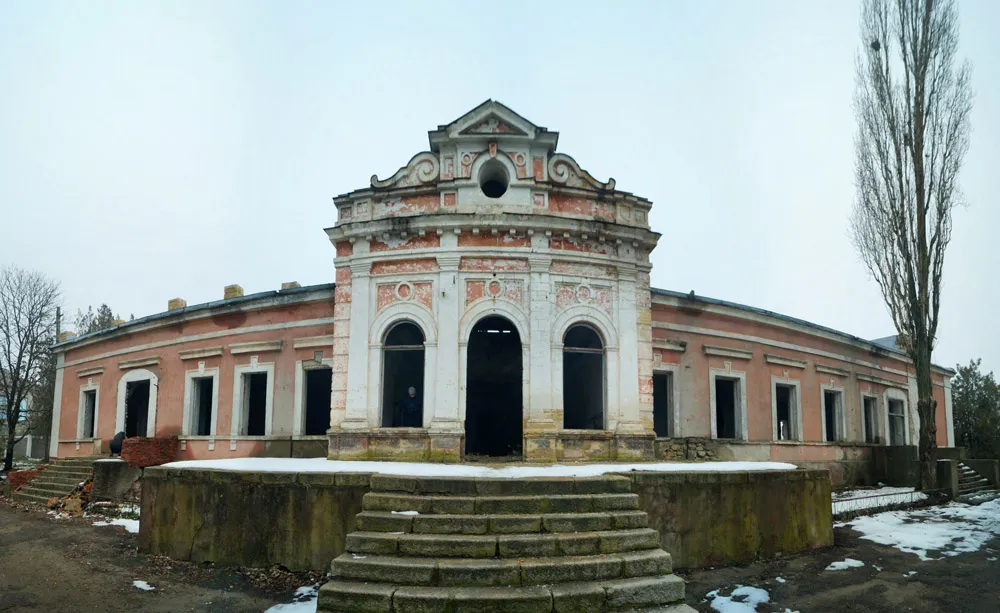
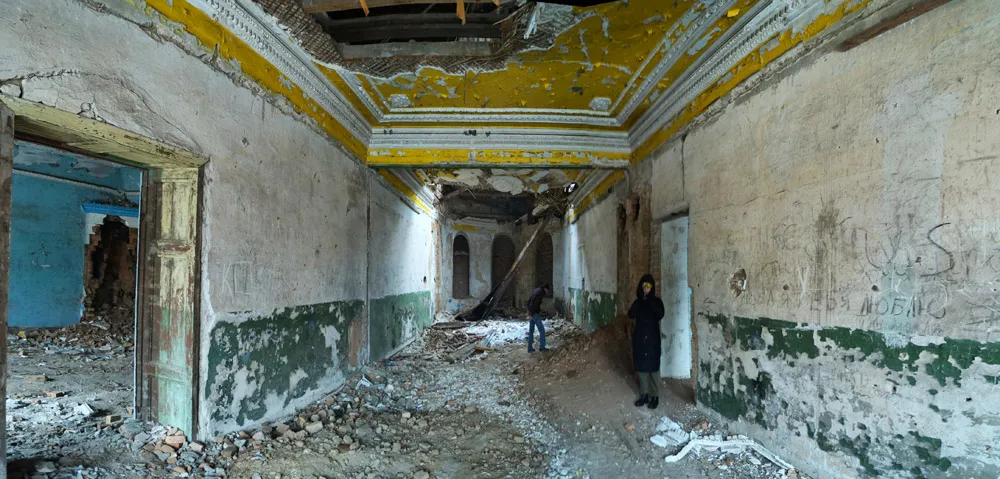
The Buh region. Martynovskyi’s palace.
It took us a little longer to get to our first point in Mykolaiv region than it took to get out of the traffic jams in Kyiv. In the village of Chausove we thought of crossing to the other side of the Southern Buh, but no such luck – it turned out that the bridge is a pontoon one: fine for cars weighing up to two tons, but too weak and too narrow for a huge Lexus. When I tried to drive onto the bridge I could not even see the railings. No, this is not for us. And this was one of the two drawbacks of the Lexus LX – an elephant cannot squeeze through a crack. I will tell about the other drawback later.
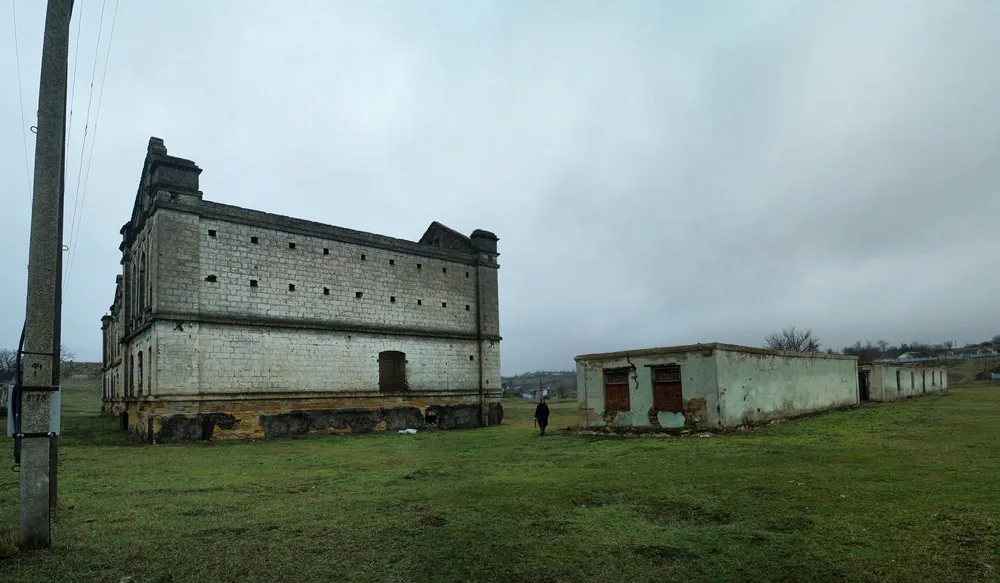
Myhiia and Blahodatne. Agricultural school castles.
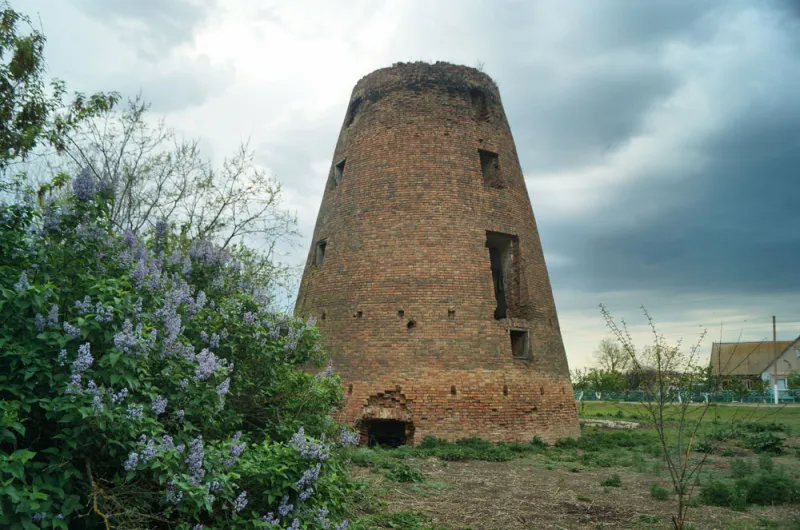
In Myhiia – a village where rafters, kayakers, catamaran sailors and just tourists hang out all summer – we have been dozens of times. We looked at the Skarzhynskyi mill, which in Soviet times was turned into a power station, at the rocks and rapids, including the wonderful steep meander of the Southern Buh called Integral, and at the flooded quarry that is called the radon lake, although all flooded quarries in granite are radon ones, since radon is very common in these rocks. This time we were interested in a completely different object – an agrarian college that was once an agricultural school built by the famous landowner Yosyp Skarzhynskyi. In 1883 his wife, the daughter of the mayor of Odesa, Olha Papudova, died in childbirth. In memory of his wife Skarzhynskyi built a hospital, with a larger and a smaller building. The building material was rubble stone – granite. With a rather original design, which may have been a product of Skarzhynskyi’s fantasies, the hospital turned out to look absolutely unlike a hospital – it was a real castle. There is a legend that the ghost of the dead wife lives in this building – I wonder how it was moved there. By the way, the child was born healthy – Skarzhynskyi named her Olha, after the mother who died giving birth to her.
Skarzhynskyi built a hospital, but throughout its history the building served as an agricultural school and technical college. Today there is a college here, though teaching no longer takes place in the old building – it will be a pity if such a wonderful structure falls into decay.
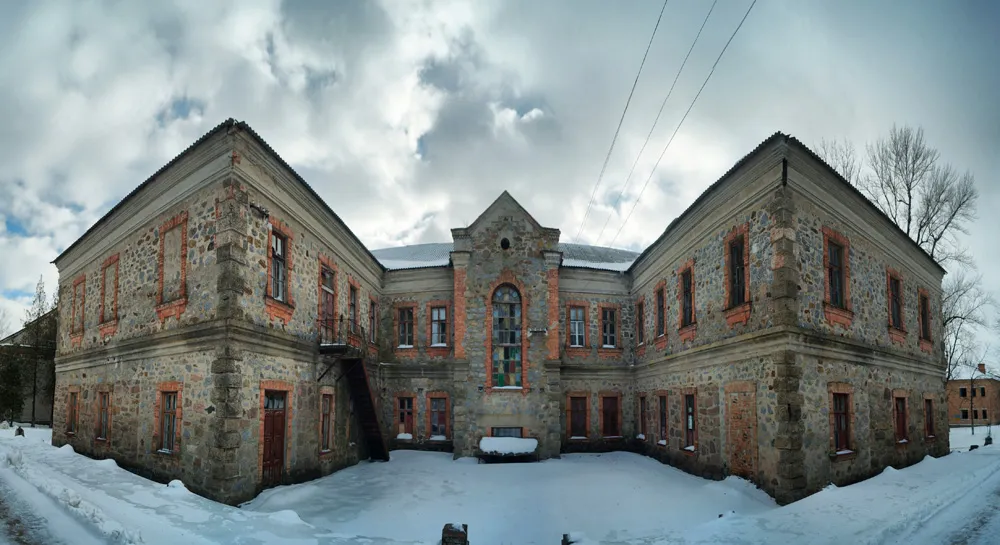
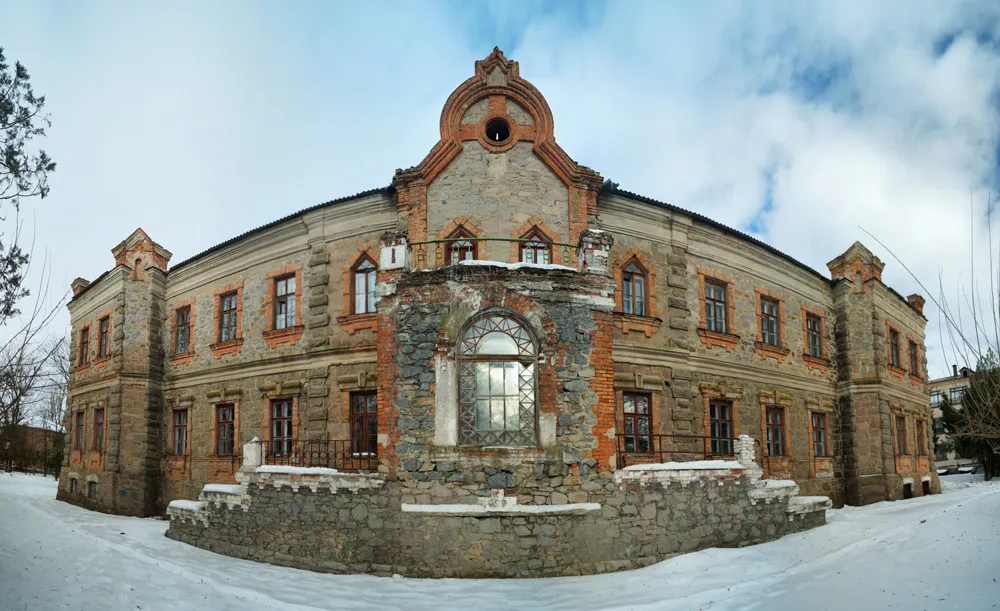
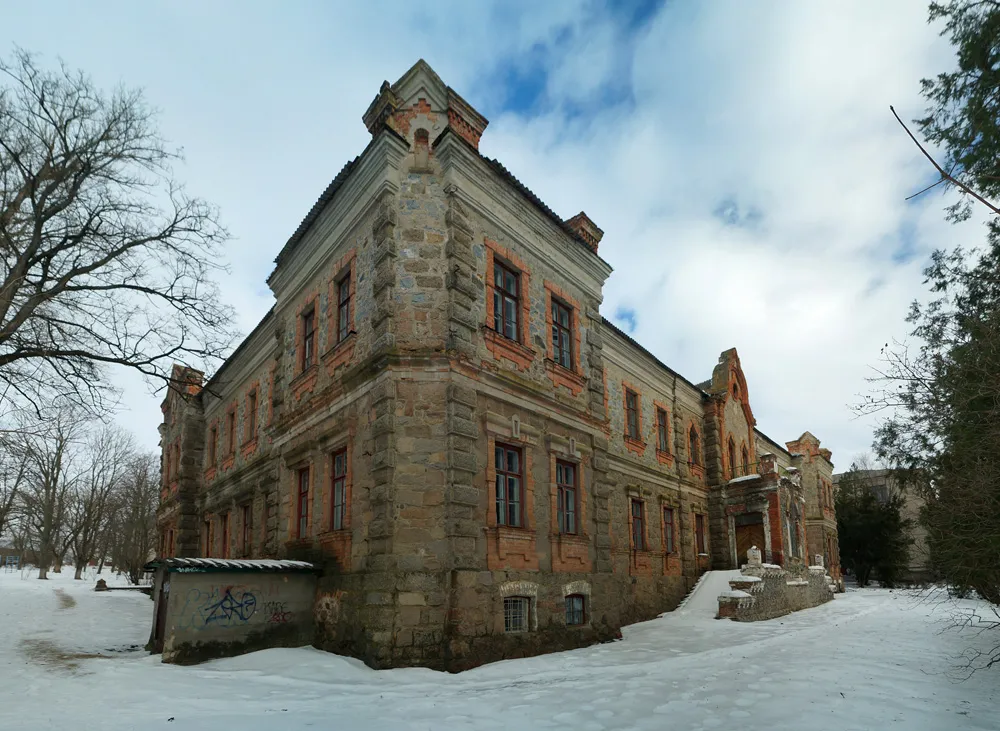
Myhiia. Skarzhynskyi’s agricultural school.
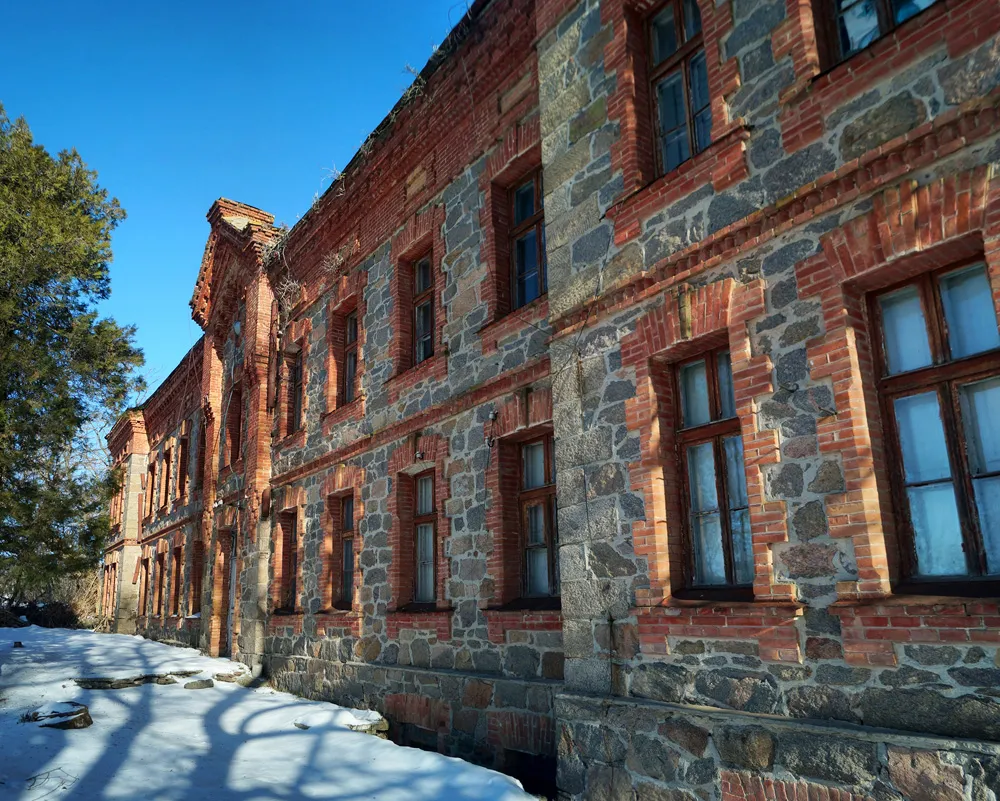
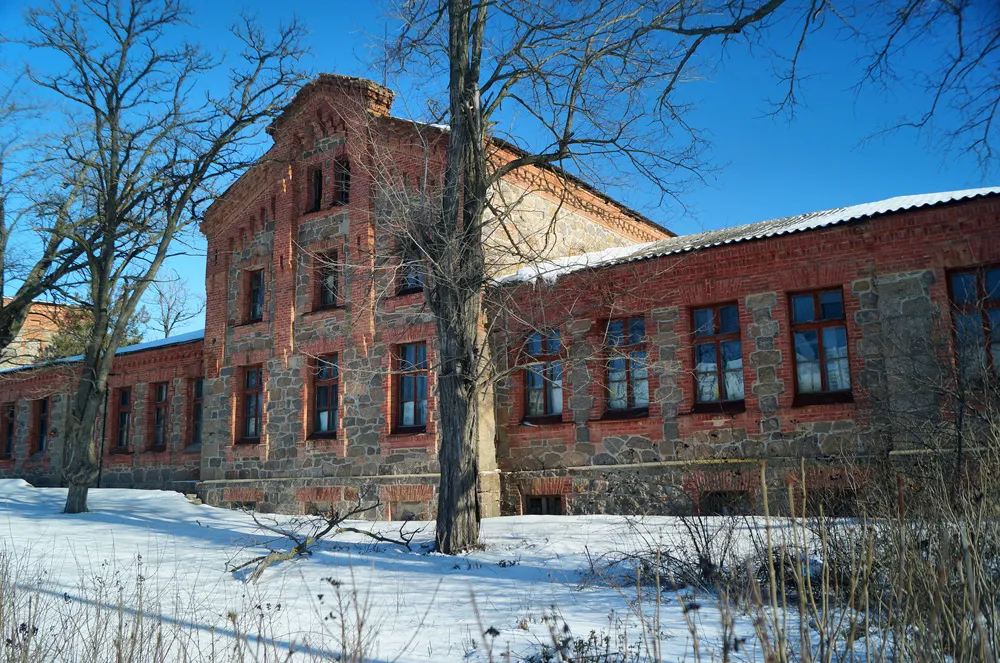
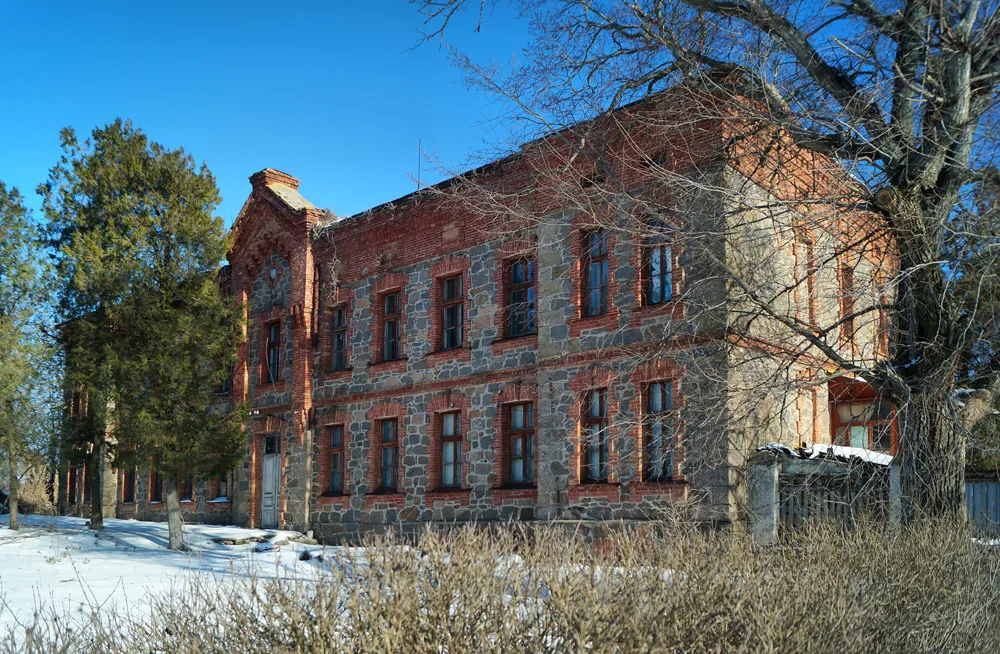
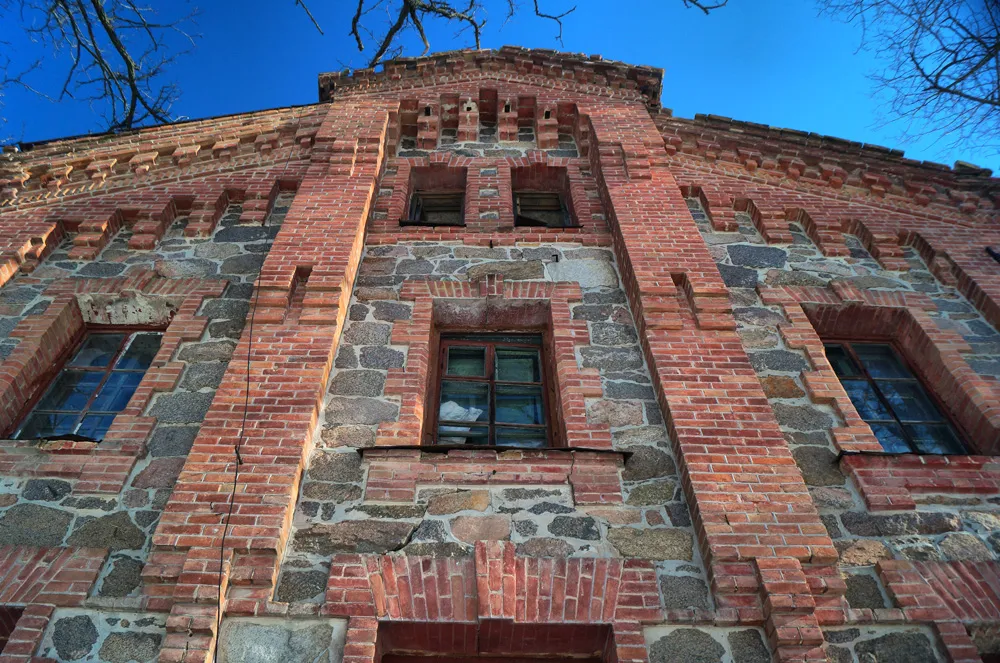
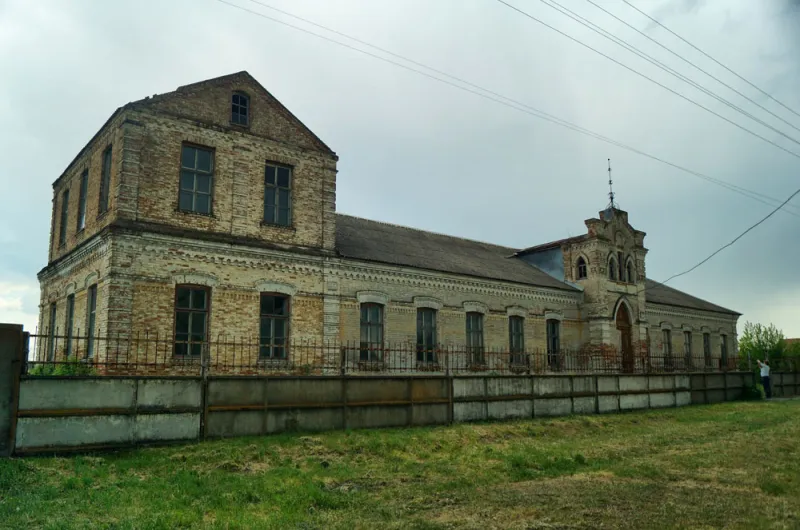
The agricultural school in Blahodatne.
16 kilometres from Myhiia towards Mykolaiv is the village of Blahodatne, which also has a surviving agricultural school built of rubble stone at the end of the century before last. There are two large buildings here and three smaller ones. Of the smaller ones, one is already just walls, another has lost its roof and soon will also be just walls. The larger buildings were built so skilfully that it is hard to imagine them as merely an institution for teaching boys farming – here dressed and rubble granite alternates with high-quality red brick. I have never seen such incredible masonry in modern buildings. Unfortunately the school is abandoned; the only staff here are guards.
Not far from Blahodatne there is a bridge across the Southern Buh, near the villages of Semenivka and Ivanivka. I won’t say the bridge is in disrepair, but there are a few small holes in it and the railings are missing in places. But do not be afraid to drive over it – the bridge is concrete and sturdy, and you should, because fairy-tale views open up from here. The Southern Buh flows here in a deep valley, squeezed between high banks into almost a canyon. In winter, in the frost, the river looks magical, like something from a fantasy film – the ice has a different structure and surface pattern, and this strengthens the overall impression.
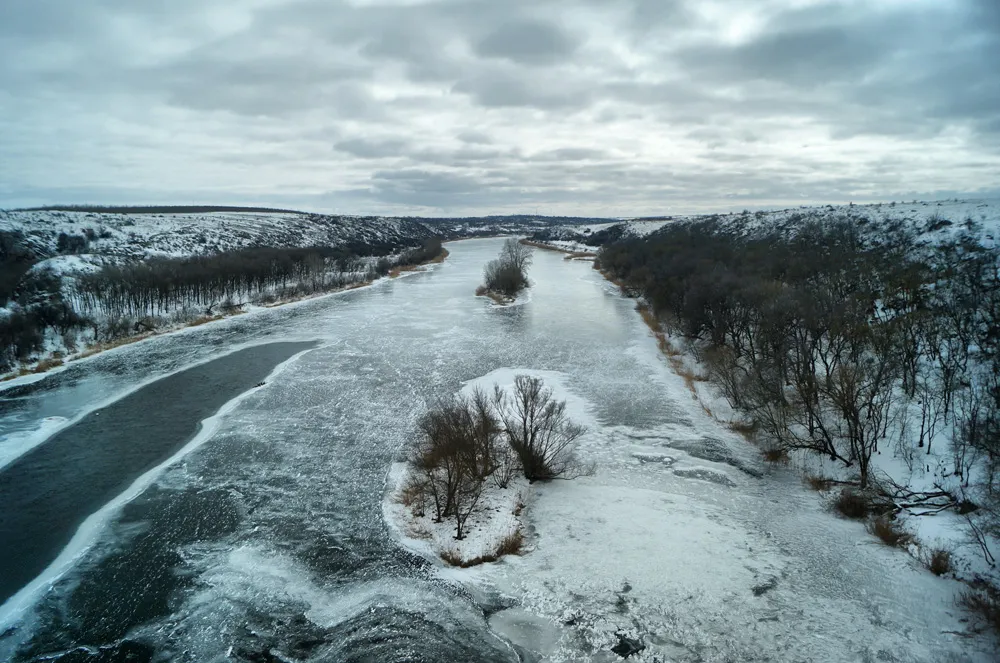
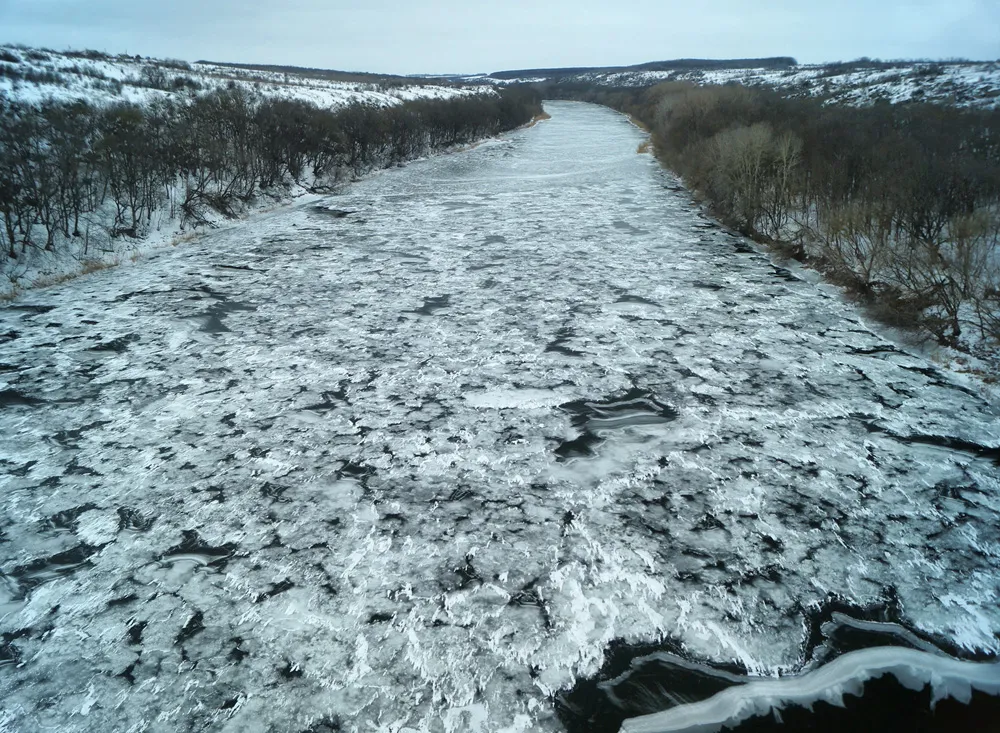
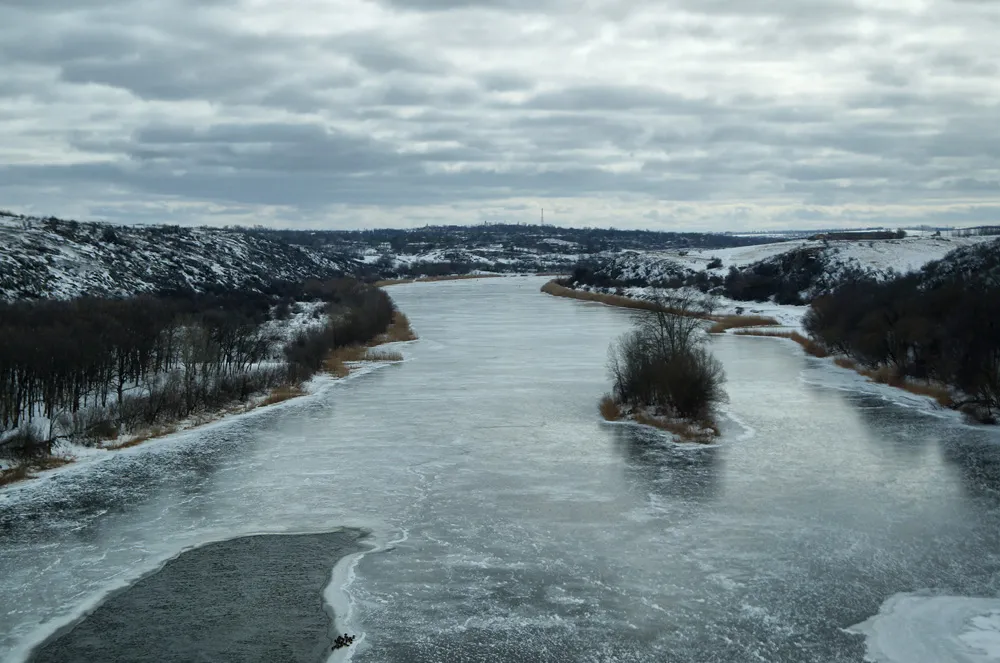
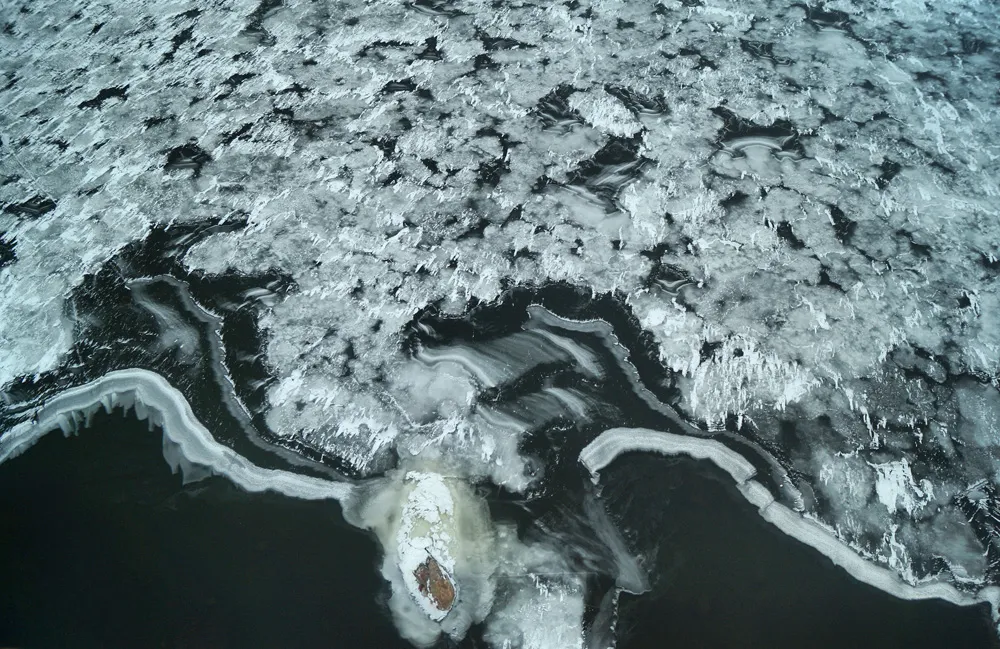
This is not some river beyond the Wall, in the Wild Lands of “Game of Thrones”, this is not in Alaska or Siberia – this is our beauty, the Southern Buh. The ice seized it unawares; it had long since grown unused to it. From the scary bridge near Semenivka and Ivanivka this great river looks simply magical.
The scariest road in Ukraine and German heritage.
As far as Domanivka, where we quickly looked at Shyshkin’s little Neo-Gothic palace, the road was patched up somehow. Then our route led to Mostove and further to Shyrokolanivka. Having asked local residents what the road to Mostove was like, we got the answer: very bad. And beyond Mostove? Much worse. A village Zhiguli covers the 28 kilometres to Mostove in an hour; we got there in half an hour. The thing is that there used to be a cobblestone road to the village; it was covered with asphalt, about 30 percent of which crumbled and came off, but the potholes in it, deep for the small wheels of a Soviet suitcase on wheels, turned out to be almost unnoticeable for the huge tyres of the Lexus LX. I must note that the Japanese SUV’s suspension simply swallowed them as if they were not there. That is why the powers that be do not repair roads, I thought then – owners of big SUVs do not notice poor roads. But after Mostove, in Veselynove district, which is called the district of the worst roads in Ukraine, such a terrible road began that even a big SUV had a hard time fighting it. The Lexus coped.
In Mostove a large manor has survived, built by members of the great noble family Erdeli. This surname translates from Hungarian as “Transylvanian”. Strange – a Transylvanian family building a palace in the Ukrainian steppes… The Erdeli family entered the service of the Russian monarchs in 1755 – since then it has been a Russian noble family. In 1880-1881 they built a new eclectic palace, around which a very large park was laid out. Both the palace and the park have survived to our time and, unlike the terrible road, are in good condition.
It is 52 kilometres from Mostove. In general this is the Domanivka – Mykolaiv road, but the tongue refuses to call it a road. Yet it is the only road in Veselynove district – overloaded grain trucks drive along it to NIBULON, and also beet trucks… and the puddles here are such that you want to measure their depth with a stick – it is scary to plunge into one. But we are in a Lexus. Forward.
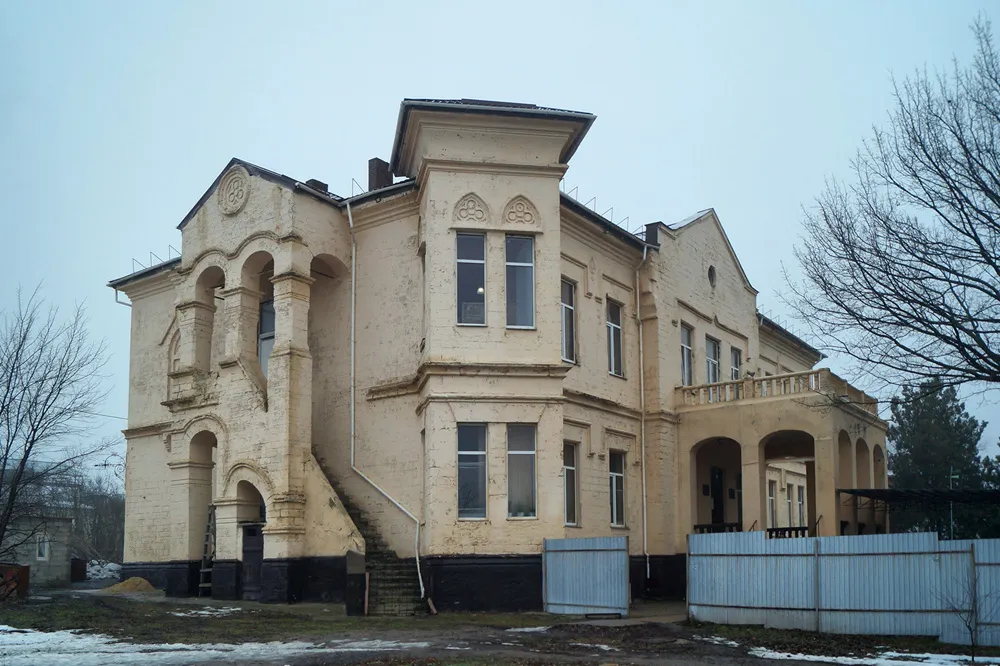
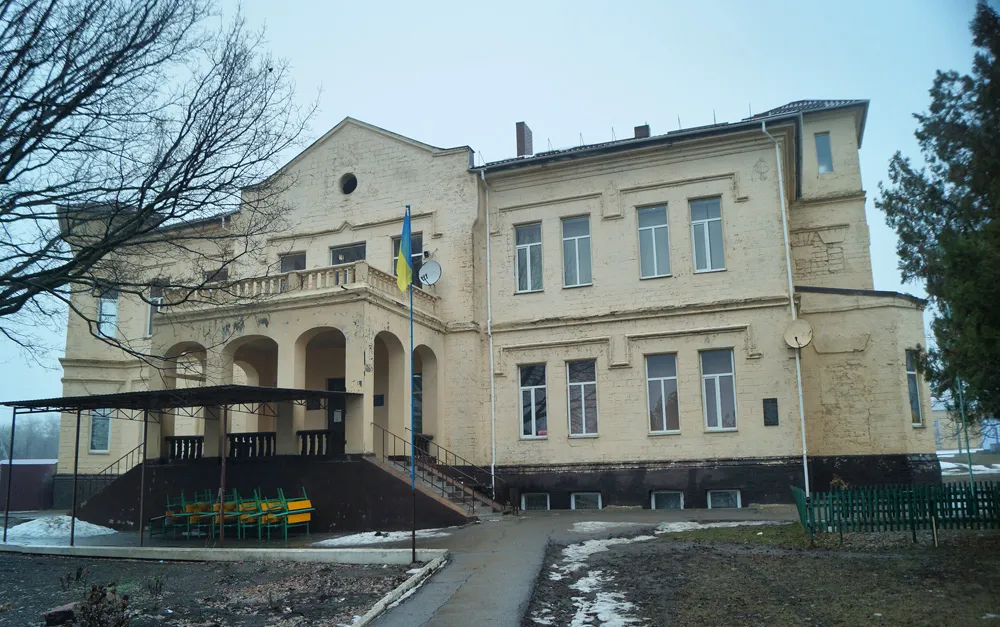
The Erdeli palace in Mostove.
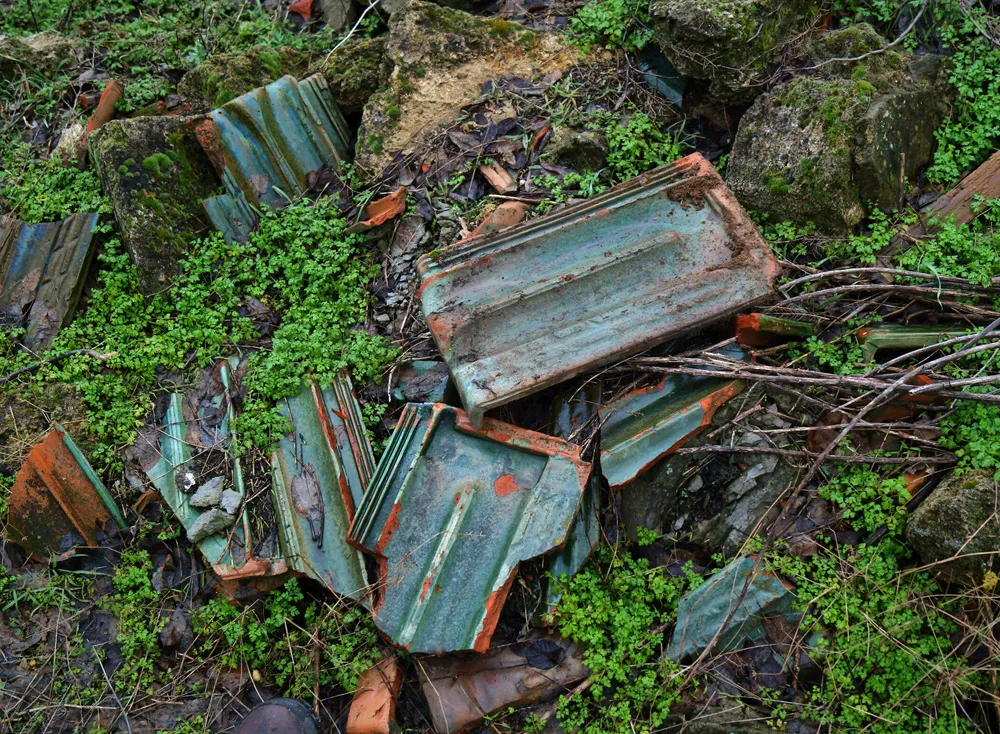
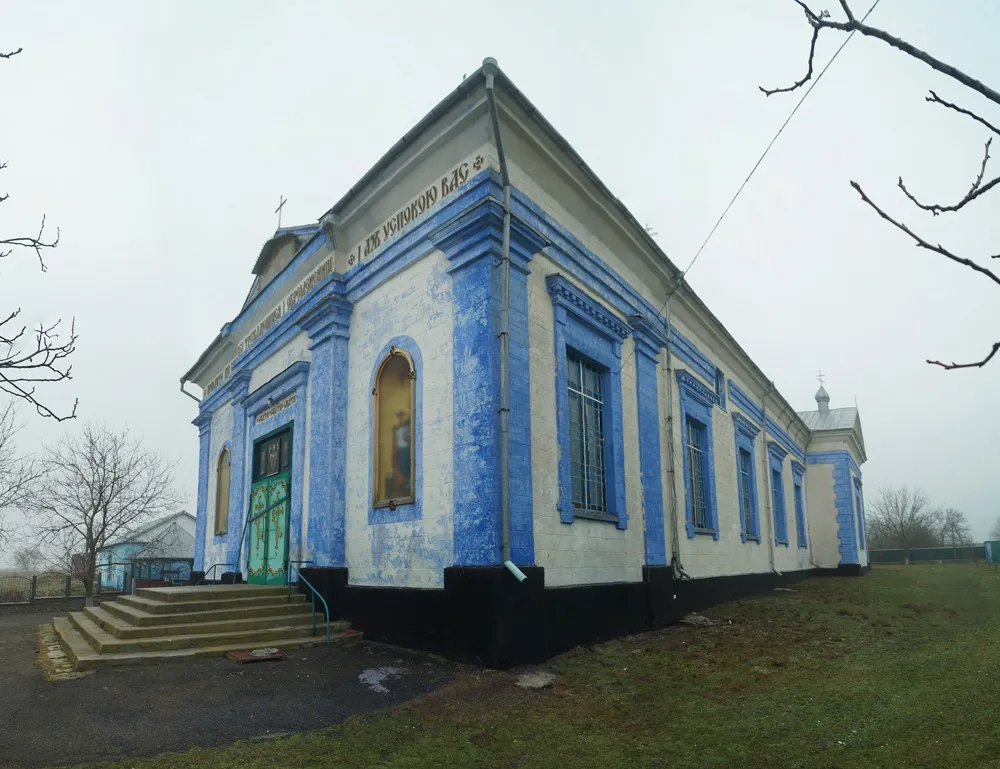
Glazed tiles and a former Roman Catholic church in the village of Pishchanyi Brid (former German colony Speyer).
This was not a trip but something like a fishing boat returning from fishing in a storm. The whole of our team except me (the driver) experienced the peculiarities of land seasickness. At times it seemed that the road had been deliberately destroyed by German bombers. Swearing, sweat, periodic rests for the passengers… We reached the village of Pishchanyi Brid, where the road became a little less awful, in record time – an hour and fifteen minutes. Here the road improved a little.
Pishchanyi Brid was founded by German colonists in 1810 and was called Speyer. In general, on the territory of present-day Mykolaiv region there were quite a few German colonies, villages and even small towns. The Germans were allowed to take good steppe plots in the arid Kherson Governorate. They were relieved for a time of taxes and military service. From the infertile lands of Germany the colonists came to luxuriant black earth. 102 families were from the Rhenish Palatinate, 27 from Alsace and 11 from Baden.
In Speyer the Germans engaged not only in agriculture but also in crafts and pottery. They built an administration building, a school and a Roman Catholic church here. No trace remains of the administration building, one wall is left of the school, but the Church of St. Martin, built in 1863, has survived – now it is an Orthodox church.
In Speyer we paid attention to the special tiles – glazed, enamelled, greenish in colour. We were told that such tiles were made in the neighbouring German town of Landau, which is now called Shyrokolanivka.
In the neighbouring villages it is called Shyrokyi Lan, hence the name of the notorious military training ground – it is right nearby, and no decent road was built even to it. Although why even – do the military need a road.
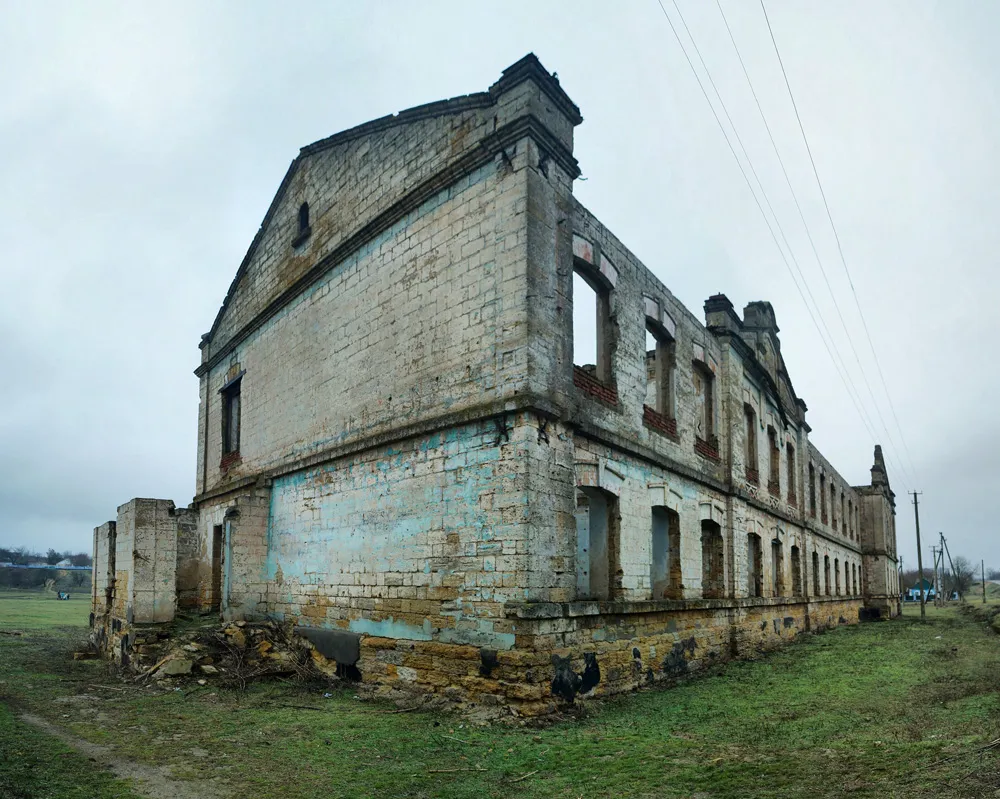
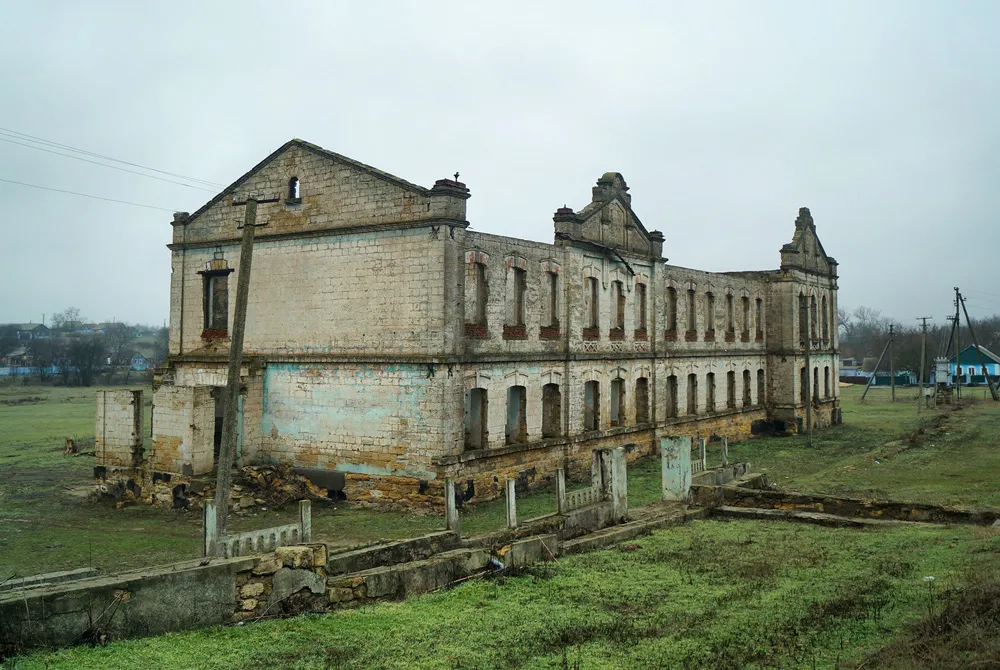
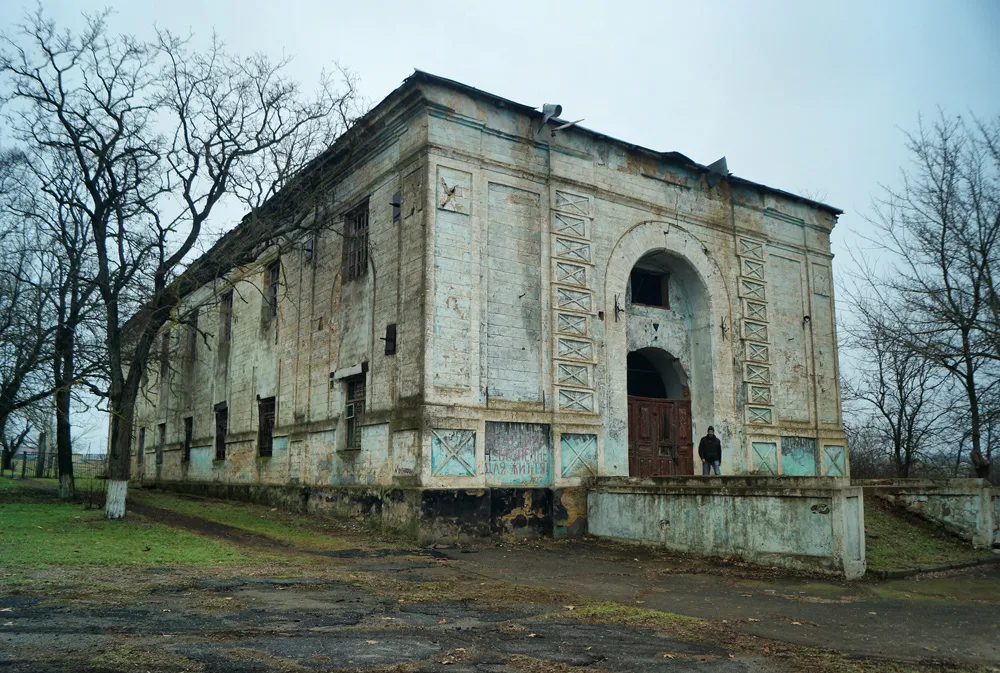
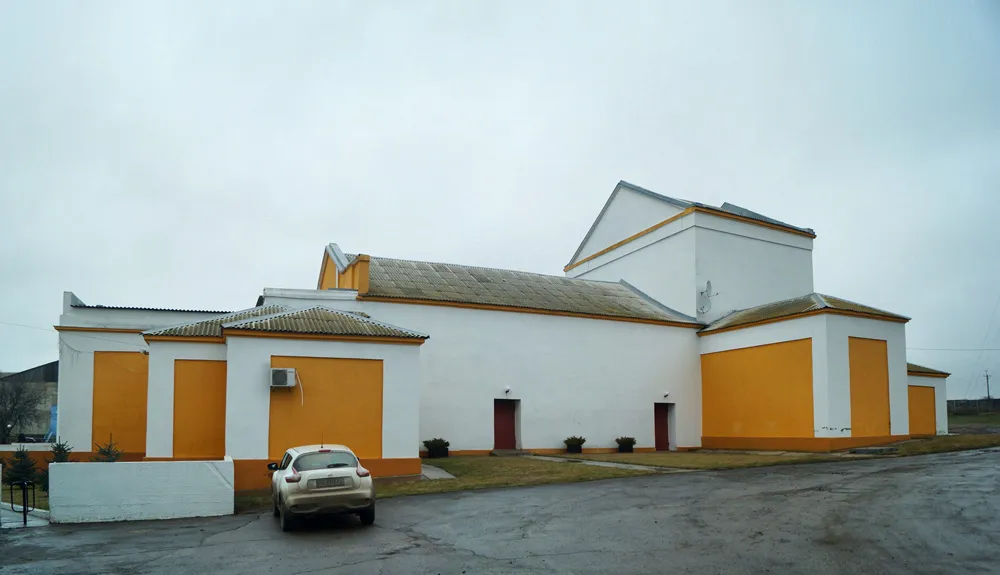
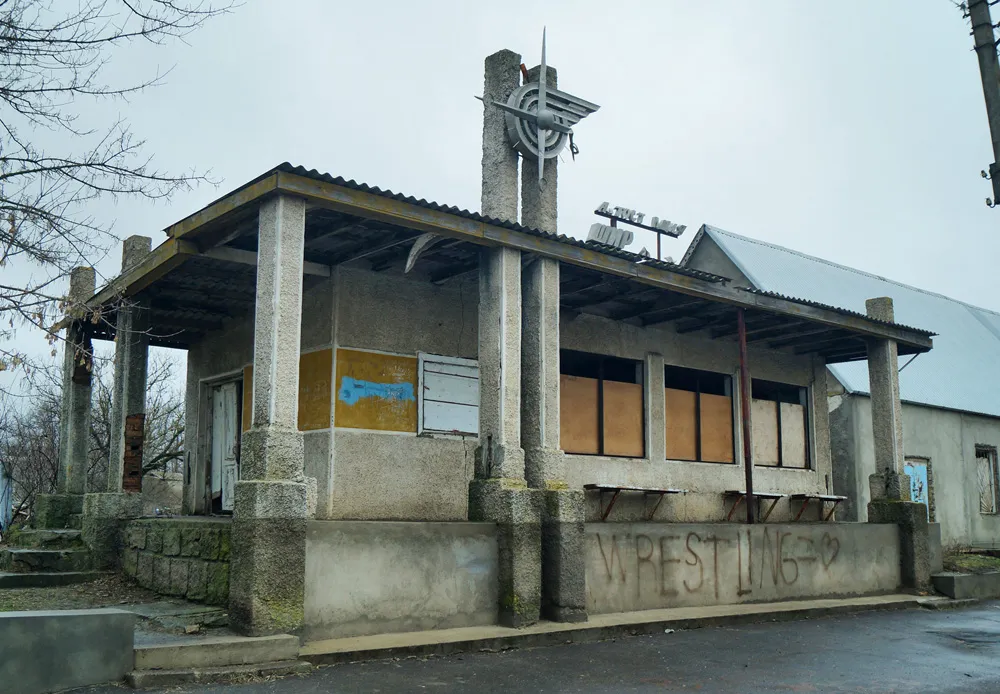
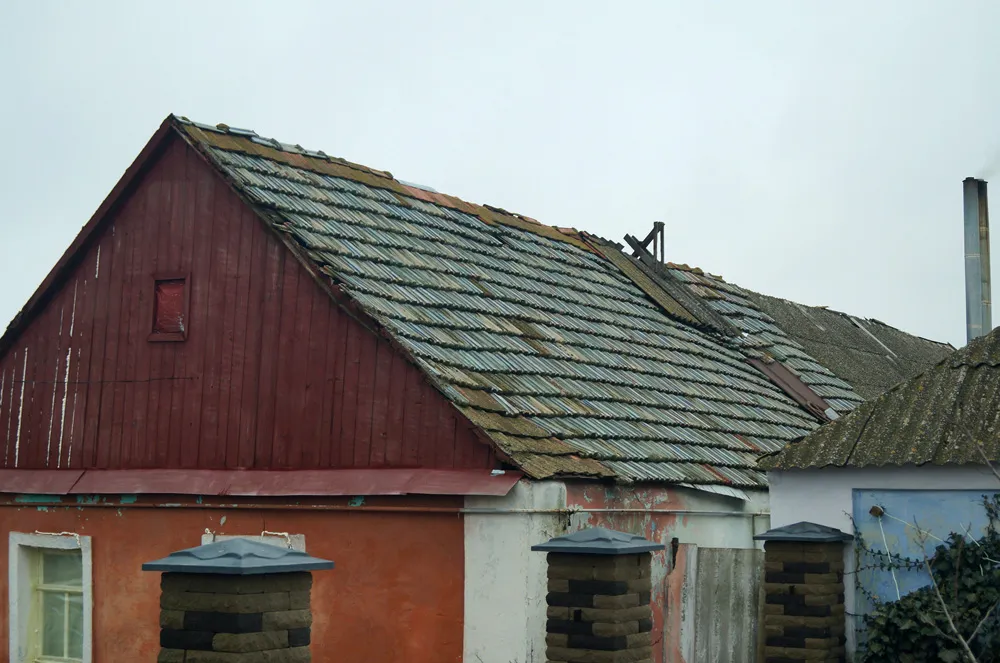
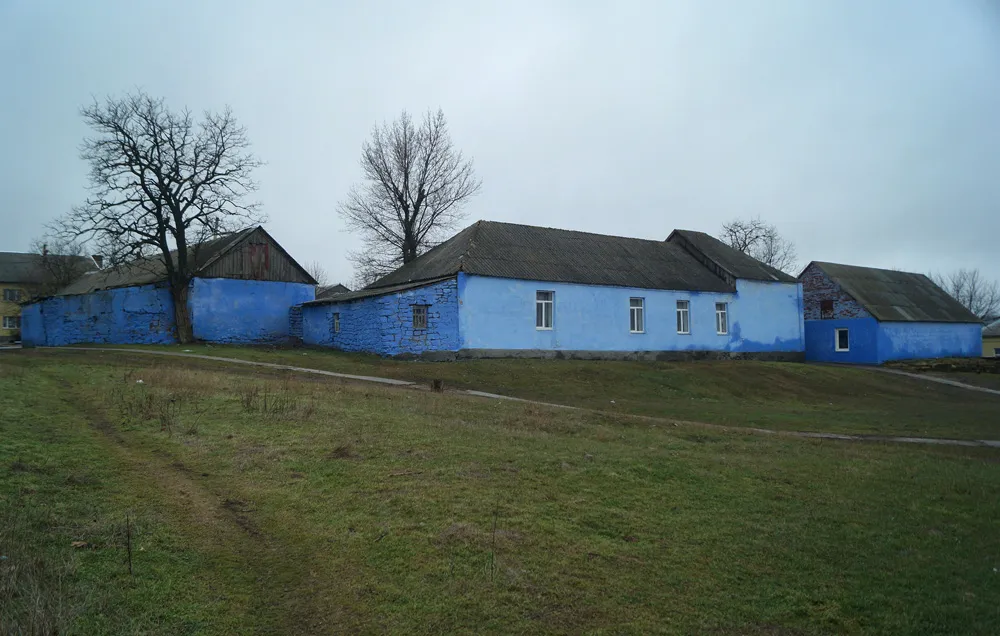
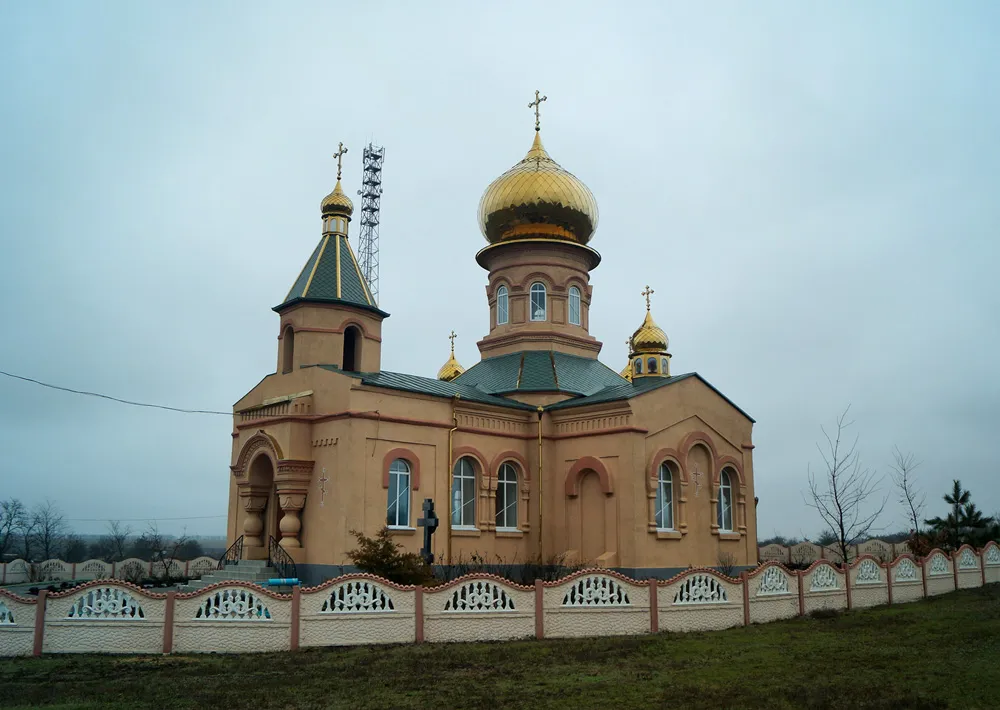
German buildings in Shyrokolanivka (former German colony Landau).
The former German colony Landau, in the 1920s-30s of the last century, was named after the founder of German communism, Karl Liebknecht, and was the centre of a German national district. In the 1930s-40s all the Germans from the village were deported or destroyed, Ukrainians and Russians were settled in the German houses, and the village was given its present name; I suspect that Landau – “lan” (field) – and Shyrokyi Lan are somehow connected.
The Landau colony was founded in 1802 and today it seems an ordinary Ukrainian village. Though it is not ordinary at all, since it is the record-holder among the villages of Ukraine for the amount of surviving German colonist buildings. A Lutheran church, a gymnasium, a town hall, a post office, a hospital, administrative buildings, a pile of residential buildings and even a club. And the Germans built the club in 1934 – at that time they were allowed to run their own village, and a little later they were no longer here… By the way, local residents say that the Germans also built an Orthodox church for the village’s minority. It exists to this day – in the field, outside the village. And indeed, it is a stern brick building, cross-shaped in plan, reminiscent of a German chapel that was extended and enlarged for Orthodox services.
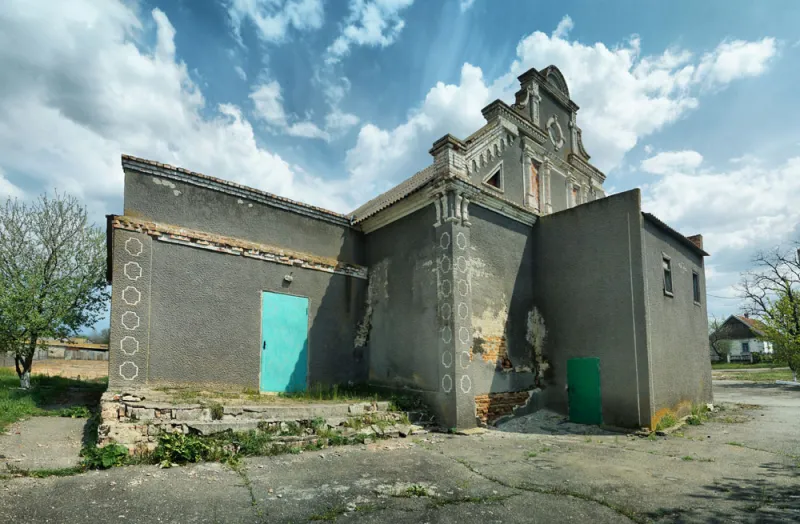
The German Roman Catholic Church of St. Raphael, consecrated in 1896, now abandoned, stands among Soviet dormitories and has long ceased to perform its functions. It is 46 metres long, 31 wide and 8.5 high. A very tall bell tower (31.5 m) once stood beside it, but the Bolsheviks long ago pulled it down, and the church was turned into a vocational school building, with the hall divided into two floors. Now the church is abandoned and gradually being destroyed and falling into decay; only the remains of decoration around the entrance gate indicate that this was once a majestic building, which even had an organ.
In 1934 naive German colonists began to build a cinema (the present club). They believed in the sincerity of the communists, believed in a bright future, and the arrest of their priest, together with 11 more priests from neighbouring German villages, was a shock to them. The trial of the priests took place in the premises of the unfinished cinema – they were all given 10 years in camps, and then tried again and shot.
The most spectacular buildings of Shyrokolanivka were the boys’ and girls’ gymnasiums. The girls’ one was completely pulled down and dismantled for building materials, while the majestic building of the boys’ one still stands, though without windows, doors or a roof. Locals say that a fire happened here by accident, but no traces of fire are visible inside – everything looks like ordinary plunder.
In German times Shyrokolanivka had 5 pottery enterprises, 2 large fairs and a tile factory. Many houses are still covered with those beautiful glazed tiles. Local residents call such houses German and give them an age of over 100 years. The buildings of the town administration, built around a courtyard, now house a boarding school. Somewhere deep in the village some more large buildings could be seen, definitely German, but it was already getting dark and we had to move on.
And next we had the village of Stepove – the former German colony Karlsruhe. It was not as large as neighbouring Landau, but judging by its church there were many parishioners here, and most of them had come from the German state of Baden-Württemberg, from the city of the same name, Karlsruhe. That city was founded by the German margrave Karl Wilhelm, who wished to create a centre with streets radiating outward. The residents of Karlsruhe brought this name to the Ukrainian steppes when they founded the settlement in 1811.
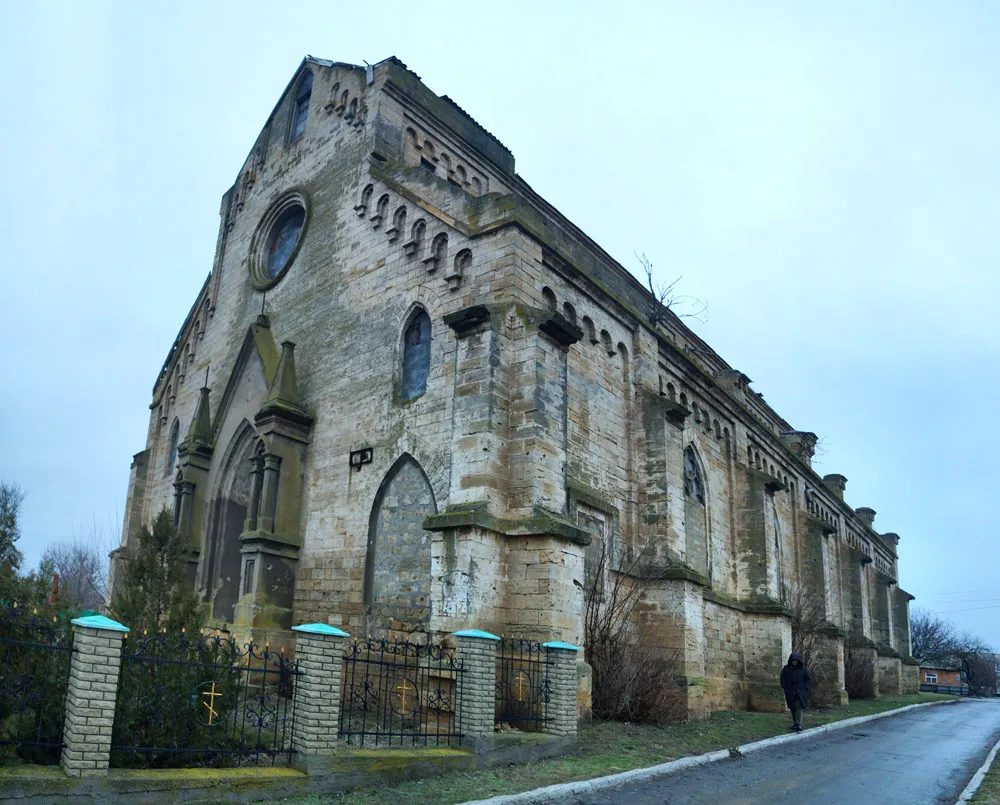
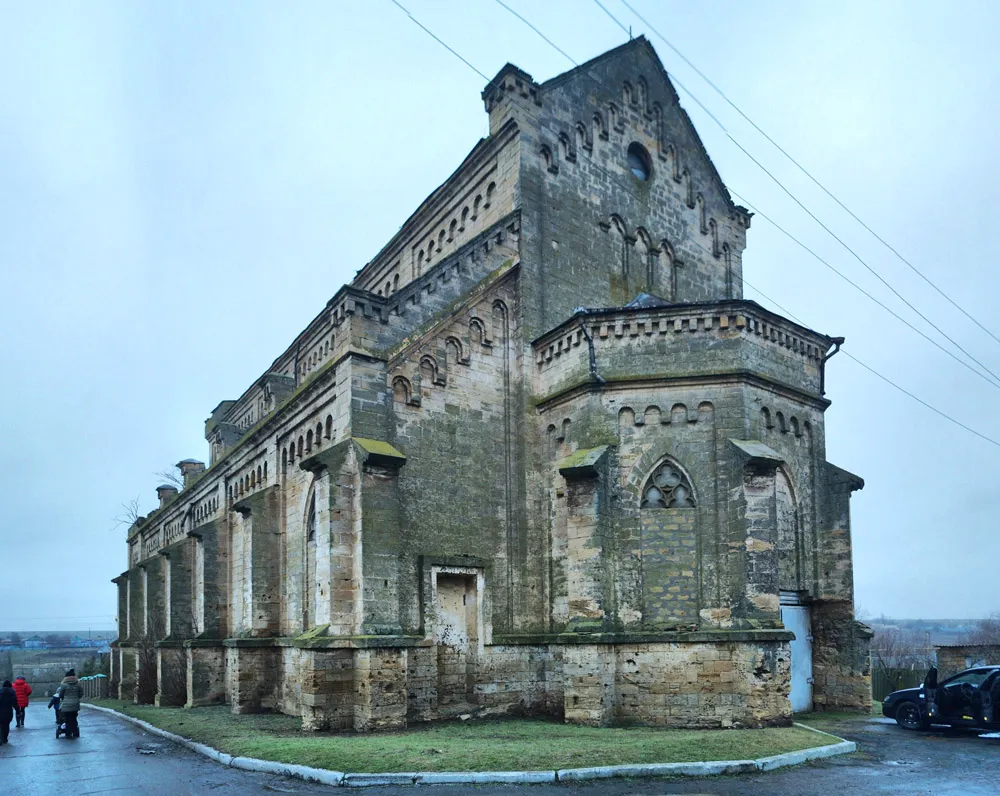
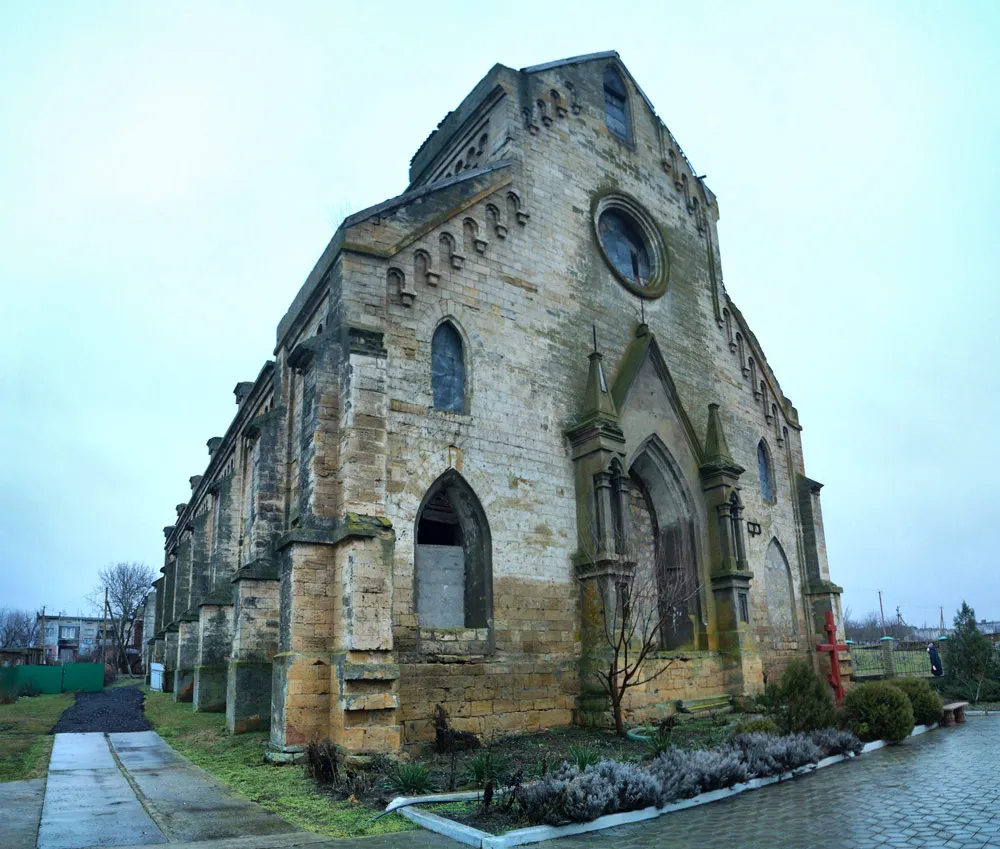
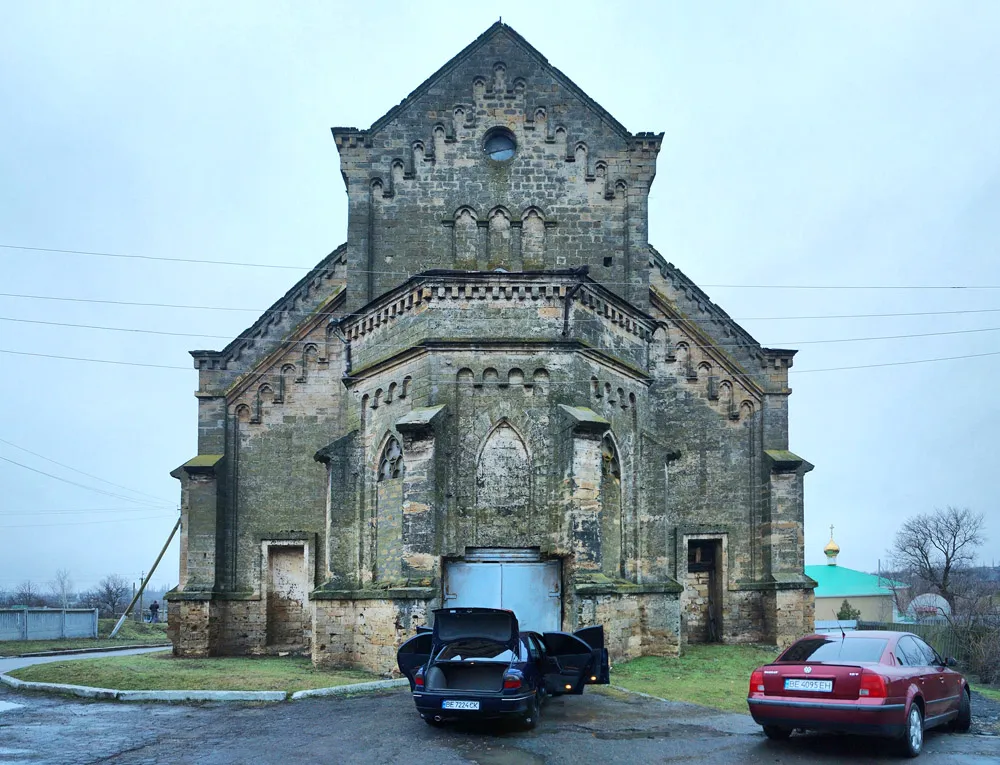
Stepove, the former German colony Karlsruhe. Probably the most majestic monument of German heritage – the Church of Saints Peter and Paul. It once had a very tall bell tower – dismantled in Soviet times, and already in the 21st century its roof was removed, supposedly to cover it with a new one. The old one was taken off, but the new one was never put up; instead a small Moscow Patriarchate church was built beside it…
Few buildings from German times remain in Stepove, but one of them is so majestic and luxurious that it could be one of the main tourist magnets of Mykolaiv Oblast – the Church of Saints Peter and Paul, built to a design by the Odesa architect Viktor Korf in 1881-1885. It is one of the largest churches in southern Ukraine, but today, unfortunately, it is in a disgraceful state. Local residents removed its roof – they say they wanted to re-roof it with a new one, but left it without a top, to fall into ruin. In the church’s yard a simple Moscow Patriarchate church was built. True, they say there used to be a rubbish dump here and the church’s merit is that it was cleared away.
Karlsruhe was founded on the banks of a large gully called Lysycha. The Germans dug seven ponds in the gully and stocked them with fish. Nearby they laid out orchards and vineyards. For the Ukrainian steppe this was an ideal farm, but the end of the German idyll came with the arrival of the Bolsheviks. At the end of the 19th century Karlsruhe had 1,274 inhabitants – almost all Germans. Now there is not a single German in the village.
Photographs of the Church of Peter and Paul with its tall bell tower and roof have survived. The bell tower vanished who knows when, probably in the 1930s, and the roof quite recently, but even without a bell tower and without a roof this building looks unreal.
18 kilometres from Stepove, in the village of Novoselivka, another Roman Catholic church has survived – the Church of St. Anthony of Padua, built in 1893. It is an abandoned, half-ruined building that in the Soviet period served as a collective-farm barn.
Novoselivka is the former German colony Halbstadt. The Germans were not very original in choosing names, since present-day Molochansk (Zaporizhzhia Oblast) was also Halbstadt, which translates as “half-town”. Halbstadt in the Zaporizhzhia region was not only a half-town but a town, the centre of the Mennonite settlements, whereas Halbstadt-Novoselivka does not seem to have been even half a town – it was always a village.
In the 1920s the Ernst Thälmann collective farm was created in the village (although this name probably stuck to the farm later). Supporters of anti-fascism closed the church and made a collective-farm warehouse in it. Today, despite being among the architectural monuments of local significance in the register, the church is absolutely abandoned and there is no talk of any protection or restoration.
On the way to Mykolaiv we were stopped by the police, just like that, without any violations; they asked whether everything was fine with us and asked for documents. 30 seconds and goodbye. We were later explained that police often check such cars, which cost over three million hryvnias, just like that, for theft. Or maybe it is thieves?
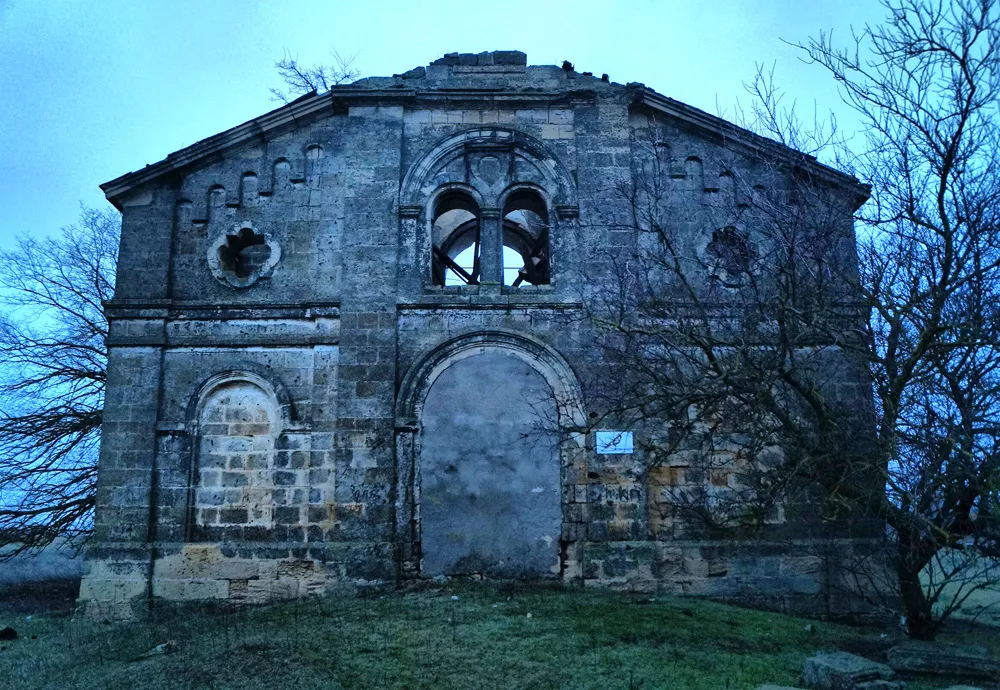
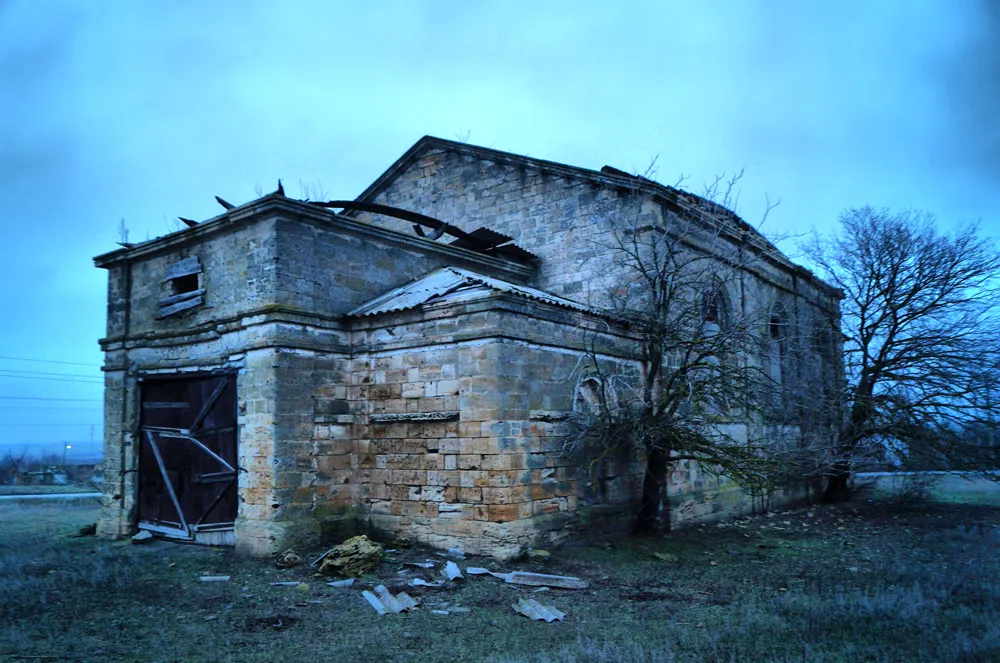
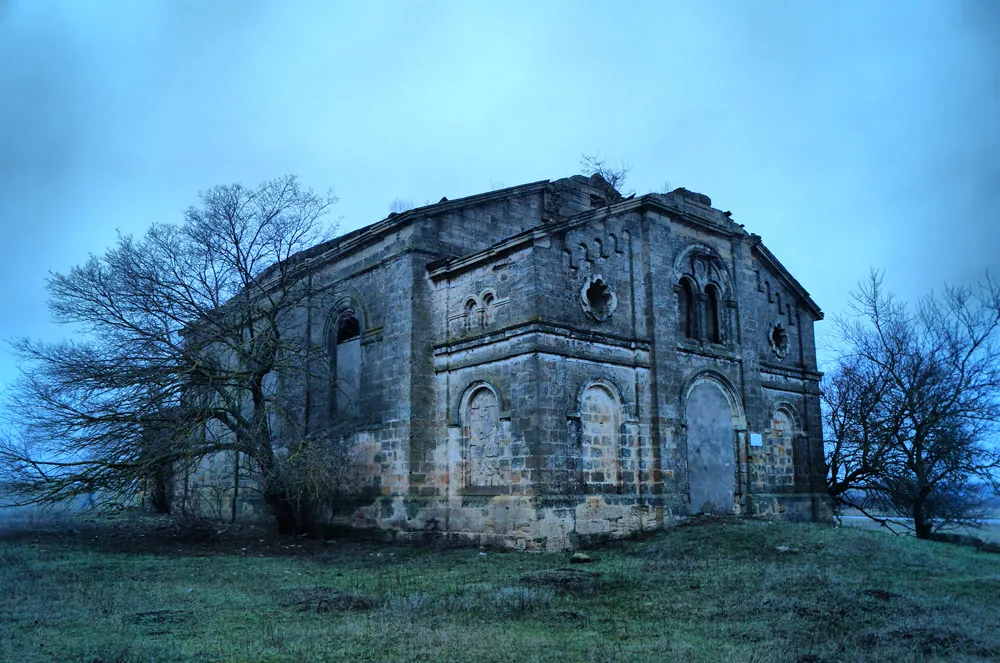
The Church of St. Anthony of Padua in Novoselivka (former German colony Halbstadt)
Real treasures.
East of Mykolaiv the road situation is better than in Mykolaiv region as a whole. For example, to Bashtanka stretches an almost ideal asphalt-concrete highway, which for some reason breaks off at the Bashtanka bypass but then begins again. We did not go further but turned towards the village of Shliakhove.
The Ukrainian steppe hides phenomenal things. Ruins of mysterious German settlements, for example their churches and houses, which have stood here for centuries, and almost none of the present-day local residents know what they are or who built them. They know only one word – Germans.
Shliakhove used to be called Neu-Karlsruhe. It was founded in the mid-19th century by German Lutherans, who built stone houses, a school and a Lutheran church. The ruins of the Neo-Gothic church are impressive. Local residents, searching for treasure, tore down the apse of the church, they say with explosives. Who knows whether they found anything… Barbarians. Near the church are the remains of its stone houses, and about 300 metres away is a desecrated German cemetery. In the cemetery there is not a single whole gravestone – they are smashed and toppled; why they did it is hard to understand.
The Germans have long been gone. Whether they visit their former homeland is unknown, just as it is unknown whether anyone remains who had ancestors in Neu-Karlsruhe.
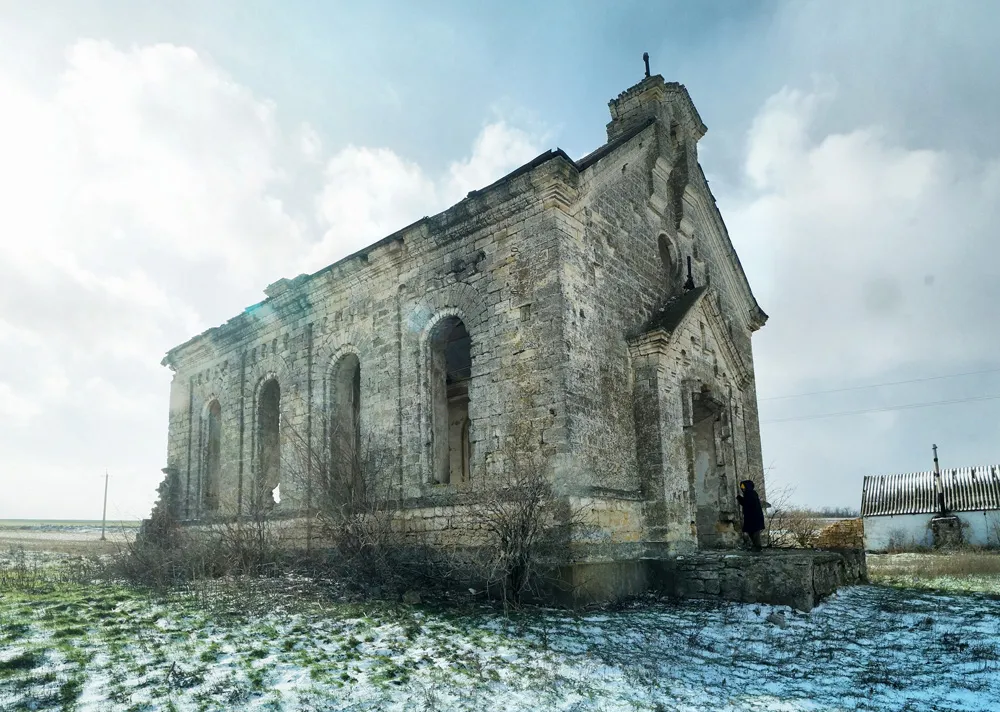
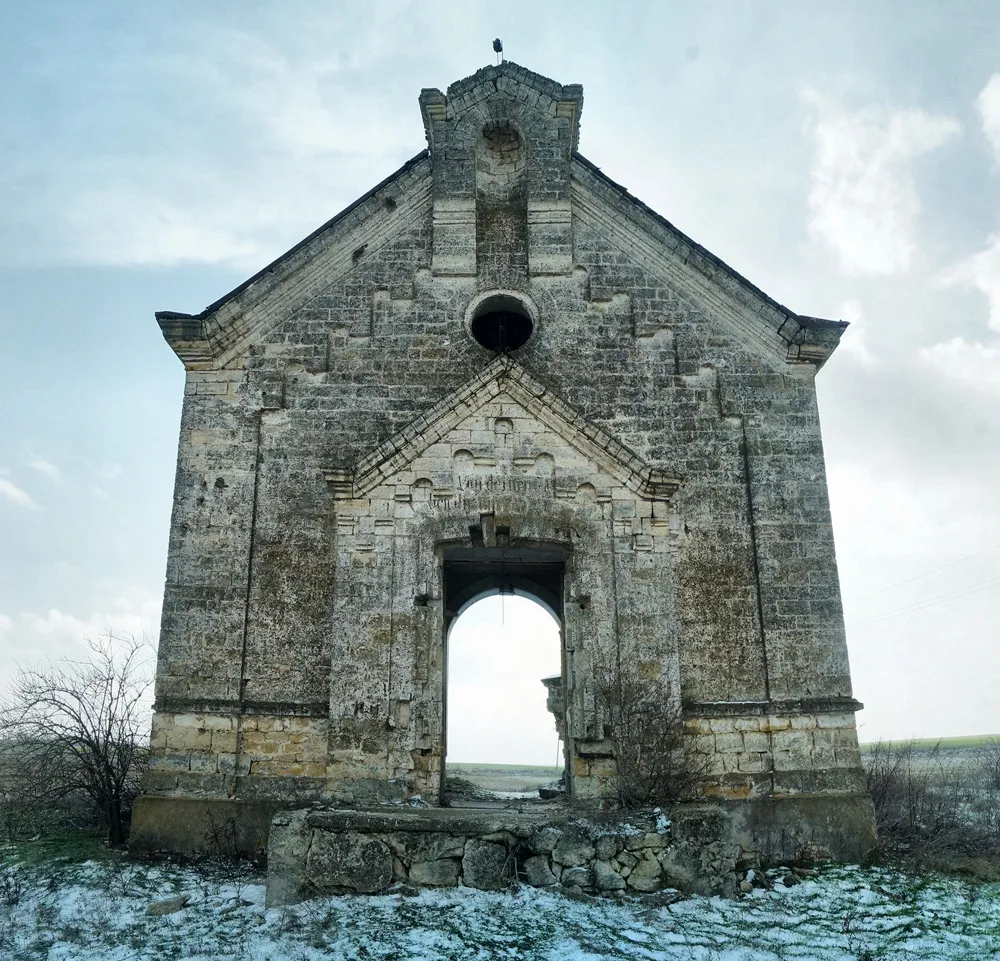
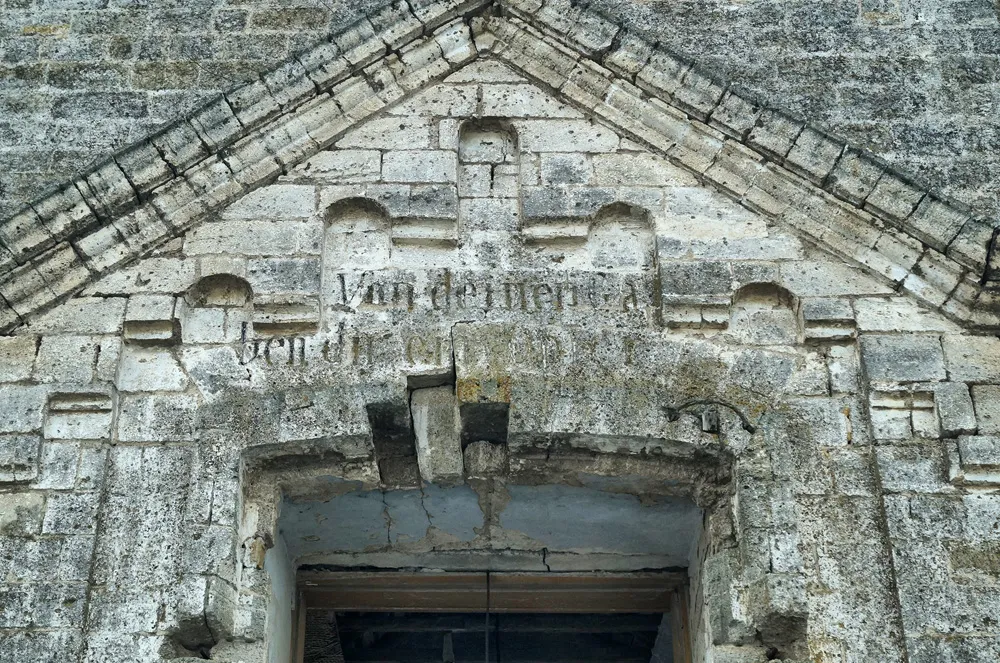
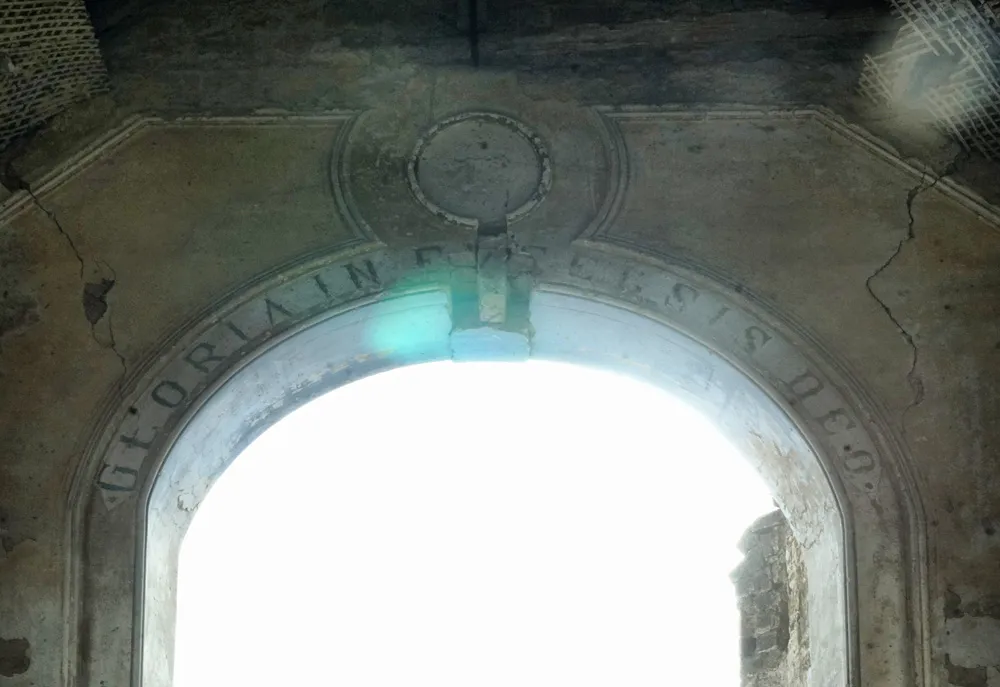
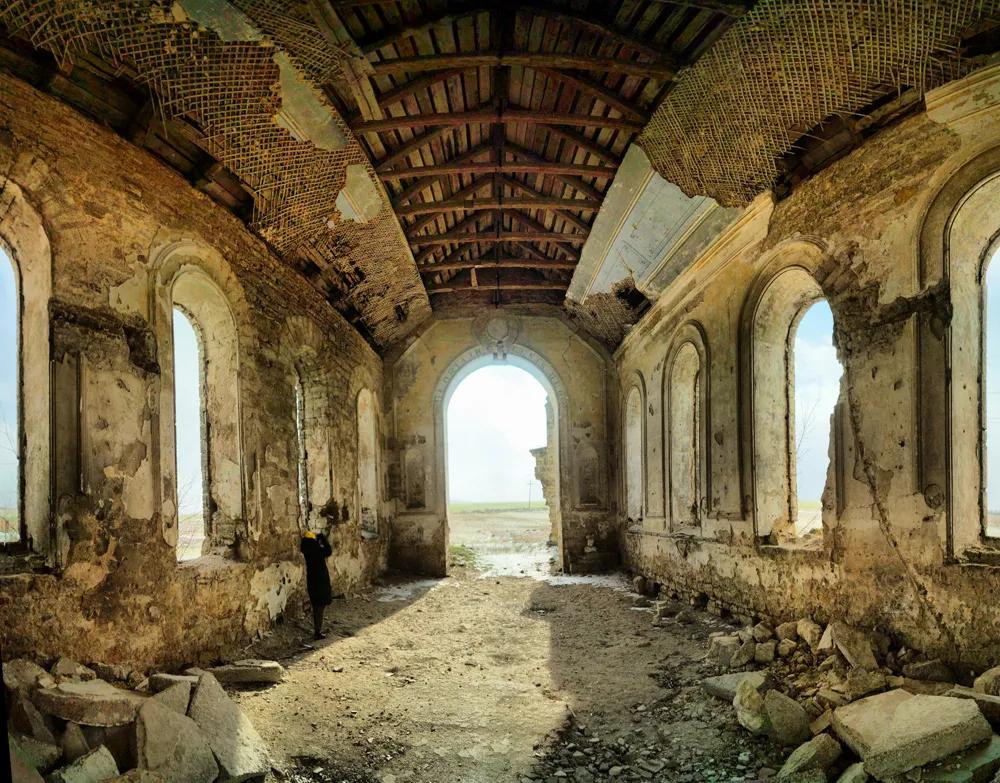
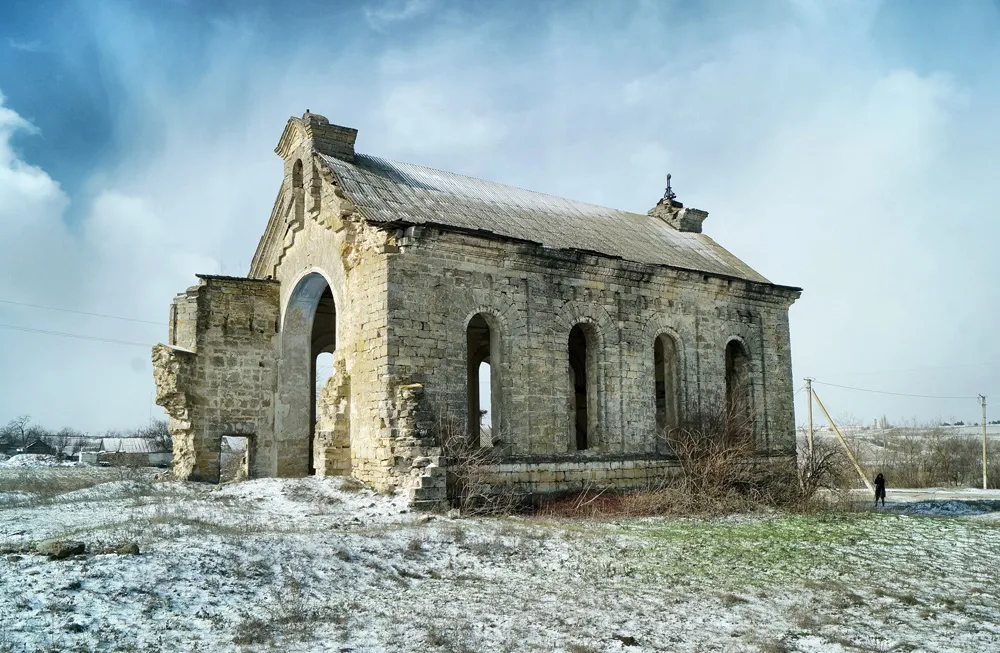
The Ukrainian steppe hides phenomenal things. Ruins of mysterious German settlements, for example their churches and houses, which have stood here for centuries, and almost none of the present-day local residents know what they are or who built them. They know only one word – Germans. In Mykolaiv region, 10 km from Bashtanka, there is the village of Shliakhove. It was founded in the mid-19th century by German Lutherans, who built stone houses, a school and a Lutheran church. The ruins of the Neo-Gothic church are impressive. Local residents, searching for treasure, tore down the apse of the church, they say with explosives. Dunno if they found anything… The little town was called Neu-Karlsruhe. Near the church are the remains of its stone houses, and about 300 metres away is a desecrated German cemetery.
I want to note that while there were metre-high snowdrifts in Kyiv, in Mykolaiv there was almost no snow – a centimetre or two, no more. Local residents said there was almost none – it did not fall. Strange, because 150 kilometres away, in Pervomaisk, there is no less snow than in Kyiv. Where does it run, that invisible line that divides different climatic zones of Ukraine – the real south, without snow and terrible cold, and almost the north, where it can be 30 degrees of frost and knee-deep snow.
From Mykolaiv we drove to Voznesensk, looked at the tsar’s little house and the place where Mishka Yaponchyk was shot, and then turned towards the village of Timiriazevka – a unique settlement that was meant to become a model showcase Soviet village. And apparently did.
In the 1950s a hotel with a dome was built in Timiriazevka – something between a circus and a palace. In the 1960s, not far from the hotel, a complex of two-storey dormitories in the Neo-Baroque style was erected, and a little further on, a huge house of culture, large houses for engineers, agronomists and livestock specialists, a huge collective-farm office… A considerable part of these buildings is now abandoned and falling apart. The model showcase Timiriazevka farm has disappeared, but in its place an enterprise engaged in nut breeding has appeared, and perhaps the village has a future.
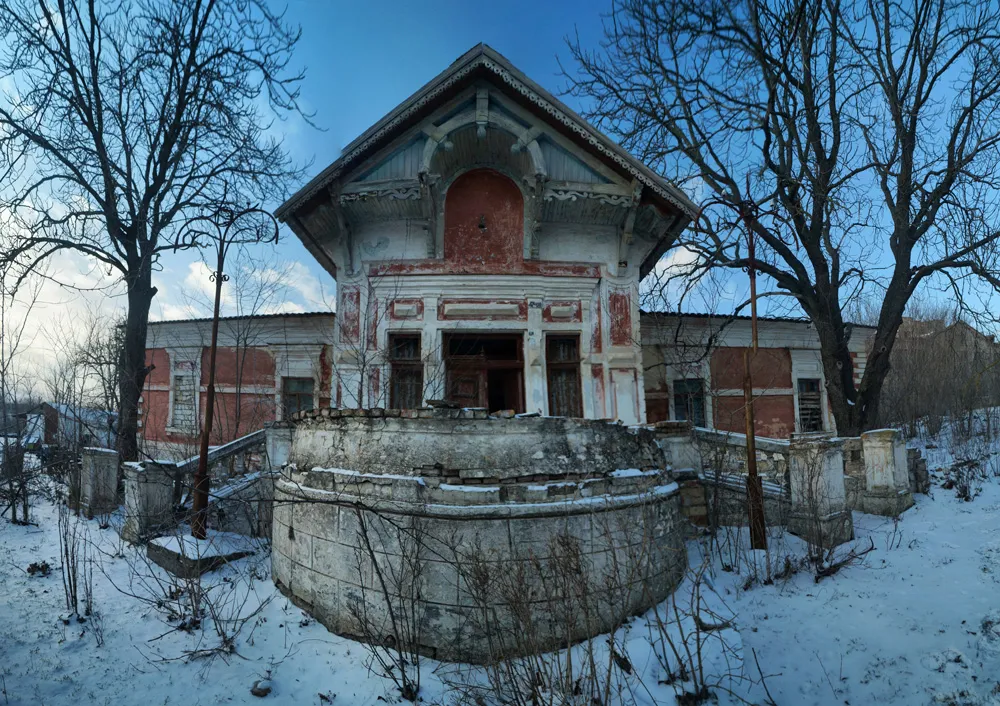
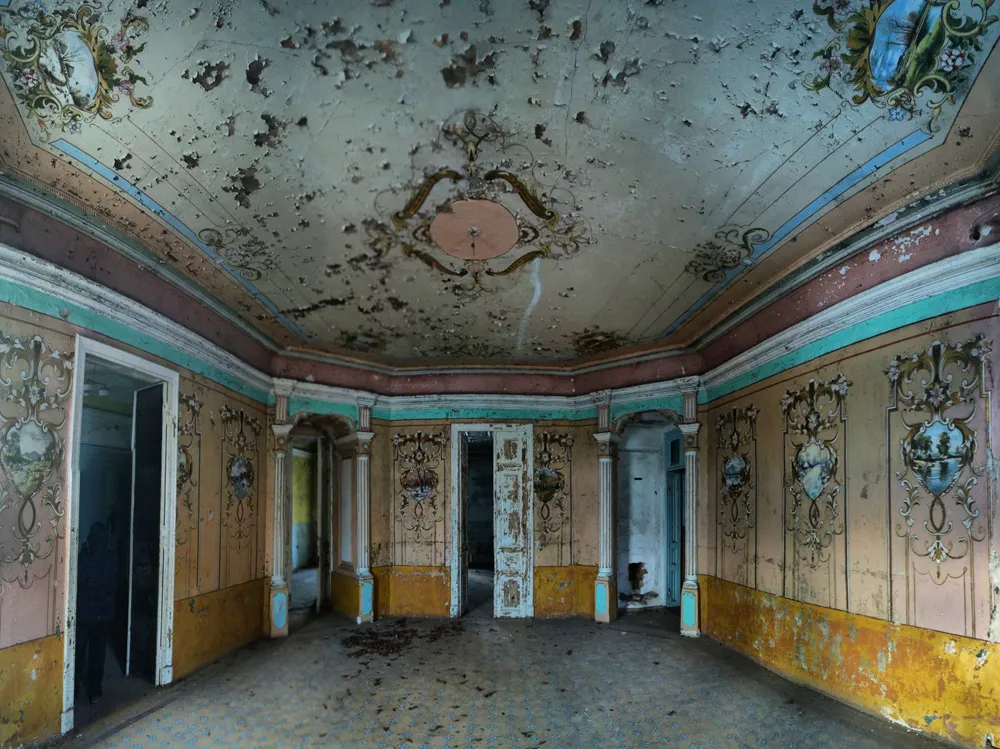
The Oxner palace.
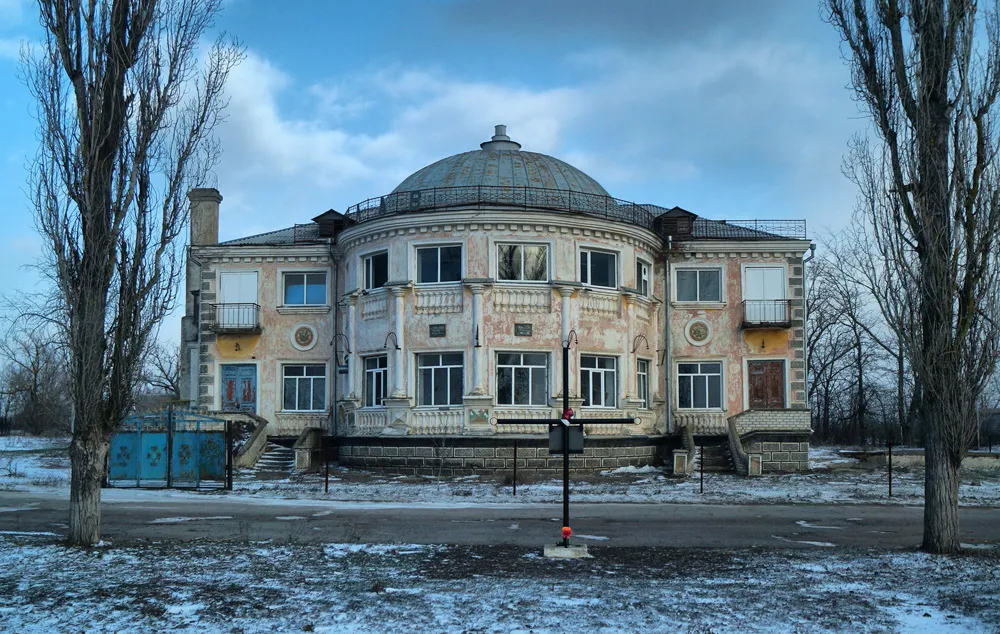
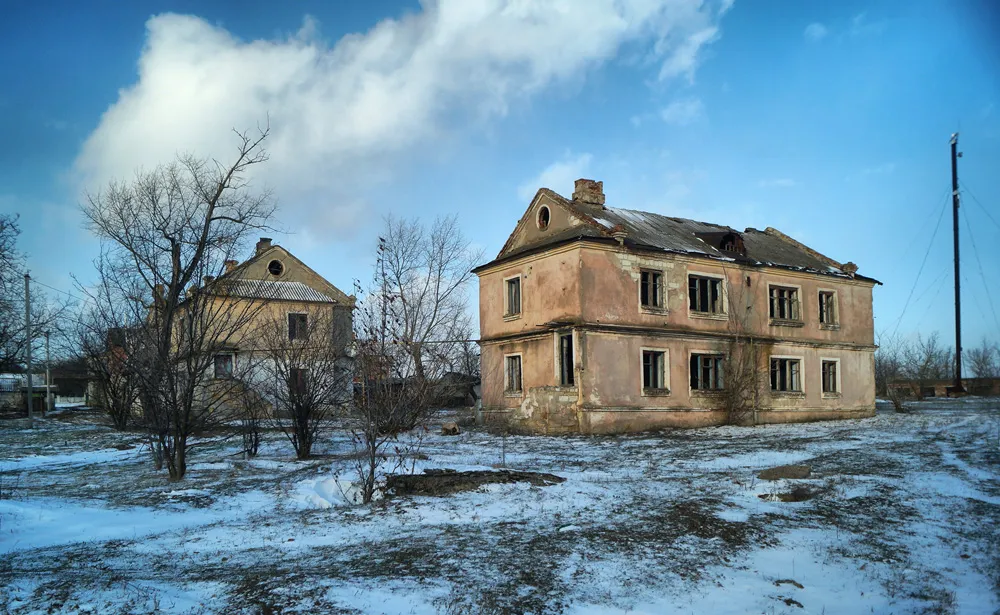
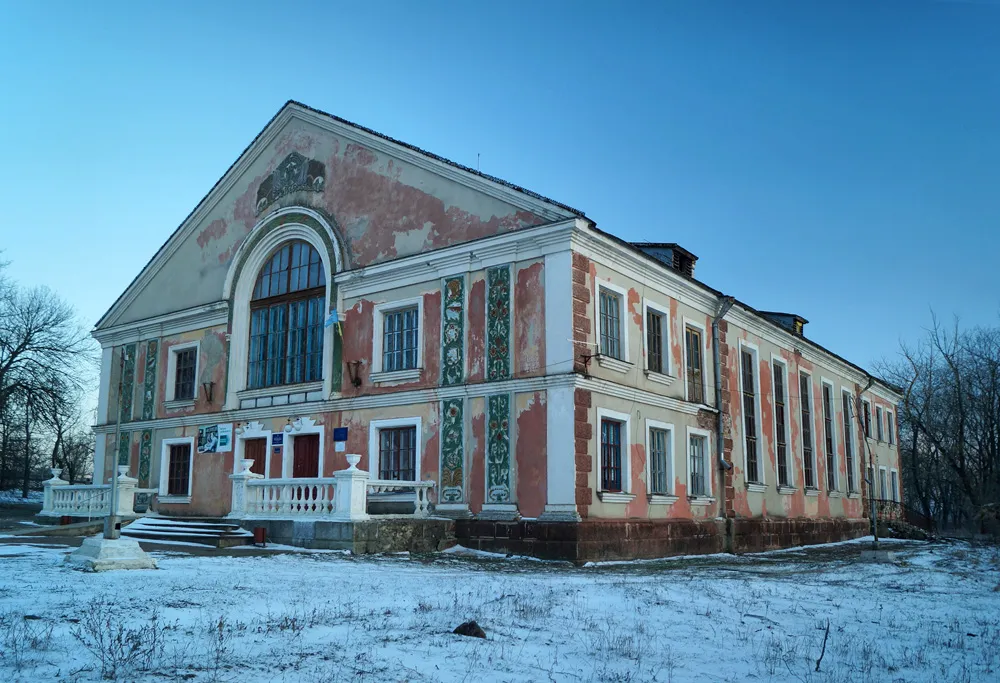
A model showcase Soviet village.
The main landmark of Timiriazevka is the palace of the German landowners the Oxners (on Google Maps it occupies the place of the hotel, but in reality it is next to the collective-farm office). Murals and some other unique things have survived in the palace, which I do not want to talk about on the open spaces of the internet. The palace stands abandoned, with its doors open… Nearby are a few Oxner gravestones and a farm with sheepdogs.
During our expedition, which became possible thanks to Lexus, we explored and looked at 24 settlements, each with some interesting locations. Someday we will tell about all of them, but now I want to speak about the second drawback of the incredible Lexus LX 450 d – the joystick that controls the navigator. Selecting the letters of a settlement name with this joystick is practically impossible, even when the car is standing still. It is some kind of game, and what the driver or passenger needs it for is hard to understand. Otherwise, for Ukraine and its roads, this is an ideal car, and the 15 litres of fuel it consumes per 100 kilometres – believe me, that is a considerable economy for such a powerful off-roader.
Text and photos by Roman Malenkov.