

“Pilgrim crosses” found in Podillia (photos)
A unique monument has been discovered in Khmelnytskyi region in the course of the project “Graves of the Ancestors”. We recall that this partnership project is carried out by the NGO “Ukraine Incognita” and the department of culture, nationalities, religions and tourism of the Horodok City Council.
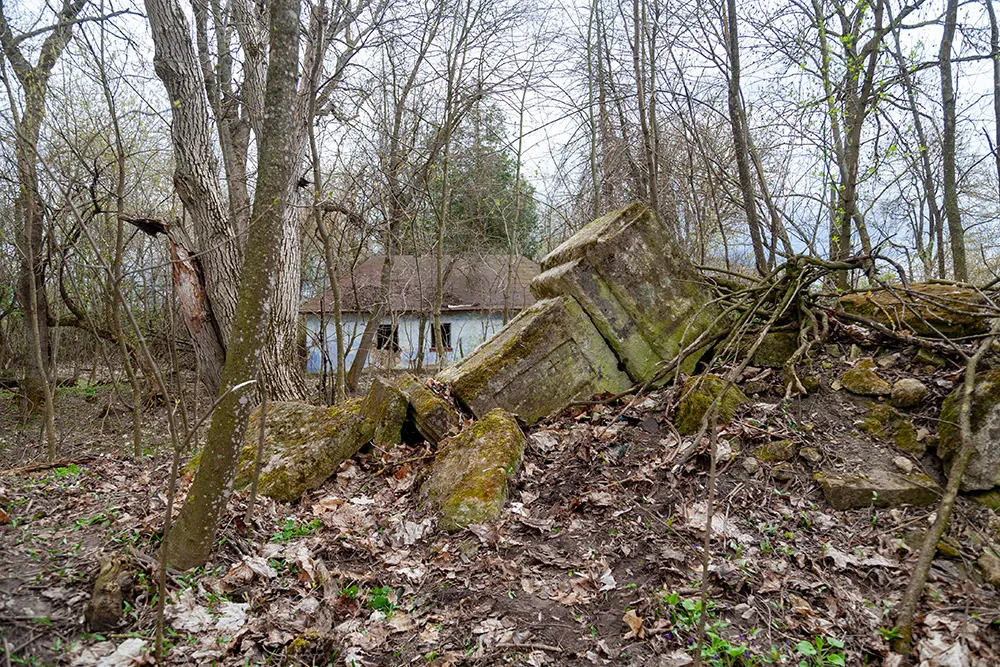
“Pilgrim crosses” cover the ruined pedestal of a destroyed sacred figure
In the village of Andriivka in the former Horodok district (now the Sataniv community), during a survey of the area near the Church of the Transfiguration of the Lord, a historical artefact unique for Podillia and for Ukraine as a whole was discovered.
There is little information about the building of the church, and it is contradictory. Only one thing can be stated for certain: it took its present form around 1750, on the site of earlier predecessors, at the expense of a member of the Stadnicki family of the Szreniawa coat of arms, which was very respected in these parts.

The church of 1750
The church had a huge grounds. Hardly any other church in Podillia had larger. It was there, amid a spontaneous rubbish dump and thickets, that Oleh Fedorov, an active participant in the project, found the ruined pedestal of some large sacred sculpture.
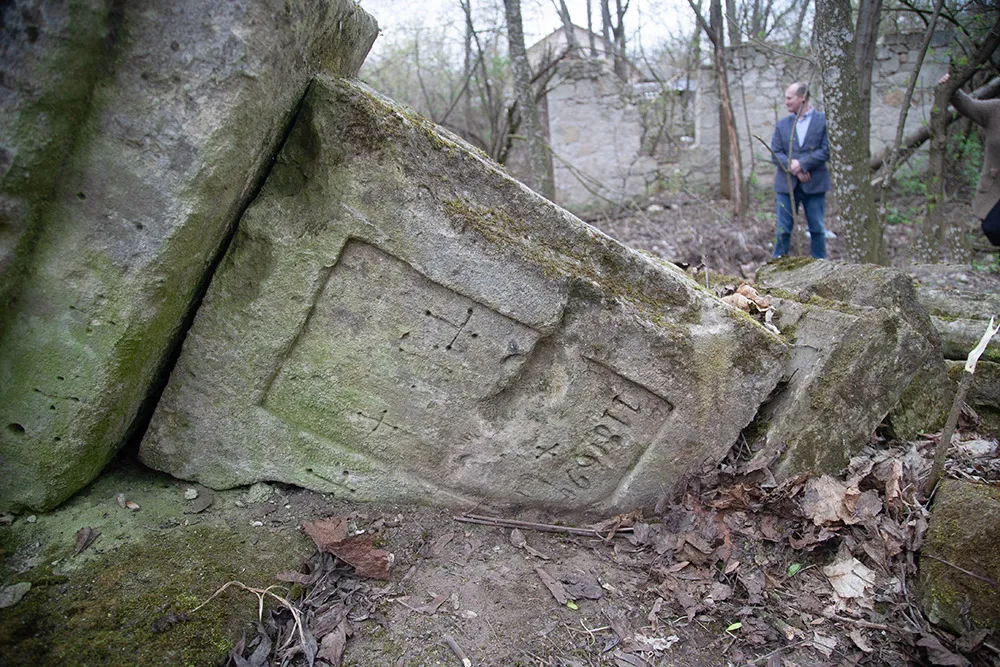
The ruined pedestal and O. Fedorov
What sculpture it was, we can only guess today. The sculpture was destroyed back in the 1920s–30s. It was probably then that the sizeable pedestal was toppled onto its side.
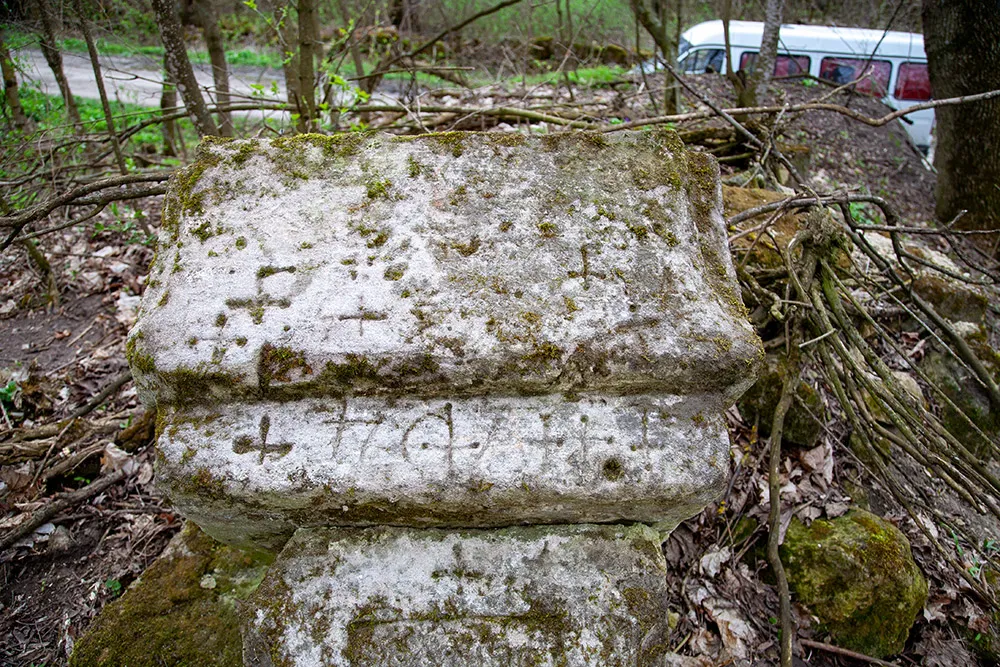
“Pilgrim crosses” and the date 1704
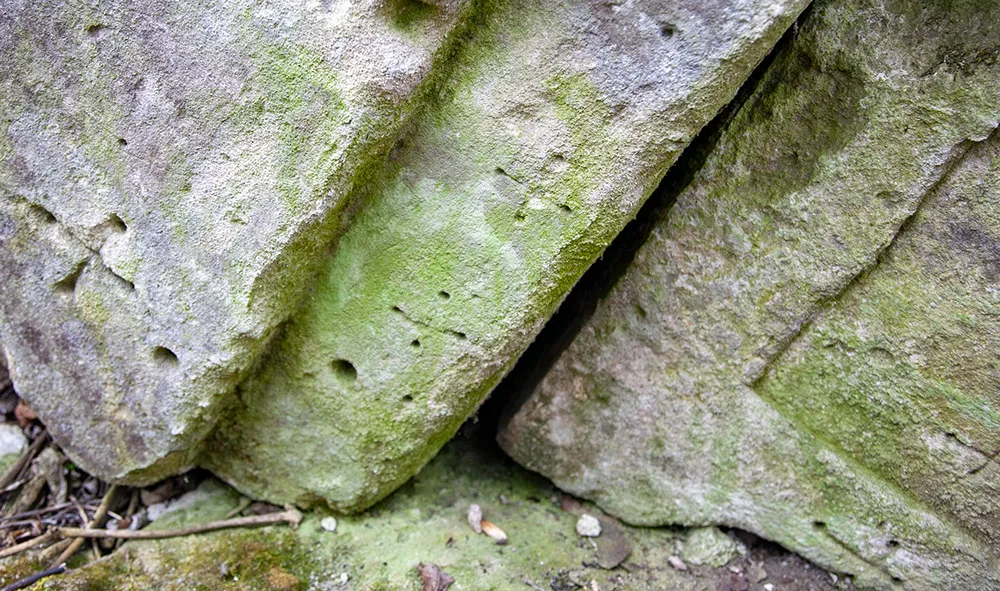
The old stones were covered with a very thick layer of moss. When it was scraped off in search of possible inscriptions, the local historian Dmytro Poliukhovych (a participant in the project from the NGO “Ukraine Incognita”) noticed a unique circumstance. The entire surface of the pedestal’s parts turned out to be covered with so-called “pilgrim crosses”. In historical literature this is the name given to marks in the form of crosses scratched by pilgrims when visiting especially venerated shrines. A scratched cross was meant not only to attest to a visit to the shrine but also to reinforce the prayers said there. The most famous “pilgrim crosses” cover the walls of the Church of the Holy Sepulchre in Jerusalem.
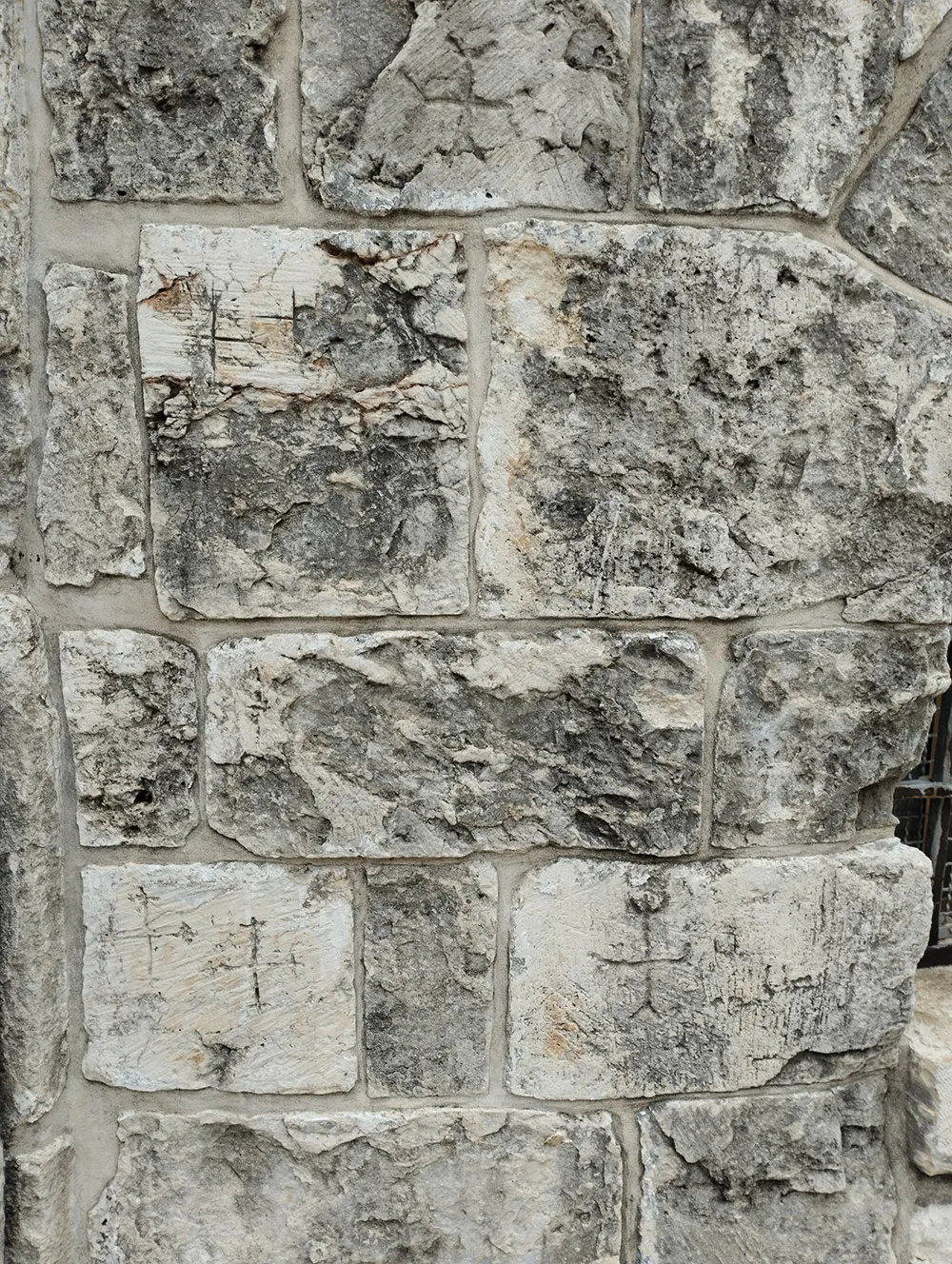
Graffiti on the walls of the Church of the Holy Sepulchre in Jerusalem. Photo: Artur Storozhuk
In Andriivka the local historians counted “only” three dozen cross marks. “Only” is in quotation marks because for Podillia and Ukraine this is in fact a great many! And on Roman Catholic monumental sites in Ukraine, “pilgrim crosses” had until this case been entirely unknown!
As the well-known historian and archaeologist, Candidate of Historical Sciences Pavlo Nechytailo, explained:
- Such crosses in Central and Eastern Europe are dated over a wide range, from the 10th century (Murfatlar, Romania) to the 18th century (the Cave Monastery in the village of Subich, Khmelnytskyi Oblast). Given the date “1704” carved on the pedestal, in this case too we have the 18th century. It is not ruled out that some of the scratched crosses date from the 19th century as well. Thanks to last year’s find by the “Ukraine Incognita” expedition, the cross on the grave of Pantylymon Kopytko (died 1860), which is also covered with “pilgrim crosses”, the chronology of the practice of scratching crosses can be pushed up to the second half of the 19th century…
The scholar also added:
- Similar crosses in our lands are more characteristic of Orthodox cave monasteries, but they also occur in Catholic churches.
For now this is a mystery to which there is as yet no direct, unambiguous answer. Why exactly this sacred figure was so venerated cannot be said at present. It is not even known what kind of figure it was at all. In the scant historical literature that mentions, even in passing, the villages of Kumaniv and Andriievka (Andriivka was once part of Kumaniv), there is not a word. Local residents can say nothing either…
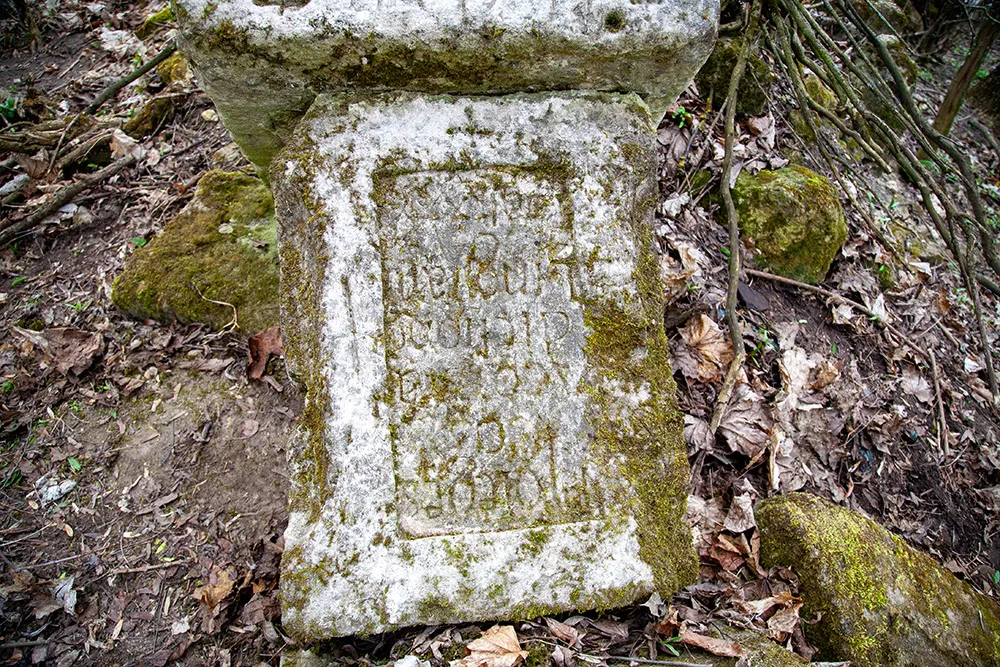
The inscription on the pedestal is practically illegible. All that is clear is that it is in Latin
We hope that this riddle of history will nevertheless be solved.


