

In the Ternopil region, locals and officials have disfigured the Hermit’s Cave
The Hermit’s Cave lies at the foot of a picturesque rocky ridge that rises only a hundred metres or so from the ramparts of Zvenyhorod, one of the sacred hill-forts of the famous Zbruch cult centre. The area where the cave is located is called the Hermit’s Forest.
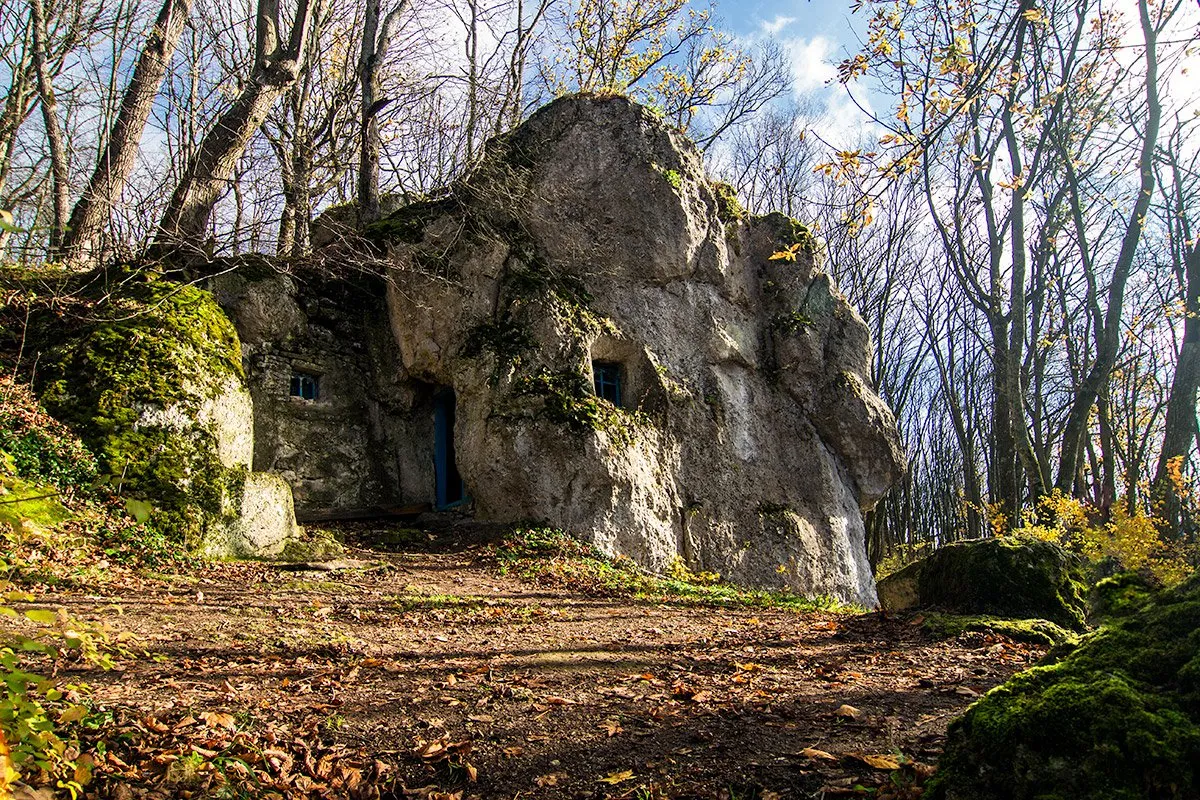
The Hermit’s Cave before the “improvement”
It was probably a pagan sanctuary originally, and later the refuge of a whole dynasty of hermits who lived and prayed here from around the 17th century until the early 20th century.
The cave consists of 2 semi-artificial chambers. One held a rock chapel; in the other the hermits lived.
After the Second World War, active Komsomol members had a fair bit of “fun” here and destroyed the ancient sacred figures. Only the lower part of the statue of St Onuphrius the Great survived.
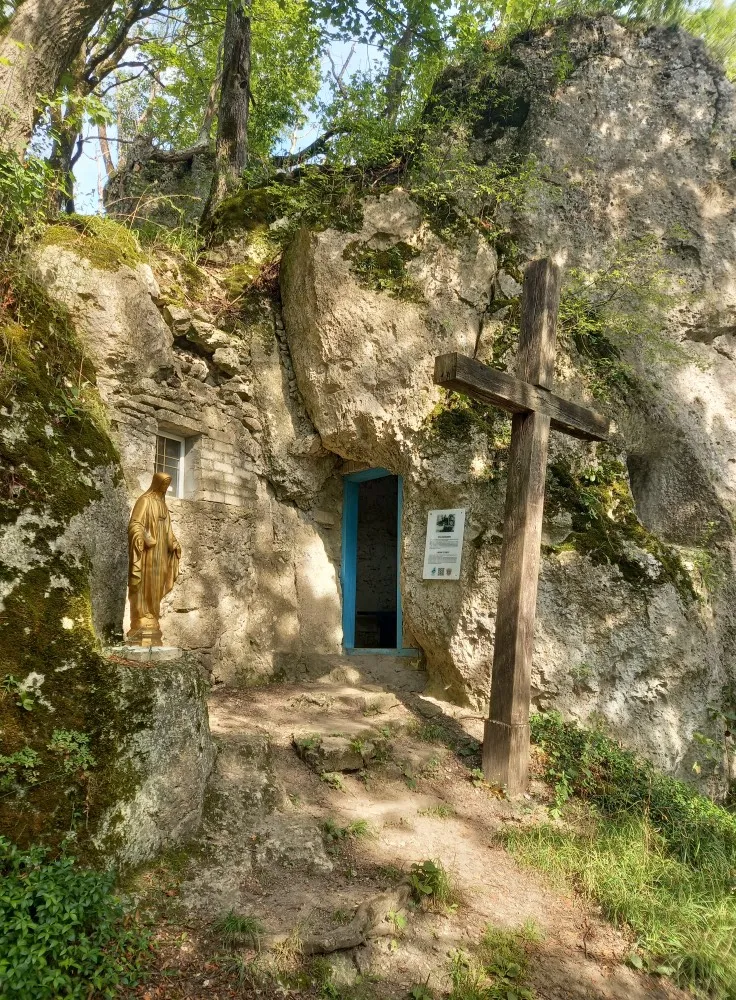
The cave got its “improvement”. Photo: open sources
Since then the monument has been protected from vandals and, above all, from ignorant “improvers” by its remoteness from people: more than 2 km along a forest road (and uphill, at that) from the nearest village, Krutyliv (Ternopil Oblast). But, as it turned out, when people are seized by a burning desire to urgently improve something, nothing can save a monument any more. Neither distance nor common sense.
Today the editorial team of Ukraine Incognita saw, on one of the social networks, a tourist photo report about a recent visit to this unique monument. We saw it and were shocked!
Someone had diligently glazed the little window of the ancient cave with a white plastic (!) window, and next to it had also placed a largish, cheap plaster figure of the Mother of God, painted to look like bronze and devoid of the slightest artistic taste.
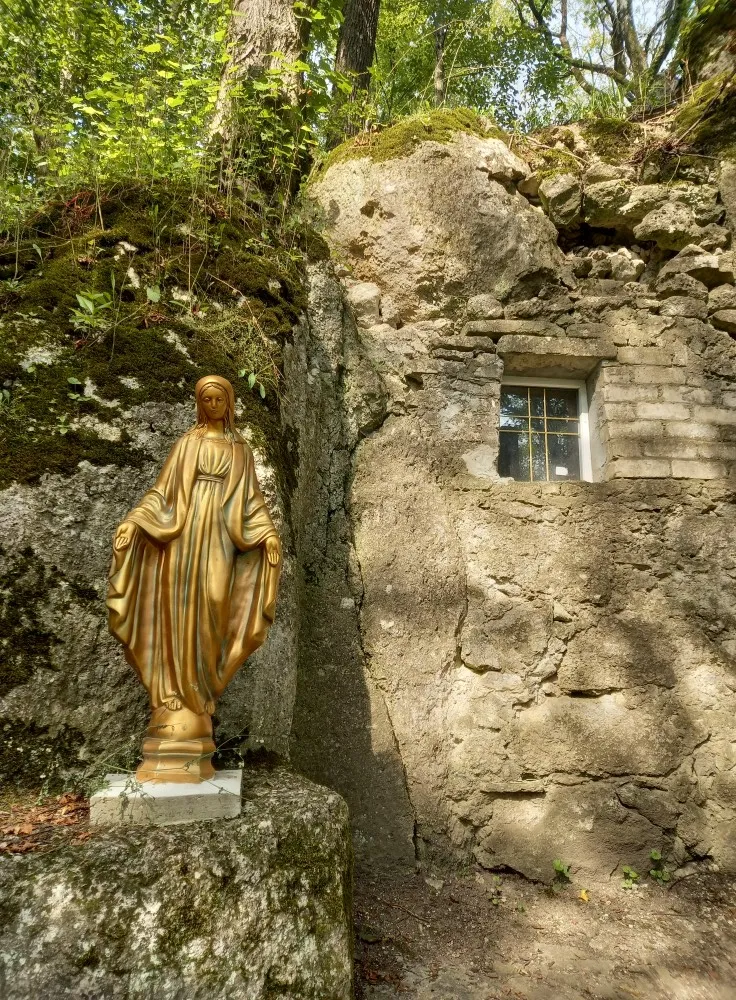
Photo: open sources
As we managed to find out, this was the work of active pensioners from the neighbouring village of Kryntsyliv.
It should be noted that such an “improvement” has not only spoiled the appearance of the ancient monument but also seriously affects its state of preservation. The cave is not airtight, and moisture constantly gets into it. The windows provided at least some ventilation. Now the walls are covered with a thick layer of mould and mycelium; even mushrooms are growing on them (see photo).
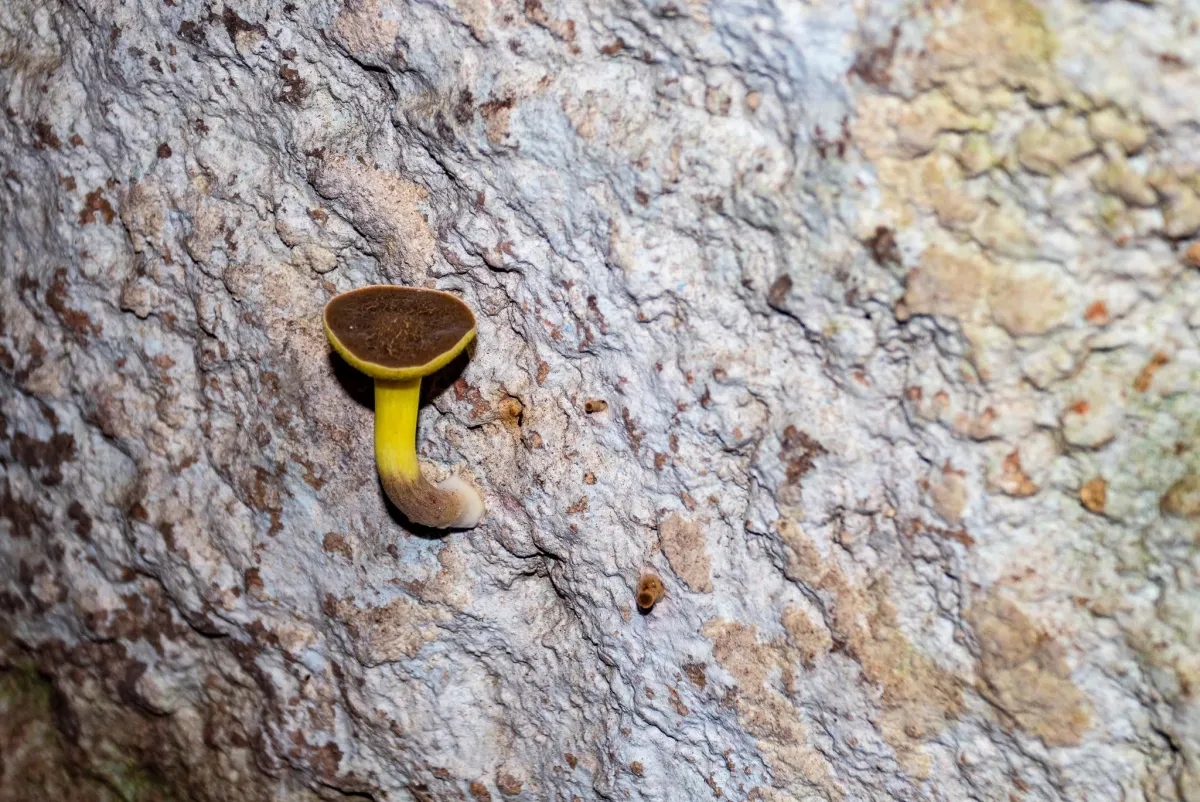
Mushrooms on the cave wall (inside)
Besides the pensioners from a remote village in the middle of the forest, regional tourism officials also joined in the desecration of the monument. In particular, a sizeable information stand was attached to the rock right by the cave entrance, decorated, among other things, with the “Ternopillia” tourism logo approved by the regional department for the development of tourist infrastructure.
Such stands at tourist sites and monuments are extremely useful and necessary. And it is good that one has appeared in the Forest. But one detail spoils everything. Fixing such boards directly to a monument is unacceptable. First, holes had to be drilled for this in the rock in which the cave is carved and which is an integral part of the monument. And that is damage to the monument. What is more, the board was fixed precisely at the spot where traces of some ancient inscription (illegible because of weathering) could be made out. It was right on top of that inscription that it was attached.
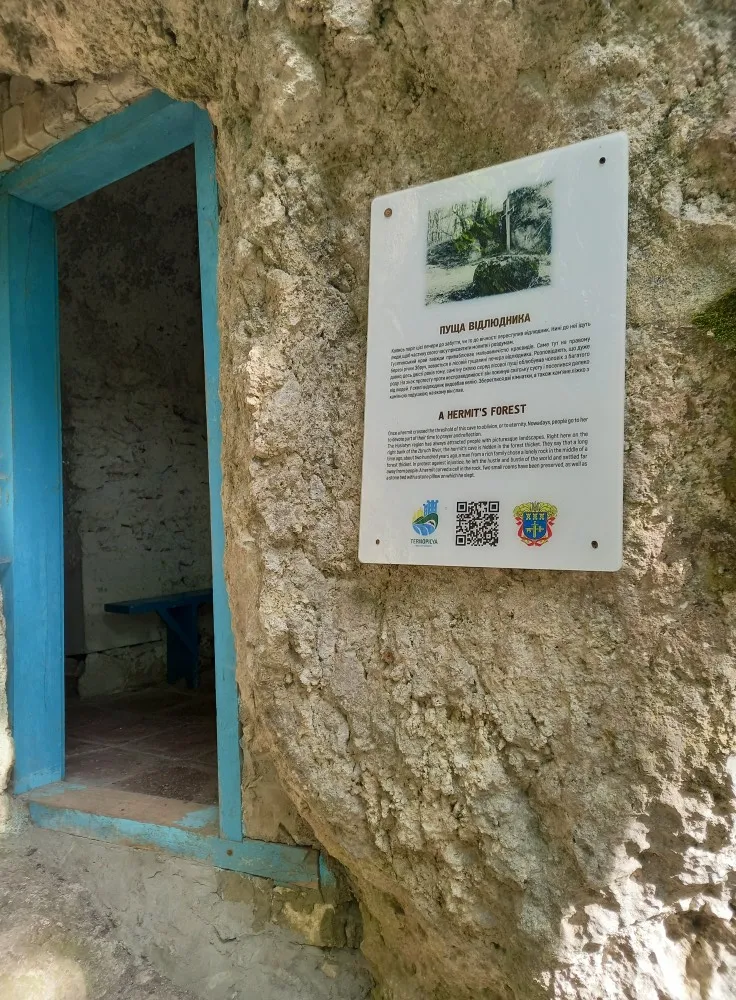
Second, tourists who have covered a considerable distance on foot want, first of all, to admire and photograph the monument (it is the main thing here), not your information board. In this vein, such information boards or stands should be installed so that they do not block the view of the site. In this case the stand would have looked harmonious and appropriate at the place where the main tourist path begins to descend to the foot of the rock. Of course, a post would have had to be dug in there, which is harder than drilling holes in a monument. But it would have harmed neither the monument nor the way visitors perceive it.
We hope that those responsible for the monument’s preservation will restore its original appearance.


