

Inept restorers damage a unique 13th–15th-century monument in Zakarpattia
In the Berehove district, an architect has been served a notice of suspicion of the deliberate damaging of a monument of national significance, the “Church of St. John the Baptist” of the 13th–15th centuries. This is reported on the official website of the Zakarpattia Regional Prosecutor’s Office.
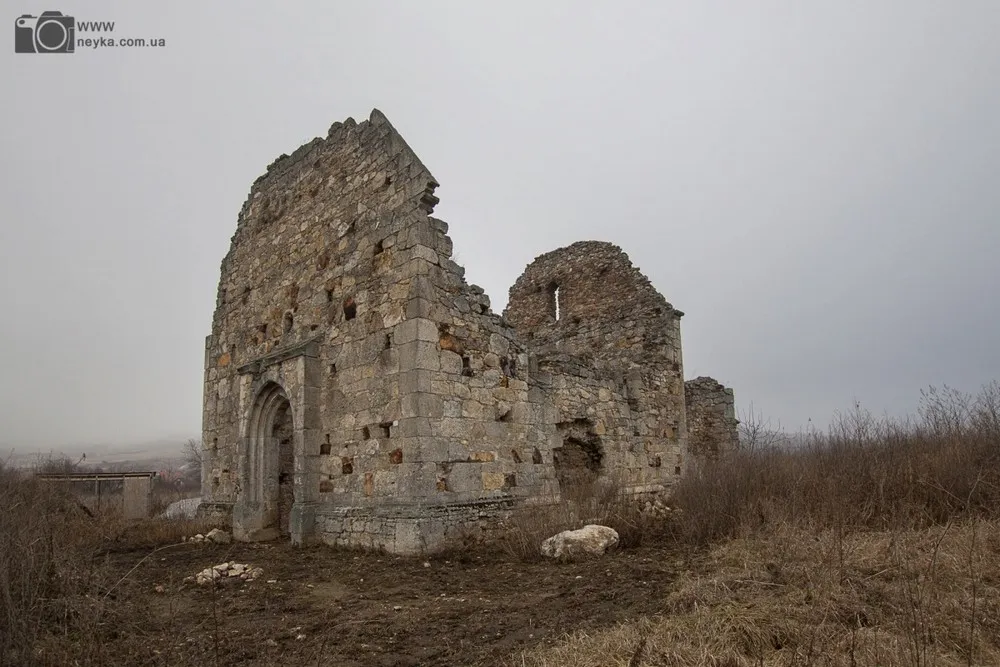
With the approval of the Berehove District Prosecutor’s Office, a local architect has been served a notice of suspicion of the deliberate unlawful damaging of a cultural heritage site that belongs to monuments of national significance (Part 3, Article 298 of the Criminal Code of Ukraine).
This concerns the architectural monument of national significance “Church of St. John the Baptist” of the 13th–15th centuries, located in the village of Muzhiievo, Berehove district. Today only ruins of the church survive, but they are of great historical significance.
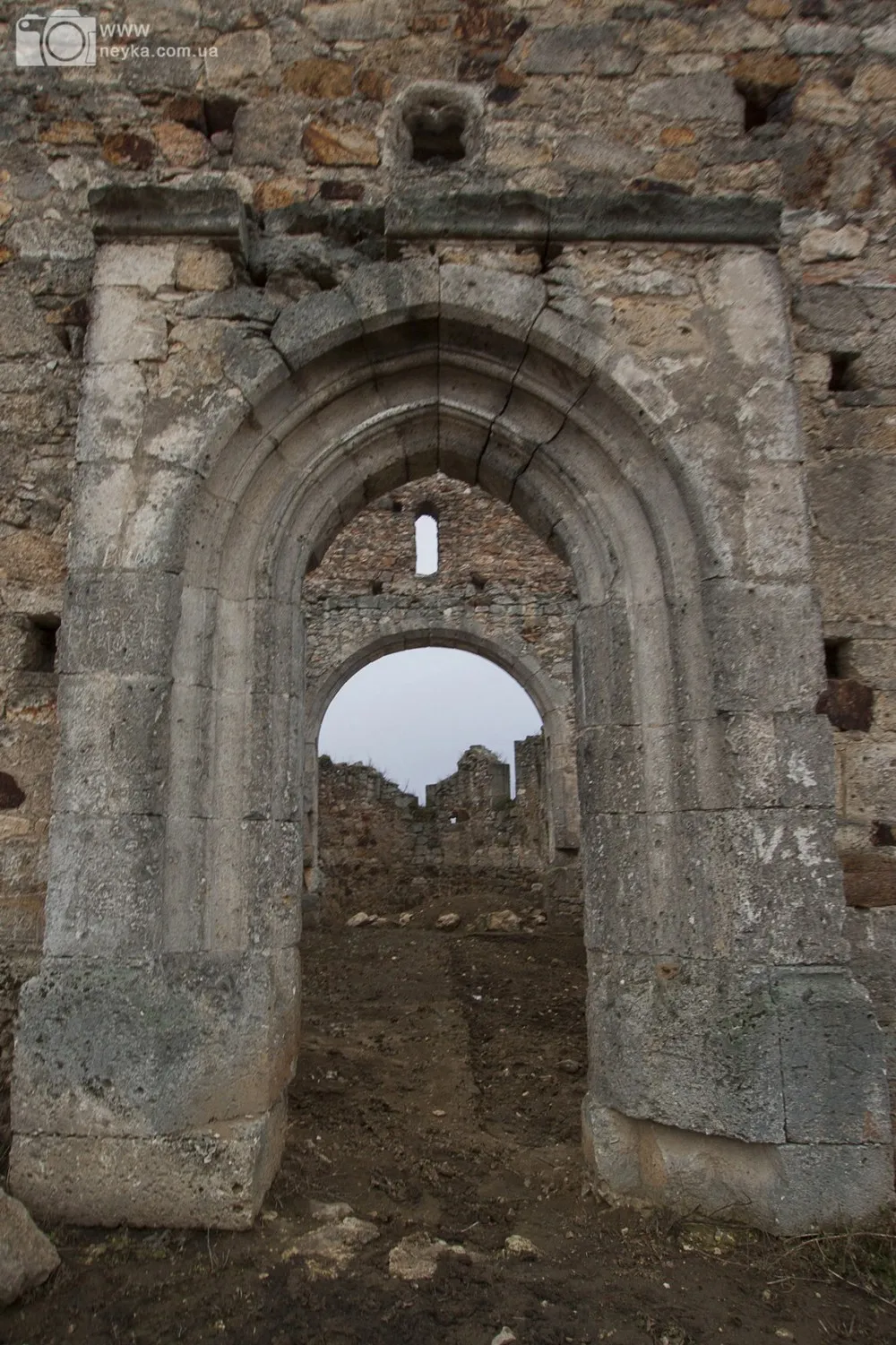
According to the investigation, the architect, contrary to the restoration project approved by the Ministry of Culture and Information Policy of Ukraine, organized construction work in 2022–2023 under his own design.
During this work, no preliminary conservation or strengthening of the church’s ancient walls was carried out; instead, brick walls using reinforced concrete were built on top of them, and the south entrance to the monument was bricked up.
The construction work led to damage to the monument and its original structure, as well as the loss of authentic and architectural elements, as confirmed by the conclusion of the relevant expert examination.
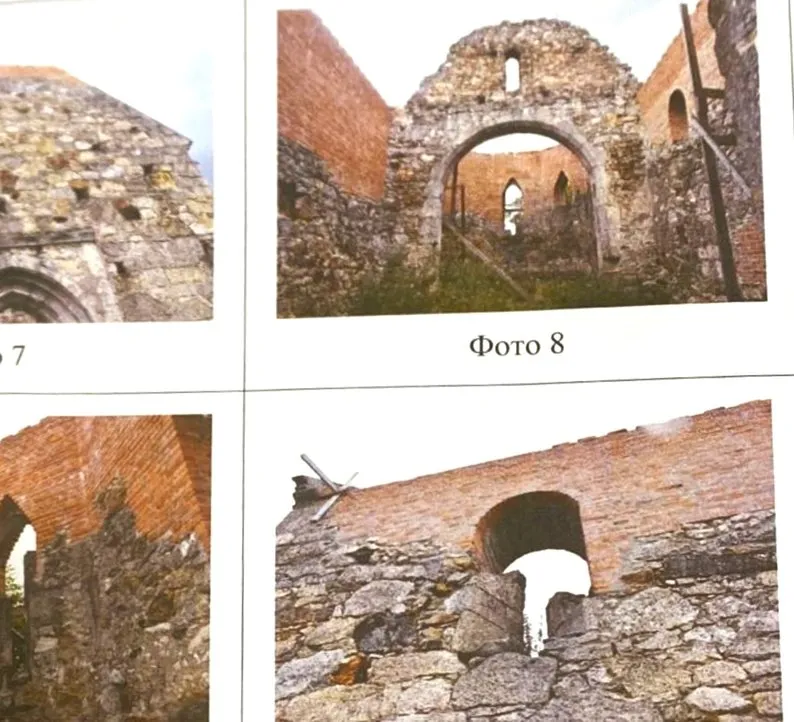
The pre-trial investigation continues, conducted by investigators of the Berehove police under the procedural supervision of the Berehove District Prosecutor’s Office.
For reference, from Wikipedia
Most documents state that the Church of St. John the Baptist was built in 1117. However, it is assumed that it was erected even earlier, and that at the beginning of the 12th century the building was restored after destruction. By contrast, the researcher Imre Henszlmann believed that the structure was built in the 15th century. His judgement was based on the Romanesque style of the church’s construction. He also supported his reasoning with the semicircular elements of the windows. The researchers Károly Csánki and Géza Lux thought that the church was built around the 1300s, a view shared by Alajos Deschmann.
Elements characteristic of the early 14th century could be used in some territories much later in the building of churches. The features of church architecture do not allow the time of construction to be established reliably. The location and features of the church’s west portal allow more detailed assumptions about the date of the building’s origin. Some characteristic features of the construction belong to the late 13th century, but the features of the framing would place it in a later era, for example the end of the 14th or the beginning of the 15th century.
Many historical sources indicate that 1337 is the date of the first written mention of the church in the village of Muzhiievo. Although in 1330 a church in the same village is mentioned in the register of the papal tithe.
In the 14th century the church was reconstructed, and at that time the building acquired Gothic forms. In 1446 the place of worship bore the title of the Virgin Mary. Until 1552 the building belonged to the Dominicans, and then passed to the Protestants.
In 1657 the church was destroyed and has never been rebuilt since. However, there are assumptions that the entrance portal of the Church of St. John the Baptist was moved to the Roman Catholic church in the town of Berehove.
The historian, ethnographer and archaeologist Tivadar Lehoczky studied the building. In his notes he gave the date of the church’s origin as the 14th century. Flóris Rómer, the founder of the archaeological direction in the development of Hungarian scholarship, and the researcher and artist Ferenc Schulcz also studied the building. In 1864, after inspecting the ruins of the church, Flóris Rómer noted that soon nothing would be left of the structure. At that time Ferenc Schulcz made sketches of the church.
In the 1920s traces of frescoes were visible on fragments of the building, but today they are no longer there. At present only ruins of the church remain[5], but the church is an architectural monument. The condition of the structure is maintained by local residents.


