The famous French periodical “Gazette” on Ivan Mazepa, the Cossacks, Ukraine and the war against the Muscovites in 1709

· 13 min read
These days (29 September 2021) Ukraine honours the memory of Hetman Ivan Mazepa. Let me make my own small contribution. I will tell about a source that is still little known in Ukraine and has not been properly introduced into scholarly circulation, but which recorded a great deal about the life of Ukraine, the exploits of the Cossacks, and also about our hero, Ivan Mazepa. It is the French newspaper “Gazette”.
It should be said that the figure of the hetman, throughout the years, even during his lifetime, attracted the attention of most European newspapers, historians and later writers. So it is understandable that the reports of the French one (even though the most famous and authoritative) got lost in this list. Let us correct this injustice and tell about the reports of the “Gazette” (later called “Gazette de France”) for the difficult, tragic and in many ways pivotal year of 1709. A year when everything could have turned out differently, when Ukraine could have remained on the European track of development, already then established itself as a European state, and been quite different today. If only they had won then, if only, if only… But history does not tolerate the subjunctive mood, so, leaving dreams of how it could and should have been, let us return to the real reports of that stormy year.
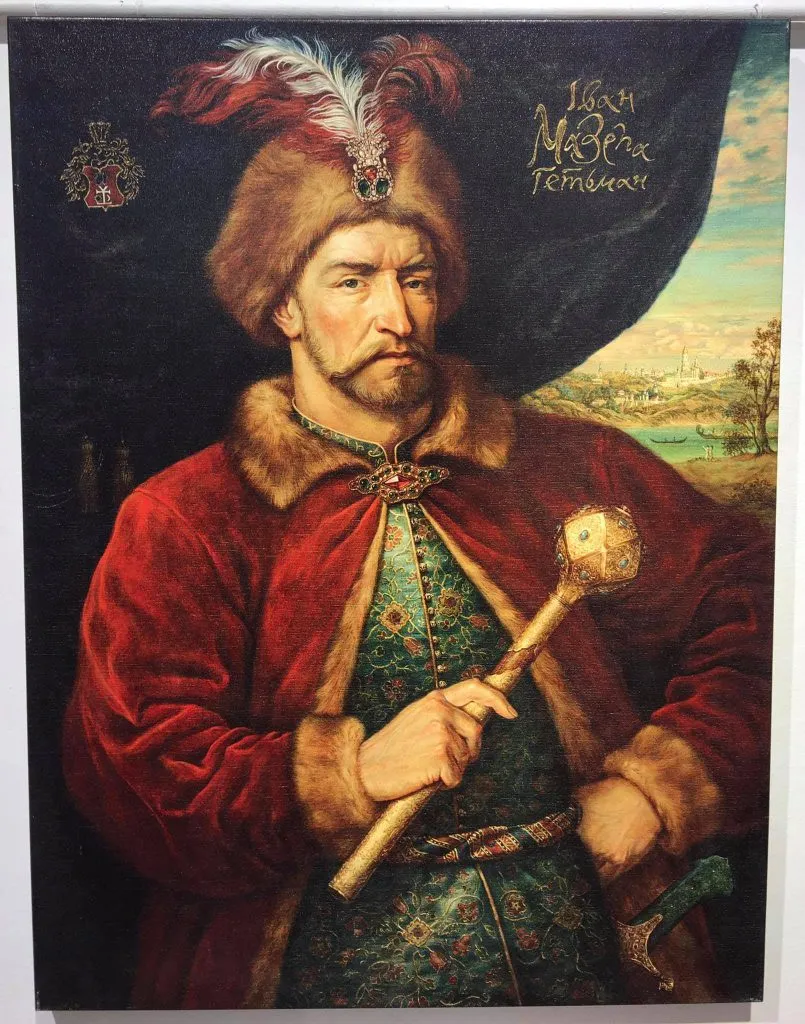
Photo: The portrait of Ivan Mazepa was created on the basis of the historical research of Kim Skalatskyi, “What Was Mazepa Like? (On the Attribution of Portraits of I. S. Mazepa)” and “What Did Count Cedercreutz Know?” These works were published in the book “Searches. Finds. Discoveries” (Kyiv: Rodovid, 2004). Given that after the Battle of Poltava the portraits of Ivan Mazepa were completely destroyed on the orders of Peter I, the author studied the hetman’s appearance on the basis of various sources (descriptions by French diplomats and Cossack officers) and also analysed all the portraits that have survived to our time.
In 2017 an interesting incident occurred connected with the depiction of Mazepa. Doctor of Historical Sciences O. Kovalevska, together with a team of scholars and forensic experts of the SBU, created a probable image of Ivan Mazepa that basically coincided with my portrait painted back in 2007. Neither O. Kovalevska nor her team yet knew of the existence of my portrait. Author: Natalia Pavlushenko.
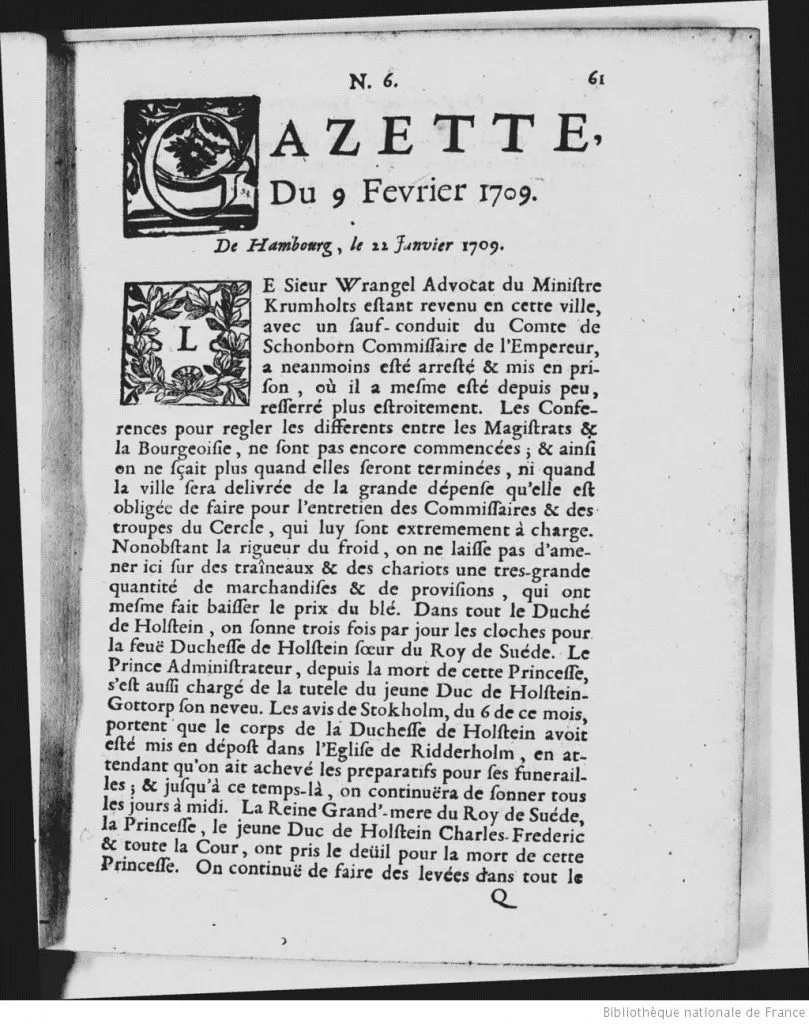
So, the French newspaper “Gazette”, already in the first issue for 1709 (which came out on 5 January), on the very first page, writes about our country — Ukraine (in the text, “l’Ukraine”). This is a report from Hamburg dated 21.12.1708, which records that:
“…We learned that the Swedish army, continuing its march towards Ukraine, beyond the Borysthenes [Dnipro], arrived in the Principality of Chernihiv: that on 6 November the King of Sweden sought to establish his headquarters in the city of Chernihiv, the capital of the Principality, on the Desna: that he concluded a treaty with the Cossacks, under which they were to help supply his army with provisions, as well as a certain number of Cossacks; and that the Muscovites, who wanted to prevent this, did not let Him settle into quarters in this fertile land, rich in provisions and food, and made efforts to imprison… [many on the way]… that flows into the Desna near Chernihiv. We hope that in future we will receive more regular news, because the Muscovites will no longer be able to hinder the passage of couriers, and we believe that trade and supplies will be fully restored with Poland…”
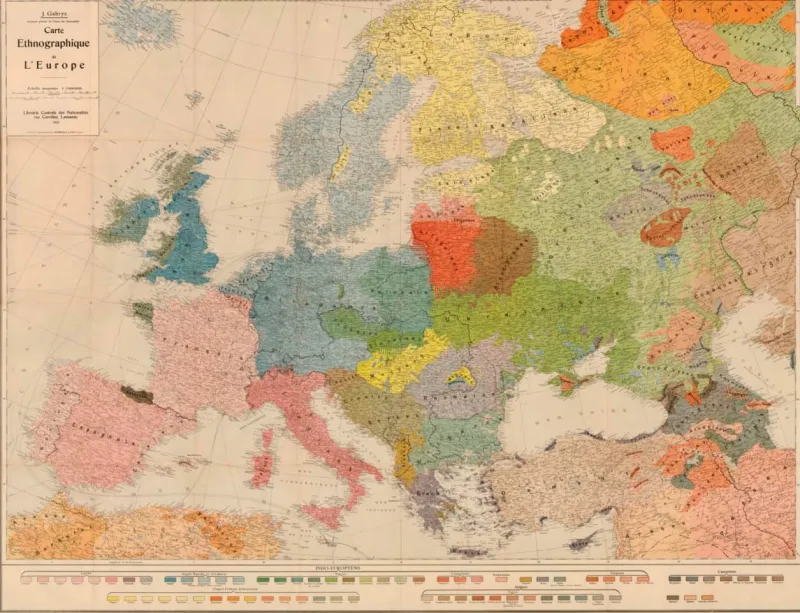
It is worth paying attention to some important terminological points. Traditionally, in the first half of the 17th century, the “Gazette” wrote about our lands using the term “Rus’” or “the land of the Cossacks” (whom they knew well and clearly distinguished from Poles, Lithuanians or Don people). From the middle of the 17th century the French increasingly begin to replace the name “Rus’” (at first using the two names in parallel) with “Ukraine”. After the publication in France of numerous books about Ukraine (Beauplan, Chevalier and others), at the beginning of the 18th century the name “Ukraine” (l’Vkraine, l’Ukraine) became fixed for the lands along the Dnipro, and later more and more widely to the west and east. The Ukrainian people were most often called “Ruthenians” or “Cossacks” (Cosaques). Whereas the lands of the Chernihiv and Smolensk regions, which often changed their nominal master in the endless wars of the 16th–17th centuries, by old tradition were often singled out as separate principalities/lands. Which is what we see in the quoted passage of the report. But there was complete clarity about the name of the country and peoples inhabiting the lands to the north-east of the Chernihiv and Smolensk regions. As in the absolute majority of other sources, almost until the middle of the 18th century this country was called Muscovy (Moscovie, Moscovia, etc.), and its inhabitants only and exclusively Muscovites (Moscovites). The same we see in this report.
About the old French newspaper, which appeared regularly from 30.05.1631 to 1915 and was at first a semi-official and later an official publication through which the French crown conveyed information on “what is happening in the world”, I have already written several posts before.
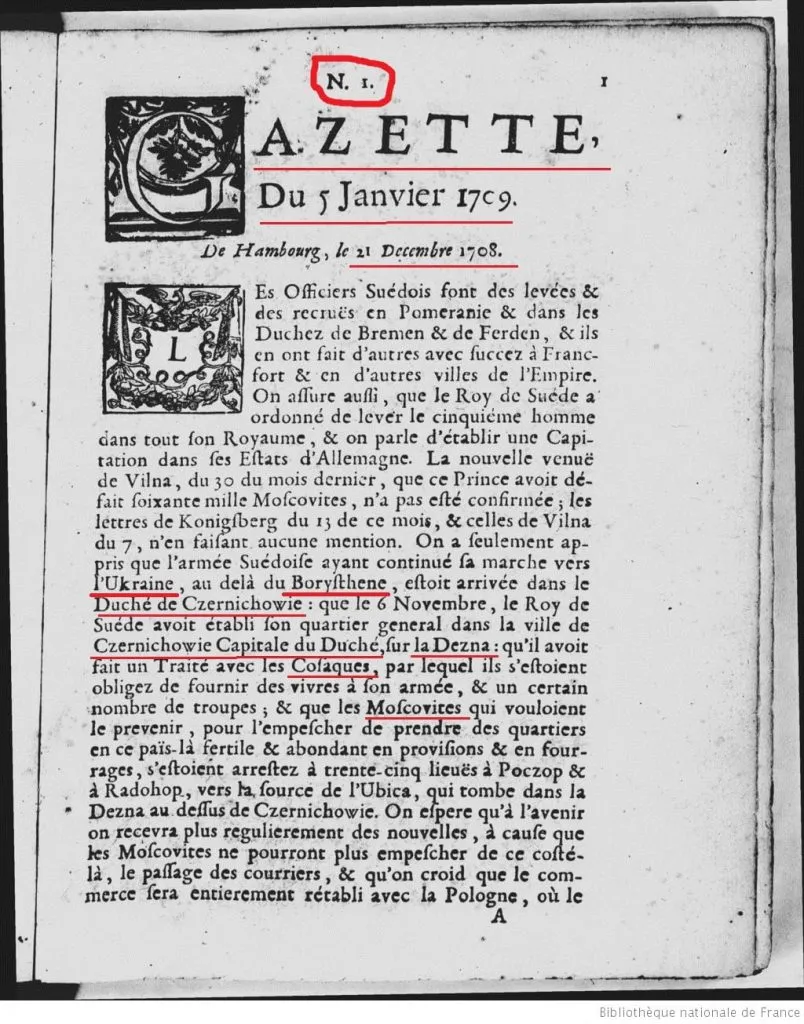
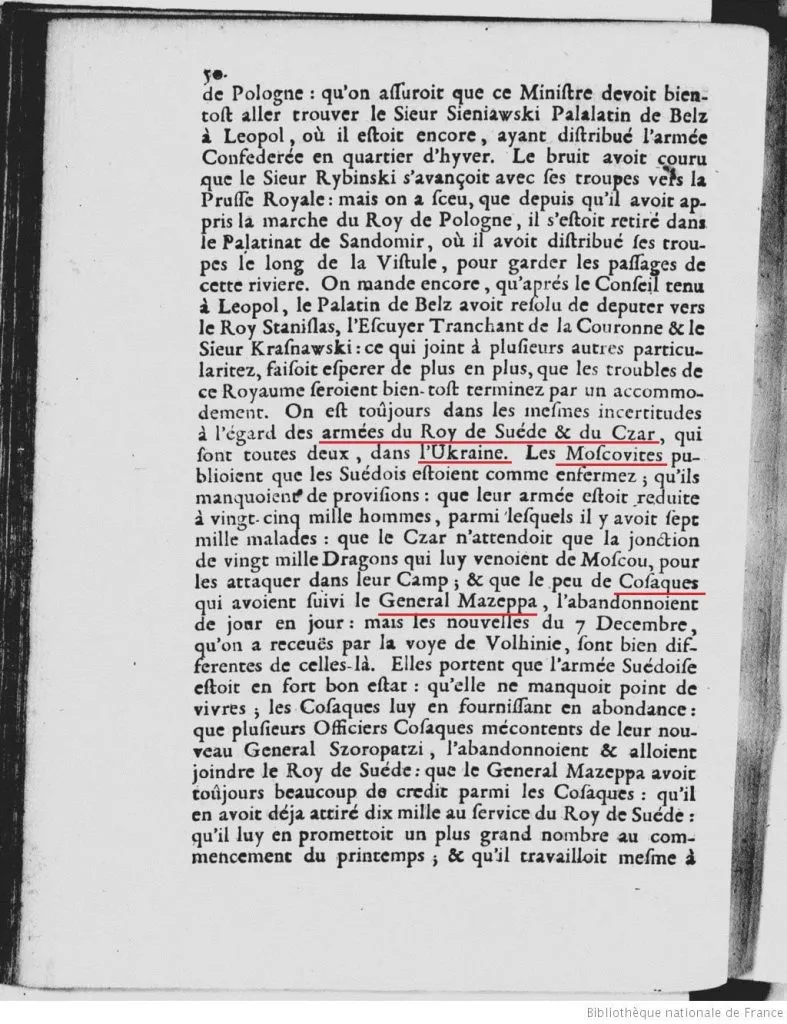
But let me remind you that the “Gazette” is not just a newspaper: it is considered one of the first such regular printed periodicals in Europe that by and large meets our modern standards, and which already then was distinguished by rigour in preparing material and logic of construction. Cardinal Richelieu personally sent copies of the king’s documents for publication. And Louis XIII himself regularly wrote to the newspaper incognito, and not only political articles but also notes about his military campaigns, and was, in essence, the first war correspondent. It came out every Saturday and began with news from the Mediterranean and the most distant countries, ending with news from Paris. I write about the history of its creation so that the weight and value for us of publications from those distant times become clear. How far the newspaper’s materials can be trusted and relied upon. That it is an invaluable source of knowledge not only about the history of France’s neighbours but also about our lands.
Returning to the reports of 1709. In No. 5, in the news item of 15 February, we see that the French of those years quite clearly distinguish Ukraine as a separate country:
“…We are always in uncertainty about the state of the armies of the King of Sweden and the Tsar [of the Muscovites], both of which are in Ukraine [!]. The Muscovites spread rumours [mostly false, aimed at the local population in order to stop the Ukrainians’ desire to fight for their independence] that the Swedes were supposedly surrounded; that they had no provisions: that their army was reduced to twenty-five thousand men, of whom a thousand were sick: that the Tsar was only waiting for the joining of twenty thousand dragoons who would arrive to him from Moscow to attack them in their camp & that few Cossacks followed Hetman Mazepa [le General Mazeppa], constantly betraying him: but the news of 7 December, which we received through Volhynia, differs greatly from this [that is, the facts refuted Muscovite propaganda]. They show that the Swedish army was in very good condition: that it lacked nothing; these Cossacks supply everything in abundance…. Hetman Mazepa has always enjoyed great respect among the Cossacks: he has already brought ten thousand to the King of Sweden’s side: he promises him a greater number at the beginning of spring & on this He has even already worked, urging the Khan of the Tatars to act against the Tsar.They say that what prompted this Hetman to join the King of Sweden was that the land of the Cossacks had been completely ruined by the Tsar, under the pretext of making life harder for the Swedish army, and that He lodged a complaint with Prince Menshikov but was badly treated by him. Since then He has been irritated, because the Tsar, having attacked and taken Baturyn, which was this Hetman’s residence, took away the last hope of coming to an understanding, destroyed the whole city: condemning it to death and abuse, in very horrible circumstances….”
A letter of 18 November arrived, which stated:
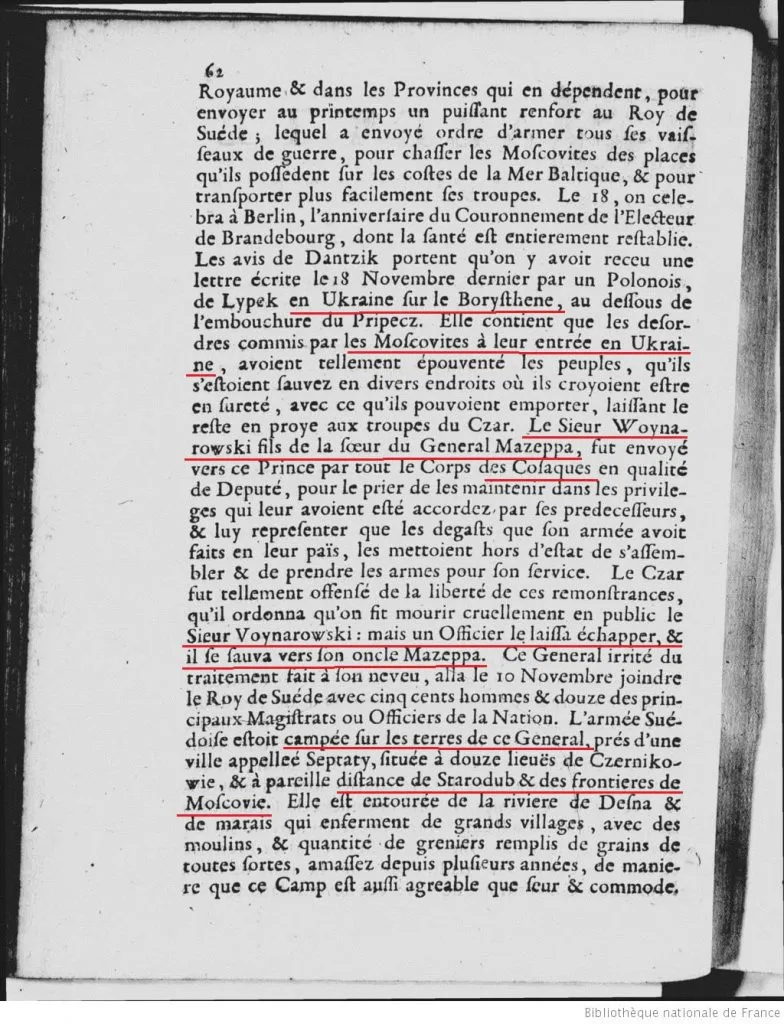
“From Ukraine on the Borysthenes….: the devastation committed by the Muscovites on the borders of Ukraine so frightened the people that they fled to various places… with what they could take, leaving the rest as prey to the Tsar’s troops. Mr. Voinarovsky, a close relative of Hetman Mazepa, was sent to this prince with an entire body of negotiators, to ask that they be preserved in the rights guaranteed by his predecessors, to inform him that the damage done by his army in their country made them fear that they would be alarmed to the point of taking up arms in their defence. The Tsar was so offended by the freedom of these remarks that he ordered Mr. Voinarovsky to be brutally killed in public: but the officer allowed him to escape. He returned to his uncle Mazepa. This Hetman, irritated by the treatment of his nephew… joined the King of Sweden…The Swedish army was stationed on this Hetman’s lands… twelve leagues from Chernihiv, at a similar distance from Starodub and the borders [!] of Muscovy. They are surrounded by the marshes of the Desna river and by large villages, with mills and a great number of granaries filled with grain, all prosperous, accumulated over several years of plenty…
In Starodub there were two regiments of Cossacks, watched over by the Muscovites, and another in Chernihiv, where the Tsar sent eight thousand men who obliged the colonel to show his loyalty. They forced the soldiers to work like slaves on the fortifications. They also destroyed all the houses within reach in order to make the approaches harder.They seize and collect as much provisions as possible and do not allow the Cossacks to enter towns…; nor do they trust one another. The Tsar found himself in a camp at Novhorod, a fortified town on the Desna, … and he was more troubled by the Cossack uprising than by the Swedish army. He sent several detachments of Kalmyk Tatars to force the Cossacks into obedience or to prevent the uprising from growing ever stronger.
Hetman Mazepa went to the Crimean Tatars to inform them that He had joined the King of Sweden and urged them to come to his aid with at least forty thousand men. He also called on the Zaporozhian Cossacks, who had long sought to throw off the yoke of the Muscovites…”
In total, over the whole of 1709 there were more than 20 reports in the main French newspaper that mention Ukraine. The Cossacks are mentioned more than 40 times in the year. So I will not quote them all, and I hope that some historian will take up deciphering all these reports and publish them as a separate publication.
I will return to the outstanding Hetman Mazepa and the last days of his life. In total his surname is mentioned about 30 times, but here I will give only the final episodes of his life that remained in the dry French news:
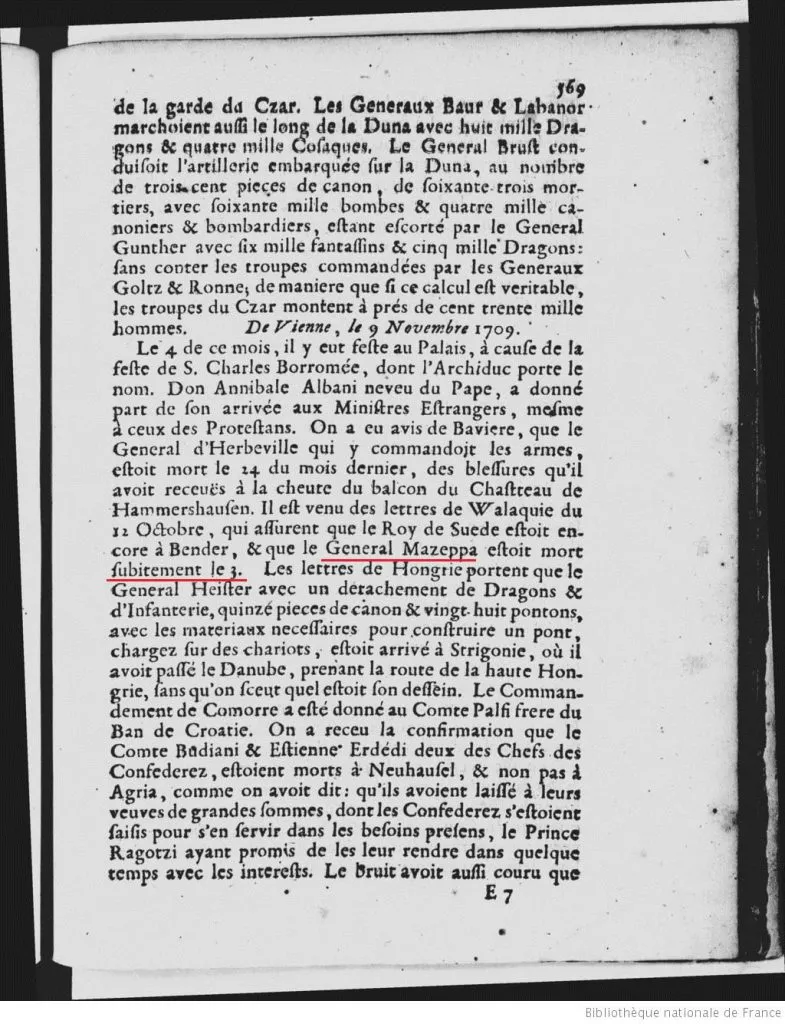
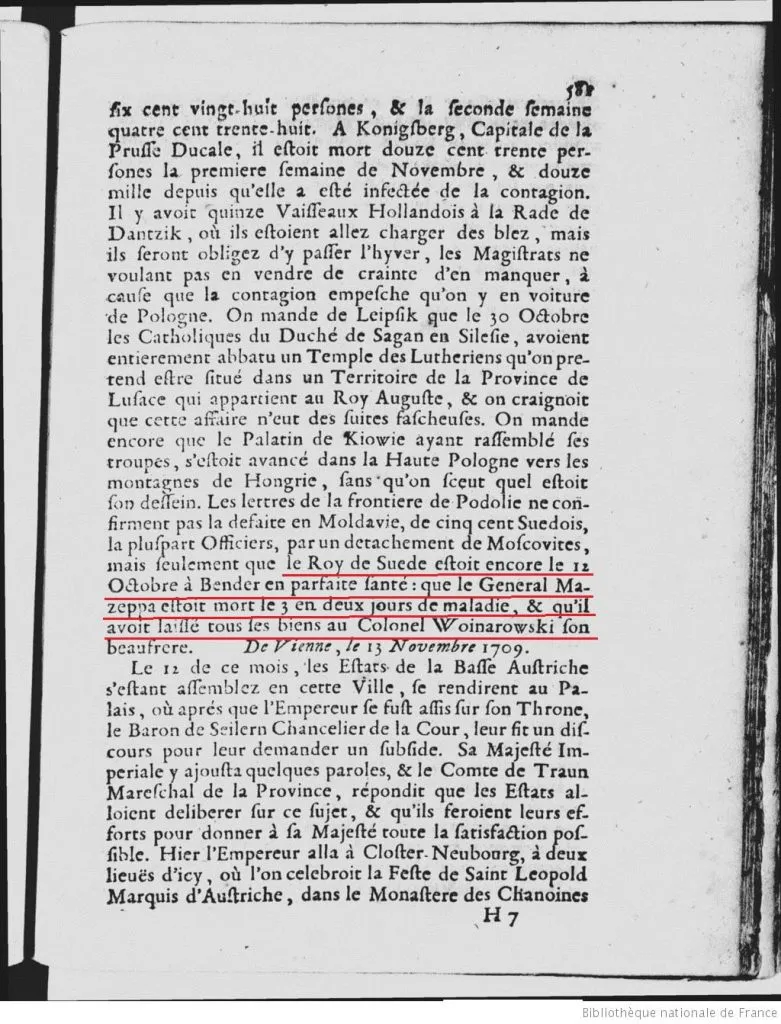
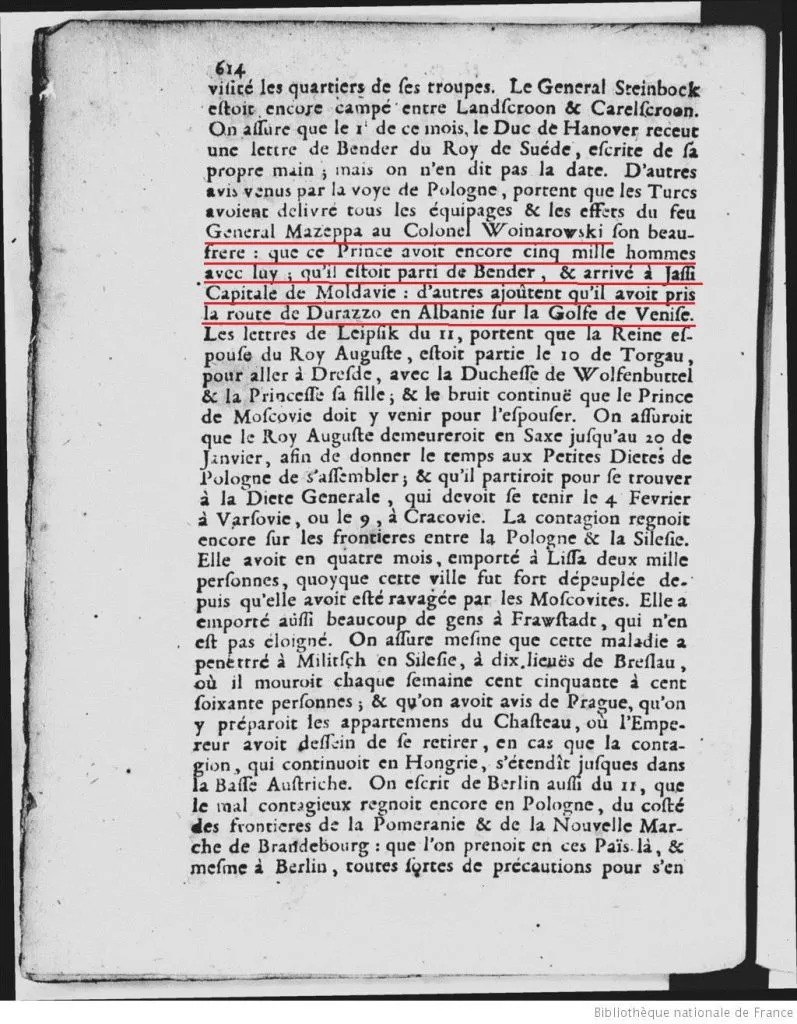
“…Letters from the Podolian border do not confirm the defeat in Moldavia of five hundred Swedes, mostly officers, by a detachment of Muscovites, but only that the King of Sweden was still on 12 October at Bender in perfect health, and also that Hetman Mazepa died on the 3rd after two days of illness and that he left all his property to Colonel Voinarovsky, his nephew…”“…It seems that this month a letter was received from Bender… but we do not give the date. Other reports arriving through Poland indicate that the Turks handed over all the property belonging to Hetman Mazepa to Colonel Voinarovsky, his nephew: that this prince still had five thousand men; that he left Bender and arrived at Iași (*the capital of Moldavia): others add that he set out on the road to Durazzo in Albania, towards the Gulf of Venice…”
Andrii Voinarovskyi was to have a life full of adventures and detective stories, worthy of a film. In the end he would indeed be abducted by the Muscovites on European soil and die in the swamps.
Tsar Peter I, although he would destroy Ukraine and its happy future, would very soon suffer a shameful defeat and rout in the Prut campaign, after which he would hide in Europe for a long time.
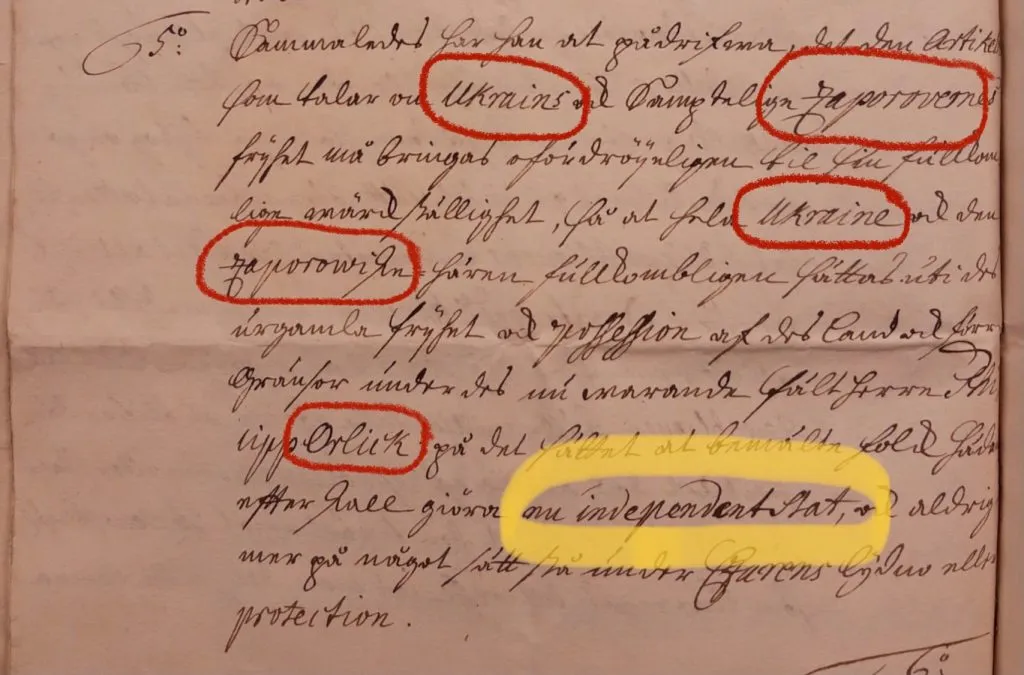
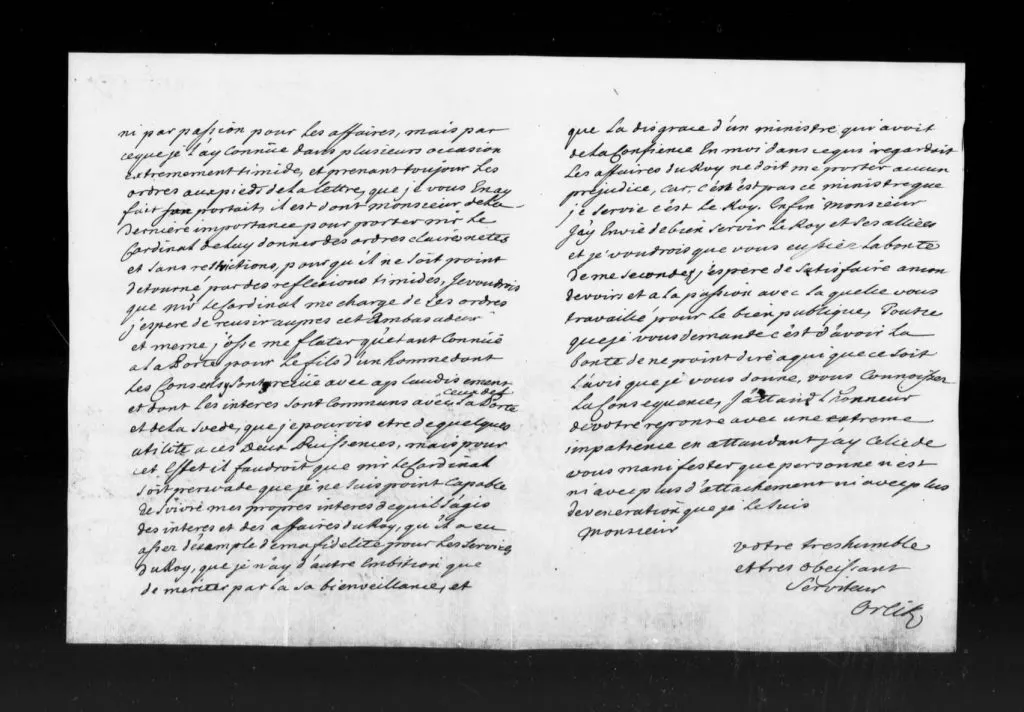
Charles XII fulfilled his agreements with Ukraine even after the death of Hetman I. Mazepa, maintained relations with the new Hetman P. Orlyk, and in a letter of 14 September 1711 instructed Sweden’s new ambassador to the Ottoman Empire, Thomas Funck, to defend in negotiations with the Grand Vizier “the interests of Ukraine as an independent state” (the letter is attached below).
This period will remain one of the most important chances to save Ukraine that was not used. Because the enemy, through propaganda, bribery, betrayals and unheard-of cruelty, managed to divide and intimidate Ukrainians, some of whom chose the path of “just stop shooting, what’s the difference, peace is better”, and therefore suffered such destruction, plunder and annihilation of the country that it would not soon recover and get a new chance for freedom and a European future. It should have been a good lesson. But who is interested in that history and in drawing conclusions. And so such mistakes kept being repeated.
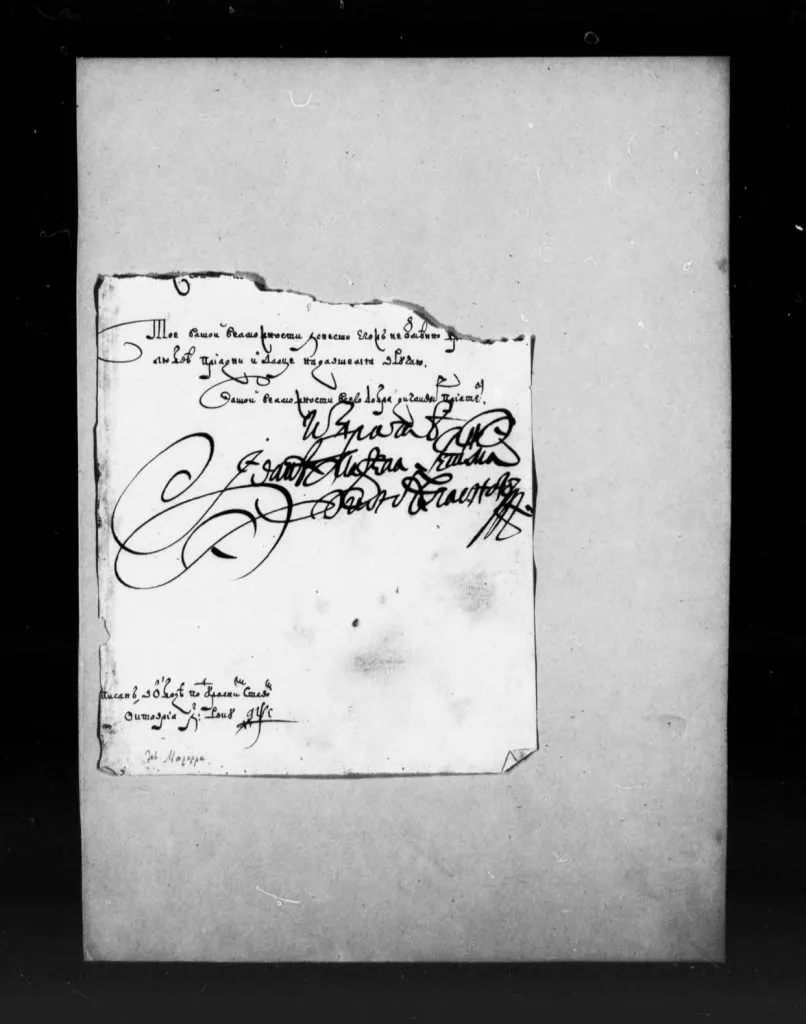
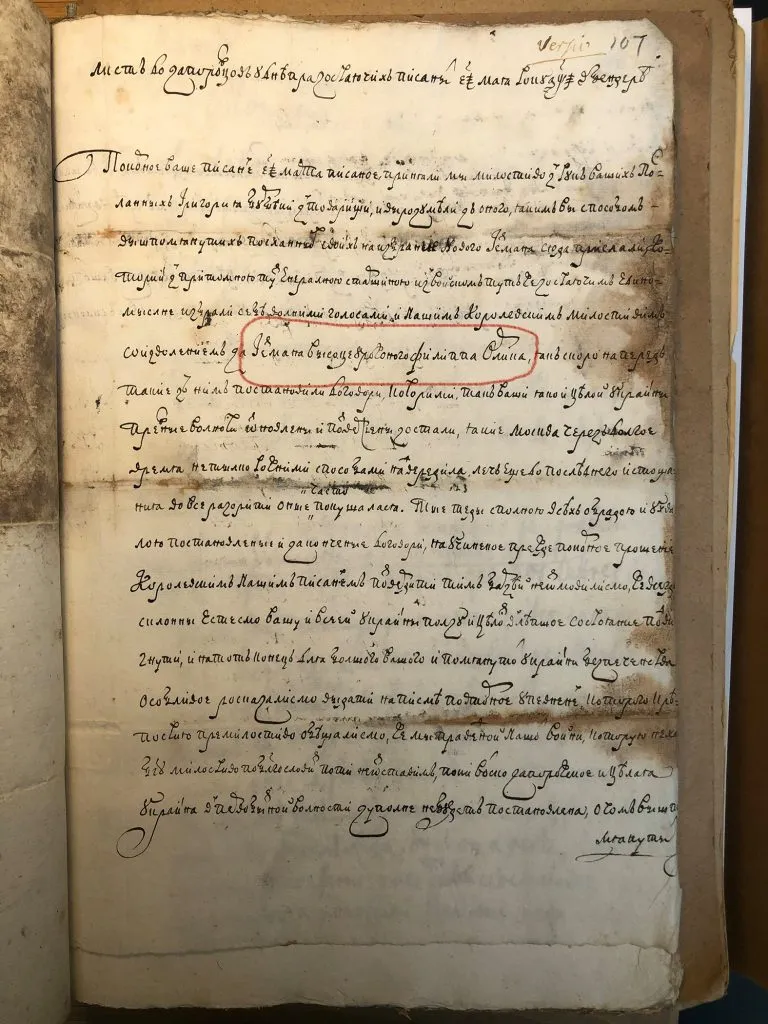
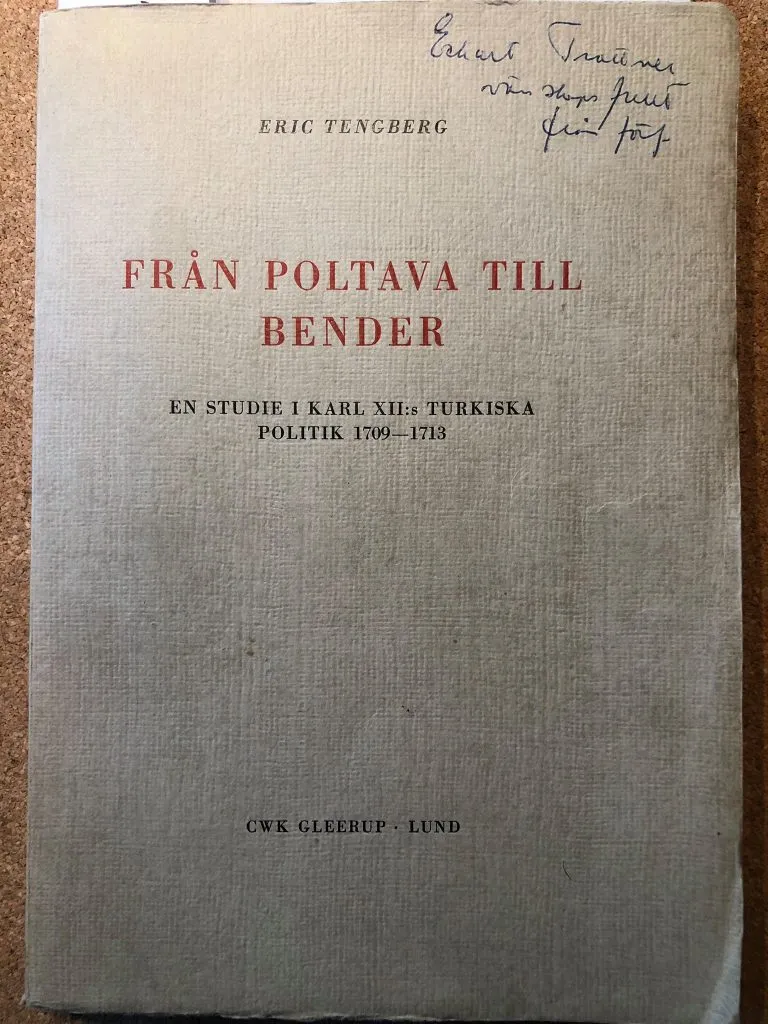
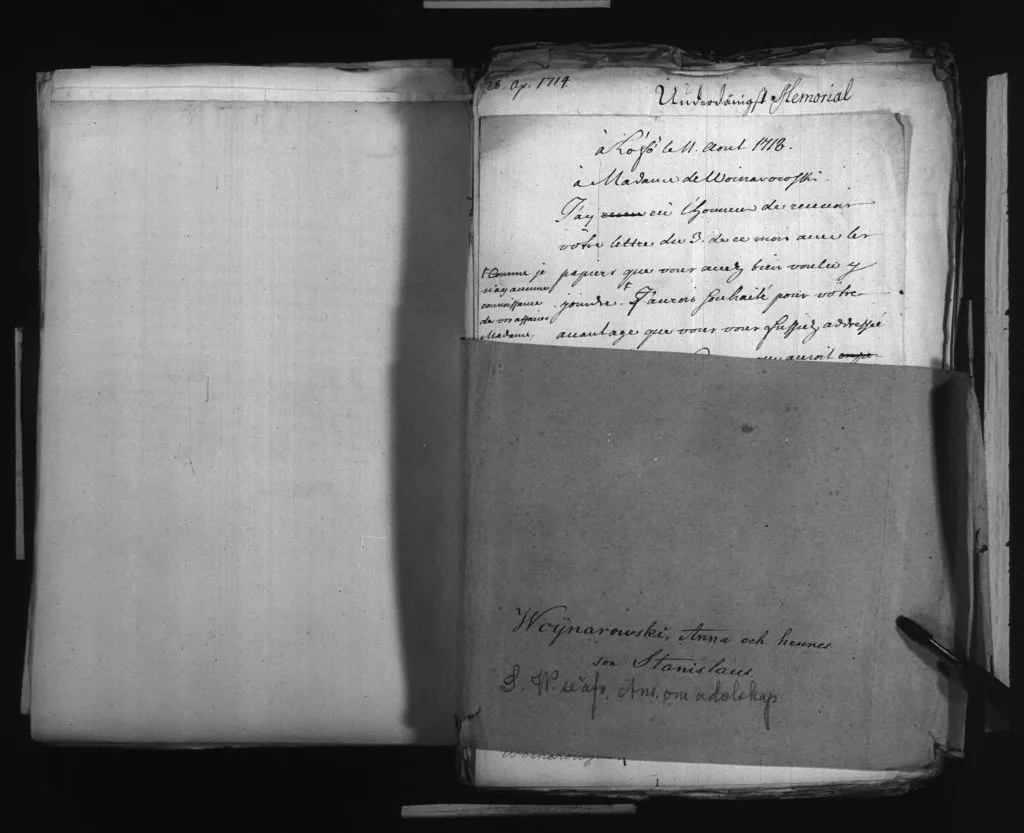
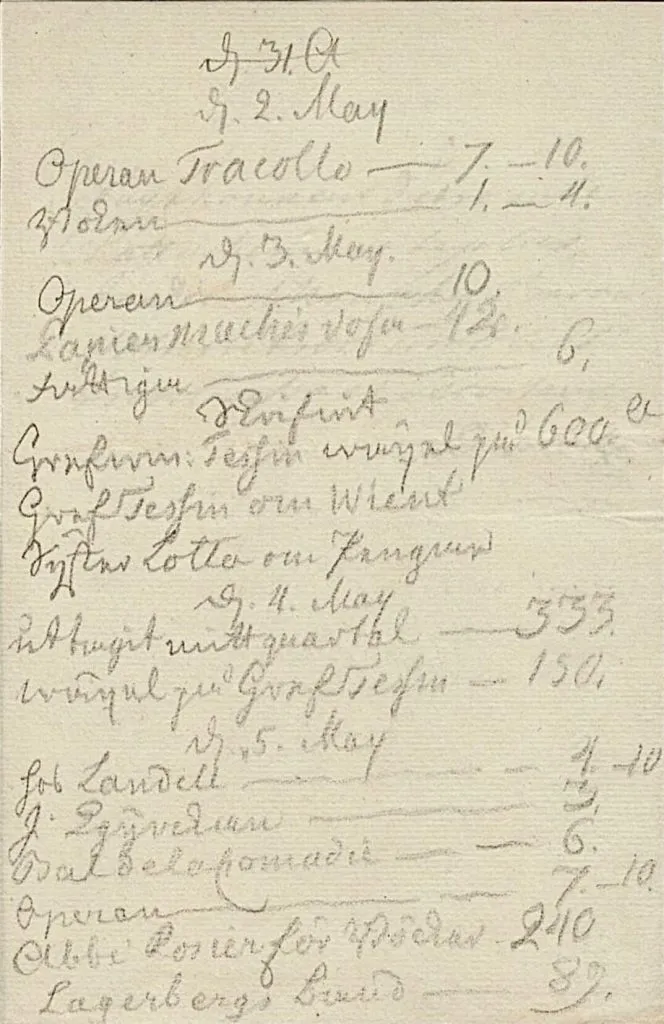
I want to end this article on a positive note and say that I was motivated to publish the continuation of my research in European archives by another researcher — Marina Trattner. In her discoveries she has gained such momentum that she has long since overtaken not only me but also professional historians, giving a head start to the work of many over their entire lives. It is Ms. Marina who has a great many new finds that scholars have yet to work through, some of which she is the first to retrieve and publish from Swedish archives. They concern, for the most part, precisely the Mazepa era, as well as the very interesting attempts by the next hetman, Pylyp Orlyk, not to lose the Ukrainian state (numerous letters and correspondence of his she is now raising from forgotten archives, processing and publishing). Here I will recall that the legendary Latin-language copy of the so-called first Constitution of Orlyk (the Pacts and Constitutions of the Rights and Liberties of the Zaporozhian Host) is being exhibited right now at St. Sophia Cathedral in Kyiv, and there is still time to visit it and see this important historical document with your own eyes. Whole volumes of the correspondence of the Voinarovsky family were also found by Ms. Marina (I will show some of her finds in the photos below — captioned). And much else of interest that remained unknown and in many ways reveals to us a new history of Ukraine and Europe, bringing out of the shadows quite a lot of what for hundreds of years was covered up by the lies and propaganda of Muscovite historians.
So subscribe to Marina and charge yourself from her not only with an enormous amount of information but also with inexhaustible energy and motivation, of which she has more than several institutes of our Academy of Sciences. She also motivated me to return sooner to what had been postponed for the whole summer and had long been waiting for its publications (I give screenshots from the newspaper and highlighted episodes below in the photos). There will be many more interesting discoveries ahead!
Author: Ihor Poluektov