

Otrokiv: the summer capital of the “Minkivtsi state” (photo report)
The small village of Otrokiv, in the Novoushytsia settlement territorial community of Kamianets-Podilskyi district, Khmelnytskyi Oblast, was once the second most important settlement, after Minkivtsi, of the renowned “Minkivtsi state”. It was the site of the summer residence of its ruler, the nobleman Ignacy Scibor-Marchocki, who built on his lands a genuine quasi-state with its own highly progressive laws, peasants freed from serfdom, freedom of religion and even its own money.
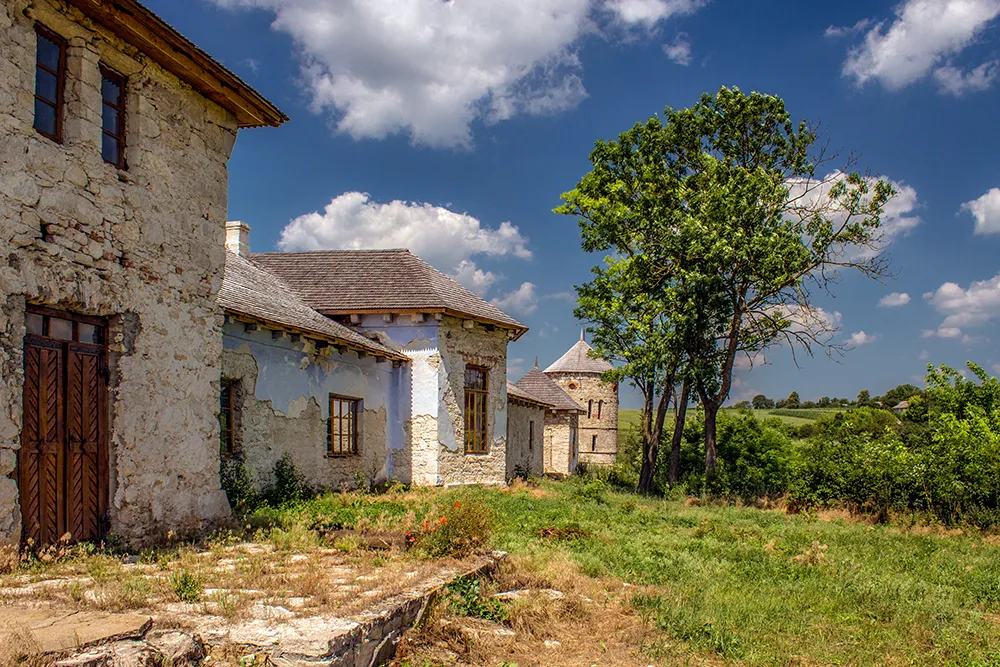
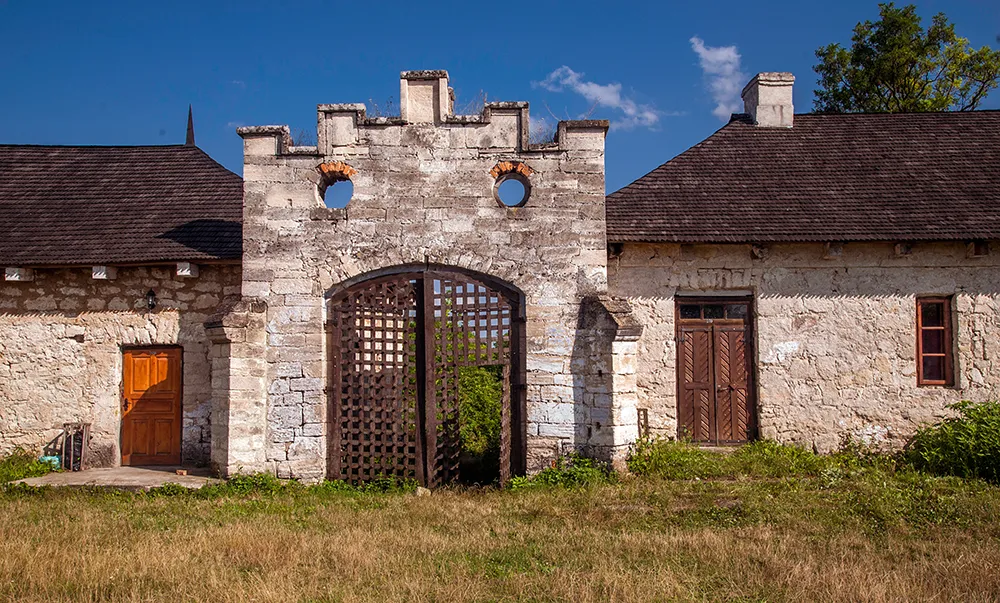
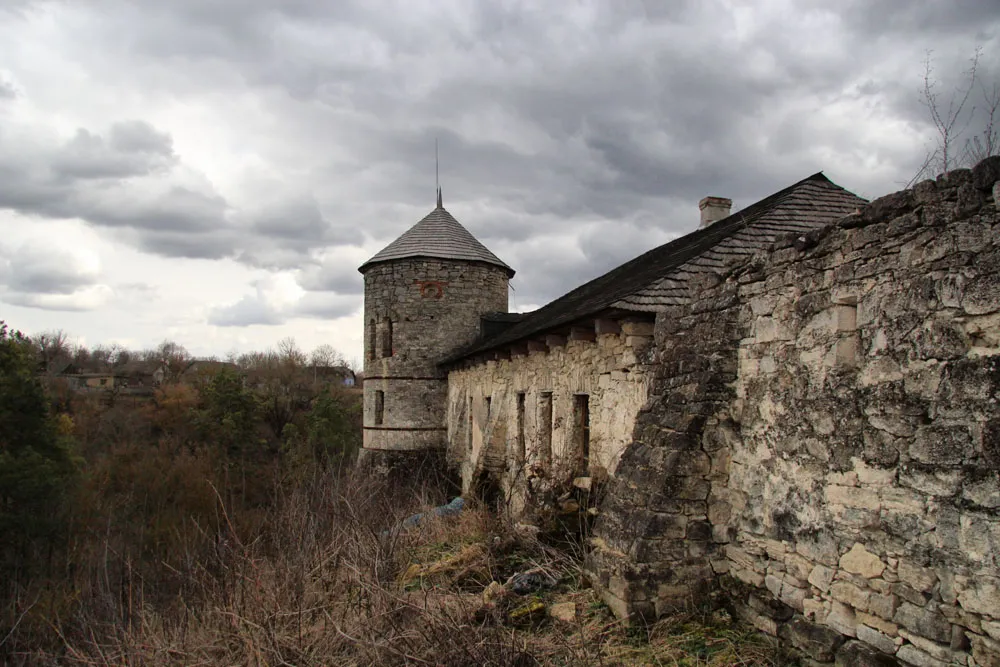
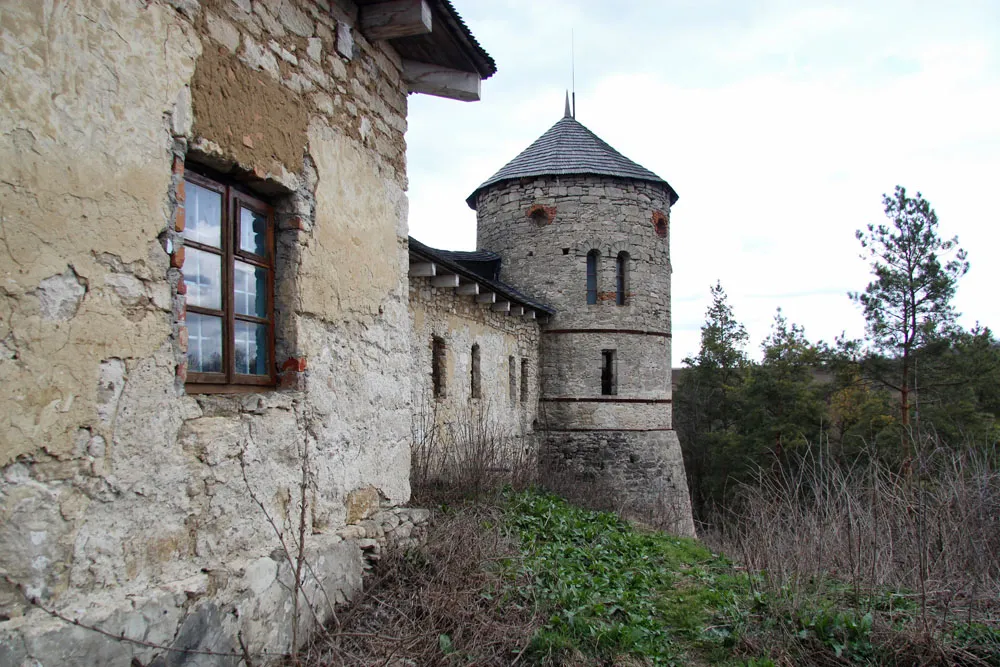
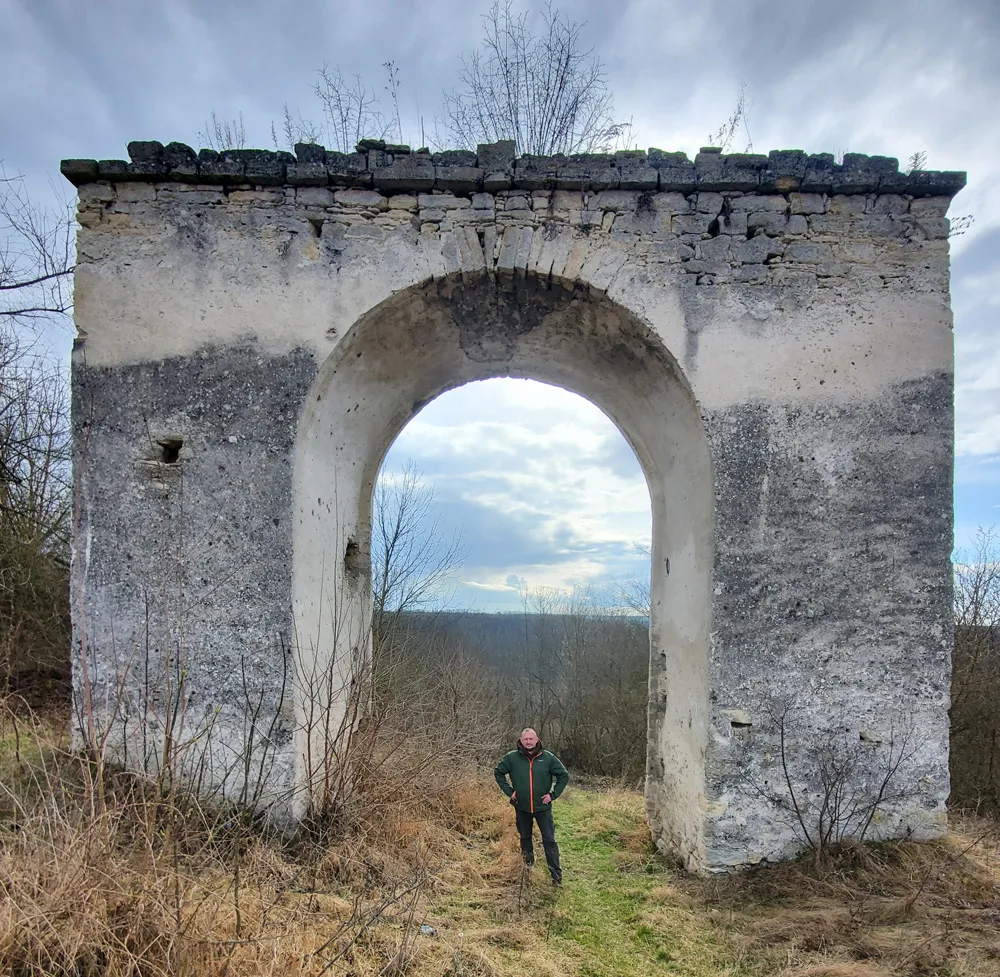
Marchocki’s summer residence (in winter he lived in Minkivtsi) was built in the form of a knightly castle. Together with its towers, outbuildings and a “forum” built on the Roman model, it has partly survived to this day. Otrokiv also still has the Triumphal Arch through which one entered the residence.
Marchocki, let us recall, was a great admirer of antiquity, for which churchmen branded him harshly, accusing him of apostasy and paganism.
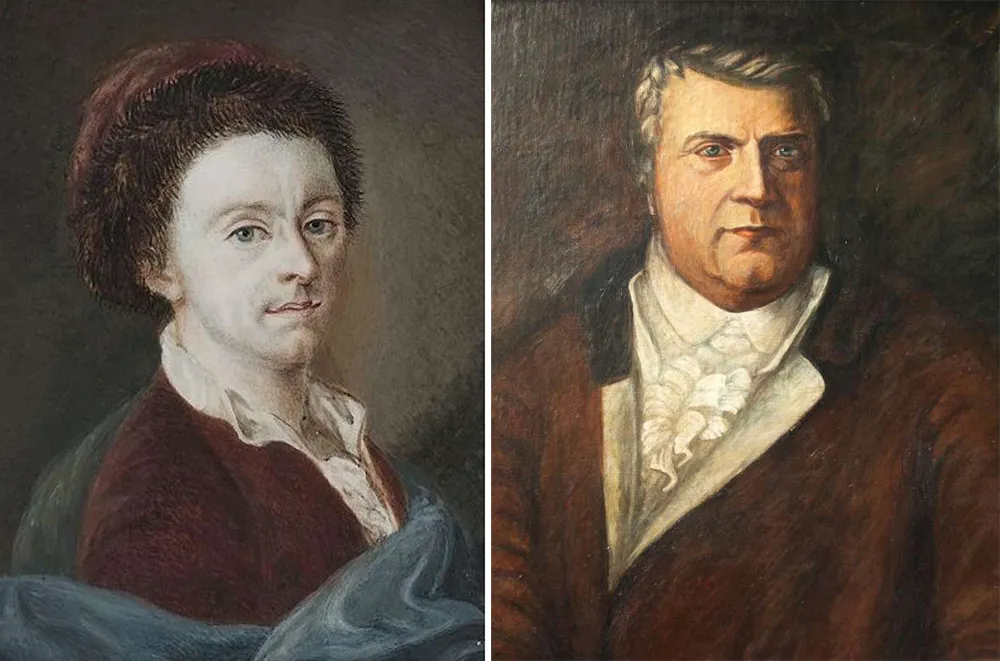
Ignacy Scibor-Marchocki in his youth and in his mature years,
Let us recall that at the end of the 18th century Count Scibor-Marchocki introduced self-government in his domains, gave members of different faiths equal rights, adopted a constitution and proclaimed the independence of the “Minkivtsi state” from the Russian Empire.
Yet the picture of Marchocki as an eccentric, oddball landowner who walked about in a Roman toga and worshipped the ancient gods is very superficial. In fact he was an educated man who turned his estates into an enclave of prosperity and well-being.
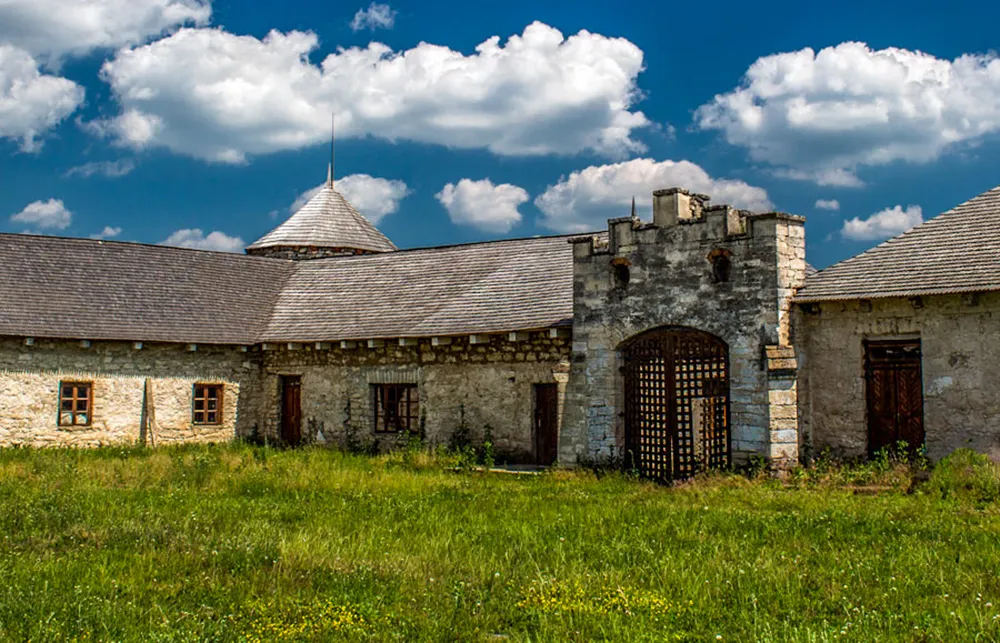
Otrokiv. The residence
Ignacy was born around 1755 in Tarnoruda, a small town on the banks of the Zbruch. The boy was orphaned early, so the role awaiting him was that of a poor nobleman who has nothing but a coat of arms and his grandfather’s sabre. Having enlisted in Prussian service, the count made a successful military career and received an education. Returning with the rank of captain, he rose to major in the Kamianets garrison.
Squire Ignacy acquired an estate only in 1790, after the death of his childless uncle, when the “Minkivtsi estate” passed to him: no fewer than 18 villages, 4,000 morgs of arable land, 2,000 morgs of forest (a morg is slightly more than 1 hectare) and about 4,200 serfs.
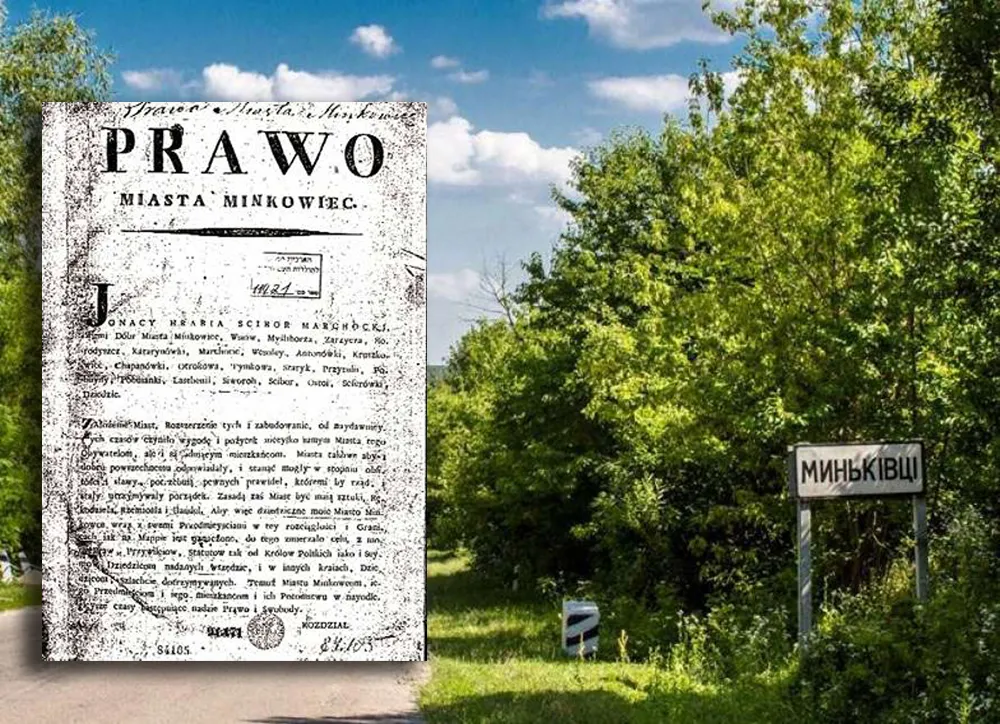
The constitution of the “state”
Instead of the traditional title “dziedzic” (that is, owner), he proclaims himself “Master and father of the people”, and his subjects citizens, which at the end of the 18th century sounded freedom-loving and even rebellious.
At that time the count also announced that anyone who dared to call a Minkivtsi citizen a “muzhik”, “churl” or “serf” (the usual way the nobility addressed peasants) would face trial and severe punishment.
In 1791 he adopted the constitution “Prawa miasta Mińkowiec” (“The Rights of the Town of Minkivtsi”), which introduced local self-government, gave members of different faiths equal rights, replaced corvée with a moderate tax and granted broad rights to its citizens. The “state” had its own money.
In 1795 serfdom was abolished on the territory of the “Minkivtsi state”. Around the perimeter of his lands the flamboyant count set up boundary markers inscribed “The border of the little state of Minkivtsi from the Russian state”. Toward the empire itself, however, the count was demonstratively loyal. As for amusing himself as he pleased within his own domains, he had every right to.
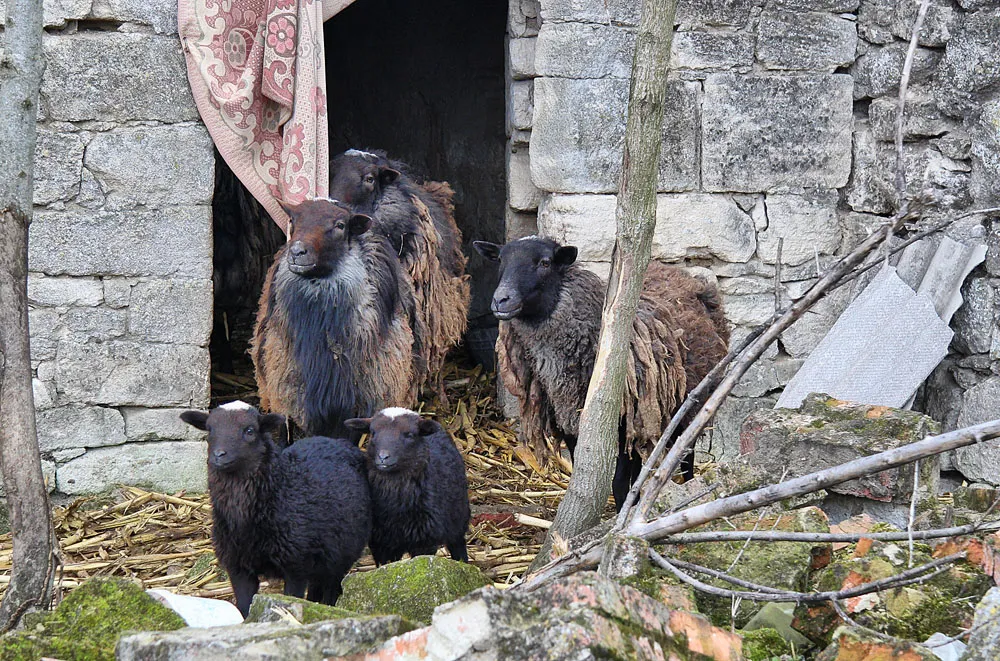
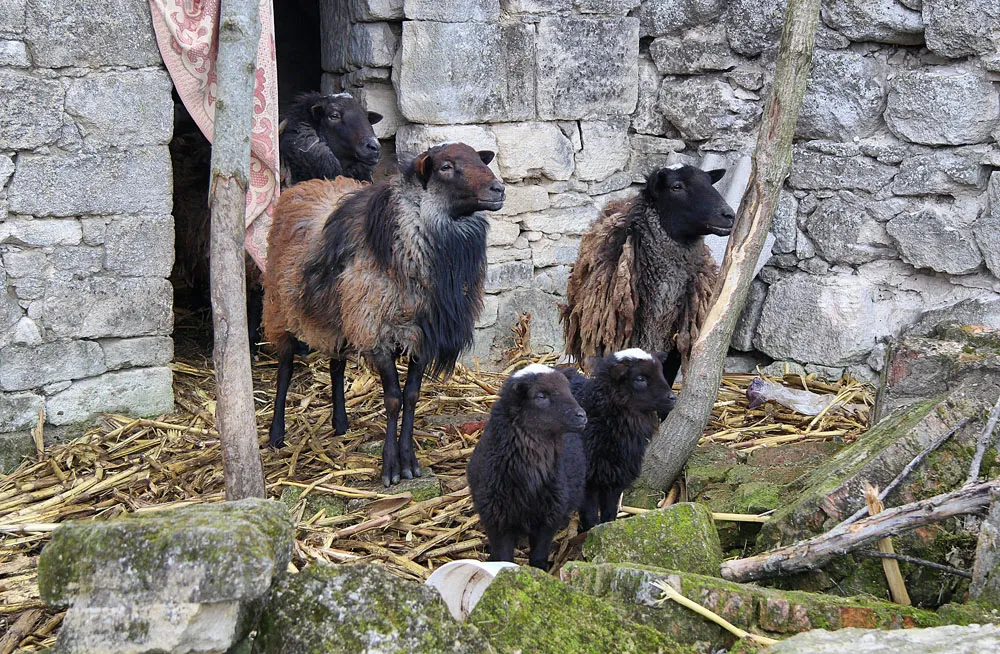
Overall, Marchocki’s reforms led to an unprecedented economic flourishing of the “state” and its citizens. There were two cloth factories, a carriage factory, and baize, saltpetre, paper and lacquer manufactories; silkworms were bred, and the best breeds of horses, cows and sheep were brought in…
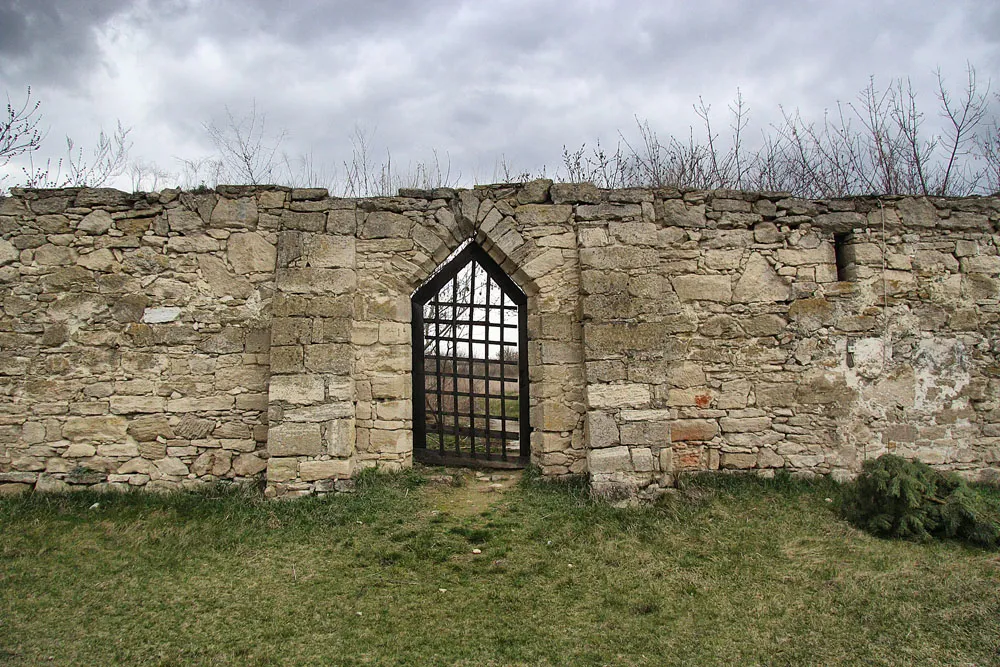
The count’s reforms made their mark in the cultural sphere too. Marchocki, who took the ideals of the French Enlightenment as his guide, paid great attention to printing. Minkivtsi acquired its own printing house as early as 1792, since one needs somewhere to print one’s laws, instructions, and to issue forms and banknotes.
In the same year a Jewish printing house was also set up, using a printing press kindly provided by the “father of the people”. This is indicated, among other things, by the inscription on the title pages of Jewish books published in Minkivtsi: “w drukarni w miesćie Mińkowcach dziedzycznym Ignacego Scibor Marchockiego” (in the printing house of Minkivtsi, the hereditary town of Ignacy Scibor-Marchocki).
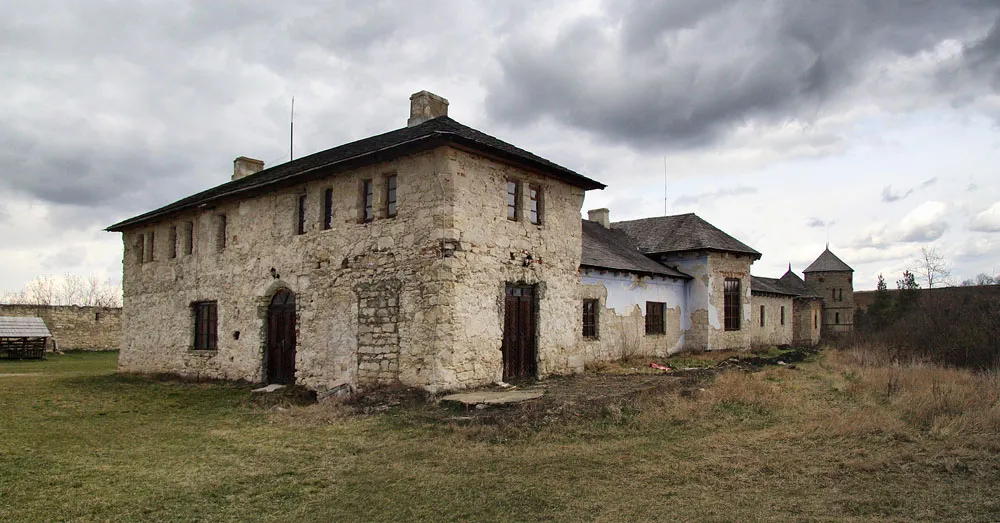
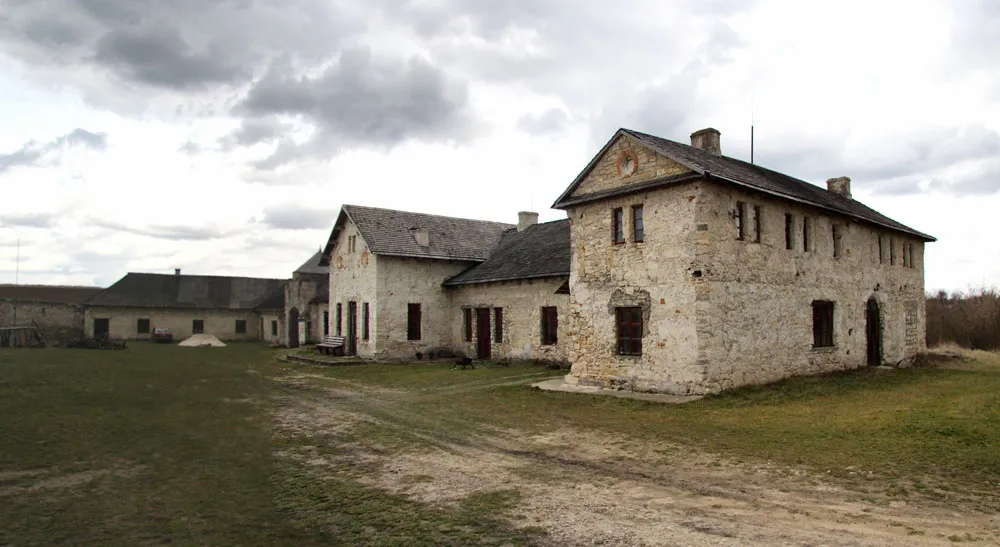
Of the count’s visible legacy, only the remains of his summer residence in the village of Otrokiv have survived. Not even his grave is left: the tomb was first plundered, and in the 1950s it was dismantled for stone.
The residence in Otrokiv resembles a castle only on the outside. Even a non-specialist can see that all these towers with loopholes and walls are in no way adapted for defence. In reality it is a skilful, artistic stylization.
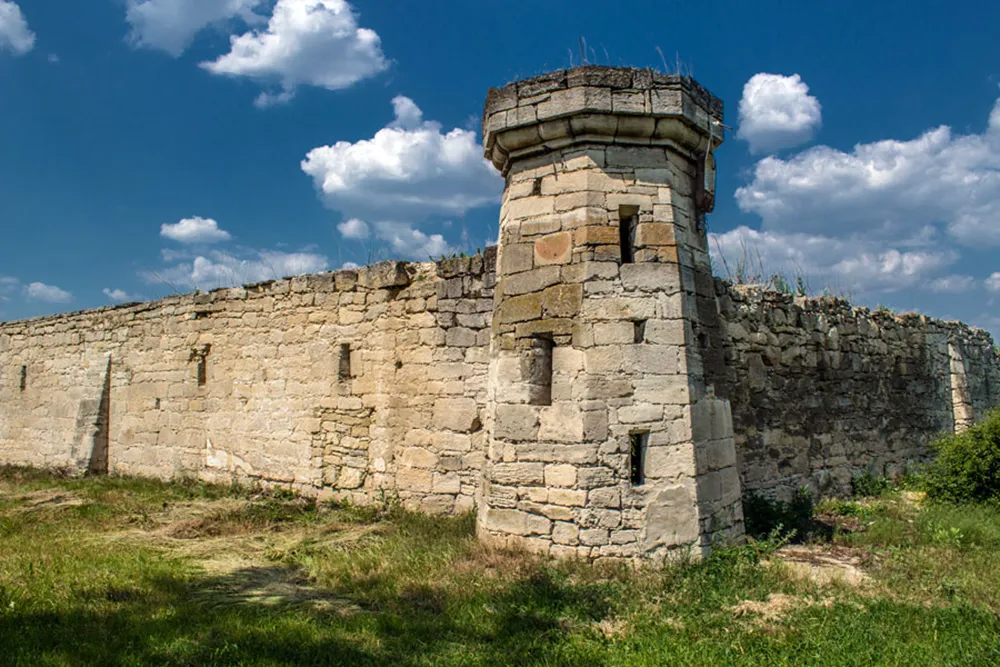
The walls of the “Forum”
The “Forum”, enclosed by a “fortress” wall, has also survived. Once, as at the real Roman Forum, festivals were held here. The walls of the “Forum” withstood the Soviet era. Fortunately, they were not dismantled like a large part of the count’s residence. The local collective farm adapted the enclosed perimeter as a cattle pen. Very practical and convenient, we note. And, above all, it saved the monument.
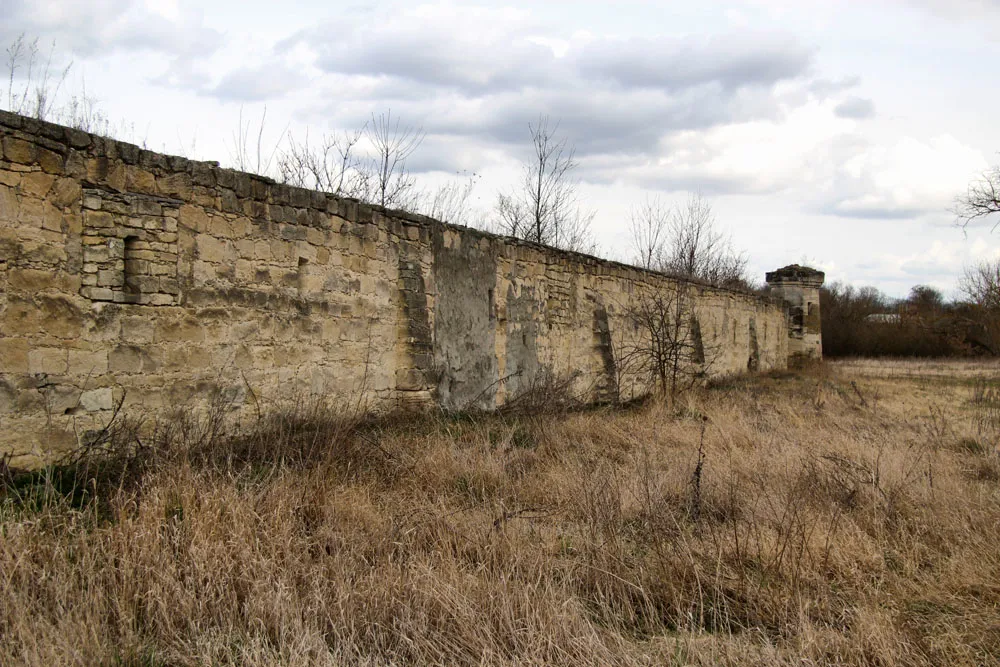
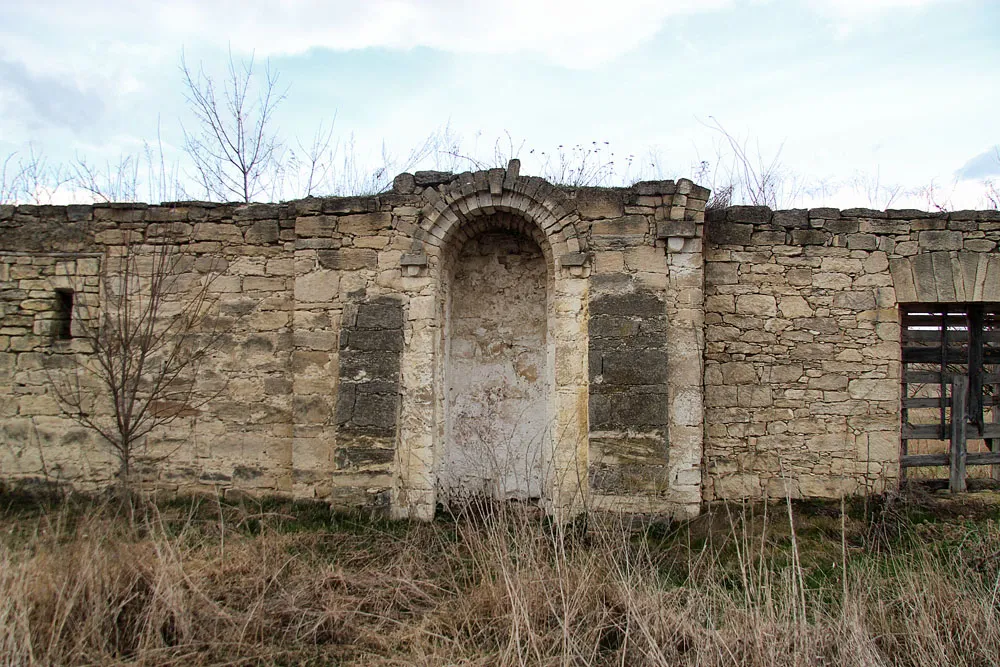
At the forum Marchocki, as already mentioned, held festivals. The most famous of them was the festival in honour of Ceres, the ancient Roman goddess of agriculture. True, Marchocki himself, to avoid trouble with the church, called it a harvest festival or obzhynky. Near the gates of the “Forum” one can still see the niches where sculptures of ancient deities once stood.
Next to the “forum” we also see a sizeable triumphal arch. It was once quite richly decorated and served as the ceremonial entrance.
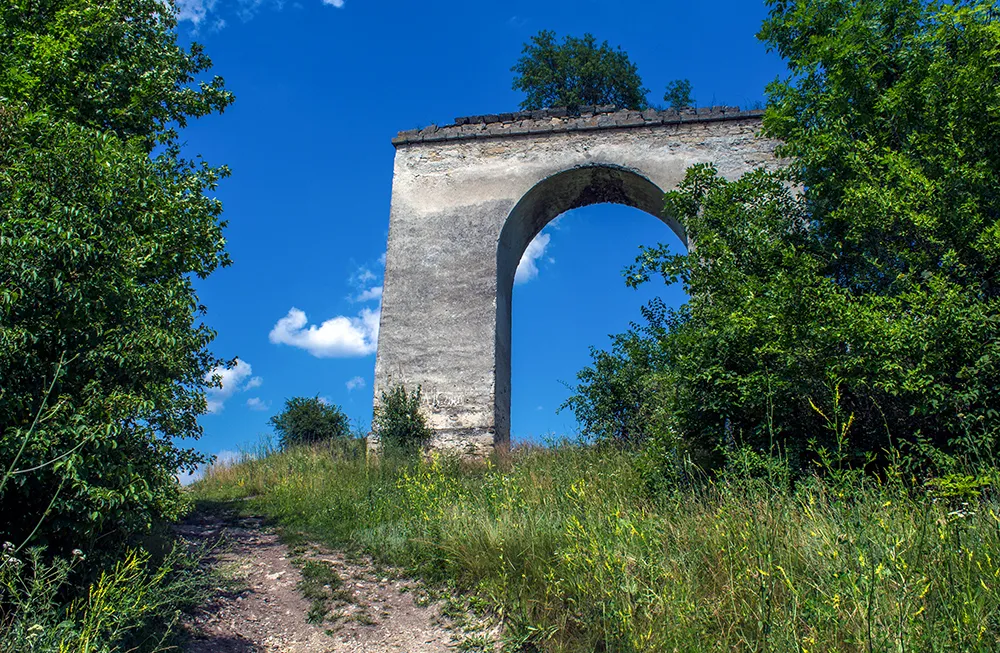
A large part of the residence was dismantled for building materials in the 1930s.
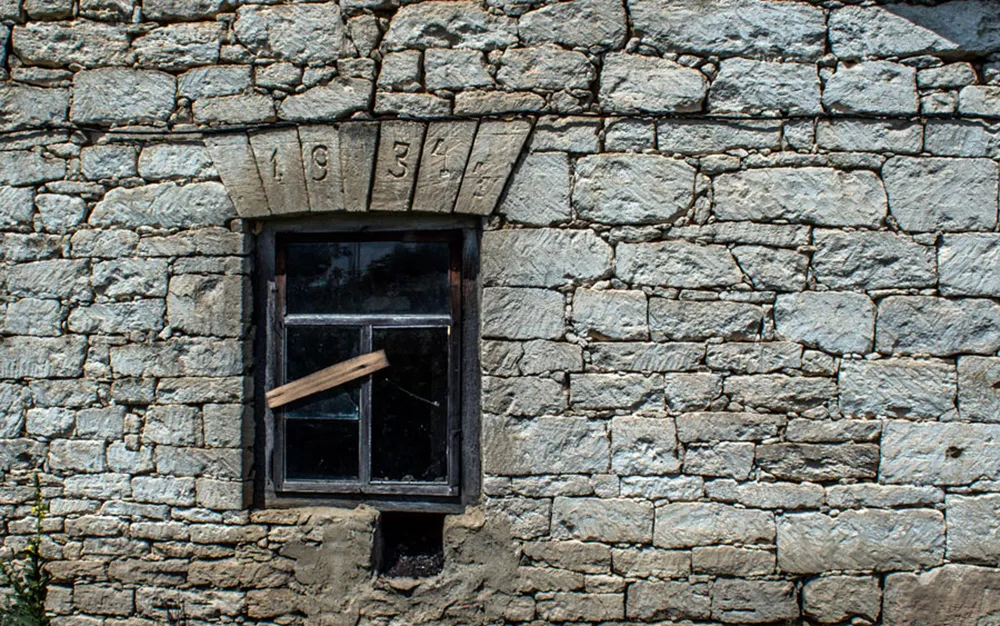
What the stones were used for can be seen by walking a little further in: stables, cowsheds, a smithy and so on. On the smithy’s window one can even see the date of its construction: 1934.
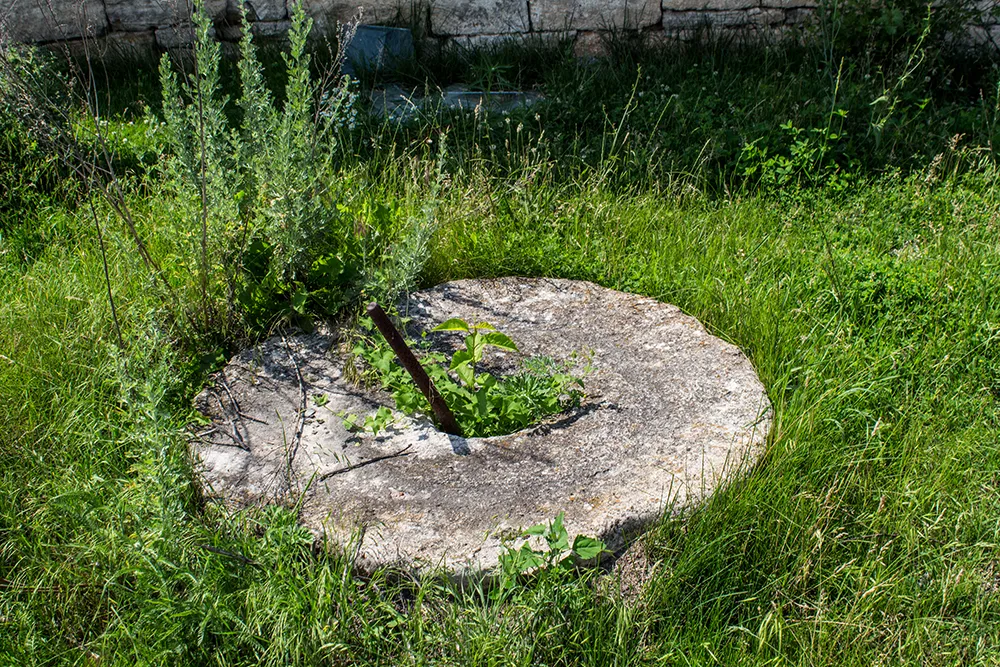
Beside the smithy there still lies a large round stone resembling a millstone. It is the remains of a device on which wooden cartwheels were repaired.
Today the former Marchocki residence houses a rather unusual hotel-museum, furnished with antique furniture and objects. It is worth a visit even just to gawk. Staying there, though, is a tourist’s dream.
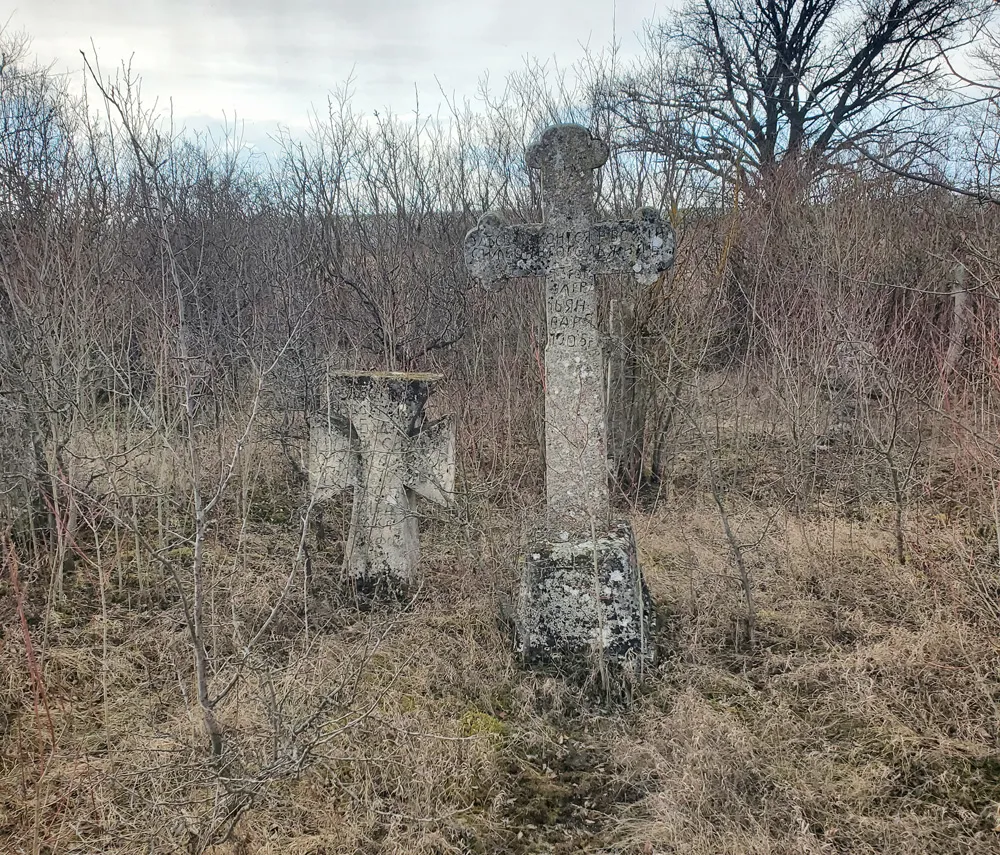
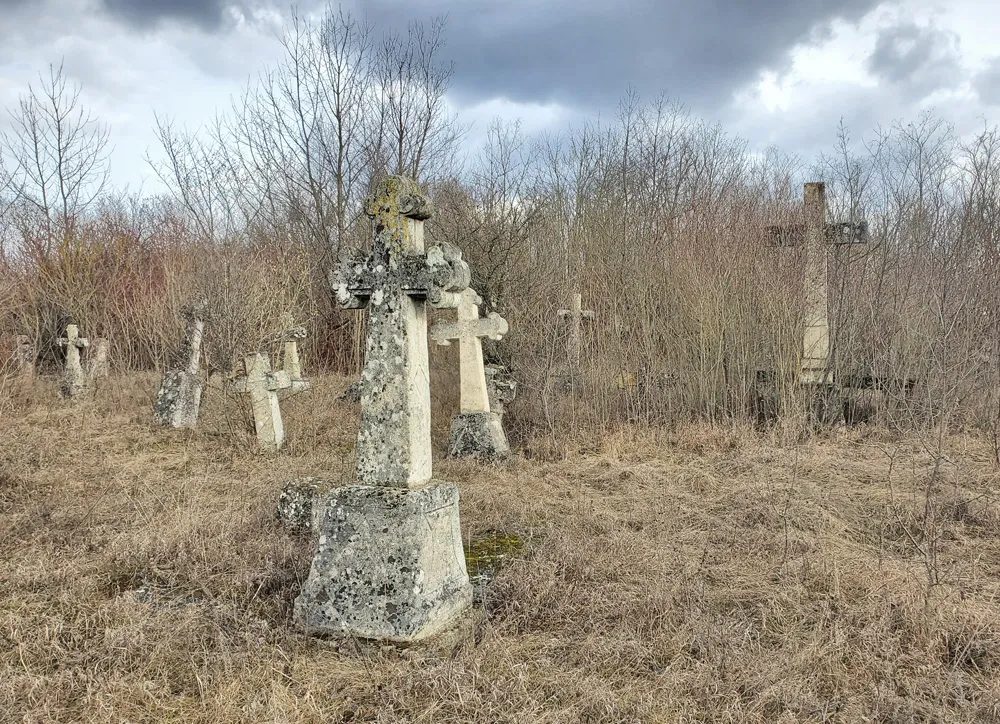
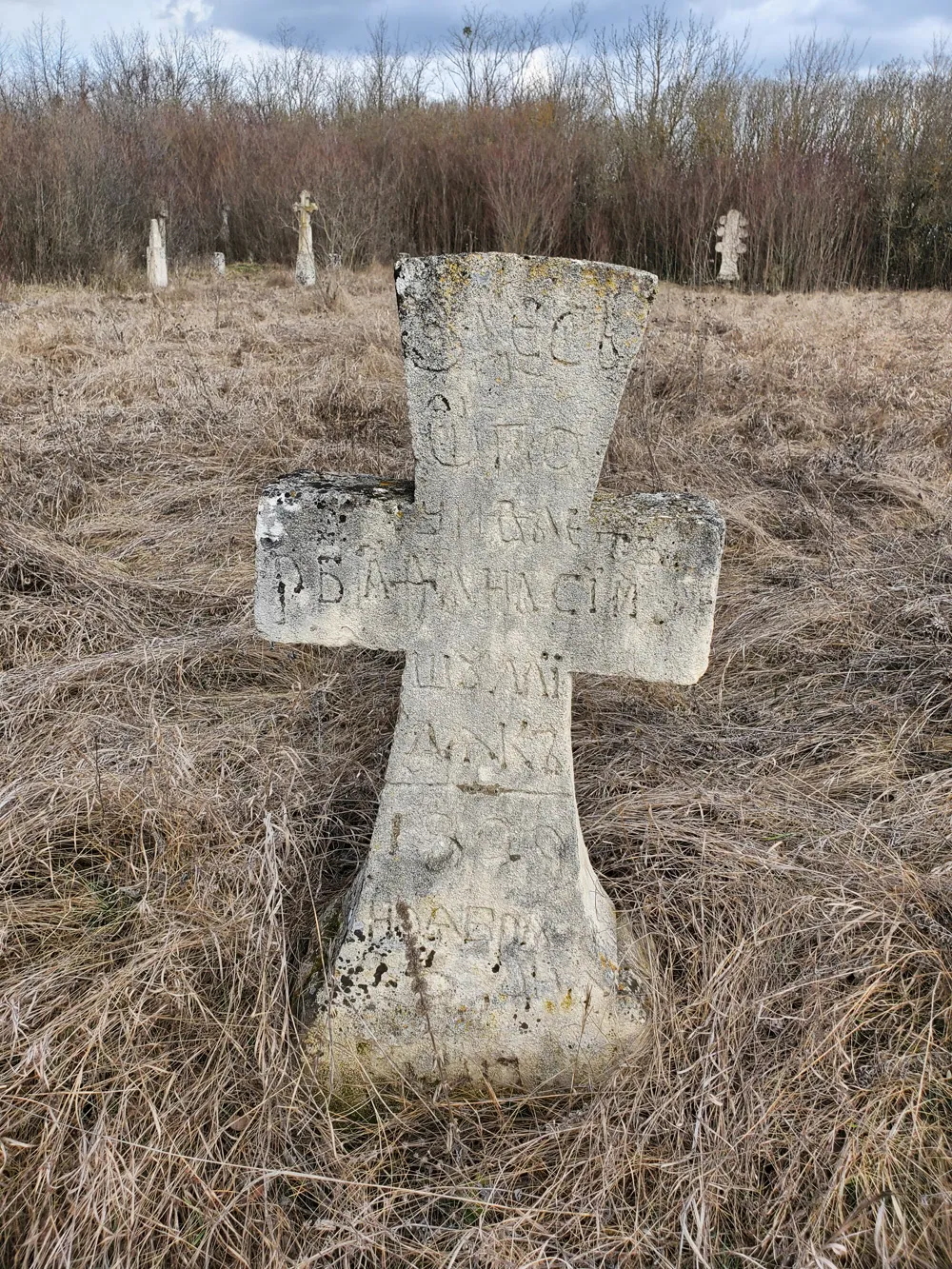
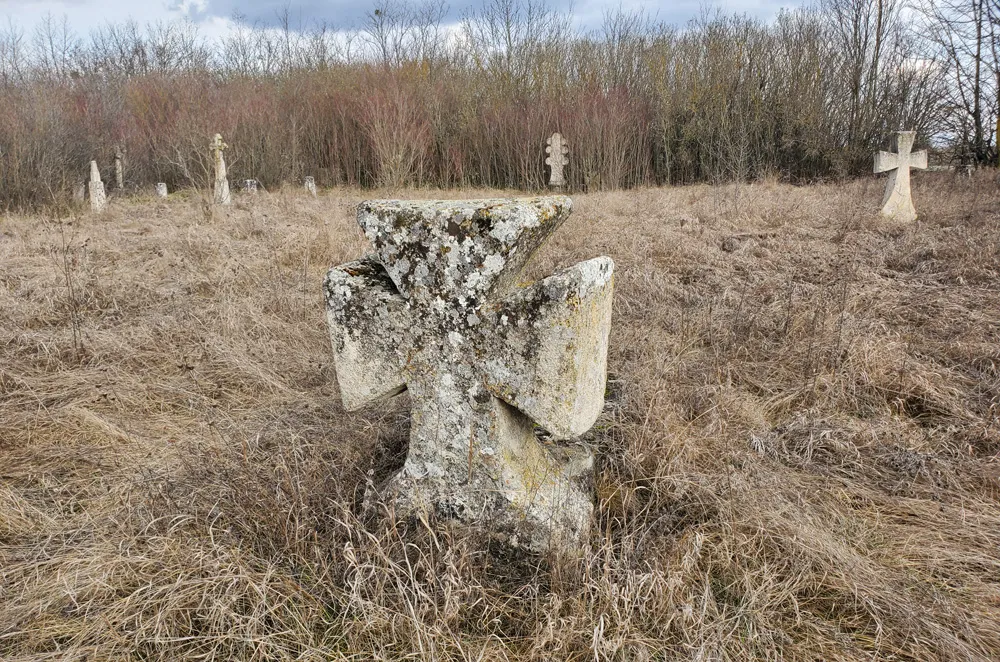
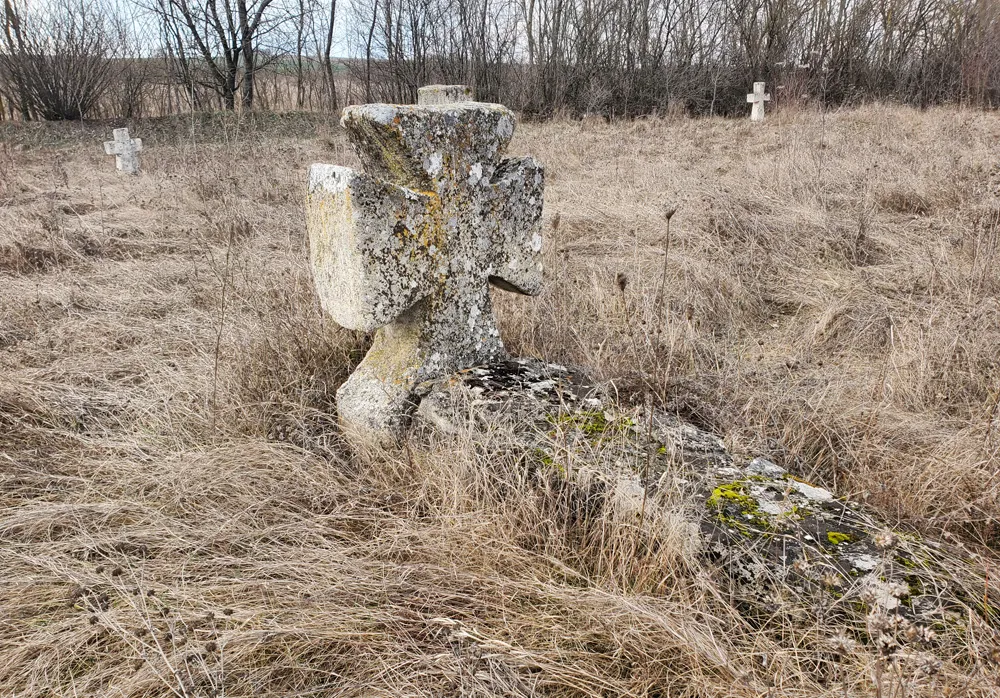
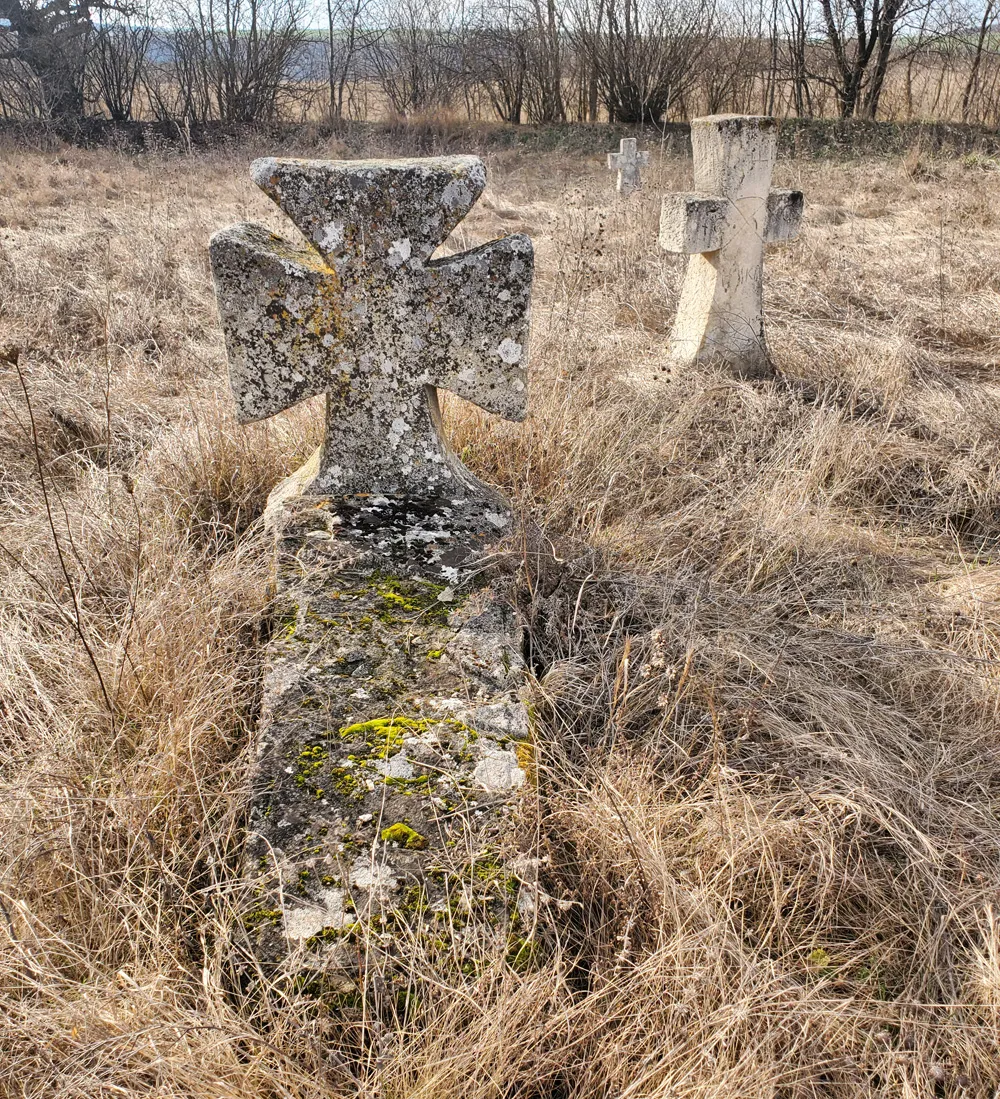
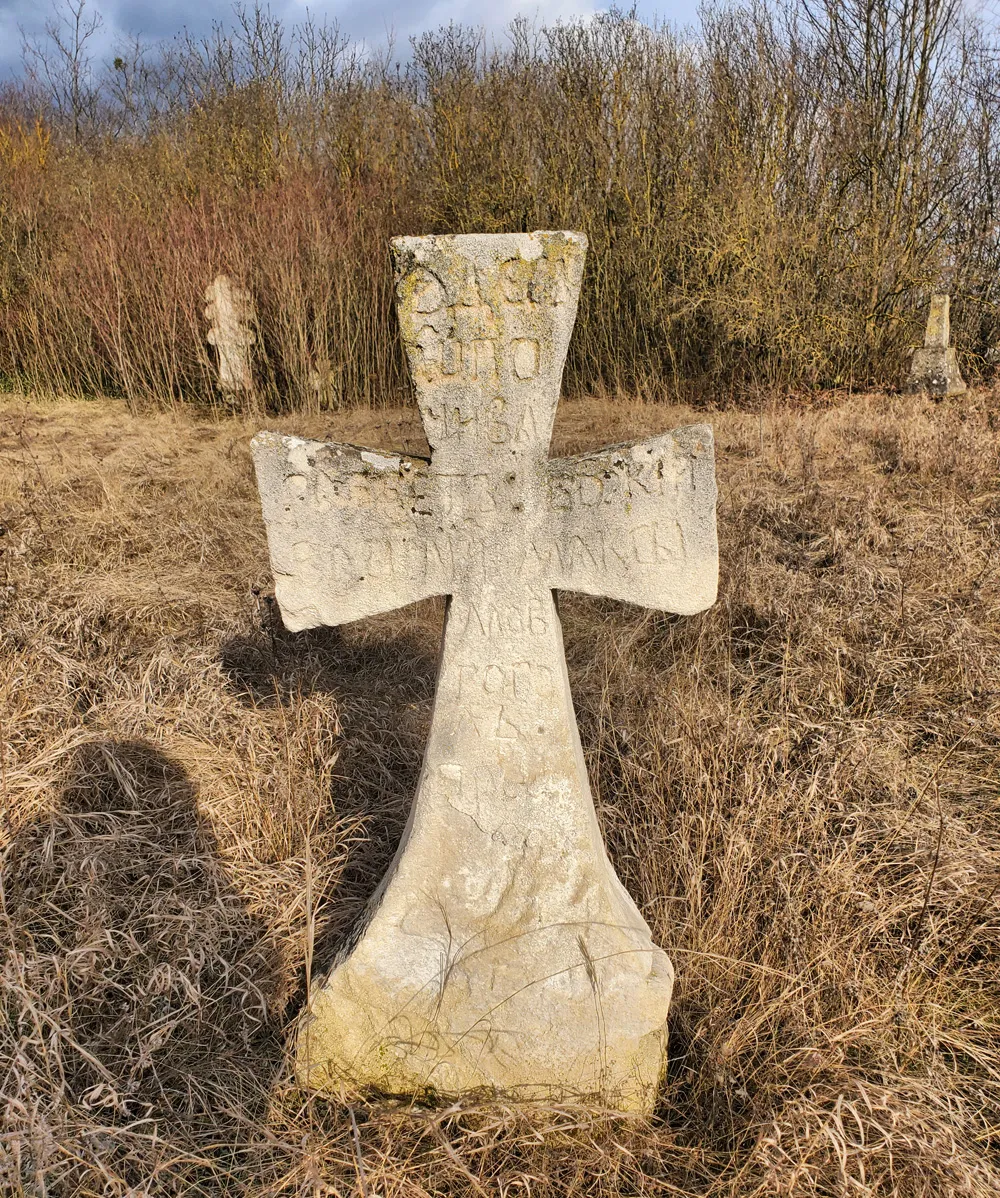
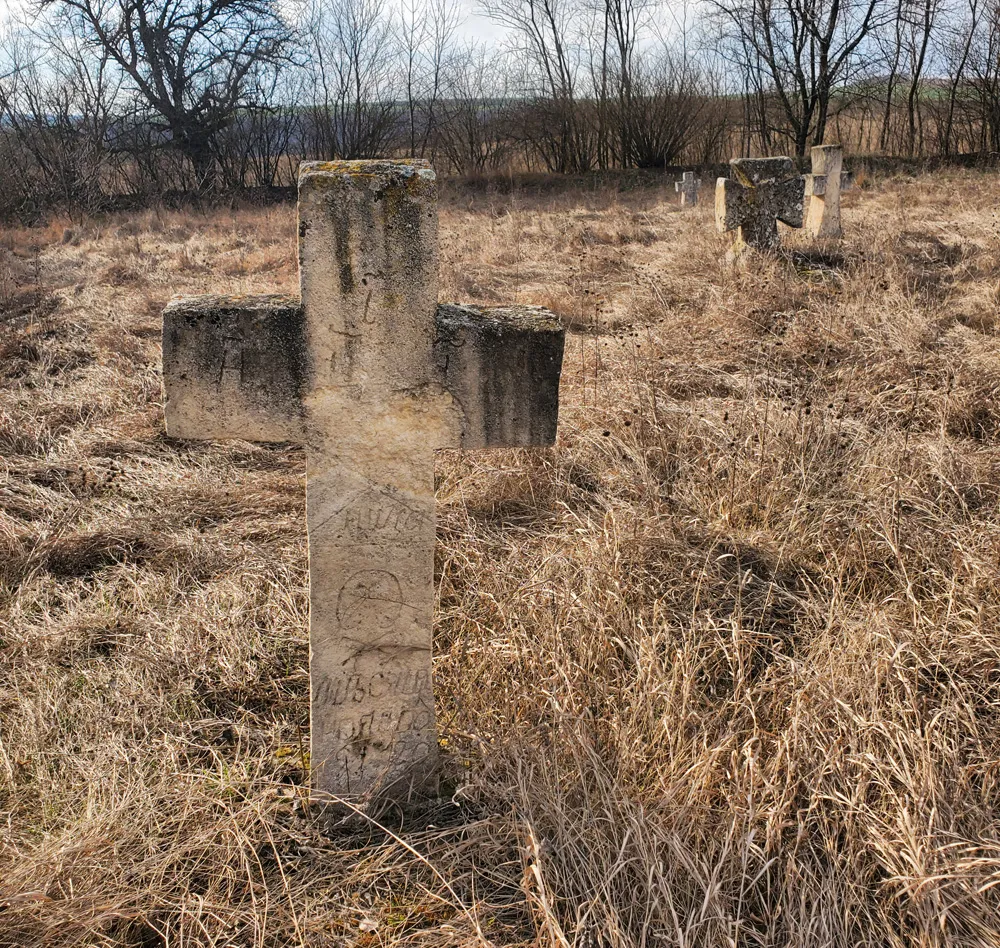
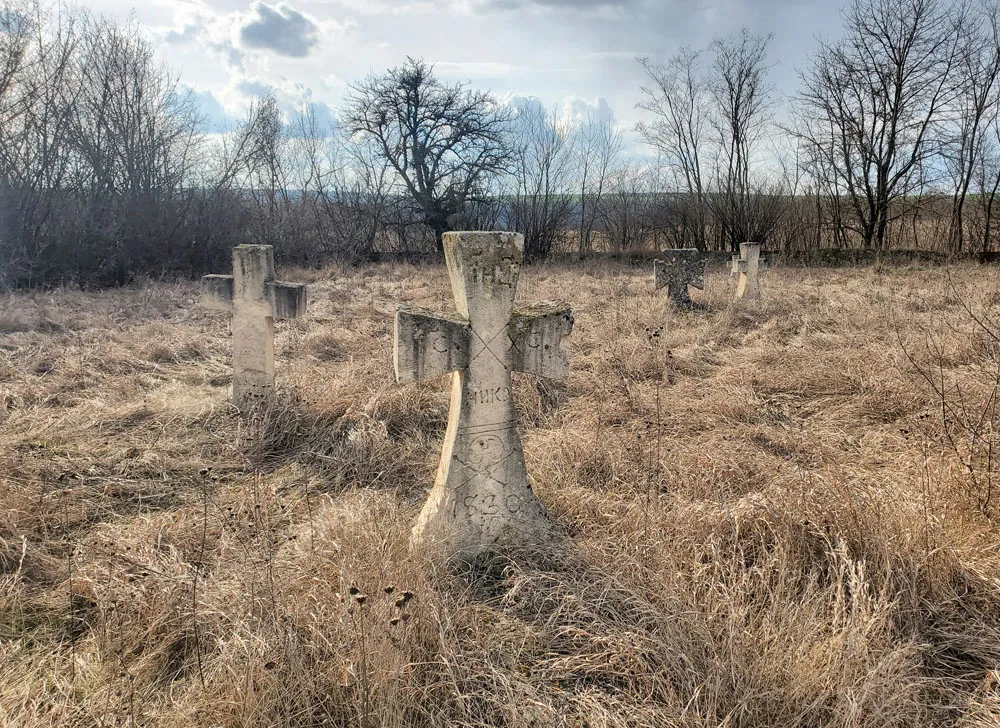
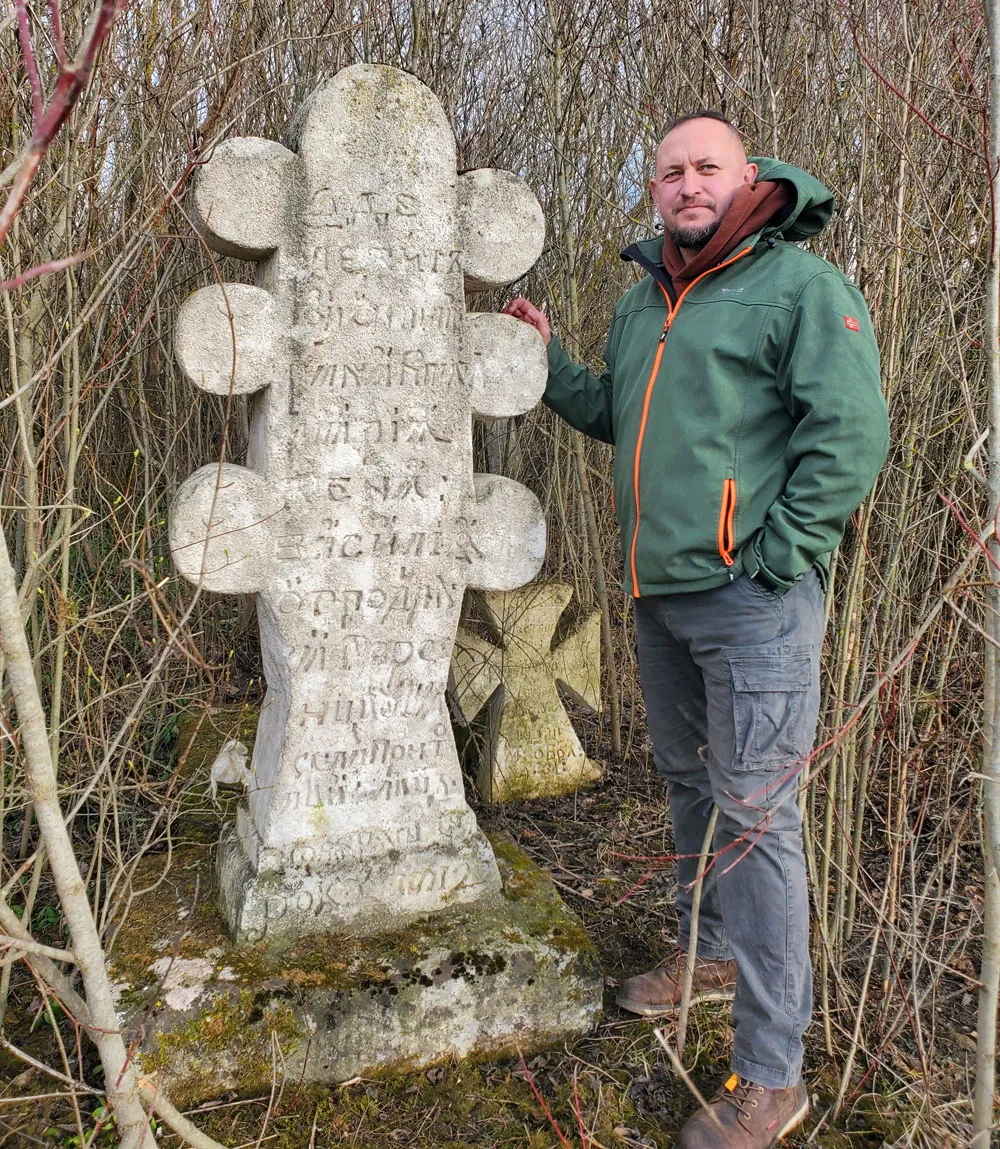
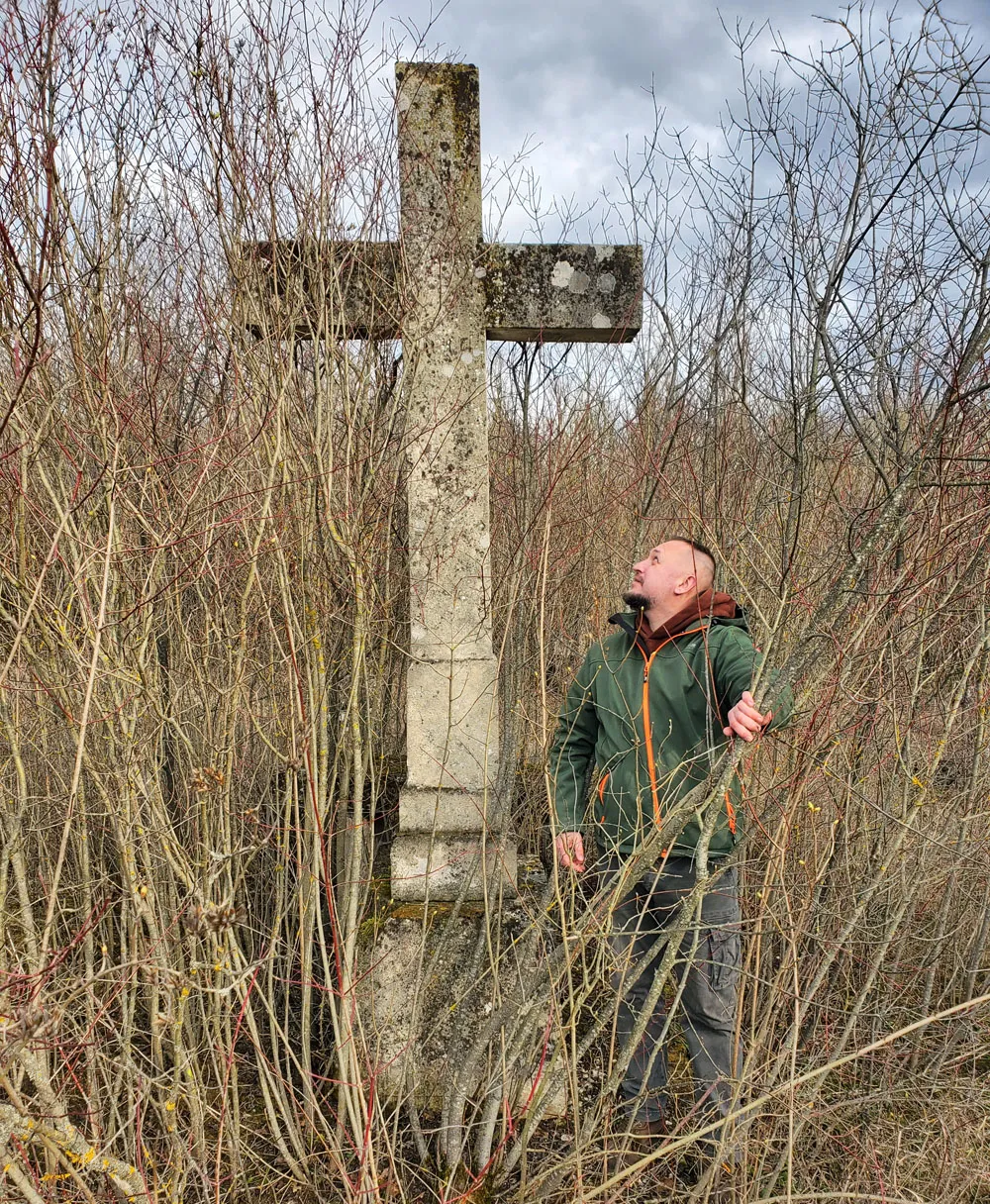
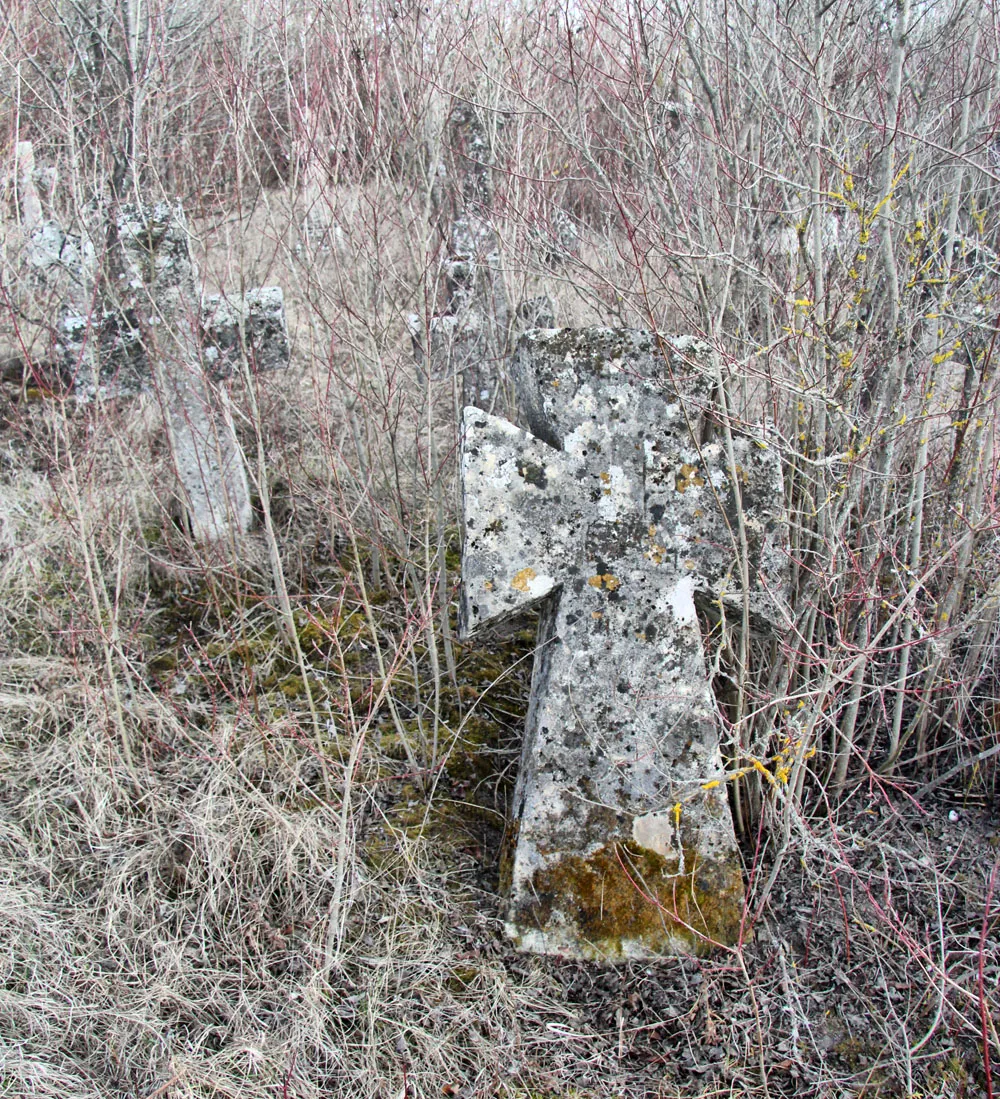
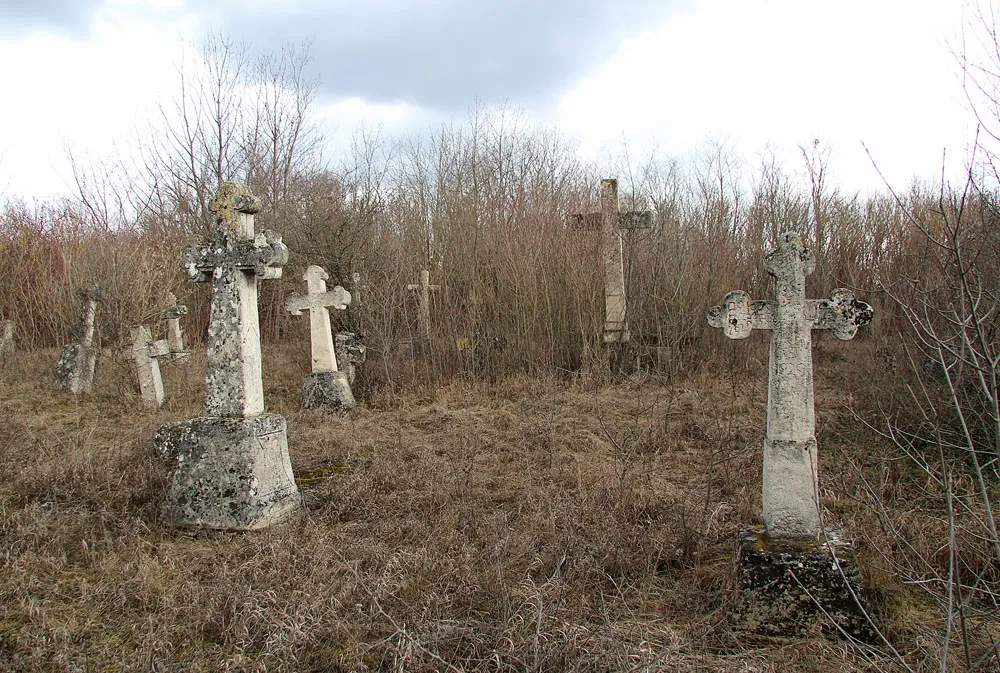
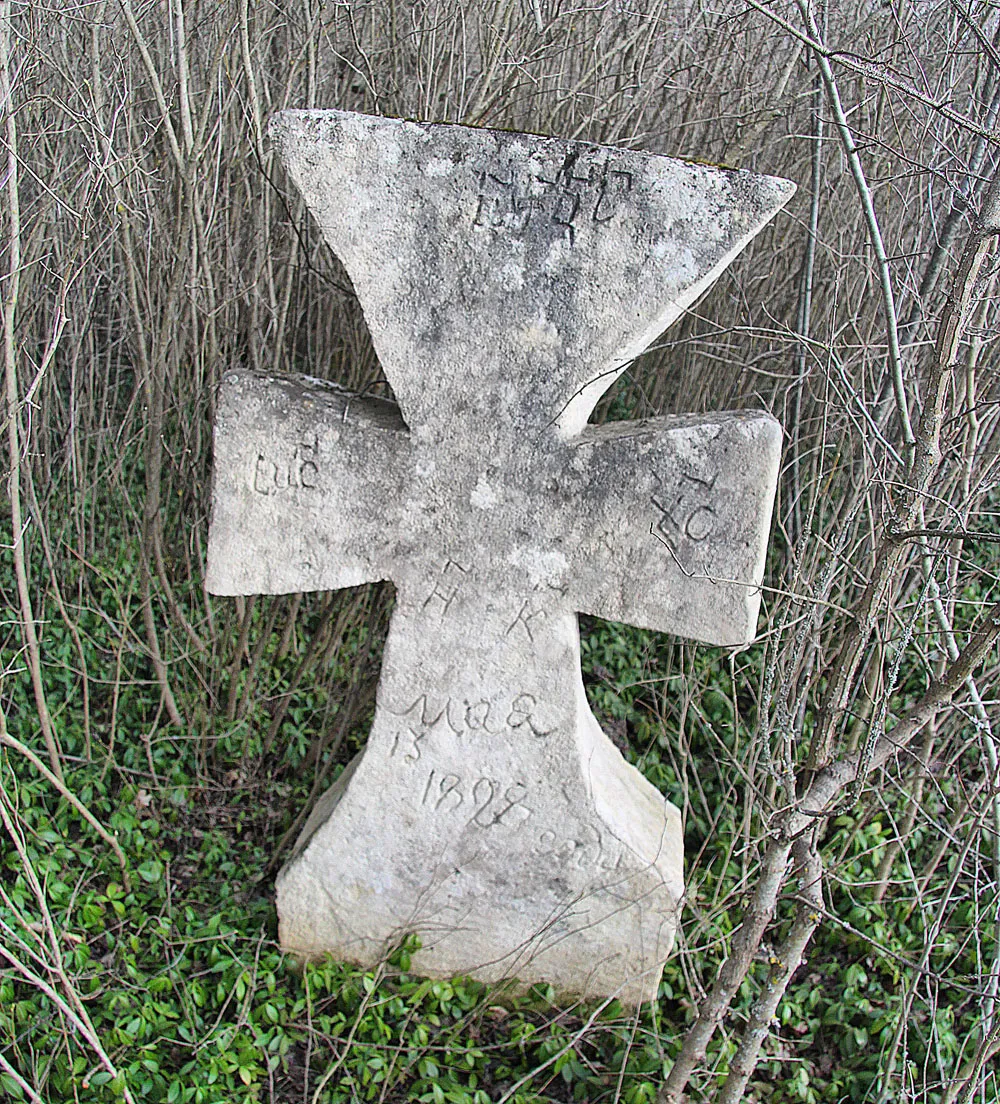
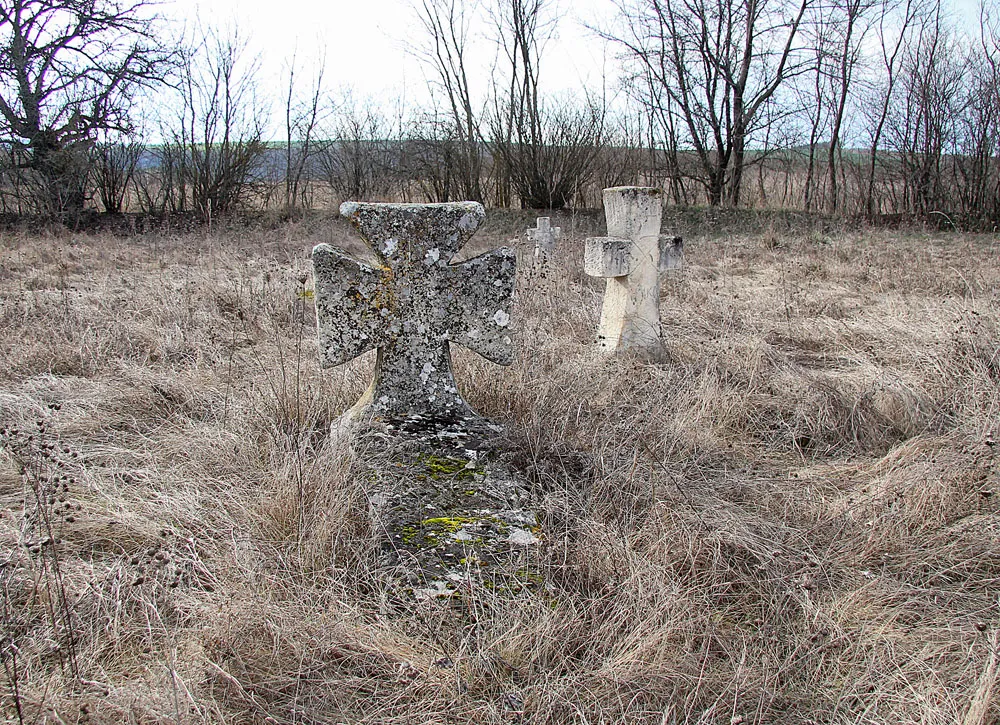
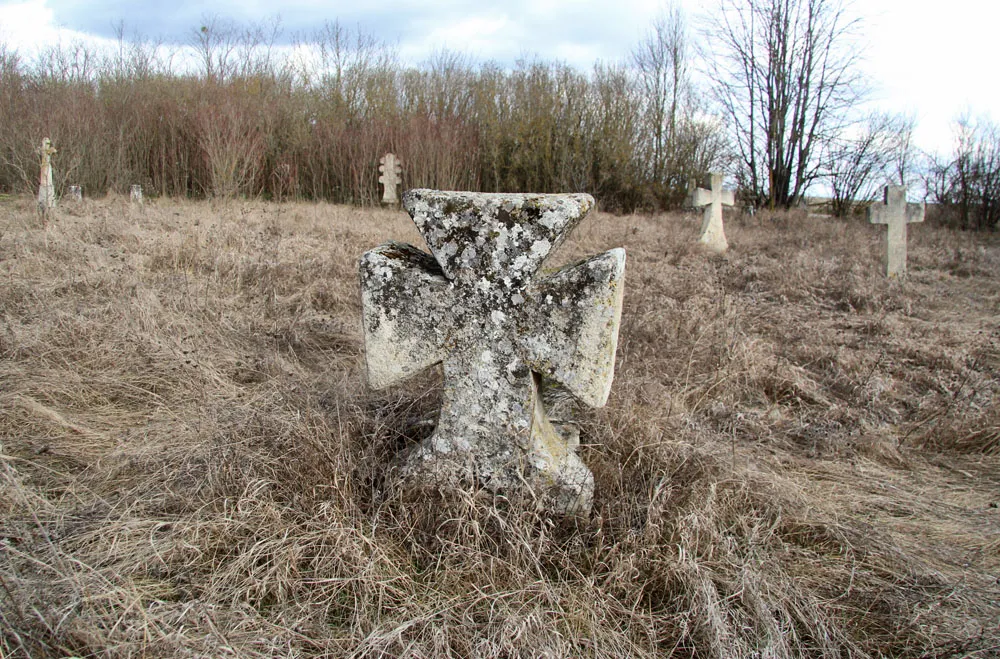
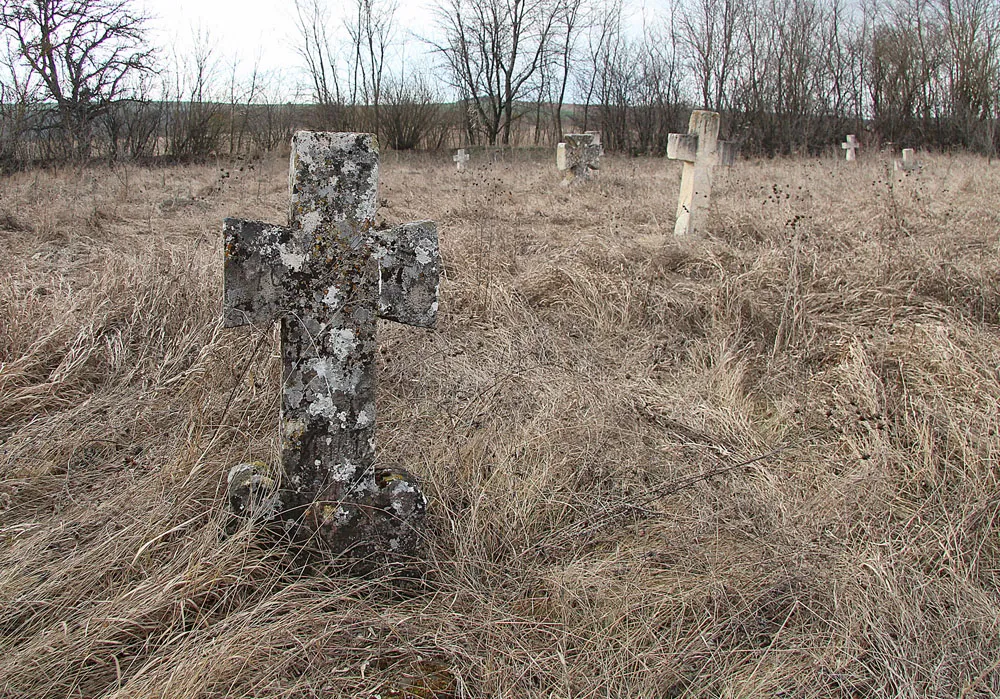
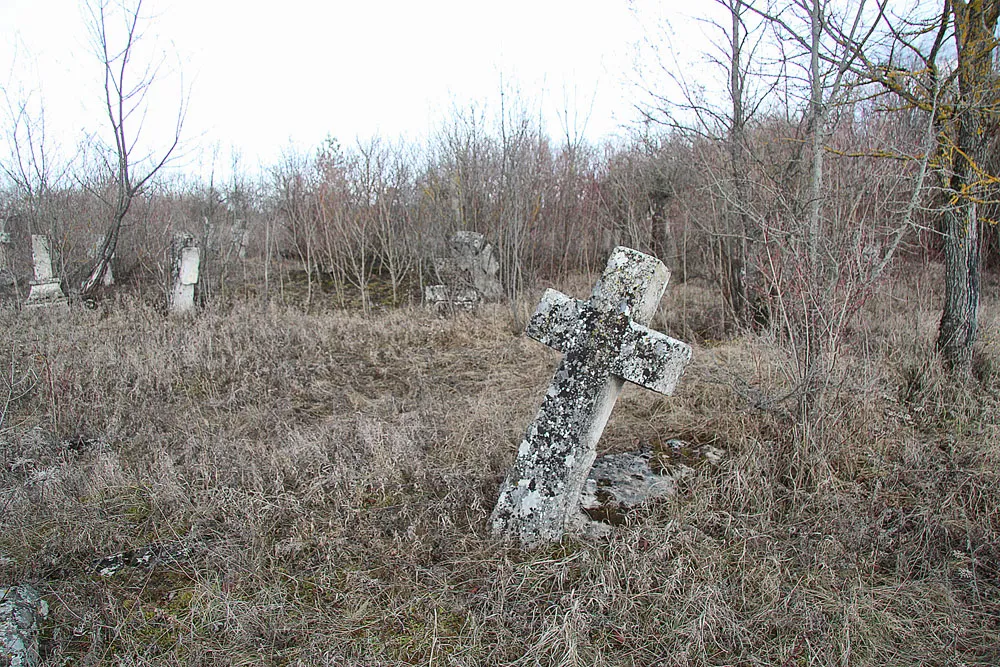
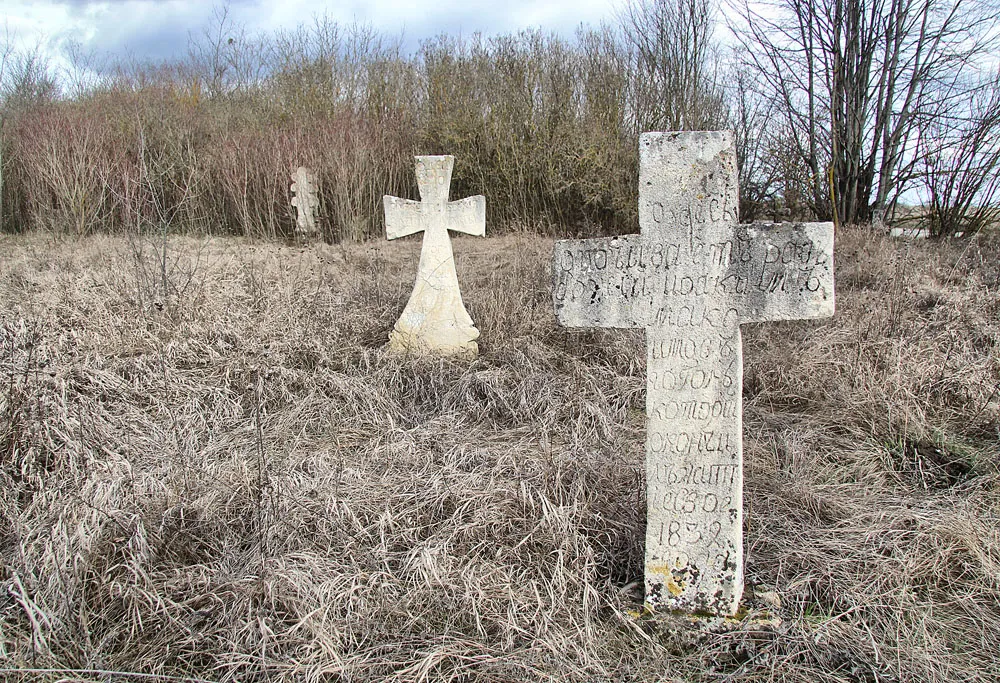
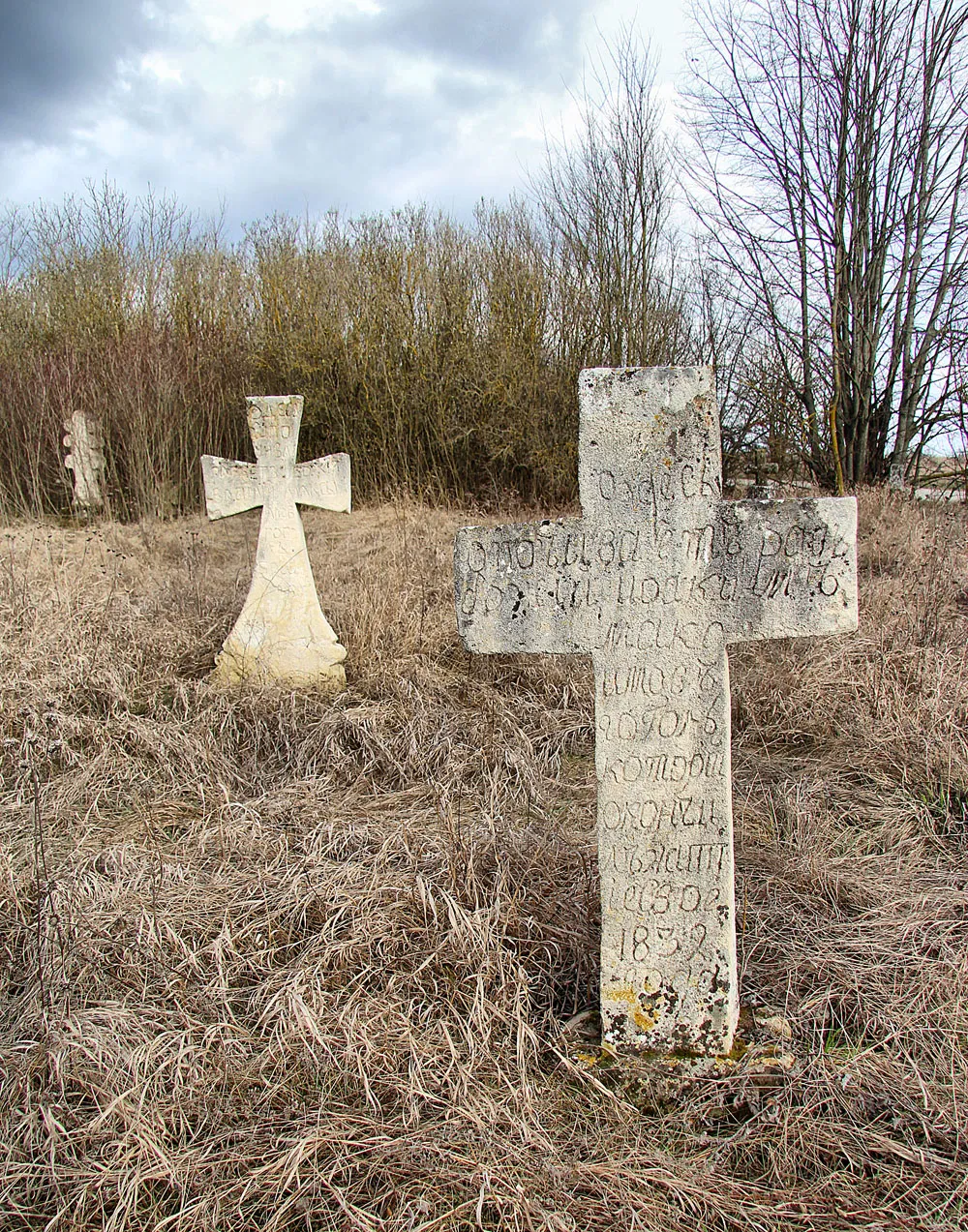
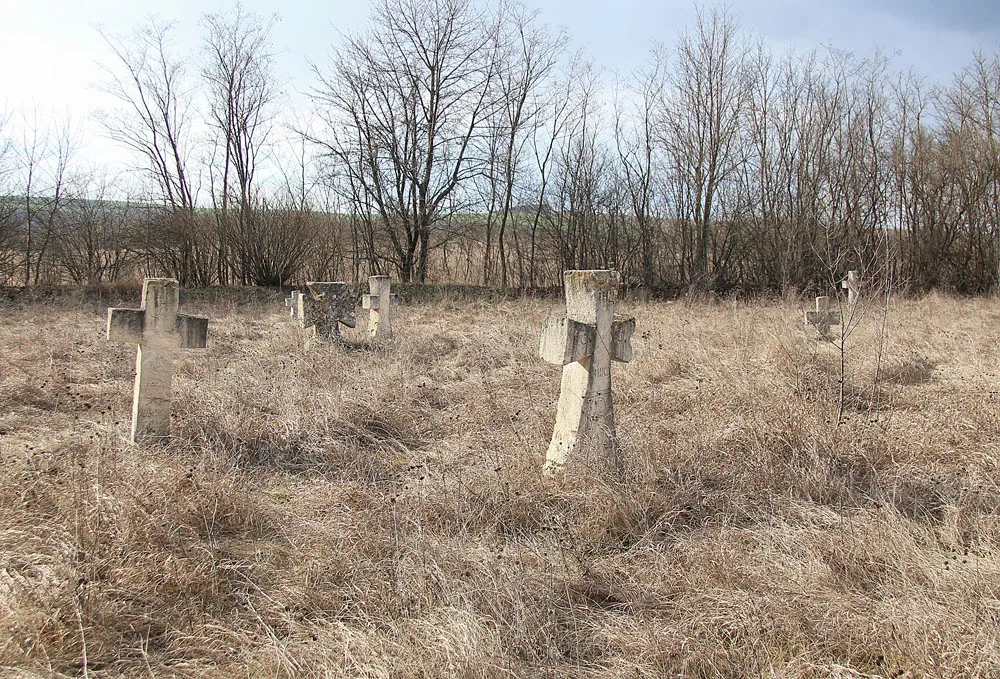
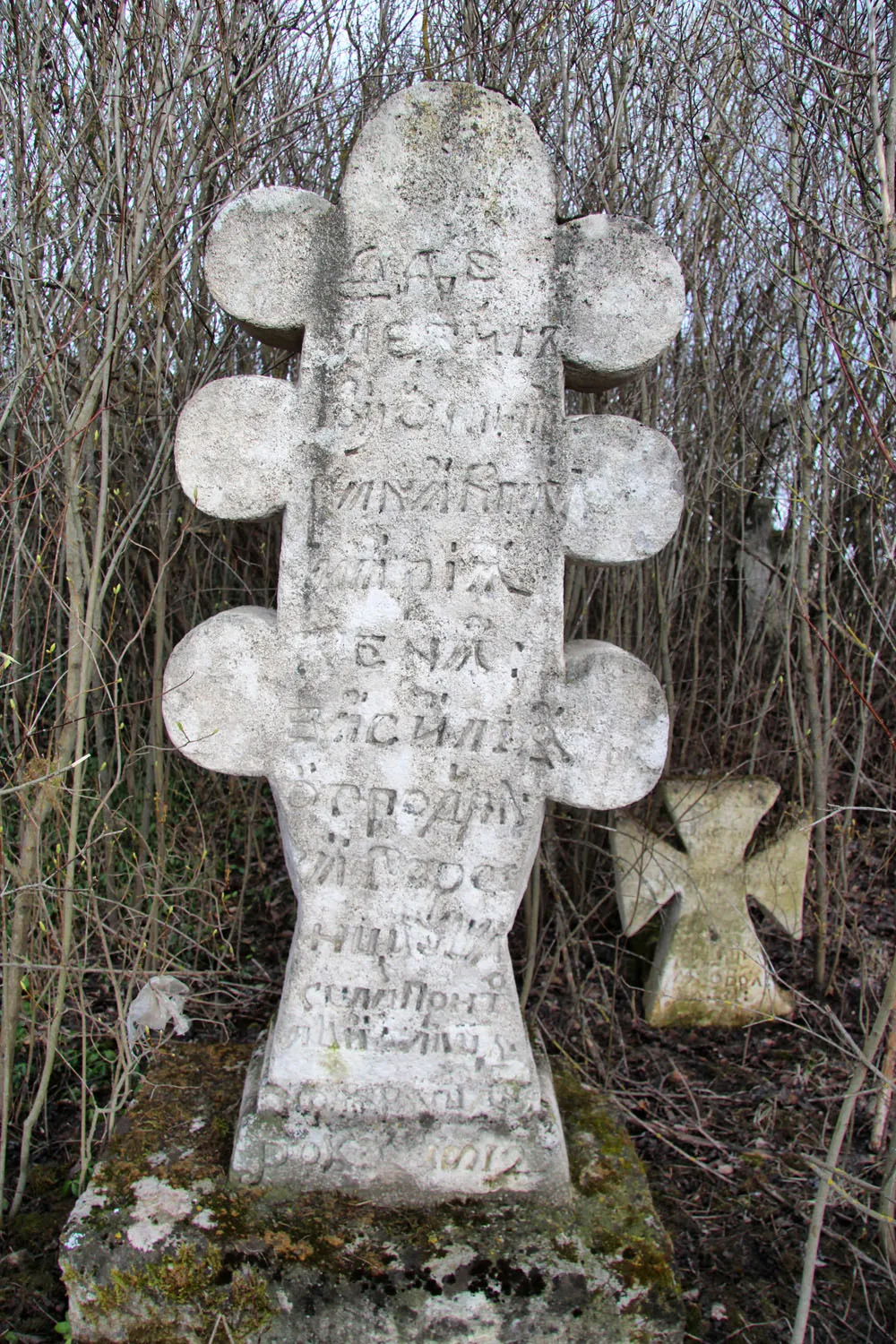
Otrokiv also has an old cemetery, where one can see many very interesting archaic stone crosses of the 19th century. The epithet “unique” fits some of them perfectly. Several gravestones are striking in both form and size.
(photos taken in different years)


