

Another 217 permits obtained for marking old Jewish cemeteries
Vitalii Kamozin, Executive Director of the Association of Jewish Organizations and Communities of Ukraine, spoke about the protection of Jewish burial sites in Ukraine, including very old ones, in an interview for the online edition of the newspaper of the Dnipro Jewish Community, “Shabbat Shalom”. Since the team of the NGO “Ukraine Incognita” pays considerable attention to researching and protecting ancient necropolises, including Jewish ones, we are publishing this interview in full.
— To begin with, please clarify what exactly is meant by protecting cemeteries?
— One of the main goals of the programme, as its very name suggests, is to protect Jewish cemeteries from desecration. That is, from demolition, damage to graves and matzevot, and construction. In a word, from vandalism.
And it is not only a matter of Jewish and religious traditions. It simply so happened that in Ukraine Jewish cemeteries suffered more than others, especially during the Holocaust and the Soviet period. At times this reached outright blasphemy; suffice it to recall the construction of a stadium on the site of the mass shootings of Jews in Dnipropetrovsk in October 1941.
No less important is the goal of preserving historical memory. After all, in many settlements people today know nothing not only about Jewish cemeteries that once existed, but even about the Jewish communities and settlements in their own villages and towns.
And in global terms, protecting Jewish cemeteries is our duty. In Judaism, desecrating burial places is equated with murder. This is untouchable land.
— What has been achieved during the programme?
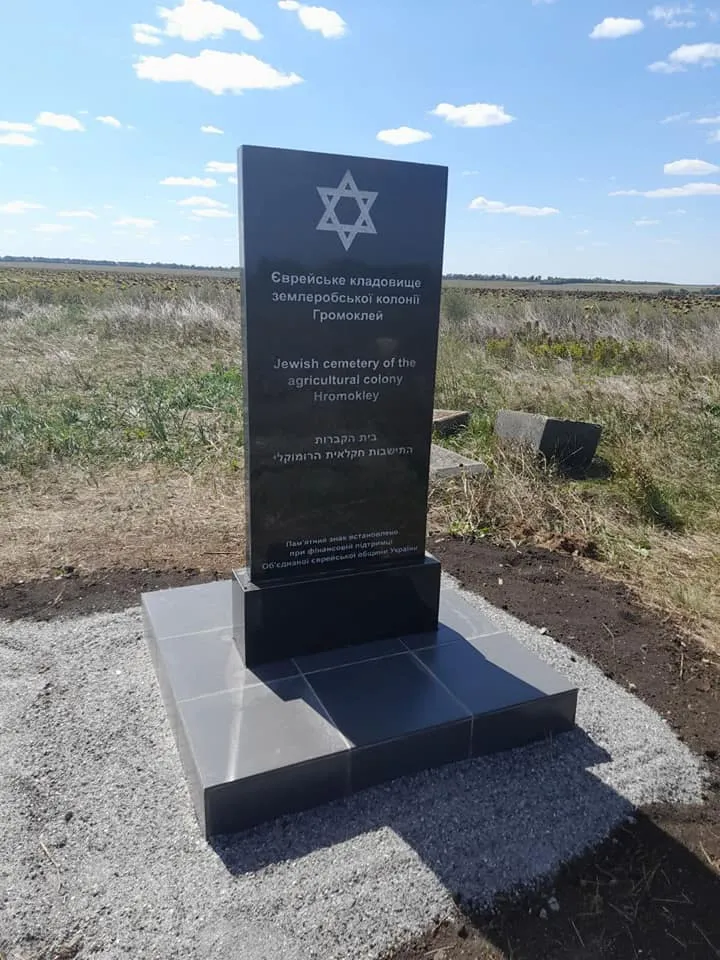
— Since 2021, 124 Jewish cemeteries in Ukraine have been marked with memorial signs, 11 of them in Dnipropetrovsk Oblast.
A feature of our oblast is that most of its Jewish cemeteries are in the south, on the territory of the former Stalindorf district, where before the Second World War more than half of the population was Jewish and there were over 50 Jewish settlements. The oldest Jewish cemetery in the region, Inhulets, is located right here, 40 km from Kryvyi Rih. Its fate is typical, too. After the war the Inhulets Jewish cemetery was abandoned and almost completely destroyed, with matzevot used as building material. In fact, the revival of the cemetery as a memorial site began only in 2021, thanks to the efforts of enthusiasts.
— How does the installation of memorial signs work in practice?
— To install a memorial sign, one must obtain permission from the local self-government body. This is a standard procedure, since the land on which the cemeteries are located belongs to the communities. But as a rule, local authorities are in no hurry to take a cemetery onto their balance sheet, which is understandable: municipal property has to be looked after and one has to bear responsibility for it.
However, the documents we receive from the authorities usually state that a memorial sign is permitted at the site of the Jewish cemetery. That is, the existence of the burial place is recognised de facto. This helps a great deal in guarding and protecting these sites.
In Poltava Oblast, in Khorol, there was a case when a tractor arrived at an already verified Jewish cemetery and began to demolish it, clearing the plot on the pretext that it was public land. Thanks to the fact that we had documents confirming that this was a burial place, the destruction of the cemetery was avoided.
— But there are also people who help you protect cemeteries, aren’t there?
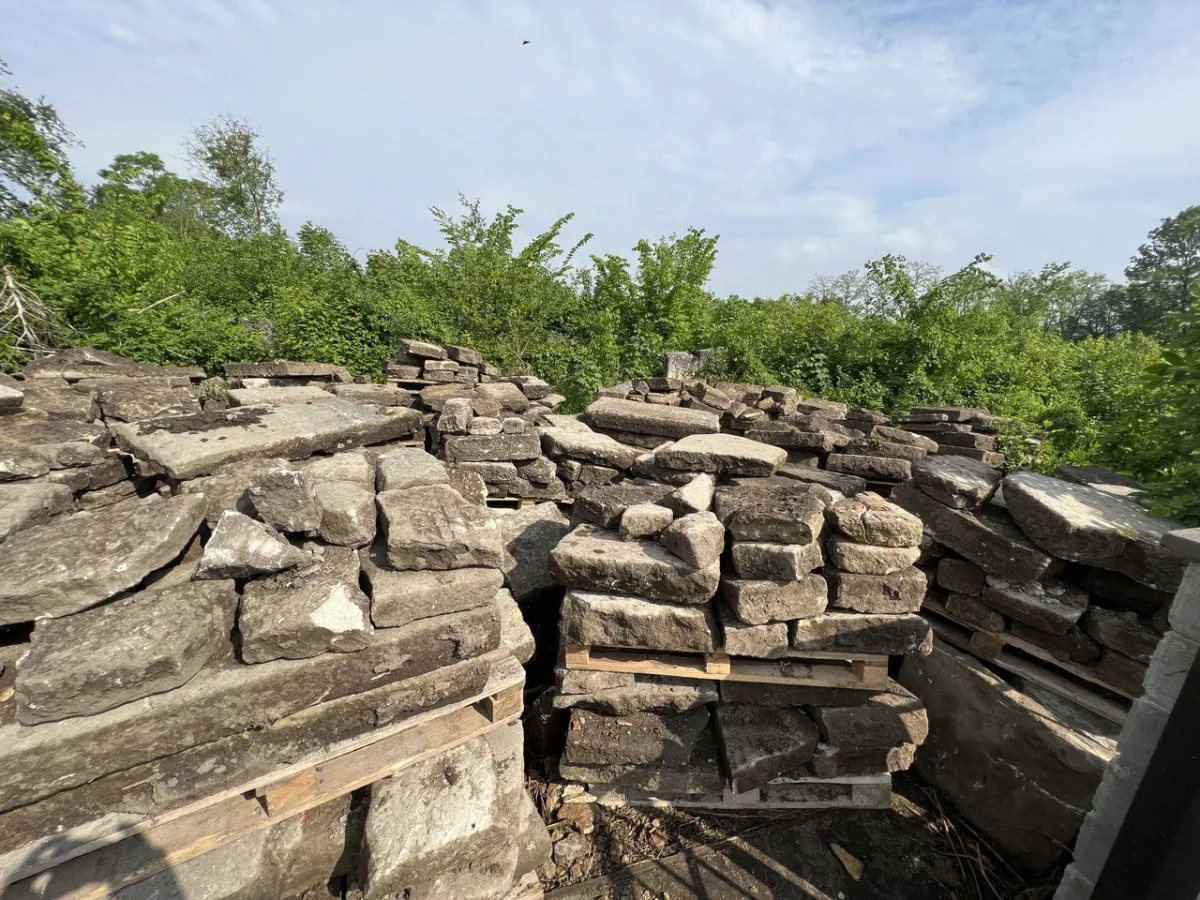
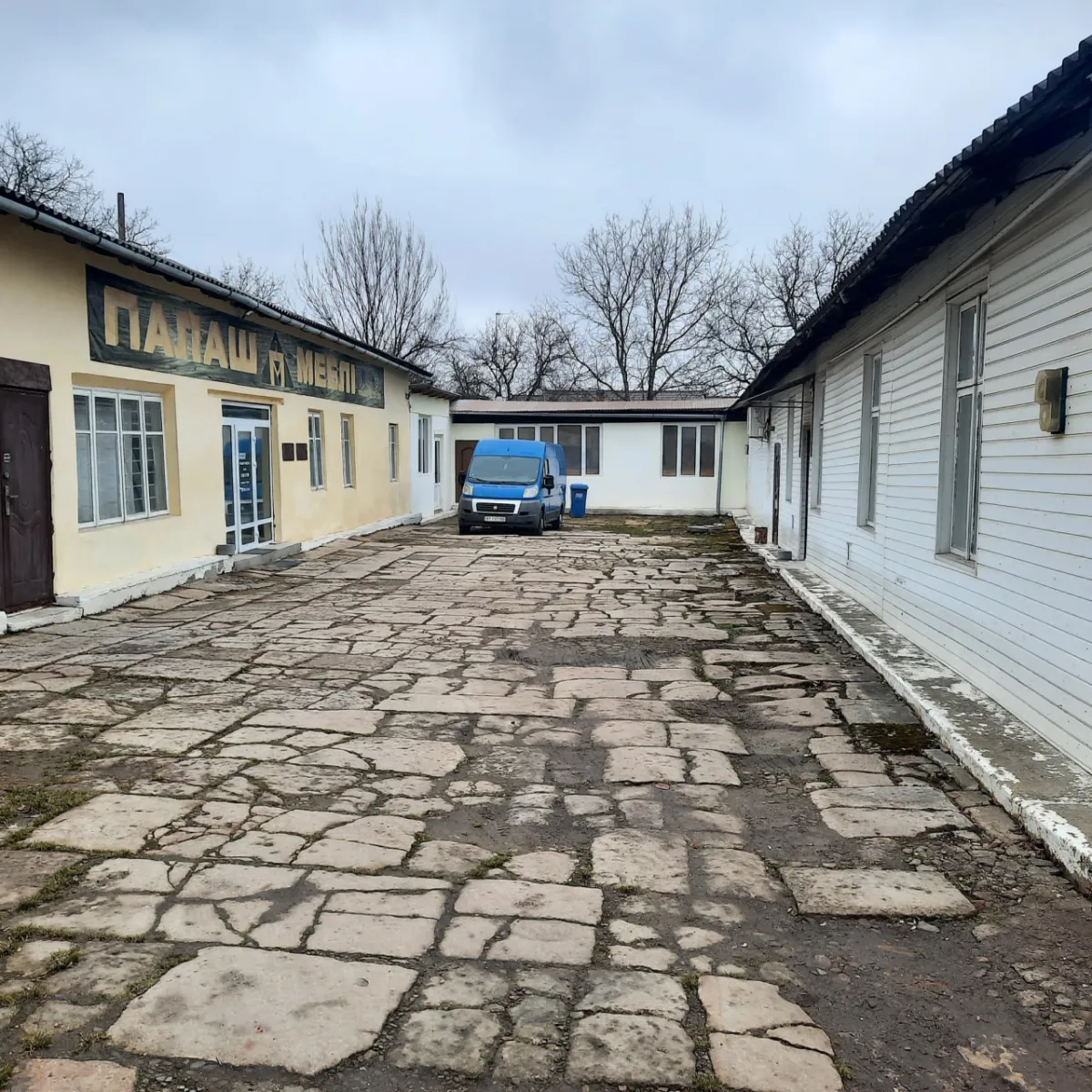
— Of course. There are many caring people. In Sniatyn, for example, two years ago there was a truly striking story. A local resident contacted us and reported that the entire yard of a complex of buildings he had recently bought, several hundred square metres, was paved with matzevot. The information was confirmed. As a result, we managed to retrieve about 300 matzevot and move them to the Jewish cemetery, the oldest of them dating from 1754, thus fulfilling such an important mitzvah. We gathered the matzevot literally in fragments, since most of them were broken up; the process was complicated and painstaking.
It is noteworthy that nobody had asked the local resident for anything, and he could easily have poured concrete over the whole yard. But he did not; he contacted us. As a token of gratitude, we raised the necessary sum and gave him an equivalent amount of paving tiles.
The story itself only confirms that the Jewish Cemeteries Protection Programme is relevant and necessary.
— Can you give examples relating to Dnipropetrovsk Oblast?
— Certainly. In Samar (Novomoskovsk), a few years ago a woman found a matzevah in her vegetable garden. Later we installed a memorial sign near the spot, and the matzevah itself was moved to a museum, as an exception. Usually matzevot are returned to the territory of Jewish cemeteries, where they belong. Incidentally, a memorial sign has also been installed in Novomoskovsk at the site of the former Jewish cemetery.
A similar story recently happened in Verkhnodniprovsk. A young Jewish woman bought a house here and discovered a late 19th-century matzevah on its grounds.
And in Dnipro itself, thanks to the Jewish Cemeteries Protection Programme, a few years ago the building of the 19th-century “Beit HaChaim” synagogue was discovered. In the area where the Old Jewish Cemetery once stood, a local resident found a matzevah and shared the information that a few more gravestones were nearby. We went to the spot. The matzevah was found. And on the way back, by chance, as usually happens, we came across another local resident, who told us that he had some cemetery building in his yard. True, only one brick wall remained of the original structure, but a number of signs made it possible to establish that this was the site of the synagogue. As a result, there is one more verified site of Jewish history in Dnipro.
— However, most Jewish cemeteries are concentrated in western Ukraine.
— And that is not surprising. That is how it historically came about: in the west there were simply far more Jewish settlements from the beginning than in our region. And they appeared much earlier than in the Dnipropetrovsk region; in Busk, for example, a matzevah dated 1520 has survived.
As a result, while Lviv and Ivano-Frankivsk oblasts each have over 100 Jewish cemeteries, Dnipropetrovsk Oblast has only about 30.
However, I believe our oblast is still lucky in this respect. In Kharkiv Oblast there are only a few Jewish cemeteries at all.
And interestingly, the percentage of built-over cemeteries in Dnipropetrovsk Oblast is lower than the Ukrainian average. Perhaps because the residents of the settlements of the former Stalindorf district remember that these were originally Jewish colonies. You come to such a village, talk to people, and everyone remembers that Jews used to live here.
— And where in Dnipropetrovsk Oblast do you manage to discover previously unknown Jewish cemeteries?
— In various places, even unexpected ones. For example, there is the village of Zhovte in Dnipropetrovsk Oblast, a classic Cossack settlement. Right up to the collapse of the Russian Empire, the entire system of administration here was built on the Cossack model. And imagine: 150–200 Jews lived in the village permanently. It was simply that there was a railway station next to the village, which promoted the development of trade, in which the Jewish population mostly specialised.
I am also almost 100% sure that there was a Jewish cemetery in Tsarychanka. We do not know where it was located, but it existed: there was a synagogue in the settlement, which means Jews lived there. Accordingly, there was also a cemetery. And there are many such cases.
— Does the programme also cover mass graves from the Holocaust?
— Certainly. When we manage to find a new, previously unknown burial place of Holocaust victims, we install a memorial sign, as, for example, in Verkhovtseve. At the time of the town’s occupation during the Second World War there was a psychiatric care home here, and some of its patients were Jews. How the Nazis treated the mentally ill is well known. At the same time, Jewish patients were destroyed first. In Verkhovtseve, 18 Jews, patients of the home, perished in this way.
We managed to establish the place of their burial. As a result, together with the Jewish community of Kamianske, we installed a memorial sign near the building of the former care home. The head of the community, Rabbi Levi Stambler, recited Kaddish. In all, more than 50 people took part in the ceremony, including the mayors of two cities and a People’s Deputy of Ukraine.
— In Dnipropetrovsk Oblast you are assisted by the local authorities and Jewish communities. And in other regions?
— In other regions too. In Zhytomyr Oblast, for example, we installed 8 memorial signs marking the territory of cemeteries as early as 2021, with the help of the Jewish community of Berdychiv. And a year earlier a remarkable event took place in Berdychiv itself: the matzevah of the famous Hasidic tzadik Levi Yitzchok of Berdychiv was discovered here.
We also cooperate fruitfully with the Jewish community of Ivano-Frankivsk Oblast. We find funding, prepare the necessary documents and obtain permits. And the Jewish community helps us carry out the work directly on site. The work in other oblasts of Ukraine is organised on the same principle.
— And the last question: are you planning to expand the programme?
— To date, 217 permits for the installation of memorial signs have been obtained under the Jewish Cemeteries Protection Programme. The programme continues. And we invite everyone who cares about this topic to cooperate.
Right now, for example, we are developing a project to create an online database of Jewish cemeteries in Ukraine. At the first stage we plan to digitise information about the locations of the cemeteries and the memorial signs installed. So that people know where and which cemeteries need protection and rescue, how to take part in this, and what kind of help is needed.
There is also a more ambitious idea: to create a single Jewish memorial portal that would collect information not only about cemeteries but also about those buried in them. Say, so that a person who types their surname into the search and says that their grandfather, for example, is buried in Busk would arrive at our portal, on the page of the local cemetery with a list of all burials, and see that everything is fine with the burial place of their ancestor.
There is even a wild idea: to place on the portal photographs of all surviving matzevot. And not only to place them but to index them. It is clear that this is a colossal amount of work, even taking into account that we plan to concentrate our main efforts on historical burial places. But I am confident that by joint efforts we will cope with this task as well.


