

The search for Sahaidachnyi’s grave. Archaeologists report first results (photos)

· 3 min read
Ukraine Incognita earlier reported that on the grounds of the Kyiv-Mohyla Academy, the municipal institution “Centre for the Conservation of Archaeological Objects”, together with the Institute of Archaeology of the National Academy of Sciences of Ukraine and the Academy, was planning exploratory archaeological research to locate the foundations of the monument “Remains of the Epiphany Cathedral of the Kyiv Brotherhood Monastery”, near which, according to one hypothesis, the grave of Hetman Sahaidachnyi was once located.
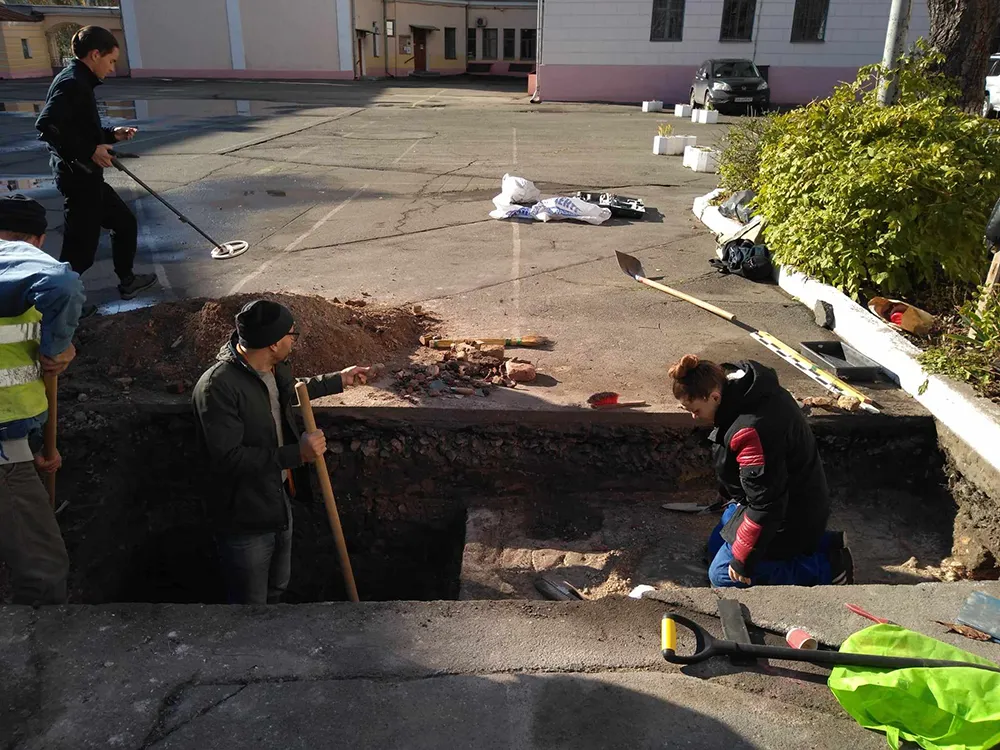
One of the participants in the research published a detailed account and photo report of the progress of the excavations on his Facebook page: Serhii Taranenko:
At the beginning of November the municipal institution “Conservation Centre” of the Department for the Protection of Cultural Heritage of the Kyiv City State Administration began exploratory archaeological research on the grounds of the National University of Kyiv-Mohyla Academy together with the Institute of Archaeology of the National Academy of Sciences of Ukraine (open letter of Vsevolod Ivakin).
AIM. To find the foundations of the Epiphany Cathedral of the Kyiv Brotherhood Monastery, built in the 1690s at the expense of Ivan Mazepa and destroyed in the 1930s by the Soviet authorities.
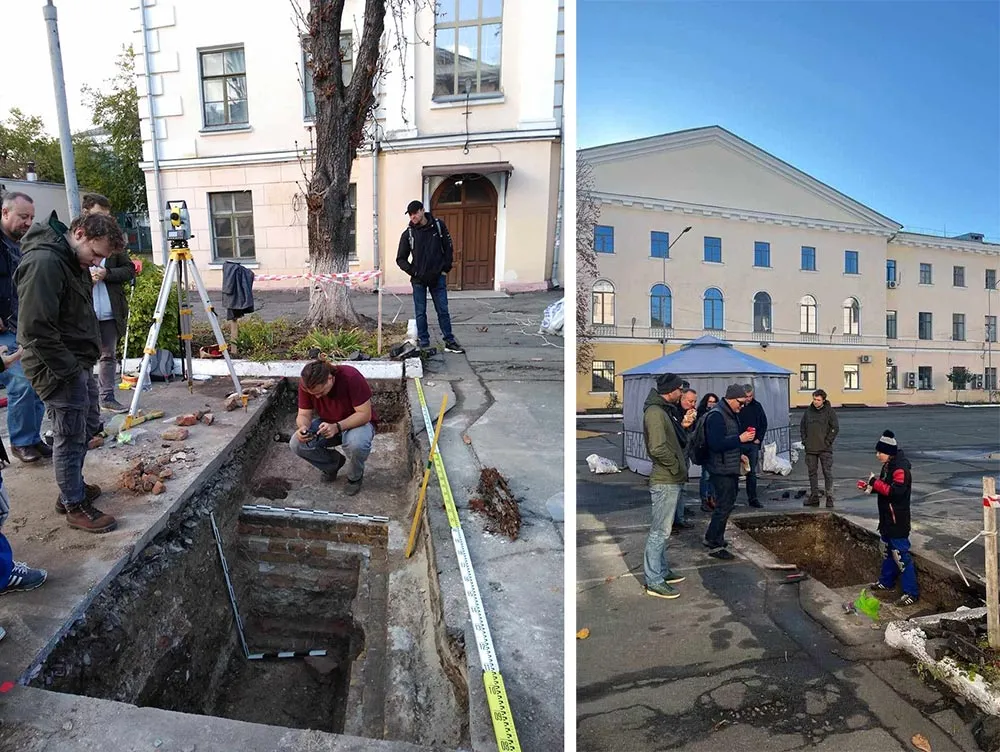
PRELIMINARY RESULTS. An exploratory trench (about 4.2 × 1.2 m) was laid out. Red brick masonry was found at a depth of 0.45 m from the present-day ground surface (1.7 × 1.2 × 0.8 m).
Four types of brick can be distinguished: rectangular, square and two shaped varieties. Most of the brick is rectangular, of good quality, hand-moulded. A single size standard was used: 28.5 × 15.5 × 6 cm. The square brick is half of a rectangular one; its dimensions are 14–19 × 15.5 × 6 cm. The mortar is lime-and-sand, of medium strength, with grains of lime. The joints are 2.2 cm thick.
The walls were built using a header bond. In plan a system can be traced: two rectangular bricks and one half-brick, offset in the next course. The masonry of the wall’s face was damaged while the building was in use and was restored in the late 19th and early 20th century.
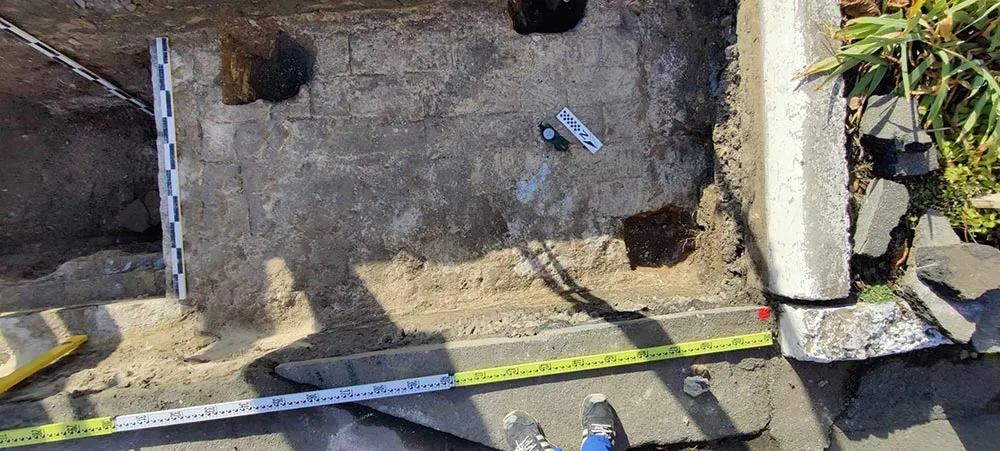
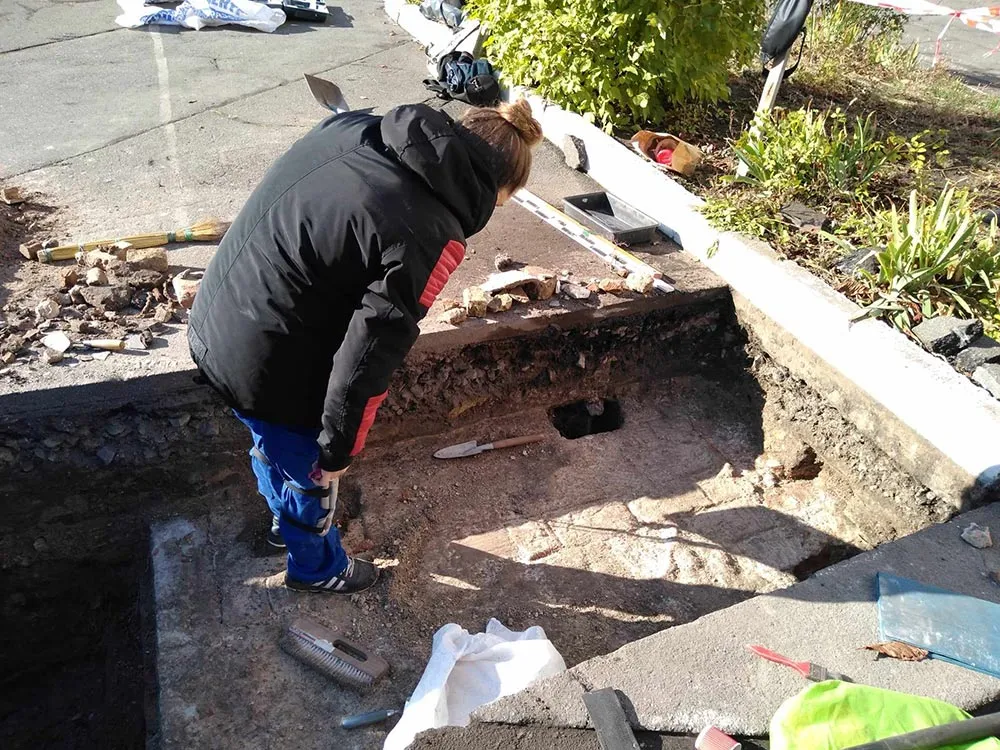
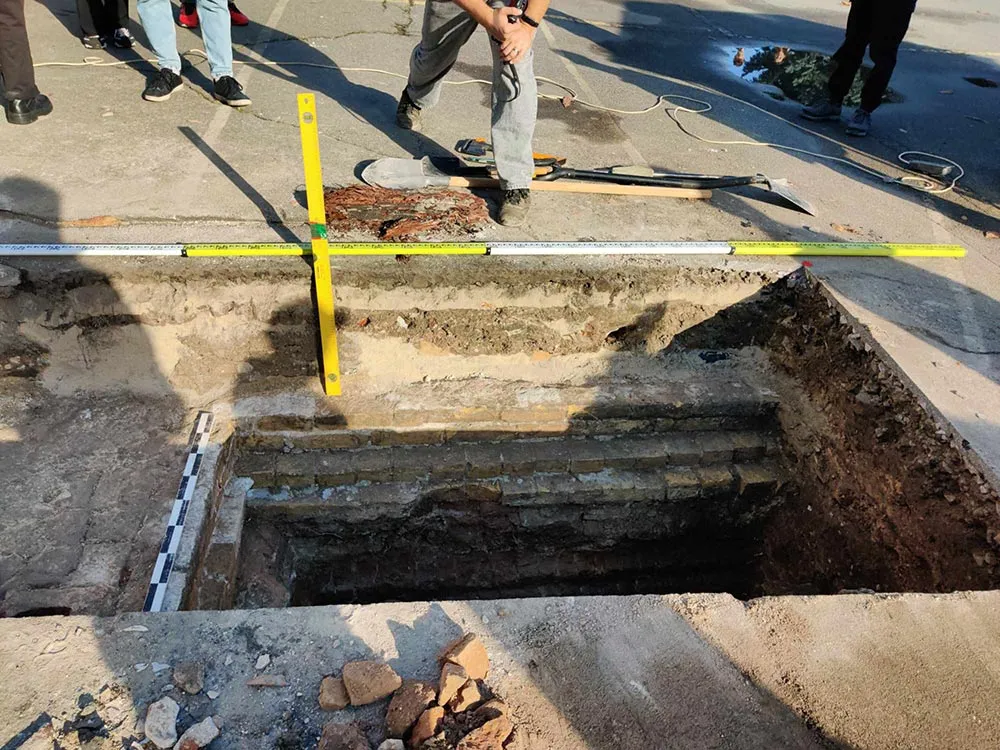
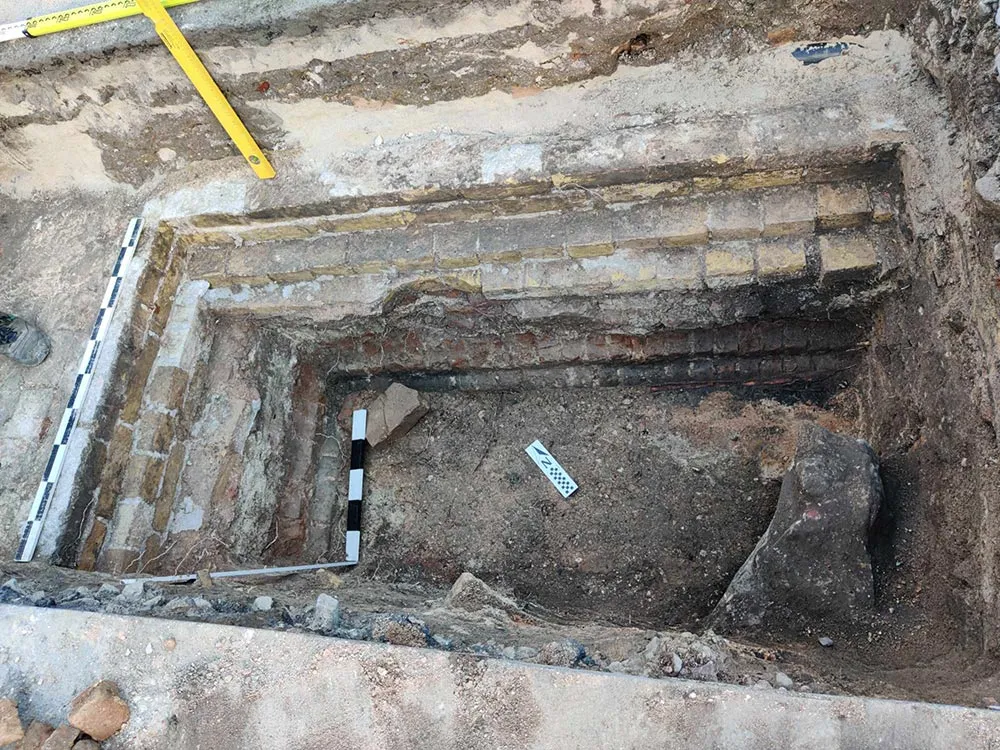
Five courses of restoration yellow brick on concrete mortar were traced. The brick measures 25.5 × 12.5 × 6.5 cm. The joints are 2.7 cm thick. CONCLUSIONS. A lower belt course of the structure was probably recorded.
Decorative relief masonry was quite common in the 17th–18th centuries. In our opinion, the presence of a decorative element indicates that the wall masonry continues further down for at least 0.5 m. The condition of the foundations can be judged after a larger area is opened.
The available data now make it possible to place the plan of the church accurately on a modern topographic base.
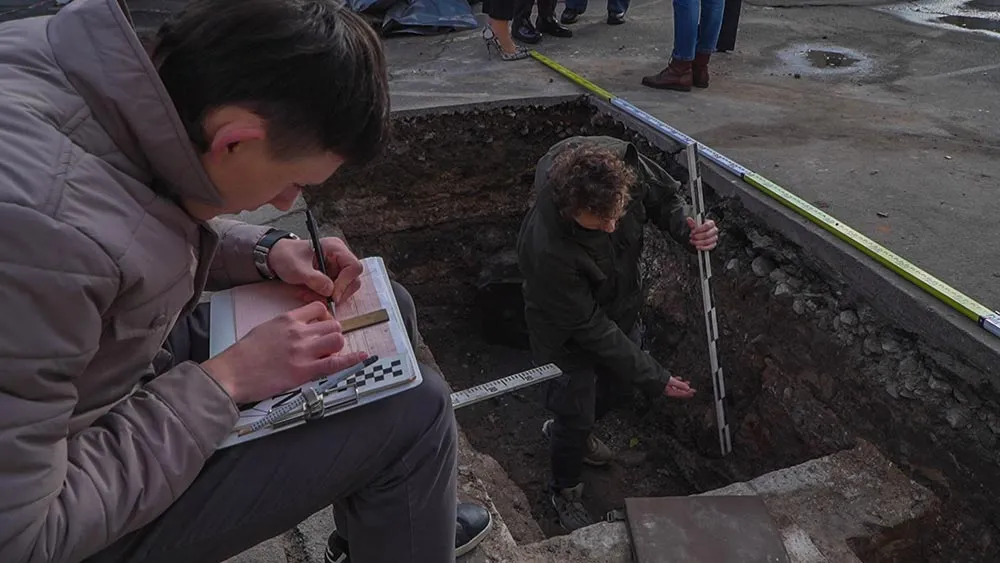
The survey was carried out by Olena Makhota, a researcher in the archaeological research department of the Kyiv-Pechersk Lavra National Reserve. Consultations were provided by Yurii Lukomskyi, Candidate of Architecture.
An author’s method for the conservation of the discovered remains of the church was presented to the scientific and methodological council. By the end of the month the work will be completed and this year’s research will be considered finished.
Students of the National University of Kyiv-Mohyla Academy under the guidance of Oleh Bilynskyi, volunteers and workers from Velykyi Lokh took part in the research.


