

Dorohobuzh. A former princely capital

· 5 min read
The present-day village of Dorohobuzh lies on the E-40 highway. It has about six hundred inhabitants, but it was once the centre of an appanage principality. The village has the oldest church in Rivne Oblast. The text below is from Wikipedia
Dorohobuzh is an ancient Rus town in Volhynia. It is first mentioned in the chronicle (1084) in connection with its being given to Prince David Igorevych. After his death (1112) the Dorohobuzh district was received by Yaroslav Sviatopolchych, Prince of Volodymyr-Volynskyi. It was then ruled by grand princes of Kyiv, in particular Volodymyr Mstyslavovych (1150–1154, 1170–1171), up to Izyaslav Mstyslavych, under whom Dorohobuzh had its own princes, forming a special principality, dependent on Kyiv, together with Peresopnytsia. Subsequently the capital of the principality moved there. At the end of the 12th century Dorohobuzh ceased to be an independent appanage and depended on the appanage princes of Shumsk, Dubrovytsia and Peresopnytsia. Later it belonged to the Princes of Ostroh, who had a castle here. According to a charter of the Lithuanian prince Alexander to the Volhynian land, fairs were held in Dorohobuzh in 1501.
Church of the Dormition of the Most Holy Mother of God. The 19th-century historian O. A. Fotynsky, who visited Dorohobuzh in the 1890s, recorded plinthos in the walls of the building, of the kind used in Kyiv construction of the 11th–13th centuries. It is therefore assumed that the Dormition Church in the village of Dorohobuzh was founded in the 11th century as a monastery church.
In the Ternopil archive materials by an unknown author were found, dated 1925, that is, 25 years after O. Fotynsky, giving different indications: “The Dormition… church in the village of Dorohobuzh was built in antiquity, if not in the 11th century then in the 12th century, then destroyed and rebuilt anew by Kostiantyn Kostiantynovych, Prince of Ostroh, around 1580 on the surviving… foundation.”
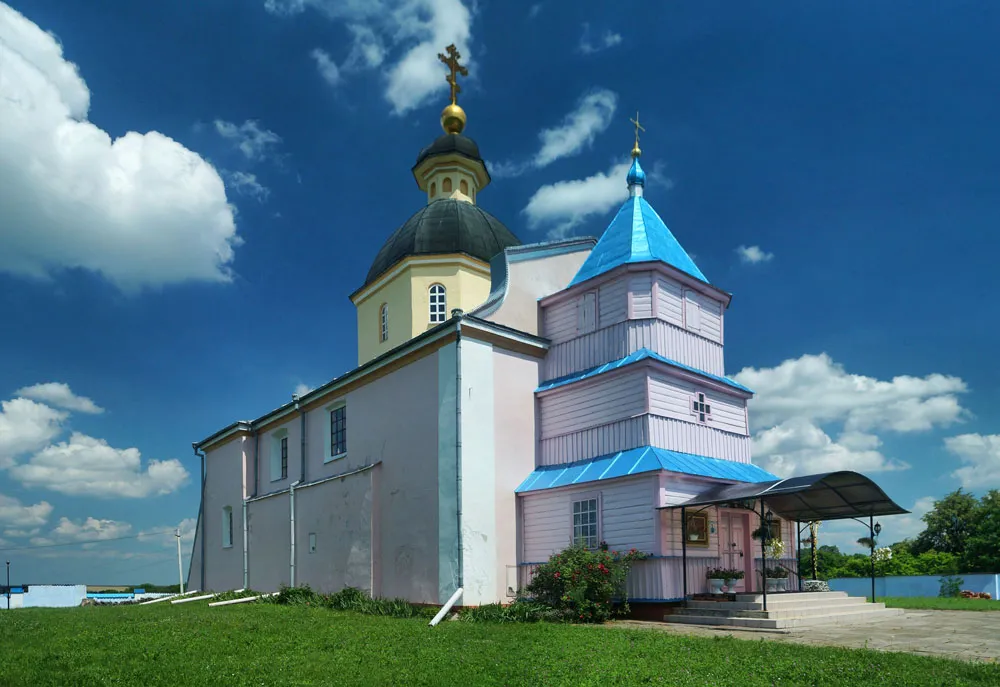
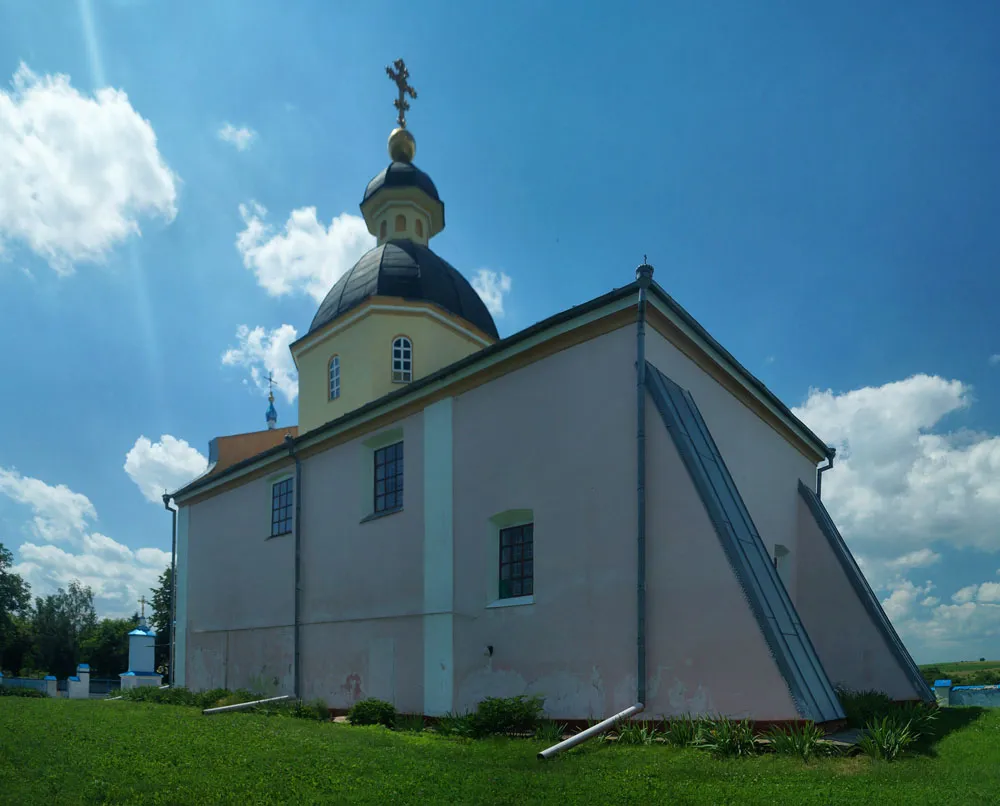
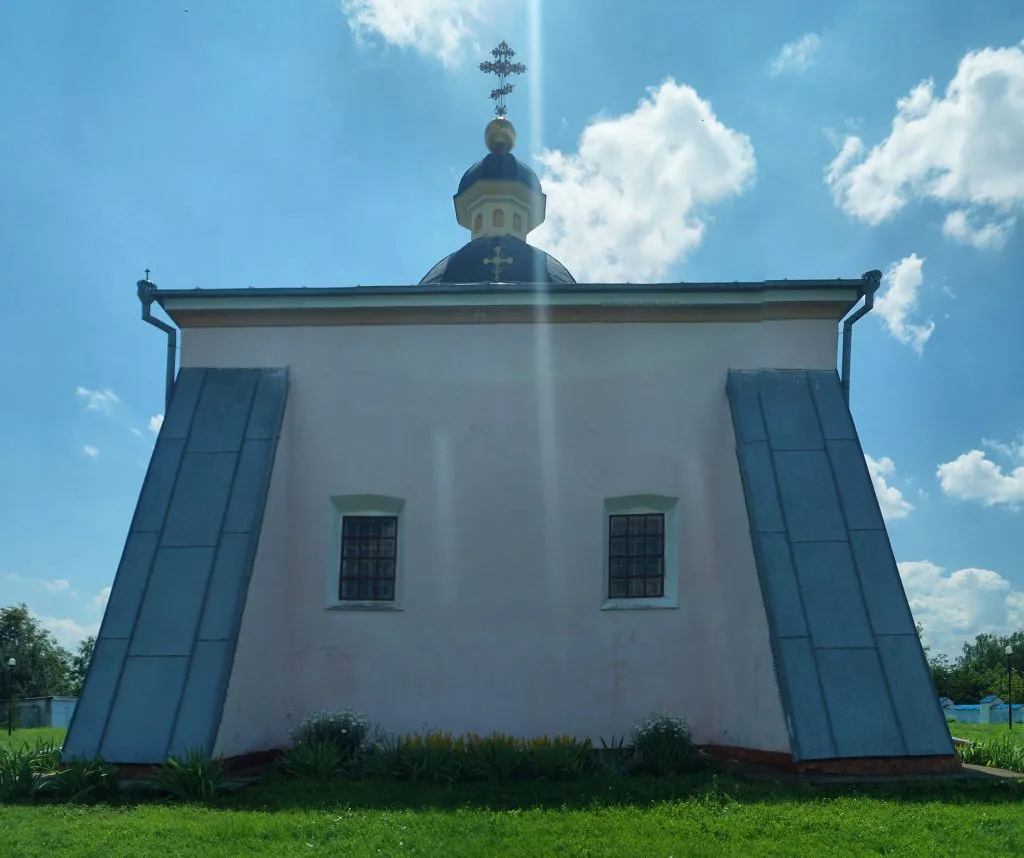
During architectural and archaeological studies of the Dormition Church by H. A. Peskova in 1988, the remains of a pre-Mongol church were uncovered.
The destruction of the Dormition Church could have been caused by a whole series of historical events. These could have been the campaigns of the Golden Horde khans Kuremsa (1253–1255, 1257, 1259), Burundai (1259–1260), as well as raids by the Crimean Tatars.
Thus, in the opinion of most researchers, the Dormition Church in Dorohobuzh was built in the 1170s and was the first building in the architecture of Rus with a single apse, square in plan, with four massive piers capable of carrying a tall drum with a dome, which allows us to see in it the forerunner of the tower-like churches that spread in Rus at the turn of the 12th and 13th centuries.
In the 16th century the fate of Dorohobuzh was linked with the magnate family of the Ostrozky, who, enjoying the support of the people, launched enormous building activity. As a result, large defensive and religious structures were built. The Dormition Church is one of these monuments. Literary sources name Prince K. K. Ostrozky as the founder of this church, although it is possible that a monastery existed before the new church was built.
The limited information about the construction of the Dorohobuzh church, set out in articles mostly of a local-history nature, gives another dating of the church building: the end of the 18th century.
After the adoption of the Church Union, the Dormition Monastery was occupied by monks of the Basilian Order. M. Orlovych gives in his guidebook the improbable fact that the Basilians built the church in Dorohobuzh in the classical style; other authors of the 19th and early 20th centuries speak of the church’s rebuilding in 1786.
In 1892, marking the 900th anniversary of the Volhynian Diocese, restored by Prince Volodymyr the Great, a majestic cylindrical monument, topped with a cross, was erected in Dorohobuzh in front of the Church of the Dormition of the Mother of God.
Later the church was repaired once more in 1936, and in 1950 a wooden two-storey bell tower was added to it, connected to the main facade of the church.
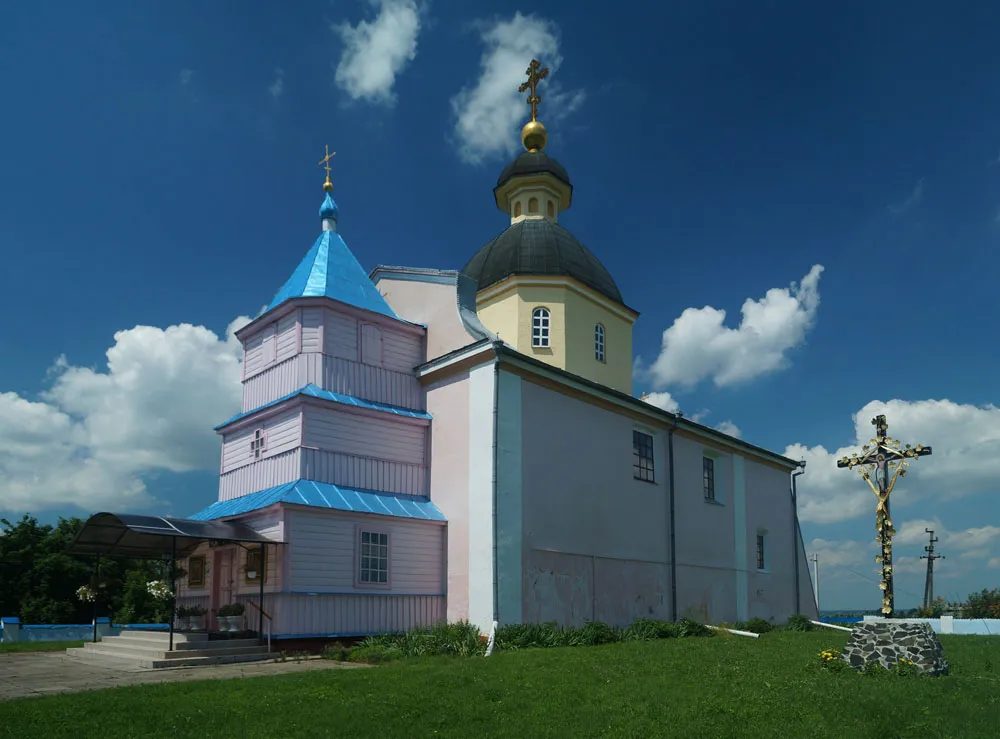
There is a theory that beneath the church there is a hillfort with underground passages, since in the 1920s a human skeleton chained to a wall was found there.
After a long period of desolation in Soviet times, 25 years ago, on 10 November 1988, through the efforts of the community, the church resumed services. And for this to happen, people pressed their case and travelled to Moscow and Kyiv.
The church building, which had almost collapsed, was revived through the joint efforts of the people and the state. Today the church is unrecognizable. The Orthodox community, with the help of benefactors and the authorities, maintains and protects the Holy Dormition Church as a symbol of the spirit and indomitability of the Ukrainian nation. Repairs have been carried out inside the church, the exterior has been tidied up, and new bells have been acquired.
The thousand-year-old shrine, the Church of the Dormition of the Most Holy Mother of God, preserves one of the oldest icons of the Mother of God to have come down to us through centuries of hardship, from the princely-era Dorohobuzh Monastery of the 12th century. It is one of the rare monuments of ancient Ukrainian painting, of the Volhynian school of icon painting. The miraculous icon of the Mother of God, “Our Lady Hodegetria of Dorohobuzh”, is painted on canvas glued to a wooden board. The Mother of God is depicted on it to the waist, with the Christ Child on her left arm. In 1769 the icon was adorned anew with a silver oklad of artistic chasing. Its original origin is unknown; perhaps it was transferred here from the Monastery of the Transfiguration. From historical sources we learn that this image was renewed in 1577. After the renewal the 12 apostles were painted around the Mother of God.
Text from Wikipedia, photos by Roman Malenkov.


