

Details emerge about the restoration of the monuments of the vanished town of Chervonohorod
As “Ukraine Incognita” reported earlier, in Ternopil Oblast it is planned to restore the ruins of a church and palace of the 17th–19th centuries near the village of Nyrkiv. This is all that remains of the once famous and large town of Chervonohorod.
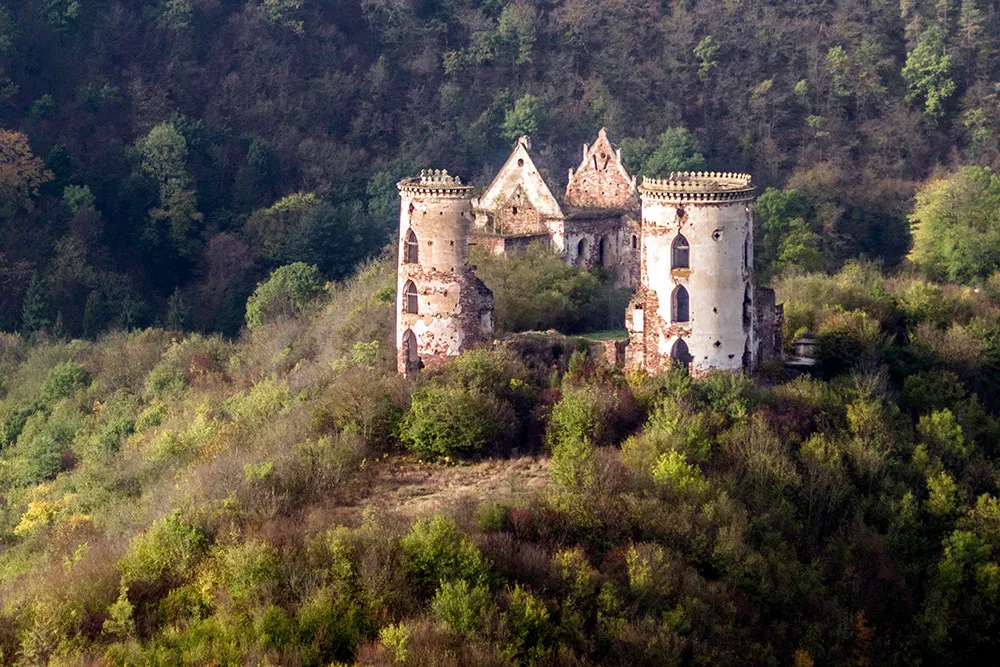
The palace (“castle”) and church of the vanished Chervonohorod. Photo: Dmytro Poliukhovych
As soon as this news was made public, many anxious comments appeared asking whether the restoration in question would end in the final destruction of the monument. All the more so as the work will take place under the auspices of the OCU, which owns the ruins of the palace and church. Fears were even voiced that the ancient church faces the sad fate of the Carmelite monastery and church in Terebovlia, which, as a result of reconstruction by the faithful of the UAOC, turned from an architectural masterpiece into a gaudy, boorish something devoid of the slightest artistic taste and aesthetics. They say the new owners might stick domes of shining damask steel and other “beautifications” onto the ancient Gothic church.
For now, if we believe the reports of the patrons who will finance the work, the monument is not threatened by such a fate. This follows from an extract from the Memorandum, which representatives of the Dzhurynski family, who promise to invest in the restoration, published on Facebook.
The key agreements of the Memorandum are:
- The Dzhurynski family, through the Foundation it established, intends to act as a patron and make efforts to preserve, restore and develop the ruins of the palace and church, as well as the area near the Dzhuryn (Chervonohorod) waterfall, in the interests of the local community, the Eparchy, the Orthodox Church of Ukraine and Ukrainian society as a whole.
- Neither party to the Memorandum pursues commercial or any other goals than those stated above.
- For the reconstruction of the ruins of the palace and church, a corresponding project will be commissioned in compliance with the requirements for the treatment of architectural monuments.
Finally, the improvement of the area around the Dzhuryn waterfall, if the relevant approvals are obtained, as well as the process of reconstructing the ruins of the palace and church, will begin only after the end of martial law.


