

Judges allowed a company close to Pylypyshyn to destroy an outstanding archaeological monument

· 4 min read
In Kyiv, the Kytaiv hillfort, an archaeological monument of national significance, has been handed over for development. On 21 February it became known that the Commercial Court of Kyiv had ruled in favour of a company planning to use the valuable territory for high-rise buildings, reports Informator.
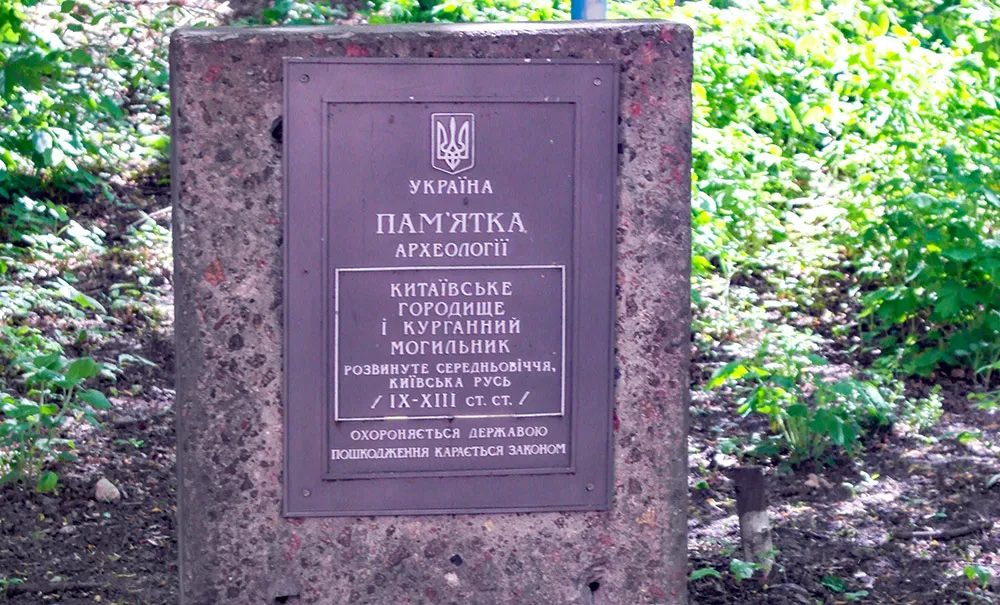
Photo: Wikipedia
The Commercial Court of Kyiv left the valuable land, on which stands the archaeological monument of national significance “Kytaiv hillfort and burial-mound cemetery”, with the company “Kyiv Vegetable Factory”. This concerns a 4-hectare plot that should be protected by law. For now, the Prosecutor General’s Office has time to try to appeal these decisions. As the community “Tsehla” reported on 21 February, “Judge Palamar rejected the claim of the Office of the Prosecutor General to cancel the transfer of the monument for development”.

The company is within the sphere of influence of Viktor Pylypyshyn (left) and Kostiantyn Yalovyi (right). Photo: Informator
Earlier, in January 2024, Nataliia Yahicheva, a judge of the same Commercial Court, did not allow the Prosecutor General’s Office to take back 21.54 hectares in the Kytaiv hillfort, which had also been transferred into private ownership. In that lawsuit the judge was asked not only to take the land from the company and declare the Kyiv City Council’s decision on its transfer unlawful, but also to take the land from the Kyiv community.
In total, in the courts of first instance the Prosecutor General’s Office failed to protect 25.54 hectares of land from development. Under the rules, there is time from the issuing of the decisions to try to appeal them.
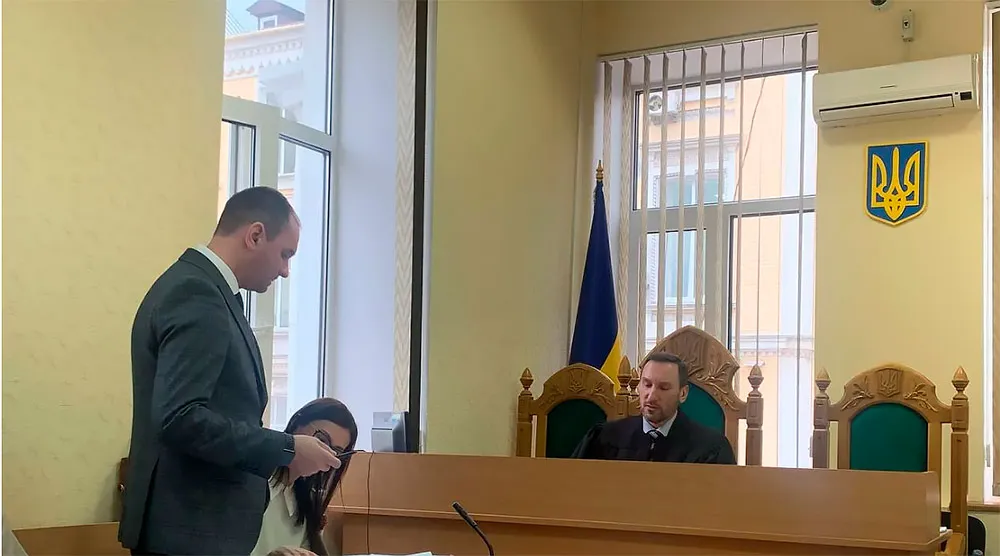
Photo: Informator
Recall that Kytaiv is an area on the southern outskirts of Kyiv in the Holosiivskyi district, in the eastern part of the Holosiivskyi Forest. The Kytaiv archaeological complex is located here, a historical monument called “Kytaiv hillfort and burial-mound cemetery”. Part of the territory, which should be protected from development, was handed over for the construction of a residential complex.
How the archaeological monument ended up in private ownership
In August 1997 the Institute of Horticulture of the Ukrainian Academy of Agrarian Sciences received from the Kyiv City State Administration the right to use land plots with an area of 71.45 hectares in the Kytaievo, Samburky and Bolharske tracts.
Under Mayor Oleksandr Omelchenko, in December 2004, the Kyiv City Council leased 59.06 hectares, taken from the institute, to the joint-stock company “Kyiv Vegetable Factory” for 15 years.
The Cabinet of Ministers recognized the Kytaievo tract as a monument in 2001, so Omelchenko’s city administration should not have given away such valuable land, since it was protected. Nevertheless, the land was transferred into private ownership “for commercial agricultural production”: in the Kytaievo tract the factory received two plots of 4.82 and 21.61 hectares; in the Bolharske tract, 9.50 hectares; in the Samburky tract, 23.13 hectares.
As for Kytaievo, in 2007, already under Chernovetskyi, the city council changed the designation of these two plots in a single day and reclassified them as land for residential and public development.
Historical background
As the website of the Museum of the History of the Church of the Tithes reports, the Kytaiv archaeological complex is an archaeological monument of national significance (No. 260026-N) with several components: an ancient hillfort, two burial-mound cemeteries, a settlement and a complex of caves, together occupying a 67-hectare area. Territorially the complex can be divided into three parts: western, northern and southern. The first includes the settlement, part of which is occupied by the Kytaiv Holy Trinity Monastery for men of the UOC (Moscow Patriarchate). In the northern part of the complex are the hillfort, the caves beneath it and the burial-mound cemetery adjoining the ancient fortification. In the southern part there is another burial-mound cemetery and another group of caves.
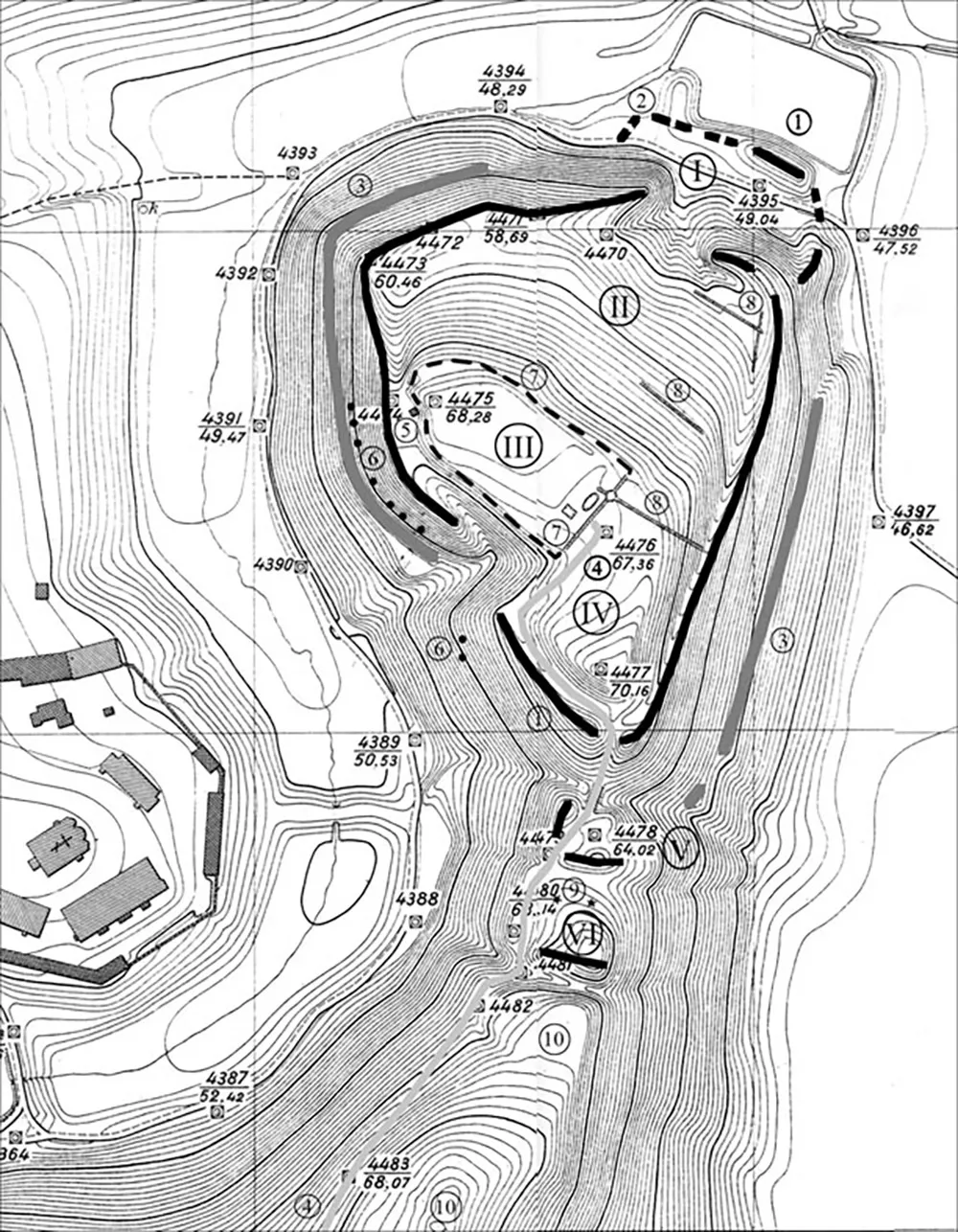
Plan of the Kytaiv hillfort based on the 1927 topographic plan
The Kytaiv settlement occupies the sloping banks of the left side of a stream and covers about 30 hectares. Besides the monastery, located in the central part of the settlement, the area of the latter is partly built up with residential and other buildings on Yahidna, Kytaivska and Pyrohivskyi Shliakh streets. Hand-modelled pottery of the Trypillia culture (3rd millennium BC) and of the Early Iron Age (Scythian) period (1st millennium BC) has been found at the monument, along with numerous materials from the time of Kyivan Rus (10th–13th centuries) with the remains of dwellings with clay ovens. During research at the settlement in recent years, many fragments of pottery of the 14th–16th centuries were also found, and a structure of the second half of the 15th century was partly excavated, attesting to the existence of a village here at that time.


