Hlynsk. Remains of an Old Rus town

· 3 min read
The history of the village of Hlynsk in the Romny region – earlier a district centre, earlier still a Cossack sotnia town, and earlier still a settlement of Kyivan Rus times, known since 1149 – is described in detail and interestingly in Volodymyr Parkhomenko’s historical essay “An outline of the history of Hlynsk”, which you can read here, or on Wikipedia, to which it has also been transferred. It reads with pleasure and in one breath.
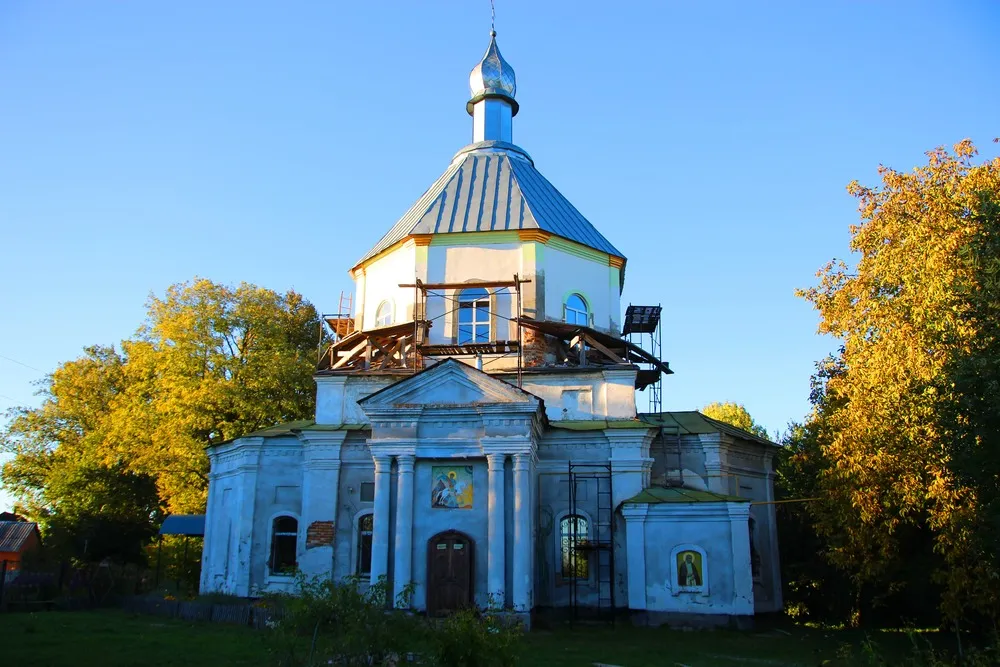
Several interesting monuments have survived in Hlynsk. First of all, the St. Nicholas Church, of quite original architecture unlike others, a transition in time from late Baroque to Classicism.
The first church was built as early as 1709 and was wooden, funded by a baptized Jew, Anton Antonovych Kryzhanivskyi; in 1794 a new one was built in its place from local brick (the brick factory of the landowner Zarudnyi), and the vestibules and bell tower were added only in the 19th century. It is known that at the beginning of the 20th century a women’s literacy school and a church parish guardianship operated at it. In 1930 the Bolsheviks closed the church, destroying the bell tower and the iconostasis.
Since the late 1980s the Church of St. Nicholas has been used again for its purpose, and in the early 1990s it was repaired.
There was a period when Hlynsk had as many as 4 churches at once:
Besides the above-mentioned St. Nicholas, in the 1760s-90s new buildings were erected for the Cathedral Church of the Dormition, the Church of the Resurrection of Christ, and the cemetery church of the Nativity of John the Baptist and Great Martyr George.
The Dormition church operated until the end of the 1850s, then the church building fell into disrepair and was dismantled.
The Resurrection church stood until the 1930s, when its bells were thrown down, its domes dismantled and it was turned into a club, which burned down in a fire in 1968.
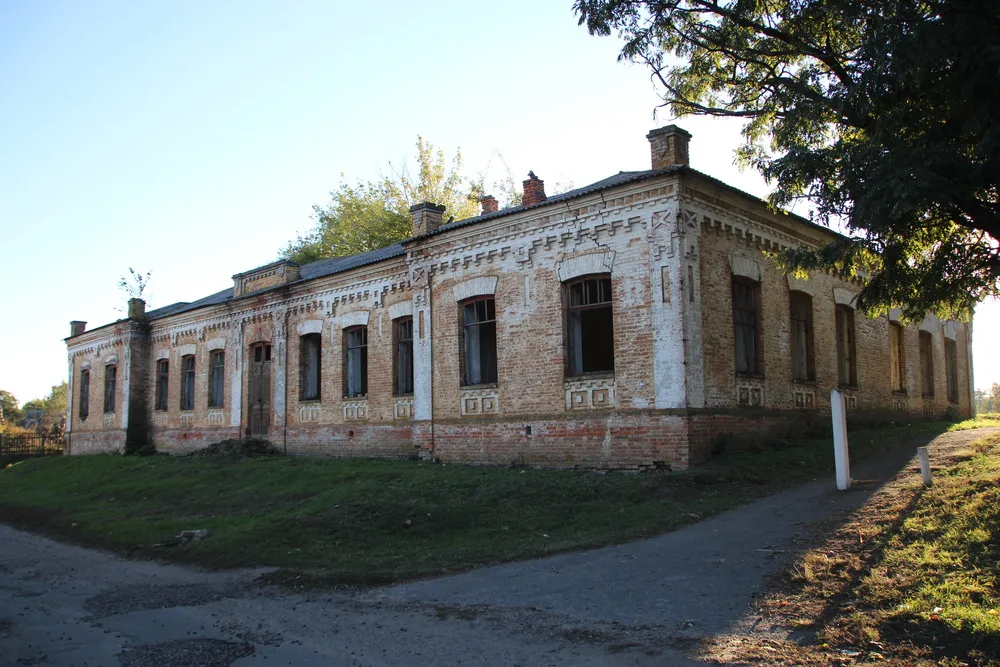
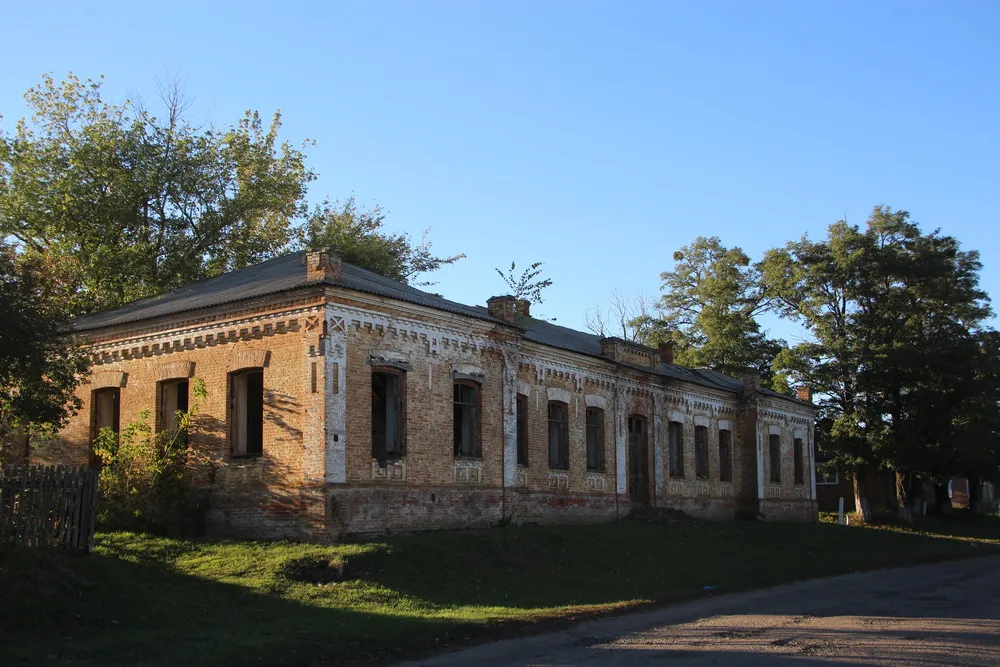
The village also has a surviving building that is most likely a zemstvo school. It could not be identified precisely, as there were several schools. The first three-year zemstvo school was opened in Hlynsk at the end of the educational reform, in 1865. In 1909 a four-grade school was opened, with an entrance exam, on the basis of the elementary zemstvo school. In 1910-1912 the zemstvo built two more brick school buildings in Hlynsk.
In 1918, under the Hetmanate, a Ukrainian gymnasium was opened in the town, on the basis of which a three-year pedagogical school soon began to work.
Or perhaps it was the training pottery workshop that was opened in 1900. A year later the zemstvo built a teaching building for the workshop. The workshop was financed at the state level, receiving 600 rubles annually. The Hlynsk potters were famous throughout the empire, fulfilling orders even for the imperial court. The successes of the Hlynsk masters led to the workshop being reorganized in 1909 into a three-year school. German specialists were engaged to teach, and graduates were sent to various ceramic enterprises of the empire. In 1910-1911 at an exhibition in St. Petersburg the school was awarded a diploma and a silver medal. After that the school received additional financial aid from the tsarist government. Another teaching building was constructed, the workshops expanded, a dormitory and apartments for employees built.
The school also took part in district and governorate exhibitions. Two items that received a gold medal at the exhibition in Paris are held in the Hermitage museum.
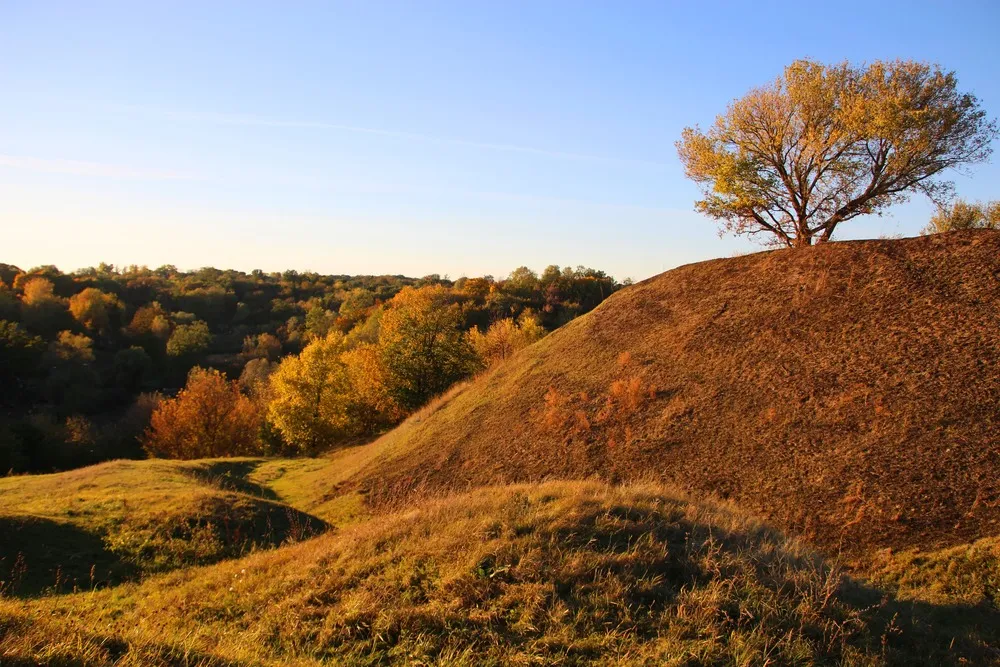
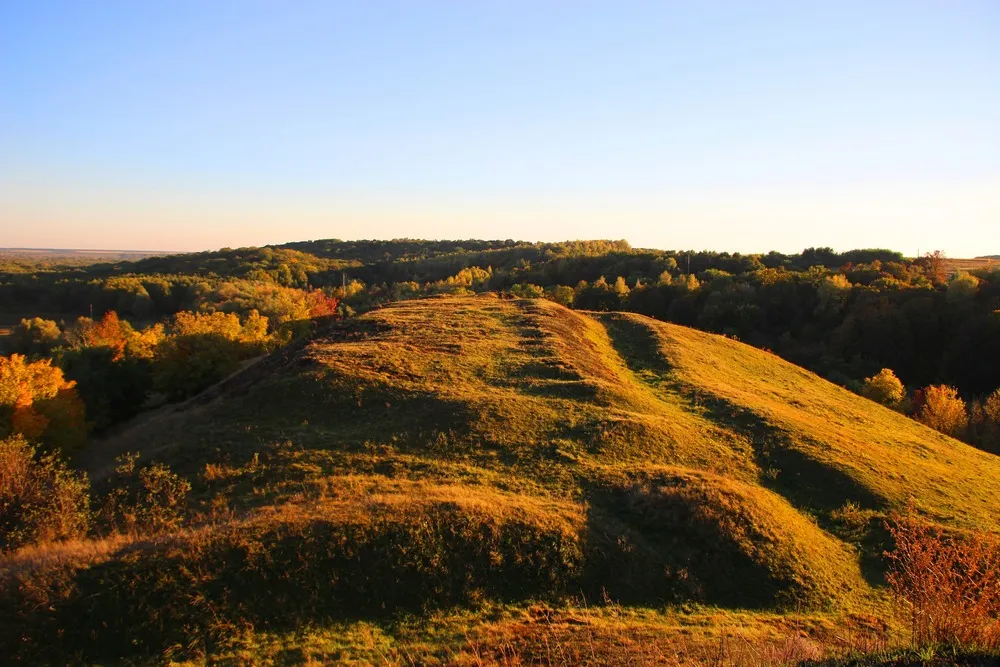
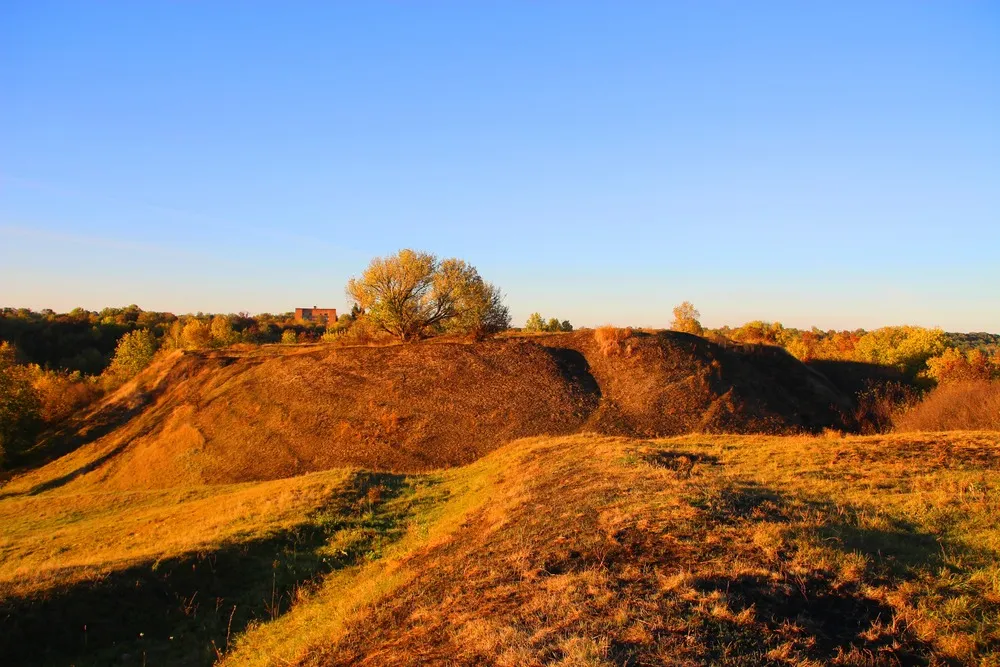
Hlynsk has two multi-layered hillforts, one in the Horodyshche tract, the other on Zamok hill. The deepest lie the remains of Neolithic camps, above them the remains of Scythian settlements, and closer to the surface those of later Slavic settlements.
Text and photos by Ihor Dorozhko, Oleh Hodyna and Maksym Nazarenko.