Plavynyshche

· 2 min read
The village of Plavynyshche was founded around 1624-1626, when residents of the Romny area began to leave their settlements en masse, fleeing the oppression of Yarema Wiśniowiecki, then the owner of the lands, and Sinozhatskyi, the official in charge of the Romny stockade, issued a decree to create new settlements around Romny.
The first settlers of Plavynyshche were “Lithuanian people”, and the settlement had 10 households. The village was called Plavynyshche because it lay in floodplain marshes, so that during floods one sometimes had to reach Romny by boat.
Documents show that Plavynyshche was first transferred in 1700, by a universal of Ivan Mazepa, to the Romny sotnyk Yakiv Lukianov, and in 1709, after the sotnyk’s death, Hetman Skoropadskyi, in recognition of his special services, reassigned the village by his universal to Yakiv Lukianov’s widow and his sons Fedir and Stepan.
The Lukianovyches, which is what the surname Lukianov eventually turned into, remained landowners in the village right up to the events of 1917, though no longer the sole ones and no longer so wealthy.
In 1861, when serfdom was abolished, the landlords’ peasants received land, and the Stolypin reform gave peasants the right to take land as a separate “otrub” holding with the right of disposal. Some of them grew rich, became middling landowners themselves, and were able to enlarge their land holdings by buying land from those same Lukianovyches. Among them, in Plavynyshche the following are known: Prokip Burmaka, the owner of a mill; the Komisars, who built a brickworks; Heller, who made a fortune selling vegetables; the brothers Yakiv and Vasyl Yaremenko, who had a brickworks and an oil mill; and the landowner Panas Zamura. And of the last Mrs Lukianovych it was told that after the events of October she was driven out of her manor and begged for a living.
In 1907 a school, the “Two-class People’s School”, was built in the village. It was an ordinary peasant house that stood across the road from the present school. In 1913 the zemstvo built a new school, which now houses the village council.
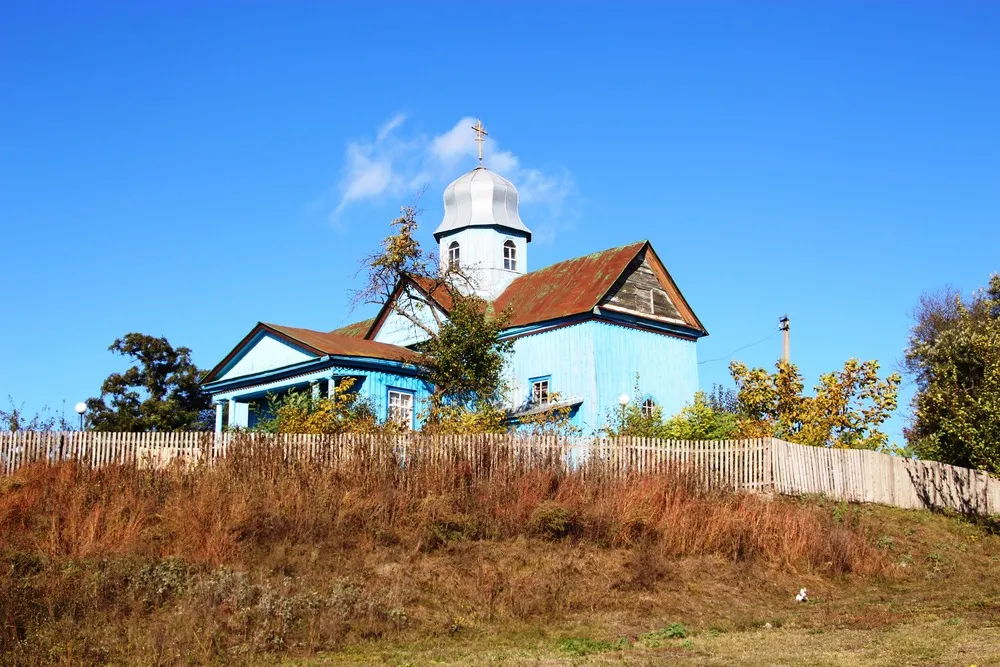
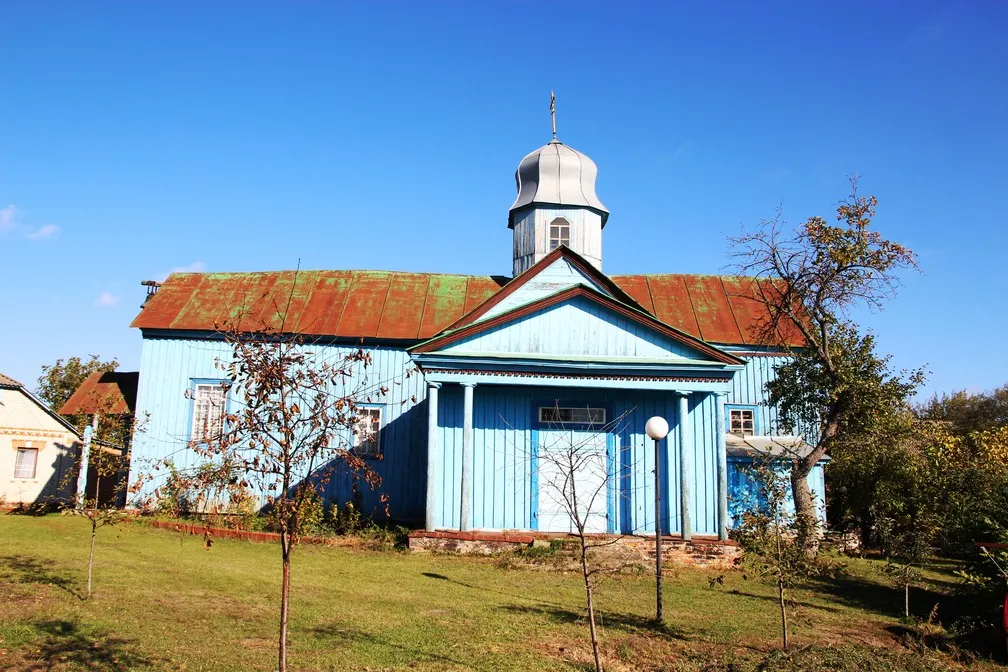
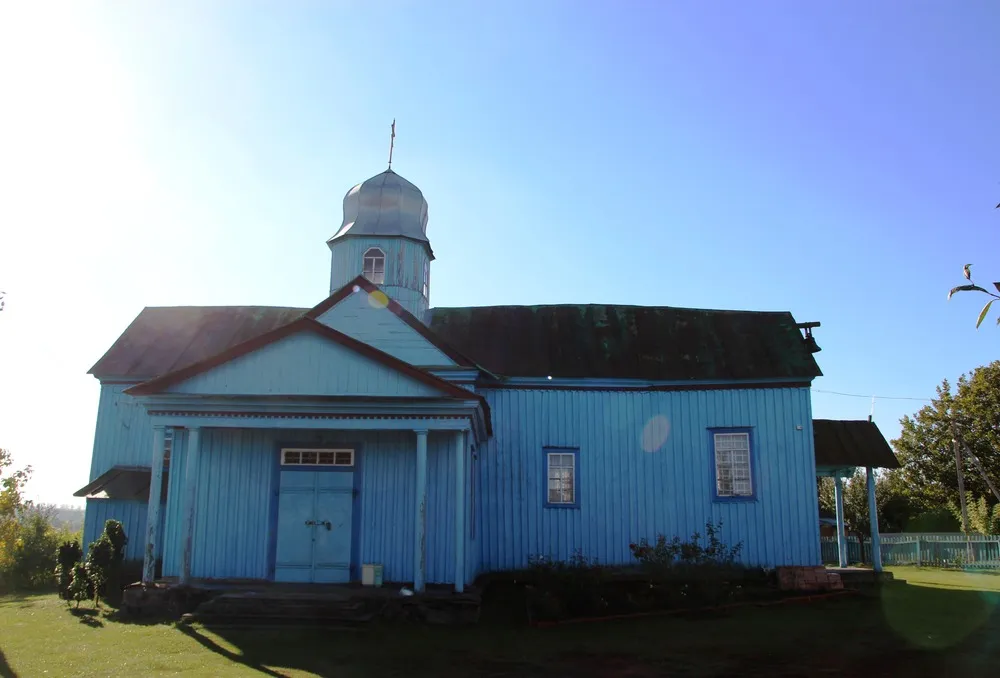
In 1776 the Church of St. John the Theologian was built in the village. The church owes its construction to five Cossack families who gave their land for the church, namely the Taratuns, Kostenkos, Petrashes, Kyrychenkos and Symonenkos. Some time later a bell tower was added to the church, with a bell weighing 90 poods, which has not survived to this day.
We can no longer find out what the church originally looked like, but we can say for certain that the tops were lost in the 1930s, when the church was converted into a grain store, or perhaps a club. In November 1944 the church was returned to the parishioners and they were allowed to hold services in it, which have continued to this day.
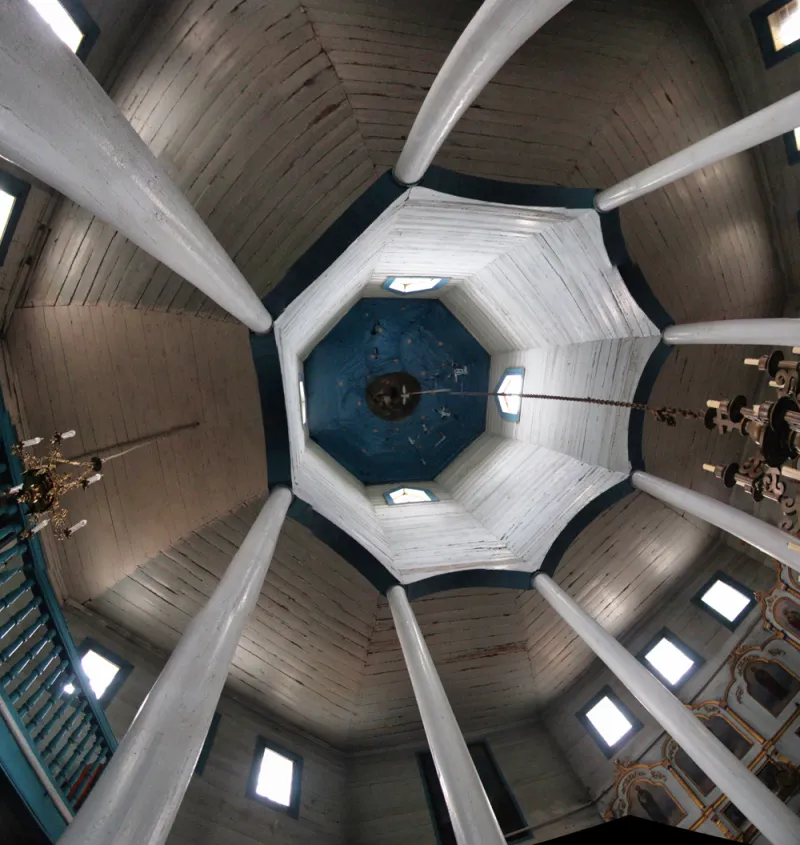
The church interiors can be seen here.
Text and photos by Maksym Nazarenko, Oleh Hodyna and Ihor Dorozhko.