

The Church of the Assumption in Yazlovets reveals historical secrets

· 8 min read
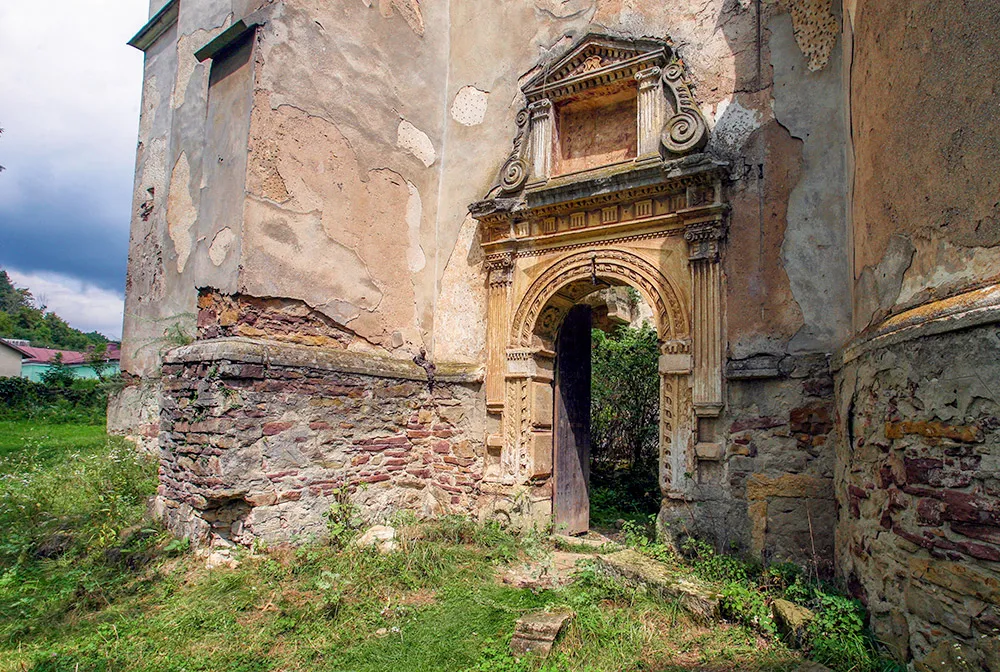
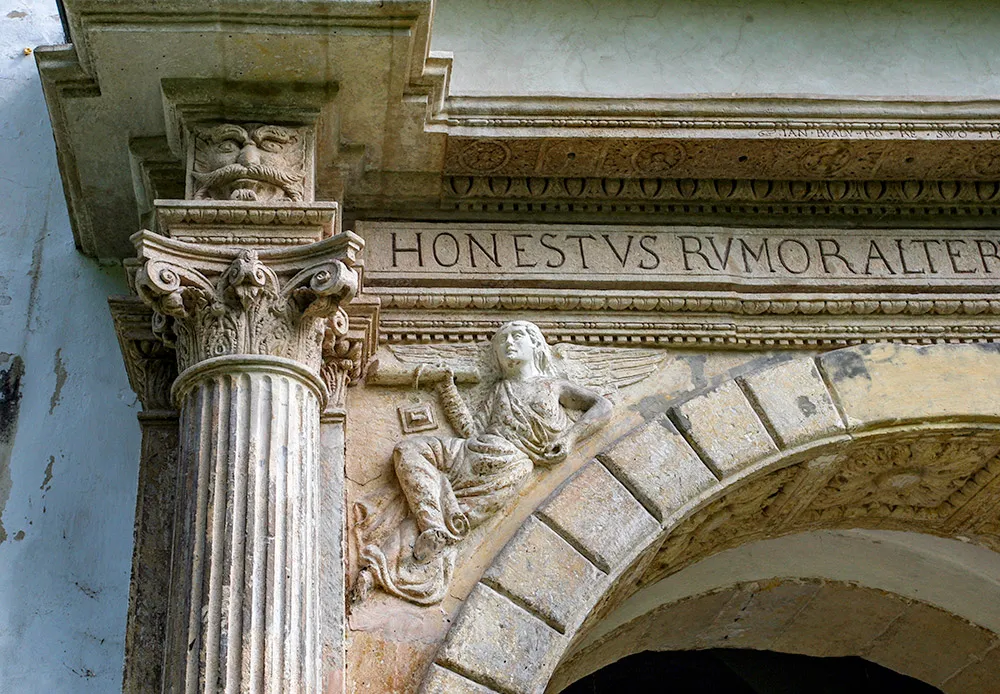
The entrance to the 16th-century church is adorned by a remarkable Renaissance portal
Three years ago, during their travels around Galicia, the “Virtual Vytrishky” (Virtual Gawkers) made a discovery of at least national significance. It was a unique body of graffiti from the 16th-18th centuries found in the abandoned Church of the Assumption of the Blessed Virgin Mary in Yazlovets near Buchach in Ternopil Oblast. The find really did prove unique: until then, all the large bodies of old graffiti in Ukraine had been tied exclusively to churches of the princely era (we will explain why below). Moreover, this was the first Roman Catholic church in Ukraine with such an enormous number of old inscriptions and drawings: there are at least three or four hundred of them here. Perhaps even five hundred, since some inscriptions are barely scratched and you do not notice them right away.
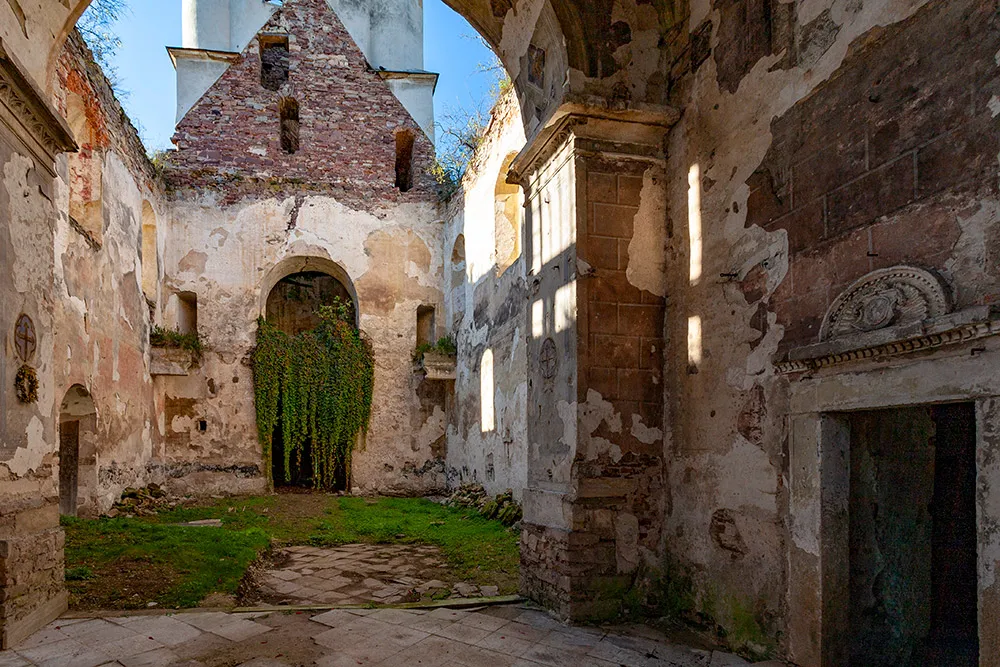
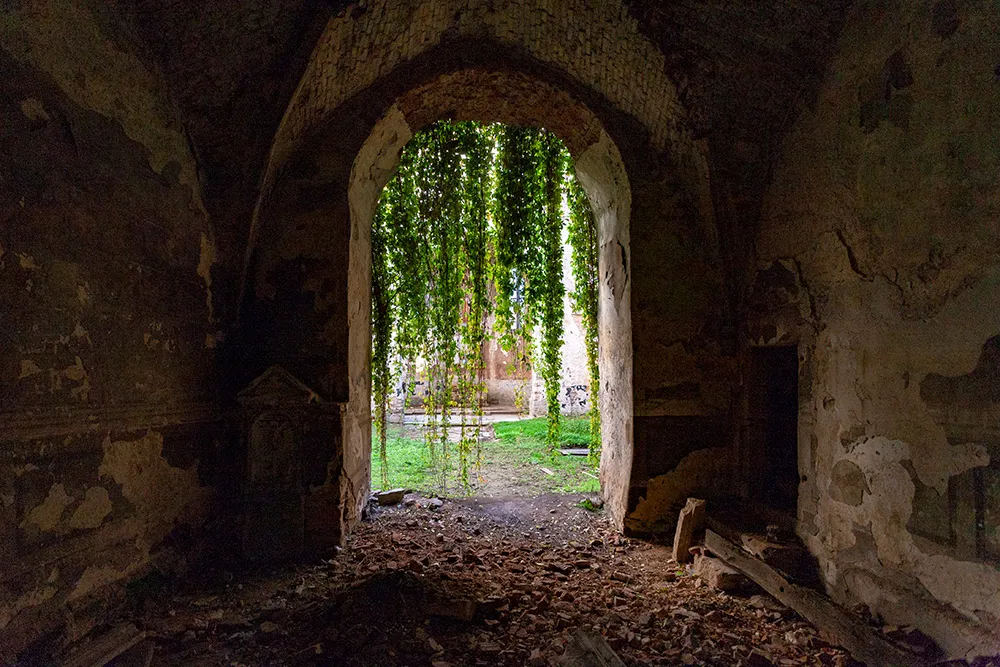
Graffiti cover the walls of the choir loft (where the wild grapevine hangs down)
As the “Virtual Vytrishky” were once told by perhaps the best specialist in medieval and Renaissance graffiti in Ukraine, Doctor of Historical Sciences Viacheslav Kornienko, deputy director general of the “Saint Sophia of Kyiv” National Reserve, the main body of 16th-18th-century inscriptions left on church walls is the work of Polish and Ukrainian nobility. They usually contain a personal and family name, sometimes the year or date of the visit to the church. In this way the “graffitist” once recorded his visit to a particular church or his pilgrimage to it. Besides, according to the ideas of the time, this was supposed to help ensure that prayers spoken in the church would be heard and requests to God or some Saint would be granted.
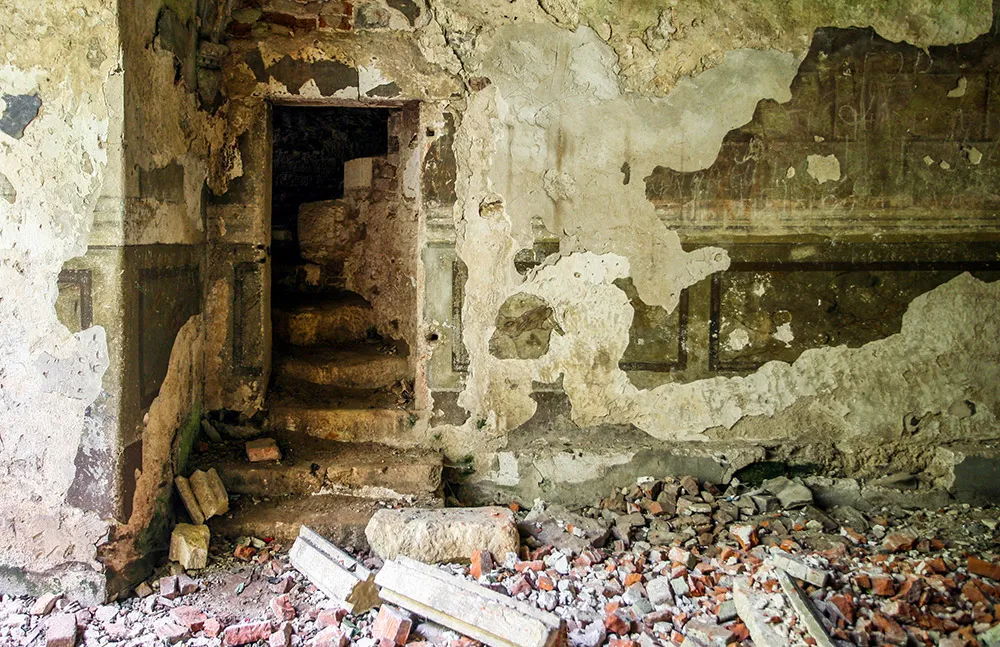
The entrance to the choir loft
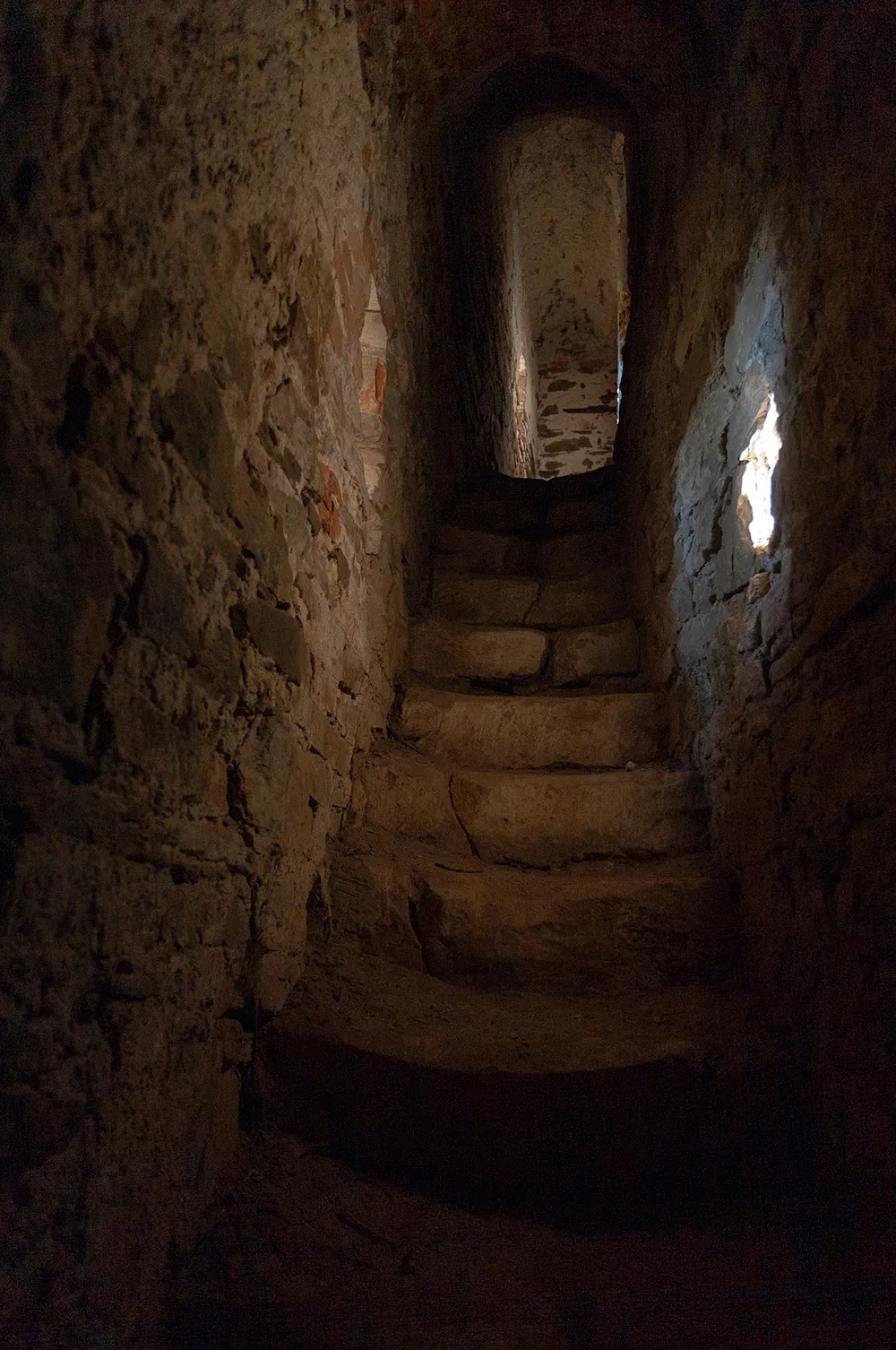
The stairs to the choir loft
Also, according to medieval, Renaissance and early modern beliefs, any inscription in a church was automatically sanctified by the church itself. Accordingly, the sanctification of one’s own name and surname was supposed to bring additional well-being, so a church autograph also served as an amulet.
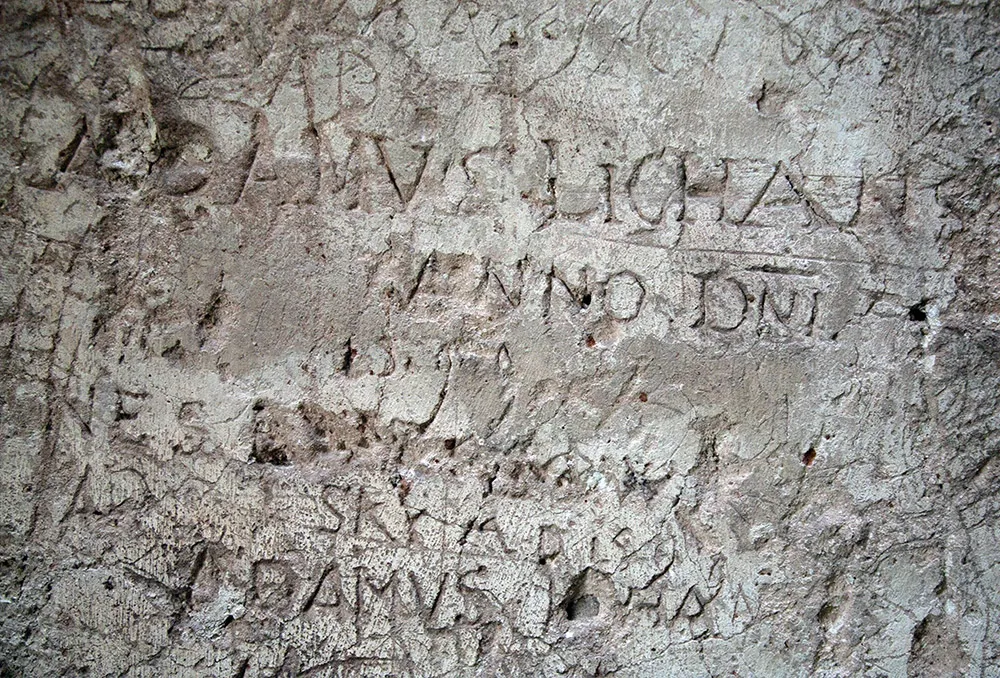
Two inscriptions dated 1599
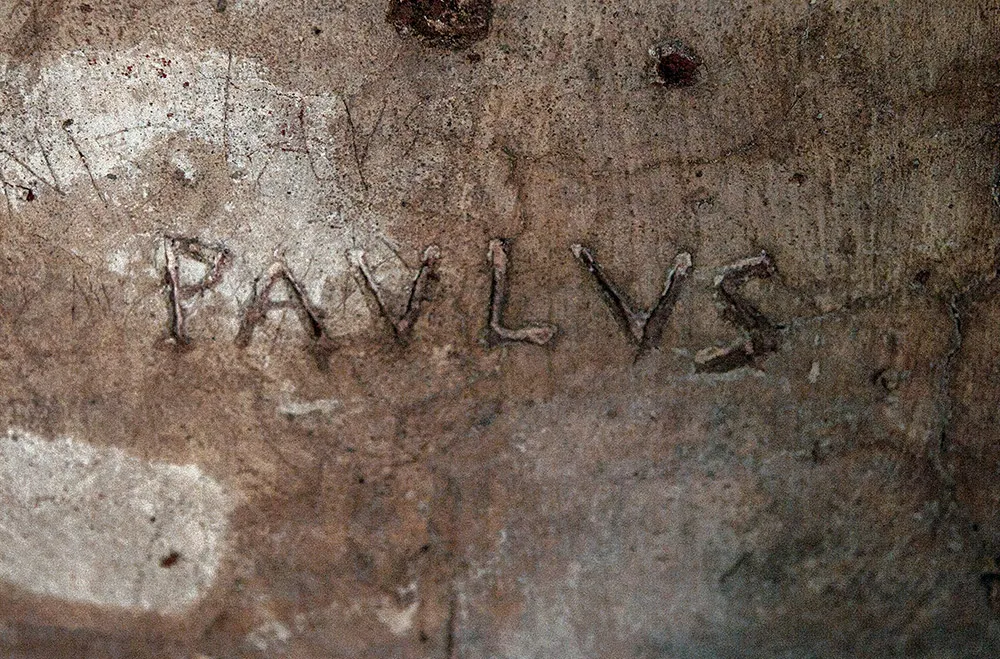
A very beautiful and neat inscription left by a Dominican monk named Paul. 16th century
Scratching one’s name on church walls was once a very common and widespread practice. But today church graffiti, especially in large numbers, are a great rarity. In most cases they are all hidden from researchers by layers of later centuries, or simply destroyed by time.
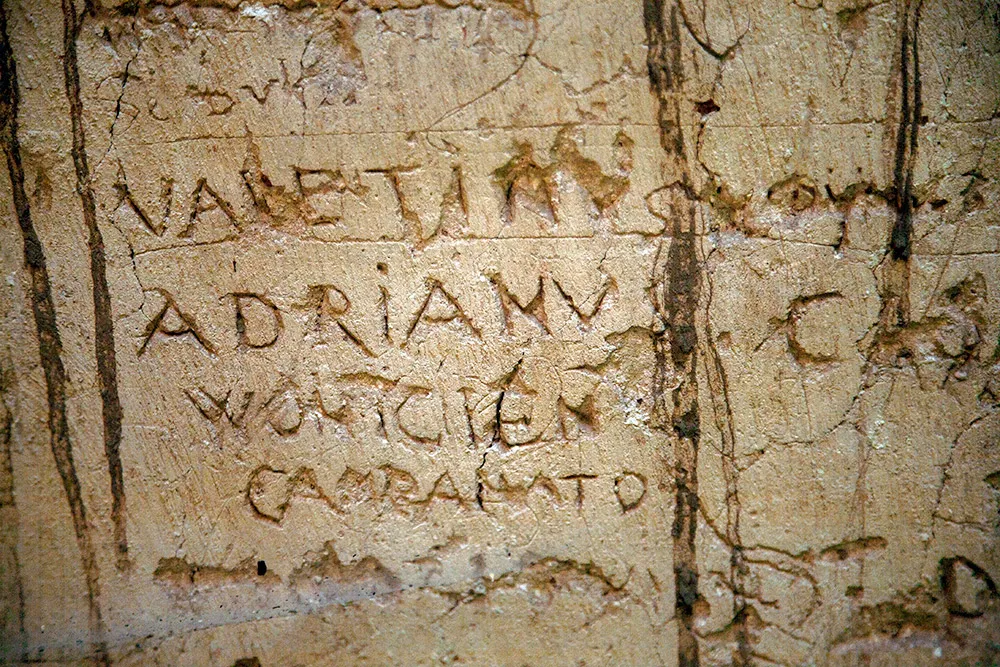
Inscriptions (judging by the lettering) of the 17th century
Such graffiti are usually found during large-scale restoration work, as happened with the inscriptions of Saint Sophia of Kyiv and other churches of Kyivan Rus. They were discovered when authentic frescoes began to be freed from the layers of numerous renovations.
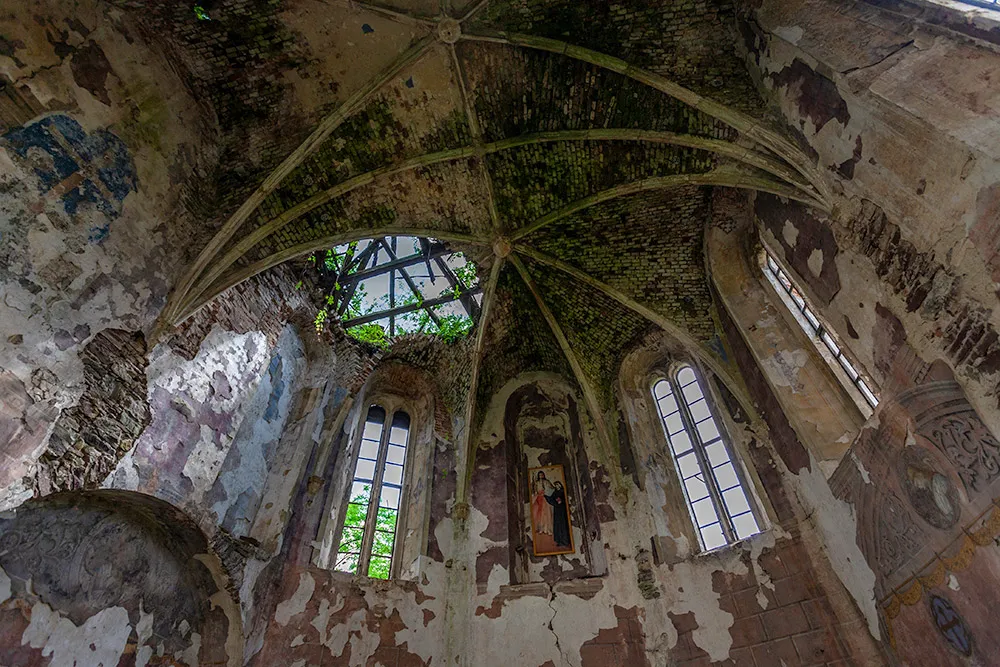
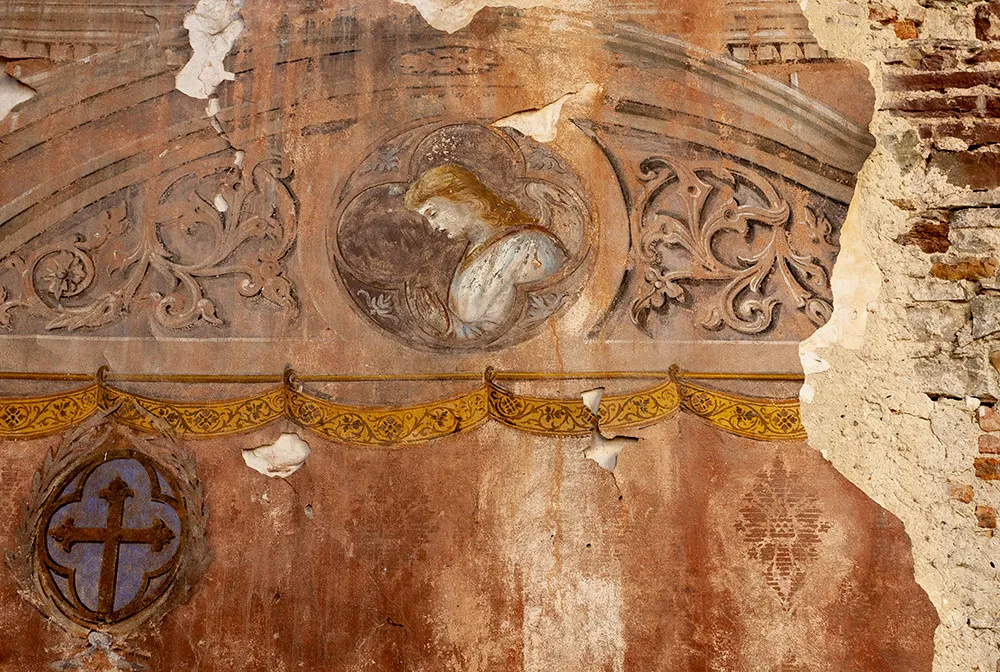
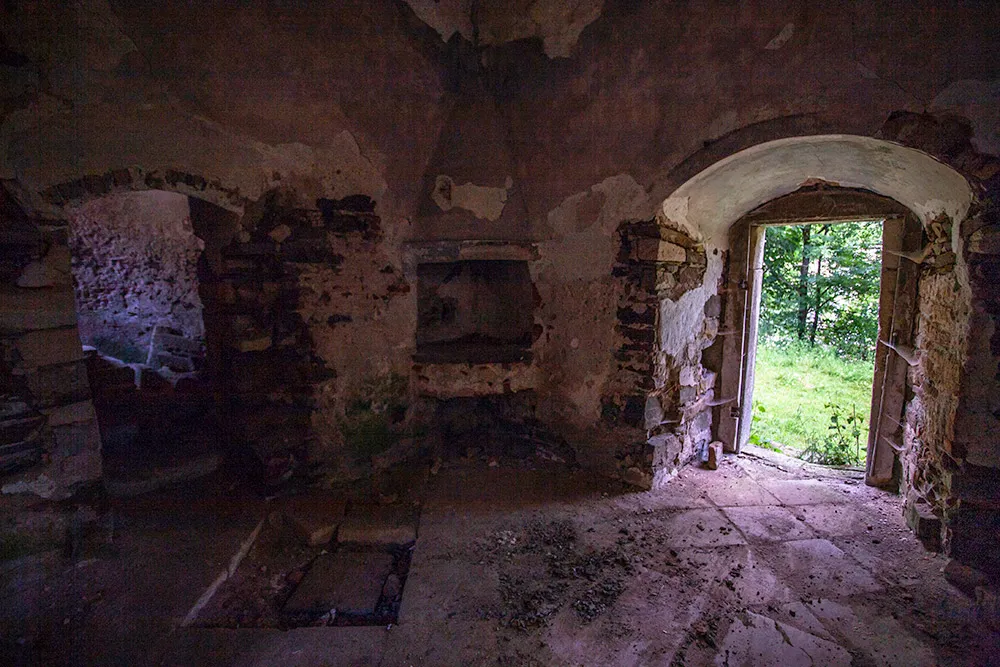
A sad irony: the graffiti were found thanks to destruction
In the case of the church in Yazlovets, the sad fate of the abandoned building played its part. First the roof fell in. Then the vault. Then, under the effect of precipitation, the later layers fell off and the oldest layer of plaster was revealed, with hundreds of inscriptions and drawings that visitors to the church had scratched on its walls over several centuries. The oldest inscriptions here date from 1590, the youngest from the first third of the 19th century.
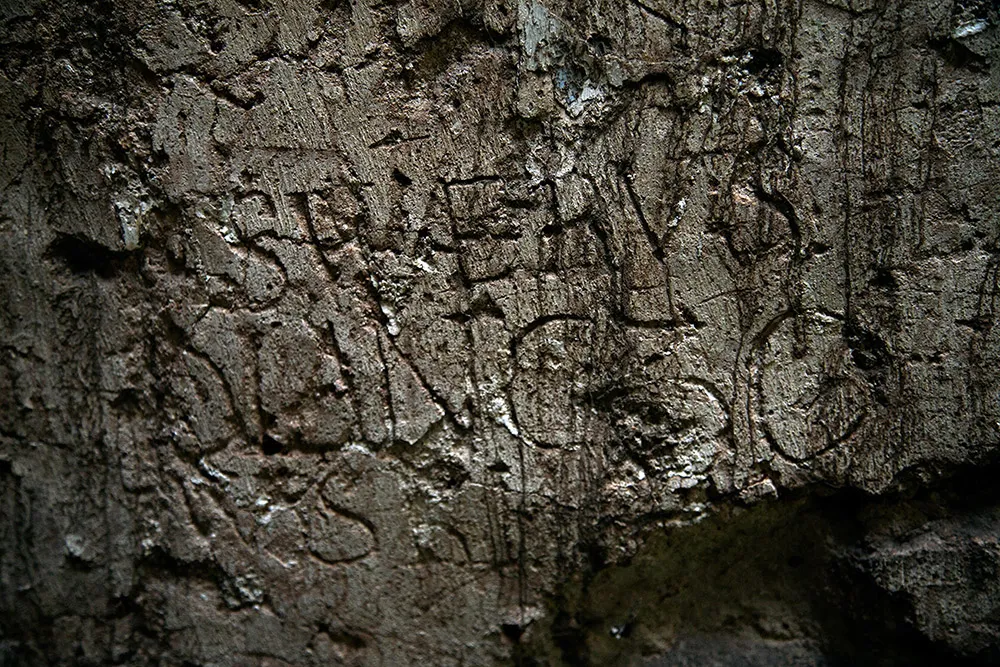
Old autographs of pilgrims
This explains why the graffiti were previously unknown to the scholarly community. When scholars surveyed the church, all these inscriptions were still hidden under the “new” plaster, and when they were uncovered, tourists simply did not understand what they were.
In 2022 Viacheslav Kornienko planned to carry out large-scale research on the Yazlovets graffiti, but the full-scale Russian invasion got in the way.
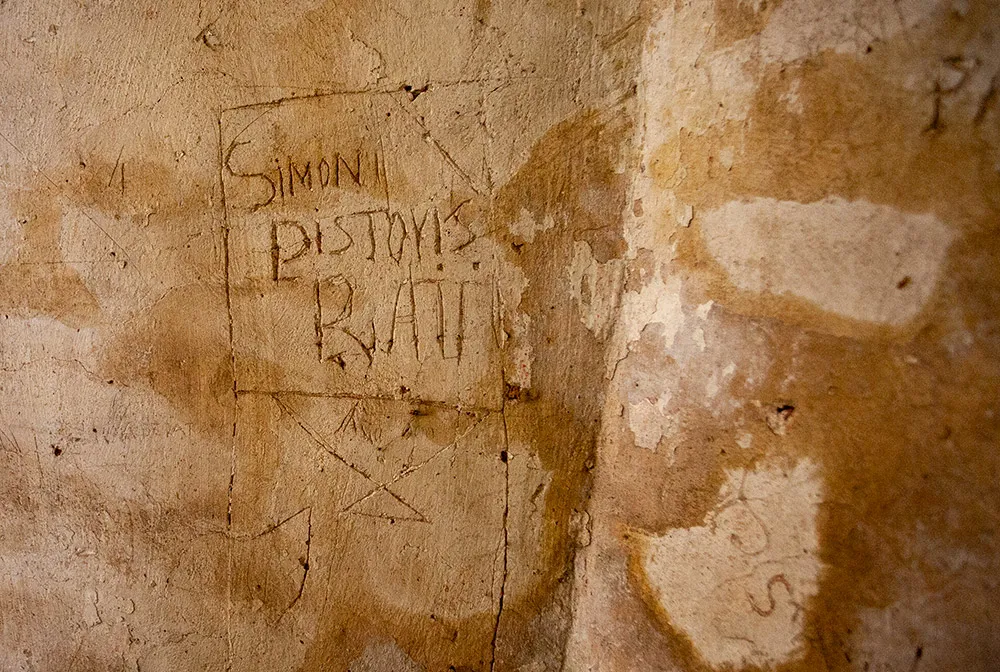
An inscription of 1620
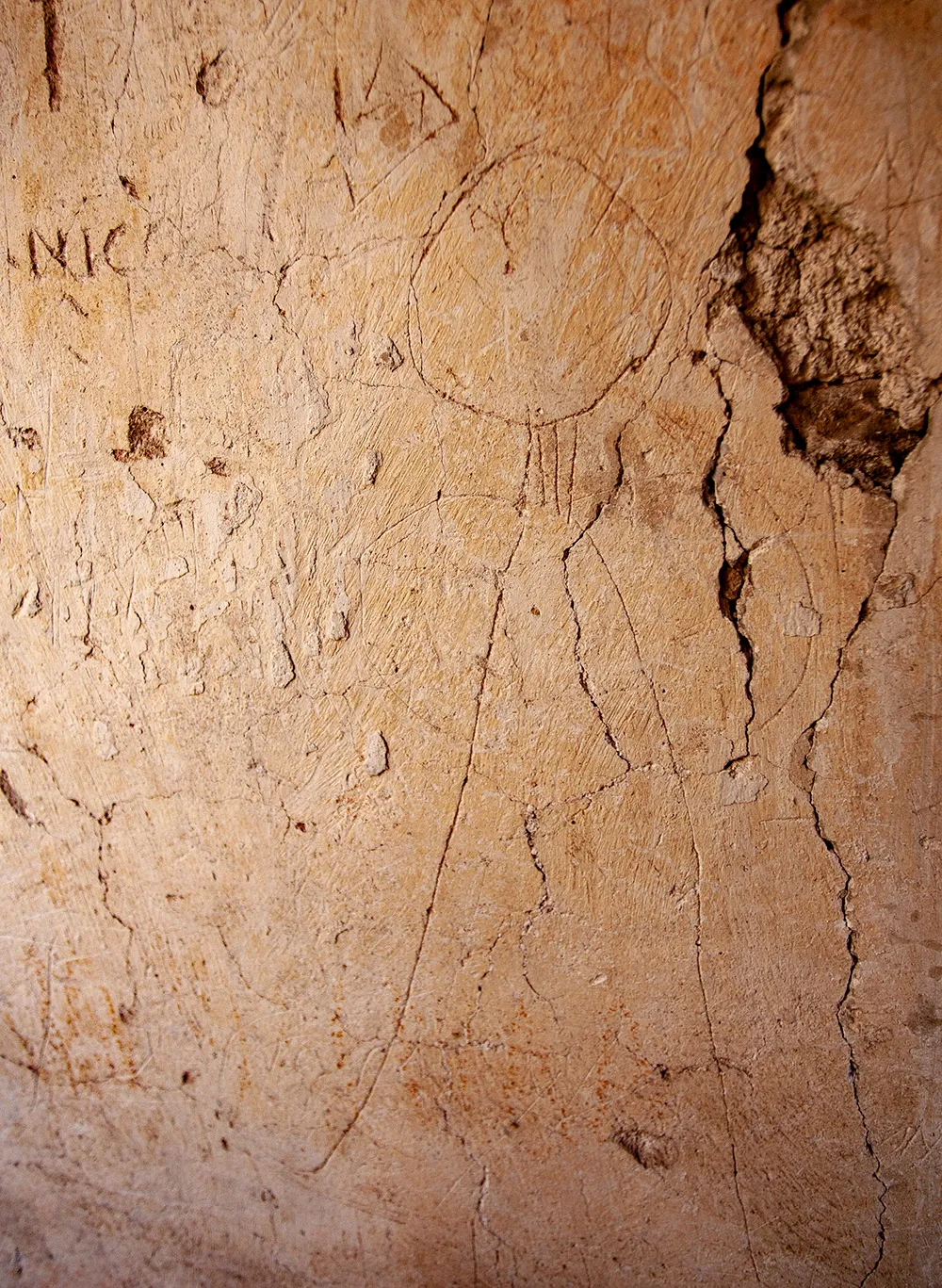
A very funny drawing. Either an angry woman (hands on hips) or a priest in a cassock. An interesting facial expression
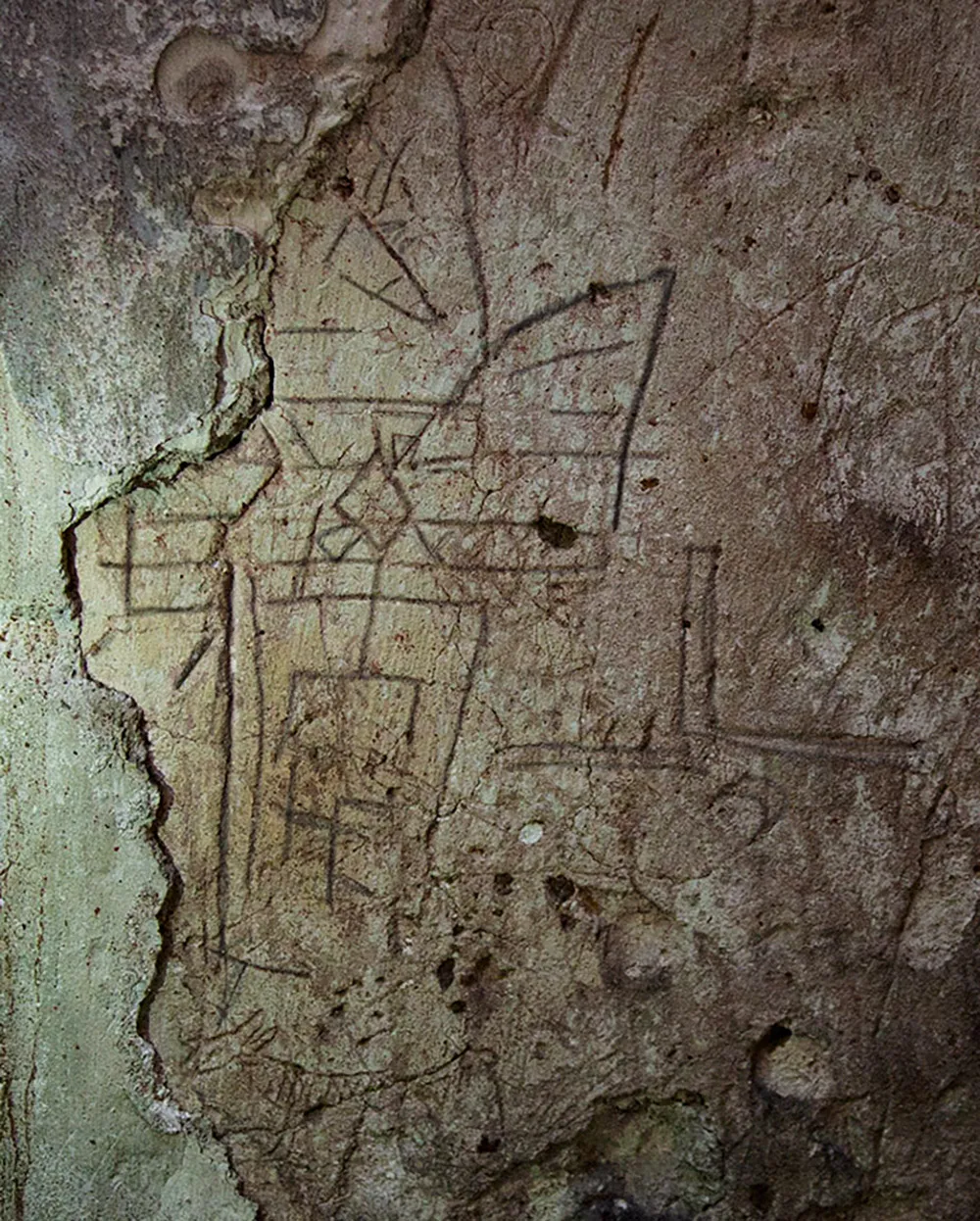
The most enigmatic drawing. Some tower and a dragon (?) beneath it.
“Such complexes are important as a source that records the real movement of people within the Polish-Lithuanian Commonwealth and reliably establishes their connection with a specific settlement,” explained Viacheslav Kornienko. “Often these inscriptions record the names of members of families (noble or burgher) about whom there is no mention in written sources.”
That is exactly what happened in Yazlovets.
This time the author came here briefly and quite unexpectedly for himself. But he still took a number of new photographs of the graffiti. One of them caught the eye from the start with its rather large and clear lettering and, above all, the date: 1591. Afterwards I wanted to find out whether publicly available historical sources contain any mention of Stanisław Strzemecki (Strzemecki), who left his autograph here more than four centuries ago.
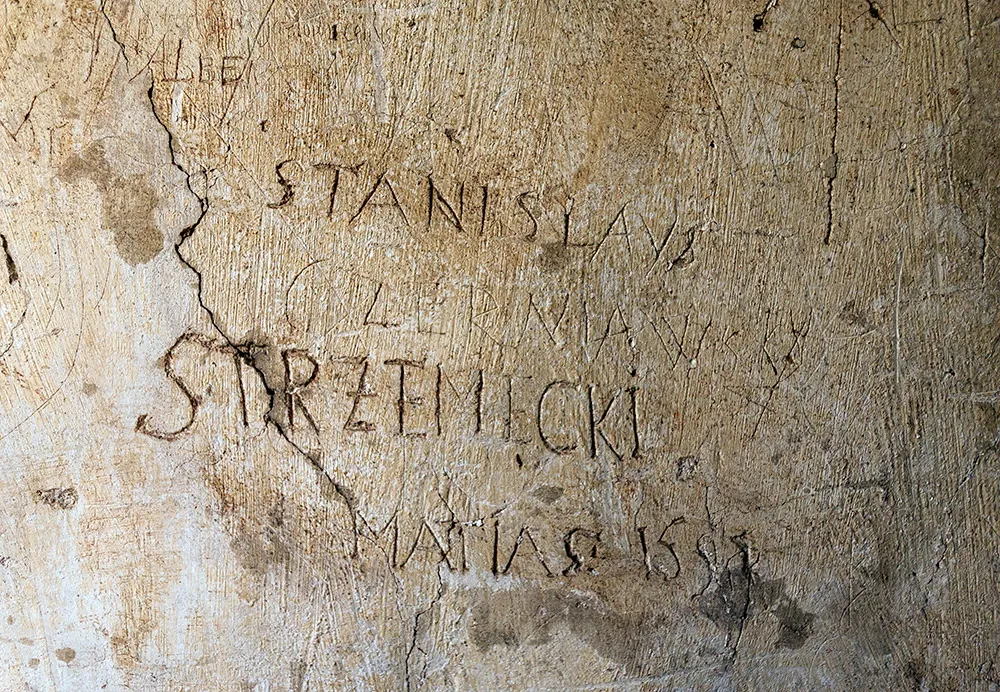
The inscription left by Stanisław Strzemecki. 1591
The hope of “digging up” something was not in vain. First, the inscription was made in rather large letters and stands out well against the others. This pointed to a significant status of the writer. Second, Strzemecki is a rather uncommon surname, unlike that of Mr. Kowalowsky, who immortalized himself nearby.
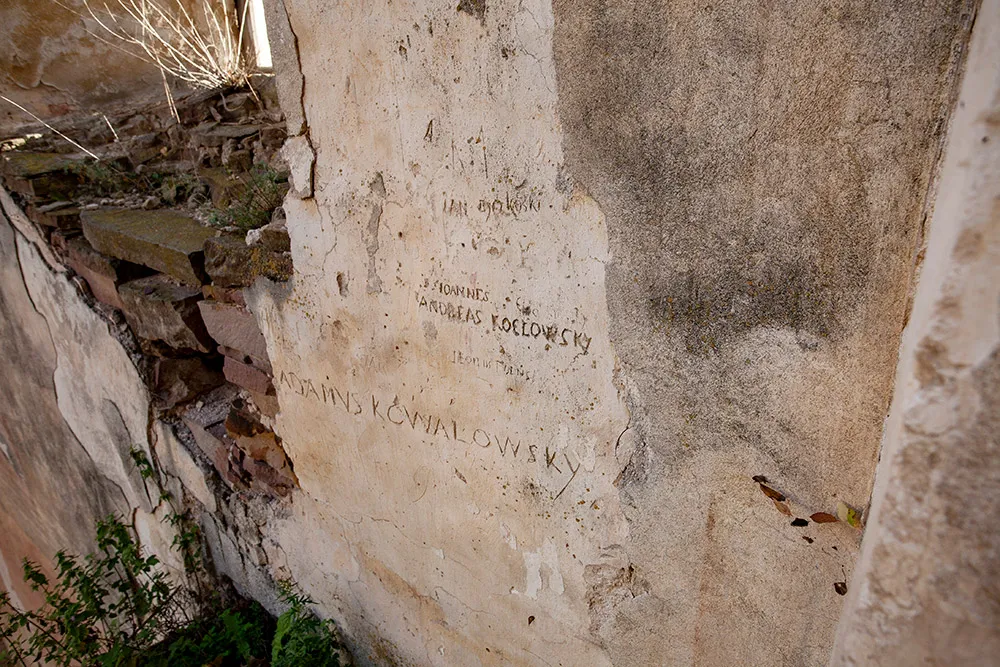
But the author did not bother to look up who Kozlowski and Kowalowsky were. The surnames are very common
Note that in their day these inscriptions were made quite legally and openly. At least with the permission of the owners of the church, the Dominican monks, who specially set aside the choir loft of the church for graffiti (inscriptions are not found in other places). There are, by the way, plenty of monks’ autographs in Yazlovets too.
The “Virtual Vytrishky” have a hypothesis that all the inscriptions of 1591 were made by nobles and monks on the day of the church’s consecration. As if to say: we were at this celebration.
The attempt was a success! As it turned out, the noble family of Strzemecki of the Lubicz coat of arms was once quite widely known in the Buchach area in general and in Yazlovets in particular! Its most famous representative was Krzysztof Strzemecki (????-1671), who even made it into Wikipedia. And not only the Polish one, but even the Ukrainian. Indeed! It is precisely to the riddle of his ancestry that the graffito found in the church sheds light.
But first, a little about Krzysztof himself.
Krzysztof Strzemecki, as befits a true nobleman, dedicated his life to defending the Fatherland. Already in his youth he fought in the pancerni company of Grand Crown Hetman Stanisław Żółkiewski, and then in a hussar company. He took part in battles against the Muscovites and the Wallachians, and in Prussia. In the battle with the Turkish-Tatar army at Cecora (September 1620) he did not abandon the crown hetman, was wounded and captured, and spent two years in captivity. After returning from captivity he went on fighting.
The church in Yazlovets
Among his known feats is active participation in the defense of Horodenka against the Tatars, when during a counter-sortie he managed to capture a green enemy banner. There is also the tragic story of his mother, Katarzyna Borysławska of the Szreniawa coat of arms, daughter of the Podolian chamberlain Piotr Borysławski. When the woman was taken captive by the Tatars, Krzysztof went to Crimea to ransom her. Unfortunately she died, and he brought home only his mother’s remains, to bury her in her homeland.
On the whole, the life of this interesting figure was bright and eventful. But our story is not about that.
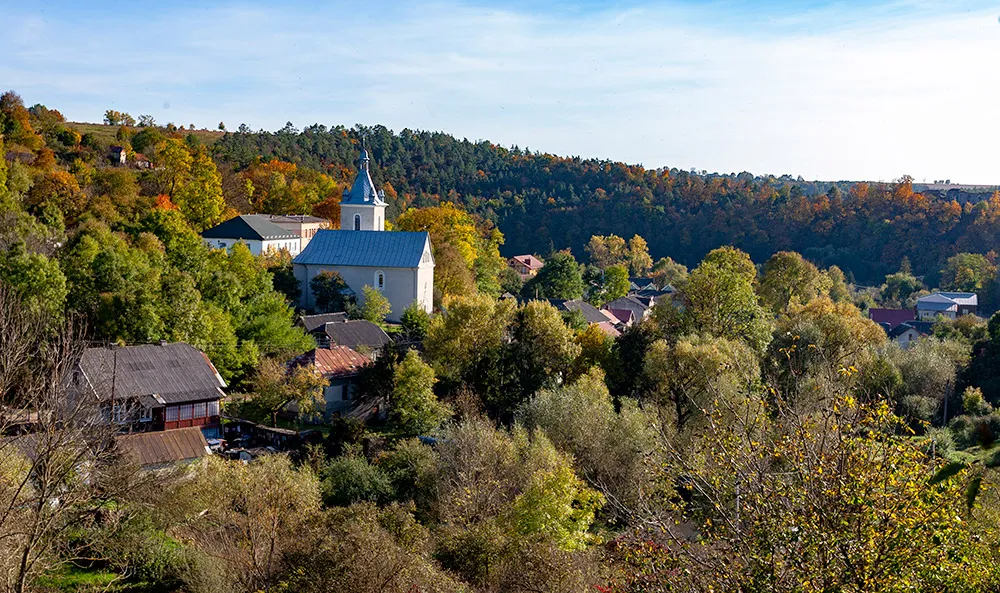
A panorama of Yazlovets. The Armenian church of Surb Nikoghayos (1551). The castle is visible on the right.
Until recently there were discrepancies regarding the identity of Krzysztof Strzemecki’s father. In particular, according to Stanisław Józef Duńczewski (1701-1767), his father was Mikołaj Strzemecki, who was killed “in the bloom of youth” by a Tatar hand and was buried with the Dominicans in Yazlovets (that is, in this very Church of the Assumption or next to it). According to Kasper Niesiecki (1682-1744), the father of Krzysztof was named Jędrzej Stanisław.
Thanks to the graffito that was found, the long-distance dispute between Niesiecki and Duńczewski over the genealogy of Krzysztof, which has lasted for more than a century, can now be settled. Considering the date of the inscription on the church wall, 1591, and the small size of the Strzemecki family, only Krzysztof’s father, and no one else, could have left this autograph. Accordingly, it was the Jesuit, historian and researcher of genealogy and heraldry Kasper Niesiecki who was right, and not the astronomer, mathematician and part-time historian Stanisław Duńczewski.
Yazlovets has many different monuments. The gate of the palace of Stanisław Poniatowski (father of the last king of the Polish-Lithuanian Commonwealth)
Of course, this discovery cannot by any means be called global or sensational. It is merely the finding of one more small piece of glass in the boundless mosaic of History. But without this piece of smalt the mosaic would be incomplete.
On the other hand, it shows how much can be hidden behind an ordinary autograph scratched on a wall. It may be assumed that a thorough and full-scale study of the Yazlovets graffiti could yield truly sensational finds. All the more so because many not merely well-known but famous people visited Yazlovets. And signing one’s name on a church wall was a good tradition.
“Virtual Vytrishky”
You can thank the author for his work and help the “Virtual Vytrishky” project by transferring a few hryvnias to the PrivatBank card 5168 7554 6511 0969. (Dmytro Poliukhovych)
We would also be very grateful for reposts on social networks.
The “Virtual Vytrishky” project was originally based on Facebook. But after Zuckerberg shut down the very nice “notes” service (where you could post texts with photos like this one), we had to “crawl over” to LiveJournal. Later to Blogspot (you can TAKE A LOOK, there is a lot of interesting stuff there), but it is a very lousy service that for some reason even Google does not index. With the kind consent of “Ukraine Incognita”, our “Vytryshky” are now posted here.


