

The Armenian church of Surb Nikoghayos in Yazlovets, 1551
Yazlovets, near Buchach in the Ternopil region, is today a small village. It is packed with ancient monuments, each of which fits the word “unique”. It was once a proud town, whose competition the merchants of Lviv itself bitterly complained about!
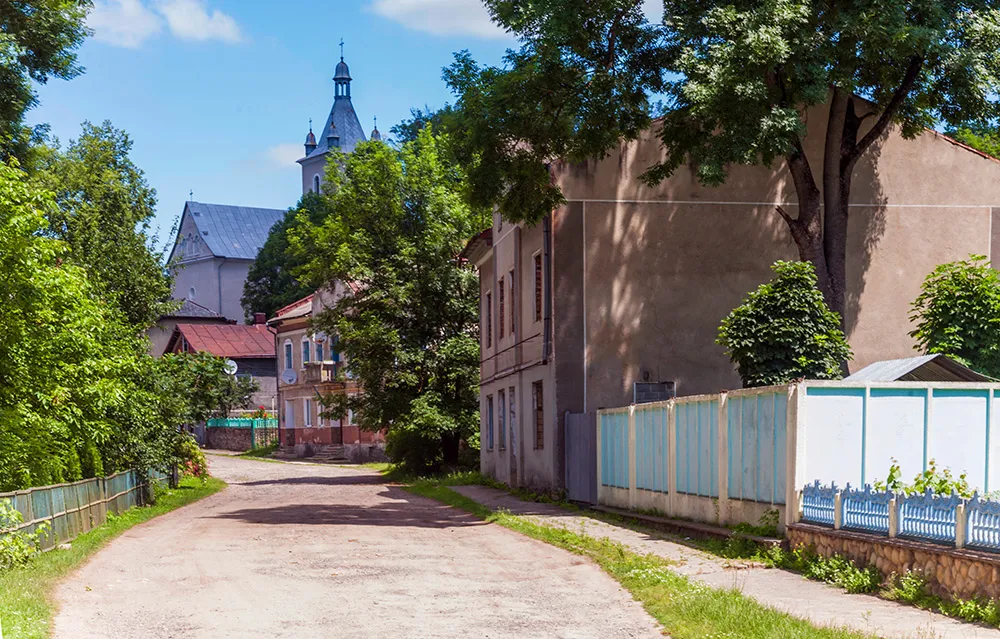
In the Renaissance and Early Modern era the face of Yazlovets was defined by Armenians, and in the early 17th century this town was in effect the “Armenian capital” of the whole of Podillia: the seat of the Armenian archbishop was here. Unfortunately, very little remains of the extremely interesting and vivid Armenian heritage that still in the early 20th century delighted researchers and travellers. The whole astonishing Renaissance built-up area of the little town was destroyed by Russian “Ilya Muromets” bombers during several massive raids, although there was not the slightest military need for it. It is possible that Yazlovets became the first town in history destroyed by aviation.
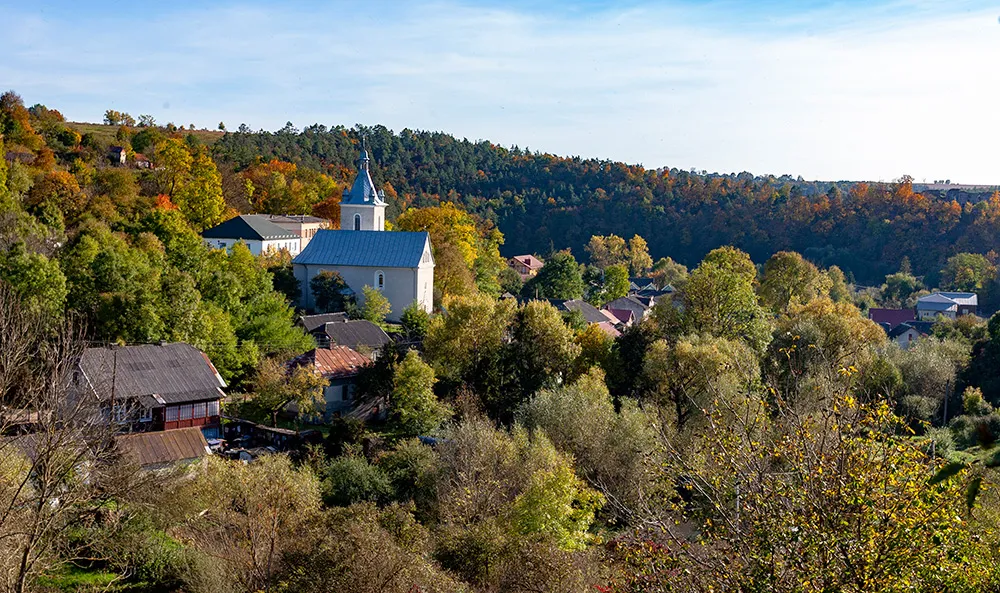
Fortunately, the main Armenian shrine survived: the church of Surb Nikoghayos (now St. Nicholas Church, UGCC).
The Armenian church of Surb Nikoghayos was built as early as 1551. Of course, it was of a defensive type. At that time all masonry sacred buildings were also built as fortresses. In the early 17th century a square bell tower was added to the church.
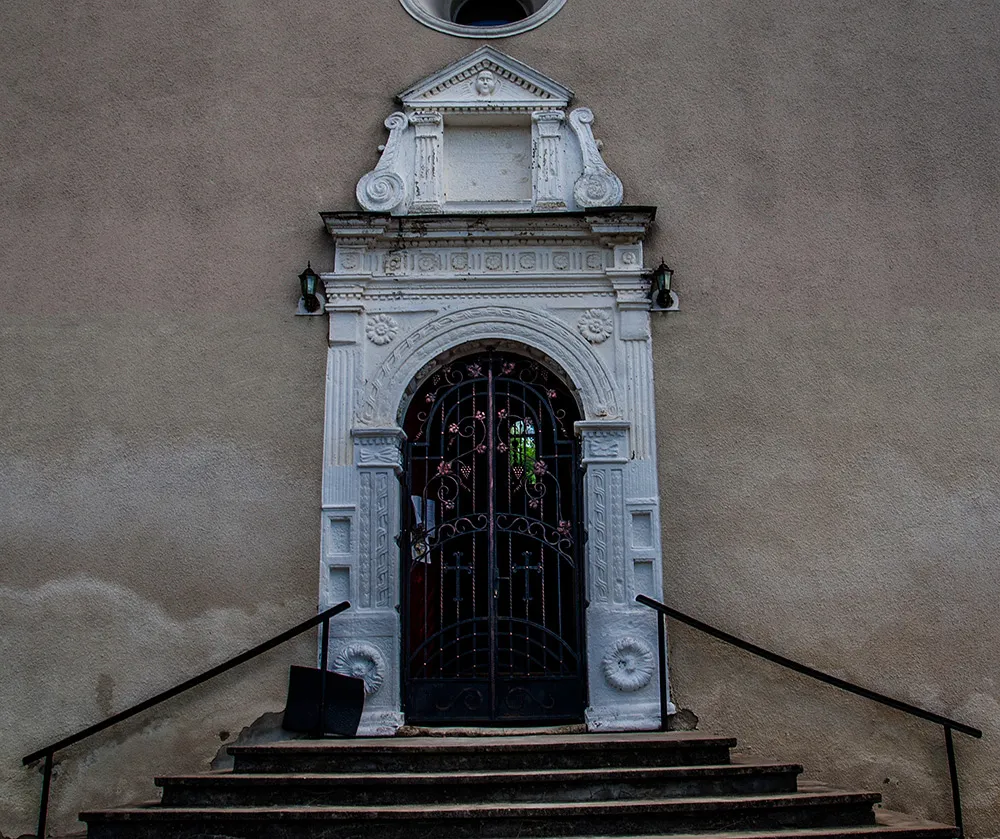
The portal of the Armenian church
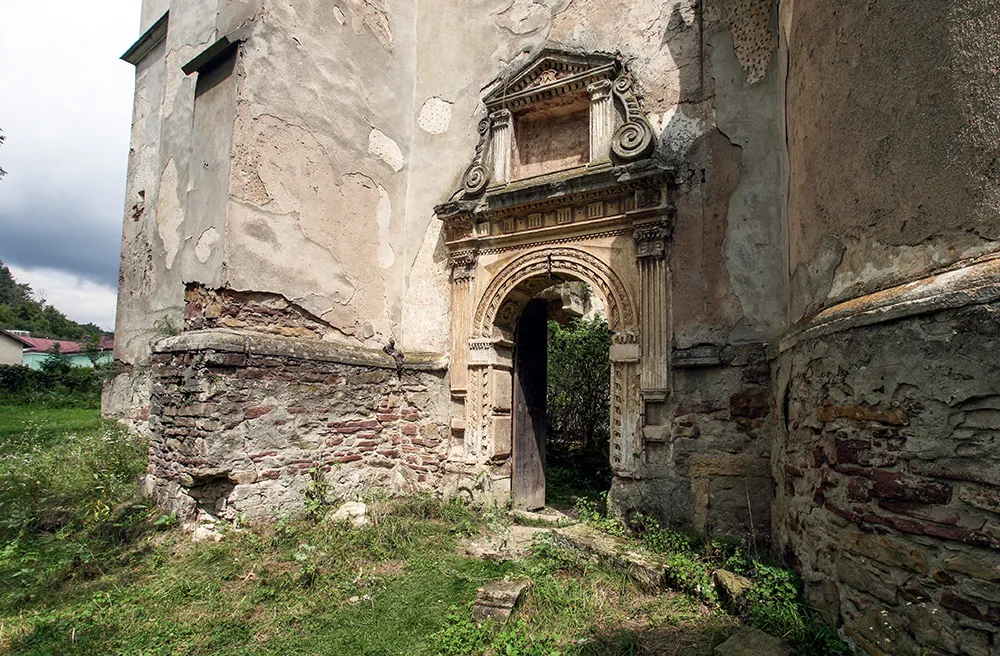
For comparison, the portal of the neighbouring Catholic church (1591)
The church’s Armenian past is vividly recalled by the foundation plaque with an Armenian inscription that adorns the carved Renaissance portal of the main entrance. It is clearly visible that it is almost a twin of a similar portal from the neighbouring Church of the Assumption of the Blessed Virgin Mary.
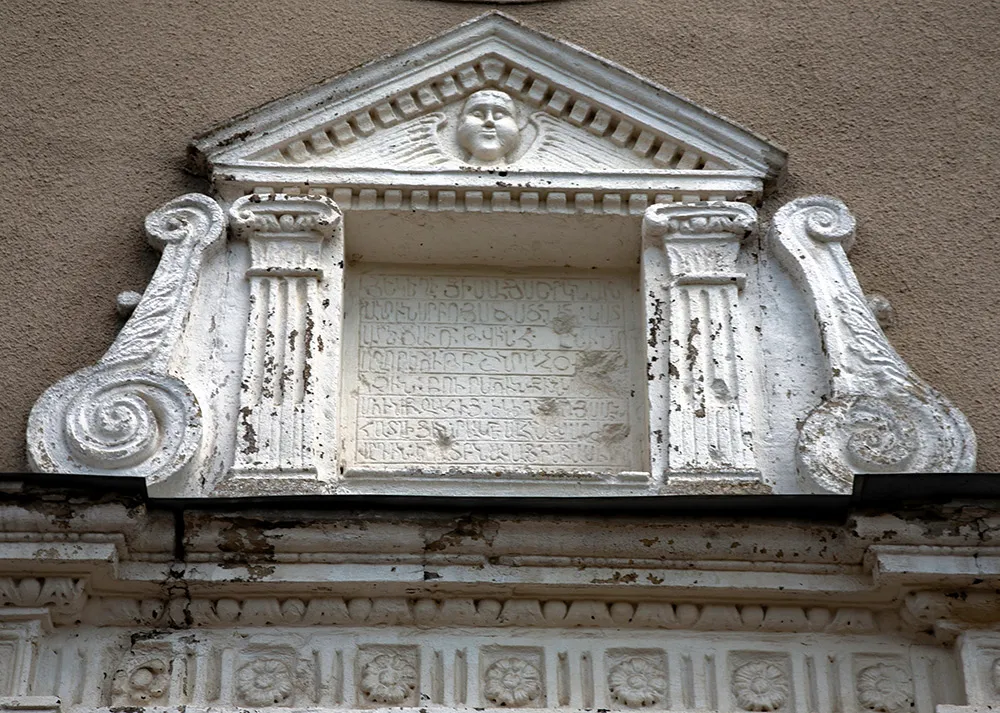
Not everyone will notice another Armenian inscription. It decorates the passage from the bell tower to the church. AI translates this text as “True philosophy is armed with justice, and justice is fortified by nobility.” But it seems doubtful.
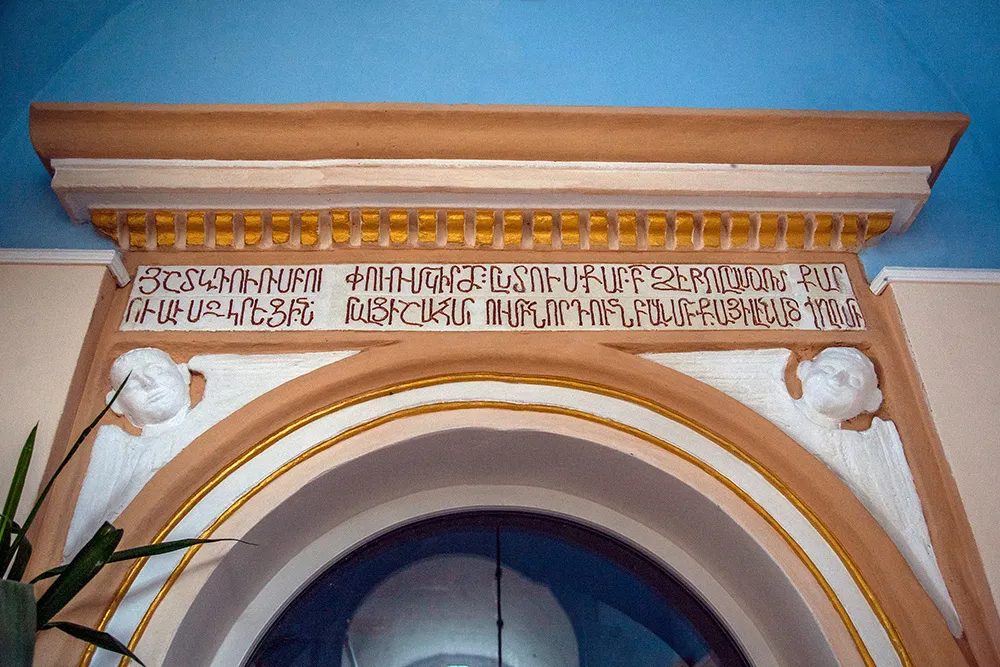
In the 17th century the church even managed to serve as a cathedral, that is, a bishop’s church. When the Armenians left Yazlovets at the end of the 18th century, the church stood empty for some time. Only in 1801 was it handed over to the local Greek Catholic community.
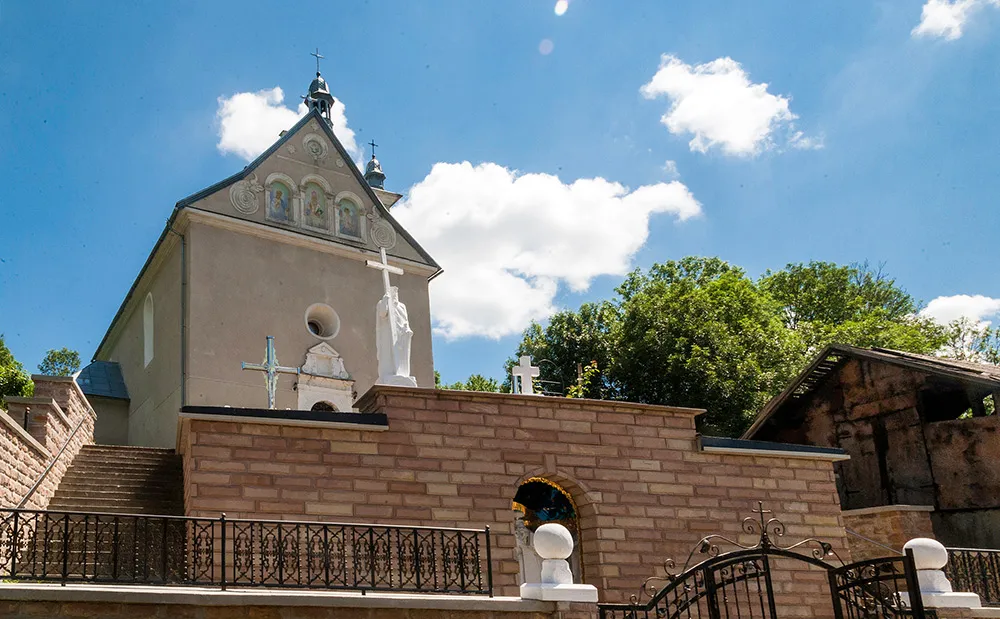
In 1916 the church suffered considerably from Russian bombs, which destroyed the roof and vaults. Apparently God himself protected it, because everything that stood next to it was blown to rubble by the proto-orcs. Incidentally, traces of shrapnel can still be seen on the foundation plaque.
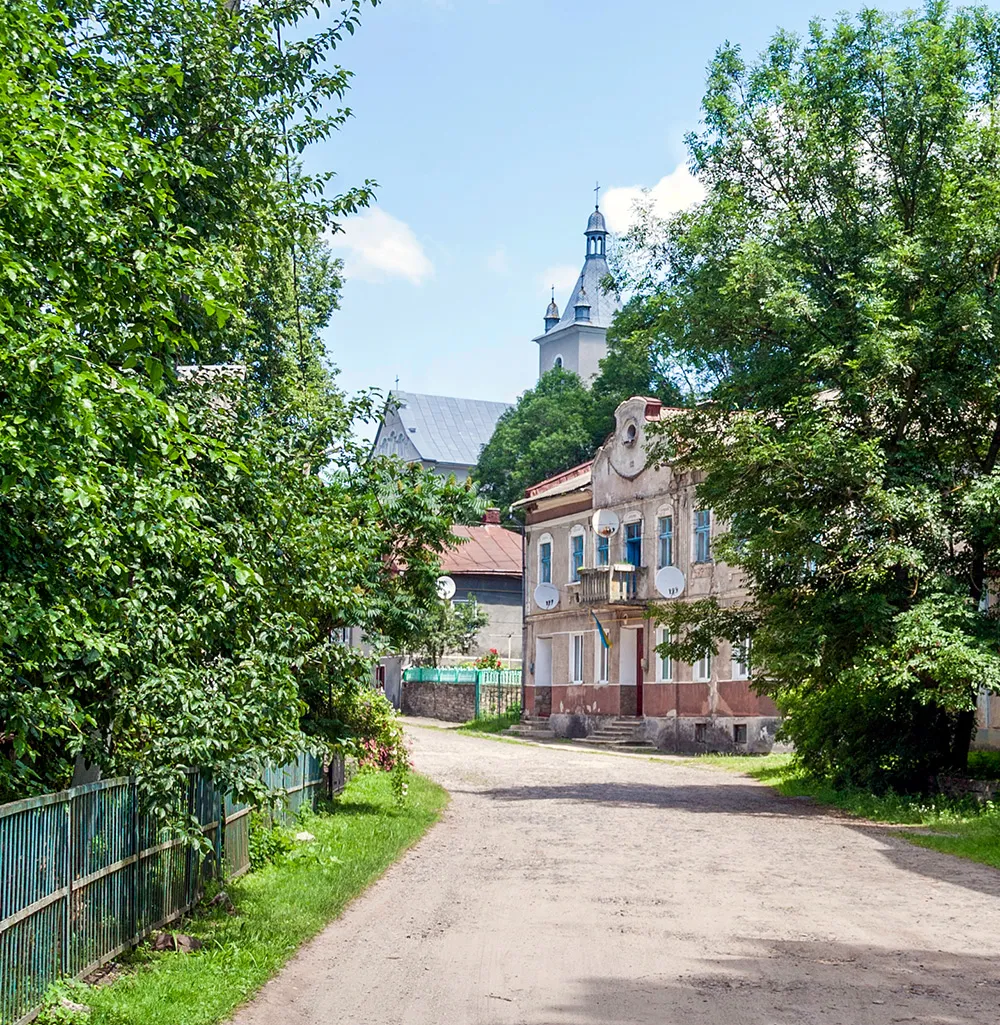
The road to the church…
Text and photos: Dmytro Poliukhovych


