

The mill in Lychkivtsi: a museum of 1920s technology
Perhaps the most interesting water mill in Ukraine stands in the village of Lychkivtsi, or more precisely in its hamlet of Trybukhivtsi, in the Ternopil region. What makes it interesting is its century-old equipment. It is a genuine working technical museum, where you can see far more than milling exhibits.
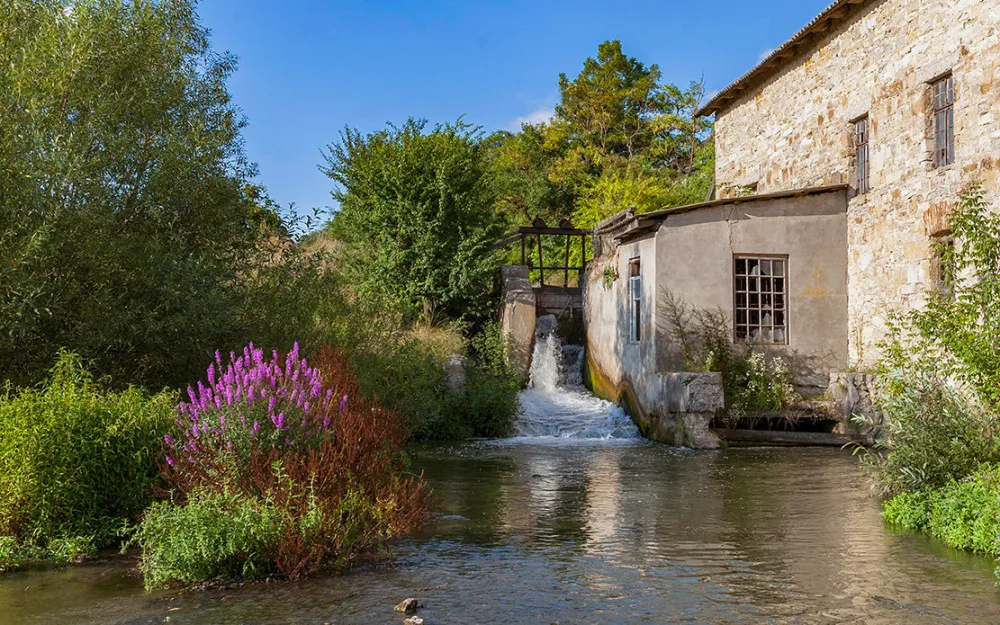
The mill on the Tayna River (a tributary of the Zbruch) was built around 1922 at the expense of a local landowner, Mojżesz Kimmelman. It is still in good working order today, although it is temporarily idle. Its machines were last started up last year. After the property of the collective farm was divided up, the site changed tenants and owners several times. Now the question of ownership has finally been settled, and the new owners, according to local residents, seem seriously determined to bring the mill back to life. For now it is rather difficult for an ordinary tourist to get inside.
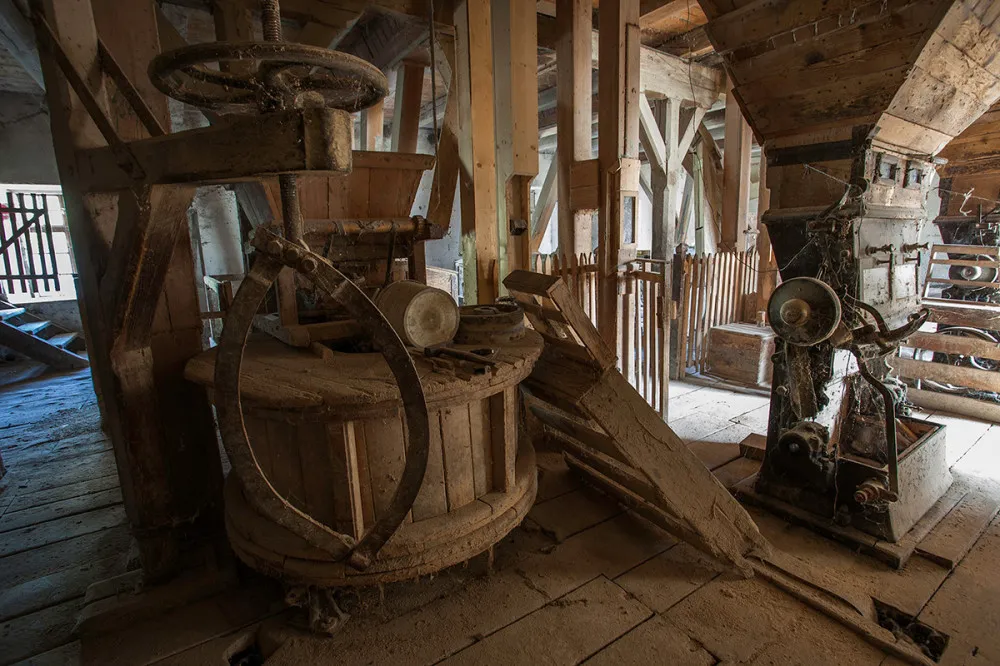
We managed to do so solely thanks to Taras Vasylyk, director of the Husiatyn Local History Museum, who not only arranged for the mill to be opened, but also found 79-year-old Yaroslav Khraplyvyi, a mechanic who in the late 1990s was responsible for the maintenance and repair of the antique machinery.
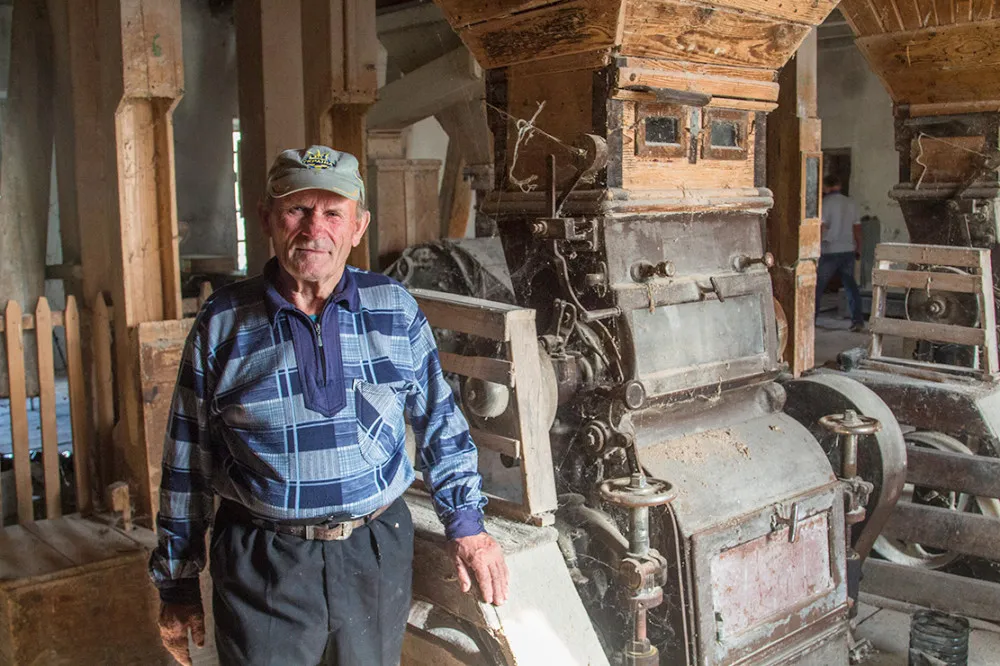
As Mr Yaroslav explained, this was once a fairly powerful enterprise, employing as many as 4 millers, not counting their assistants. Here they ground grain into flour, produced several kinds of groats and coarse meal for livestock, and hulled buckwheat.
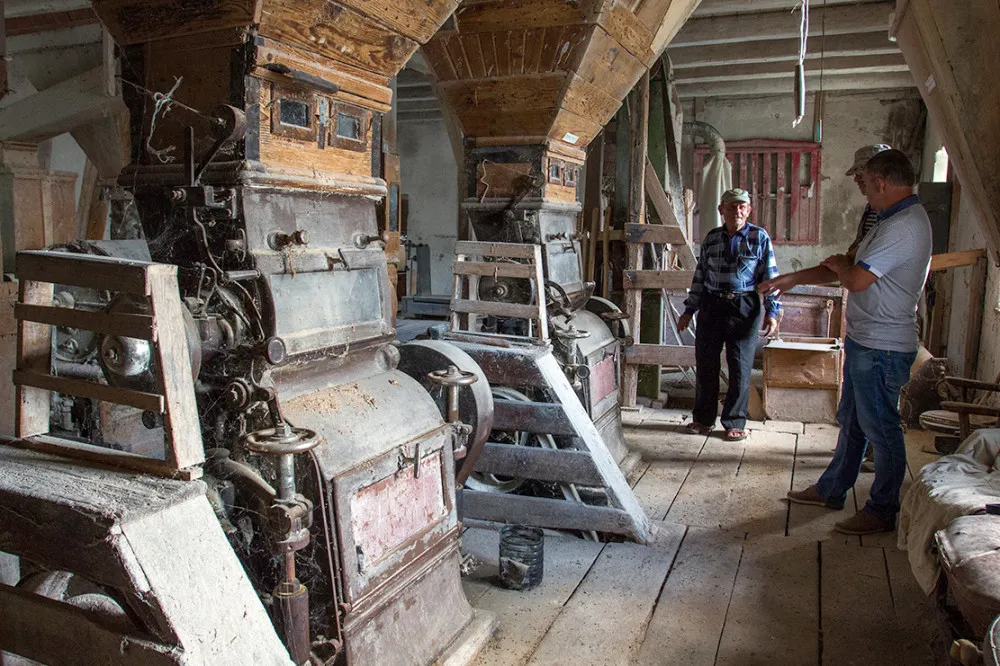
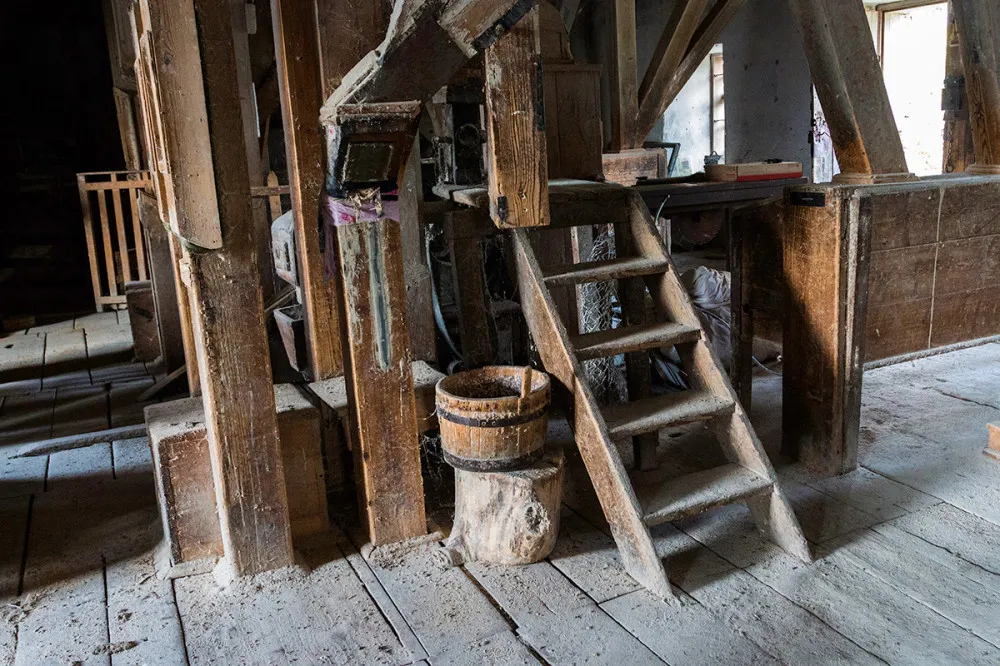
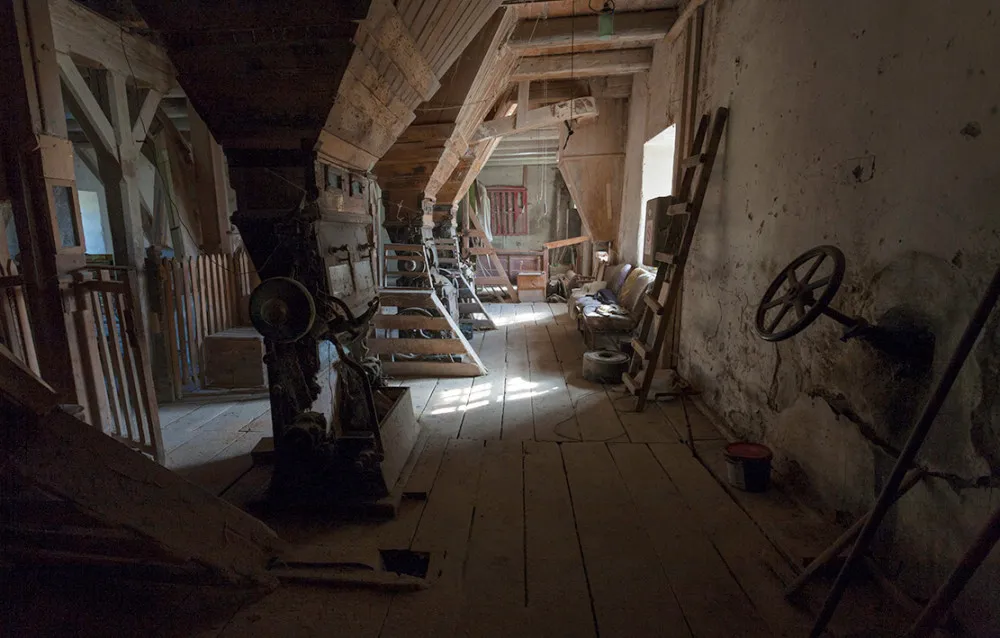
Showing us around, the former mechanic drew our attention to a sizeable electric motor standing on the lower level of the building (the mill has 3 levels). Sometime in the 1970s, when kilowatts in the USSR were very cheap, the mill was switched to electric power.
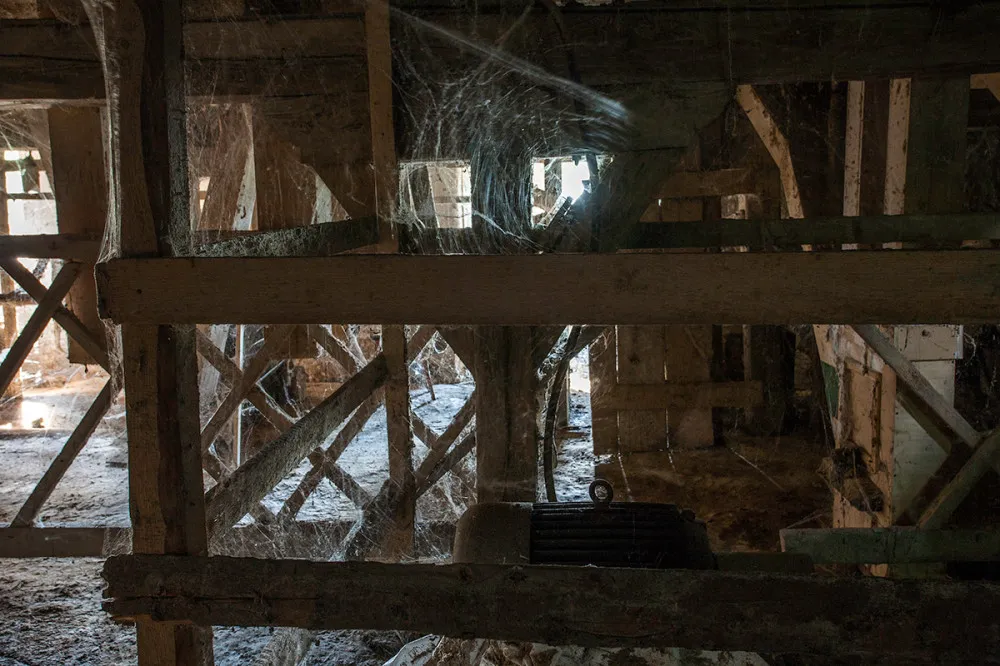
The electric motor
Fortunately, some wise person then did not allow the turbine and the water supply system to be dismantled. When the price of kilowatts rose sharply in the 1990s, the mill was switched back to hydropower without much trouble.
According to the former mechanic, the equipment of the Trybukhivtsi mill is still in working order, and to restart production it only needs preventive maintenance of the mechanisms, minor repairs and some preparatory work.
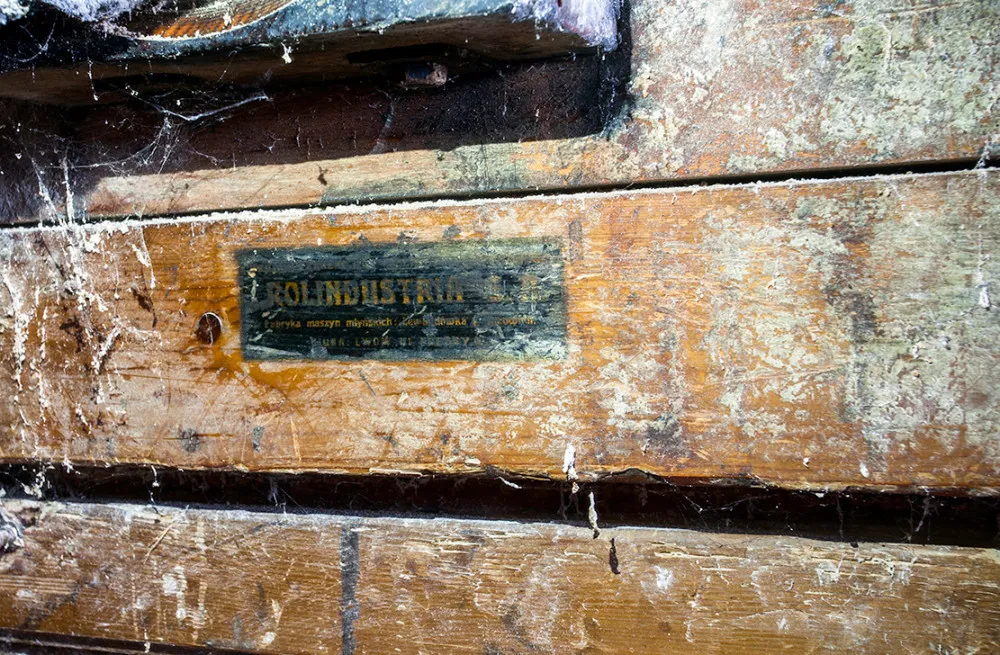
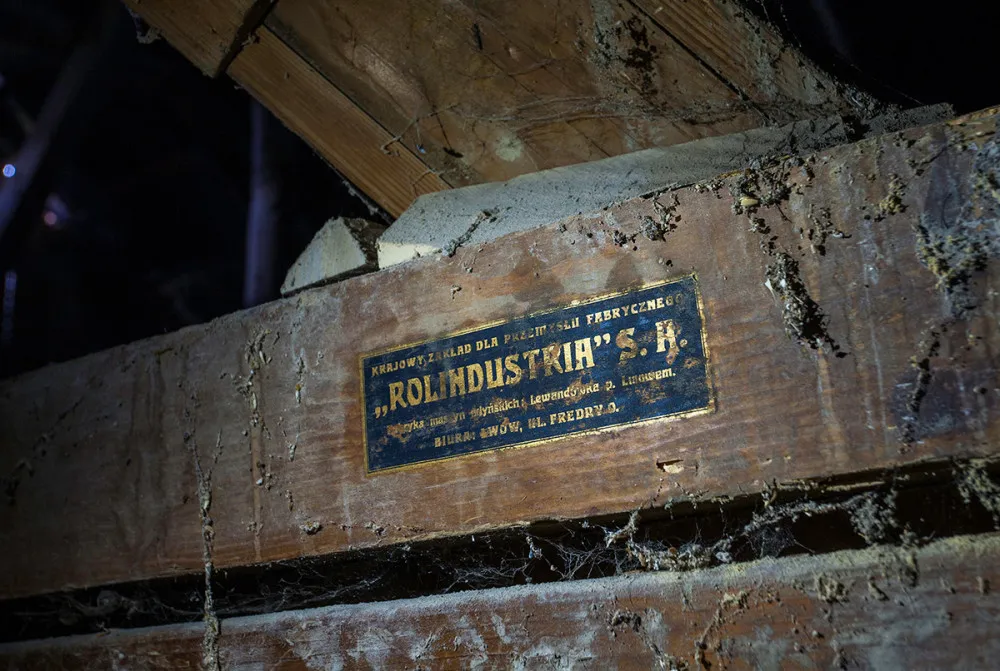
The inscriptions on the hoppers show that the machines were made by Rolidustria S.A. (Lviv), a subsidiary of the German company “Mühlenbauanstalt und Maschinenfabrik vorm. Gebrüder Seck” (Dresden), which specialized in producing milling equipment. Until quite recently, nameplates (“Schild” in German, meaning a label or tag) bearing the manufacturer’s name were attached to every machine. All that is left of them are rectangular marks and fixing holes. The sizeable plates disappeared during one of the changes of ownership. According to Mr Yaroslav, they were very beautiful, “shone like gold”, with Gothic lettering. Unfortunately, it is now hard to establish which manufacturer was named there: the main factory in Dresden or its Lviv branch, Rolidustria S.A.
The founder of the main firm was the engineer Wilhelm Seck, who set up his factory in 1865 in Bockenheim, one of the districts of Frankfurt. His success was based on the “Seck roller system” he developed for the gradual milling of wheat. Soon machines from this manufacturer became hugely popular not only in Germany but also in Belgium, France, England, Austria-Hungary and other countries.
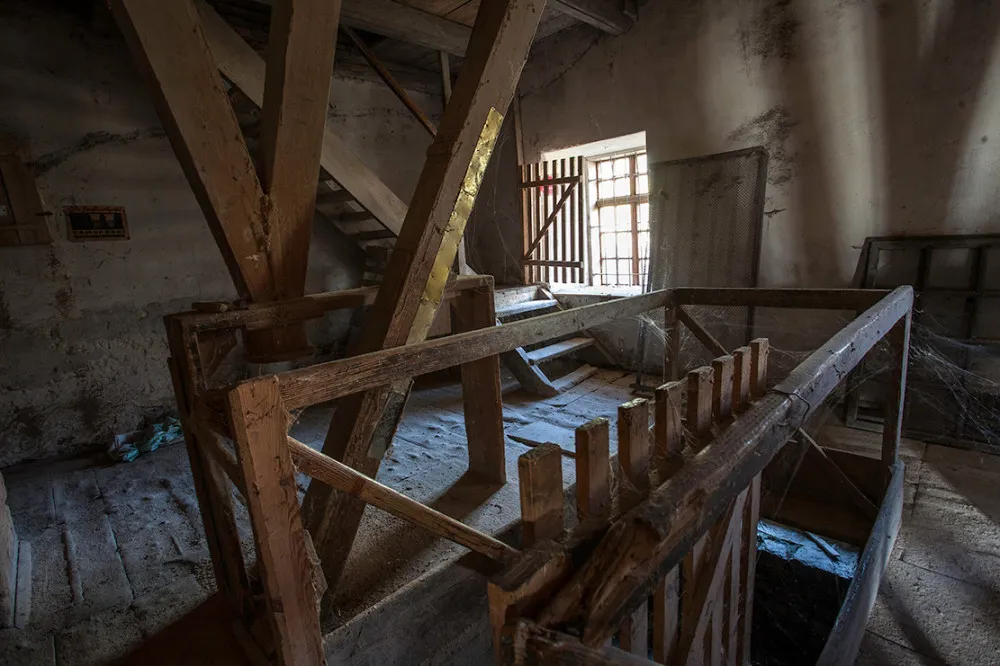
Sometime in the early 1920s the German manufacturers opened a branch in Lviv. The reasons are clear. At that time there was an enormous demand for milling equipment in Galicia and Volhynia, since many mills had been destroyed in 1914–1920 during the fighting. In addition, around the same time, archaic mills with primitive wooden mechanisms began to be replaced en masse by modern ones. The success and scale of Rolidustria S.A.’s work are vividly illustrated by the sizeable building that once housed the company’s head office in Lviv; today it is home to the luxurious Atlas hotel.
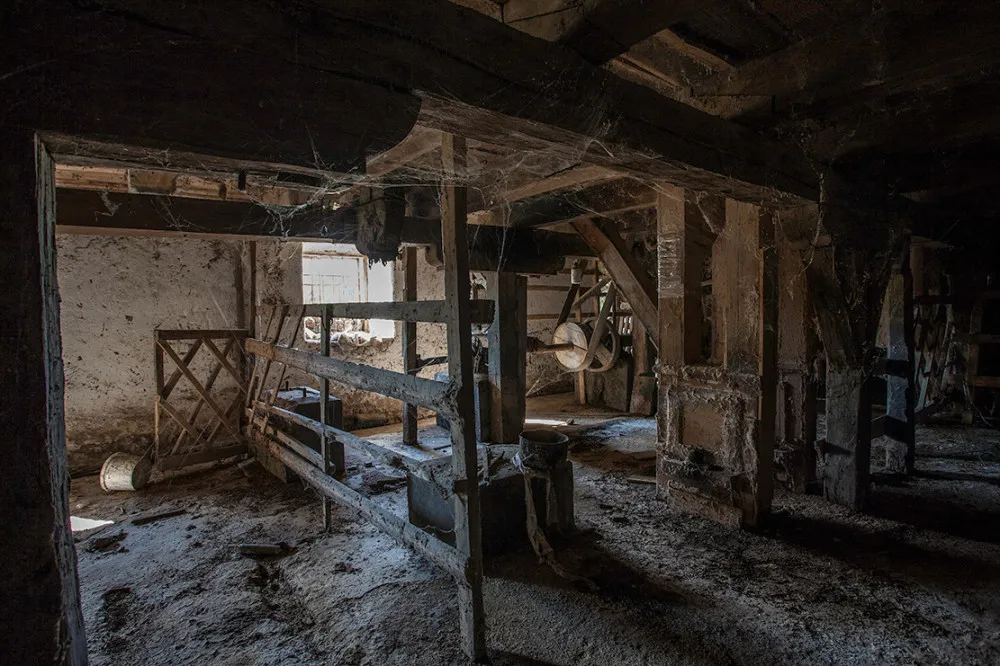
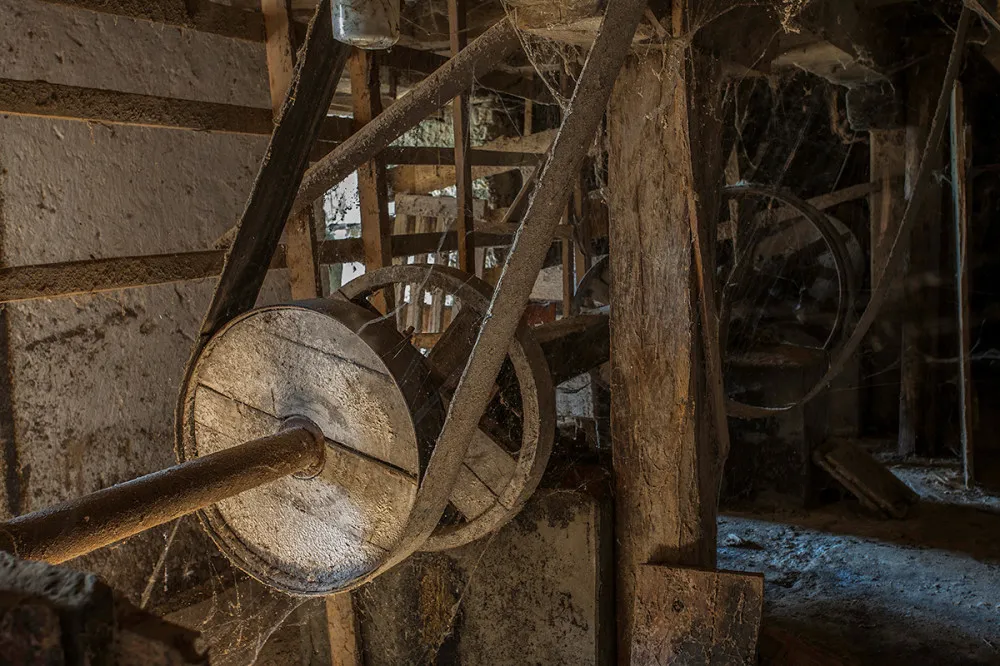
Besides products from Rolidustria S.A., the equipment of the Trybukhivtsi-Lychkivtsi mill includes even older pieces. On one of the machines you can see the nameplate of the factory of Leopold Kašpar, once a famous Czech manufacturer of milling equipment.
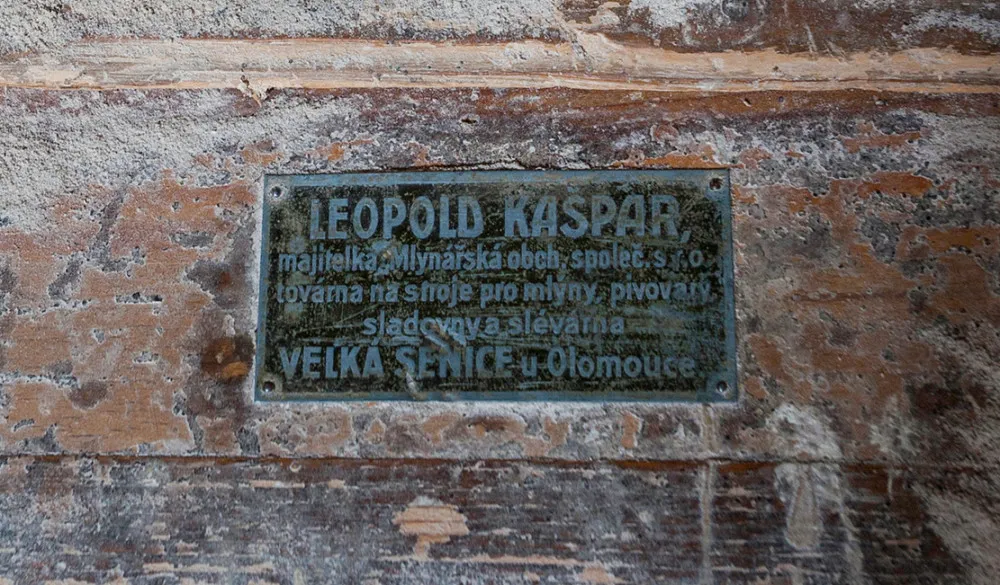
Leopold Kašpar began producing milling equipment in 1890 in a small workshop in Senice na Hané. At first it was a small factory, but within six years he had built a large engineering plant. In 1919 Mr Leopold was forced to sell the factory to the company Mlynářská obchodní společnost, spol. s r.o. (the “Miller Trading Company”, Ltd.), which operated successfully until the Great Depression (the economic crisis that began in the autumn of 1929 and lasted until the end of the 1930s).
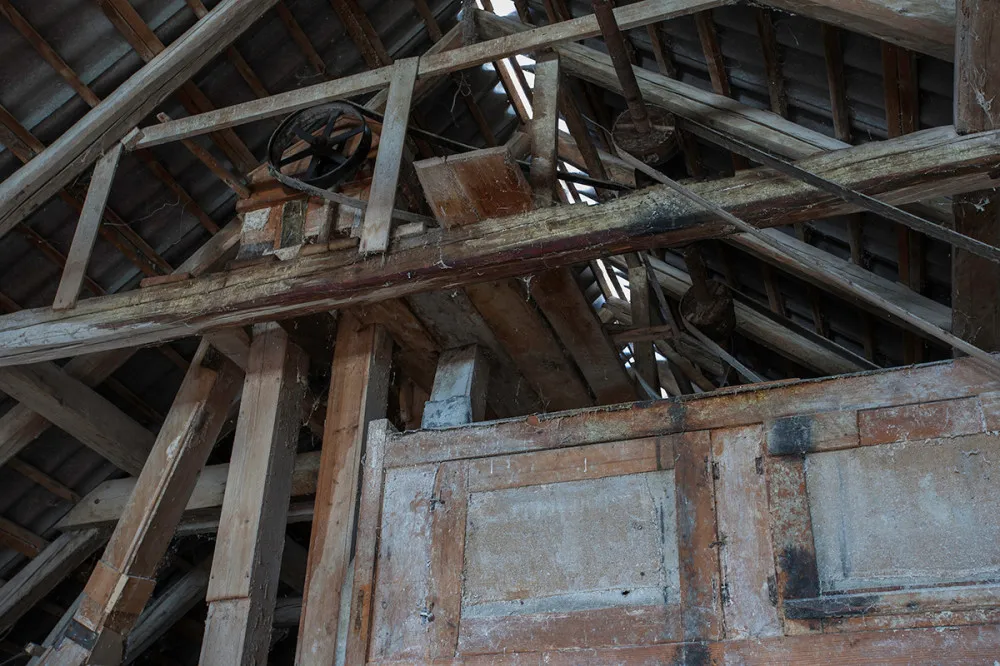
But these are not all the trademarks of the industrial giants of interwar Poland represented in Lychkivtsi.
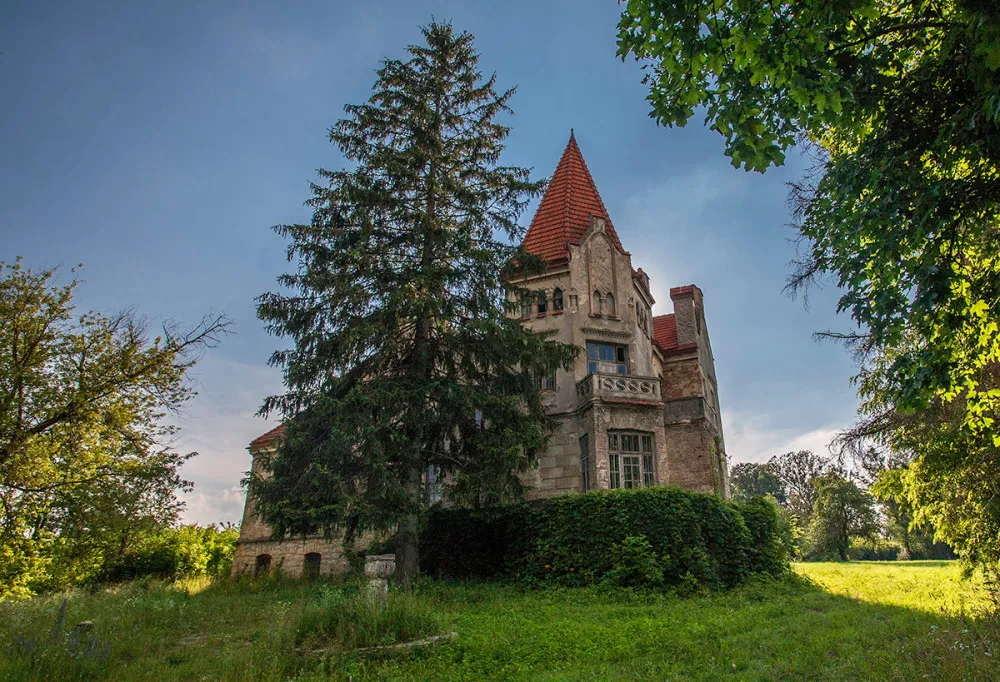
The mill also once had a small hydroelectric power station. Before the Second World War it supplied electricity to Kimmelman’s sizeable manor house and a number of other buildings, and after the war to the school and the village council.
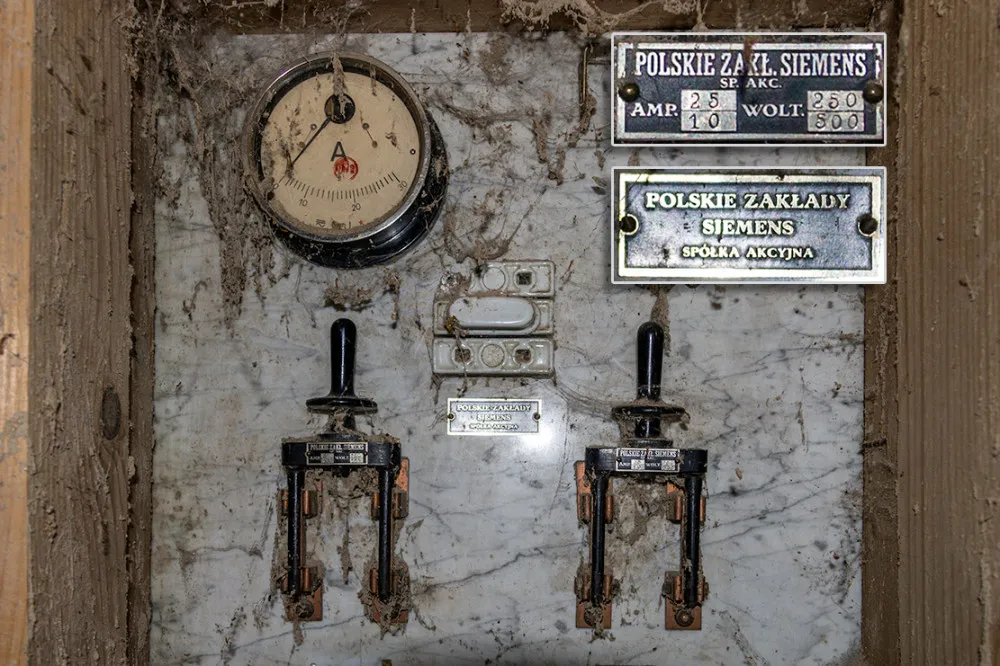
All that remains of that station is a marble switchboard with knife switches, an ammeter that looks like a saucepan, and porcelain fuses. Almost a century has passed, but this Polskie Zakłady Siemens product still impresses with its perfect design and refined execution. Against its background, the Soviet electrical panel next to it looks like the pinnacle of clumsiness.
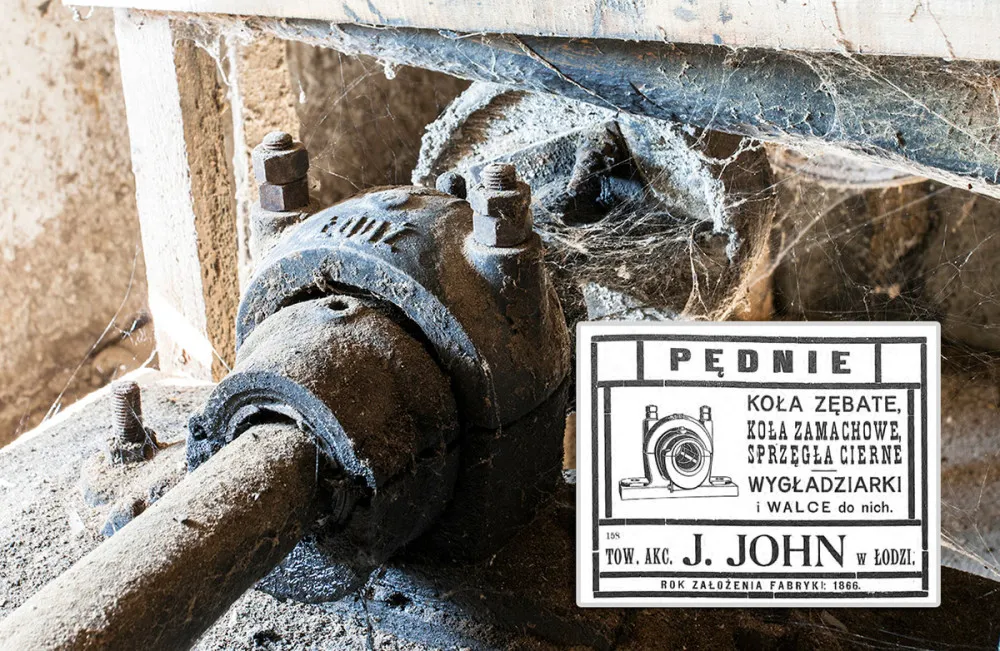
On the lower level of the mill we were lucky to find just one maker’s mark. The massive cast-iron coupling holding the big shaft that transmits the turbine’s rotation to the machines is decorated with the inscription “Łódź”. It is a product of Towarzystwo Akcyjne Budowy Transmisji, Maszyn i Odlewni Żelaza “J. John” w Łodzi.
The author is sure that a more thorough search would turn up further evidence of the industrialization of the first half of the 20th century. But even what has been mentioned is enough to state with confidence that here in Lychkivtsi-Trybukhivtsi we have a genuine museum of technology and industry, unique in every respect.
Text and photos: Dmytro Poliukhovych.
2021


