Koropets. The palace and other monuments

· 3 min read
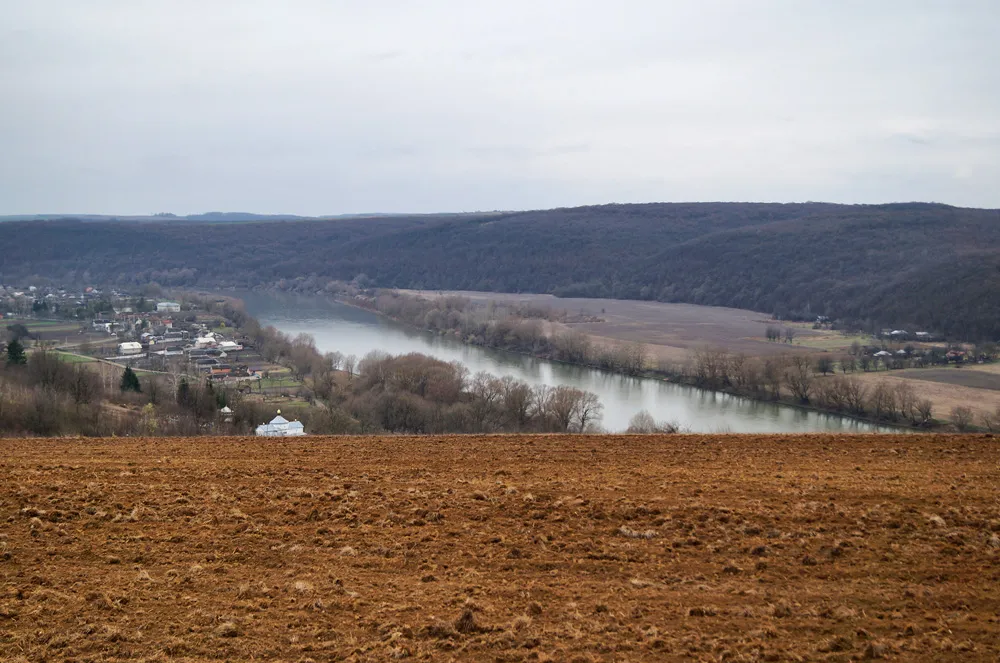
Koropets is located in the south-west of Ternopil Oblast, on the slopes and terraces of the Dniester valley. The population here is over 3 thousand: a lot for a village, little for a town. A settlement, although “small town” sounds better. It is quite old, founded in 1421. The history of Koropets is described in fair detail on Wikipedia.
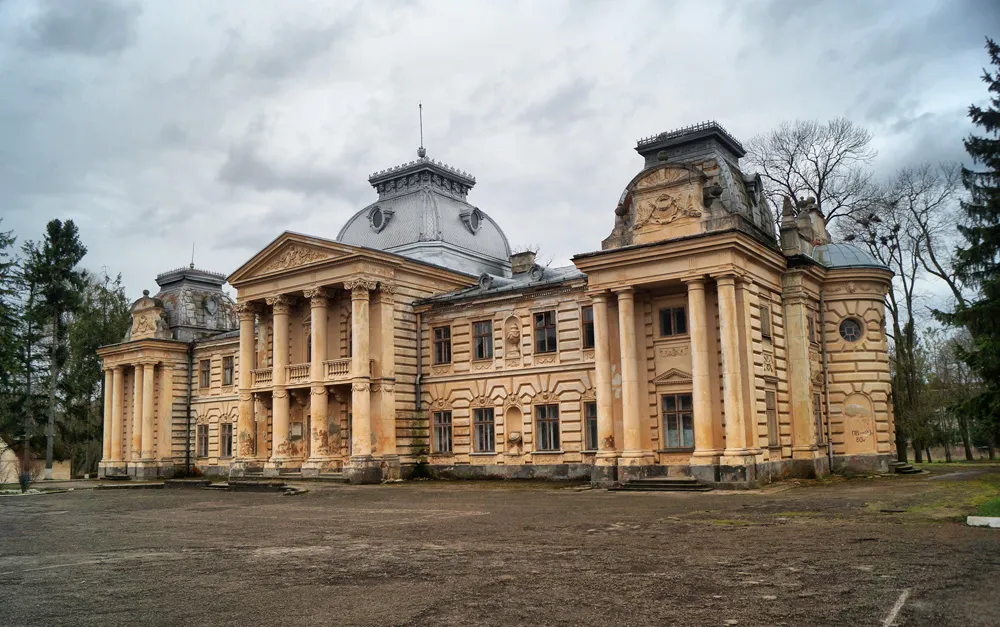
The main landmark of Koropets is the palace of Count Badeni. At the same time it is the main disgrace of Koropets, because to bring such beauty to such a state one has to be a true barbarian.
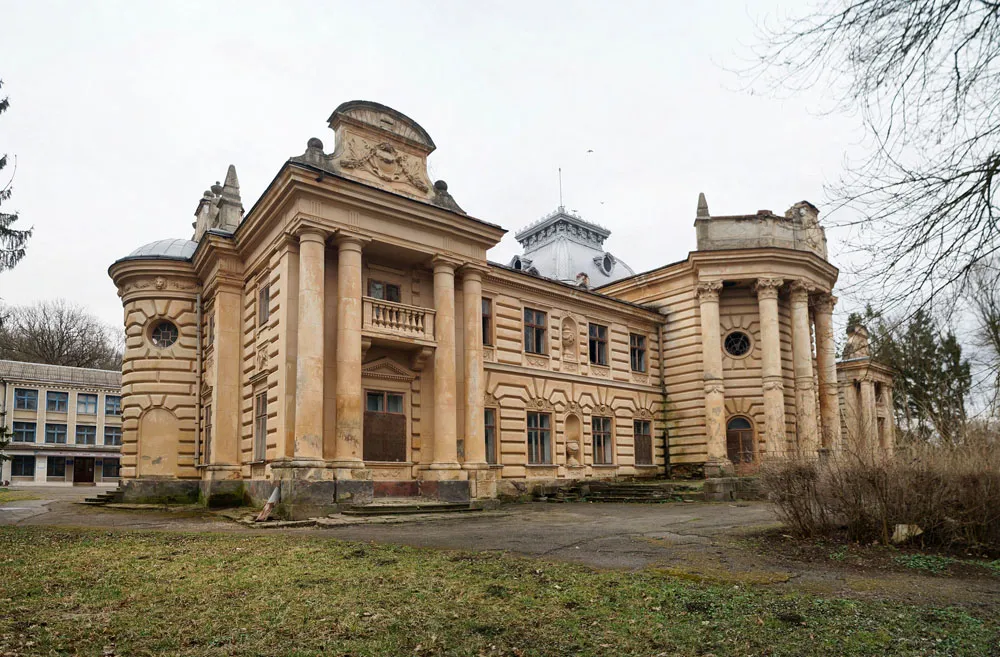
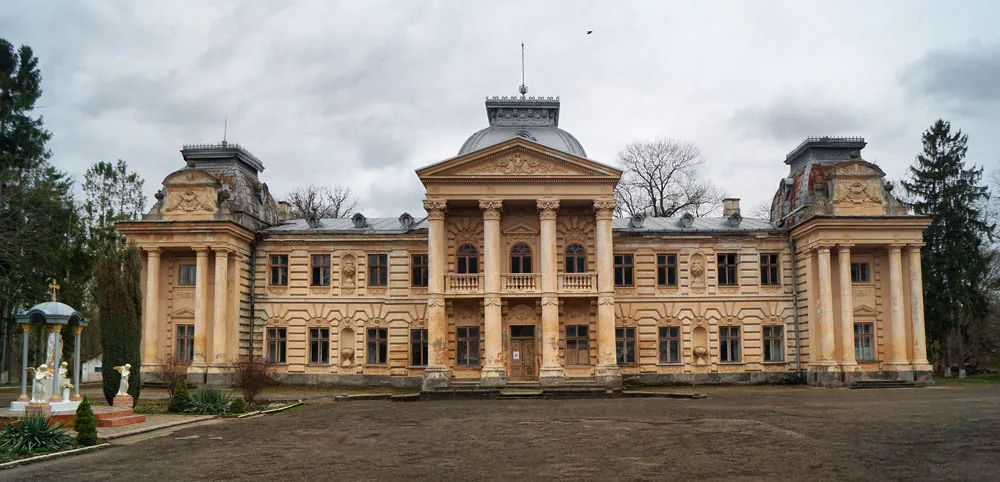
We quote further from Wikipedia:
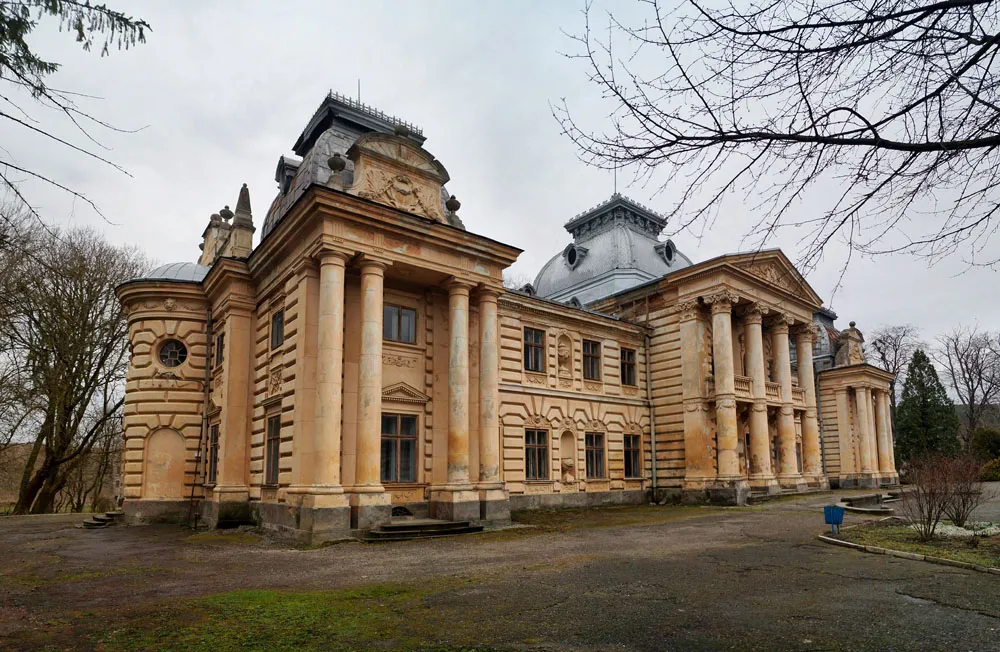
At the beginning of the 19th century the Mysłowski family (owners of the town at that time) built a palace in Koropets. The central part was two-storeyed, and one-storey side wings were added to the central part on both sides. In 1893 Koropets passed into the ownership of the Marshal of the Galician Sejm, Count Stanisław Marcin Badeni (Polish: Stanisław Marcin Badeni) (1850-1912). Stanisław immediately began rebuilding the castle into a family residence. The new palace was built in the Viennese Renaissance style. The work was completed in 1906. The palace rose two storeys high, decorated with three projections and a shaped roof. The oval ballroom on the ground floor of the palace has survived to our time. Next to the royal hall were a dining room, a library and a chapel. On the other side stretched living quarters. The second floor consisted of living quarters. During the First World War, in 1914-1920, the palace was badly damaged and looted.
The last owner of Koropets was Stanisław Badeni’s youngest son, Stefan Badeni (1885-1961). After the Communists seized Koropets in 1939, he was forced to move with his family to Budapest. He was later imprisoned by the Nazis in the Mauthausen concentration camp, where he survived. He spent his last years in Dublin.
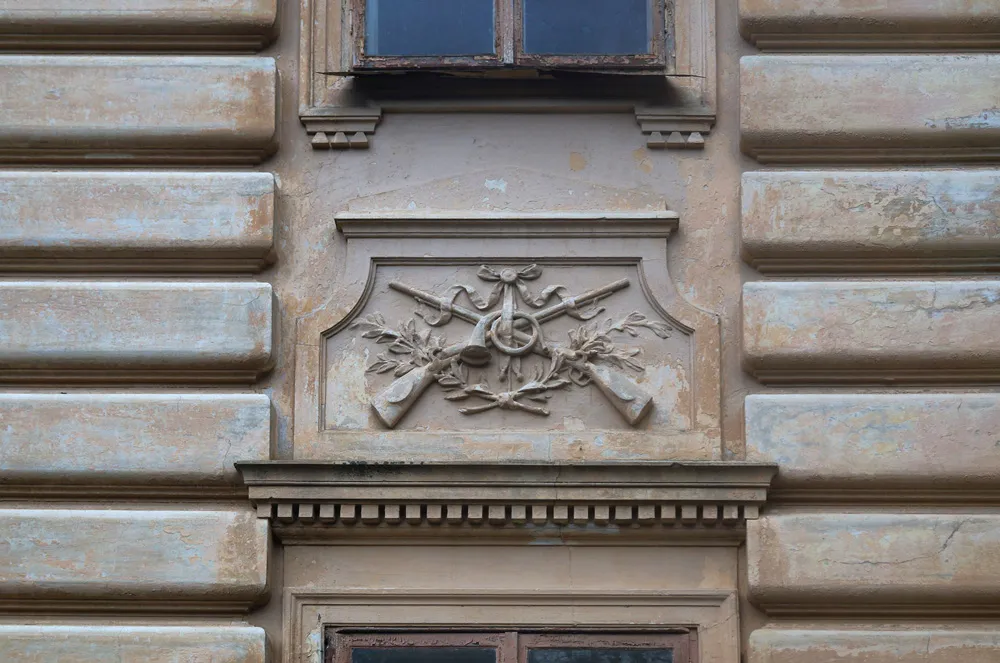
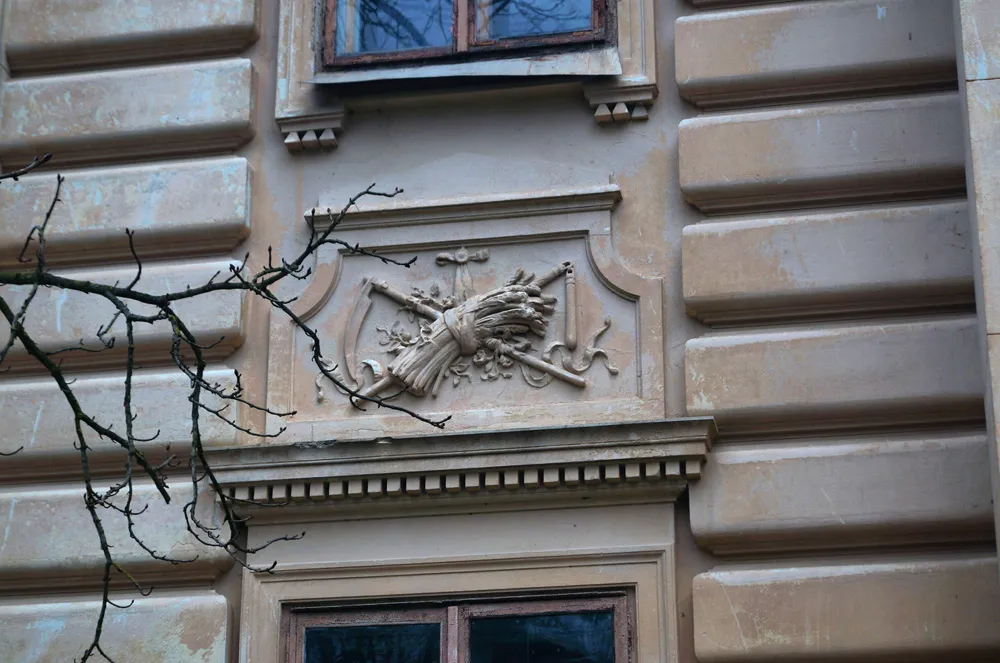
The palace of the former owner of these lands, Count Stanisław Badeni (a Pole of Italian origin, brother of Kazimierz Badeni), stands among the buildings of a children’s boarding school. Huge old trees, including exotic ones (for example, plane trees), have survived in the palace park.
The palace in Koropets is built in a classical-syncretic style with luxurious Baroque stucco heraldic attributes, among which, between rifles and hunting horns, a place of honour is occupied by a bas-relief depicting a crossed scythe and flail.
Especially impressive in the palace is the artistic use of coloured wood for the parquet and wall panelling.
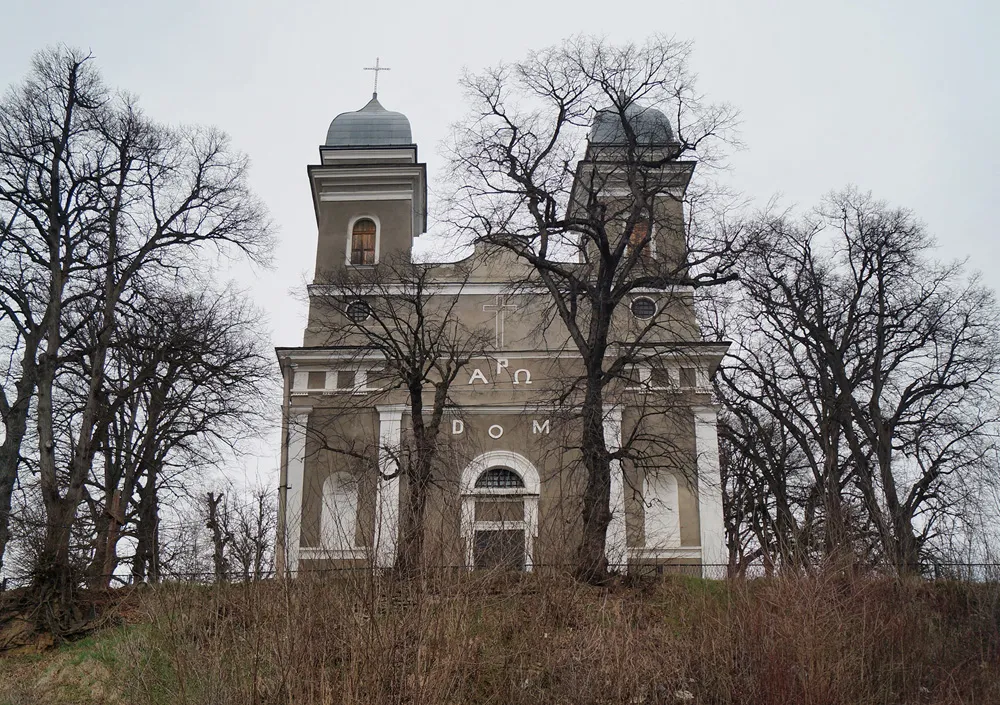
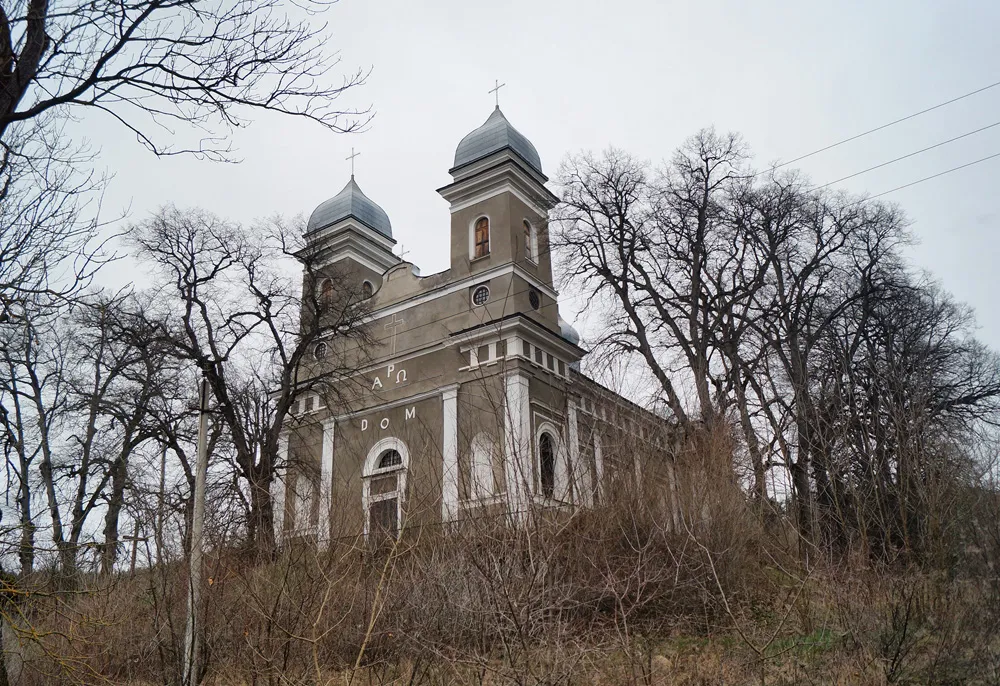
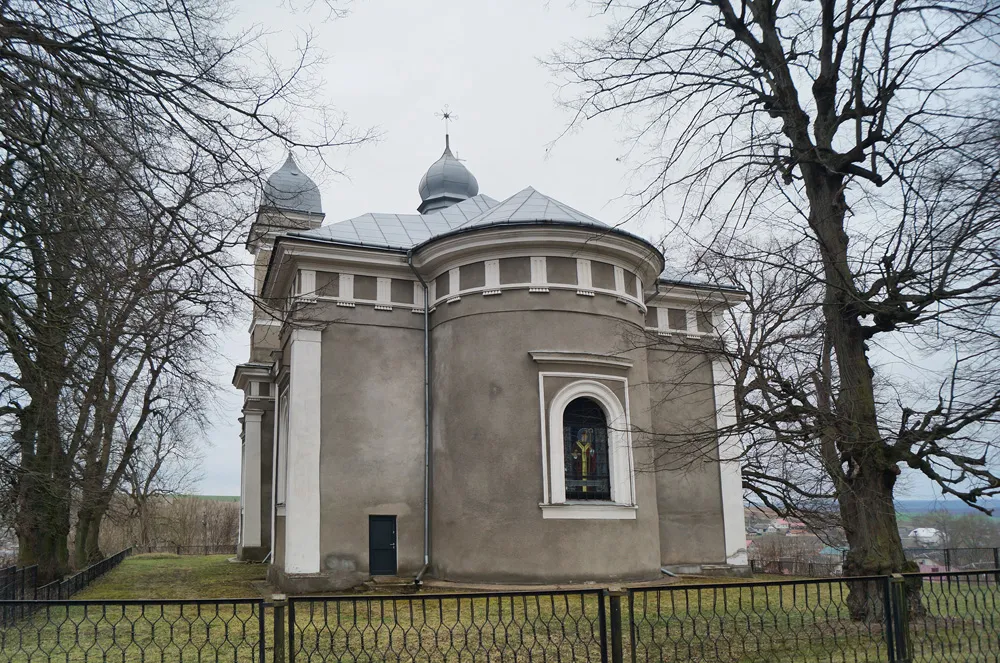
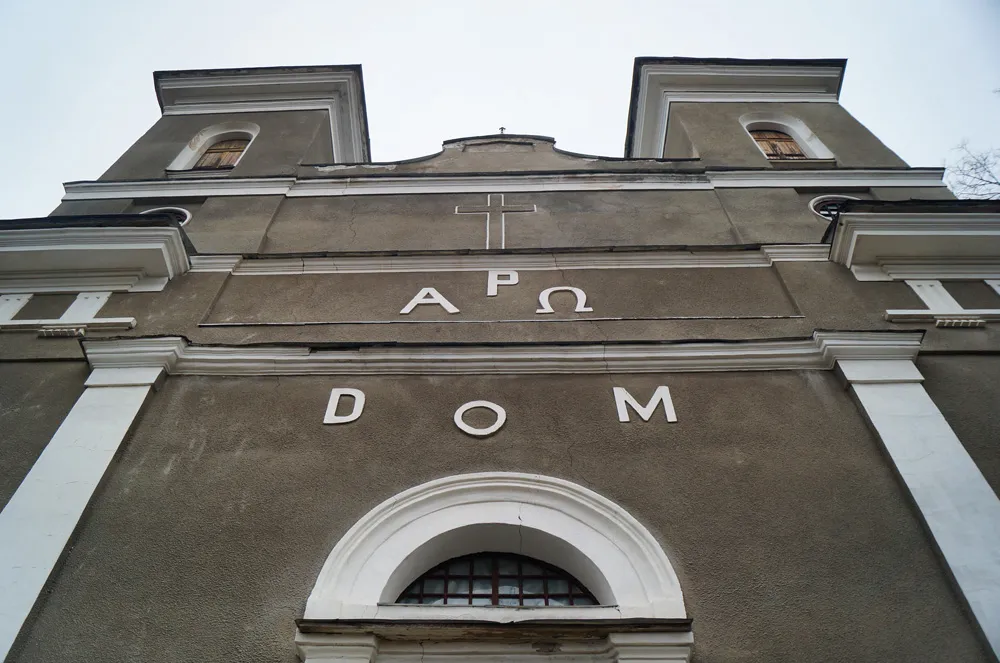
Another landmark of Koropets is the St. Nicholas Roman Catholic church, built in 1860. Text from Wikipedia:
On the hill where a Trypillia culture settlement once stood rises the St. Nicholas Roman Catholic church. In 1421 the Polish king Władysław II Jagiełło (1351-1434) established a foundation for building a church in Koropets. The church was destroyed by the Turkic-Tatar invaders in 1672. In the 1860s a new St. Nicholas church was built and consecrated. In 1882 the church was consecrated. From 1944 to 1992 the church did not operate; in 1992 it resumed activity and belongs to the Roman Catholic community (in 2014 the priest was Dariusz Piechnik).
The wooden Church of the Dormition of the Most Holy Theotokos (1772) is an architectural monument. We did not make it there. Judging by the photo on Wikipedia it is completely encased in metal.
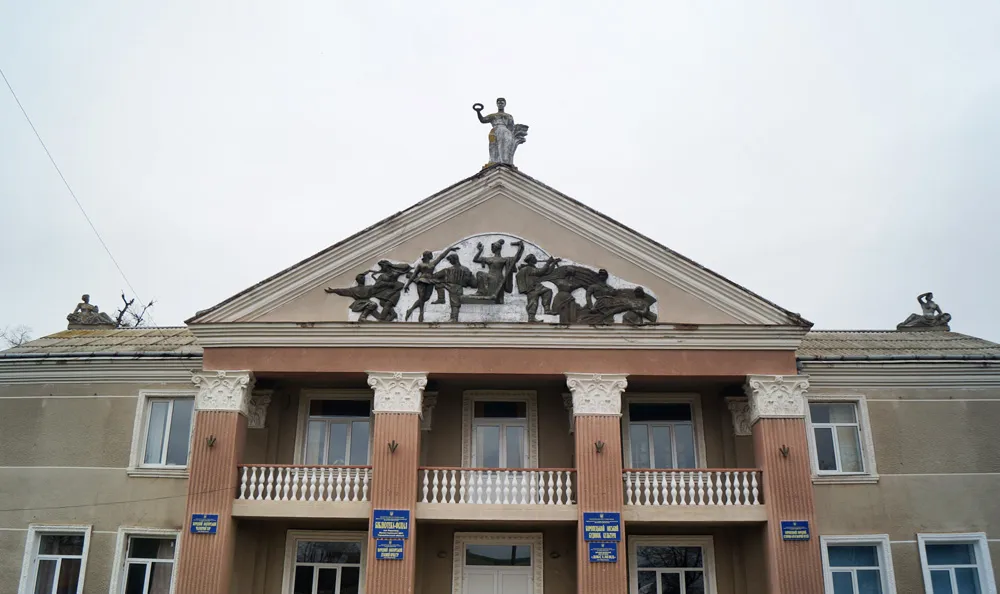
It is also worth paying attention to the house of culture built in Soviet times.
Photos by Roman Malenkov.