

An architectural monument is quietly dying in Parkhomivka, Kyiv Oblast
In Parkhomivka, one of the most beautiful old buildings in the Kyiv region is quietly dying: the house of the local priest. The architectural monument is ownerless and is on nobody’s balance sheet. For now it is a ruin.
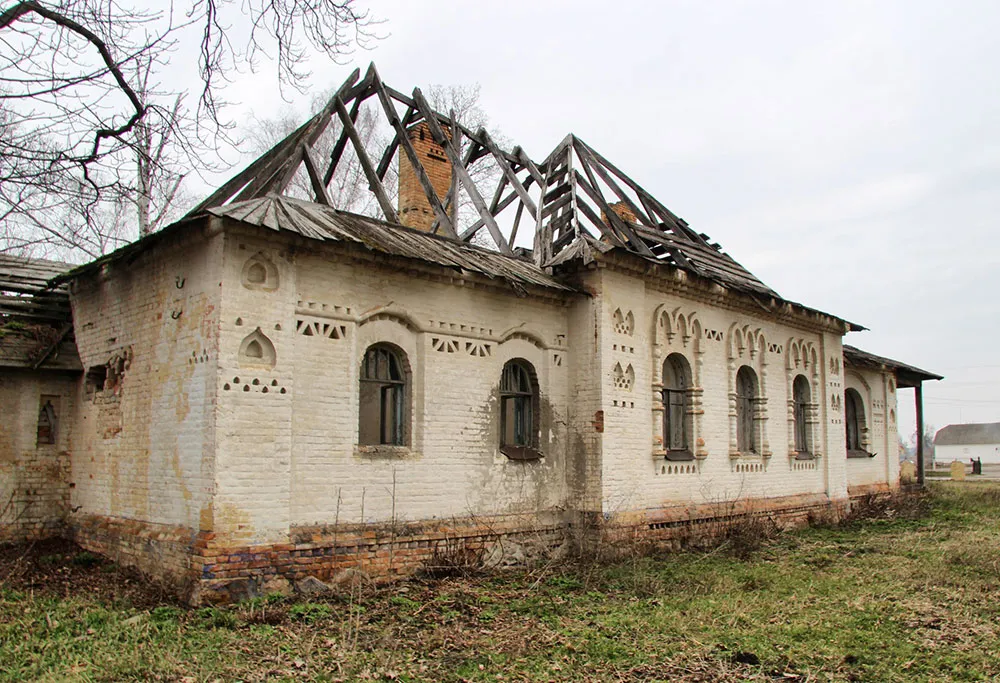
Here and below, photos: Ukraine Incognita
It was once a true pearl, built by the outstanding architect Pokrovskyi.
The house arose as part of the complex of buildings of the famous local Church of the Intercession of the Mother of God.
The Church of the Intercession in Parkhomivka is a unique work created jointly by outstanding artists of the time: the painter Mykola Roerich, the architect Volodymyr Pokrovskyi and the mosaicist Volodymyr Frolov.
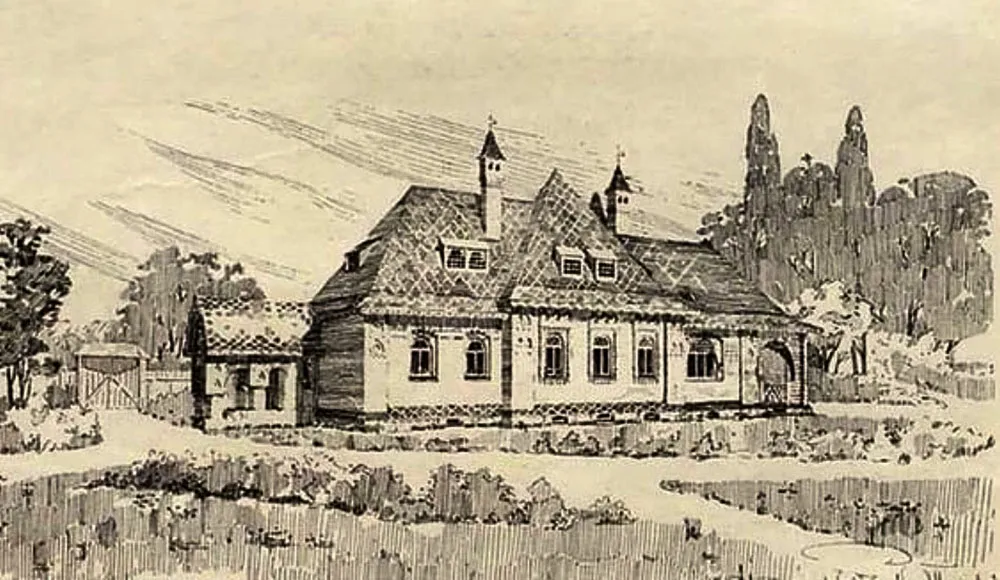
This is how it used to be…
The church complex forms an ensemble unified in style: the church, the priest’s house, the gatehouse, the fence and the gate.
Mykola Roerich, who was a good acquaintance of V. V. Holubiev and V. A. Pokrovskyi, designed 13 sketches for the mosaics and exterior decoration of the church. But only two mosaics were realized: “The Intercession of the Mother of God” and “The Saviour Not Made by Hands”. The smalti for them were made by one of the best masters of that time, V. A. Frolov. The mosaics still adorn the church in Parkhomivka today.
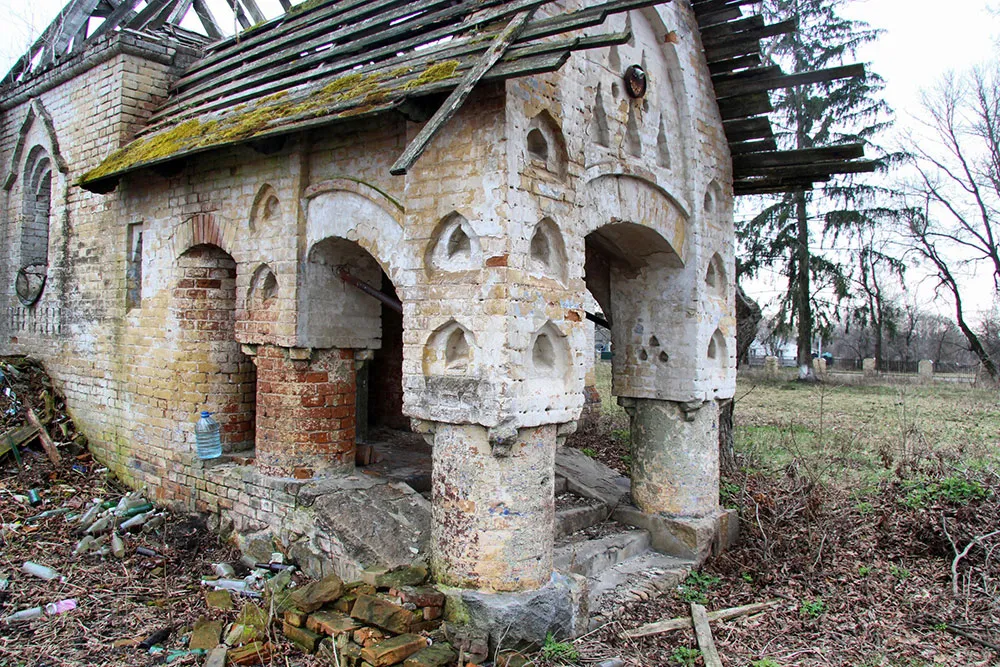
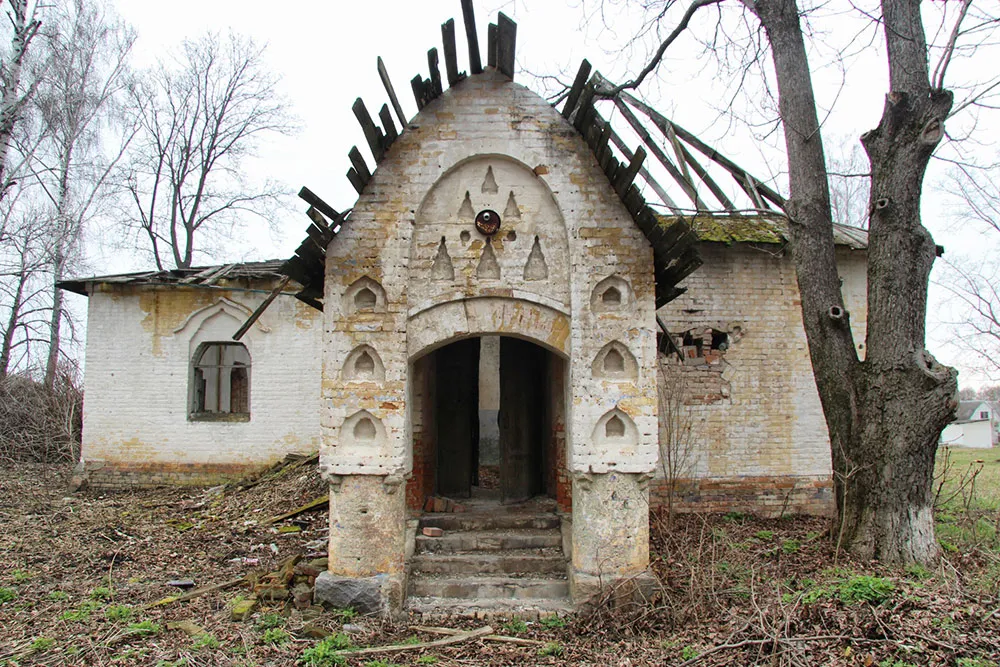
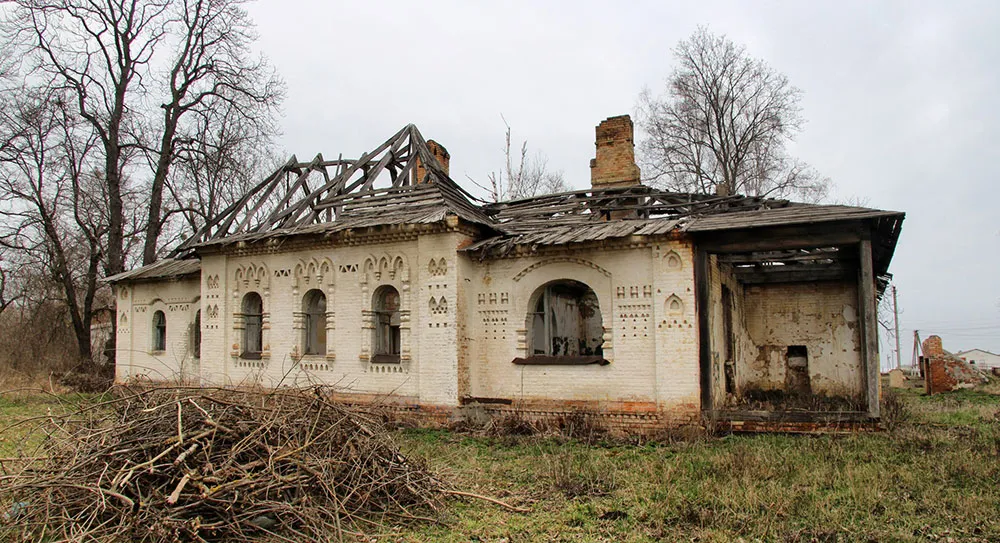
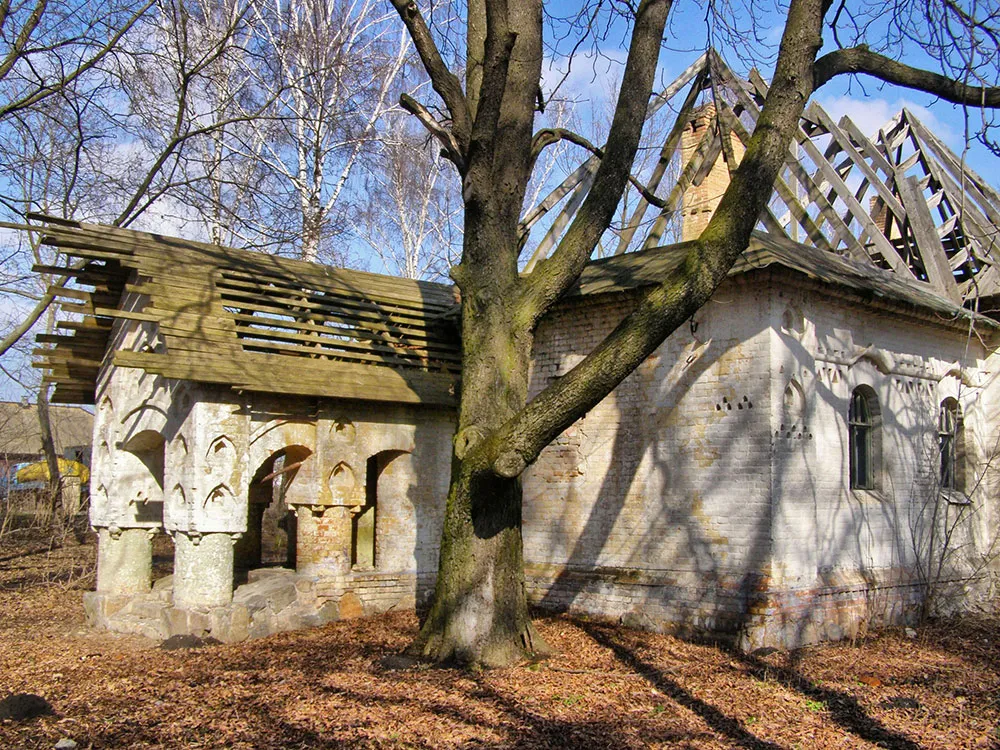
The church itself, we should note, is in decent condition. In the summer of 1987, during the Festival of India in the USSR, Mykola Roerich’s son Svyatoslav came. A group of Parkhomivka enthusiasts met him, and a visit by Roerich to Parkhomivka was planned. A significant role in stepping up the restoration work was played by the wife of the then General Secretary, Raisa Gorbachev. As a result, work got under way at the Parkhomivka church. The best Ukrainian specialists worked on the restoration. Enormous sums were invested. But Roerich did not come to Parkhomivka. The restoration was brought to a certain level and then wound down.
Unfortunately, the priest’s house was never reached. It is hard even to understand how its walls are still standing, since they have large cracks and there has been no roof for more than thirty years. Nobody bombed the priest’s house, so how did it end up in such a ruinous state? But understanding who wrecked this architectural monument will not answer the question of how to save it. Realistic options exist, but first the building must end up on somebody’s balance sheet. Someone must take responsibility for the future of this architectural masterpiece.


