

An exhibition devoted to Jewish necropolis studies opens in Vinnytsia
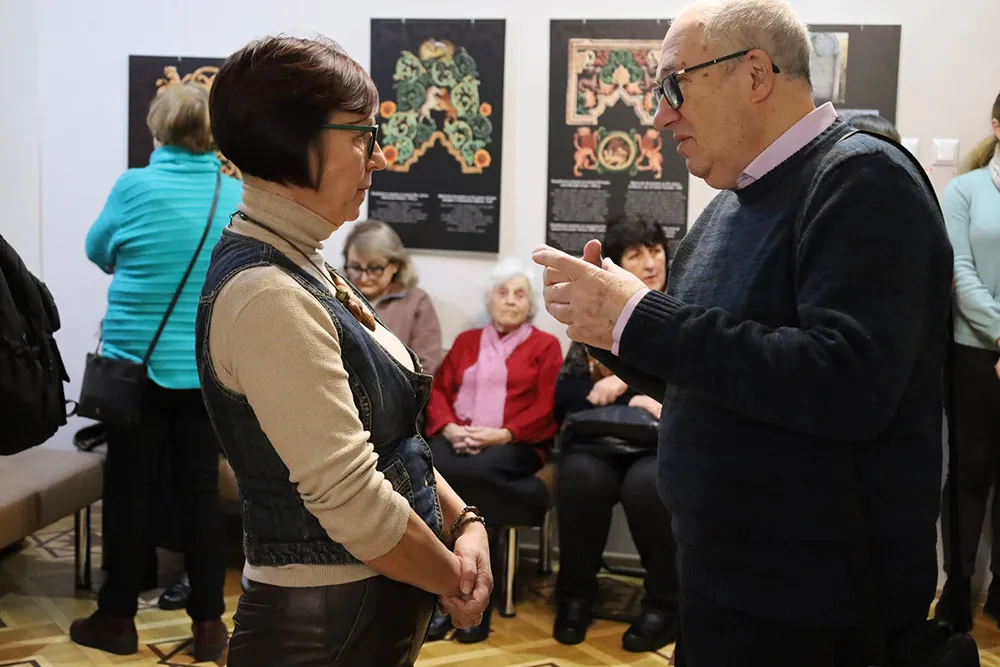
Today in the Academic Hall of the Vinnytsia Regional Museum of Local History a cultural and historical event took place: the opening of a travelling exhibition by the well-known Podillian local historian, traveller, photographer and member of the “Ukraine Incognita” team Dmytro Poliukhovych, “Sataniv: The Lost World of the Ancient Jewish Cemetery”, dedicated to Holocaust Remembrance Day. This is reported on the museum’s page on Facebook.
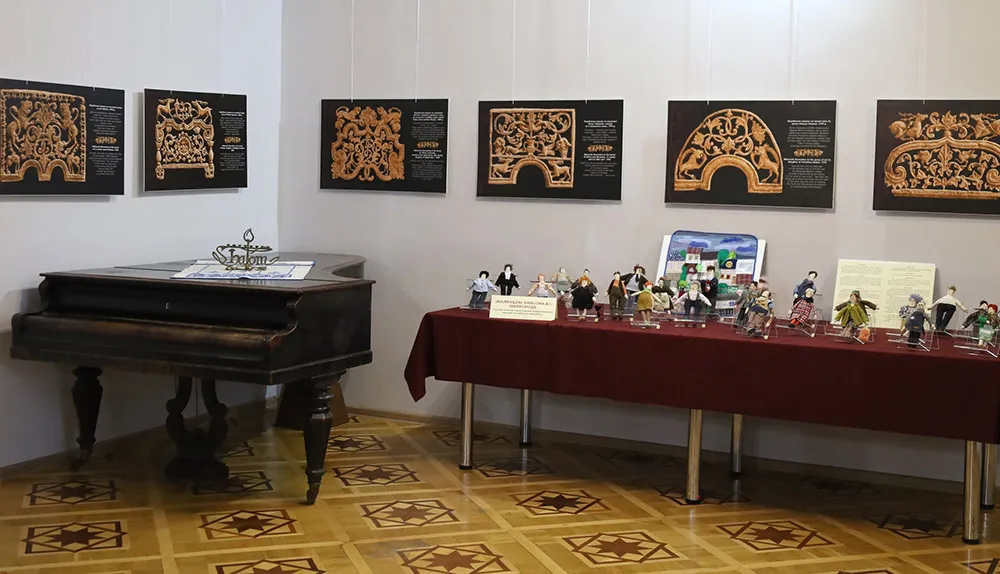
Photo: Vinnytsia Regional Museum of Local History
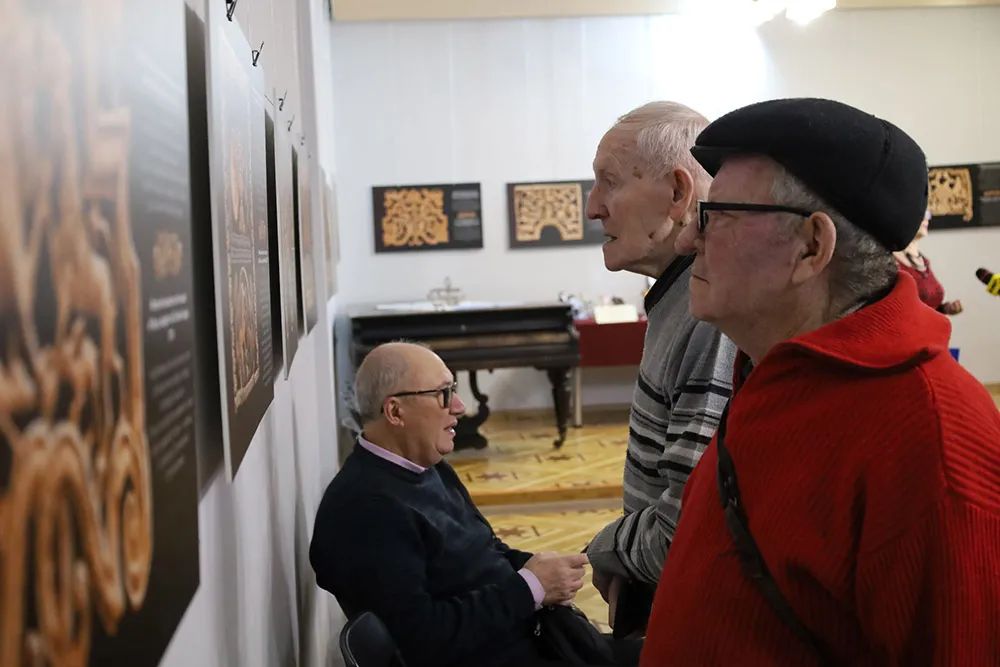
The exhibition presents 25 panels with original paper-cut-style works (“vytynanky”) devoted to the traditional art of the Jews of Ukraine and created on the basis of stone carving on matzevah gravestones dating from the mid-17th to the early 19th century.
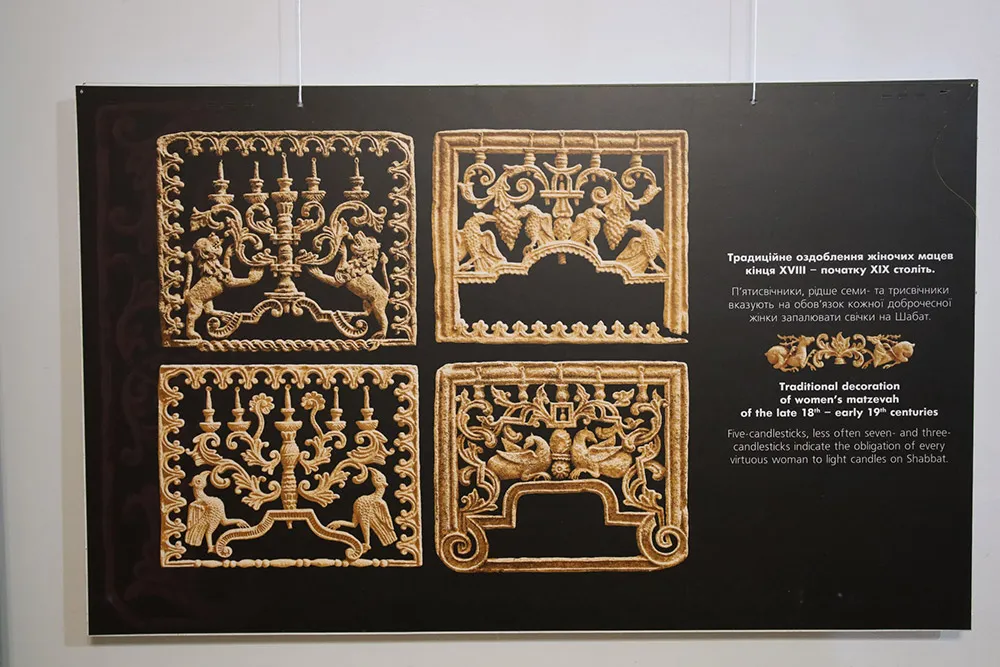
Photo: Vinnytsia Regional Museum of Local History
The exhibition project reveals the culture, worldview and customs of the Jews of Ukraine and shows the traditions and beliefs of a people who have lived beside us for centuries. Every image on a gravestone has a hidden meaning, which Dmytro Poliukhovych has studied for two decades.
The Sataniv Jewish cemetery is an ancient necropolis in a small Podillian town, one of the most unique in Eastern Europe, with burials dating from the 16th–19th centuries. Matzevot, traditional Jewish gravestones skilfully carved from stone, survive on its grounds. These gravestones impress with intricate Baroque and Renaissance ornaments, carvings and symbolic images, which not only indicate names and dates of birth and death but also convey deep religious and cultural meanings connected with the lives of the deceased.
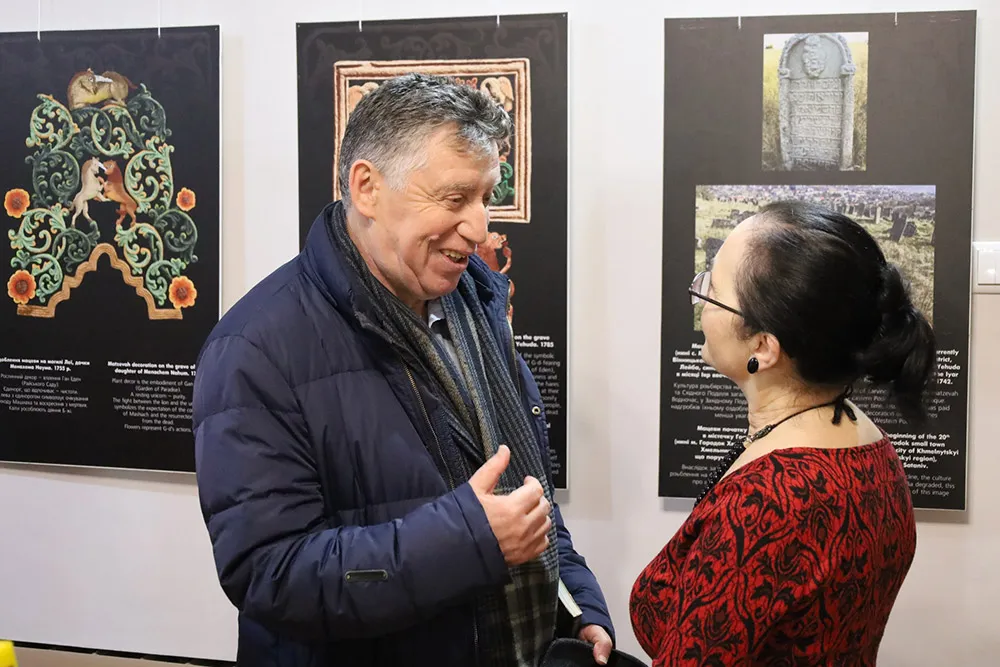
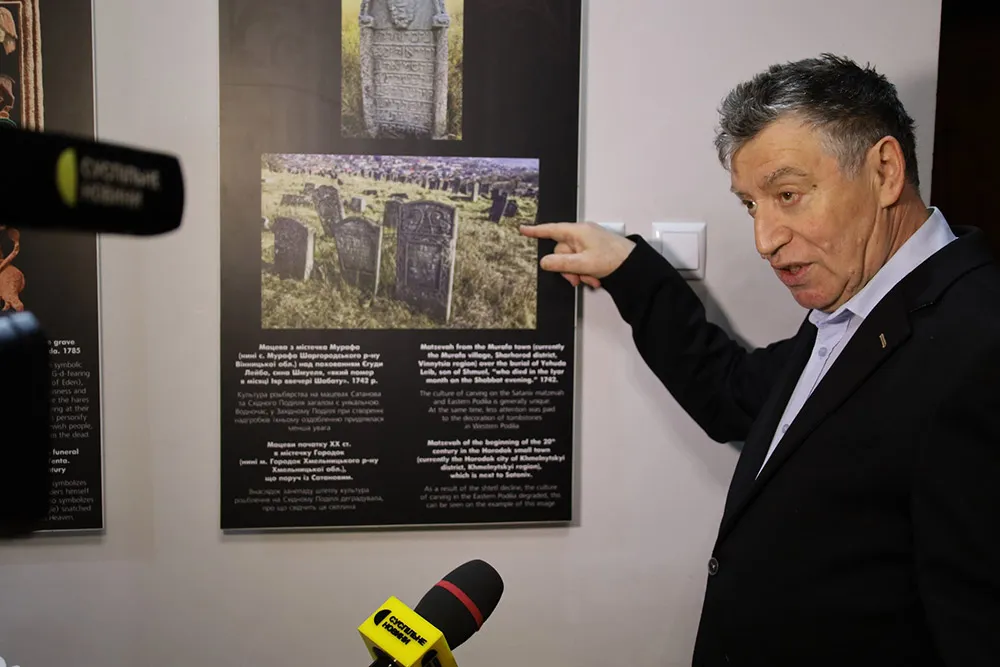
The religious beliefs of the Ashkenazi Jews forbade depicting people. So the story of the deceased and of his or her future in the World to Come, and the hope of resurrection from the dead, were “encoded” in plant ornaments and zoomorphic images. Almost every such image illustrates the sacred texts of the Torah and the Talmud. However, “extra-textual” subjects also occur. For example, the central element of a very beautiful Baroque gravestone on the burial of Brayna, daughter of Aaron, who died in 1776, is a she-bear with twigs in her paws. Here we see not only an illustration of the psalms of King David, which say: “The righteous shall flourish like the palm tree, he shall grow like a cedar in Lebanon” (the popular subject of a bear with twigs is precisely that righteous person in the Garden of Eden). In this subject the master also played on the name of the deceased: Brayna in literal translation from Yiddish means “dark”, “brown”. We see a parallel between the name of the woman buried and the brown fur of the bear.
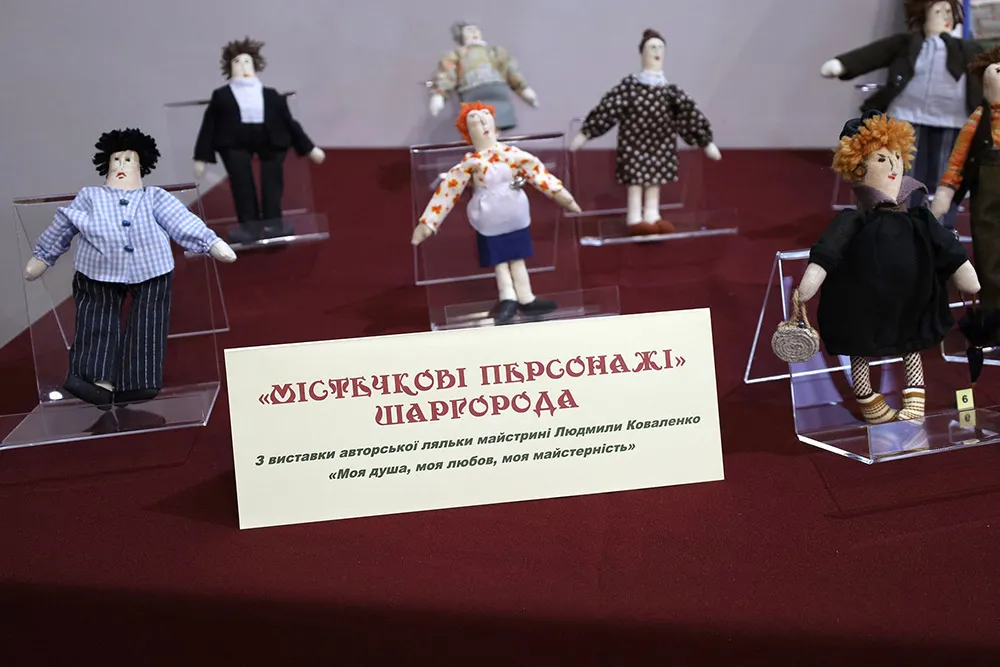
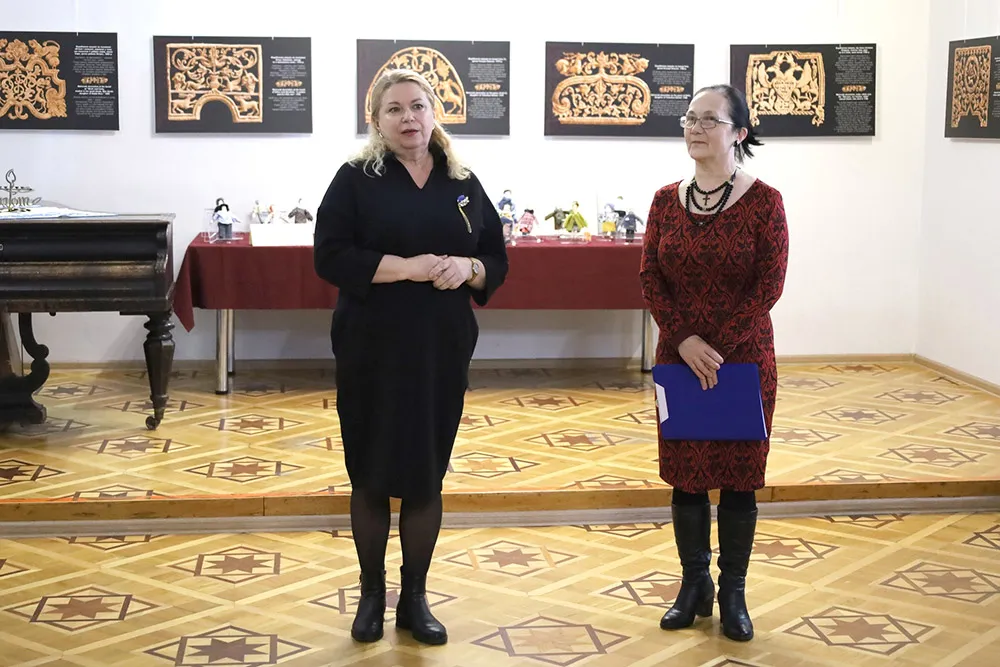
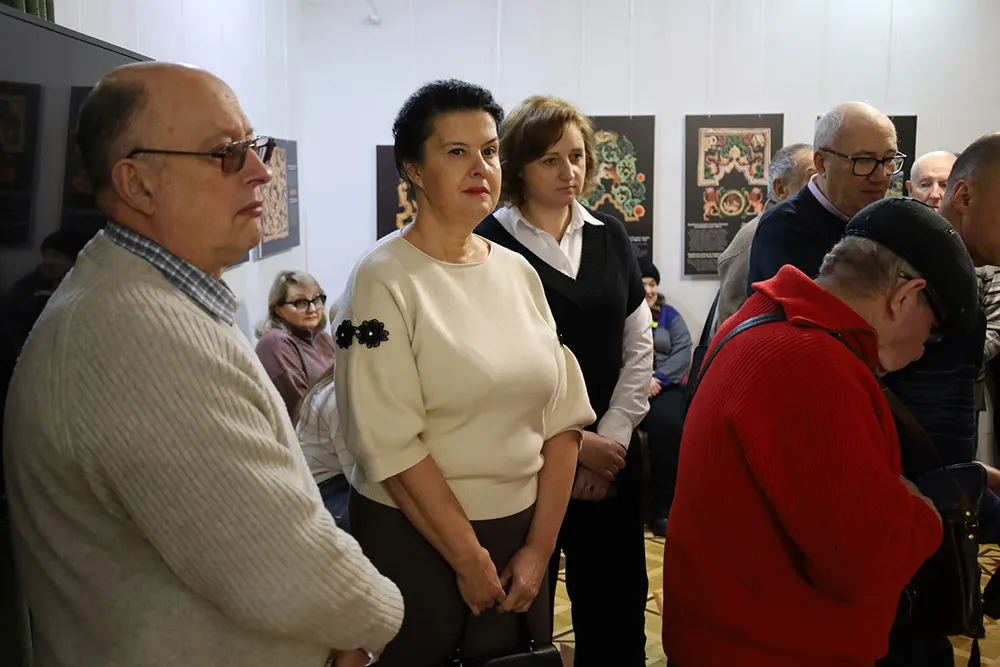
A fine complement to the exhibition are the wonderful original works of the Sharhorod artist Liudmyla Kovalenko: souvenir dolls from the series “shtetl characters”, made with warm affection for the ordinary figures of the Podillian town of Sharhorod. At the presentation of the exhibition “Sataniv: The Lost World of the Ancient Jewish Cemetery” the speakers were: Olha Zelinska, chief specialist of the Department of Culture and Creative Industries of the Humanitarian Policy Department of the Vinnytsia Oblast Military Administration; Alla Ratynska, acting head of the Department of Nationalities and Religions of the Vinnytsia Oblast Military Administration; Svitlana Sharovarska, deputy director of the Vinnytsia Regional Museum of Local History; Leonid Trakhtenberh, director of the Holocaust Museum in Vinnytsia; and Larysa Semenko, moderator of the event. Members of the Jewish community, local historians, educators and the media attended. The exhibition was made possible by the organizational and financial support of the United Jewish Community of Ukraine (UJCU).
Thanks should also go to the leadership of the Horodok urban community (Khmelnytskyi Oblast), and in particular the Department of Culture, Nationalities, Religions and Tourism of the Horodok City Council, which in partnership with the NGO “Ukraine Incognita” initiated the project “Graves of the Ancestors”, within which the ancient necropolises of the Horodok area (Ukrainian, Polish and Jewish) are surveyed and studied. The aim is to preserve the historical heritage and popularize the diverse, multinational culture of Podillia. Thanks to the project participants, a number of matzevot with interesting and unique bas-reliefs were discovered, which are presented at the exhibition. Local people also greatly helped the project activists in cleaning the gravestones of moss and lichen so they could be photographed.
Before Vinnytsia, the exhibition had already been shown in Dnipro, Kyiv, Odesa, Khmelnytskyi, Horodok (Khmelnytskyi Oblast) and Kharkiv.


