

In Cherkasy archaeologists are demolishing imperial myths (photos)

· 3 min read
In the centre of Cherkasy, in the Upper Town within the so-called “Lithuanian” castle on Dzelenhora, archaeological excavations continue, carried out by the Cherkasy expedition of the Institute of Archaeology of the National Academy of Sciences of Ukraine.
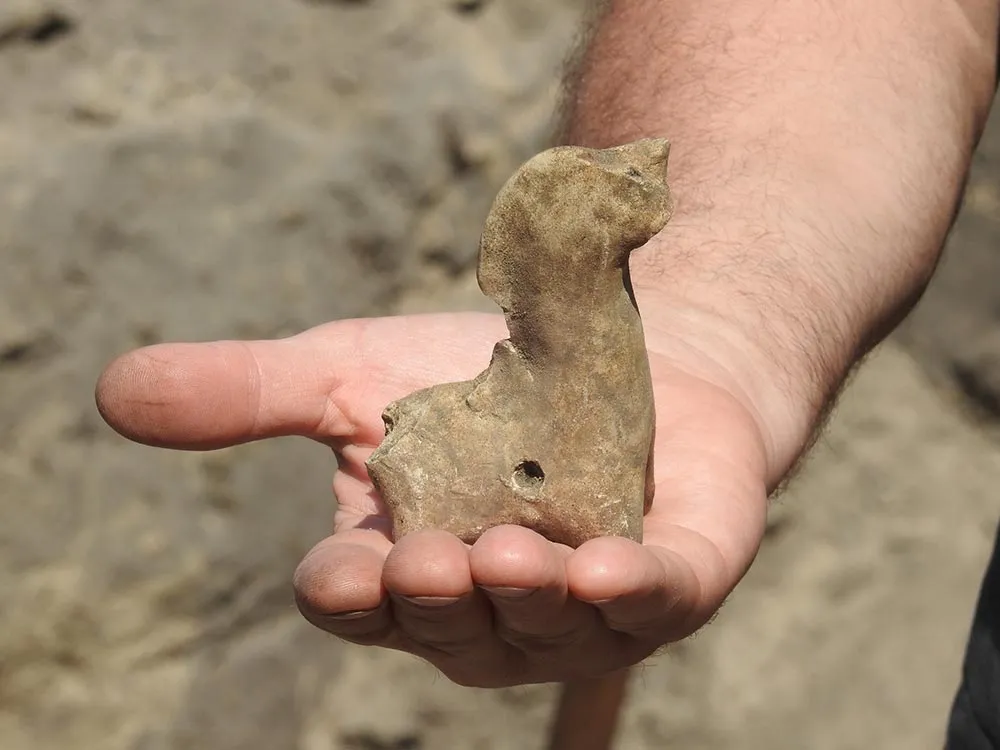
An archaeologists’ find. Cherkasy
As the press service of the Institute of Archaeology reports, this is the second season of research at this location since 2020.
Previously the archaeologists worked on a plot at 2 Baidy-Vyshnevetskoho Street (in the courtyard of the “Krynskyi House”), and this year they extended the excavation to the east, onto the neighbouring plot at 11/3 Starosobornyi Descent.
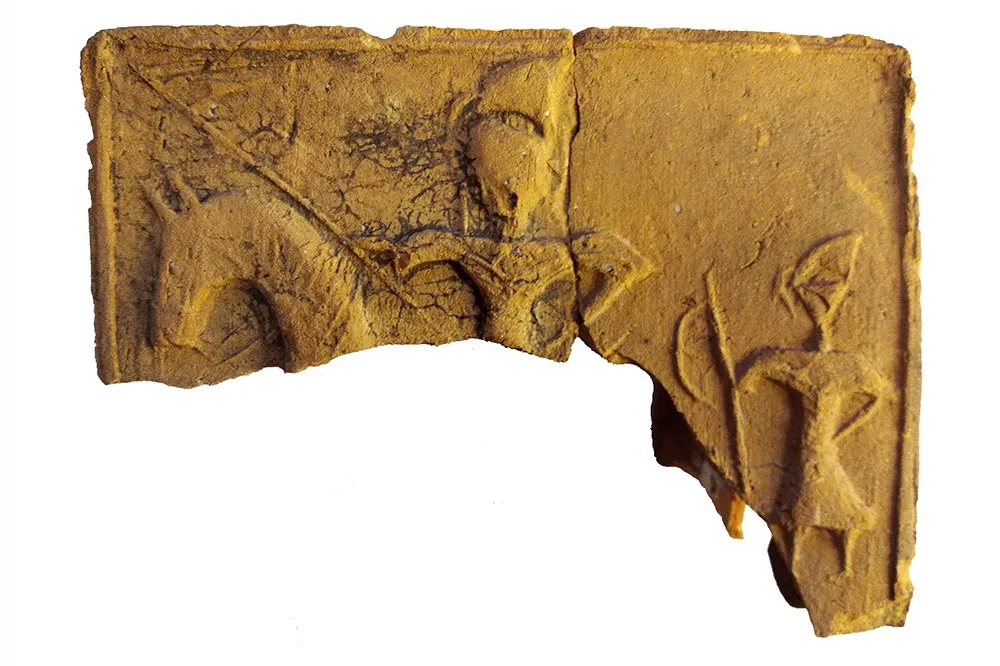
Among the finds are artefacts of various periods, ranging from the Zarubyntsi culture (3rd century BC to 1st century AD) to the early modern era. Most of the finds belong to the early history of Cherkasy and are connected with the town castle of the late 14th to early 17th centuries.
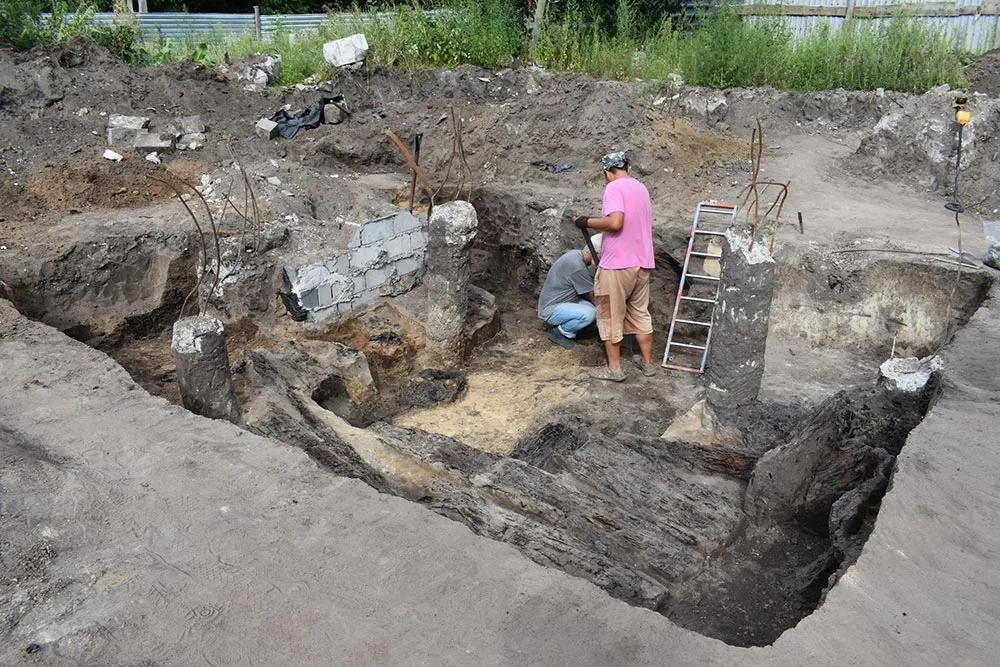
Remains of the granary-arsenal
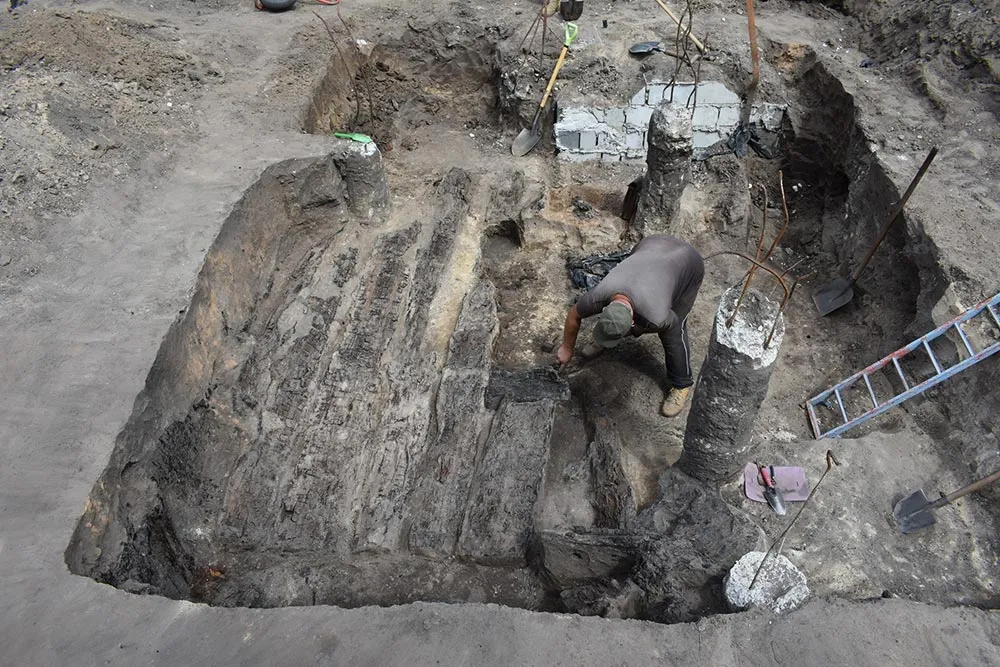
Remains of the granary-arsenal
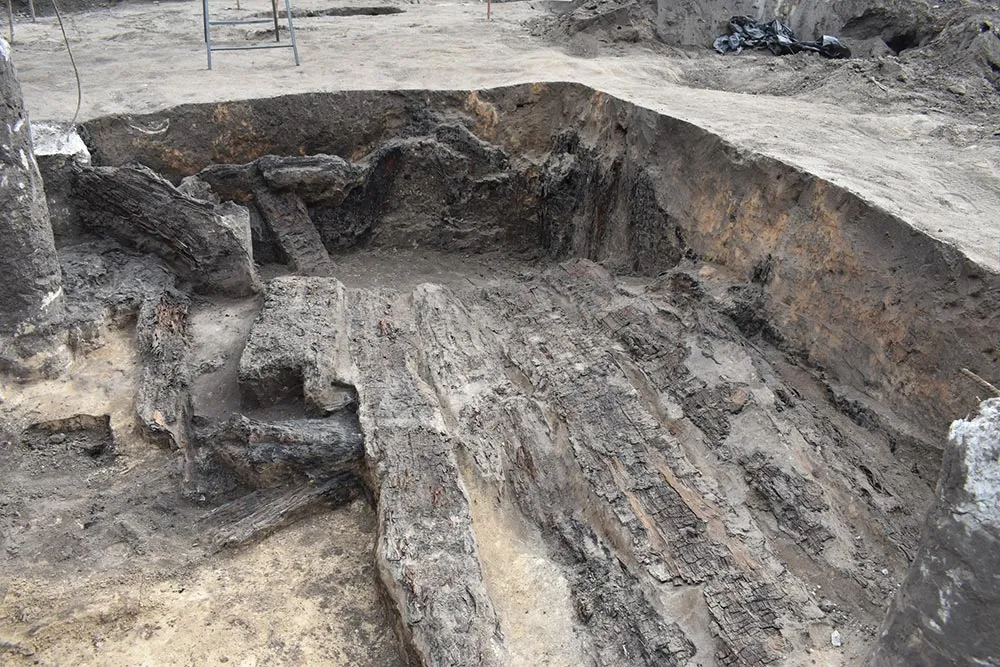
Remains of the granary-arsenal
The researchers were most pleased by the discovery of a granary-arsenal (a food storehouse). It is a large (4.5 x 5.5 m) structure of the semi-dugout type. So far the upper part of the fill of its pit has been cleared, and the charred remains of a wooden structure have been found: plank facing of the walls, posts, and boards and beams of the collapsed ceiling. On the floor were found the remains of a burnt wooden vat. Sadly, the structure turned out to be badly damaged. Incidentally, the greatest damage was done to it recently, about five years ago: the former owner of the plot, without the proper archaeological assessment, built a house, which he later had to dismantle. This illegal construction left “indelible scars” on the Cherkasy castle site: the discovered structure is pierced by reinforced-concrete piles and cut by a brick cellar… Nevertheless, even in this “crippled” state the structure is interesting and promising for study.
In these turbulent times many archaeologists are defending Ukraine’s independence and territorial integrity with weapons in hand. One of the tasks of the scholars who remain at their posts is to combat imperial-Soviet and Russian narratives that, sadly, still circulate in the Ukrainian public space. The latest archaeological research in Cherkasy, for example, proves the groundlessness of the “Circassian” theory of the city’s origin (this concept of the origin of Cherkasy, and at the same time of the Cherkasy Cossacks, from North Caucasian settlers in the 1280s – on the basis of an alleged similarity between the toponym “Cherkasy” and the ethnonym “Circassians” – was formed in the 18th century by the Russian imperial historians Vasilii Tatishchev and Ivan Boltin). And therefore the official (still Soviet) version of the time of the city’s appearance is not confirmed either; its 700th anniversary was solemnly celebrated in 1986. As archaeological finds and critical analysis of historical sources show, Cherkasy appeared 80–100 years later – as the south-eastern outpost of a young European state, the Grand Duchy of Lithuania, Rus and Samogitia, after its victory over the Golden Horde at the Battle of Blue Waters (1362).
Photos: Anton Dietkin, Dmytro Kushtan


