

Images of four large Tryzubs found in the Church of St. Paraskeva in the village of Velykyi Kliuchiv!

· 2 min read
As Arsenii Uzhytchak, a church servant of the Church of St. Paraskeva in the village of Velykyi Kliuchiv (Ivano-Frankivsk Oblast), has just told Ukraine Incognita, a sensational discovery was made on 8 December during restoration work in the church.
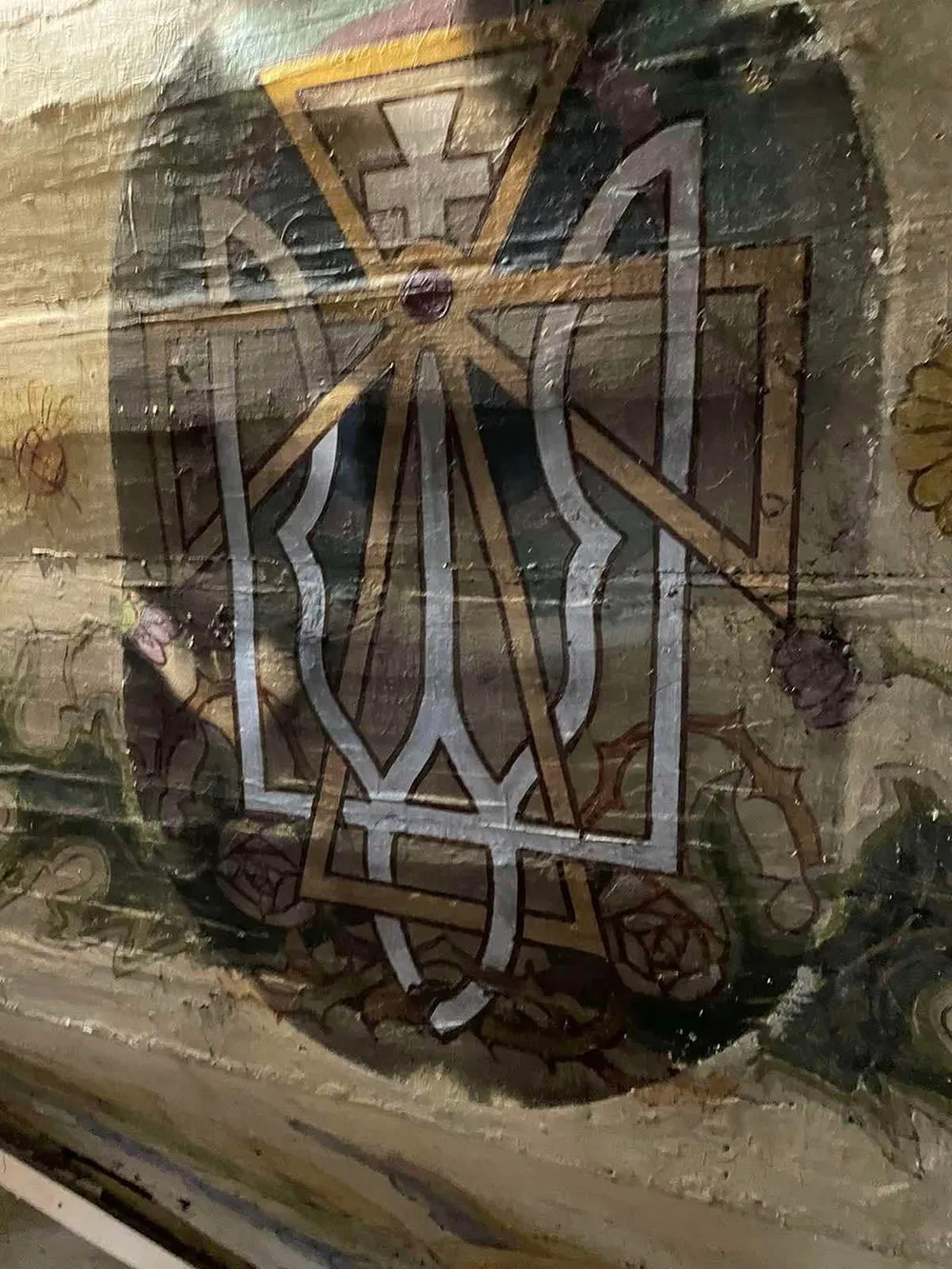
Photo: Arsenii Uzhytchak
According to Mr Arsenii, the dome of the altar part had long been decorated with four large medallions depicting the holy equal-to-the-apostles princes Volodymyr and Olha, Saints Boris and Hleb, and the Archangel Michael. The images were painted on sheets of plywood. When the plywood was removed during restoration, it turned out that large Tryzubs were hidden beneath it.
“They were obviously painted by the well-known icon painter from Przemyśl Pavlo Zaporizkyi, who painted this house of God in 1933–1934,” says Arsenii Uzhytchak. “And he must have been asked to do so by the conscious people of Kliuchiv who lived in the village then and to whom our national symbols were dear. Then the Russian-communist regime came and they concealed the Tryzubs. But they did not wipe them out or scrape them off; they preserved them, hoping that someone would one day discover them. And the people who knew this secret died, evidently, in the early years of our Independence. And now, after 90 years, it has happened: the painted Tryzub quartet is no longer forgotten!”
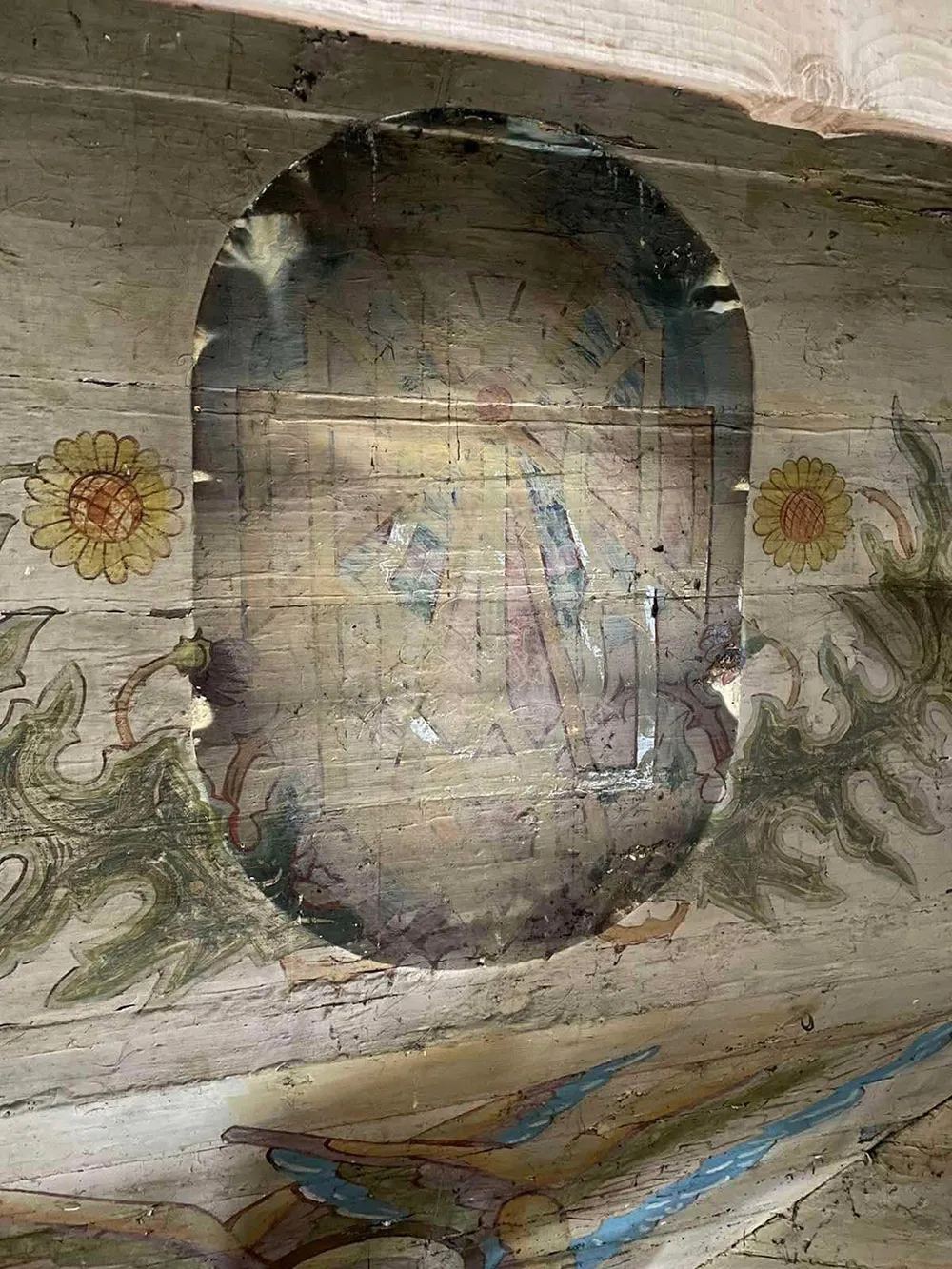
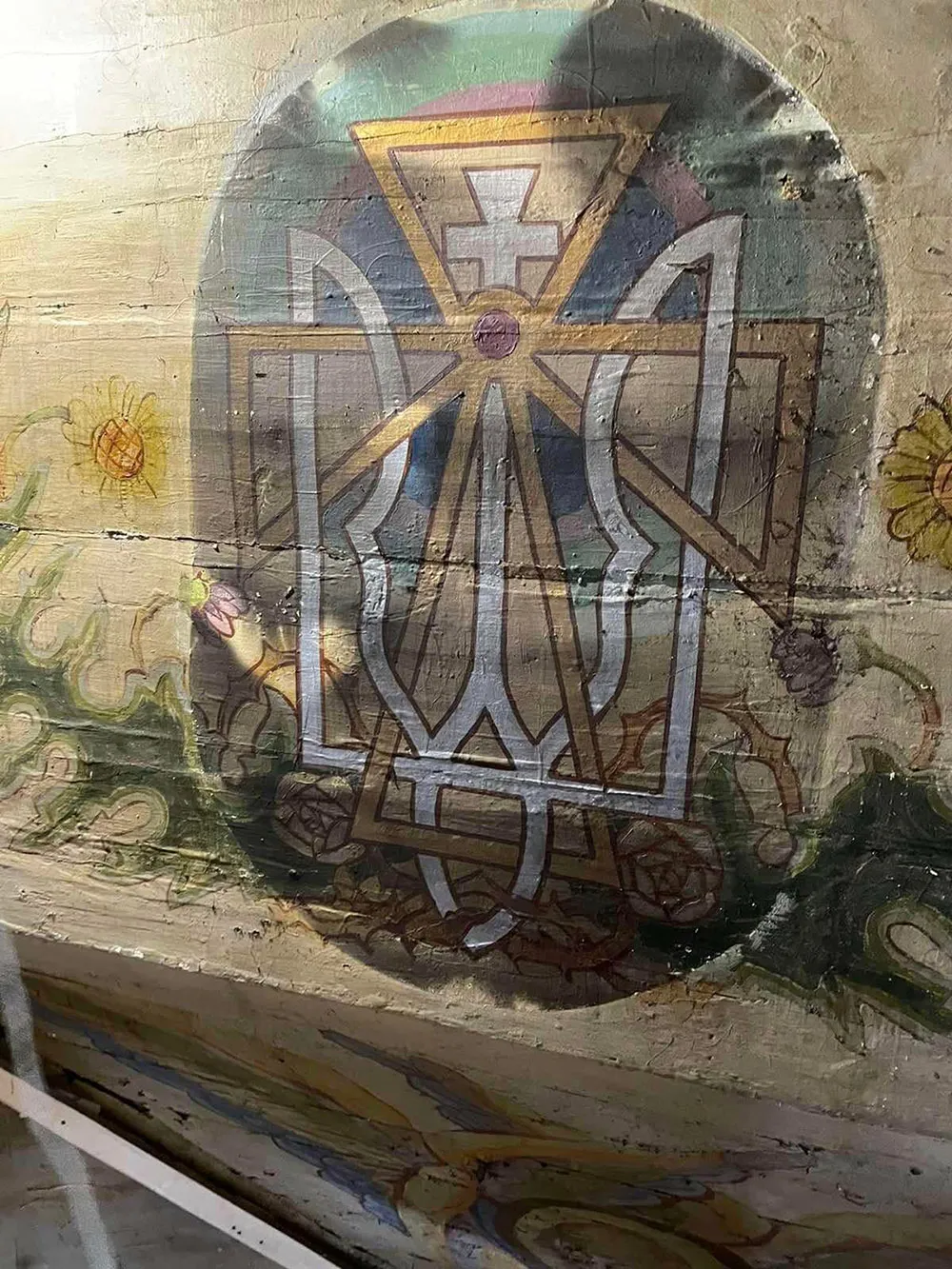
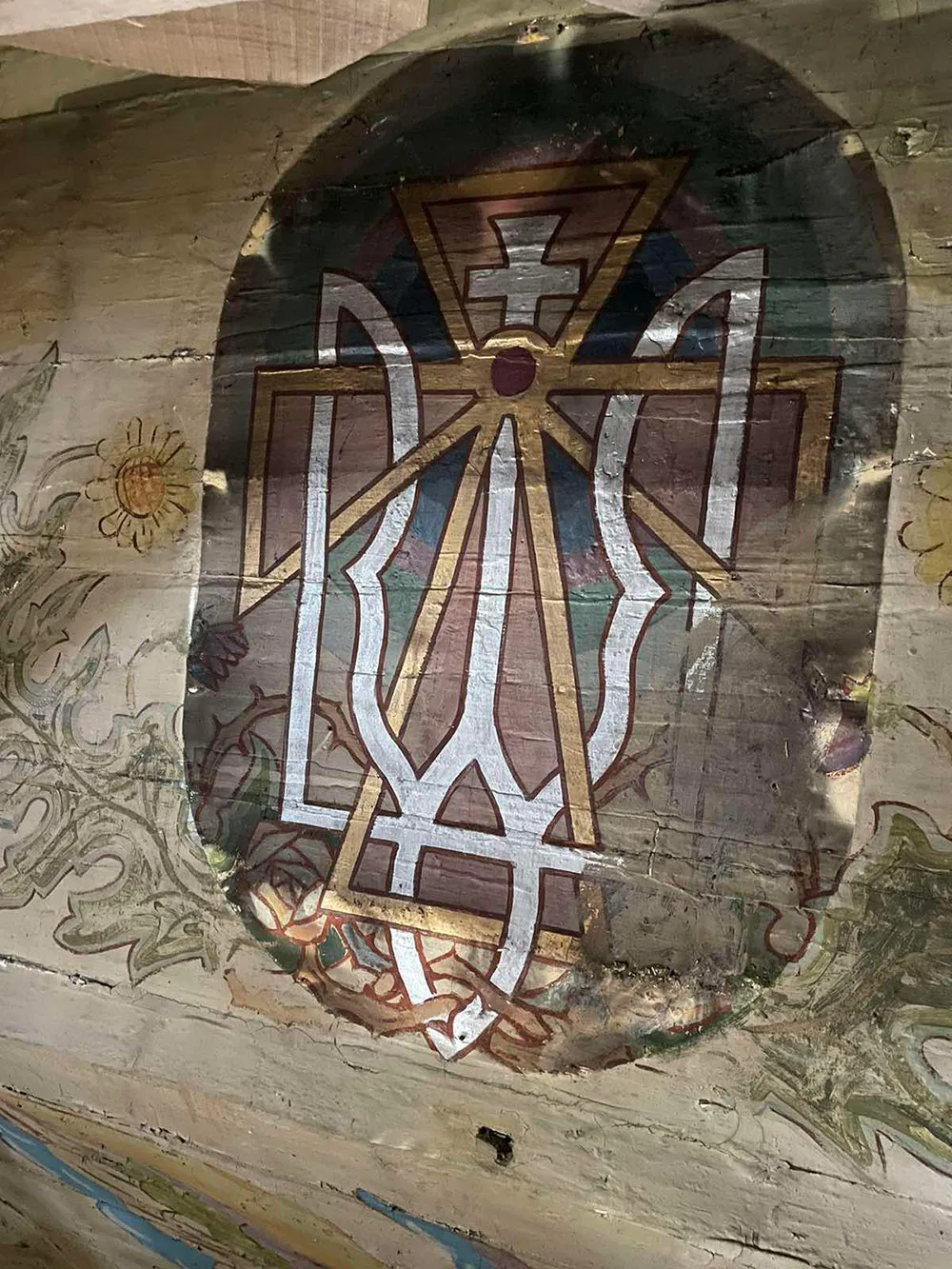
Photo: Arsenii Uzhytchak
Background.
The present wooden church was built by the master Dmytro Babiak. It was consecrated on 21 August 1865. It was a parish church.
A new iconostasis was installed in 1869, and in 1888 the walls and roofs were covered with sheet metal.
The church was restored in 1933–1934, and it was painted then by Petro Zaporizkyi from Przemyśl. The walls above the encircling gallery and the octagons were clad in sheet metal in 1990.
The wooden bell tower stands to the north-east of the church.
In 1934 the community ordered a 410.5 kg bell for the bell tower from the Felczyński foundry in Kalush.
(Hromyk V., Slobodian V. Wooden churches of Ivano-Frankivsk Oblast. Lviv, 2016, p. 195.)


